Ever stood in the grocery aisle, staring at a wall of olive oil, feeling utterly paralyzed by choice? You’re not alone. One bottle boasts it's ‘Extra Virgin,’ while its neighbor is labeled ‘Pure,’ and a third whispers ‘Cold-Pressed.’ It’s enough to make you grab any old bottle and flee. But the secret that separates them all is surprisingly simple: how the oil is coaxed from the olive and how pure it remains afterward. This single fact changes everything—the taste, the health-boosting power, and, most importantly, how it will perform in your kitchen.
Your Guide to the Different Olive Oils
It’s tempting to just grab the nearest bottle and call it a day. But what if I told you that in the next few minutes, you could learn to decipher those labels like a seasoned Italian chef? Think of this guide as your personal decoder ring for the world of olive oil. We’re about to slice through the confusion and uncover the key differences between the main types, from the undisputed king, Extra Virgin, to its humble, hardworking cousins.
Forget the jargon. I’m going to hand you a clear, simple map to a world of flavor that’s been hiding in plain sight. To start, picture the world of olive oil as a pyramid.
The Olive Oil Hierarchy
At the very peak sits the absolute best—the most flavorful, least processed, and highest-quality oils. As you descend, the oils become more refined, which isn’t necessarily a bad thing; it just makes them better suited for different jobs in your kitchen.
This simple chart reveals the quality ranking for the three main grades you'll find on any supermarket shelf.
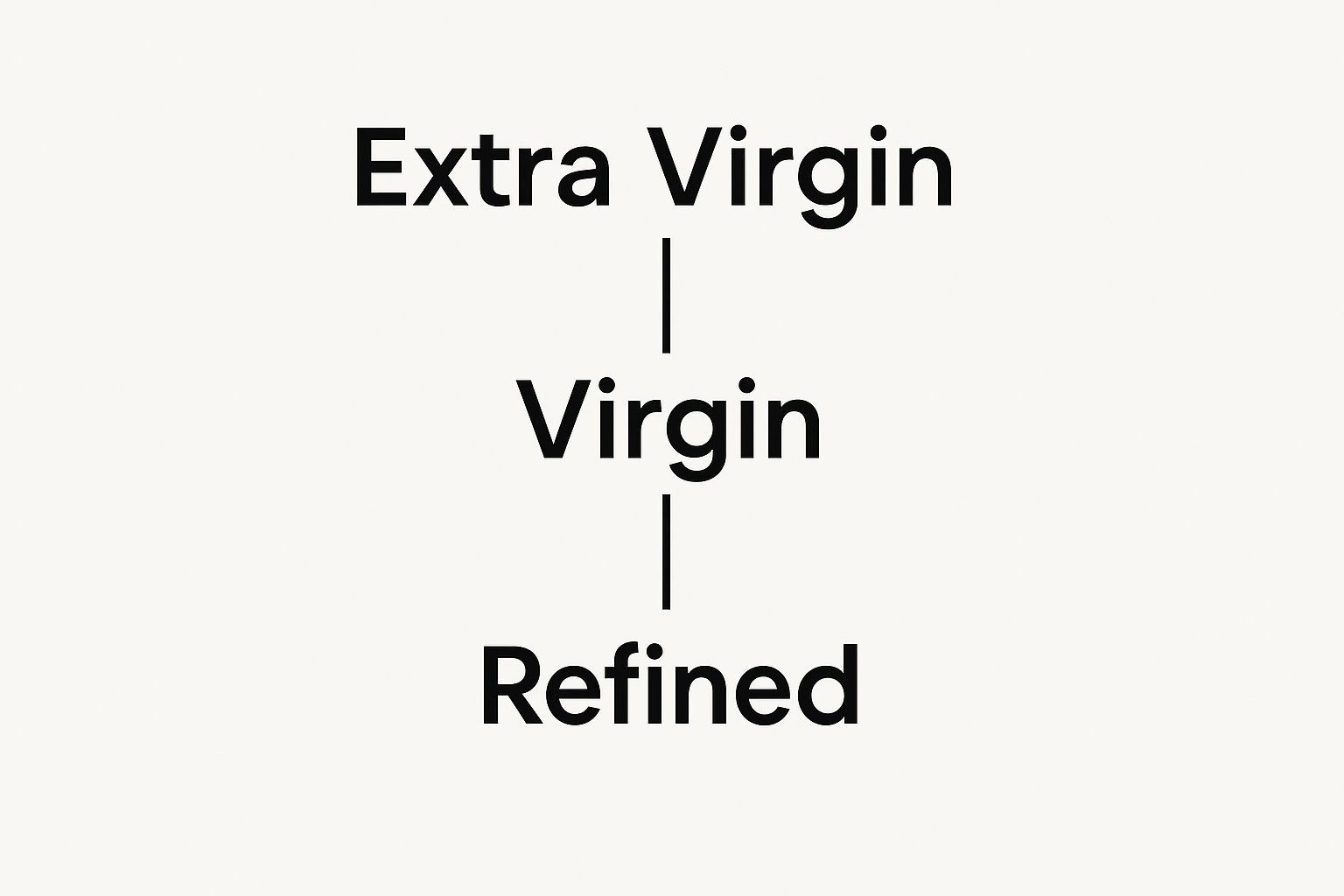
As you can see, Extra Virgin Olive Oil sits enthroned at the top. It is the pinnacle of quality. Virgin is a step down, followed by the Refined oils. It’s a clear progression from pure, unadulterated nature to something more processed for utility.
What Really Separates Them?
This distinction isn't just clever marketing—it's rooted in hard science and process. The grades are officially determined by the extraction method (was it simply pressed, or did it involve chemicals?), its free acidity level, and even professional sensory tests that hunt for any off-flavors or defects.
The less an oil is handled, heated, or treated, the more of the olive's natural soul—its vibrant flavor and powerful antioxidants—it retains. This is the secret behind the breathtaking quality of extra virgin olive oil.
Once you grasp this simple principle, you're on your way to conquering the olive oil aisle. It allows you to peer past the fancy labels and start thinking about how each oil will actually behave in your kitchen. Whether you need a bold, peppery finish for a Caprese salad or a neutral, high-heat oil for searing a steak, there's a perfect olive oil made just for that job.
To make it even clearer, here’s a quick-reference table that summarizes the key players.
Olive Oil Types at a Glance
| Olive Oil Type | Processing Method | Flavor Profile | Best For |
|---|---|---|---|
| Extra Virgin | Cold-pressed, no heat or chemicals | Robust, fruity, peppery | Salad dressings, dipping, finishing |
| Virgin | Cold-pressed, slightly higher acidity | Milder olive flavor, less intense | Sautéing, roasting, everyday cooking |
| Refined ("Pure" or "Light") | Heat/chemical processing, then filtered | Neutral, very little flavor | High-heat cooking, frying, baking |
| Olive Pomace Oil | Extracted from leftover pulp with solvents | Very neutral, bland | Industrial cooking, deep-frying |
This table gives you a rock-solid foundation. Now, let’s dive deeper into each of these types to truly understand what makes them tick.
Extra Virgin Olive Oil: The Gold Standard of Flavor
If olive oil were a kingdom, Extra Virgin Olive Oil (EVOO) would be its undisputed ruler. This isn't just a fancy name; it's a promise of purity and quality, governed by a strict set of laws that place EVOO in a class all its own.
To earn the "extra virgin" crown, the oil must come from the very first pressing of fresh olives, extracted using only mechanical means. Banish any thought of harsh chemicals or high heat. This is all about the cold-press method—a gentle process that coaxes the oil from the fruit, preserving every drop of its vibrant character and natural goodness.
This meticulous care is why true EVOO is brimming with antioxidants and polyphenols, the very compounds that deliver its signature peppery kick and legendary health benefits.
The Science Behind the Superior Taste
So, what’s the secret at a chemical level? It all boils down to a remarkably low free fatty acid (FFA) level. For an oil to be officially certified as extra virgin, its acidity must be less than 0.8%. A lower number isn't just a technicality; it's a direct signal of healthier olives and flawless handling from the moment they leave the branch.
This low acidity is what allows the olive's true personality—its unique flavors and aromas—to sing. You can discover more about the specific criteria in our guide on the meaning of extra virgin olive oil.
The gold standard of EVOO is about capturing a perfect moment—the peak freshness of the olive, flawlessly preserved. It is the purest expression of the fruit, a liquid snapshot of the grove it came from.
This obsession with quality is a global passion, especially in Europe. The European Union is the heart of the industry, projected to produce about 58.7% of the world's olive oil in the 2024/25 season. Spain, in particular, is a titan, with its sun-drenched groves yielding a massive portion of the global supply.
A Symphony of Flavors
Tasting a high-quality EVOO is a genuine sensory event. Don't just think "olive oil." A great bottle offers a complex profile of tasting notes every bit as nuanced as a fine wine.
Depending on the olive variety, where it was grown, and when it was harvested, you might uncover a universe of flavors:
- Fruity Notes: These can range from bright and green, like unripe apples, to mellow and rich, like ripe tropical fruits.
- Peppery Finish: That pungent, spicy tickle at the back of your throat is the tell-tale sign of freshness and high polyphenol content. It’s a very good thing!
- Pleasant Bitterness: Often found in oils made from early-harvest olives, this bitterness points to powerful, healthy antioxidants.
- Grassy or Herbaceous Hints: Many EVOOs have aromas of freshly cut grass, artichoke, tomato leaf, or even almond, connecting you directly to their agricultural roots.
This complexity is precisely why EVOO shines as a finishing oil. A simple drizzle can utterly transform a dish, whether it's a grilled steak, a fresh Caprese salad, or a humble bowl of pasta. Use it where its flavor can be the star—in dressings, for dipping bread, or as that final touch that adds a layer of delicious sophistication.
Choosing Your Everyday Cooking Companions
Not every meal demands the complex, robust character of a premium extra virgin olive oil. For the daily grind of sautéing, roasting, and frying, you need reliable kitchen workhorses. When the heat is on, or you simply need a versatile, budget-friendly option, it's time to meet the rest of the olive oil family.
Think of Virgin Olive Oil as EVOO’s slightly more laid-back sibling. It’s produced the same way—mechanically pressed from olives without chemicals or heat. The key difference is found in the free acidity, which can be up to 2.0%. This typically means the olives were a bit riper or had a few minor bumps and bruises before pressing.
The result is an oil with a much milder, less assertive flavor. You'll still get a pleasant olive taste, but without the peppery kick or grassy notes of a top-tier EVOO. Its gentler personality and friendlier price tag make it a superb all-rounder for sautéing vegetables or whipping up a marinade where you don't want the oil to steal the show.
Understanding Refined and Light Olive Oils
Next in line is Refined Olive Oil. This is where things get a bit more industrial. These oils begin their journey as virgin olive oils that, for reasons of high acidity or flavor defects, just couldn't make the grade. But they aren't discarded.
Instead, they undergo a refining process using heat and filtration to strip out those imperfections. This process also removes most of the color, aroma, and flavor, leaving behind a completely neutral oil. To give it back a little life, producers then blend in a small amount of virgin or extra virgin olive oil. This is what you’re usually buying when the label just says "Olive Oil" or "Pure Olive Oil."
Don't be fooled by clever marketing: "light" olive oil has just as many calories as any other oil. The term "light" refers only to its pale color and neutral taste, not its fat content.
Because they’ve been refined, these oils have a much higher smoke point—often around 465°F (240°C). This makes them a fantastic choice for high-heat cooking where a delicate EVOO would burn. Their neutral flavor is also a bonus when you don't want the oil to interfere with the taste of your ingredients. For a complete breakdown, see our guide on the best types of olive oil for cooking.
So, when should you reach for one of these bottles? Here’s a quick rundown of where these oils truly shine:
- Roasting: A refined olive oil is perfect for getting potatoes and other root vegetables crispy and golden brown in a hot oven without filling your kitchen with smoke.
- Frying: Whether you're pan-frying a piece of fish or deep-frying doughnuts, the high heat tolerance of a refined oil is exactly what you need.
- Baking: When a cake or muffin recipe calls for vegetable oil, a "light" olive oil is an excellent heart-healthy substitute that won’t add any unwanted flavor.
Beyond the Basics: Pomace and Infused Olive Oils
Now that we’ve covered the major players, let’s explore two other olive oils you might encounter. These two couldn't be more different. One is a product of pure industrial thriftiness, while the other is all about creative culinary delight.
The Workhorse: Olive Pomace Oil
Ever wonder what happens to the olive skins, pits, and pulp after the good stuff has been pressed out? That leftover paste is called pomace, and it still has a tiny bit of oil trapped inside. Getting it out is not a job for a simple press.
To extract this last vestige of oil, producers use solvents and high heat. The resulting crude oil is then refined, just like refined olive oil, which strips away any flavor or aroma. What remains is Olive Pomace Oil: a completely neutral oil with a very high smoke point.
It lacks the antioxidants or nuanced flavors of EVOO, but that’s not its purpose. Think of it as the ultimate utility player. It's inexpensive and stable, making it a go-to for industrial kitchens and restaurants that do a lot of deep-frying. For home cooks, it can fill that same role when you just need a high-heat oil and don't care about adding any particular flavor.
Pomace oil is really a testament to the no-waste philosophy of traditional food production. It ensures every single part of the olive is put to good use.
The Flavor Powerhouse: Infused Olive Oils
On the complete opposite end of the spectrum are Infused Olive Oils. These aren't a formal grade of oil, but a creative twist on it. They are essentially flavor bombs created by steeping high-quality olive oil with other ingredients.
The possibilities here are endless. You can find oils infused with:
- Herbs: Rosemary, basil, thyme
- Spices: Chili, garlic, black peppercorn
- Citrus: Lemon, blood orange
A drizzle of garlic-infused oil can resurrect a bland pizza crust, while a splash of chili oil gives pasta a welcome kick. Lemon-infused oil is brilliant over grilled fish, and a rosemary infusion is a natural partner for roasted potatoes or focaccia bread.
These oils are a fantastic shortcut for adding a deep layer of flavor to a dish without any extra prep work. If you're feeling adventurous, it's fairly simple to learn more about how to make infused olive oil at home and create your own custom blends.
How to Read an Olive Oil Label Like a Pro
Alright, you now know the different types of olive oil. Now for the real-world test: the grocery store aisle. The label on that bottle is your roadmap to quality, but it can feel like it's written in a secret code. Let's crack it so you can shop with the confidence of an expert.
The Most Important Date on the Bottle
Your first mission is to find the Harvest Date. Do not confuse this with the "Best By" date. A "Best By" date is usually set for two years after the oil was bottled, but the harvest date tells you when the olives were actually picked and pressed.
Think of olive oil as fresh-squeezed fruit juice—because that’s precisely what it is! It does not improve with age. The fresher, the better. Always hunt for the most recent harvest date you can find. That’s your single best guarantee of vibrant flavor.
Spotting the Seals of Quality
Next, scan the label for official seals. These are not just decorative stickers; they are legally recognized certifications that guarantee where the oil came from and how it was made.
- PDO (Protected Designation of Origin): This is the gold standard. A PDO seal means the olives were grown, harvested, pressed, and bottled all within one specific geographical area. It’s a promise of a unique character that comes directly from that place.
- PGI (Protected Geographical Indication): This seal is also a superb sign. It guarantees that at least one part of the production process happened in a specific region, linking the oil’s quality back to its roots.
These certifications are your best defense against fraudulent oils, ensuring that the bottle of Italian olive oil you're holding is actually from Italy. For a closer look at what all the different terms and seals mean, our complete guide on understanding olive oil labeling has you covered.
What the Country of Origin Really Tells You
The country listed on the label tells a story about more than just flavor; it gives you a peek into the global market. For instance, recent reports show Spain's inventory is sitting at over 400,000 tons. That tells us there’s a good supply now, but it might also hint at a tighter market in the future.
We're also seeing some fascinating shifts in where the oil is going. Exports to Japan have recently dipped by 12.3%, while shipments to China have exploded by an incredible 86.2%. This shows a huge new demand emerging in Asia. Knowing these details helps you appreciate the long journey that bottle took to get to your shelf. You can see more about these evolving olive oil market trends on certifiedorigins.com.
A dark glass bottle isn't just for looks—it's armor. Light is one of the biggest enemies of olive oil, causing it to break down and lose its flavor and health benefits. A dark, heavy bottle is a great sign that the producer cares about protecting what’s inside.
In the end, it comes down to a few key things. Look for a clear harvest date, a specific origin (like a single farm or region), and a protective, dark bottle. With this knowledge, you can confidently pick a bottle that delivers on its promise of quality and flavor.
The Global Journey Inside Every Bottle
From the sun-drenched groves of the Mediterranean to your kitchen counter, every bottle of olive oil carries the story of its home. Think of it as a liquid snapshot of a specific climate, soil, and tradition, capturing the very essence of the land where the olives grew. This is precisely why olive oils from different parts of the world have such wonderfully distinct personalities.
A Spanish oil, perhaps from Picual or Arbequina olives, might hit you with bold, peppery notes. A classic Italian oil could be grassy and robust, while a Greek Koroneiki might feel softer, almost buttery on the palate. Olive oil isn’t just a simple cooking fat; it's a direct product of its terroir—a term you often hear in the wine world that perfectly describes how a region’s unique environment shapes the final flavor.
A World of Flavor in Every Drop
The life of an olive begins long before it’s ever pressed into oil. The amount of sunshine it soaked up, the nutrients in the soil, and even the generations-old harvesting techniques all leave their unique fingerprint on the final product.
Knowing this adds a whole new layer of appreciation for that bottle sitting in your pantry.
- Spain: Often the source of powerful, pungent oils that stand up beautifully to hearty dishes.
- Italy: Famous for its incredibly diverse regional profiles, from the vibrant, grassy oils of Tuscany to the milder, more delicate oils of Liguria.
- Greece: A cornerstone of the Mediterranean diet, known for its characteristically fruity and herbaceous oils.
But this journey is shaped by more than geography; the complex mechanics of the global market play a huge role. For instance, production forecasts can dramatically affect what’s on the shelf and how much you pay. Global output for the 2025/26 season is projected to drop by around 10%, mostly due to lower yields in key European and Turkish regions. If you want to get into the numbers, you can explore the USDA's latest production forecasts on Olive Oil Times.
Ultimately, the differences you taste in these oils all trace back to the very first step in their creation. To truly grasp this, it helps to understand how oil is extracted from olives in our detailed guide.
Got Questions About Olive Oil? We’ve Got Answers.
Even after you begin to master the different olive oil labels, there are always a few lingering questions that seem to cause confusion. Let's clear up some of the most common myths and mysteries so you can feel confident every time you grab a bottle.
So, Can I Actually Cook With Extra Virgin Olive Oil?
Yes! Emphatically, yes. This is probably the most persistent myth out there. People hear "low smoke point" and immediately banish their best bottles of EVOO to the salad dressing shelf for fear of burning it.
The truth is, extra virgin olive oil’s smoke point is around 375°F (190°C). That’s more than high enough for the vast majority of your daily cooking, from sautéing vegetables to pan-searing a piece of chicken. Cooking with it brings a depth of flavor to your food that you simply cannot get from a neutral oil. The only time you'll want to reach for something else is for deep-frying.
What’s the Right Way to Store Olive Oil?
Think of your olive oil like a fine wine after the cork has been pulled. Its three greatest enemies are heat, light, and air. Exposing your oil to any of these will rapidly degrade its beautiful flavors and potent antioxidants.
The secret to preserving your olive oil is simple: treat it like a vampire. Keep it in a cool, dark place away from the light and always seal the bottle tightly after use.
Your pantry or a cabinet is the perfect home. Just whatever you do, don't store it right next to the stove where the constant temperature changes will accelerate its decline. And stick with dark glass bottles or tins—they're its best protection.
Does "Light" Olive Oil Have Fewer Calories?
No. This is a clever bit of marketing that has tricked countless people over the years. "Light" refers strictly to the oil's pale color and very mild flavor—not its calorie or fat content. It has the exact same number of calories as every other type of olive oil.
Light olive oil has been heavily refined to remove that signature olive taste. It's really just a neutral cooking fat, which can be useful when you're baking something delicate or making a sauce where you don't want any olive flavor to come through.
Ready to put your newfound knowledge to the test? At Learn Olive Oil, we provide expert guides, tasting notes, and recommendations to help you discover the perfect bottle for any occasion. Explore the world of premium olive oil with us.
 Learn Olive Oil
Leave a comment