Walk down any grocery aisle and you’ll see it everywhere. But what does "extra virgin" truly signify? It’s far more than a fancy label on a bottle in your pantry; it’s a promise. A promise of purity, of flavor, of an oil extracted from the olive using nothing but mechanical force.
Imagine fresh-squeezed orange juice, straight from the fruit. That is what extra virgin olive oil is to the olive. No chemicals. No intense heat. Just pure, cold-pressed liquid gold, captured in its most natural, vibrant state.
The Secret Promise Inside Every Bottle of True EVOO
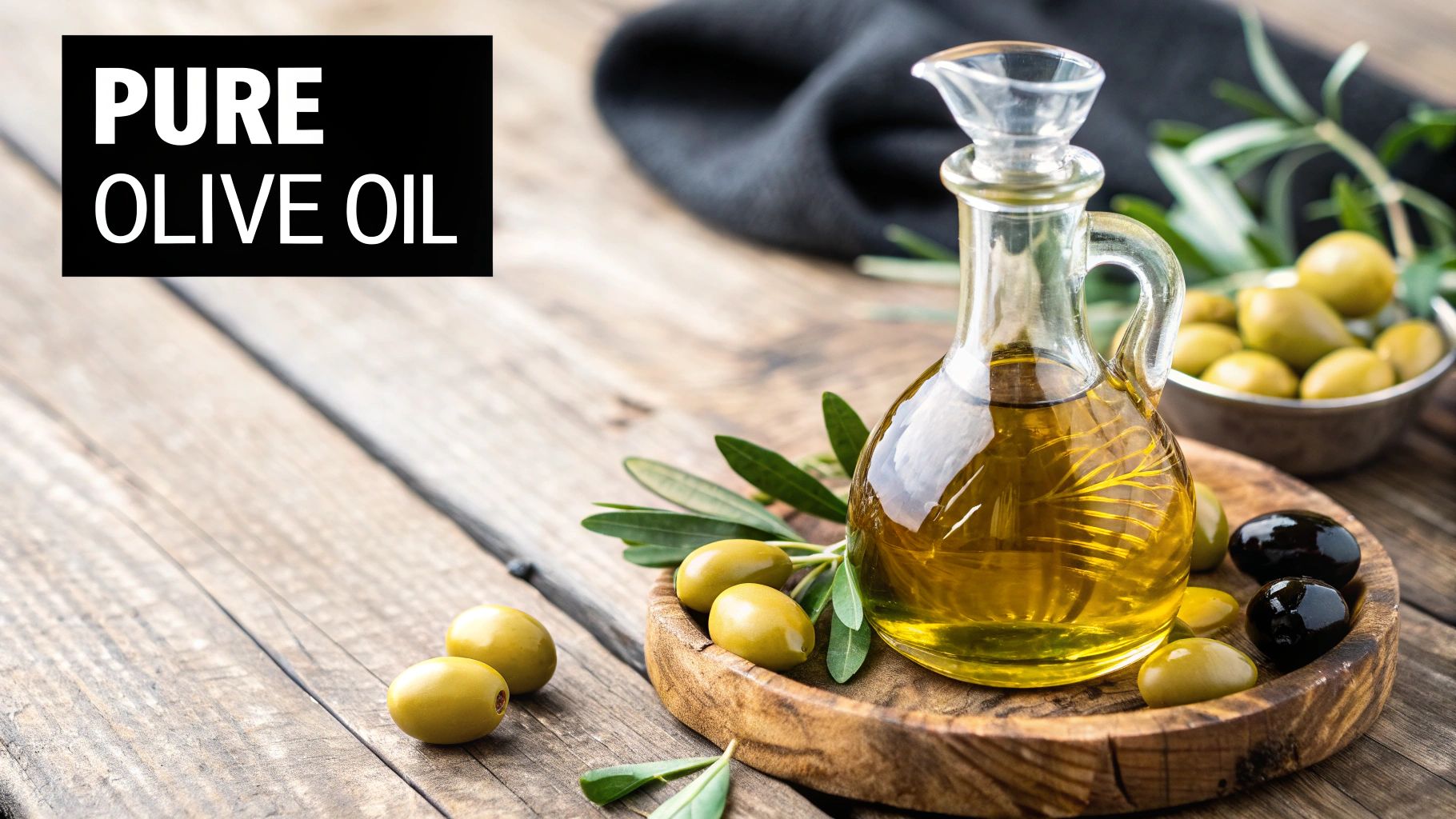
Before we dissect the science, let's talk about the experience. When you uncap a bottle of genuine EVOO, your senses are greeted by a fresh, often grassy or fruity aroma. When you taste it, you might feel a distinct peppery kick in the back of your throat. These aren't just quirks of flavor; they are the tell-tale signs of purity and profound quality.
The term ‘extra virgin’ is a pact between the producer and you. It is their guarantee that you are holding the absolute highest grade of olive oil—an unrefined treasure that stands as a testament to true craftsmanship.
This classification isn't just handed out. It's earned. It means the oil has triumphed over a series of stringent tests, a journey that begins in the sun-drenched olive grove and is perfected at the mill. This meticulous process is what draws a clear, bright line between authentic EVOO and the lesser oils cluttering the shelf. Discover the full story in the olive oil manufacturing process.
What Makes It the Highest Standard of All
So, what must an olive oil endure to earn the coveted "extra virgin" title? It comes down to a few non-negotiable benchmarks.
- Mechanically Extracted: The oil must be physically pressed from the olives. The use of chemical solvents is strictly forbidden.
- Low in Acidity: Its free fatty acid level must be below 0.8%. This isn't just a number; it's a crucial chemical marker that proves the olives were healthy, harvested with care, and milled without delay.
- Free of Defects: A trained sensory panel tastes every single oil. To pass, it must have zero flavor defects and instead showcase positive, fruity characteristics.
This isn’t just a label; it’s a standard of excellence. It signifies that the oil inside the bottle has preserved the olive's true soul, delivering the maximum flavor and health benefits nature intended.
Decoding the Standards That Define “Extra Virgin”
What truly makes an olive oil "extra virgin"? It's not just marketing fluff. It’s a hard-won grade, a seal of quality protected by a strict, two-part evaluation system recognized across the globe.
Think of it as a two-hurdle race. To even enter the competition, an oil must first pass a rigorous chemical analysis.
The Chemical Hurdle
This first test is a trial by numbers, a scorecard for the oil's health and freshness. The single most critical measurement is its free fatty acid (FFA) content.
To qualify as extra virgin, an oil's FFA level must be incredibly low—no more than 0.8%. Why does this matter? Because a low FFA is proof that the olives were healthy and handled with immense care, rushed to the mill right after being picked. A higher number whispers a story of bruised, overripe, or neglected fruit, where decay had already begun to set in.
The Sensory Hurdle
But perfect chemistry isn't enough. An oil can pass the lab test with flying colors and still fail to make the grade. This is where the second, and arguably more difficult, hurdle appears: a professional sensory tasting.
Here, a certified panel of experts tastes the oil, sniffing and sipping to hunt for even the slightest hint of a flavor defect. They are trained assassins of mediocrity, spotting negative attributes like rancidity, mustiness, or a winey-vinegary taste. For an oil to earn the "extra virgin" crown, it must have zero of these sensory defects.
An oil can have perfect chemistry, but if it fails the taste test, it can never be called extra virgin. This human element is the final, crucial gatekeeper of an oil's superior quality.
This dual-pronged approach is what breathes meaning into the "extra virgin" classification. It guarantees the oil was made only through mechanical means, meets strict chemical benchmarks for freshness, and delivers the flawless, fruity taste you expect.
It’s a comprehensive process that separates the magnificent from the mundane. You can dive deeper into this fascinating process in our ultimate guide to extra virgin olive oil certification.
How Extra Virgin Olive Oil Is Different From The Rest
To truly grasp what makes extra virgin olive oil special, you must meet the rest of its family. Picture a quality pyramid. Extra virgin olive oil (EVOO) sits alone at the peak—pure, unadulterated, and bursting with flavor. As you descend, the oils undergo more processing, which involves heat and, yes, often chemicals.
The chasm between them lies in how the oil is made. EVOO is, in essence, fresh fruit juice, created by simply crushing olives and extracting their oil. That’s it. Nothing is added, and nothing is taken away. Other grades, however, must be refined to be edible. And this isn't a gentle spa treatment; it’s an industrial process involving high heat and chemical solvents that strip the oil of everything that makes it unique.
What Refining Does to Olive Oil
When an oil is refined, it's changed forever. The process obliterates any defects, but it’s a scorched-earth policy: it also wipes out all the good stuff. Gone are the delicate aromas, the complex flavors, and those powerful antioxidant compounds called polyphenols.
What remains is a bland, neutral oil. This is precisely why you see such a dramatic price difference at the grocery store. You're not just paying for a fancy label; you're investing in a purity, flavor, and health-giving potential that are utterly lost in the refining process.
Extra virgin olive oil is the only grade that can truly be called a "fruit juice," extracted without industrial interference. Every other grade is a refined product, designed for neutrality rather than character.
The image below reveals the key factors that put EVOO in a class all by itself.
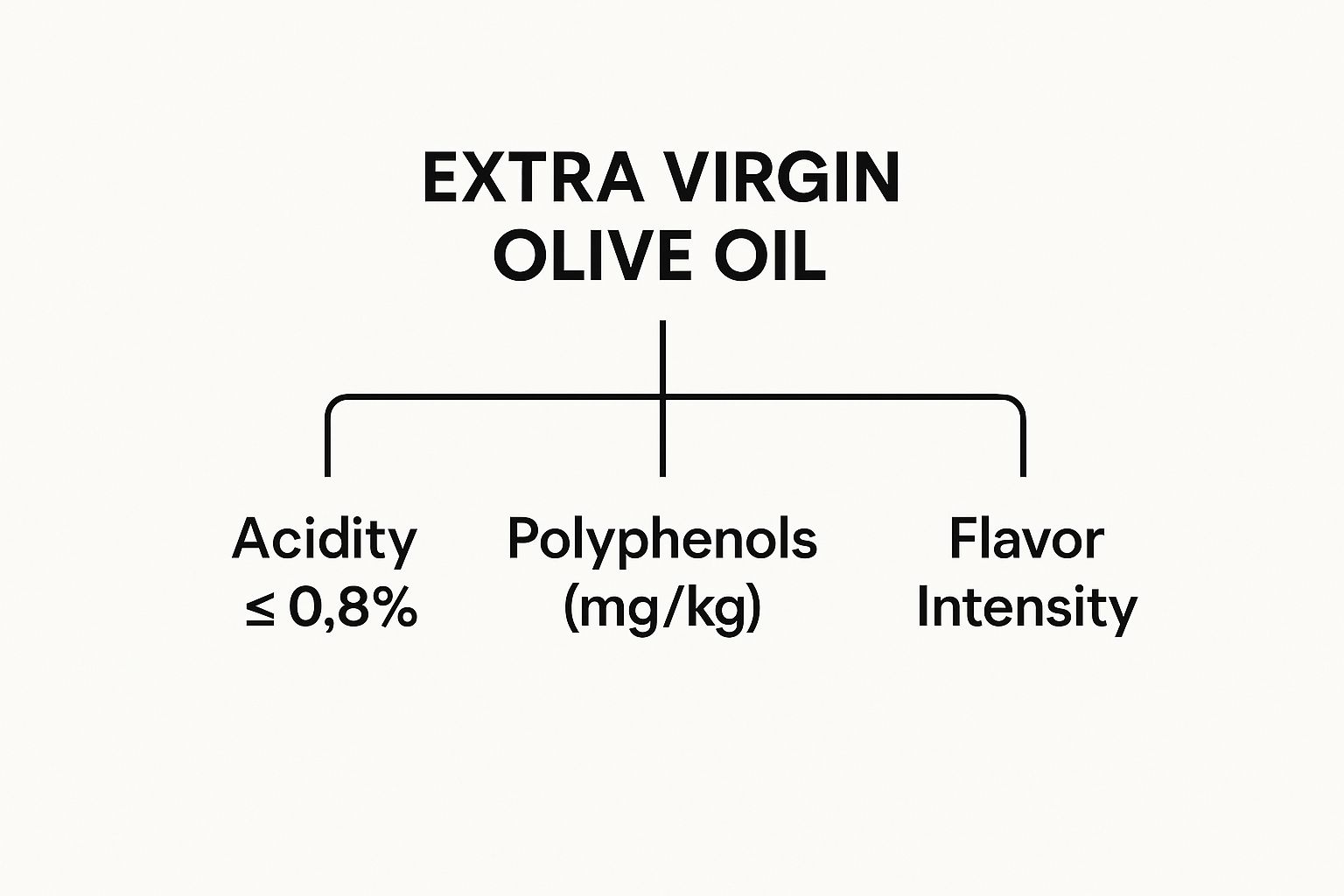
As you can see, lower acidity and higher polyphenol counts are the unmistakable signatures of a top-tier oil.
Olive Oil Grades At a Glance
To make it even clearer, here's a quick rundown of the different types of olive oil you'll find on the shelf.
| Grade | Extraction Method | Acidity Level | Flavor Profile |
|---|---|---|---|
| Extra Virgin | Cold-pressed, no chemicals | Below 0.8% | Fruity, peppery, flavorful |
| Virgin | Cold-pressed, no chemicals | Up to 2.0% | Milder, may have slight defects |
| "Pure" Olive Oil | Blend of refined & virgin | Over 2.0% (before refining) | Neutral, very little flavor |
| "Light" Olive Oil | Highly refined | Over 2.0% (before refining) | Almost flavorless |
This table shows a clear pattern: the more an oil is processed, the more its natural character and quality are diminished.
Meet the Other Olive Oil Grades
So, when you see those other labels in the store, here’s what you’re actually looking at:
-
Virgin Olive Oil: This is the next best thing. It’s also made without chemicals or heat, but it’s allowed a higher acidity level (up to 2.0%) and can have some minor flavor flaws. It’s good, but not quite perfect.
-
Olive Oil: You’ll often see this labeled as “Pure” or “Classic,” but don’t be fooled. This is a blend, typically a tiny bit of virgin olive oil mixed with a whole lot of refined olive oil.
-
Light Olive Oil: The word “light” here has nothing to do with calories—it only refers to the oil's light color and neutral flavor. It’s a highly refined product that’s often hard to tell apart from other basic cooking oils.
How to Spot a Truly Great EVOO on the Shelf
So, you understand what "extra virgin" is supposed to mean. The real test, however, comes when you're standing in the grocery aisle, facing a wall of bottles. How do you find one that actually lives up to its name?
Forget the beautiful labels and the poetic marketing fluff. The single most important piece of information you need is the harvest date. Think of olive oil as a fresh-pressed fruit juice, because that's exactly what it is. It's at its absolute peak right after it's made and begins a slow decline from there. An expiration date can be misleading, but the harvest date tells you precisely when the clock started ticking.
Reading the Clues on the Bottle
After you’ve zeroed in on a recent harvest date, examine the bottle itself. A producer who is serious about quality will go to extraordinary lengths to protect their oil from its two greatest enemies: light and heat.
Here’s what to look for:
- Dark Glass or Tins: Light is a killer. It causes olive oil to degrade, robbing it of its flavor and health benefits. Quality producers always use dark, opaque containers like tinted glass or metal tins to shield their product. Clear glass is a major red flag.
- Regional Certifications: Keep an eye out for official seals like PDO (Protected Designation of Origin) or PGI (Protected Geographical Indication). These aren't just fancy stickers; they are legally binding guarantees that the oil is from a specific place and was produced according to strict, high-quality standards.
And let's bust a common myth right now: color means nothing when it comes to quality. A deep green oil isn't inherently better than a golden one. In fact, professional tasters use special blue glasses to hide the color so it doesn't influence their judgment.
Unfortunately, the market is flooded with low-quality and even fraudulent products. It’s worth learning how to spot fake olive oil so you don't waste your money.
The most reliable signs of quality have nothing to do with poetic descriptions or a beautiful color. They are the hard facts: a recent harvest date, protective packaging, and a verifiable seal of origin.
Where Your Olive Oil Comes From (and What It Costs)
Ever wonder why one bottle of real EVOO costs just a few dollars, while the one next to it commands a much higher price? The answer isn't just about what's inside the bottle; it's about the incredible journey that oil took to get to your shelf.
This liquid gold is a truly global commodity. Its price is a direct reflection of a delicate dance between ancient farming traditions and modern market forces.
A sudden drought in Spain or an unexpected frost in Italy can send shockwaves through the market, affecting prices in kitchens thousands of miles away. These Mediterranean giants are the heart of the industry, and what happens in their groves—good or bad—sets the tone for supply and cost worldwide.
The Global Marketplace for Olive Oil
But the story doesn't end with the weather. International trade and what we, the consumers, choose to buy add another fascinating layer.
Take the United States, for example. As the world's largest importer of olive oil, American demand wields enormous power. With over 95% of its supply shipped in from other countries, U.S. buying habits can make or break a producer's year.
For instance, between October 2024 and February 2025, U.S. import volumes actually grew by 4.7%, even as average prices dipped. Yet through it all, extra virgin olive oil held its ground with a consistently higher price tag, underscoring its premium status. For a deeper look, check out the May 2025 olive oil market report.
This isn’t just a simple transaction; it’s a reflection of agricultural reality. The price on the sticker accounts for the farmer's hard work, the risk of a bad harvest, and the immense logistical effort to transport this precious cargo.
When you understand these forces, your perspective shifts. It’s no longer just a simple pantry staple. It’s a product of immense effort, shaped by both nature and economics. Appreciating this journey helps you better understand the true origin of olive oil and the real value it brings to your table.
Common Questions About Extra Virgin Olive Oil
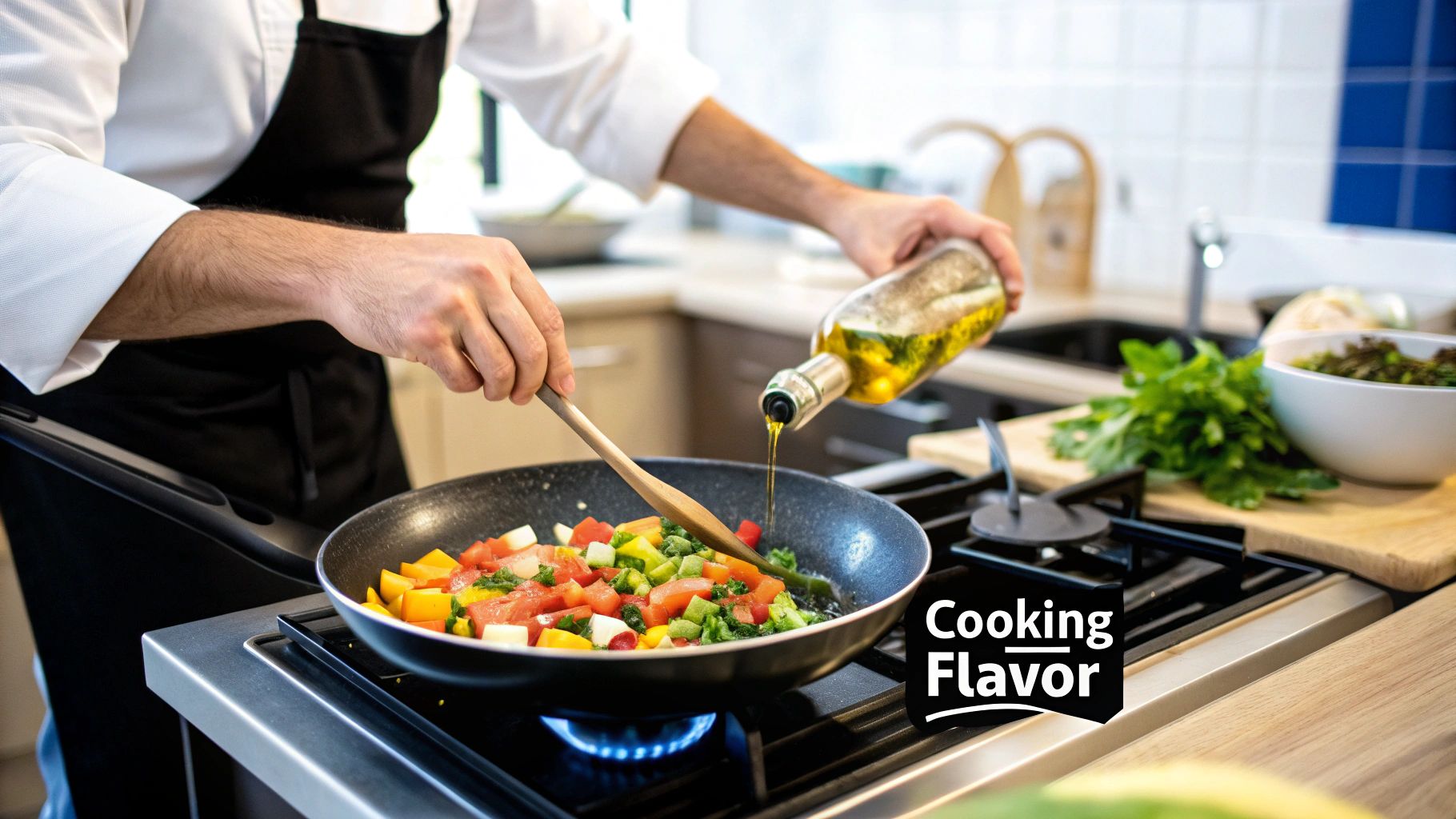
Even after you understand the official standards, a few stubborn myths about extra virgin olive oil always seem to surface. It’s time to set the record straight.
Getting these details right is the final piece of the puzzle. It’s what helps you move from just buying olive oil to truly understanding and appreciating it, ensuring you get every drop of value from your bottle.
Can You Actually Cook with Extra Virgin Olive Oil?
This is perhaps the most persistent myth of all, and the answer is an emphatic yes. The old wives' tale that you can't heat EVOO is simply not true.
A high-quality extra virgin olive oil has a smoke point somewhere between 375-410°F (190-210°C). That’s more than high enough for most home cooking, from sautéing greens to pan-searing a piece of fish. Its stability comes from its incredibly low free fatty acid content and a high concentration of antioxidants, which shield the oil from breaking down under heat.
So go ahead, cook with it. You're not only adding incredible flavor but also transferring many of the compounds responsible for the well-known extra virgin olive oil benefits directly into your food.
What Is the Best Way to Store Olive Oil?
If you want to remember how to store your oil, just think: cool, dark, and sealed. The three greatest enemies of fresh olive oil are heat, light, and air. Each one works tirelessly to degrade the oil, ruining its beautiful flavors and healthful properties.
To keep your oil in peak condition, follow these simple rules:
- Keep it in a pantry or cupboard. Never store it right next to the stove where it gets blasted with heat.
- Only buy oil in dark glass bottles or tins. This is your first and most powerful defense against light damage.
- Always screw the cap on tight. This keeps oxygen out, preventing the oxidation that turns oil rancid.
Once a bottle is open, try to use it within 3-4 months. This guarantees you're enjoying it at its peak freshness and flavor—exactly as the producer intended.
Does 'Cold Pressed' Guarantee It Is Extra Virgin?
Not on its own, no. But it is a critical piece of the puzzle.
By definition, all extra virgin olive oil must be 'cold pressed' or 'cold extracted.' This simply means the olives were crushed and the oil was extracted mechanically at a temperature below 80.6°F (27°C). This gentle process protects all the delicate, healthy compounds in the oil.
However, being cold-pressed is just the first step. That oil still has to pass the two other major tests: a full chemical analysis and a sensory tasting by a trained panel to prove it has zero flavor defects. Think of 'cold-pressed' as the entry ticket to the competition—it gets you in the door, but it doesn't guarantee you'll win the prize.
At Learn Olive Oil, we believe that understanding the story behind your food makes it taste even better. From the groves to your table, our mission is to make the world of high-quality olive oil simple, enjoyable, and rewarding. https://learnoliveoil.com

 Learn Olive Oil
Leave a comment