Walk down any grocery store aisle, and you're met with a wall of olive oils, all vying for your attention. But one phrase stands above the rest, a quiet promise of quality: extra virgin cold pressed organic olive oil. This isn't just a fancy label; it's a declaration of purity, a signal of an oil teeming with flavor and profound nutritional benefits.
This is an oil crafted without the violence of heat or chemicals. What you get in the bottle is as close to the living fruit as possible. This meticulous, almost reverent process is what safeguards the delicate antioxidants and healthy fats that make a premium olive oil a true agricultural treasure.
What Makes Olive Oil Truly Exceptional?
To truly appreciate a world-class olive oil, you must first learn to speak its language. The phrase "extra virgin cold pressed organic" is not marketing fluff—it is a four-part promise of quality, a story told in every single drop.
Each of these terms reveals a critical step in the oil's journey, from the ancient grove to your kitchen table. Think of them as credentials, building upon each other to create a product of unimpeachable integrity. Let’s pull back the curtain and discover what’s really behind this prestigious title.
When you scan a bottle, these four terms are your guide to quality. Each one tells you something specific about how the oil was made and what you can expect from it.
Decoding Your Olive Oil Label
| Term | What It Guarantees |
|---|---|
| Extra Virgin | The highest grade. This means extremely low acidity, zero flavor defects, and a fresh, fruity taste profile confirmed by expert tasters. |
| Cold Pressed | A gentle, mechanical extraction method. No heat is used, which preserves the oil’s delicate flavors, aromas, and powerful antioxidants. |
| Organic | The olives were grown without synthetic pesticides or fertilizers. It reflects a commitment to natural farming and a healthier ecosystem. |
Understanding these terms empowers you to choose a product that delivers on its promises of purity, health, and exceptional taste.
The Promise of Extra Virgin Purity
The term extra virgin is the highest grade an olive oil can achieve. It is a guarantee of both chemical purity and sensory perfection. To earn this coveted title, the oil must have an acidity level below 0.8%. This is a key chemical marker that tells you the olives were fresh and handled with extreme care from harvest to press.
But it isn't just about the numbers. The oil must also pass a rigorous taste test by a certified panel of experts, proving it has absolutely zero flavor defects and a noticeable, pleasant fruitiness. You can dive deeper into the full meaning of extra virgin olive oil to become a pro at spotting the real deal.
The Gentle Art of Cold Pressing
Next up is cold pressed. This describes how the oil was extracted—a gentle, purely mechanical process that avoids heat and chemical solvents entirely. Many industrial producers use high temperatures to wring more oil out of the olives, but that heat destroys the very nutrients and flavor compounds that make olive oil so good for you.
Cold pressing is the secret to preserving the oil's vibrant, peppery taste and its wealth of polyphenols—powerful antioxidants responsible for many of its health benefits. It's the difference between a mass-produced commodity and a handcrafted agricultural treasure.
This gentle crushing preserves the oil's integrity, ensuring it retains the full spectrum of vitamins and antioxidants that nature packed into the olive. It’s a classic case of tradition and quality winning out over speed and quantity.
The Organic Commitment to Nature
Finally, the organic certification tells you about how the olives were grown. It is your assurance that the fruit was cultivated completely free of synthetic pesticides, herbicides, or fertilizers. But this is about more than just keeping unwanted chemicals out of your food.
Organic farming is a holistic approach to agriculture that focuses on the health of the entire ecosystem. It’s all about:
- Building healthy soil: Farmers use natural techniques like composting to enrich the earth.
- Promoting biodiversity: Organic groves are thriving, living environments, not sterile monocultures.
- Sustainable practices: Water conservation and natural pest control are fundamental principles.
This commitment to natural farming is catching on. The global olive oil market is expected to grow from $20.3 billion in 2025 to $30.6 billion by 2032, largely because more people are seeking out the health benefits of high-quality, pure olive oils.
By understanding these key pillars—extra virgin, cold pressed, and organic—you're no longer just a shopper. You're a connoisseur.
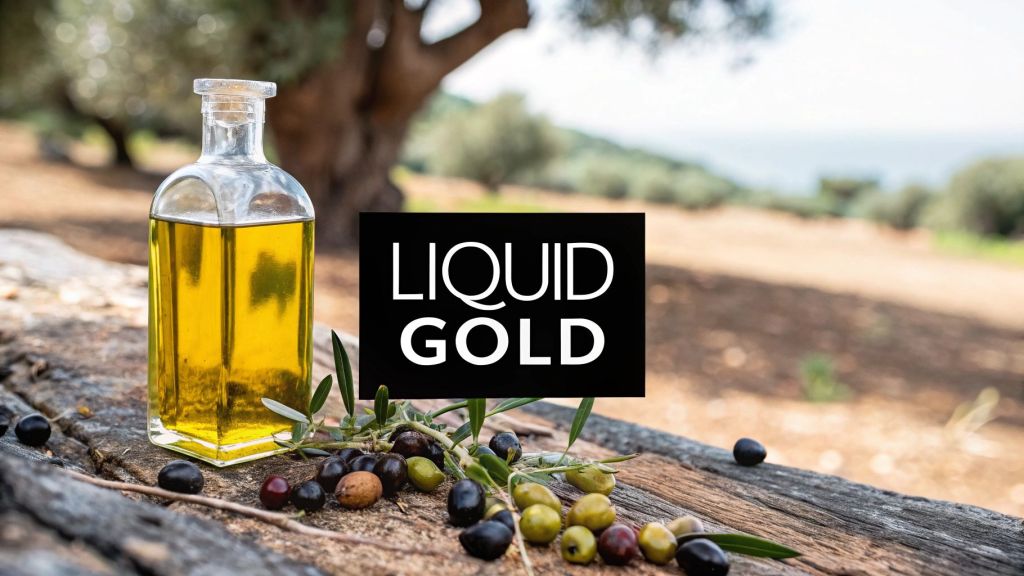
The Journey from Ancient Grove to Liquid Gold
Imagine walking through a sun-drenched grove where ancient, gnarled olive trees have stood for centuries, their silver-green leaves shimmering in the breeze. This is where the story of a truly exceptional extra virgin cold pressed organic olive oil begins. It’s a process rooted in patience, precision, and a profound respect for nature.
This journey from a humble fruit to the liquid gold in your bottle is not a race. It is a meticulous art form, where every decision—from the moment an olive is picked to the way it is pressed—shapes the final flavor, aroma, and nutritional power of the oil.
The Critical Moment of Harvest
The entire process hinges on one crucial factor: timing. Olives are not simply harvested when it’s convenient; they are picked at the precise moment of veraison, the point when the fruit begins to change color from green to a deep, dusky purple.
Harvesting too early results in a bitterly sharp oil, while waiting too long yields a bland, greasy product lacking in character and antioxidants. The perfect window is fleeting. Skilled growers walk their groves daily, watching for that exact moment when the olives possess the perfect balance of robust flavor and peak nutritional content.
Once that moment arrives, the harvest begins, often by hand. This gentle handling prevents bruising, which can trigger oxidation and increase acidity—the enemies of extra virgin quality. The olives are rushed from the grove to the mill, often within hours, to capture their fleeting freshness.
The Art of the First Cold Press
Inside the mill, the magic truly happens. The term cold pressed refers to a traditional, purely mechanical method of extraction that is deceptively simple yet profoundly important. There are no chemical solvents and, critically, no heat.
The process follows a careful sequence:
- Cleaning and Crushing: The olives are first washed and then crushed—pits and all—into a thick, fragrant paste.
- Malaxation: This paste is slowly stirred in a process called malaxation. This allows the smaller oil droplets to clump together, making them easier to extract.
- Extraction: The paste is then pressed, using immense mechanical pressure to gently squeeze the oil from the fruit pulp.
The oil that flows from this initial pressing is known as the 'first press'—the purest and most flavorful expression of the olive. This gentle, temperature-controlled method is the only way to preserve the delicate polyphenols and antioxidants that give premium olive oil its signature peppery finish and powerful health benefits.
This painstaking process yields far less oil than industrial methods that use heat, but the quality is incomparable. If you are curious about the mechanics, you can learn more about how olive oil is made and the steps that define its quality.
From Mill to Bottle: The Final Steps
After pressing, the oil is not yet ready. It contains tiny particles of olive fruit and water that must be removed. The oil is typically stored in large stainless steel tanks in a cool, dark environment, allowing these solids to settle naturally.
This resting period is crucial for clarifying the oil and developing its complex flavors. Finally, the clear, vibrant oil is bottled, often in dark glass to protect it from light, its final enemy.
This entire journey, from the ancient grove to the sealed bottle, is a testament to agricultural artistry. A genuine extra virgin cold pressed organic olive oil is not merely a product; it’s the carefully preserved essence of the sun, the soil, and the fruit itself. It's a taste of tradition, captured in every single drop.
Unlocking the Potent Health Benefits of Real Olive Oil
For thousands of years, Mediterranean cultures have done more than just cook with olive oil. They've used it for healing, for ceremony, and have long considered it a source of life itself. This wasn't just folklore; it was ancient wisdom. Now, modern science is finally catching up, proving the profound truth inside every golden drop.
When you bring home a bottle of genuine extra virgin cold pressed organic olive oil, you’re getting far more than a simple cooking ingredient. You're investing in a powerful natural elixir, packed with compounds that can genuinely support your long-term health and well-being.
The journey from the olive grove to your kitchen is a simple one, and that's the point. The quality of the final product hinges on preserving the natural goodness of the fruit.
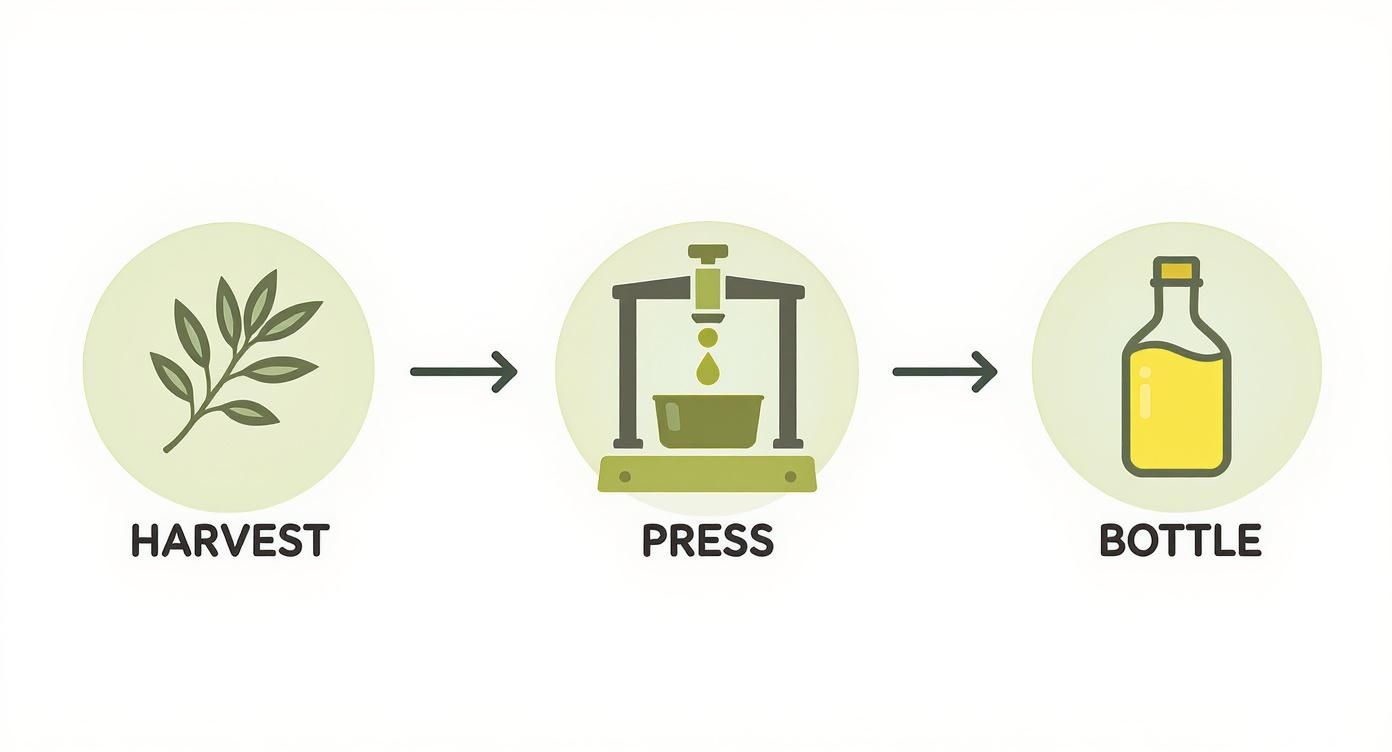
This direct path, free from harsh chemicals and high heat, is exactly what locks in the oil’s powerful health benefits.
The Heart of the Matter: Oleic Acid
At the very core of olive oil's magic is oleic acid, a fantastic monounsaturated fat that can make up to 73% of the oil's total content. You can think of it as the main "good fat" and the primary building block that gives olive oil its celebrated health-giving properties.
Oleic acid isn't just a passive component, either. It actively works to reduce inflammation in the body. Perhaps most importantly, it’s a champion for cardiovascular health, helping to maintain healthy cholesterol levels, which is a key part of keeping your heart strong. This is one of the fundamental reasons real olive oil stands leagues apart from highly refined seed oils.
The Antioxidant Powerhouse Within
Beyond its healthy fats, real olive oil is brimming with bioactive compounds, especially a group of powerful antioxidants called polyphenols. These are the unsung heroes that give a high-quality oil its characteristic peppery kick and slightly bitter finish—the very cues that tell you you're getting the good stuff.
One of the most fascinating of these compounds is oleocanthal. In a stunning display of nature's power, it functions in the body in a way that’s remarkably similar to a low dose of ibuprofen, providing natural anti-inflammatory effects without the synthetic ingredients.
This is a bigger deal than it might sound. We now know that chronic, low-grade inflammation is a major culprit behind many modern diseases. By incorporating an olive oil rich in these natural anti-inflammatory compounds into your daily diet, you're essentially creating a protective shield inside your body, helping to calm those internal fires before they get out of hand. If you're curious about the specifics, you can learn more about the science of olive oil phenols and what they do for our health.
A Shield Against Oxidative Stress
Every single day, our bodies are bombarded by unstable molecules called free radicals. This creates cellular damage, a process known as oxidative stress, which is linked to everything from premature aging to chronic illness.
The potent antioxidants found in extra virgin cold pressed organic olive oil are your frontline defense. They work around the clock to neutralize these damaging free radicals, safeguarding your cells. This has profound implications for your whole body:
- Brain Health: The brain is especially susceptible to oxidative damage. The compounds in EVOO help protect brain cells, which in turn supports cognitive function and memory.
- Cellular Integrity: By defending your DNA and cell membranes, these antioxidants help your entire body function as it should.
Making this liquid gold a part of your daily routine is one of the easiest—and most delicious—ways to build a more resilient you. It isn't some fleeting health trend; it's a return to a time-tested source of vitality, now fully backed by science and enjoyed for generations.
How to Spot an Authentic Bottle and Avoid Imposters
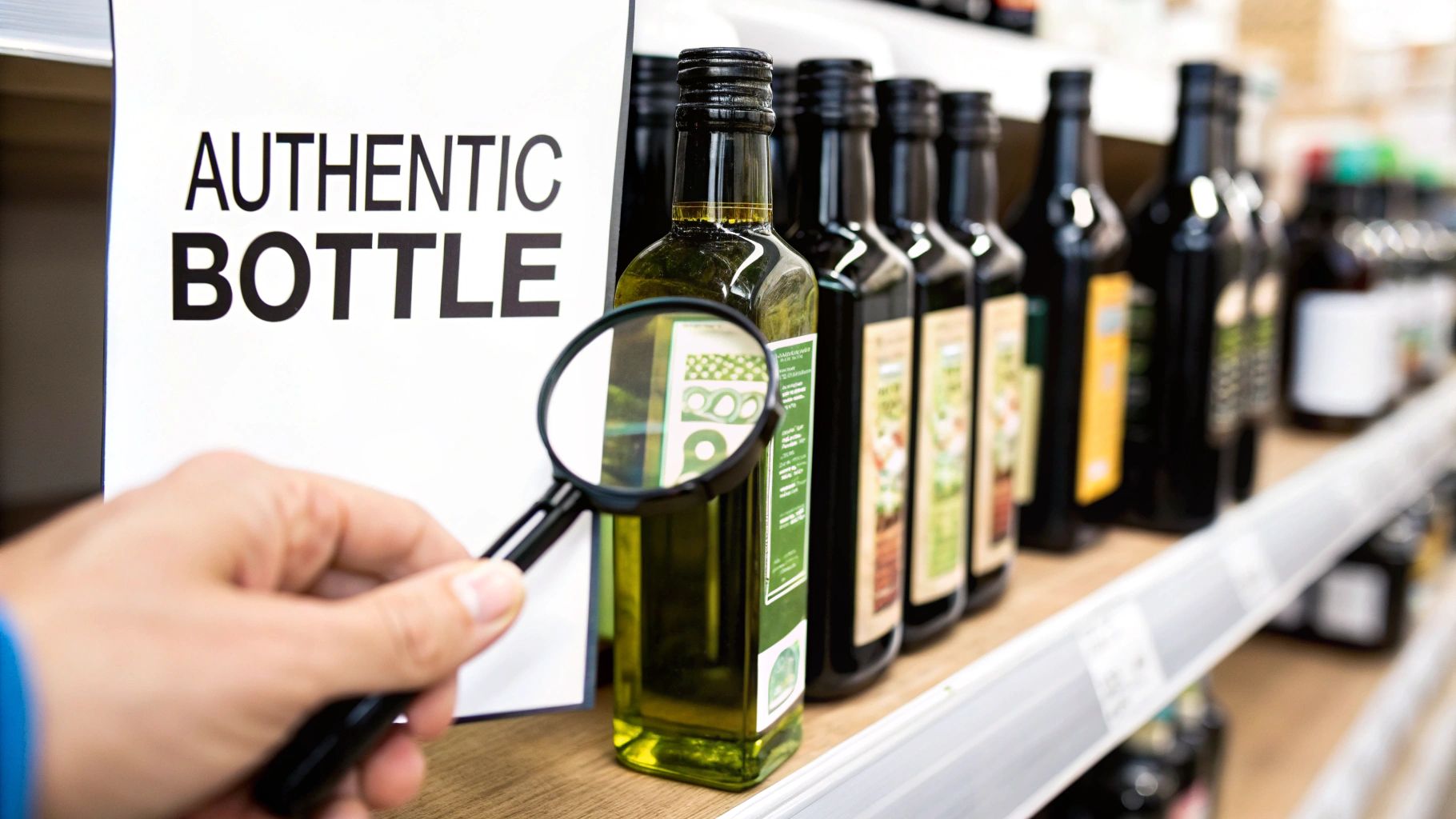
Walking down the olive oil aisle can be overwhelming. You're faced with a wall of beautiful bottles, all claiming to be the best. But here’s a little secret from someone who's spent years in this world: much of what you see isn't the real deal.
The good news? You don’t need to be a professional taster to find a genuinely great olive oil. With a few key pointers, you can learn to see through the marketing fluff and pick a bottle with confidence. The truth is almost always printed right on the label—if you just know what to look for.
Read the Label Like a Producer
Forget the flashy front label; that's just advertising. The real story is on the back. This is where you'll find the details that separate a true extra virgin cold pressed organic olive oil from a cheap imitation.
Your first and most important mission is to find the harvest date.
Think of olive oil as fresh-squeezed fruit juice. Unlike wine, it does not get better with age. It starts to lose its vibrant flavor and health benefits from the moment it’s pressed. A specific harvest date, like "Fall 2024," shows that the producer is proud of their oil's freshness. If you only see a "best by" date, be wary. That date can be set up to two years after bottling, telling you nothing about when the olives were actually picked.
Next, check the country of origin. Vague phrases like "Product of the Mediterranean" are a major red flag. A quality producer will proudly state the specific country—and often the very region or estate—where the olives were grown and milled.
This specificity matters. For example, recent forecasts show that six key countries are expected to produce a combined 2.65 million metric tons. Spain is set to lead with around 1.37 million tons, while Italy anticipates a 30% annual increase to 300,000 tons because of good summer rains. You can read the full forecast on global olive oil production to see how these global shifts affect the oil in your bottle.
Trust in Official Certifications
Seals and certifications are your allies in the aisle. They're proof that a third party has verified the oil's quality and origin, something a producer has to work hard to earn.
Keep an eye out for these key seals:
- PDO (Protected Designation of Origin): This is the gold standard. It guarantees the olives were grown, milled, and bottled in one specific geographical area using traditional methods.
- PGI (Protected Geographical Indication): This seal certifies that at least one major step of the production process happened in a specific region.
- Organic Seal: For anyone seeking a pure product, this is non-negotiable. It confirms the olives were grown without any synthetic pesticides or fertilizers.
These seals aren't just fancy stickers; they are legally binding promises of provenance and quality. They provide a level of transparency that helps you cut through the marketing noise and make a confident choice.
Look for Protective Packaging and a Fair Price
Pay attention to the bottle itself. Light is one of olive oil's worst enemies, causing it to go rancid quickly. A producer who cares about their product will almost always package it in a dark, opaque glass bottle or a tin to shield it from light. If you see EVOO in a clear bottle (plastic or glass), just leave it on the shelf.
Finally, if the price seems too good to be true, it probably is. Making real, high-quality extra virgin cold pressed organic olive oil is an expensive, labor-intensive process. A rock-bottom price is a strong hint that corners were cut, or worse, that the oil has been diluted with cheap seed oils. To learn more about these shady tactics, see our guide on how to spot fake olive oil.
With this knowledge, you're no longer just a shopper—you're an informed buyer. The table below provides a quick checklist to help you on your next trip to the store.
Authentic EVOO Checklist
This quick-reference table summarizes the key signs of a high-quality, authentic olive oil versus a likely low-quality or fake product. Use it as your guide in the grocery aisle.
| Quality Indicator | What to Look For | Warning Signs to Avoid |
|---|---|---|
| Date Information | A specific Harvest Date (e.g., "Fall 2024") | Only a "Best By" or "Use By" date |
| Origin | Specific country, region, or estate listed | Vague terms like "Product of Mediterranean" or "Packed in Italy" |
| Certifications | Official seals like PDO, PGI, or a certified Organic logo | No third-party certifications or unfamiliar, meaningless seals |
| Packaging | Dark, opaque glass bottle or a tin container | Clear glass or plastic bottles that expose the oil to light |
| Price Point | A price that reflects the quality and labor involved | An unusually low price that seems too good to be true |
| Acidity Level | Stated acidity level, ideally under 0.5% (often <0.3%) | No mention of acidity, or a level close to the 0.8% legal limit |
By keeping these points in mind, you can confidently navigate the shelves, bypass the imposters, and bring home the real, delicious, and healthful liquid gold you and your family deserve.
Proper Storage to Preserve Flavor and Freshness
So, you’ve brought home a beautiful bottle of extra virgin cold pressed organic olive oil. That's the first step. The next, and just as important, is protecting it. This isn't just another cooking oil that can sit out indefinitely; think of it as fresh fruit juice, with delicate flavors and aromas that can disappear if you're not careful.
Fresh olive oil has three mortal enemies: heat, light, and air. Let any of these get to your oil, and you'll quickly ruin the very things that make it special—that peppery finish, the bright, fruity notes, and all those fantastic health benefits. Proper storage isn't just a good idea; it's absolutely essential.
The Three Enemies of Olive Oil
That convenient spot right next to your stove? It might seem like a good idea, but it's probably the worst place in your kitchen for olive oil. The constant heat from cooking will rapidly break down the oil, turning its complex, wonderful flavor into something flat and uninspired.
Light is just as bad. It kicks off a process called photo-oxidation, which basically puts the oil on the fast track to becoming rancid. This is precisely why good producers use dark, opaque bottles. They aren't just for looks—they're a suit of armor against light damage.
And then there's oxygen, the silent thief. Every time you open the bottle, air rushes in and starts the oxidation process. That's why you have to be vigilant about screwing that cap back on tightly, every single time. A loose cap is like leaving the door wide open for freshness to escape.
Best Practices for Preserving Your Oil
Keeping your oil in peak condition from the first drizzle to the last drop doesn't require any fancy equipment, just a few simple habits. Sticking to these will protect your investment and make sure you enjoy every last bit of it.
- Find a Cool, Dark Home: Your best bet is a dark pantry or cupboard, far away from the oven and out of direct sunlight. You're aiming for a stable, cool temperature. Resist the urge to refrigerate it, though, as this can create condensation and mess with the oil's texture.
- Keep It Sealed Tight: Get into the habit of twisting the cap on securely the second you’re done pouring. This simple act drastically cuts down the oil's exposure to oxygen.
- Buy the Right Size: It can be tempting to grab that giant, cost-effective tin, but unless you're running a restaurant, a smaller bottle is usually the smarter choice. Once opened, you should aim to use a bottle of olive oil within 30 to 60 days.
Remember, olive oil is not like wine; it does not improve with age. Freshness is paramount. Always look for a harvest date on the bottle to ensure you're buying the most recent press available.
The global demand for high-quality olive oil really drives home its value. European exports, of which a massive 74.6% are extra virgin, are booming, especially in places like China, which saw an 86.2% increase in imports. You can discover more insights about the global olive oil market and see just how much freshness matters on the world stage.
For an even deeper dive into keeping your oil perfect, be sure to read our complete guide on perfect olive oil storage.
How to Use Premium Olive Oil in Your Kitchen
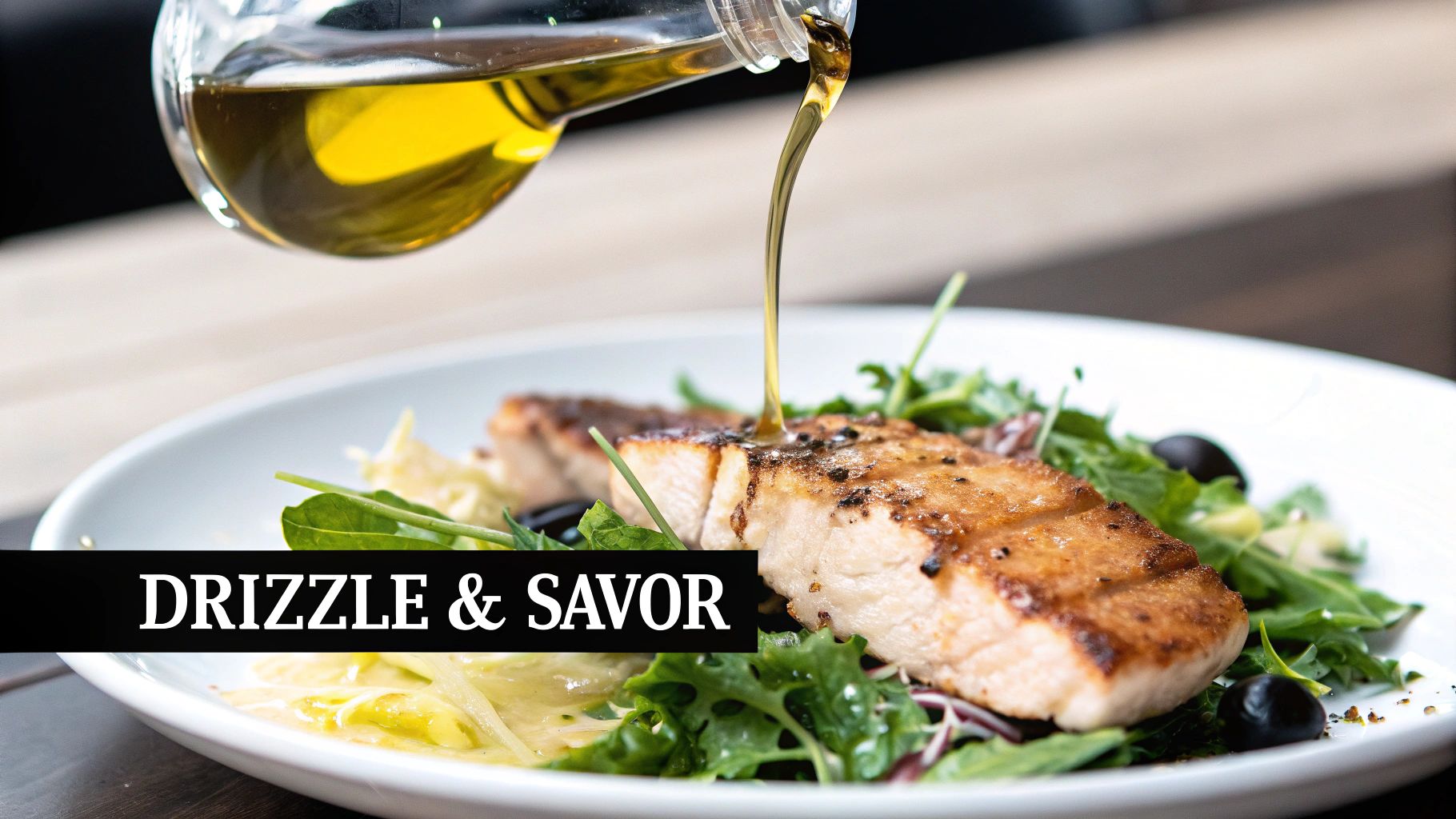
It’s time to think beyond the salad bowl. If you've only been using that beautiful bottle of extra virgin cold pressed organic olive oil for dressings, you are missing out on some serious culinary magic. This liquid gold is one of the most versatile ingredients in your pantry, capable of elevating the simplest meal into something truly special.
Lots of folks have been told that you can't cook with high-quality EVOO because of a supposedly low smoke point. Let's put that myth to rest, once and for all. A true extra virgin olive oil has a smoke point that sits comfortably between 380°F and 410°F. That’s plenty high for most of the cooking you do every day.
The secret is learning how to use it right—not just as another cooking fat, but as a genuine flavor enhancer.
Cooking with Confidence
When you cook with real extra virgin olive oil, you’re doing more than just greasing a pan; you’re infusing your food with character. The peppery, robust notes of a great oil add an incredible depth to all sorts of dishes, and they hold up beautifully to heat without ever becoming overpowering.
Here are a few ways to start cooking with it:
- Sautéing and Pan-Frying: Gently sautéing aromatics like garlic and onions or greens like kale in a good EVOO is a total game-changer. The oil lends a subtle fruitiness that you just don’t get from bland, neutral oils.
- Roasting: Before they hit the oven, try tossing vegetables like potatoes, broccoli, or asparagus with a generous coat of olive oil and a sprinkle of salt. Roasting around 380°F gives them a perfectly crisp outside and a tender, flavorful inside.
- Baking: Believe it or not, you can even swap it in for butter or other oils in certain baked goods. An olive oil cake, for instance, is unbelievably moist and has a sophisticated, complex flavor that's hard to beat.
The Art of the Finishing Drizzle
One of the best ways to experience your premium olive oil is as a finishing touch. This is where its raw, unheated flavor really gets to shine. A final drizzle just before you serve a dish adds a burst of freshness, a luxurious texture, and an aroma that wakes everything up.
Think of a finishing oil not just as an ingredient, but as a condiment—the final flourish that ties the whole dish together. A generous pour can transform the mundane into the magnificent.
Try a finishing drizzle in a few of these unexpected places:
- Over a perfectly grilled steak or piece of fish for a grassy, peppery kick.
- Swirled into a bowl of hearty soup or a creamy bean stew right before serving.
- Drizzled over a scoop of good vanilla ice cream, finished with a little sprinkle of flaky sea salt.
- On top of avocado toast or even just a simple plate of fresh, sliced tomatoes.
Simple Pairings to Get You Started
The best way to learn is to just start experimenting. Different olive oils have different personalities—some are mild and buttery, others are bold and spicy. You can find inspiration year-round by growing your own fresh edible indoor plants for cooking to pair with your favorite oils.
Your premium extra virgin cold pressed organic olive oil is so much more than a pantry staple. It's an invitation to get creative in the kitchen and turn every meal into a small celebration of flavor. So don't save it for a special occasion—use it generously, use it often, and taste the incredible difference for yourself.
Clearing Up Common Questions About Olive Oil
Diving into the world of high-quality olive oil can feel a little overwhelming at first. Even after you've learned the basics, a few stubborn questions always seem to pop up. Let's tackle these head-on with some straight, simple answers.
Getting these details right is like finding the final pieces of a puzzle. It's what turns you from someone who just buys olive oil into someone who truly understands it.
Can I Really Cook with EVOO?
Yes, you absolutely can! This is probably the biggest myth we hear. A high-quality extra virgin cold pressed organic olive oil actually has a smoke point somewhere between 380°F and 410°F. That’s more than high enough for everyday cooking like sautéing and roasting.
The trick is simply to use moderate heat. This not only protects the oil's incredible flavor but also keeps its powerful antioxidants intact. So, go ahead and roast your vegetables or pan-sear that fish with confidence.
Does "Light" Olive Oil Have Fewer Calories?
Not at all. This is a classic marketing gimmick. When you see "Light" or "Extra Light" on a bottle, it’s only talking about the oil's pale color and mild flavor—it has nothing to do with calories. All olive oils, no matter the type, have about 120 calories per tablespoon.
The truth is, these "light" oils are heavily refined. That process strips away their color, flavor, and—most importantly—all the healthy polyphenols. They aren't a healthier option and they completely lack the beautiful character of a true extra virgin olive oil.
Should Olive Oil Be Refrigerated?
It's better if you don't. While popping it in the fridge won't ruin it, the cold temperature will make the oil solidify and look cloudy. When you take it out and it returns to room temperature, this cycle can cause condensation inside the bottle, which can slowly degrade the oil's quality.
The best place for your olive oil is a cool, dark cupboard. That's the perfect environment to keep it fresh and flavorful.
Here at Learn Olive Oil, we believe that understanding this liquid gold makes every meal better. Explore our expert guides and tasting notes to continue your journey. Discover the World of Premium Olive Oil today at https://learnoliveoil.com.


Leave a comment