Let's talk about one of the biggest—and most stubborn—lies in the cooking world.
You've heard it a thousand times: "Never cook with olive oil over high heat!" It's advice passed down from generation to generation, repeated in kitchens and on cooking shows until it’s treated as gospel truth.
But what if this "truth" is costing you flavor? What if it's forcing you to use bland, inferior oils for the most important cooking tasks, like searing a perfect steak or stir-frying crisp vegetables?
The fact is, a high smoke point olive oil isn't just a myth—it's your secret weapon for incredible high-heat cooking. And it's time you learned how to use it. This isn't about recklessly tossing your most expensive finishing oil into a screaming-hot pan. It's about a much simpler, more powerful idea: picking the right tool for the job.
Unlocking the Truth About Cooking with Olive Oil
For years, the story has been the same. Olive oil is precious. Delicate. It belongs on a finished dish of pasta or beside a warm loaf of bread for dipping. To subject it to the intense heat of a searing pan was considered a culinary sin—a crime that would fill your kitchen with acrid smoke and ruin your dinner.
This single piece of misinformation has steered millions of home cooks away from olive oil and towards lesser, often flavorless, oils for searing, sautéing, and roasting. But what if the story we've all been told is missing the most important chapter? What if the problem was never the olive oil itself, but our incomplete understanding of it?
The Two Faces of Olive Oil
Here’s the secret the professionals have known all along: not all olive oils are created equal. The critical difference between an oil that smokes up your kitchen and one that delivers a flawless sear comes down to a single, powerful factor: refinement.
The smoke point of an olive oil isn't fixed; it varies dramatically based on how it was processed. A highly refined olive oil, for instance, can boast a smoke point soaring as high as 465°F (242°C). This transforms it into an absolute powerhouse, ready to tackle any high-heat task you throw at it.
That one distinction changes everything. It means you no longer have to sacrifice the rich, satisfying character of olive oil just because you need to turn up the heat.
The notion that you can't cook with olive oil is one of the most persistent myths in the culinary world. The reality is, the right olive oil is a true kitchen champion, fully capable of giving you a magnificent sear without setting off every smoke alarm in a five-mile radius.
When you select an olive oil with a high smoke point, you aren't making a compromise. You’re simply adding an incredibly versatile player to your culinary team. This is the secret behind how great chefs:
- Achieve that perfect, golden-brown crust on meats and vegetables.
- Flash-fry ingredients in a wok without a trace of bitter, burnt flavor.
- Keep their oil stable, pure, and delicious even as the temperature climbs.
This isn't about abandoning your beloved extra virgin olive oil. It’s about recognizing that its rightful place is for finishing, not frying. To uncover more common falsehoods, you can explore some of the most prominent olive oil myths. It's finally time to let olive oil claim its rightful place as the undisputed, all-around star of your kitchen.
Why a Smoke Point Can Make or Break Your Meal
Imagine an oil's smoke point as its line in the sand. It's the precise temperature where a cooking fat transforms from a stable, effective ally into an enemy of your meal. Cross that invisible threshold, and the oil doesn't just start to smoke—it begins to chemically disintegrate before your eyes.
When you push an oil past its limit, its healthy fats start to decompose. This catastrophic breakdown unleashes a flood of undesirable elements, including free radicals, and forges a nasty compound called acrolein. That's the chemical culprit responsible for the acrid, burnt taste that can sabotage an otherwise perfect dish.
So, respecting the smoke point isn't just about avoiding a cloudy kitchen. It's about defending the flavor, integrity, and health of your food. Every great cook knows that temperature control is the foundation of delicious results, and your oil is the medium that transfers that heat. If your oil fails, the entire dish is destined to fail with it.
This infographic reveals the clear dividing line for cooking oils, separating safe, effective heat from a complete chemical collapse.
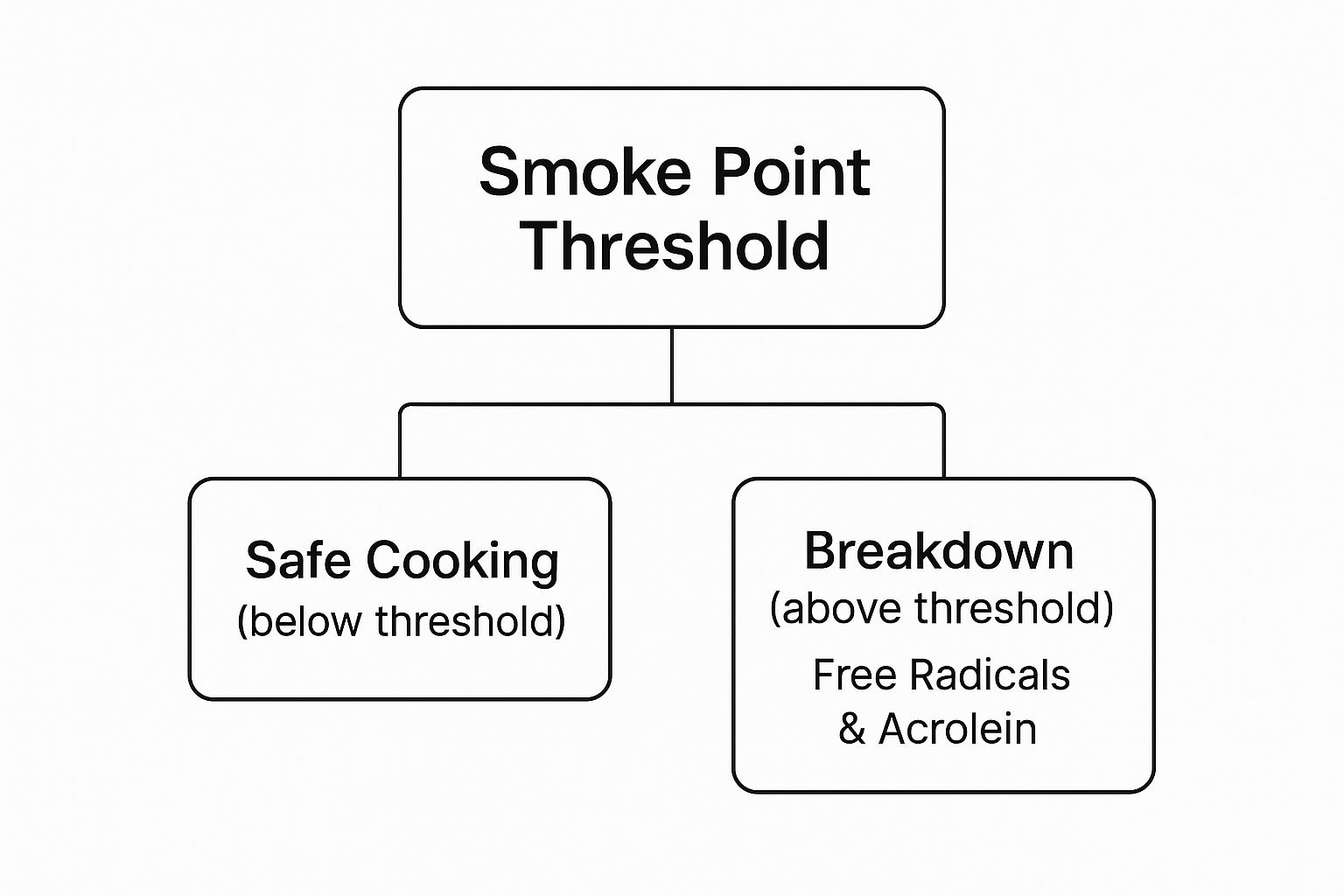
As you can see, every cook faces a choice: stay below the smoke point for spectacular results, or push past it and allow damaging compounds to infiltrate your meal.
The Flavor and Nutrition Connection
Ignoring an oil's smoke point does more than just make your food taste terrible. When an oil breaks down, it’s not just creating foul flavors; it's incinerating the very nutrients that made you choose it in the first place. For a nutritional titan like olive oil, that’s a tragedy.
This is where a high smoke point olive oil becomes your kitchen’s ultimate insurance policy. It grants you a much wider margin for error, allowing you to reach the high temperatures required for a perfect sear, a crispy roast, or a lightning-fast stir-fry without a second thought about the oil degrading.
"The smoke point is the single most important factor in high-heat cooking. It's the difference between a golden, crispy crust and a bitter, burnt failure."
Using the right oil for high heat guarantees two critical outcomes every single time:
- Flavor Preservation: Your food tastes as it was meant to taste, not like burnt oil. The vibrant, natural flavors of your ingredients remain the star of the show.
- Nutritional Integrity: All the beneficial properties of the olive oil, like its heart-healthy monounsaturated fats, stay intact and make it into your final dish.
Mastering this concept is fundamental to achieving cooking greatness. If you wish to dive deeper into the science, you can learn more about the vital importance of the olive oil smoke point and what it signifies for different oils.
Ultimately, by matching your oil to your cooking temperature, you seize complete control over the quality, health, and taste of your meals. It is one of the simplest yet most powerful secrets to unlocking delicious, consistent results in your kitchen.
Understanding Refined Versus Extra Virgin Olive Oil
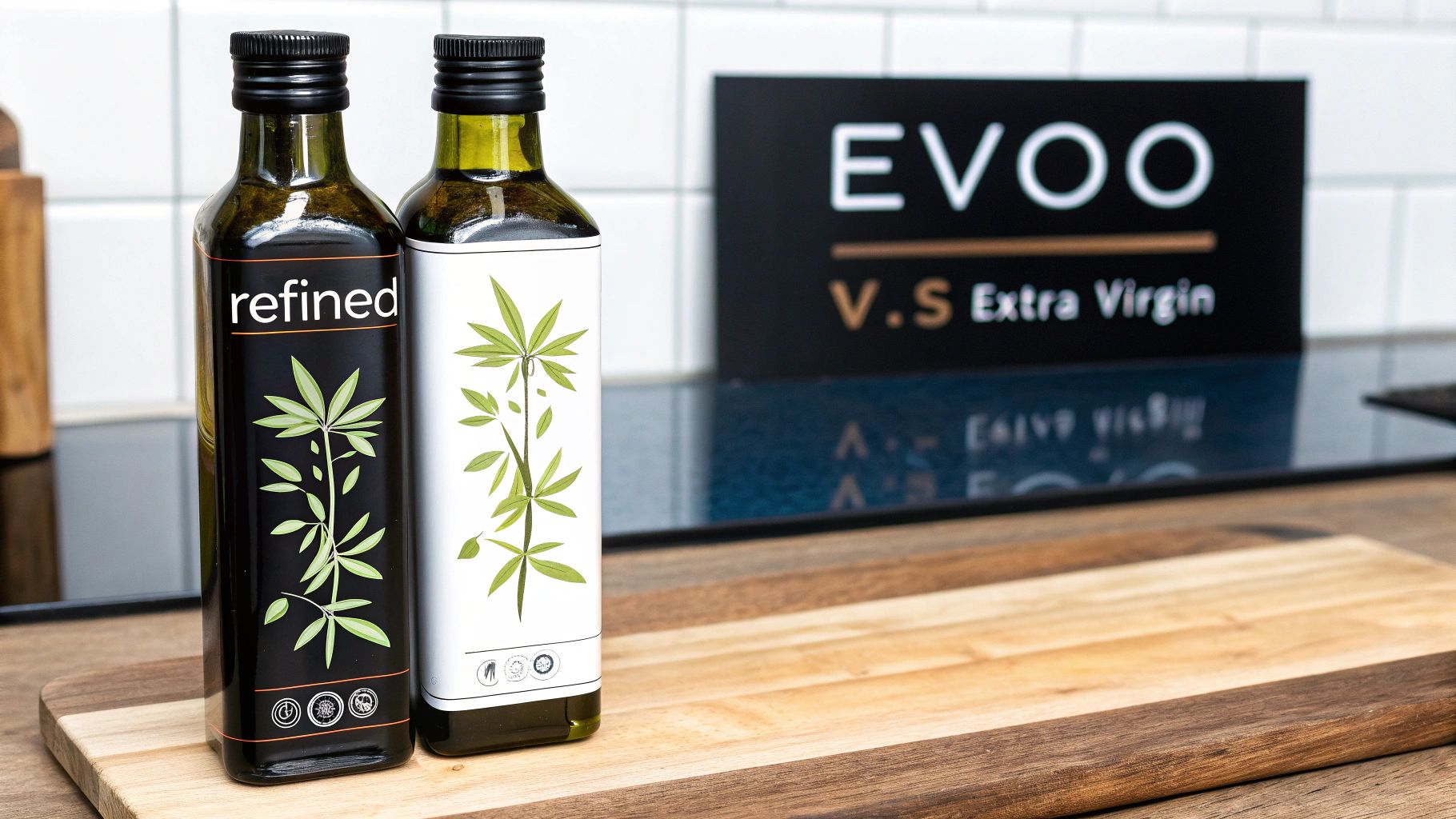
It’s a dangerously common misconception that all olive oils are created equal. The truth is, the bottle you choose can be the difference between a culinary triumph and a total disaster. On one side of the ring, you have the celebrated champion, Extra Virgin Olive Oil (EVOO)—the one with the bold, peppery flavor and deep emerald hue. It is the undisputed star for finishing dishes, crafting vinaigrettes, or accompanying fresh bread.
Then, you have its quieter, less flashy, but incredibly powerful stablemate: refined olive oil. This is your kitchen workhorse, engineered specifically for the high-heat cooking that would make EVOO smoke and turn bitter. The difference isn't about "good" versus "bad" oil; it's about possessing the right tool for the right job.
The secret is forged in how they're made. EVOO is essentially raw, unadulterated juice, freshly squeezed from olives. It's simply pressed and bottled, which is why it retains all its vibrant flavor, potent aroma, and delicate natural compounds. Refined olive oil, on the other hand, undergoes a purification process.
Why Refine Olive Oil?
Refining isn't a destructive process; it’s a strategic one. It's not done to strip the oil of its soul, but to arm it for a different battle in the kitchen. This process gently filters out the very elements—free fatty acids and microscopic olive solids—that cause EVOO to smoke at lower temperatures.
This careful purification is precisely what gives refined olive oil its impressively high smoke point. The final product is an oil that’s lighter in color, much milder in flavor, and profoundly more stable when the heat gets turned up.
The purpose of refining isn't to diminish the oil's identity, but to fortify it for the brutal demands of a hot pan. It strategically trades the assertive flavor of EVOO for the high-heat stability required for searing, frying, and roasting.
By removing those volatile particles, producers create a reliable high smoke point olive oil that simply will not burn or impart off-flavors to your food. This makes it the ideal, neutral-tasting oil for a vast arsenal of cooking methods. For a more detailed breakdown, you can explore the key differences in olive oil and see how each type masters its specific role in the pantry.
To make it crystal clear, let's break down the types you'll encounter on the shelf.
Comparing Olive Oil Smoke Points and Best Uses
This quick-glance table helps you instantly know which oil to grab for which culinary mission.
| Olive Oil Type | Processing | Typical Smoke Point | Best For |
|---|---|---|---|
| Extra Virgin Olive Oil | Cold-pressed, unrefined | 350-410°F | Salad dressings, finishing drizzles, dipping, low-heat sautéing |
| Virgin Olive Oil | Pressed, unrefined (slightly higher acidity) | ~390°F | Sautéing, roasting, baking |
| Light/Refined Olive Oil | Filtered, heat-treated | 465-470°F | Searing, frying, stir-frying, high-heat roasting |
| Olive Oil (Blend) | Mix of refined and virgin oils | ~425°F | All-purpose cooking, baking, sautéing |
As you can see, the more refined the oil, the higher its smoke point—making it your undisputed champion for the stovetop.
Building Your Olive Oil Toolkit
Thinking of these oils as competitors is a fundamental mistake. They are a team, and each member is a specialist. You wouldn't use a delicate, flaky finishing salt to boil pasta water, would you? The exact same logic applies here.
Here’s a simple way to remember their roles:
-
Extra Virgin Olive Oil (EVOO): This is your flavor artist. Reach for it when you want the oil's bold personality to shine and you're not using high heat. Think vinaigrettes, drizzling over soup or roasted vegetables after cooking, or serving with bread.
-
Refined or Light Olive Oil: This is your high-performance workhorse. It’s your go-to for any high-heat cooking. Perfect for searing a steak, sautéing aromatics like onions and garlic, stir-frying, or roasting potatoes until they're impossibly crispy and golden. Its neutral taste lets your ingredients take center stage.
A well-stocked kitchen requires both. With a bottle of flavorful EVOO for finishing and a reliable high smoke point olive oil for cooking, you will be armed and ready to conquer any recipe that comes your way.
How to Choose a High-Quality Cooking Olive Oil
Walking down the olive oil aisle can feel like navigating a minefield. You’re bombarded by a wall of bottles—all shapes, sizes, and colors, each screaming for your attention with alluring terms that sound official but are often meaningless.
The secret to finding a truly great high smoke point olive oil is learning to cut through this marketing clutter. Your mission is simple: find a fresh oil that has been properly protected and is designed for heat. Forget the fancy jargon and poetic descriptions; a couple of key details on the back of the bottle will tell you everything you need to know.
Decoding the Label Like a Pro
The first rule of buying olive oil is this: ignore the front of the label. Almost all of the truly critical information is hidden on the back. While seductive words like "Pure" or "Light" are designed to catch your eye, they can be deeply misleading. "Light," for instance, simply means the oil has a lighter flavor and color because it's heavily refined—it has absolutely nothing to do with calories.
Instead, train your eyes to hunt for these crucial clues:
- Harvest Date: This is the single most powerful indicator of freshness. A "best by" date can be set years in the future, but the harvest date tells you precisely when the olives were picked. Always, always reach for the bottle with the most recent harvest.
- Bottle Type: High-quality olive oil is fragile. Its two greatest enemies are light and heat, which cause it to degrade and turn rancid with alarming speed. For this reason, you should never buy olive oil packaged in a clear glass bottle. Insist on dark, opaque glass or a metal tin that completely shields the oil from damaging light.
Think of a clear bottle as a ticking time bomb for your olive oil's freshness. The best producers protect their product from light because they know it is the sworn enemy of quality and flavor.
Putting It All Together
Once you've found an oil with a recent harvest date in a protective bottle, you’re on the home stretch. The final piece of the puzzle is selecting the right type of oil designed to perform under pressure.
As we've covered, you are looking for an oil labeled simply "Olive Oil," "Light Olive Oil," or "Refined Olive Oil"—not "Extra Virgin." These oils have been specifically prepared to withstand higher heat, so they won’t smoke, burn, or break down. This is your guarantee that your food will cook beautifully without absorbing any bitter, off-putting flavors.
For a complete masterclass, our guide on how to choose olive oil offers an even deeper look into making the perfect selection every time. With these simple tips, you’ll have the confidence to pick a champion that will perform flawlessly in your kitchen.
The Global Journey of Olive Oil
Every bottle of high smoke point olive oil in your pantry has a story. It's an epic tale that crosses oceans and spans centuries. This kitchen staple is far more than a simple cooking fat; it's the culmination of a colossal global effort, with roots buried deep in the sun-drenched groves of the Mediterranean and branches shaped by the powerful winds of international trade.
The journey begins where olive trees have thrived for millennia. Countries like Spain, Italy, and Greece aren't just producers—they are the very soul of olive oil culture. Their unique climates, ancient farming traditions, and expertise passed down through countless generations converge to create the foundation for the world's entire supply.
The Powerhouses of Production
When it comes to sheer, staggering volume, Spain is the undisputed titan. It frequently produces more olive oil than the next several countries combined, its landscapes blanketed in seemingly infinite groves of olive trees. Italy, another production giant, is celebrated for its breathtaking diversity of regional flavors—a direct result of its varied terroir and hundreds of unique olive cultivars.
These nations have dedicated millennia to perfecting the art and science of olive cultivation. From meticulously tending the trees to timing the harvest with precision, every single step is honed to yield the best possible fruit. This agricultural mastery is the first, and most vital, link in the long chain that ultimately delivers olive oil to your kitchen.
Understanding the agricultural and economic forces behind your olive oil transforms it from a simple commodity into a connection to a rich, international heritage.
From Grove to Global Marketplace
Once the olives are pressed, the oil enters a fiercely competitive global marketplace where economics and consumer demand seize control. And this industry isn't just growing; it's experiencing a massive, worldwide surge.
The global olive oil market is projected to skyrocket from around USD 20.3 billion in 2025 to over USD 30.6 billion by 2032. Europe remains the dominant force in this expansion, with a market valuation already hitting nearly USD 9.7 billion in 2024. This is largely because it is the world's primary region for both producing and consuming olive oil. You can dig deeper into these global market trends to see how they influence the choices you find at the store.
This economic reality directly shapes everything from the price you pay to the variety of high smoke point olive oils available. So, the next time you pour that liquid gold into a hot pan, take a moment to appreciate its incredible journey—from a sunlit Mediterranean grove, through a complex global network, and finally, right to your table.
Mastering High-Heat Cooking with Olive Oil
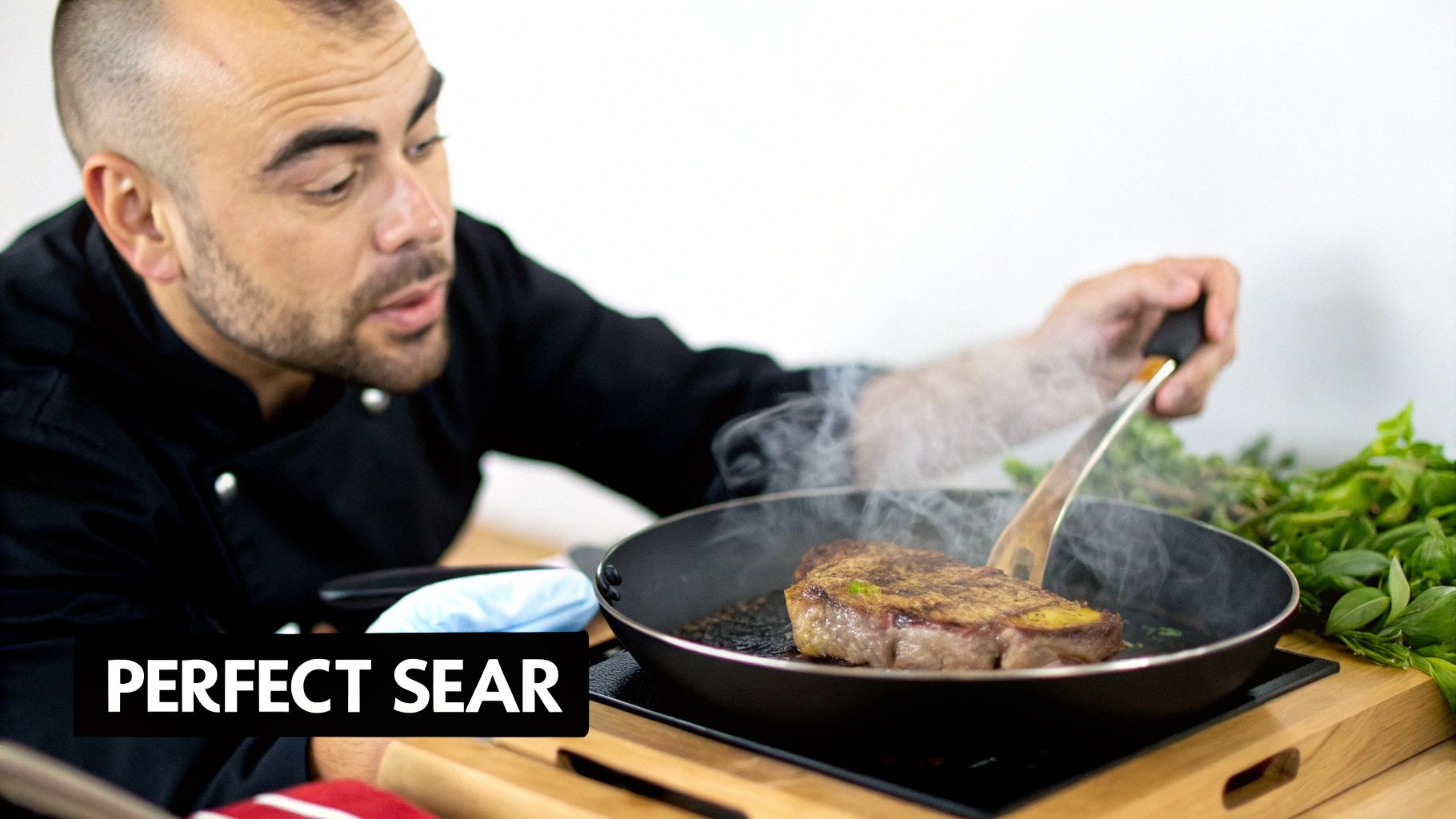
Knowing why a high smoke point olive oil is the right choice is one thing. But making it sing in your kitchen? That’s where the real magic begins. This is where theory meets fire, transforming you from someone who merely understands the science into a cook who wields it with absolute confidence.
The transformation happens when you learn to command the heat and let the oil do its work. Say goodbye forever to soggy stir-fries or steaks that steam sadly in the pan. With the right technique and the right oil, you will unlock textures and flavors you previously thought were impossible.
Creating the Perfect Sear
That glorious, deeply browned crust you crave from restaurants isn't an accident—it's the masterful execution of heat management. To achieve a perfect sear on a thick-cut steak, delicate scallops, or even a humble chicken breast, you need two things: a brutally hot pan and an oil that can take the punishment. This is precisely where a high smoke point olive oil shines.
First, get your pan hot. I mean, truly hot. A drop of water should dance, sizzle, and evaporate in an instant. Only then should you add your oil. This critical step ensures the oil hits temperature rapidly without sitting on the heat too long, which preserves its quality and prevents your food from sticking.
A hot pan is your single greatest ally for developing flavor. The goal isn't just to cook the food through; it's to create that delicious, caramelized crust through the Maillard reaction—a magical process that only occurs at high temperatures.
Roasting and Frying with Precision
The same principles that deliver a great sear on the stovetop apply directly to the oven. When you're roasting vegetables, you’re aiming for crispy, caramelized edges and sweet, tender interiors—not a sad, limp pile.
Here are a few tips I've picked up over the years:
- Don’t Crowd the Pan: Give your vegetables room to breathe on the baking sheet. If they’re packed together, they will steam one another instead of roasting.
- Use Enough Oil: Be generous. Tossing your vegetables in a good high smoke point olive oil ensures heat is distributed evenly and is your ticket to perfect browning.
- Crank Up the Heat: Roasting is a high-temperature sport. Don't be timid. Set your oven to 400-425°F (204-218°C) to get the job done right.
Mastering these fundamentals is a game-changer. It’s also why understanding oil properties is so vital for other high-heat tasks, like choosing the right cooking oil for high-temperature applications such as seasoning a new griddle or cast-iron pan.
As more home cooks embrace high-heat techniques, the demand for quality oils is exploding. In fact, global olive oil production is projected to hit roughly 3.375 million tonnes for the 2024/25 season. You can discover more insights about this significant 32% production increase and what’s driving it.
This newfound confidence in your oil opens up a whole new universe of cooking. Our complete guide to using olive oil for high heat cooking is packed with even more in-depth strategies to help you elevate your meals to the next level.
Got Questions About Cooking with Olive Oil? Let’s Clear Things Up.
Even after you've mastered the basics, a few stubborn questions always seem to linger. Let's tackle the most common ones head-on so you can step into the kitchen with complete confidence. Think of this as the final piece of your olive oil education.
Can I Reuse My Cooking Olive Oil?
Technically, you can. But you absolutely shouldn't. Every time you heat an oil, you degrade it, lowering its smoke point and breaking it down a little more. For the absolute best flavor and performance, you must start with fresh oil for each high-heat cooking session.
This guarantees a pure, clean taste and consistent results, so you never accidentally carry yesterday's fish flavor into tonight's stir-fry.
How Should I Store High Smoke Point Olive Oil?
Treat it with the same respect you'd give a bottle of fine extra virgin olive oil. Keep it far away from its two greatest enemies: light and heat. The ideal storage spot is a cool, dark place like a pantry or cabinet—and definitely not right next to the stove.
Proper storage is the only thing that prevents the oil from going rancid, protecting its flavor and dramatically extending its shelf life. A well-stored oil is a better-performing oil.
The moment you open the bottle, the clock starts ticking. Proper storage isn’t just a suggestion; it’s the single most important thing you can do to protect your investment and ensure every dish tastes its best.
Does the Refining Process Make It Unhealthy?
Not at all. This is another dangerous myth. When olive oil is refined, the process is primarily physical—it's filtered and gently heated to remove impurities. This is a world away from the harsh chemical solvents used to create many industrial seed oils (like corn or soybean oil).
While refining does reduce the polyphenol count compared to EVOO, a high smoke point olive oil is still loaded with stable, heart-healthy monounsaturated fats. This makes it an unequivocally superior choice for high-temperature cooking.
At Learn Olive Oil, our mission is to empower you with clear, accurate information so you can make the best choices for your kitchen. Discover more and continue your journey to becoming an olive oil expert by visiting us at https://learnoliveoil.com.

 Learn Olive Oil
Leave a comment