You’re roasting vegetables, skipping the shaker, measuring carefully, doing everything right. Then your hand reaches for the olive oil and a small doubt slips in.
If olives can taste salty, does sodium in olive oil count against your daily limit too?
It’s a smart question. A lot of careful home cooks ask it, especially when a doctor has mentioned blood pressure, when a family member needs a lower-sodium diet, or when a nutrition label starts to feel like a legal document written to test your patience.
The good news is simple. Pure olive oil is not the sodium trap many people fear. The confusion usually comes from mixing up two very different foods: brined olives and pressed olive oil. One spends time in salt. The other is made by extracting fat from fruit.
That distinction changes everything.
The Hidden Sodium Question in Your Kitchen
A home cook I know keeps two habits side by side. She buys beautiful extra virgin olive oil for salads and vegetables, and she also keeps a jar of olives in the fridge for quick snacks. One day she checked both labels and froze for a second.
The olives had plenty of sodium. The olive oil did not seem to. She assumed one of those labels had to be hiding something.
That moment is more common than people admit. We hear “olive” and think one nutrition story must fit both forms. But the fruit in a salty jar and the oil in a dark bottle are not nutritional twins. They are more like grapes and wine vinegar. Same origin, very different path.
If you’ve ever wondered whether your finishing drizzle is undoing your low-sodium efforts, you’re not being fussy. You’re paying attention. And when you understand what olive oil is made of, the mystery starts to dissolve.
If a food starts with olives, that does not mean every olive product carries the sodium profile of cured table olives.
The kitchen gets easier once you separate the fruit from the process. Then the label stops looking suspicious and starts making sense.
The Simple Answer About Sodium in Olive Oil
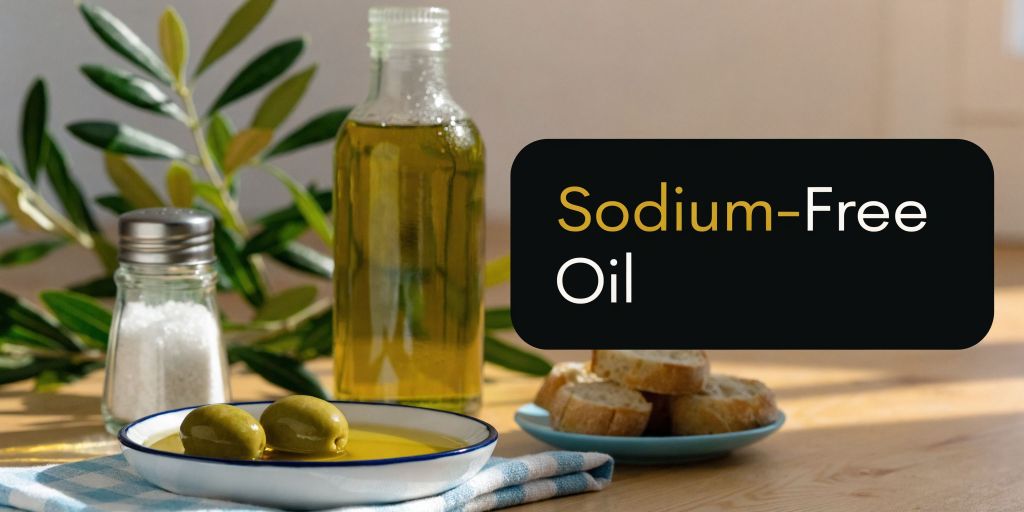
Here is the clear answer many labels confirm. Pure olive oil is sodium-free or so close to zero that it functions that way in everyday cooking.
That surprises many home cooks because the word olive points them back to salty snack olives. But the bottle in your pantry is a different food. If the label says plain olive oil or extra virgin olive oil, you are looking at a fat, not a brined product.

Why that happens
Sodium stays with the watery part of food. Olive oil is the fatty part.
A simple kitchen comparison helps here. Salt mixes easily into soup, bean cooking liquid, or olive brine because those foods contain water. Oil behaves differently. It coats, carries aroma, and adds body, but it does not naturally carry much sodium. So a spoonful of pure olive oil adds flavor and richness without adding meaningful salt.
That is why nutrition labels for plain olive oil usually show 0 mg sodium per serving.
What to look for on the label
A bottle can answer the sodium question fast if you know where to look.
- Start with the product name: “Extra virgin olive oil” or “olive oil” usually signals a plain oil.
- Check the sodium line: For pure oil, it should read 0 mg or a trace amount.
- Read the ingredient list: One ingredient is the goal. Olive oil.
If a bottle has extra ingredients, pause for a second. Herbs are not the issue by themselves. Added seasonings, flavor blends, or prepared dressing ingredients can change the sodium story, which is why reviewing olive oil's nutritional facts and these practical olive oil nutrition facts for home cooks can make label reading much easier.
Pure olive oil is usually one of the simplest choices in a low-sodium kitchen. The confusion comes from mixing it up with brined olives, not from what the bottle contains.
Why Pure Olive Oil Has No Added Salt
The biggest misunderstanding comes from one word: olives.
People know olives can be salty. They taste a green olive, a Kalamata, or a cured black olive and assume the oil must carry some of that saltiness into the bottle. But that assumption skips the most important part of the story. The process.

Two different roads from the same fruit
One olive becomes a table olive.
That olive is often cured or brined. In that form, sodium gets introduced on purpose. A frequent point of confusion is that brined olives can contain 115 to 360 mg of sodium per 5 olives, while extra virgin olive oil is made by mechanically pressing fruit and bypassing brining and curing, leaving the oil with just 0 to 0.3 mg per tablespoon, as explained in this overview of olives versus olive oil.
The other olive becomes oil.
That route is mechanical. The fruit is pressed. The oil is separated from the rest. No jar of salty brine enters the picture. No curing bath. No salty soak. Just extraction.
Why the confusion sticks
The names are too similar for their own good.
“Olives” and “olive oil” sound like one nutritional category. But they behave like different foods because they are prepared differently. One is preserved and seasoned. The other is extracted.
Here’s the simplest way to hold it in your mind:
- Table olives: Often cured, brined, and salty
- Extra virgin olive oil: Pressed from olives, with negligible sodium
- Your tongue: Can mistake “olive flavor” for “olive nutrition”
That last point matters. Flavor can fool us. A peppery extra virgin olive oil can taste bold, grassy, even savory. But savory is not the same as salty.
Trust the method
When you pick up a bottle of pure extra virgin olive oil, you are buying the pressed fat from the fruit, not the cured flesh from a brine jar.
That’s why the sodium story changes so dramatically between the snack bowl and the bottle on your counter.
Spotting Sodium in Flavored and Infused Oils
Pure olive oil is the easy part. The modern grocery shelf is where things get slippery.
A bottle may sit in the olive oil section and still contain ingredients that change the sodium picture. Garlic-infused oil, chili oil blends, herb dressings, and vinaigrettes all sound close to olive oil. Nutritionally, they may be something else.
Where sodium sneaks in
The sodium usually does not come from the olive oil itself. It comes from what is added around it.
According to USDA-linked nutrition material, pure EVOO has 0 mg of sodium, some refined olive oils may show 0.27 to 0.3 mg per tablespoon from processing, and vinaigrettes can contain 250 mg of sodium per 2 tablespoons because of added salt in the final product, as shown in this olive oil nutrient reference PDF.
That means the problem is often not the oil. It’s the seasoning mix, the dressing formula, or the flavor additives.
Sodium at a Glance Pure vs. Processed Olive Oil Products
| Product Type | Typical Sodium Content |
|---|---|
| Pure extra virgin olive oil | 0 mg |
| Some refined olive oils | 0.27 to 0.3 mg per tablespoon |
| Olive-oil-based vinaigrette | 250 mg per 2 tablespoons |
What to watch for on the front label
A bottle can look wholesome and still be a dressed-up product.
Look closely when you see words like:
- Infused: This can be fine, but check whether seasonings or preservatives were added.
- Flavored: Flavor blends sometimes come with sodium-containing ingredients.
- Vinaigrette: This is dressing, not plain oil.
- Marinade: These products often include salt for taste.
If you enjoy making your own flavored oils, you’ll have much more control over ingredients and sodium by learning how to make infused olive oil at home.
A bottle in the olive oil aisle is not automatically plain olive oil. Product type matters as much as brand.
That one habit, reading the product name before admiring the label design, can save you a lot of confusion.
Become a Sodium Detective at the Grocery Store
The label tells the truth. You just need to know where to look.

Start with the sodium line
Look at the Nutrition Facts panel first. For a plain bottle of olive oil, you want the sodium line to show zero or a trace amount.
That matches the chemistry. Olive oil is built mostly from fat, and its composition is around 75% monounsaturated fat. Because sodium is water-soluble and does not chemically integrate into that fat-based structure, sodium above a trace amount points to an additive rather than a natural part of the oil, as explained in these extra virgin olive oil nutrition facts.
Then read the ingredient list
Hidden sodium reveals itself in this part of the label.
Look for terms such as:
- Salt
- Brine
- Sodium chloride
- Seasoning blend
- Marinade mix
A plain olive oil ingredient list is wonderfully boring. That’s what you want.
Use a three-step store test
When I shop, I use a quick test:
Name check
Does it say extra virgin olive oil, or does it say dressing, dip, marinade, or flavored blend?Sodium check
Is the sodium line at zero or just trace?Ingredient check
Is it only olive oil, or did the producer add other ingredients?
For more confidence with bottle language, seal terms, and front-label claims, it helps to understand olive oil labeling before you head down the aisle.
A short video can also sharpen your eye for nutrition labels and ingredient clues:
If sodium appears above a trace amount in a so-called olive oil product, ask what else is in the bottle.
That question turns you from a hopeful shopper into an informed one.
Embracing Olive Oil on a Low-Sodium Journey
Does eating less sodium have to mean eating food that tastes flat?
Olive oil helps answer that question with flavor, aroma, and richness. For many home cooks, that shift feels surprisingly freeing, especially once you separate two foods that often get lumped together. Brined olives can carry noticeable sodium because they sit in salty liquid. Pure pressed olive oil does not bring that saltiness with it.

Flavor helps replace what salt used to do
A good extra virgin olive oil can taste peppery, green, buttery, nutty, or like fresh-cut grass, depending on the olives and how the oil was made. Those qualities matter on a lower-sodium plate because flavor is not only about salt. Aroma, texture, and bitterness all shape how satisfying food feels.
A spoonful over beans, sliced tomatoes, roasted squash, or a grain bowl adds depth in the same way a good broth adds body to soup. The dish feels rounded out. You still notice the vegetables, but they no longer taste bare.
That is why olive oil earns a regular place in low-sodium cooking. It gives you another path to fullness and pleasure.
Why this matters for heart-conscious cooks
If you are watching sodium for blood pressure or heart health, olive oil can be a steady, useful pantry choice because it adds flavor without adding salty ingredients on its own. The bigger lesson is confidence. You do not need to avoid olive oil because olives themselves are sometimes cured in brine.
That distinction clears up a lot of label anxiety.
You can use olive oil with vegetables, legumes, whole grains, and simple proteins to build meals that taste generous instead of strict. If you want practical ideas for putting that into daily routines, these low-sodium meal plans can help.
A more useful way to frame it
Olive oil works like seasoning support. It cannot mimic salt exactly, but it carries herbs, wakes up garlic, softens bitterness in greens, and helps roasted foods taste richer. In a low-sodium kitchen, that job matters.
If blood pressure is part of your concern, this guide to how olive oil fits into blood pressure-friendly eating connects the bottle on your counter to the bigger health picture.
The best low-sodium cooking tastes satisfying because flavor comes from more than salt.
Olive oil helps make that possible.
Your Key Takeaway on Olive Oil and Sodium
Keep one line in your mind: trust the press, not the brine.
That is the cleanest way to remember sodium in olive oil. Pure, pressed olive oil is naturally a very low-sodium choice. The salty reputation comes from cured olives, flavored products, and bottled dressings that travel a different road.
When you shop, separate plain olive oil from vinaigrettes, marinades, and blends. When you cook, let good extra virgin olive oil bring flavor where salt steps back. When you read labels, trust the simple bottle with the simple ingredient list.
Once you see the difference, the whole subject gets easier. You can pour with confidence.
If you want to keep learning from people who care about olive oil as much as they care about clarity, visit Learn Olive Oil . It’s a smart place to deepen your understanding of buying, tasting, labeling, and using premium olive oil with confidence in your own kitchen.
 Learn Olive Oil
Leave a comment