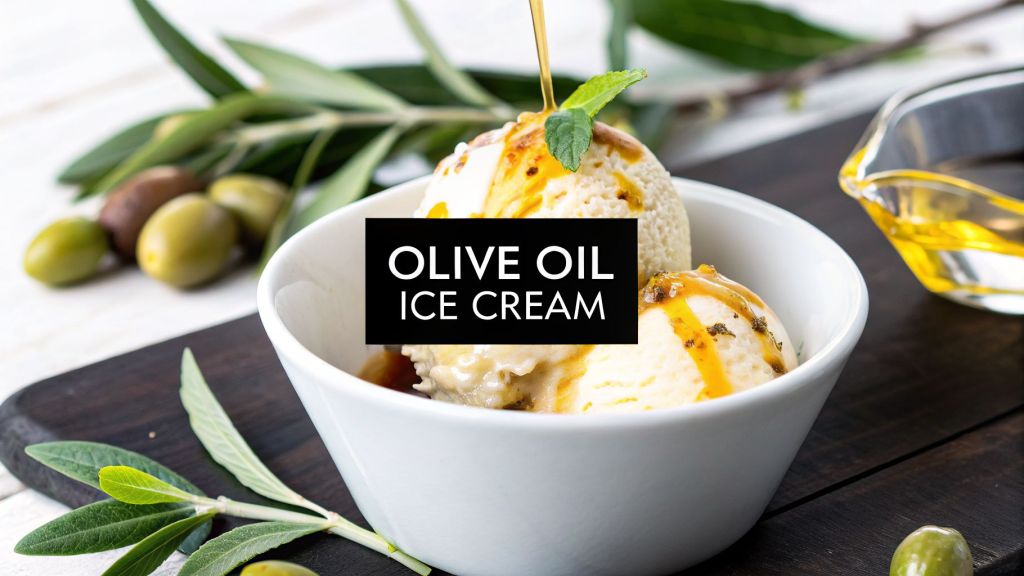
Imagine, for a moment, an ice cream that is both deeply comforting and thrillingly new. This is the promise of olive oil ice cream. It is a simple, almost secret culinary discovery that elevates the liquid gold from your pantry into a frozen dessert with a texture so impossibly rich and silky, you may never look at a pint of vanilla the same way again.
If the thought of oil in your ice cream makes you pause, I understand. But please, trust me on this. This is an invitation to create something truly extraordinary.

The Gourmet Secret Hiding in Your Pantry
What if the ingredient that could unlock the most luscious ice cream you’ve ever made wasn’t more cream or sugar, but a splash of high-quality extra virgin olive oil? This unexpected pairing has been quietly captivating food lovers for years, making its way from rustic Italian kitchens to the menus of the world's most celebrated restaurants.
The magic lies in the contrast. The fruity, sometimes grassy or peppery notes of a great olive oil slice through the sweetness of the custard base like a knife. The result? A sophisticated, balanced flavor that is a world away from your standard scoop. This is not a fleeting trend; it is a brilliant rediscovery of the versatility of a timeless ingredient.
Why This Pairing Works So Well
So, what is the secret? It boils down to two key elements: flavor and fat.
- Complex Flavor: A good extra virgin olive oil delivers a profile that vanilla alone can't touch—think notes of fresh grass, ripe fruit, and a pleasant, peppery finish that sings on the palate.
- Unbeatable Texture: The fat in olive oil lowers the freezing point of the ice cream mixture. This is the crucial scientific trick that prevents large, crunchy ice crystals from forming, rewarding you with an incredibly smooth, dense, and creamy scoop every single time.
This isn’t just a niche idea anymore. As people have become more adventurous, there's been a surge in appreciation for premium olive oil. The global market, valued at USD 9.50 billion in 2025, is forecast to climb to an impressive USD 16.11 billion by 2034. This growth is fueled by health-conscious consumers and the incredible quality coming out of Europe, where Spain, Italy, and Greece produce over 90% of the world's supply.
Think of it like a seasoned chef's trick finally being shared with the world. By using oil instead of relying solely on butterfat, you create a dessert that feels both lighter and more luxurious on the palate.
From Farmhouse Tradition to Modern Delicacy
The idea of using olive oil in sweets isn't new. Mediterranean bakers have been folding it into cakes and cookies for centuries. But its leap into frozen desserts is a more modern revelation. My own "aha!" moment happened years ago at a tiny gelateria in Sicily. The velvety texture was incredible, but it was the surprising peppery kick at the very end that completely won me over.
That experience proved that olive oil ice cream is no gimmick. It’s a thoughtful creation that hinges on understanding how to balance flavors. To truly master it, you must start by understanding the oil itself. To get a better feel for this, you might find it helpful to learn how to taste olive oil like a pro. Once you can pick out the different notes in an oil, you'll unlock a whole new level of dessert making.
How to Choose Your Liquid Gold
The single most important decision you will make for this recipe happens before you touch the cream or sugar. It is the choice of olive oil. Get this right, and your reward will be a scoop of ice cream that tastes like a sun-drenched afternoon on the Italian coast. Get it wrong, and you might as well have made plain vanilla.
This is not the time to reach for the same bottle you use for sautéing. We aren't just using the oil for fat; we’re using it for flavor. You need a bold, premium extra virgin olive oil—it is not merely an ingredient; it is the star of the show.
What to Taste For
Before that oil goes anywhere near your ice cream base, you must taste it on its own. I mean it. Pour a little into a small glass, warm it with your hands for a moment, and give it a good sniff. What do you smell? Is it grassy? Almond-like? Maybe a little green banana?
Now, take a sip. You are searching for an oil with a distinct personality.
- Fruity Notes: Bright, fruity flavors are a fantastic counterpoint to the rich dairy. I look for oils with hints of green apple, tomato leaf, or even citrus.
- A Peppery Finish: This is the tell-tale sign of a high-quality, fresh oil. That little cough or tickle you feel at the back of your throat comes from polyphenols, powerful antioxidants that give the best oils their vibrant character. Do not be shy; you want that kick.
- A Hint of Bitterness: A pleasant, sophisticated bitterness, like what you’d find in good dark chocolate or radicchio, adds an incredible layer of complexity.
The goal is to find an oil that is assertive but not so aggressive that it completely bulldozes the sweet cream base. Think of it as a duet—both the oil and the custard need to shine.
To help you navigate the options, here's a look at how different olive varietals can influence your ice cream's final flavor.
Olive Oil Flavor Profiles for Ice Cream
Choosing an olive oil is a lot like choosing a wine. Different varietals (types of olives) produce wildly different flavors. Some are buttery and mellow, while others are pungent and green. For ice cream, you want something that can hold its own.
| Olive Oil Varietal | Flavor Profile | Intensity | Best For |
|---|---|---|---|
| Arbequina (Spain) | Fruity, buttery, with notes of almond and green apple. Very low bitterness. | Mild to Medium | A subtle, gateway olive oil ice cream. Great for beginners. |
| Koroneiki (Greece) | Robust and grassy with a distinctly peppery finish. Notes of green herbs and artichoke. | Medium to High | A classic, balanced ice cream with a noticeable peppery kick. |
| Picual (Spain) | Assertive and complex with notes of tomato leaf, fig tree, and a pleasant bitterness. | High | A bold, "foodie-forward" ice cream with sophisticated, savory notes. |
| Coratina (Italy) | Intensely fruity and spicy with a powerful, peppery finish and a strong bitter note. | Very High | An intense, pungent ice cream for true olive oil aficionados. |
Ultimately, the "best" oil is the one that tastes best to you. If you love a buttery, mild oil, start there! If you crave that spicy, green flavor, go for a more robust option like a Koroneiki or Picual.
Reading the Label Like a Pro
Once you've tasted an oil you like, the bottle's label will tell you the rest of the story. Ignore the pretty designs and focus on a few critical details.
First and foremost, find the harvest date. Olive oil is fresh-pressed fruit juice, and it absolutely does not improve with age. If the oil was harvested more than 18 months ago, it has likely lost its vibrant character and may even be rancid. Just walk away.
Next, look for an origin seal like PDO (Protected Designation of Origin) or PGI (Protected Geographical Indication). These certifications guarantee the oil is from a specific region and was produced under strict quality standards, which is a good indicator of a well-made product.
This focus on quality is driving a huge culinary trend. Chefs and home cooks are embracing olive oil in desserts, fueling a market expected to grow from USD 15.7 billion in 2025 to USD 21.6 billion by 2034. They're seeking out extra virgin grades that can pack a custard with up to 500 mg/kg of polyphenols, turning a simple scoop into an antioxidant-rich indulgence. You can learn more from these insights on the global olive oil market.
Finally, getting to know the different varietals will elevate your dessert from good to truly spectacular. If you want to dive deeper, our guide on the different types of olive oil is a great place to start.
The Classic Custard-Based Recipe
If you are a purist who believes the best ice cream starts with a rich, velvety custard, this is the recipe for you. We are going to make a classic, French-style olive oil ice cream by hand, using the time-honored magic of egg yolks and cream. This method is all about building a luxurious foundation, and it’s a process worth savoring.
Making a custard-style ice cream requires a bit of patience, but the result is a scoop so creamy it’s almost indescribable. The small details here are what separate a good ice cream from a truly unforgettable one.
Crafting the Perfect Custard Base
The soul of this recipe is the custard—a simple but delicate blend of milk, cream, sugar, and egg yolks. Your main challenge is to gently cook the yolks just enough to thicken the base without ending up with sweet scrambled eggs. It is all about controlling the heat.
Before you even turn on the stove, though, the most important decision is choosing your olive oil.

As you can see, a stellar olive oil ice cream begins with a deliberate choice. You’re looking for flavor, freshness, and quality. Once you have your star ingredient, gather the rest of your cast:
- Whole Milk: Forms the liquid foundation of the custard.
- Heavy Cream: This is non-negotiable for that rich, creamy texture.
- Granulated Sugar: Provides sweetness and contributes to a smooth final product.
- Egg Yolks: The powerhouse emulsifiers that create a custardy mouthfeel.
- Vanilla Bean or Pure Vanilla Extract: Adds a familiar, aromatic depth.
- High-Quality Extra Virgin Olive Oil: The main event.
- Fine Sea Salt: A pinch is crucial for making all the other flavors pop.
The first crucial technique is tempering the eggs. This simply means you must slowly—very slowly—add the hot cream mixture to your whisked egg yolks. Add one ladle at a time while whisking constantly. If you rush this part, the yolks will cook instantly and curdle. Take your time; a silky-smooth base is your reward.
The Art of Emulsification and Churning
After your custard has cooked and thickened enough to coat the back of a spoon, it’s time to cool it down. And I mean completely cool it down. Trying to churn a warm base is the fastest way to get an icy, grainy texture, which would be a tragedy after all your careful work. For best results, I always chill my base in the fridge overnight.
The most critical moment in this recipe is when you add the olive oil. Many recipes have you add it to the hot custard, but I’ve found a better way. Add the olive oil in a slow, steady stream during the final few minutes of churning.
This trick is a game-changer. It allows the oil to emulsify directly into the cold, churning ice cream, integrating it perfectly. You get a stable, cohesive texture where the olive oil becomes part of the ice cream itself, not a slick, greasy layer on top. As the machine runs, you'll see the base thicken and lighten in color as the oil and air are whipped in.
Once it's done churning, immediately transfer the soft-serve-like mixture to an airtight container. Let it "ripen" in the freezer for at least four hours. This final rest allows the flavors to meld beautifully and gives the ice cream the perfect firmness for scooping. This custard method is a fantastic canvas, and you can get more inspiration from our guide to baking and creating desserts with olive oil.
The Genius No-Churn Method
What if I told you that you don't need an ice cream maker to create a stunningly creamy, complex olive oil ice cream? It’s true. Forget the fuss of making a custard, tempering eggs, or needing any special equipment. This no-churn approach is my go-to shortcut, and honestly, it’s so simple it feels like a kitchen secret you'll want to keep to yourself.
The magic comes from the beautiful partnership of two very unassuming ingredients: sweetened condensed milk and heavy cream.

How It Works: No Churn, All Creaminess
Sweetened condensed milk is the workhorse here. Because it’s already cooked down with sugar, it creates a thick, stable base that won’t turn into a solid block of ice in your freezer. It provides all the sweetness and structure you need, completely sidestepping the need for a traditional custard base.
Then we have the heavy cream. When whipped into soft, airy peaks, it gives the ice cream its incredible lightness and volume, stopping it from becoming dense or gummy. When these two get together, they create a base that’s shockingly close to what you'd get from a premium, churned ice cream.
But the real showstopper is what happens when the olive oil joins the party.
The brilliance of this no-churn recipe is how it lets the olive oil shine. The oil's fat works with the condensed milk to prevent ice crystals from forming, leaving you with a texture that is just impossibly smooth and velvety.
The Foolproof Folding Technique
The whole process is incredibly simple. You’ll start by whisking your sweetened condensed milk with a good pinch of fine sea salt, a splash of vanilla, and, of course, your high-quality extra virgin olive oil. Don’t hold back on the oil—I find that ⅓ to ½ cup is the sweet spot for a standard batch.
Next, in a separate, chilled bowl, whip cold heavy cream until it holds stiff peaks. This is where your technique really counts. You are not just stirring; you are folding.
- First, lighten the base. Take about a third of your whipped cream and gently mix it into the olive oil mixture.
- Now, add the rest of the whipped cream right on top.
- Using a spatula, carefully cut down through the center, scrape the spatula along the bottom of the bowl, and bring the mixture up and over itself. Give the bowl a quarter turn and repeat. Stop when you see just a few streaks of white left.
This gentle folding is crucial because it keeps all that lovely air you just whipped into the cream. If you overmix, it will deflate, and you’ll end up with a much denser ice cream.
Once it's folded, pour the mixture into a chilled loaf pan, cover it tightly, and let it freeze for at least six hours. You will be amazed that something so elegant was so easy to make.
If this has you thinking about other flavor possibilities, you've got to explore our guide on how to make infused olive oil. It's a fantastic way to add even more layers of flavor to your next batch.
Perfect Pairings and Serving Ideas
Okay, you’ve done it. Your olive oil ice cream is churned, chilled, and ready. But please, don't just scoop it into any old bowl and call it a day. This is where the real artistry begins—transforming a beautiful scoop into a dessert that people will be talking about for weeks.
Let's get into the pairings that take this ice cream from simply delicious to truly unforgettable.

A Finishing Touch That’s Non-Negotiable
Before you even think about sauces or fruit, there is one simple thing you absolutely must do: add a generous sprinkle of flaky sea salt. I'm serious. The delicate crunch of the salt crystals is the perfect textural foil to the ultra-smooth ice cream, and it makes the fruity, peppery notes of the olive oil pop in a way you won't believe.
This dessert is a testament to how far olive oil has come. It’s no longer just for salads; it’s a star ingredient in the gourmet world. The global olive oil market was valued at $22.30 billion in 2022 and is expected to soar to $33.12 billion by 2030, a growth fueled by innovative uses just like this. This simple ice cream is part of a massive culinary shift.
Creating Contrast with Flavor
With your salt in place, it’s time to build layers of flavor. The best pairings create a delightful contrast—something tangy, warm, or sharp to play against the cool, rich creaminess of the ice cream.
- Balsamic Glaze: A drizzle of thick, aged balsamic is a classic for good reason. Its syrupy sweetness and sharp acidity cut right through the richness.
- Fresh or Roasted Fruit: You really can't go wrong here. I absolutely love it with fresh, ripe figs, whose jammy texture feels as though it was made for this. In the summer, try serving it with roasted strawberries or peaches to bring out their deep, caramelized notes.
- Something Warm and Baked: Picture a scoop slowly melting over a decadent, warm flourless chocolate cake. The slight bitterness from the dark chocolate is an incredible match for the oil's peppery finish. A slice of lemon-almond cake or a citrusy polenta cake also works beautifully.
The goal is to find flavors that don’t just sit next to the ice cream but actively enhance it. Each component should make the others shine, creating a bite that is more than the sum of its parts.
Of course, presentation is part of the fun. Serving your masterpiece in elegant ice cream cups can elevate the whole experience. And if you're feeling adventurous, explore our guide to flavored olive oil recipes to discover even more pairing possibilities.
Common Questions About Olive Oil Ice Cream
Olive oil in ice cream? I know, it sounds a little out there at first. But once you try it, you will understand. That said, it's not quite as simple as just dumping any old oil into your ice cream base. It’s natural to have a few questions, so let’s walk through the ones I hear most often to make sure your first batch is absolutely perfect.
Can I Use Regular Olive Oil Instead of Extra Virgin?
The short answer? Please don't. While you technically could, you would completely miss the magic of this recipe. The whole point is to capture the complex, fruity, and peppery notes that only a high-quality extra virgin olive oil can provide.
Regular or "light" olive oils have been refined to the point where all those beautiful, nuanced flavors are gone. Using one will just leave you with a greasy-tasting, bland ice cream. My rule of thumb is simple: if you wouldn't be happy dipping good bread into it, don't put it in your ice cream.
Why Does My Ice Cream Taste Bitter?
If you're getting a harsh, unpleasant bitterness, the problem almost always lies with your olive oil. A little background bitterness is a hallmark of a good oil, but it should be pleasant, not acrid. An overpowering bitterness usually points to one of a few things:
- Rancid Oil: Like any fresh product, olive oil has a shelf life. Old, oxidized oil develops a sharp, almost waxy or crayon-like bitterness. Always look for a recent harvest date on the bottle.
- Low-Quality Oil: Some poorly produced oils are just inherently bitter and lack the fruity notes needed for balance.
- An Overly Aggressive Varietal: Certain types of olives produce intensely pungent and peppery oils. While delicious in some savory contexts, they can easily overwhelm a delicate dessert.
The most important step you can take is to taste your olive oil before you use it. A quick sip will tell you everything you need to know about its flavor and whether it’s fresh enough for your dessert.
How Long Does Homemade Olive Oil Ice Cream Last?
For the best possible texture and flavor, I recommend enjoying your homemade ice cream within one to two weeks.
To keep it fresh, store it in a truly airtight container. The real secret weapon here is to press a piece of parchment paper or plastic wrap directly against the surface of the ice cream before you put the lid on. This simple trick is your best defense against dreaded ice crystals and stops it from picking up any weird freezer smells.
Will the Olive Oil Actually Freeze Properly?
Yes, and it’s what makes this ice cream so special! Olive oil itself doesn't freeze solid in a home freezer, and when it’s churned into the custard, it works wonders. The oil emulsifies into the base, and its fat molecules get in the way of water, preventing large ice crystals from forming.
This is the key to the ice cream’s famously smooth, dense, and creamy texture. It results in a scoop that is significantly less icy than many traditional recipes.
At Learn Olive Oil, we're all about exploring the incredible potential of this ingredient. We believe that understanding where your oil comes from and how to use it is the key to unlocking amazing flavors in your kitchen.
Ready to dive deeper? Explore our guides and resources to start your own olive oil journey at https://learnoliveoil.com.
 Learn Olive Oil
Leave a comment