Imagine for a moment, an oil so precious, so potent, that for centuries its deepest secrets were known only to a handful of artisans nestled in the sun-drenched groves of North Africa. This isn't just a story about flavor. It's a story about a profound, almost startling impact on your health and well-being. The benefits of Moroccan olive oil aren’t just a happy accident; they are the direct result of a unique antioxidant profile and a bold, peppery flavor that can transform both your kitchen and your health.
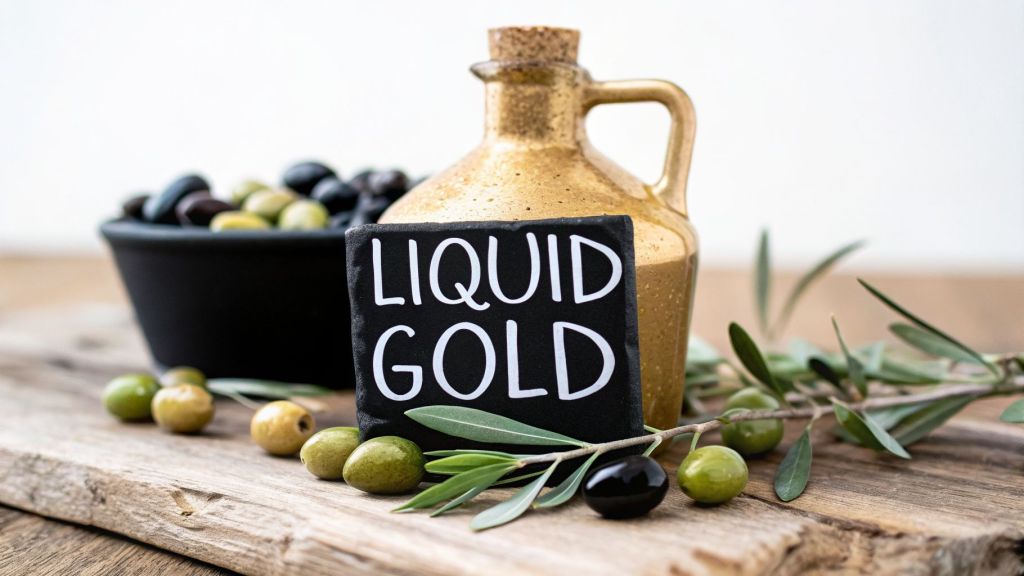
Discovering Morocco's Liquid Gold
This is the story of Moroccan olive oil—a true liquid gold that the world is only now beginning to awaken to. If you believe you know olive oil, I invite you to think again. We're about to journey to the sun-blasted groves of Morocco, where ancient traditions and a uniquely hardy olive conspire to create something truly extraordinary.
This isn't just another bottle on the shelf. It’s an elixir, forged in a unique terroir, blessed with a robust, peppery flavor and a nutritional punch that leaves many of its Mediterranean cousins in the dust. The secret, you see, is etched into the very land itself and the remarkable olive variety that calls it home.
The Picholine Marocaine Advantage
At the very heart of Moroccan olive oil lies the Picholine Marocaine olive. This native variety is a true survivor, perfectly engineered by nature to withstand Morocco's demanding, arid climate. To protect itself from the relentless sun and scarce water, the olive tree produces a staggering concentration of powerful defensive compounds.
And here’s the astonishing part: these very compounds, known as polyphenols, are precisely what deliver the celebrated health benefits of Moroccan olive oil. That distinct, peppery fire you taste at the back of your throat? That isn't just flavor. It's the unmistakable proof of its resilience and potency.
More Than Just a Healthy Fat
While all extra virgin olive oils are classified as healthy fats, the Moroccan variety stands in a class of its own due to its exceptional chemical fingerprint. It's renowned for a stunningly high concentration of polyphenols like hydroxytyrosol and oleocanthal—two of nature's most effective foot soldiers against inflammation and oxidative stress.
In short, the same unforgiving climate that forges the Picholine olive also supercharges its health-giving properties. This results in an oil that isn't merely a source of good fat, but a genuine functional food, brimming with protective compounds.
This remarkable profile is precisely why this oil is capturing the attention of health experts and master chefs across the globe. It delivers a one-two punch of intense flavor and wellness advantages that is incredibly difficult to match.
For a quick overview, here's what makes this oil so utterly unique.
Moroccan Olive Oil At a Glance
| Benefit Category | Key Advantage |
|---|---|
| Antioxidant Power | Exceptionally high in polyphenols like oleocanthal, which fight inflammation and cellular damage. |
| Flavor Profile | Distinctly bold and peppery, a sign of high-quality, potent oleocanthal content. |
| Olive Varietal | Made from the hardy Picholine Marocaine olive, adapted to thrive in Morocco's arid climate. |
| Heart Health | Rich in monounsaturated fats that support healthy cholesterol levels and cardiovascular function. |
This table merely scratches the surface of what makes this "liquid gold" from Morocco so special.
Here are the key secrets you must know:
- Exceptional Polyphenol Count: Often containing over 500 mg/kg, these antioxidants are your body's front-line defense against the cellular chaos of free radical damage.
- Distinctly Bold Flavor: That peppery kick isn't just for show—it's the signature of oleocanthal, a potent anti-inflammatory compound that rivals the effects of over-the-counter drugs.
- Ancient Heritage: The production methods have been honed over centuries, a sacred trust designed to preserve the oil's natural quality. To journey further back in time, you can learn more about the origins of olive oil in our detailed guide.
We're only just beginning to peel back the layers. Next, we’ll dive into the precise science of how these compounds work to protect your body—from your heart to your brain—giving you a crystal-clear picture of the profound benefits of Moroccan olive oil.
A Powerhouse of Health-Protecting Polyphenols
Let's move beyond the simple 'it's good for you' story and talk about the scientific miracle that makes Moroccan olive oil so special. The true magic isn't folklore; it's written in its very chemistry. This oil is packed with an unusually high concentration of compounds called polyphenols, with names like hydroxytyrosol and oleuropein leading the charge.
Think of these polyphenols as your body's personal security detail. They are elite defenders, tirelessly working around the clock to neutralize a persistent enemy: oxidative stress. This cellular-level chaos is the real villain behind chronic inflammation, premature aging, and the slow, silent decline of our body's vital systems.
The Science of Resilience
Imagine your body is a magnificent fortress. Every single day, environmental toxins, stress, and a poor diet launch a relentless assault on its walls. Polyphenols are the master masons, constantly repairing the ramparts, reinforcing the weak spots, and fiercely protecting the precious structures within—namely, your heart and your brain.
So, where does this incredible potency come from? The secret lies with the Picholine Marocaine olive. Forged in the harsh, sun-soaked, arid climate of Morocco, this specific olive is forced to fight for its own survival. To protect itself from the intense sun and dry conditions, the tree produces an abundance of these protective polyphenols.
It's a beautiful act of nature's alchemy. The olive's struggle for life directly creates the very compounds that help protect ours. This results in an oil with a truly impressive defensive profile—a gift from a challenging land.

As you can see, the high polyphenol content is intrinsically linked to its bold flavor and ancient heritage, creating a perfect trifecta of quality.
From Olive to Artery Protection
This isn't just theory; it's backed by compelling evidence. The health benefits of Moroccan olive oil truly shine in its antioxidant profile. Those high levels of hydroxytyrosol and oleuropein are particularly noteworthy, as studies show they can reduce oxidative stress by up to 62% in regular consumers.
The best extra virgin varieties from Morocco's sun-kissed terroir frequently boast superior polyphenol levels, often exceeding 500 mg/kg. This potency plays a well-documented role in helping to lower harmful LDL cholesterol by 10-15% with a daily intake of just 20ml, a finding supported by large-scale Mediterranean diet research.
This direct link between consumption and improved cardiovascular markers is what makes this oil more than a simple food. It's a daily investment in your long-term health. The combination of monounsaturated fats and potent antioxidants found in Moroccan olive oil is an excellent way to support efforts to lower cholesterol naturally.
These potent compounds are the reason a high-quality oil tastes peppery and slightly bitter. That "kick" you feel at the back of your throat is the taste of health—the signature of oleocanthal, another powerful polyphenol with natural anti-inflammatory properties.
By choosing an oil rich in these compounds, you are choosing a more active form of nourishment. For those interested in maximizing these effects, our guide on how to identify high polyphenol olive oil is an essential read. This powerful profile provides a robust shield against the daily stressors that contribute to chronic disease, making Moroccan olive oil a cornerstone of any health-focused diet.
The Journey from Ancient Grove to Your Table
The real difference between an average olive oil and an exceptional one lies in its journey. The story behind authentic Moroccan olive oil isn't just about pressing olives; it’s a craft refined by generations, where every single step is obsessively designed to preserve quality. This journey is where the profound Moroccan olive oil benefits are either captured for you to enjoy, or lost forever.
It all begins with a remarkable local hero: the Picholine Marocaine olive. This is not your average olive. It's a survivor, a native variety that thrives in conditions where others would simply wither and fail. Growing under the intense Moroccan sun and in arid soil, it has adapted over centuries to become incredibly tough, resilient, and bursting with protective compounds.
This resilience isn't just a charming detail—it directly translates into a more robust, nutrient-dense oil. The very stress the olive endures forces it to produce the potent polyphenols we’ve been talking about, which give the final product its signature peppery kick and powerful health benefits.

A Race Against Time
The moment these olives reach peak ripeness, a frantic clock starts ticking. Traditional harvesting, a practice passed down through families, is often performed by hand. This gentle, painstaking approach prevents bruising, which can kickstart oxidation and degrade the fruit before it even leaves the grove.
But the most critical step happens next. The olives must be rushed from the grove to the mill for pressing, ideally within a few short hours. This race against time is arguably the single most important factor in preserving the oil's integrity. Any delay allows the olives to ferment and oxidize, which ruthlessly murders the delicate flavors and erodes their healthy compounds.
This sense of urgency is what separates the masters from the masses. While industrial operations might let olives sit for days, artisanal Moroccan producers know that every hour counts. Their focus is on the quality of the oil, not just the quantity.
The Magic of the First Cold Press
Once at the mill, the olives undergo what’s known as the "first cold press." Think of this term as your ultimate guarantee of quality. It means the oil is extracted using only mechanical force—no high heat or chemical solvents are ever involved.
Here’s why that’s so critically important:
- First Press: This tells you the oil came from the very first extraction of the olives. This initial press yields the highest-quality oil, bursting with flavor and nutrients. Any subsequent pressings produce inferior, lower-grade oils.
- Cold Press: This ensures the temperature during extraction stays below a cool 81°F (27°C). Heat can squeeze more oil out of the olives, but it comes at a steep price: it destroys the precious polyphenols and delicate aromatic compounds that give the oil its character.
This careful, low-temperature method is what locks in the oil’s vibrant, peppery flavor and its full arsenal of health benefits. To get a better handle on the mechanics of this stage, you can learn more about how olive oil is made in our complete guide.
Artistry Over Industry
When you understand this process, you begin to see the stark, night-and-day difference between authentic Moroccan olive oil and the mass-produced pretenders. Industrial shortcuts—like rough mechanical harvesting that bruises fruit, long waits before pressing, and using heat to boost yield—all chip away at the final product's quality.
The result of those shortcuts is often a bland, lifeless oil that completely lacks the flavor, pungency, and antioxidant punch of its artisanal counterpart. When you choose a true Moroccan extra virgin olive oil, you’re not just buying a cooking fat. You're tasting a story—of a resilient olive, a careful harvest, and a time-honored craft that puts purity above profit. That journey is what makes all the difference.
A Flavor Profile That Elevates Every Meal
While the incredible health benefits might pique your interest in Moroccan olive oil, it's the flavor that will make you a true believer. This is what truly sets it apart, turning a good meal into something unforgettable. Forget those mild, buttery oils that timidly disappear into a dish. This is an oil with a bold, unapologetic personality.
Tasting a high-quality Moroccan olive oil, especially one from the famed Picholine olive, is a genuine experience. It unfolds in three distinct stages. First, you’re greeted by a vibrant green fruitiness—think fresh-cut grass, hints of green apple, and perhaps a whisper of almond.
Right after that initial brightness, a pleasant, assertive bitterness spreads across your tongue. Do not mistake this for a flaw! That bitterness is the signature of healthy polyphenols doing their job. It's the taste of potency, a clear signal the oil is loaded with the very compounds that protect your body.
The Signature Peppery Finish
The grand finale is a spicy kick that builds in the back of your throat. We call this pungency, and it can range from a gentle tickle to a full-on, cough-inducing punch, depending on the oil's freshness and polyphenol count.
This peppery sensation comes directly from oleocanthal, that powerful anti-inflammatory compound we covered earlier. It is your absolute guarantee of quality. If you taste an oil that’s flat and missing this kick, it’s likely old, low-quality, or has been processed in a way that stripped it of its most valuable components.
When you feel that peppery finish, you're not just tasting flavor—you're physically feeling one of nature's most effective anti-inflammatory agents at work. Learning to chase that "kick" is the real secret to picking an outstanding olive oil.
This complex, three-part structure is what makes Moroccan olive oil a world-class finishing oil, not just another cooking fat. Using it for high-heat frying would be a waste, like making a stew with a vintage wine; you'd destroy all its beautiful, delicate notes. Instead, this oil is meant to be drizzled and savored as the final touch that brings a dish to life.
How to Pair It Like a Chef
Once you understand its bold profile, you can begin to use it to make your food sing. The trick is to use its assertive character to cut through richness and complement other flavors. Think of it less as a cooking fat and more as a potent, liquid seasoning.
Here are a few ideas to get you started:
- Grilled Meats and Fish: That peppery bite is the perfect counterpoint to the smoky char of grilled steak, lamb chops, or a hearty fish like swordfish. A final drizzle just before serving adds an incredible layer of complexity.
- Hearty Soups and Stews: A generous swirl into a lentil soup, a bean chili, or a traditional Moroccan tagine just before you eat will brighten the entire bowl with its fruity notes.
- Simple Salads and Vegetables: Ditch the heavy dressings. Let the oil be the star, paired with just a squeeze of fresh lemon and a pinch of good salt over fresh greens, roasted broccoli, or steamed asparagus.
- Dips and Spreads: There's a reason a generous pool of olive oil in the center of a bowl of hummus or baba ghanoush is a classic. It adds a final, luxurious layer of flavor and richness.
Learning to spot these characteristics will completely change how you see olive oil. To get a better handle on it, check out our guide on how to taste olive oil like a professional. You’ll be surprised how quickly you can train your palate to recognize the signs of a truly great product.
Ultimately, the unique flavor isn't just a happy accident; it’s directly tied to the very things that make this oil so healthy. The bitterness and peppery finish are your taste buds' confirmation that you’re getting the high polyphenol content that defines this liquid gold.
How to Choose and Protect Your Liquid Gold
Alright, you get it. You understand the incredible power packed into every drop of Moroccan olive oil and you're ready to bring it into your own kitchen. But then you're standing in the grocery aisle, faced with a dizzying wall of bottles. How do you find the real deal?
Don't worry, navigating this choice is much easier than it looks. It's not about guesswork. It's about learning to spot the signs of quality that authentic producers are proud to put right on the label. Think of yourself as a label detective—your investigation starts now.

Reading the Label Like an Expert
The label is the oil’s resume. It tells you everything you need to know about its origin, freshness, and quality. Ignore the flashy marketing slogans on the front; the real story is always in the fine print.
Here’s what you absolutely must see on the label:
- Extra Virgin Olive Oil (EVOO): This is the highest grade possible. It’s a guarantee that the oil is unrefined, extracted without chemicals or high heat, and has a free fatty acid level below 0.8%. That low acidity means the olives were healthy and fresh when pressed.
- First Cold Pressed: This term confirms the oil was physically squeezed from the olives at temperatures below 81°F (27°C). This gentle, low-temperature process is crucial for preserving the delicate, peppery polyphenols and vibrant flavors that make an oil truly great.
- Harvest Date: Honestly, this might be the single most important detail on the bottle. Olive oil is a fruit juice, and like any juice, it's best when fresh. Look for a recent harvest date, ideally within the last 12 months, to get the most flavor and health benefits.
If a bottle is missing any of this key information, put it back. Transparency is the hallmark of a producer who has nothing to hide. To go even deeper, our complete guide on how to buy olive oil is an amazing resource.
The Enemies of Olive Oil
Once you've brought that beautiful bottle home, your job is to protect it. Olive oil has three mortal enemies that will quickly ruin its quality, destroying both its flavor and its health-giving compounds: light, oxygen, and heat.
An oil left in a clear bottle on a sunny kitchen counter can lose a significant portion of its antioxidant content in just a few weeks. Protecting your investment is as important as choosing it wisely.
This is exactly why packaging is so important. A quality producer would never put their oil in a clear glass bottle. Always choose dark green or black glass, or even better, an opaque tin. These materials act like a fortress, shielding the precious oil from damaging light.
Storing Your Oil for Lasting Potency
Bringing home a great bottle is only half the battle. How you store it determines how long it will maintain that peppery kick and nutritional punch. Follow these simple rules to keep your liquid gold at its best.
- Keep It in the Dark: Find a home for your oil in a cool, dark place like a pantry or cupboard, far away from any windows.
- Keep It Cool (But Not Cold): The sweet spot for storage is around 57°F (14°C). Definitely avoid storing it next to the stove or on top of the fridge. And never refrigerate your olive oil—condensation can introduce water, which leads to spoilage.
- Keep It Sealed: Oxygen is a major foe. The moment you open the bottle, the clock starts ticking. Get in the habit of sealing the cap tightly after every single use to minimize air exposure. For the best taste and potency, try to use your oil within two to three months of opening it.
By following these simple steps, you'll ensure that every single drizzle, from the first to the very last, delivers the full spectrum of Moroccan olive oil benefits you paid for.
Your Questions About Moroccan Olive Oil, Answered
As you get ready to dive into the world of this liquid gold, you probably have a few questions. That's a good thing. Let's tackle some of the most common ones so you can feel confident adding Moroccan olive oil to your kitchen and your life.
Think of this as your final briefing before you start experiencing all the great things this oil has to offer.
Is Moroccan Olive Oil Better Than Italian or Greek?
It’s less a question of "better" and more a matter of what makes it so distinct. Italy and Greece absolutely produce world-class oils, but Moroccan oil has a unique edge, thanks to its star player: the Picholine Marocaine olive.
This tough little olive, adapted to a harsh, dry climate, has evolved to produce an incredibly high concentration of polyphenols. This gives the oil a bold, peppery flavor and a chemical profile that really stands out. If you’re hunting for the most potent health benefits—especially that anti-inflammatory punch from oleocanthal—the intensity of Moroccan oil often puts it at the top of the list.
Can I Cook With High-Quality Moroccan EVOO?
You absolutely can. One of the most stubborn myths out there is that you shouldn't cook with good extra virgin olive oil. The truth is, a top-tier Moroccan EVOO has a smoke point right around 400°F (205°C).
That’s more than high enough for everyday sautéing and even light roasting. Its stability under heat is thanks to its high antioxidant count and extremely low free fatty acids.
That said, to really savor its complex, fruity notes and keep its most delicate health compounds intact, most experts prefer using it as a finishing oil. A generous drizzle over a dish right before it hits the table lets its true character sing, delivering that signature peppery aroma that high heat would mellow out.
Why Does Good Olive Oil Taste Peppery or Bitter?
That spicy kick at the back of your throat and the hint of bitterness on your tongue? That’s the taste of health. It’s what you want to find.
- The Peppery Kick: This sensation is your direct signal of oleocanthal, a powerhouse anti-inflammatory compound. A stronger kick means more oleocanthal. It’s that simple.
- The Bitter Note: Bitterness is the calling card of other healthy polyphenols, the antioxidants that fight cellular damage in your body.
A bland, buttery, or overly smooth oil should be a warning sign. It often means the oil is old, was poorly processed, or made from low-quality fruit, stripping it of the very compounds that deliver all those incredible health benefits. So, learn to love the bite—it’s how you know you’ve found the real deal.
Ready to experience the authentic taste and power of premium Moroccan olive oil? Learn Olive Oil is your ultimate guide to discovering, tasting, and choosing the world's finest olive oils. Start your journey with us and elevate your cooking and your health.
 Learn Olive Oil
Leave a comment