When you see the words cold pressed on a bottle of olive oil, it’s not just a fancy label. It’s a promise. A declaration of quality that speaks directly to the oil’s flavor, its purity, and its profound nutritional power.
So, what does this promise actually mean? It’s a guarantee that the oil was coaxed from the olives using only mechanical force—a press or a centrifuge—without the destructive influence of high heat. The entire process is kept cool, specifically below a strict 27°C (80.6°F), and absolutely no chemical solvents are allowed to touch the oil.
The Cold Pressed Promise
Imagine this. A craftsman takes a batch of freshly harvested olives and gently crushes them in a cool, controlled environment. This careful process coaxes out the golden-green oil, painstakingly preserving its peppery notes, vibrant flavors, and fragile, health-giving antioxidants.
Now, picture a factory. Another batch of olives is subjected to scorching heat and harsh industrial chemicals. This aggressive process is designed for one thing: to wring out every last drop of oil. But it comes at a terrible cost, stripping away the very essence and nutritional benefits that make olive oil a cornerstone of a healthy life. The "cold pressed" method is a conscious choice to preserve what nature perfected, not sacrifice it for a higher yield.
More Than Just a Label
This dedication to quality is no longer a niche interest. As people grow wiser about what they put into their bodies, the demand for natural, nutrient-dense foods is surging. The proof is in the numbers: the global market for cold pressed oils is projected to climb from USD 30,831.3 million to an astonishing USD 41,615.0 million by 2030.
This isn't an isolated trend. It reveals a growing understanding that how a food is made directly impacts its value. Consider the art of how to make cold brew coffee, which follows a similar philosophy. Just as cool water gently extracts coffee’s smoothest flavors without a trace of bitterness, a cold press protects the delicate compounds locked inside each olive.
At its heart, the principle is simple: heat is the enemy of flavor and nutrition. By keeping the process cool, producers ensure the oil in your bottle is as close to its pristine, natural state as humanly possible.
This isn’t just about creating a more delicious oil; it’s about safeguarding the powerful, life-enhancing properties that make a premium olive oil worth its price. To truly understand the mechanics behind this art, explore our detailed guide on the olive oil cold pressing process.
The Craftsman vs. The Factory: How Olive Oil Is Made
Imagine the difference between a master sculptor carefully chiseling a masterpiece from a block of marble and a factory stamping out thousands of lifeless plastic figures. That captures the vast gulf between how authentic cold pressed olive oil is born and how most mass-market oils are manufactured.
The craftsman’s path—the cold pressed journey—is a story of gentle handling and unwavering temperature control. It begins with perfectly ripe olives, rushed from the grove to be crushed into a thick, fragrant paste. From there, a mechanical press or a centrifuge carefully persuades the oil to separate from the fruit. The secret? No external heat is ever applied; the entire process relies on pure, clean mechanical force.
The Two Paths of Production
This ancient method is all about preservation. It’s a solemn vow to protect the raw, lively character of the olive itself. Every single step is meticulously designed to shield the oil's delicate flavor compounds and potent antioxidants from degrading, giving you a final product that bursts with both taste and health.
This simple diagram reveals the pure, unadulterated journey from the olive grove to your bottle.
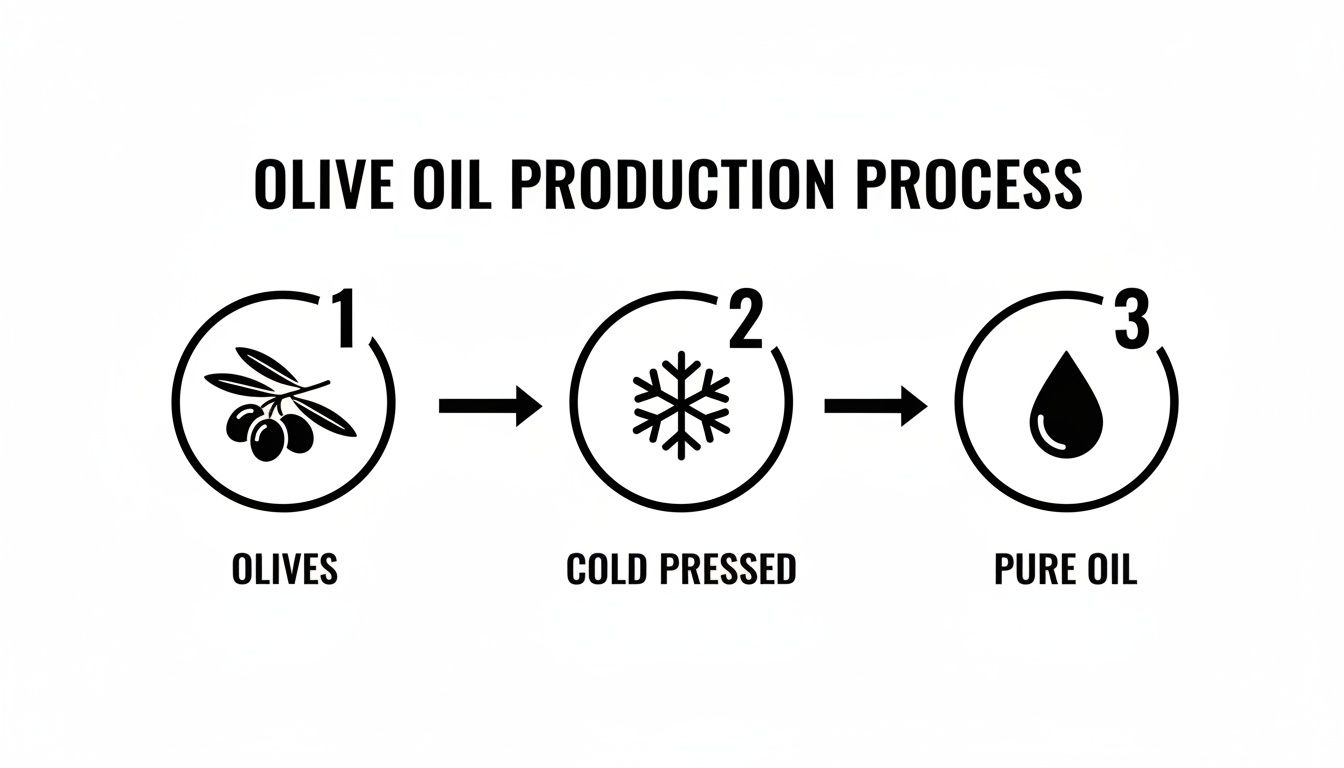
It illustrates a clean, three-step transformation that champions quality over quantity at every turn.
Then there is the other path: the industrial factory method. This process is engineered for one goal: maximum yield at any cost. This is how many of the cheaper oils labeled ‘Olive Oil’ or ‘Light Olive Oil’ are made. Inside these facilities, the olive pulp is often blasted with high heat and washed with chemical solvents like hexane to violently extract every final, hidden drop of oil.
To grasp just how different these approaches are, let’s put them head-to-head.
Cold Pressed vs. Heat & Solvent Extraction At a Glance
| Attribute | Cold Pressed Method | Heat & Solvent Extraction |
|---|---|---|
| Extraction Process | Mechanical pressing or centrifuge only. No added chemicals. | High heat is applied, and chemical solvents (like hexane) are used. |
| Temperature | Kept low (typically below 27°C / 80.6°F) to preserve quality. | High temperatures are used to increase the amount of oil extracted. |
| Quality | Preserves natural flavors, aromas, and beneficial polyphenols. | Destroys delicate flavors and nutrients, resulting in a bland oil. |
| Yield | Lower yield, focusing on quality over quantity. | Maximizes the amount of oil extracted, prioritizing volume. |
| Final Product | Extra Virgin or Virgin Olive Oil with complex, robust character. | A refined, often tasteless oil that may be blended for flavor. |
The contrast couldn't be starker. One method is about artistry and preservation. The other is about brute force and volume.
This high-intervention approach fundamentally alters the nature of the oil. The heat triggers oxidation, which demolishes the flavor and obliterates nutrients. The chemical solvents must then be boiled away, subjecting the oil to even more stress. The final product is often so bland and lifeless that producers must blend in a small amount of virgin olive oil just to give it a faint memory of its olive origins.
The distinction is night and day. One process honors the fruit, protecting its integrity for a product rich in flavor and health. The other prioritizes extraction above all else, sacrificing the very soul of the oil for a fatter bottom line.
To learn more about this journey from tree to table, you can explore the complete process of olive oil production. Ultimately, choosing cold pressed means you’re choosing the craftsman’s touch over the factory’s assembly line.
Why Temperature Is The Guardian Of Quality
Why all the fuss about a few degrees? When it comes to creating extraordinary olive oil, temperature isn't a detail—it's the whole story. Keeping the process cool is the very heart of what makes a cold-pressed oil exceptional, acting as a fierce guardian of its quality, flavor, and nutritional might.
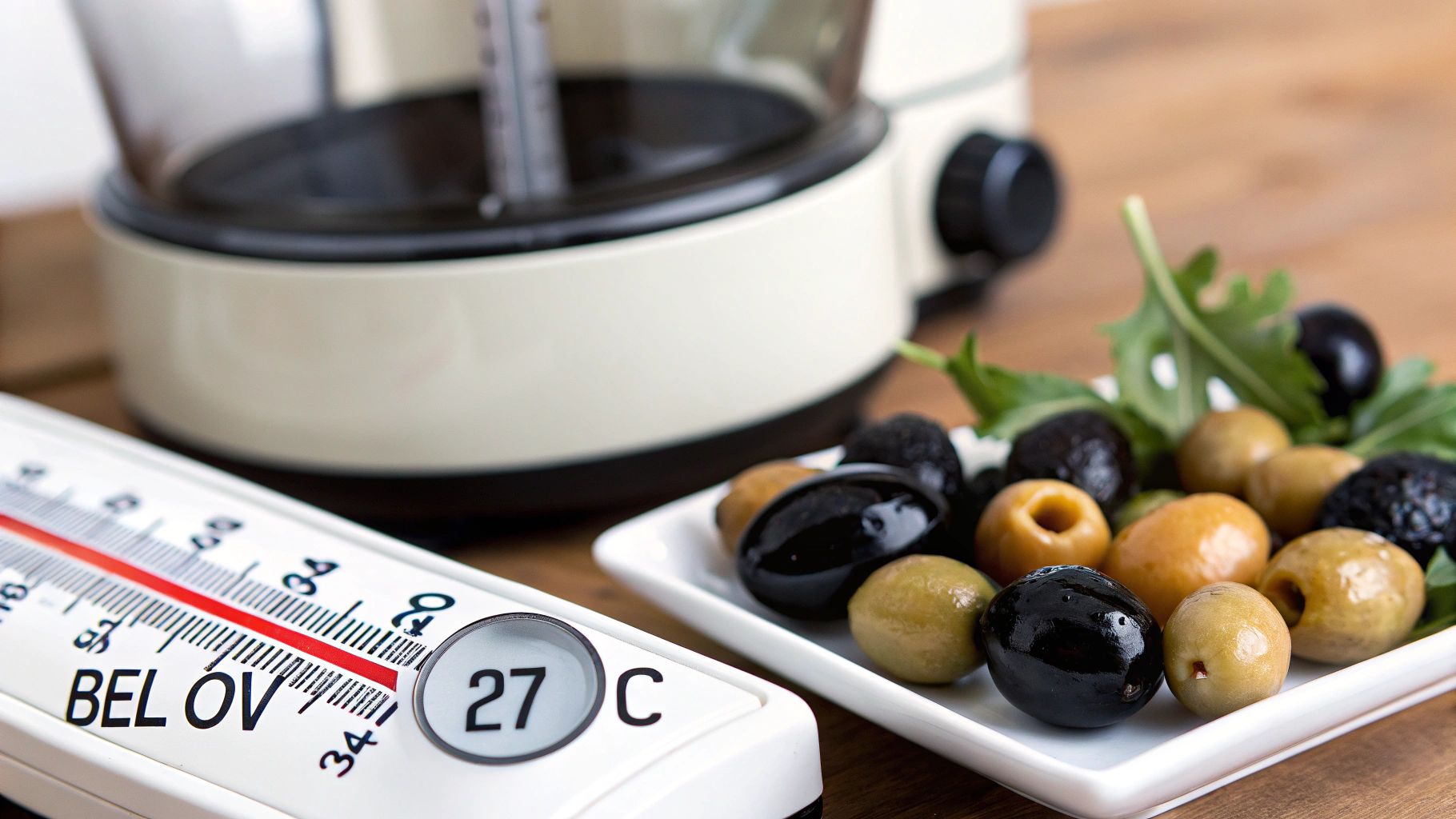
Think of heat as olive oil's mortal enemy. It triggers rapid oxidation, a chemical chain reaction that causes the oil to break down and develop stale, rancid flavors. It’s the very same process that turns a freshly sliced apple into a brown, mushy mess on your kitchen counter.
But the damage goes far beyond taste. Heat also annihilates the precious compounds that make olive oil a nutritional powerhouse.
Protecting The Good Stuff
The most vital of these heat-sensitive compounds are polyphenols, which include a particularly powerful one called oleocanthal. These are not just scientific terms on a lab report; they are the source of the very best qualities of a great olive oil:
- The Peppery Kick: That satisfying, sharp tingle at the back of your throat? That's the signature of oleocanthal, a potent natural anti-inflammatory.
- The Fresh Aroma: The vibrant, grassy, or fruity scent of a world-class oil comes from delicate aromatic compounds that heat causes to simply evaporate into thin air.
- The Health Benefits: Polyphenols are powerful antioxidants linked to improved heart health and the protection of your body’s cells from damage.
Staying below the strict 27°C (80.6°F) threshold isn't just a guideline; it's the unbreakable law for producing true extra virgin olive oil. It is the only way to keep these priceless, health-giving molecules intact.
A fitting analogy is brewing a delicate green tea. If you scorch the leaves with boiling water, you get a bitter, undrinkable mess. But use water at the correct, cooler temperature, and you unlock its subtle, complex flavors. The principle is identical for olive oil.
By keeping the entire process cold, producers protect the very soul of the oil. This wisdom extends to your own kitchen. Understanding the limits of different cooking oils is critical for every cook, as this guide to High Smoke Point Oils explains beautifully.
To explore how temperature impacts oil even further, you can learn all about the olive oil heating point and what it means for your cooking.
Decoding Olive Oil Labels To Find The Real Thing
Walking down the olive oil aisle can be a bewildering experience. Bottle after bottle makes grand promises. How can you possibly know what you’re really getting? This is your field guide to cutting through the marketing noise and shopping with the confidence of an insider.
Let’s begin with the single most important rule: for an oil to earn the coveted Extra Virgin Olive Oil (EVOO) designation, it must come from a cold press or cold extraction process. This is not a friendly suggestion. It is a non-negotiable international standard that serves as your guarantee of a certain level of quality.
And people are finally catching on. The global demand for cold pressed olive oil is projected to explode from $20.31 billion to an incredible $34.17 billion by 2034. This seismic shift is being driven by smart shoppers like you, who are actively seeking the phenomenal flavor and health benefits that only this gentle production method can preserve. You can see the full story in these olive oil market trends.
Understanding The Olive Oil Grades
Once you venture beyond EVOO, the labels tell a dramatically different story about how the oil was made. Here’s a quick primer to help you see past the marketing spin:
- Virgin Olive Oil: Like its "extra" cousin, this oil is also cold pressed. The crucial difference is that it has minor flavor imperfections, so it doesn't quite meet the flawless sensory profile of an EVOO. It remains a good, unrefined oil.
- Olive Oil (or Pure Olive Oil): Here is where the deception begins. This product is almost entirely refined oil—meaning it was extracted with heat and chemicals—that has been blended with a tiny amount of virgin olive oil simply to add back a hint of flavor.
- Light Olive Oil: The name is a stroke of marketing genius, and it is utterly misleading. "Light" has absolutely nothing to do with calories. It refers to the light, neutral flavor and pale color—the direct result of a harsh refining process that has stripped the oil of its character and beneficial compounds.
One of the most common phrases you'll encounter is "First Cold Pressed." In truth, this is a redundant marketing term. It’s a relic from the days when old-fashioned presses might have squeezed the olives a second time. With today's hyper-efficient centrifugal extractors, all extra virgin oil comes from a single, continuous process. Seeing the word "first" doesn't mean it's superior—it’s just a clever bit of advertising.
Knowing what these terms truly signify empowers you to sidestep the inferior oils and head straight for the authentic article. If you want to become a true expert, dive into our complete guide on how to read an olive oil label.
How To Buy And Protect Your Liquid Gold
Now that you know the secret behind the "cold pressed" promise, it’s time to put that knowledge to work. You can now walk into any store with confidence, select a superb bottle of olive oil, and know exactly how to keep it that way.
The world has woken up to the magic of high-quality olive oil. This surging demand, especially for cold-pressed varieties, has caused the market to explode. Global production has tripled over the last 60 years, now reaching a staggering 2,589,000 tonnes. This gives you more choice than ever before, which is both a blessing and a challenge.
Your Checklist For Choosing Quality
When you’re facing that wall of bottles, don’t let yourself be paralyzed by choice. Simply look for a few key clues that separate the genuine article from the impostors.
-
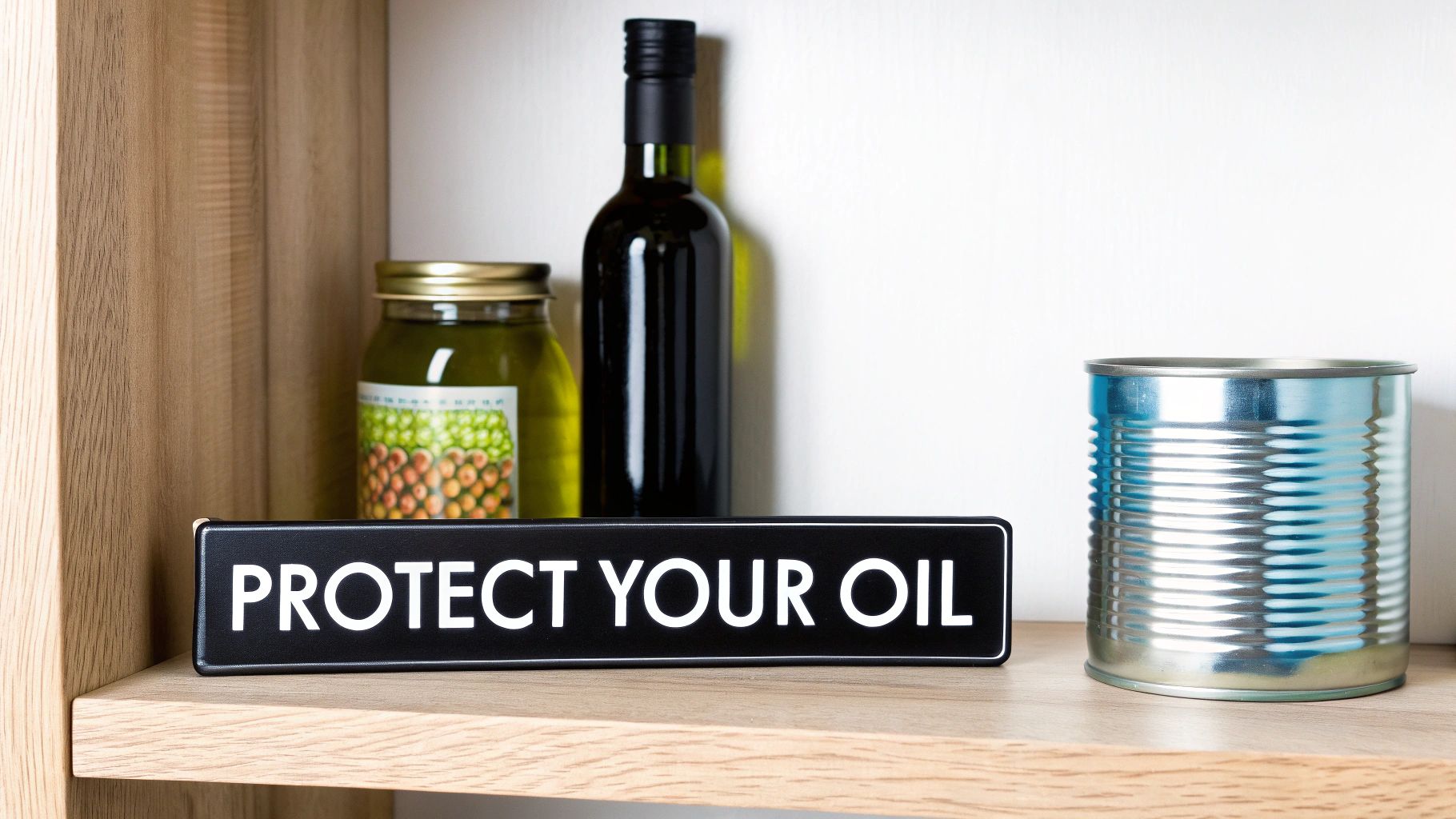
Dark Packaging: Light is one of olive oil's greatest enemies. A producer who cares about their oil would never bottle it in clear glass. Always reach for dark glass or an opaque tin can.
-
Harvest Date: Freshness is paramount. A "best by" date can be deceptive. What you really want is a harvest date. Look for an oil harvested within the last year to experience its peak flavor and maximum health benefits.
-
Certifications: Official seals like PDO (Protected Designation of Origin) are a fantastic sign. This tells you the oil was grown, pressed, and bottled in a specific geographical region using time-honored local traditions.
Once you get that beautiful bottle home, remember the three saboteurs that will ruin it: heat, light, and air. Store your oil in a cool, dark place like a pantry—and never, ever keep it next to the stove.
Treating your oil with care ensures every last drop is as vibrant and healthy as the day it was pressed. For an even more detailed strategy, check out our tips on how to buy olive oil like a true connoisseur.
Busting a Few Olive Oil Myths
Even with a solid grasp of the fundamentals, a few persistent myths about olive oil always seem to pop up. Let’s dismantle some of the most common points of confusion so you can shop for and cook with olive oil with complete confidence.
Is "First Cold Pressed" Better Than "Cold Pressed"?
In a word? No. This phrase is a ghost from a bygone era of oil production. It’s a holdover from a time when old-school hydraulic presses sometimes needed a second, harder squeeze of the olive paste to extract all the oil.
Today’s modern centrifuges are incredibly efficient. They extract all the precious oil in one single, continuous step. This means virtually all extra virgin olive oil is, by definition, from a "first" press. Seeing "First Cold Pressed" on a label is pure marketing; it does not mean the oil is of higher quality than one simply labeled 'cold pressed' or 'cold extraction'.
Can You Actually Cook With Extra Virgin Olive Oil?
Yes, absolutely. This may be the most stubborn and damaging myth in the entire culinary world. A quality EVOO has a smoke point between 350-410°F (177-210°C). That is more than high enough for the vast majority of home cooking, from sautéing vegetables to roasting chicken.
What’s more, the high concentration of stable monounsaturated fats and powerful antioxidants makes it more resistant to breaking down under heat than many other common cooking oils. So go ahead and cook with it. You’ll be rewarded with incredible flavor and peace of mind.
Does "Light" Olive Oil Mean Fewer Calories?
Not for a second. This is arguably the most deceptive label on the grocery store shelf. "Light" has nothing to do with calories or fat content. It refers only to the oil's pale color and neutral flavor.
"Light" olive oil is a heavily refined product, tortured with heat and chemicals that strip out its color, flavor, and virtually all of its health-giving polyphenols. It is a nutritionally barren choice compared to its extra virgin counterpart.
So, How Can I Spot a Genuinely Good Olive Oil?
Forget the marketing slogans. Your two best tools are your own nose and palate. Before it even touches your lips, a great EVOO should smell fresh and alive—you might detect notes of green grass, artichoke, tomato leaf, or fresh herbs.
When you taste it, you’re looking for complexity. It should taste clean and fruity at first, followed by a peppery or slightly bitter finish that catches in the back of your throat. That little kick is a very good sign! It’s the calling card of those powerful, healthy polyphenols hard at work.
At Learn Olive Oil, we believe that understanding these details is the key to truly appreciating this incredible food. To deepen your knowledge, explore our expert guides and tasting notes and continue your journey into the world of premium olive oil. Visit us at https://learnoliveoil.com to get started.
 Learn Olive Oil
Leave a comment