If you want to truly master how to use olive oil for cooking, you must stop thinking of it as a single ingredient. Instead, I want you to picture a family of ingredients, each with a distinct personality, each with a specific job in your kitchen. Here's the secret in a nutshell: Match the oil’s character and smoke point to your cooking method. Reserve those bold, flavorful extra virgin olive oils for finishing touches that dazzle, and reach for their more refined, milder cousins when the heat is on.
Your Guide to Cooking With Olive Oil
Let's banish the notion of a single, all-purpose bottle of olive oil standing guard by the stove. The real magic begins the moment you stop treating it like a generic cooking fat and start seeing it for what it truly is: a foundational flavor component. This is the simple secret that separates food that is merely cooked from food that becomes truly memorable.
Staring at the grocery store shelf can feel paralyzing. "Extra virgin," "pure," "light"—what do these labels truly mean for your cooking? It’s far simpler than the industry wants you to believe. A pungent, grassy Extra Virgin Olive Oil (EVOO) is an entirely different culinary tool than a neutral, golden "light" olive oil.
Choosing Your Culinary Partner
Once you discover the unique personality of each type of oil, you will begin making choices that instinctively elevate every dish you create. This isn't about memorizing a long list of rigid rules; it's about developing an intuitive feel for what works.
- When Flavor is the Star: A high-quality, delicate EVOO is your secret weapon when you want its complex, fruity notes to command attention. Think of it as a final flourish, not the everyday workhorse.
- For All-Purpose Heat: A more refined option, often labeled simply "olive oil" or "pure olive oil," delivers a higher smoke point and a much milder flavor. This makes it your go-to for daily sautéing, roasting, and even light frying.
This decision tree gives you a quick visual for picking the right olive oil for the job.
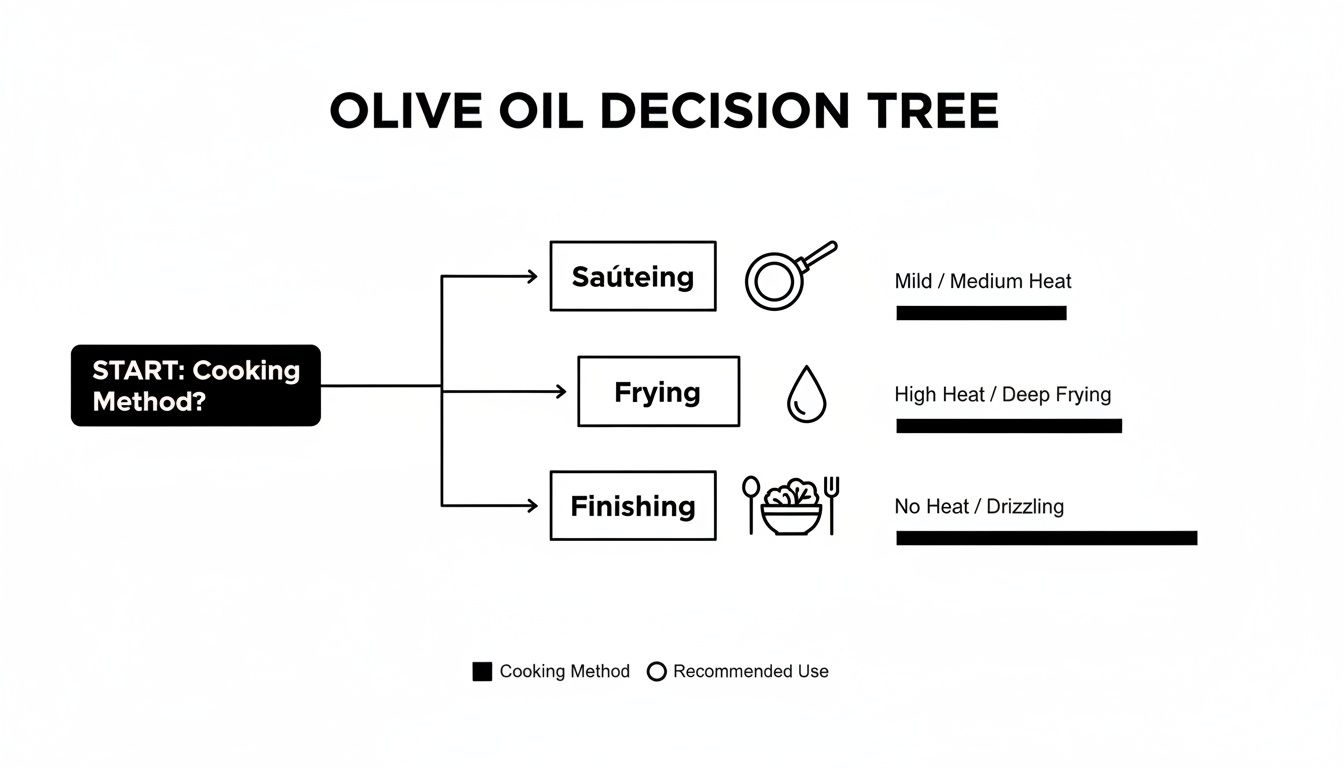
As the chart reveals, your cooking method—whether you’re turning up the heat for a stir-fry or gently drizzling over a finished soup—is the compass that should guide your choice.
Beyond a Condiment: A Global Staple
The appreciation for olive oil's incredible range is exploding. The global market was recently valued at a staggering USD 19.4 billion, with experts predicting consumption will soon eclipse 3 million tonnes. This isn't a fleeting trend; it's a fundamental shift in how people cook, a realization that olive oil is essential for far more than just Mediterranean dishes. For more details on the https://learnoliveoil.com/best-olive-oils-for-cooking, our guide has you covered.
All this inspiration often sparks a desire for a better kitchen to cook in. If you're considering a change, there are excellent guides on updating your kitchen without a massive investment.
The right olive oil doesn't just cook your food; it becomes an integral part of it. It can be a subtle background note or the star of the show. Your job as the cook is simply to cast it in the right role.
Let’s look at a quick reference chart to make these choices even easier.
Quick Guide: Which Olive Oil To Use For Your Cooking Method
Here is a simple breakdown matching common cooking techniques with the ideal olive oil.
| Cooking Method | Best Olive Oil Type | Typical Smoke Point Range (Fahrenheit) | Best For |
|---|---|---|---|
| Finishing & Drizzling | High-Quality Extra Virgin | 350-410°F | Drizzling on soups, salads, pasta, bread |
| Sautéing & Light Frying | Regular or Pure Olive Oil | 390-470°F | Sautéing vegetables, pan-searing chicken |
| Roasting & Baking | Regular or Pure Olive Oil | 390-470°F | Roasting potatoes, vegetables, baking cakes |
| Deep Frying | Refined or Light Olive Oil | 465-470°F | Frying chicken, french fries, calamari |
| Vinaigrettes & Dressings | Extra Virgin Olive Oil (EVOO) | 350-410°F | Emulsifying into dressings and marinades |
This table should help you quickly grab the right bottle without a second thought. By the time you finish this guide, you will be using olive oil with the confidence of a seasoned chef, turning good dishes into unforgettable ones.
Understanding Olive Oil Smoke Points
Let's finally put to rest one of the most stubborn myths in the kitchen: the false belief that you cannot use your "good" olive oil for high-heat cooking. Countless home cooks, panicked by the first wisp of smoke, instinctively reach for a different oil the moment the temperature climbs. The truth is far more empowering and will give you permission to use your favorite olive oils much more freely.
The term smoke point is simply the temperature where an oil stops shimmering and starts to smoke. When this happens, the oil is breaking down, a process that can make your food taste burnt and acrid. It’s a vital concept for any cook, but the numbers you see on charts fail to tell the whole story, especially when it comes to olive oil.
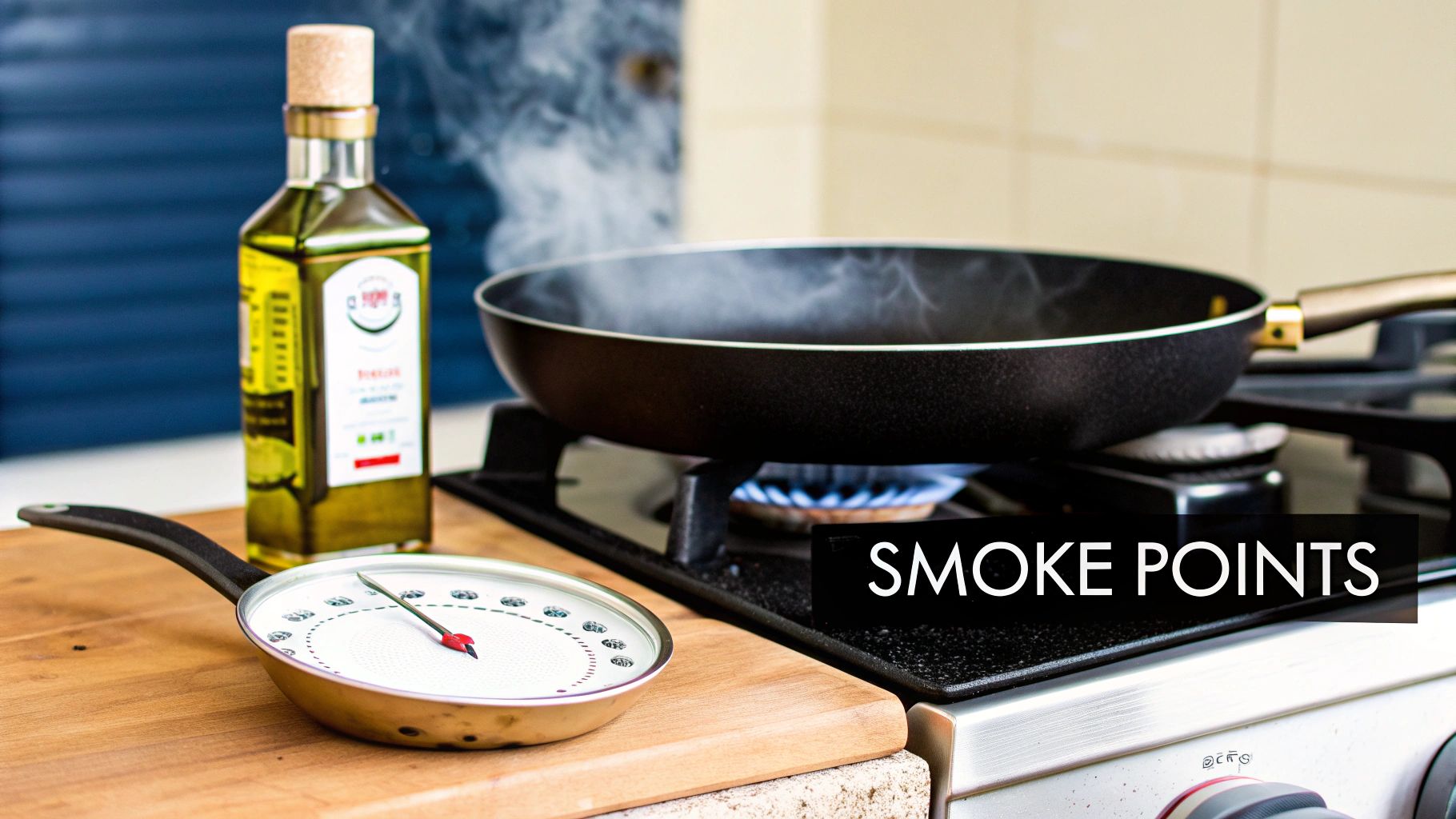
Why Quality EVOO Defies Simple Numbers
Here’s the secret: an oil's smoke point isn't a single, fixed number. It’s a range, and that range depends enormously on the oil’s quality, age, and filtration.
High-quality Extra Virgin Olive Oil, for instance, is brimming with powerful natural antioxidants called polyphenols. These compounds do more than just add that peppery flavor and deliver health benefits—they actively shield the oil from breaking down under heat. Think of them as tiny bodyguards for the oil's fat molecules, fending off heat damage far longer than you would ever expect.
This is why a fresh, high-polyphenol EVOO is dramatically more stable than an older, lower-quality one, even if they share the same label. It’s also why discerning chefs worldwide confidently use EVOO for sautéing and even shallow frying.
The presence of antioxidants and low free fatty acids in high-quality extra virgin olive oil makes it surprisingly resilient to heat. Its smoke point is often higher and more stable than most people believe, making it a versatile choice for everyday cooking.
Practical Smoke Point Ranges for Your Kitchen
Instead of trying to memorize exact degrees, it's far more useful to think in practical temperature ranges that match how you actually cook. Knowing these general guidelines will give you the confidence to sear a steak or stir-fry vegetables without smoking up your kitchen.
Here are the typical smoke points you can expect, giving you a clear map for when to use each one.
- Extra Virgin Olive Oil (EVOO): Generally falls between 350°F and 410°F. This range is perfect for most stovetop cooking—sautéing garlic, pan-searing chicken breasts, or roasting vegetables up to 400°F.
- Virgin Olive Oil: You don't see this one as often, but its smoke point is similar to EVOO's, hovering around 390°F. You can use it in much the same way.
- Refined Olive Oil (often labeled "Olive Oil" or "Pure Olive Oil"): This is where heat tolerance soars, reaching between 390°F and 470°F. Its neutral flavor and high stability make it a workhorse for searing, deep frying, and high-heat roasting.
- "Light" Olive Oil: Remember, "light" refers to flavor and color, not calories! It’s the most refined and boasts the highest smoke point, often reaching up to 470°F, making it a reliable choice for any high-temperature method.
Understanding these ranges lets you move beyond the myth and see every bottle in your pantry for its true potential. If you wish to dig deeper, you can learn more about the science behind olive oil's smoke point and how it all works. This knowledge empowers you to use olive oil not just for drizzling, but for nearly every task in the kitchen.
Sauté, Fry, and Roast: Putting Olive Oil to Work
Knowing your smoke points is like having the map, but the real adventure begins at the stove. This is where technique, taste, and a little intuition converge. Think of this not as following a rigid rulebook, but as building your culinary instincts, starting with three of the most common cooking methods.
Mastering the Sauté
The sauté is where countless incredible dishes are born. It’s that magical moment you hear the sizzle of garlic hitting shimmering oil, and the entire kitchen is filled with an intoxicating aroma. This is where you build your foundation of flavor, and your choice of olive oil is the very first brick.
For quick tasks like wilting spinach or browning mushrooms, a good quality extra virgin olive oil over medium heat is perfect. It does more than just prevent sticking; it actively infuses the food with its unique grassy or peppery notes. For a deeper dive, our complete guide to sautéing with olive oil has you covered.
But what if you're starting a soup or a hearty stew destined to simmer for hours? That's when a robust EVOO becomes your secret weapon. Its strong character will not fade during the long cook, adding a complex depth that you simply cannot get from a more neutral oil.
The Art of Frying With Olive Oil
Many home cooks are nervous about frying with olive oil, believing it’s too precious or delicate for high heat. But if you look at kitchens across the Mediterranean, you’ll find it is the go-to fat for creating a perfectly golden, crispy crust on everything from chicken cutlets to potatoes.
The trick is simply to use the right kind. A refined or "pure" olive oil is your best friend here, thanks to its high smoke point of up to 470°F. This allows you to achieve a fantastic sear that creates a crust, sealing in moisture so the food essentially steams from the inside. The payoff? A wonderfully crispy exterior and a tender, juicy interior, all without the heavy, greasy feeling some other frying oils can leave behind.
When you fry with a quality olive oil, you're not just cooking the food; you're seasoning it from the outside in. The clean flavor of the oil enhances the food, rather than masking it.
Of course, mastering techniques like sautéing and frying begins with a solid foundation. That includes selecting the right skillets and griddles to ensure you get that perfect, even heat distribution every single time.
Roasting for Maximum Flavor
Roasting is where olive oil truly works its magic. When you toss vegetables—think broccoli, carrots, or Brussels sprouts—in olive oil and subject them to the high, dry heat of an oven, something extraordinary happens.
That beautiful browning and those crispy edges you crave? That's caramelization, and it’s what unlocks the natural sweetness hidden inside the vegetables. A standard, pure olive oil is a fantastic all-around choice for roasting. It can easily handle the temperature, and its milder flavor allows the vegetables to be the star.
But don't stop there. This is a brilliant opportunity to get creative and start pairing your oil to your food.
- Asparagus or Bell Peppers: Try a fruity, delicate EVOO to brighten their fresh flavors.
- Potatoes or Root Vegetables: A bold, peppery EVOO has the backbone to stand up to their earthy notes.
Flavor Pairing Your Olive Oil with Your Food
Once you are comfortable, you can begin to think like a chef by pairing the specific flavor profile of your olive oil to complement the ingredients in your dish. A robust oil perfect for a steak might overpower a delicate piece of fish. This table is an excellent starting point for matching flavors.
| Olive Oil Profile | Flavor Notes | Best Food Pairings | Example Dishes |
|---|---|---|---|
| Delicate | Buttery, light, subtle fruitiness, smooth finish | Fish, shellfish, fresh greens, light vinaigrettes, baking | Seared scallops, lemon-dill salad dressing, olive oil cake |
| Fruity | Grassy, green apple, tomato leaf, medium bitterness | Vegetables, chicken, pesto, pasta, bruschetta | Roasted asparagus, grilled chicken with herbs, classic basil pesto |
| Robust | Peppery, spicy, assertive bitterness, bold finish | Red meat, stews, hearty soups, drizzling over beans | Grilled steak, lentil soup, bean-and-garlic dip (Fava) |
Thinking about food and oil pairings this way elevates your cooking from a mere process to a true art form. It's about creating layers of flavor that work in harmony.
It’s fascinating to see how different cultures embrace these techniques. Spain, for instance, leads the world in olive oil use, with an average consumption of 14.2 liters per person each year. Italy is right behind at 11.3 liters. Meanwhile, the United States averages just 1.1 kilograms per capita. This just goes to show how much opportunity there is for North American kitchens to explore the incredible versatility of this ancient ingredient.
Finishing Dishes With Olive Oil
Some of the most breathtaking olive oils I have ever tasted never see the heat of a pan. This is where the real joy begins—where you stop thinking of a beautiful Extra Virgin Olive Oil as just another cooking fat and start treating it as what it truly is: a finishing ingredient. A final, generous drizzle is the secret that elevates a good dish into something truly special.
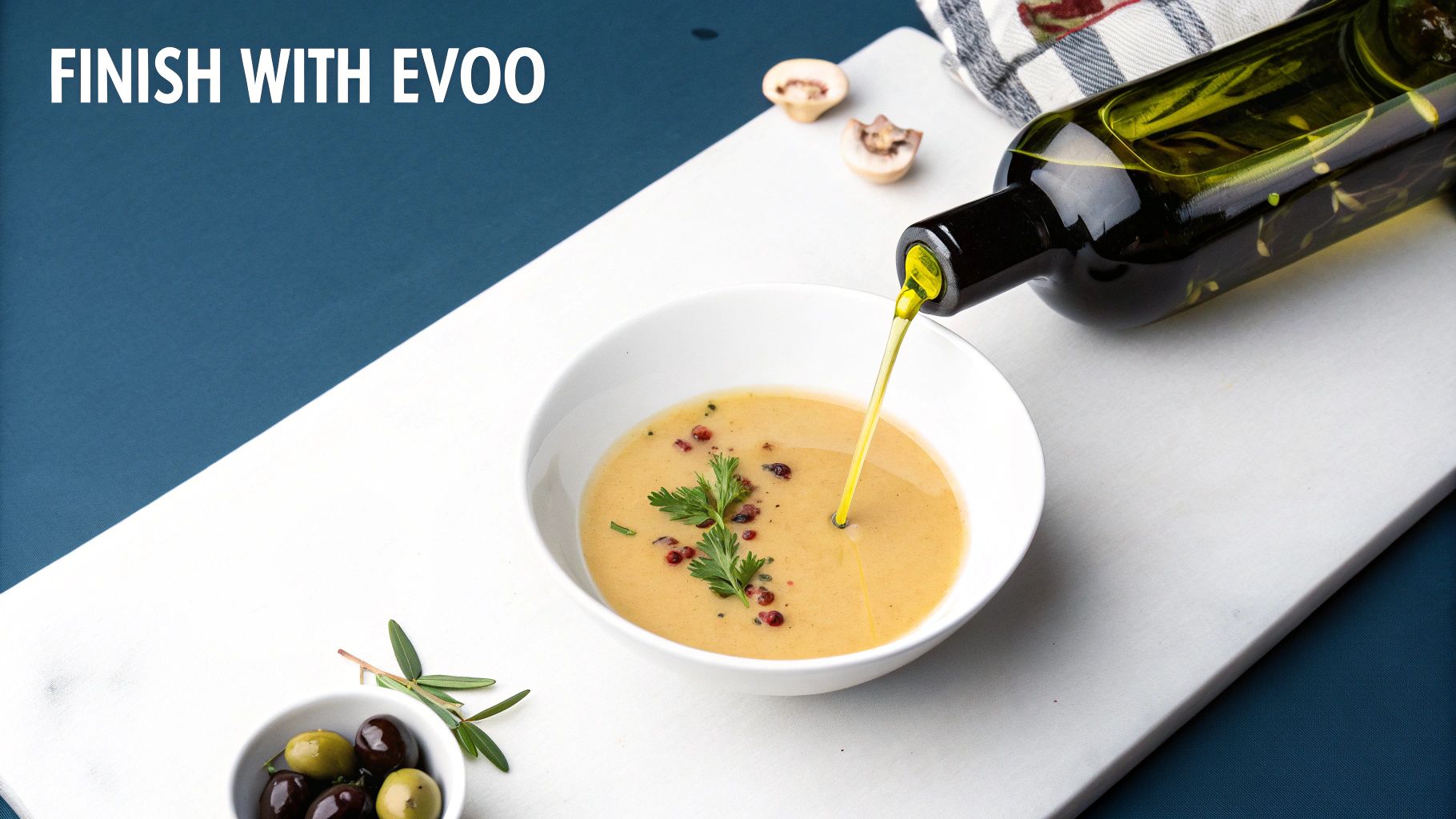
Picture it: a shimmering, emerald stream of peppery oil cascading over a hearty white bean soup. Or anointing a perfectly grilled steak, letting the oil’s bright, grassy notes slice through the rich, smoky char. This last-minute touch introduces a layer of complexity and aroma that direct heat would have simply cooked away.
The Magic of the Final Drizzle
When you use EVOO as a finisher, you are preserving all of its most delicate, volatile aromatic compounds. These are the nuances—the hints of green tomato, artichoke, or almond—that make a premium oil worth its price. Heating these oils can dull their personality, but drizzling them on a finished dish allows their full character to bloom.
And this technique is incredibly versatile. It’s not just for savory dishes, either.
- Over creamy soups: A bold, robust EVOO adds a spicy counterpoint to a velvety lentil or squash soup.
- On grilled meats and fish: A fruit-forward, medium-bodied oil can brighten the flavor of grilled chicken or a flaky white fish right before it hits the table.
- With roasted vegetables: Once they’re out of the oven, a final drizzle reinvigorates vegetables like asparagus, broccoli, or bell peppers.
- Even on dessert: I'm serious. A scoop of good vanilla ice cream with a drizzle of a delicate, buttery olive oil and a few flakes of sea salt is a complete revelation.
Think of a finishing oil like you would a high-quality perfume. It’s the last thing you add, and it’s meant to make a powerful, lasting impression. The goal is to enhance, not overwhelm, creating an experience that begins the moment the plate arrives.
Crafting the Perfect Vinaigrette
Beyond a simple drizzle, finishing with olive oil is the key to creating world-class vinaigrettes. Forget those bland, separated bottles from the store. A homemade vinaigrette is where the true character of your EVOO gets to shine, and the science behind it is actually quite simple.
It all comes down to emulsification. You are simply forcing two liquids that naturally repel each other—oil and vinegar—to come together. The classic ratio is the perfect starting point: three parts oil to one part acid.
By whisking vigorously, you are breaking the oil into microscopic droplets that become suspended in the vinegar. This creates a creamy, stable dressing that clings beautifully to your greens instead of pooling at the bottom of the salad bowl.
Vinaigrette Formulas Beyond the Basics
Once you've mastered the basic technique, you can move far beyond simple balsamic. The possibilities are endless. Use these ideas as a launchpad for your own creations.
-
Zesty Lemon-Herb:
- Oil: A fruity, medium-intensity EVOO works great here.
- Acid: Freshly squeezed lemon juice.
- Flavor: Finely chopped fresh parsley, a dab of Dijon mustard, and a minced garlic clove.
- Perfect For: Simple green salads, grilled fish, or drizzled over steamed asparagus.
-
Smoky Paprika & Sherry:
- Oil: A robust, peppery Spanish EVOO.
- Acid: Sherry vinegar.
- Flavor: A teaspoon of smoked paprika, a pinch of cumin, and just a whisper of honey.
- Perfect For: Hearty bean salads, roasted potatoes, or grilled chicken.
The real key is to taste and adjust as you go. Does it need more salt? A little more brightness from the acid? Maybe a touch of sweetness to restore balance? This is where you move from just following a recipe to actually cooking. If you want to dive deeper, check out our guide on making incredible sauces with olive oil.
Ultimately, finishing with olive oil is an invitation to play. It encourages you to really taste your oils, to know their individual personalities, and to discover how a simple, final flourish can become your signature move in the kitchen.
Common Mistakes When Cooking With Olive Oil
We have all been there. Even the most seasoned cooks can grab the wrong bottle in a hurry, store it in a less-than-ideal spot, or completely miss the signs that their "liquid gold" has gone past its prime. These are not minor missteps; they can genuinely ruin a dish and waste a perfectly good bottle of oil.
The good news? You don't have to learn these lessons the hard way. Understanding the most common pitfalls is the quickest way to protect your olive oil and ensure every meal tastes exactly as it should.
Treating All Olive Oil as Equal
The single biggest mistake I see is using a pricey, finishing-quality extra virgin olive oil for a high-heat sear. Imagine using a delicate silk scarf to scrub your floors—it’s simply the wrong tool for the job. You will not only burn off all those beautiful, complex flavors you paid a premium for, but you will also hit the smoke point far too quickly.
A good rule of thumb: save your best, most flavorful EVOO for drizzling and finishing. For everyday sautéing and roasting, a quality "pure" or regular olive oil is your dependable kitchen workhorse.
Storing It Next to the Stove
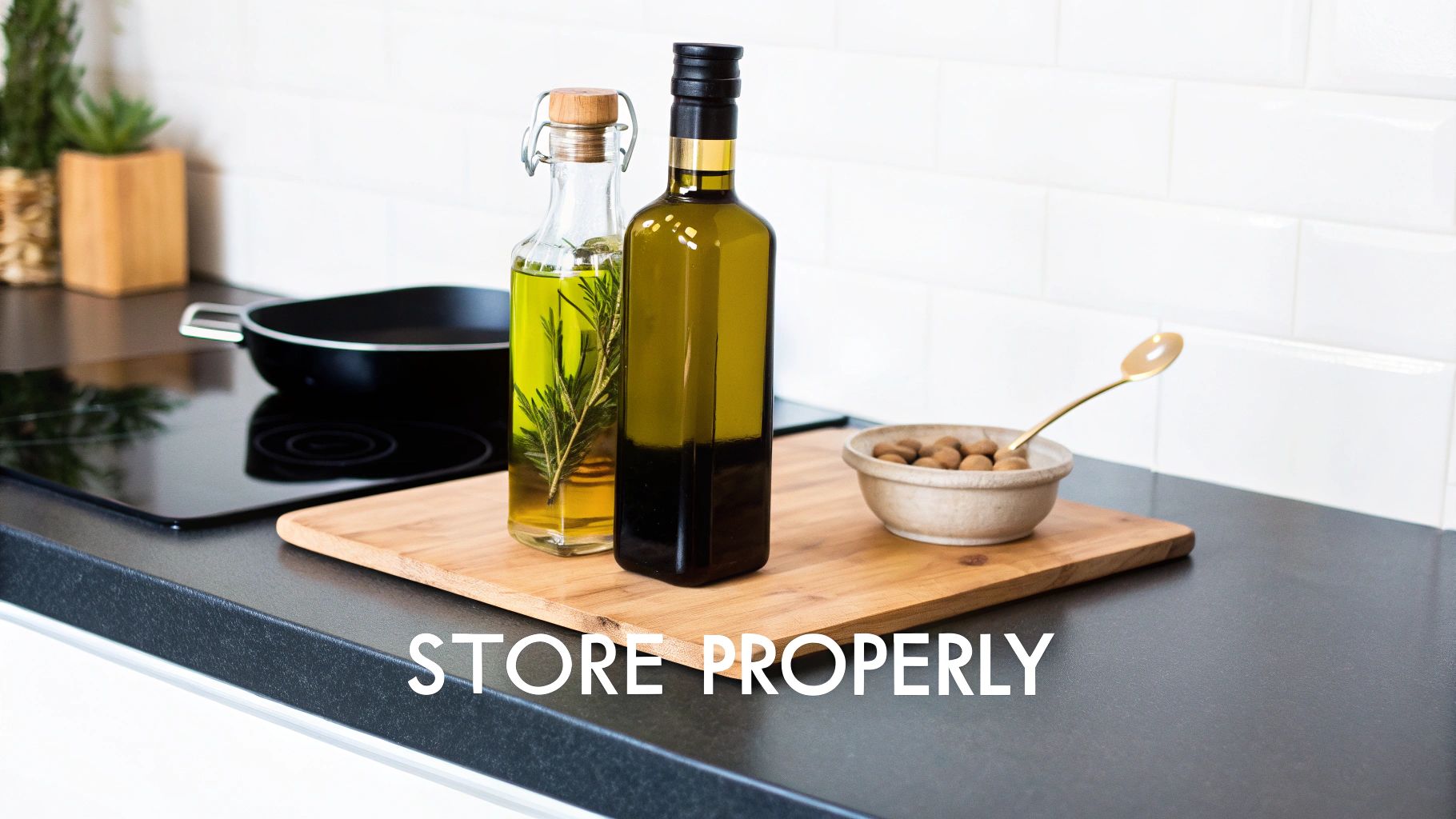
It seems so convenient, doesn't it? Keeping your go-to oil right there within arm's reach of the cooktop. Unfortunately, it is also the absolute worst place for it. Olive oil has three mortal enemies that will destroy its quality faster than anything: heat, light, and air.
Parking your bottle next to the stove subjects it to a constant barrage of heat, which dramatically accelerates oxidation. Before you know it, that fresh, vibrant oil will turn flat, stale, and tasteless.
I always tell people to treat olive oil like a fine wine. You wouldn't leave a great bottle of red on a sunny windowsill, would you? Give your oil the same respect. Store it in a cool, dark place like a pantry or cupboard, far away from the oven's heat.
Unknowingly Using Rancid Oil
This happens far more often than you would think, mostly because many of us have never tasted truly fresh olive oil. Cooking with rancid oil doesn’t just add an "off" flavor; it introduces musty, unpleasant notes that completely overpower your ingredients.
So, how can you spot a bad bottle? It's time to trust your senses.
- The Smell Test: Fresh olive oil has a clean, grassy, or peppery aroma. If yours smells like crayons, old walnuts, or even putty, it's time to toss it.
- The Taste Test: Pour a little on a spoon. Good oil might have a pleasant bitterness or a peppery tickle in the back of your throat. Rancid oil, on the other hand, will just taste greasy, waxy, and stale.
When in doubt, throw it out. It is not worth compromising an entire meal. For a deeper dive, it's worth exploring the common olive oil myths and truths that trip up so many home cooks.
Buying More Than You Can Use
That huge, economy-sized tin of olive oil can look like a fantastic deal, but it’s often a false economy. The moment you open that container, the clock starts ticking. Oxygen rushes in and the degradation process begins immediately.
Unless you're feeding an army or running a small cafe from your kitchen, you will probably never finish that giant tin before it goes rancid. You are far better off buying smaller bottles that you can realistically use within three to six months after opening. This simple habit guarantees you are always cooking with oil at its absolute peak of flavor and freshness.
Your Questions About Cooking With Olive Oil Answered
Even with the best techniques mastered, questions are bound to arise. It’s completely normal. So, let’s tackle some of the most common things I hear from cooks, with direct answers to help you feel completely confident every time you reach for that bottle.
Think of this as your final myth-busting guide to turn good cooking intentions into truly great food.
Can I Really Bake With Olive Oil?
You absolutely can, and you should! Swapping out butter or other oils for olive oil in certain baked goods is a brilliant move. A delicate, fruity extra virgin olive oil can bring a gorgeous, subtle complexity to things like cakes, muffins, and even some tarts.
It’s not just about flavor—it’s also about texture. The fats in olive oil often create a wonderfully moist crumb, and I find that cakes made with it stay fresher for longer than those made with butter. A great place to start is with recipes where that hint of fruitiness would feel right at home, like a lemon-polenta cake or a simple vanilla quick bread.
Does "Light" Olive Oil Have Fewer Calories?
This is probably the single biggest point of confusion out there, and the label is certainly misleading. Let me be clear: "light" olive oil does not have fewer calories or less fat than any other olive oil. All fats, regardless of type, have roughly the same calories—around 120 per tablespoon.
The word "light" refers only to the oil's flavor, aroma, and color. It has been highly refined and filtered, which strips out the robust olive notes, leaving it very neutral-tasting with a pale golden hue. This actually makes it a fantastic choice for high-heat cooking or for baking where you specifically don’t want any olive flavor to peek through.
Think of "light" as meaning light in taste, not light on calories. It’s a workhorse for frying and high-heat jobs, not a diet product.
How Can I Tell if My Olive Oil Is Actually High Quality?
The label is your first clue. You are looking for signs that a producer genuinely cares about what’s inside the bottle.
- Harvest Date: This is far more important than a "best by" date. It tells you when the olives were actually picked and pressed. The fresher, the better—always grab the most recent harvest date you can find.
- Origin: Look for a specific region, estate, or country ("Product of Italy" or "Grown in California"). A vague "Packed in…" often means oils from different places and qualities were blended together.
- Bottle Type: This is a non-negotiable for me. Quality oil will always be sold in a dark glass bottle or an opaque tin. This protects the oil from light, which is one of its worst enemies and quickly degrades the flavor.
Ultimately, however, the real test is tasting it. A great extra virgin olive oil should taste fresh, green, and vibrant. You might get notes of grass, artichoke, or a peppery finish, but it should never taste greasy, waxy, or like stale nuts. Your own palate is the most reliable guide you have.
Is It Safe to Reuse Frying Oil?
A very practical question for anyone who deep-fries at home. Yes, you can reuse olive oil, but you must follow a few important ground rules. First, only reuse oil that you’ve used for something fairly neutral, like French fries. If you fry fish in it, that oil is going to taste like fish forever.
Once you’re done, let the oil cool down completely. Then, you must strain it through a fine-mesh sieve or a few layers of cheesecloth to get rid of all the little food particles. If you skip this, those bits will just burn next time and make the oil taste bitter.
Store the strained oil in a sealed, airtight container somewhere cool and dark. As a general rule, you can get away with reusing it two or three times. But always trust your nose—if it smells "off" or funky, its cooking days are over. Taking these steps helps you get the most value out of every bottle.
At Learn Olive Oil, we believe that understanding this incredible ingredient is the first step to transforming your cooking. From the groves to your table, we’re here to make your journey simple and rewarding. Discover the World of Premium Olive Oil and elevate every dish you create.
 Learn Olive Oil
Leave a comment