Have you ever tasted an olive oil that leaves a sharp, peppery kick in the back of your throat? Or a pleasant bitterness that feels… alive? That's not a flaw. Far from it. It’s a secret handshake, an unmistakable sign that you’re experiencing one of nature's most powerful gifts—olive oil polyphenols.
These are the potent antioxidant compounds that truly define an exceptional extra virgin olive oil.
The Secret In Olive Oil You Can Actually Taste
Imagine a health secret hidden in plain sight, one that doesn't come in a pill but announces its presence with a spicy catch in your throat. This isn’t some modern supplement; it's the very soul of the world’s best extra virgin olive oils. That bitterness on your tongue and the peppery sensation are more than just flavor notes. They're your proof of quality and potency.
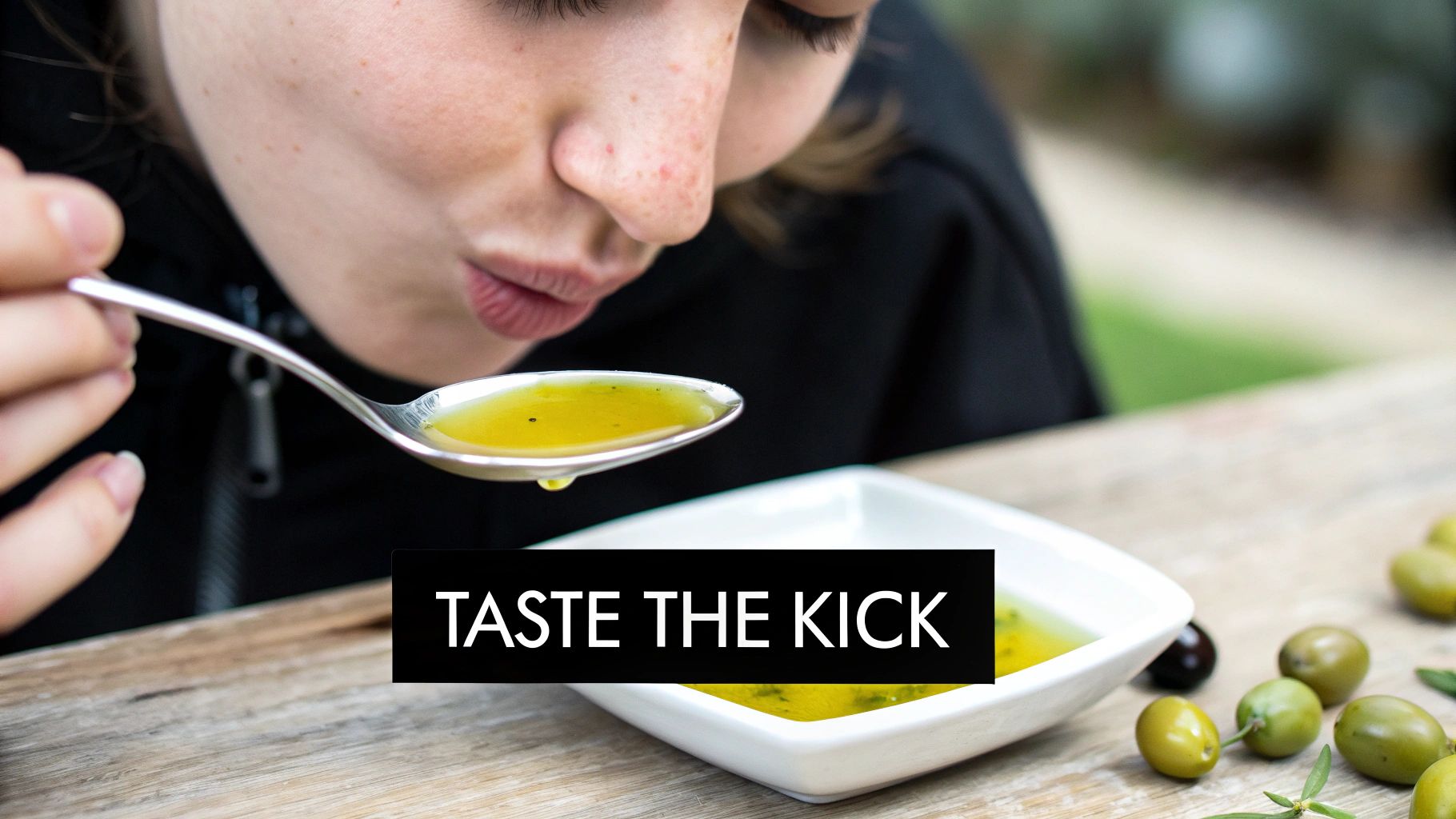
Those sensations are your body’s direct encounter with olive oil polyphenols. Think of them as the olive tree’s personal defense system. These are powerful antioxidants the tree produces to protect its fruit from harsh sun, pests, and environmental stress. When those olives are harvested early and milled with exceptional care, this protective army gets concentrated right into the golden oil.
The Flavor of Potency
For too long, many of us have been taught to prefer mild, buttery, almost bland olive oils. But in seeking out that mildness, we’ve missed the entire point. That intensity you might have questioned is the very thing health experts and chefs now actively search for.
The peppery, pungent, and bitter qualities in an olive oil are not defects. They are the sensory fingerprints of high polyphenol content, signaling that the oil is fresh, stable, and packed with health-promoting antioxidants.
So, just how potent can these oils get? The difference is staggering. On January 25, 2026, Cyprus-based producer Oleaphen announced a groundbreaking achievement: they verified a staggering 2,236 mg/kg of polyphenols in their 2025-2026 harvest. This didn't just break a record; it shattered it.
To put that in perspective, that's nearly 45 times the level of an average grocery store EVOO, which often clocks in below 50 mg/kg. You can get the full story on this record-breaking harvest at HighPhenolic.com.
From Supermarket Shelf To Superfood: A Polyphenol Snapshot
It's easy to get lost in the numbers, but this quick comparison shows just how vast the difference in quality can be.
| Oil Type | Typical Polyphenol Level (mg/kg) | What This Means For You |
|---|---|---|
| Refined Olive Oil | Nearly 0 | All protective compounds are stripped out during processing. No antioxidant benefits. |
| Standard EVOO | 50 – 150 | A basic starting point. Offers some benefits, but lacks the robust kick and potency. |
| High-Phenolic EVOO | 250+ | The EU health claim threshold. This is where you start getting significant, measurable benefits. |
| Ultra High-Phenolic EVOO | 500 – 2,000+ | An elite category. A true superfood with intense flavor and maximum health potential. |
This table really drives home the point: not all olive oil is created equal. The leap from a standard bottle to a high-phenolic one is immense.
This guide is your invitation to recalibrate your palate. We'll help you not only understand but also crave these intense, life-giving flavors. You'll soon realize that when you taste that peppery finish, you're tasting the vitality of the olive itself.
To truly appreciate these nuances, you can explore our complete guide on how to taste olive oil like an expert. By connecting flavor to function, you'll shift your entire perspective on what makes olive oil truly special.
What Exactly Are Olive Oil Polyphenols?
Let's pull back the curtain on the science, but don’t worry—you won’t need a lab coat. At their heart, olive oil polyphenols are the olive's own personal security detail. These natural compounds are produced by the olive tree to protect its fruit from the stresses of the environment, like the intense Mediterranean sun and various pests.
When olives are carefully milled into extra virgin olive oil, these protective powerhouses don't just vanish. Instead, they become concentrated in the oil, ready to be passed on to you. Think of them not as one single substance, but as a whole team of specialists, each with a unique job to do.
Meet the Polyphenol A-Team
While there are dozens of these compounds, a few key players are responsible for the most noticeable effects and benefits. Getting to know them is the first step in understanding why a peppery kick in your olive oil is such a good thing.
-
Oleocanthal: The Spicy Bodyguard
This is the star player behind that distinct peppery sensation you feel at the back of your throat. Oleocanthal is a potent natural anti-inflammatory. In fact, its action in the body is remarkably similar to ibuprofen, just without the side effects. That slight cough or sting isn't a flaw; it's tangible proof that Oleocanthal is present and accounted for. -
Oleuropein: The Bitter Guardian
Responsible for the crisp, clean bitterness found in fresh, robust oils, Oleuropein is a powerhouse antioxidant. In the olive, it fights off damage and spoilage. In your body, it continues that protective work, helping defend your cells from the daily grind. -
Hydroxytyrosol & Tyrosol: The Cellular Custodians
These are some of the mightiest antioxidants found anywhere in nature, and they're abundant in high-quality EVOO. They are essentially the cleanup crew, working tirelessly to neutralize harmful free radicals all over your body.
This group synergy is what makes olive oil polyphenols so special. They don't just have one job; they work together as a sophisticated team to protect the oil's freshness and, in turn, to protect you. You can take a deeper dive into the world of these specific compounds to better understand their individual roles.
Imagine your body’s cells are like brand-new cars. Over time, stress and environmental exposure cause them to "rust" on a microscopic level—a process known as oxidative stress. Polyphenols act as the ultimate rust-proofing treatment, shielding your cells and keeping them running smoothly.
The Fight Against Cellular Rust
This idea of oxidative stress is crucial for understanding why polyphenols are so valuable. It’s a normal process, but modern life—with its pollution, chronic stress, and processed foods—can put it into overdrive. This cellular "rusting" is directly linked to premature aging and a wide range of chronic health conditions.
Polyphenols are nature's answer. As powerful antioxidants, their main job is to seek out and neutralize the unstable molecules, known as free radicals, that cause this oxidative damage.
More Than Just Antioxidants
But the story doesn't end there. The benefits of these incredible compounds go far beyond simple antioxidant activity. A growing body of research shows they can positively influence everything from heart health to brain function.
For example, studies have shown that a diet rich in high-polyphenol olive oil can improve cholesterol profiles much more effectively than low-polyphenol oils. These compounds help increase "good" HDL cholesterol while preventing the "bad" LDL cholesterol from oxidizing—a critical step in maintaining cardiovascular wellness. This isn't just a theory; it's a tangible, measurable benefit of choosing the right oil.
By reaching for an oil that delivers that signature bitter taste and peppery finish, you're not just picking a cooking ingredient. You're choosing a potent, natural ally that actively helps keep your body in balance.
The Global Quest for High-Phenolic Olive Oil
The intense, peppery kick you get from a high-polyphenol olive oil isn't just about taste—it's the signature of a global movement gaining serious momentum. What started as a niche appreciation for artisanal quality has exploded. We're now seeing a full-blown quest for potency, fueled by a perfect storm of health research, savvy consumer demand, and agricultural innovation. This is more than a trend; it's a fundamental shift in how we think about our food.
The pursuit of olive oil polyphenols is reshaping the industry from the olive grove to the grocery aisle. Health-conscious shoppers are no longer swayed by vague labels or generic "extra virgin" promises. They're coming to the table armed with knowledge, actively hunting for oils that deliver measurable, science-backed benefits. This awareness is turning polyphenols from a happy accident of quality into a primary measure of value.
The Economics of Potency
You can see this shift clearly in the market numbers. The Mediterranean diet has long celebrated olive oil, but now we have hard data showing the economic power behind its potent compounds. The global olive oil market is already massive at $20.31 billion and is expected to soar to $34.17 billion by 2034.
But the really interesting story is happening within that larger market. The high-phenolic niche, once a tiny slice of the pie, is now a booming $431.2 million segment. Buyers are specifically seeking—and paying a premium for—oils with verified polyphenol counts. You can dig deeper into these numbers over at Fortune Business Insights.
This demand has carved out a new premium category where potency reigns supreme. Growers who used to focus purely on maximizing their yield are now fine-tuning their entire process to boost polyphenol content, even if it results in a smaller, more precious harvest. It’s a classic case of quality over quantity, and the market is proving them right.
This isn't just about selling a product; it's about delivering a verifiable outcome. The demand for high-phenolic oil marks a pivot toward 'food as medicine,' where consumers invest in their wellness one potent, peppery spoonful at a time.
Farming on the Front Lines
This global quest puts olive growers right at the center of the action. They're no longer just producing olives; they're cultivating potent delivery systems for these valuable compounds. This challenge is made even tougher by the realities of a changing climate. Unpredictable weather, long droughts, and rising temperatures all have a direct impact on an olive's ability to create high levels of polyphenols.
To rise to the occasion, farmers are getting more scientific and strategic. They're dialing in on the key factors that determine an oil's final potency:
- Cultivar Selection: It all starts with the right tree. Growers are planting more varieties like Coratina, Picual, and Moraiolo—genetic powerhouses naturally known for producing high polyphenol counts.
- Precision Harvesting: Timing is everything. Picking olives when they are still green and not fully ripe means you get less oil, but the oil you do get is far richer in those sought-after bitter and pungent polyphenols.
- Technological Innovation: From advanced soil sensors in the grove to state-of-the-art milling equipment designed to minimize heat and oxygen, technology plays a vital role in protecting every last precious molecule from tree to bottle.
This deliberate, often difficult, work is what separates a standard cooking oil from a true high-phenolic superfood. The global hunt for high-polyphenol olive oil isn't just about finding a better-tasting product. It’s a movement connecting our desire for wellness directly to the soil, rewarding the farmers who cultivate potency and pushing the entire industry toward a higher standard. You're watching a fascinating convergence of agriculture, science, and health play out in real time.
How Polyphenols Are Made Or Lost From Grove To Bottle
The staggering difference between a bland, lifeless olive oil and one that sings with a peppery, vibrant kick isn't an accident. It’s the result of countless critical decisions, a chain of events where excellence is forged, and potency can be squandered in a single misstep. The final measure of olive oil polyphenols in your bottle is a direct reflection of the producer's skill, philosophy, and unwavering commitment.
This journey from a sun-drenched grove to a sealed bottle is where the magic happens—or where it’s lost forever. Think of it less as manufacturing and more as carefully guiding fragile compounds home. Four key moments dictate the final outcome.
It All Starts With The Olive Cultivar
Long before the first drop of oil is ever pressed, the most fundamental decision has already been made: which olive to grow. Just as a winemaker obsessed with quality selects specific grapes for their unique character, an olive oil artisan must choose the right cultivar. When it comes to polyphenols, not all olives are created equal.
Some varieties are just genetic powerhouses, naturally built to produce high levels of these protective compounds.
- Coratina: An Italian heavyweight, famous for its intensely robust and peppery oils that often boast some of the highest polyphenol counts in the world.
- Picual: A Spanish favorite, celebrated for its stability and potent antioxidant content, which gives it a wonderfully bitter and pungent profile.
- Moraiolo: Another Italian classic that yields complex oils with strong bitter notes—a dead giveaway of its rich polyphenol makeup.
On the other hand, if you start with a milder variety like Arbequina, you’ll almost always get a lower-polyphenol oil, no matter how perfectly you handle everything else. The olive’s genetic blueprint sets the ceiling.
The Crucial Moment of Harvest
Once you have the right olives on the trees, the next big decision is when to pick them. This single choice represents a fundamental trade-off between the amount of oil you get and the quality of that oil.
If a farmer waits until the olives are plump, fully ripe, and dark purple, they'll squeeze the maximum amount of oil from their crop. The problem? By that point, the polyphenol content has already taken a nosedive. The most potent, health-giving compounds hit their peak when the olive is still young, green, and technically unripe.
This is the whole philosophy behind early-harvest oils. Producers who are chasing high polyphenol counts deliberately pick their olives weeks, sometimes even months, ahead of the traditional harvest. They knowingly accept a much smaller yield—in some cases, less than half the oil per olive—just to concentrate those precious, peppery compounds.
An early harvest is a statement of intent. It tells you the producer values the health-giving potency and vibrant flavor of the oil far more than the total volume they can produce.
The Mediterranean is the heartland of this practice, home to 98% of the world's olive plantations. Here, the contrast is stark: green, early-harvest olives can pack 161 mg/100g of total polyphenols compared to just 117 mg/100g in their mature, black counterparts. While some compounds are inevitably lost during milling, the head start from an early harvest is undeniable and is fueling the global demand for these high-phenolic oils.
The Art and Science of Milling
With the green olives harvested, the clock starts ticking. Fast. The fruit has to be milled into oil within just a few hours to stop oxidation, which immediately begins to destroy polyphenols. The milling process itself is another arena where quality is either preserved or lost for good.
The infographic below shows how the market is shifting as more people learn about these crucial production details.
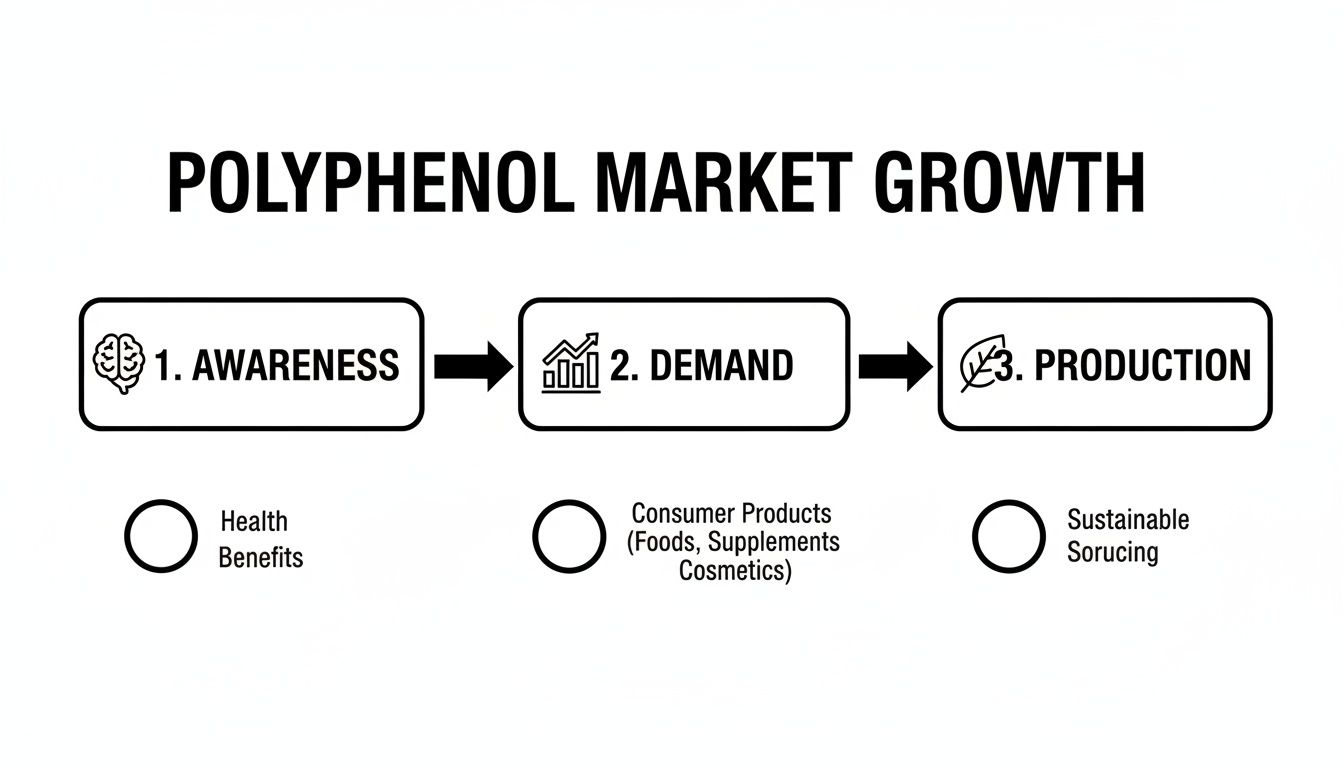
This trend is clear: educated consumers are now pushing producers to adopt better methods that protect polyphenol content.
The single most critical factor here is temperature. Polyphenols are incredibly sensitive to heat. A true "cold extraction" or "cold pressing" means the olive paste is kept below 27°C (80.6°F) during the entire mixing and extraction process. Any higher, and these volatile compounds begin to break down, robbing the final oil of both its potency and its flavor. If you want to dive deeper into this fascinating journey, you can check out our guide on how olive oil is made.
The Final Guardians: Storage and Bottling
Even after a perfect harvest and a masterful job at the mill, the work isn't over. The final enemies of polyphenols are light, heat, and oxygen. An absolutely exceptional oil can be completely ruined by sloppy storage.
Top-tier producers know this and take immediate action. They store their fresh oil in massive, temperature-controlled stainless steel tanks, often topping them with an inert gas like argon to push out every last bit of oxygen.
Finally, the bottle itself is the last line of defense. High-quality extra virgin olive oil should always be in a dark glass bottle or an opaque tin. A clear bottle is a huge red flag; it’s like leaving your oil out in the sun. The light floods in and degrades the polyphenols, turning a potent superfood into little more than a simple cooking fat before it even gets to your kitchen.
How To Find And Choose High-Polyphenol Olive Oil
Alright, you now understand what makes an olive oil a true powerhouse. The next step is the fun part: heading out into the wild to hunt down a bottle of this liquid gold. This isn't about guesswork. It’s about becoming a label detective, learning to spot the crucial clues that separate the potent from the pretenders.
Navigating the olive oil aisle can feel like a maze, but a few key indicators will lead you right to the good stuff. The goal is to build a mental checklist, turning your next shopping trip into a confident search for the very best.
Become a Label Detective
The story of an oil’s potency is written right on its label—if you know how to read it. Mass-market brands often hide behind vague terms, but true artisans are proud to show you the details of their craft.
Here are the non-negotiable clues you should be looking for:
-
Harvest Date: This is the single most important detail on the bottle. Look for a specific date (like "October 2023"). The fresher, the better, because olive oil polyphenols naturally degrade over time. A "best by" date alone isn't good enough; you need to know when the olives were picked.
-
Olive Cultivar: Producers who care about quality are proud of their olives. The label should name the specific varietal—think Coratina, Picual, or Moraiolo. A generic "Product of Italy" tells you almost nothing useful.
-
"Early Harvest" Designation: Seeing these words on a label is a huge green flag. It tells you the producer intentionally sacrificed a larger quantity of oil to get a higher quality, picking the olives when their polyphenol content was at its absolute peak.
Think of these three clues as your first filter. If a bottle is missing this basic information, it's probably best to just move on.
Decoding Potency and Protection
Once you’ve found a bottle that passes the initial test, a few more details can confirm you're holding a top-tier product. These clues speak directly to the oil's polyphenol content and the producer's commitment to keeping it that way.
First, look for a stated polyphenol count. This is the ultimate sign of transparency. A producer who invests in lab testing and prints a number like "300+ mg/kg" on the label is confident in their oil's power. Any oil with over 250 mg/kg is considered high-phenolic and is legally allowed to carry an EU health claim.
A specific polyphenol count on the label is your guarantee of potency. It transforms your purchase from a hopeful guess into an informed investment in your health.
Next, check out the packaging itself. Is the oil in a dark glass bottle or an opaque tin? This is absolutely essential. Light is a sworn enemy of polyphenols. A clear bottle is an immediate red flag, signaling that the producer either doesn't understand or doesn't care about protecting what’s inside.
While high-phenolic olive oil is a fantastic whole-food source of these compounds, it's worth noting the broader context. Some people looking to maximize their intake also explore dedicated polyphenol supplements to round out their routine.
Your High Polyphenol EVOO Buying Checklist
To make this even easier, think of this checklist as your secret weapon for the grocery aisle. It pulls together everything we've talked about into a quick, scannable guide.
| What to Look For | Why It Matters | Red Flag To Avoid |
|---|---|---|
| Specific Harvest Date | Polyphenols degrade over time. Fresher is more potent. | A "Best By" date with no harvest date. |
| "Early Harvest" Phrase | Shows the olives were picked for maximum polyphenol content. | Vague terms like "Premium" or "Gourmet." |
| Named Olive Cultivar | Indicates a single-origin, quality-focused oil. | A generic "Product of…" or "Blended Oils." |
| Polyphenol Count (mg/kg) | Provides objective proof of the oil's antioxidant power. | No mention of testing or polyphenol levels. |
| Dark/Opaque Bottle or Tin | Protects the oil from light degradation. | Clear glass bottles. |
| Origin/Estate Name | Transparency about where the oil comes from. | No information about the producer or farm. |
Having this mental checklist before you shop will help you quickly filter out the low-quality oils and zero in on the bottles that are truly worth your money.
Where to Look for Liquid Gold
Finally, where you shop matters just as much as what you look for. You’re simply not going to find a truly high-polyphenol olive oil in the cooking oil aisle of a massive supermarket chain. Those stores prioritize shelf stability and low prices, not freshness and potency.
Instead, direct your search toward places that value quality:
- Specialty Food Shops: Boutique grocers and gourmet stores often have curated selections from smaller, quality-focused producers. The staff there are usually more knowledgeable and can point you in the right direction.
- Trusted Online Retailers: Many of the world's best olive oil producers now sell directly to consumers online. This is often the best way to get the freshest oil, sometimes just weeks after it was milled.
- Farmers' Markets: If you happen to live in an olive-growing region, this is a fantastic way to meet the producers face-to-face and taste their oils before you buy.
By combining these strategies, you can confidently pick an oil that delivers both the powerful health benefits and the vibrant, peppery flavor you're after. For an even deeper dive, our complete guide on how to choose olive oil offers more tips to sharpen your skills.
Storing And Using Your High-Phenolic Olive Oil
So, you’ve done the detective work and brought home an exceptional bottle of high-polyphenol olive oil. Fantastic! You’ve just made a great investment in both your health and your palate. Now the mission shifts to protecting that liquid gold from its three mortal enemies: **heat, light, and oxygen**.
Think of those potent olive oil polyphenols as delicate, living compounds. The moment you twist open that cap, the clock starts ticking. Proper storage isn’t just a nice-to-have; it’s absolutely essential to ensure the vibrant, peppery powerhouse you paid for doesn’t degrade into just another bland cooking fat.
The Unbreakable Rules of Storage
The rules are simple, yet it's surprising how often they're broken. The absolute worst place to keep your oil is on the countertop right next to the stove—it's a brutal battlefield of heat and light. To keep its potency intact, you really just need to follow three commandments.
-
Keep It Cool: Heat is the fastest way to destroy polyphenols and turn a beautiful oil rancid. Your bottle belongs in a cool, dark pantry or cupboard, far away from the oven, dishwasher, or any window that gets direct sun. The sweet spot is around 14-18°C (57-65°F), but a consistent, cool room temperature is infinitely better than a hot kitchen.
-
Keep It Dark: Light is another ruthless enemy. It kicks off a process called photo-oxidation, which chews through the oil’s antioxidants at an alarming rate. This is precisely why you should never buy olive oil sold in a clear glass bottle. Always keep your dark bottle or tin tucked safely away inside a closed cabinet.
-
Keep It Sealed: Oxygen is the final villain in this story. Every time you open the bottle, air swoops in and starts to degrade the oil. Get in the habit of screwing the cap on tightly the second you’re done pouring. Once a bottle is opened, it’s best to use it up within a few months to enjoy it at its absolute peak of flavor and potency.
The moment an olive oil is opened, its life begins to shorten. Treat it like a fresh juice, not a pantry staple meant to last forever. Your goal is to use it and enjoy it while its power is at its peak.
For a more detailed look at best practices, our full guide on how to store olive oil correctly is a great resource.
From the Pantry to the Plate
Now for the fun part: actually using your incredible oil. One of the most stubborn myths out there is that you can’t cook with good extra virgin olive oil. This is completely false. High-quality EVOO is not only perfectly safe for cooking but is actually one of the most stable oils you can have in your kitchen.
Its high concentration of monounsaturated fats and those powerful polyphenols act as a protective shield, keeping it from breaking down under heat. While you probably wouldn’t deep-fry with your most prized bottle, it’s absolutely perfect for sautéing vegetables or pan-searing a piece of fish. You’ll still get plenty of the benefits.
But, to get that maximum, unadulterated polyphenol punch, your best bet is to use it as a finishing oil. Drizzling it generously over your food right before serving delivers the full force of its complex flavor and its raw, uncooked health properties.
Give these simple ideas a try:
- Drizzle over a finished steak or some grilled fish.
- Pour a generous ribbon into a bowl of hot soup or stew.
- Use it to finish off roasted vegetables or a creamy pasta dish.
- Or just enjoy it the simple way, with a good piece of crusty bread.
When you use your high-phenolic oil like this, you’re not just adding flavor—you’re adding a final, potent layer of vibrant wellness to every single meal.
Frequently Asked Questions
Even with all this information, a few common questions always seem to pop up. Let's tackle them head-on with some quick, practical answers.
Does The Peppery Taste Mean The Olive Oil Is Bad?
Not at all! In fact, that's the signature of a fantastic, fresh olive oil.
That peppery tickle or "kick" you feel at the back of your throat is a direct sign you're tasting oleocanthal, one of the most celebrated anti-inflammatory polyphenols. A little cough is a good thing—it means the oil is packed with the powerful compounds you want. If an olive oil is completely smooth and buttery with no kick, it's a sure sign that its polyphenol count is very low.
How Many Polyphenols Should I Look For In An Olive Oil?
Any real extra virgin olive oil offers benefits, but for a truly "high-phenolic" oil, a good starting point is 250 mg/kg. This is the minimum required for an oil to carry the official EU health claim about polyphenols protecting blood lipids from oxidative stress.
From there, the sky's the limit. Premium, early-harvest oils can easily contain 400 mg/kg, with some exceptional batches soaring past 1,000 mg/kg.
For daily health and general wellness, look for oils with 250 mg/kg or more. If you're using olive oil for more targeted, therapeutic benefits, it’s worth seeking out bottles that list 500 mg/kg and above.
Will I Lose All The Polyphenols If I Cook With My EVOO?
This is probably the biggest myth out there. While it's true that very high, prolonged heat will degrade some polyphenols, high-quality extra virgin olive oil is surprisingly stable for cooking—much more so than many people think.
Its stability comes from its high percentage of monounsaturated fat and those very same polyphenols, which act as antioxidants and protect the oil from breaking down. You'll still get plenty of benefits when sautéing or roasting. Of course, for the absolute biggest polyphenol hit, nothing beats using it raw as a finishing oil on salads, drizzled over soup, or poured over grilled fish. A healthy diet isn't just about one ingredient; it’s about making smart choices across the board, including finding the best healthy snack options to complement your meals.
At Learn Olive Oil, our passion is guiding you through the incredible world of high-quality extra virgin olive oil. From decoding labels to appreciating the nuances of taste, we're here to help you choose and enjoy the very best. Find your next favorite bottle at https://learnoliveoil.com.
 Learn Olive Oil
Leave a comment