If you are on the hunt for the best olive oil for dipping, let me give you a secret that will change how you taste food forever: there is only one real answer. It is a high-quality, astonishingly fresh Extra Virgin Olive Oil (EVOO). Forget everything else. You need an oil with a soul—a robust, complex character brimming with vibrant notes of fresh-cut grass, a sophisticated bitterness, and a peppery kick that announces its arrival. Anything less is an opportunity wasted.
The Secret Language of an Exceptional Dipping Oil
Before you tear off that first piece of crusty bread, you must understand a fundamental truth: the olive oil you choose is not just a condiment; it's the main event. A truly magnificent dipping oil doesn't just coat the bread—it elevates it into something transcendent. It’s a full sensory experience that begins the moment you uncap the bottle and are greeted by that first wave of fresh, green aroma.
This is not a matter of grabbing any old oil from the supermarket shelf. It is about discovering an oil with a story to tell, a vibrant character that sings on your palate. The very qualities that make an oil exceptional for dipping are the same ones that reveal its freshness, its purity, and the immense care that went into its creation.
What Defines a Premier Dipping Oil
A premier dipping oil stands worlds apart from the quiet, everyday cooking oils that sit by the stove. It demands your attention. This profound distinction comes from several key characteristics that conspire to create an unforgettable taste.
Here is what you must look for:
- A Lively Aroma: A great dipping oil should smell intensely fresh and green, like a newly mown lawn or crushed tomato leaves. An oil with a weak or non-existent smell is a red flag you cannot ignore.
- A Complex Flavor: It must be more than just "oily." Your palate should discover distinct notes of fruitiness, a welcome bitterness (like fine dark chocolate), and that signature peppery finish.
- A Bold Finish: That peppery tickle or cough you feel at the back of your throat is an undeniable sign of quality. It is caused by powerful antioxidants and confirms you are tasting a fresh, masterfully made oil.
This quest for quality is spreading like wildfire. In fact, global olive oil consumption is projected to leap 10% in the 2024/25 season, topping 3 million tons. This surge proves that people everywhere are awakening to the power of superior oils for experiences like dipping.
"A great dipping oil is never neutral. It must have a personality—a voice that speaks of its origin, the olives it came from, and the care with which it was made. It's an active ingredient, not a passive one."
To arm you with this knowledge, here is a quick guide to the essential qualities of a top-tier dipping oil.
Hallmarks of a Premier Dipping Oil
| Characteristic | What It Means for Your Palate | Why It's Essential |
|---|---|---|
| Vibrant Aroma | Fresh, green, and fruity scents (grass, tomato leaf, apple). | It's the first sign of freshness and a high-quality pressing. |
| Complex Fruitiness | A range of flavors, from delicate to intense, not just one-note. | Adds depth and character, making each dip interesting. |
| Pleasant Bitterness | A sophisticated, clean bitter note, like arugula or radicchio. | Indicates the presence of healthy antioxidants. |
| Peppery Finish | A pungent, spicy sensation at the back of the throat. | This is the signature of oleocanthal, a powerful polyphenol. |
Ultimately, the best olive oil for dipping is one that electrifies your senses and transforms a simple pleasure into a genuine culinary event. The potent compounds behind this experience are crucial, and you can delve deeper into the phenolic compounds in olive oil that create these incredible flavors.
Why Extra Virgin Is the Only Choice for Your Bread
When it comes to a dipping oil worthy of your bread, there is only one contender: Extra Virgin Olive Oil. To choose anything else is to settle for instant coffee when you could be savoring a freshly brewed cup from a master barista. It is simply not the same world. The magic of dipping bread lies entirely in the raw, unadulterated character of the oil itself.
That “Extra Virgin” label you see on the bottle is far more than a fancy name—it is a sacred promise of quality. It certifies that the oil was made the ancient, honest way: by simply pressing or spinning fresh olives to release their juice. No intense heat. No chemical solvents. It is the purest, most authentic expression of the olive you can possibly get.
The Purity of the First Cold Press
Think of it as the olive's first, most precious nectar. The term “cold-pressed” reveals that the process was gentle, painstakingly designed to protect the oil's most delicate and valuable qualities. By keeping heat and chemicals out of the equation, producers preserve the oil's explosive aromas, nuanced flavors, and potent health benefits. Any other grade of olive oil undergoes refining processes that strip away every trace of that wonderful character.
This careful handling is absolutely critical for protecting the polyphenols. These are the natural antioxidants that give a magnificent olive oil its signature peppery finish and sophisticated bitter notes—the very signals that tell you it is fresh and bursting with goodness. It’s what makes a high-quality EVOO feel so alive on your palate.
The contrast is night and day. A lower-grade, refined oil tastes flat, greasy, and one-dimensional. A true Extra Virgin Olive Oil, on the other hand, is a journey of flavor—aromatic, complex, and deeply satisfying. It elevates a simple piece of bread into a truly memorable experience.
Why Other Oils Just Don’t Compare
So, what about bottles deceptively labeled "Pure Olive Oil" or "Light Olive Oil"? Do not let the names fool you. These are refined oils. They have been processed to strip out imperfections, but that same process annihilates their flavor, color, and aroma. They are designed for high-heat cooking where you don't want the oil to impart much taste—not for a dish where the oil is the undisputed star.
Dipping bread in a refined oil would be a tragedy. You would miss everything that makes EVOO special: the fresh, grassy aromas; the notes of fruit or almond; and that glorious, pungent kick at the end. To truly grasp the difference, you can learn exactly what is extra virgin olive oil and why the standards behind it matter so much.
For dipping, there is no substitute. The flavor, integrity, and health benefits of EVOO make it the only choice. Anything less is just… oil.
Decoding the Three Pillars of Olive Oil Flavor
Tasting a great olive oil is a sensory expedition, far more profound than a simple swipe of bread. To truly discover the best olive oil for dipping, you must become fluent in the three pillars that experts live by: fruitiness, bitterness, and pungency. Understanding how these three elements dance together is the secret to appreciating what makes an oil truly extraordinary.
The first, and most enchanting, is fruitiness. This isn't about tasting lemons or strawberries; it's the aroma and flavor of fresh, healthy olives. Close your eyes and imagine the scent of the olive grove itself—green, vibrant, and thrumming with life.
This quality can range from delicate and sweet, with hints of ripe apple or banana, to something much bolder and greener, reminding you of artichoke, fresh-cut grass, or even green tomato leaves. A powerful fruity aroma is the very first signal of a high-quality oil. It tells you the olives were pressed immediately after being picked, locking in their peak vitality.
A Sign of Quality, Not a Flaw
Next, we must talk about bitterness. For many newcomers to the world of fine olive oil, this is a surprise. But let me be clear: bitterness in olive oil is not a defect; it is a badge of honor. Think of the sophisticated bitterness you find in good dark chocolate, a bracing espresso, or a bite of crisp arugula.
That bitterness is a direct message from the oil, signaling its freshness and its payload of healthy antioxidants. An oil with zero bitterness is almost certainly old, over-processed, or made from overripe, lifeless olives. It will taste flat and greasy—a disaster when it’s meant to be the star of the show.
"Bitterness and pungency are not defects; they are the two most positive sensory attributes of an olive oil. They are the unmistakable signatures of freshness and high polyphenol content—the very qualities you want in a premier dipping oil."
The final pillar is pungency, and this is one you feel more than you taste. It’s that peppery, spicy sensation that grabs you at the back of your throat, sometimes even making you cough. That little kick is the signature of a powerful antioxidant called oleocanthal, revered for its potent anti-inflammatory properties.
This peppery finish is the final proof that you're tasting a robust, healthy, and freshly milled extra virgin olive oil. When you feel it, you know you’ve found the real deal.
These three elements—fruitiness, bitterness, and pungency—should work in perfect harmony. A masterfully balanced oil creates a beautiful interplay between them, making for a rich and unforgettable experience. To learn more, you can discover what does olive oil taste like in our detailed guide. The goal isn't just to find a fruity oil, but one where all three pillars stand strong together, creating a flavor that's both complex and absolutely delicious.
How to Taste Olive Oil Like a Seasoned Professional
If you are serious about finding an amazing olive oil for dipping, you must learn to taste it properly. This isn't about being a snob—it’s about awakening your senses to unlock the secrets hidden in the bottle. The good news is you don’t need any fancy equipment, just a small glass and a moment of focus.
Begin by pouring about a tablespoon of oil into a small glass. A wine glass is perfect, but even a shot glass will work. Now, cup the glass in your hands for a minute. Your body heat will gently warm the oil, coaxing its delicate aromas to life.
Give the glass a good swirl and bring it to your nose. Inhale deeply. What do you smell? A quality olive oil should smell fresh and alive, like newly cut grass, green tomatoes, or a hint of apple. If you get a whiff of anything waxy, stale, or just plain nothing, it's a dud. Move on.
The Professional Slurp Technique
Alright, here comes the secret. Take a small sip, but do not swallow it yet. This is where professionals use a technique called the ‘slurp’—or strippaggio, as the Italians say. Purse your lips and suck a bit of air in through your teeth and over the oil.
It feels strange at first, but this single move is what separates casual tasting from a true evaluation. It atomizes the oil across your entire palate, allowing every single flavor note to erupt. Close your mouth and breathe out through your nose to experience another wave of aroma.
This 'slurp' is the secret handshake of the olive oil world. It aerates the oil, releasing its volatile compounds so you can experience the full trifecta of fruitiness, bitterness, and that peppery kick.
These are the three main characteristics you are searching for as you taste.
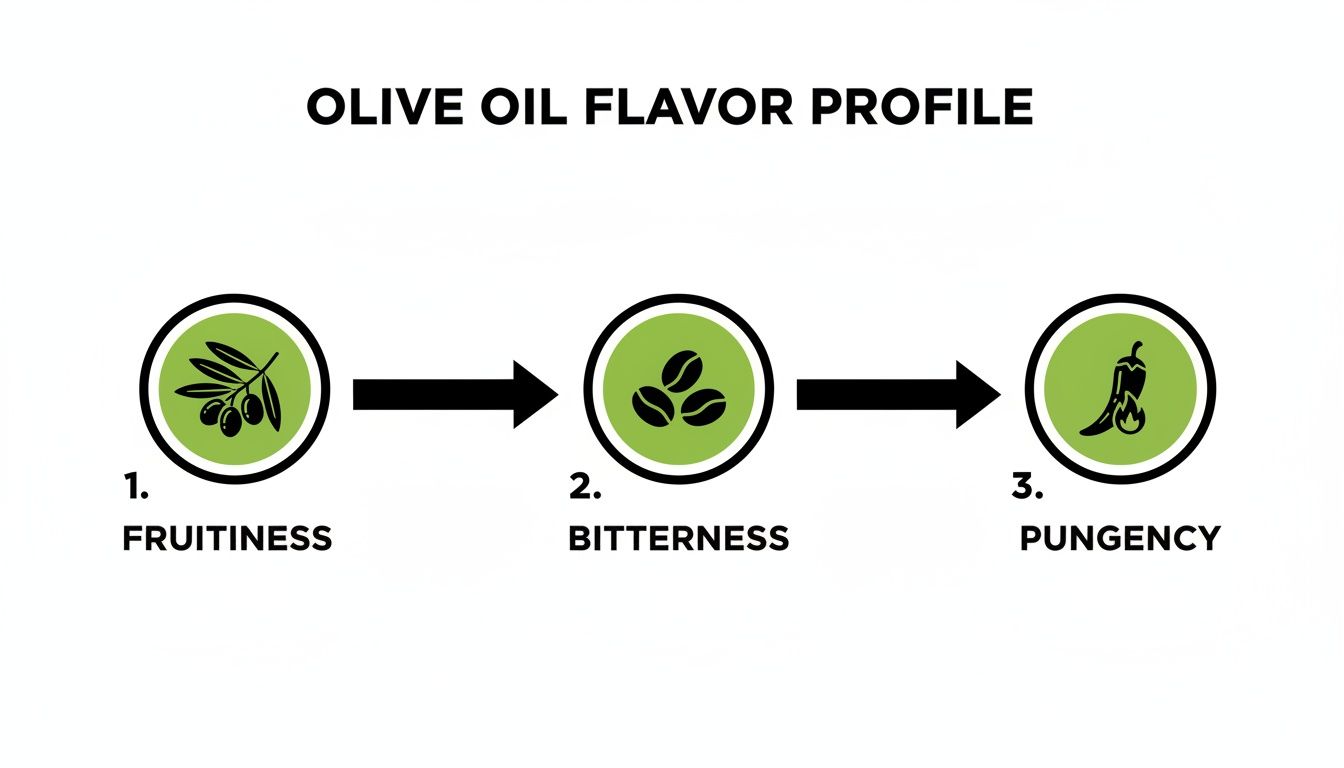
You will notice the flavors unfold in a sequence, usually starting with fruitiness, then moving to a pleasant bitterness, and ending with that spicy finish.
Finally, swallow. What happens next is crucial. Do you feel a tickle or a spicy, peppery sensation in the back of your throat? That's pungency, and it's a fantastic sign. It tells you the oil is fresh and packed with healthy polyphenols. A stronger kick almost always means a fresher, more robust oil.
Once you master these steps, you will be able to confidently select a great oil on your own. To truly hone your palate, our full guide on how to taste olive oil dives even deeper. You’ll go from simply dipping bread to truly appreciating the art.
The Art of Pairing Your Oil for the Perfect Dip
A truly remarkable olive oil should never stand alone; it deserves the perfect dance partner. Crafting the ultimate dipping experience is an art form, one that goes far beyond just pouring oil into a bowl. The secret lies in finding the perfect harmony between the character of your oil and the companions you choose for it.
Think of your olive oil’s intensity as its voice. A delicate, fruity oil with soft, buttery notes whispers. It is ideal for a light, airy bread like a pillowy focaccia or a simple ciatta, where its subtle flavors won’t be overwhelmed. On the other hand, a robust, peppery oil with a big, grassy personality practically shouts with confidence. It demands a partner that can stand up to it—something like a hearty, rustic sourdough with a thick, chewy crust that can soak up every last bold drop.
Choosing Your Bread
The bread you serve is so much more than a vehicle for the oil; it is a critical part of the entire flavor equation. The wrong pairing can mute a beautiful oil or create an unwelcome clash of textures and tastes.
-
For Delicate & Fruity Oils: Choose breads with a subtle flavor and a light, open texture. A classic French baguette, soft ciabatta, or even a simple, warm flatbread are perfect. Their gentle nature allows the oil’s nuanced notes of almond or ripe apple to shine.
-
For Medium & Balanced Oils: These are your versatile workhorses. They pair beautifully with a wide range of breads, from whole wheat loaves to classic Italian pane Toscano. The bread provides a sturdy-but-not-overpowering base for the oil's green, herbal notes.
-
For Robust & Peppery Oils: Here, you need bread with serious structure and character. A dense, tangy sourdough, a rustic whole-grain boule, or a crusty Pugliese are all excellent choices. Their strong flavors and hearty crumb can absolutely handle the oil’s intense pungency.
Simple Enhancements That Make all the Difference
Even the world's best olive oil can be elevated with a few simple additions. The key is to enhance, not overpower. Your goal is to add complementary layers of flavor that celebrate the oil's natural character.
Remember, the highest-quality ingredients often need the simplest preparations. A pinch of flaky sea salt is often all it takes to make the fruitiness of a great oil explode on your palate.
If you want to go a step further, consider these simple yet inspired infusions. Just before serving, gently warm your oil (do not let it simmer!) with one of these combinations to release their aromatic magic:
- The Classic: A few slivers of fresh garlic and a sprig of rosemary. This timeless pairing brings a savory, pine-like aroma that works beautifully with almost any oil.
- The Brightener: A strip of fresh lemon zest and a few sprigs of thyme. This combination adds a bright, citrusy lift that cuts straight through the richness of the oil.
- The Spicy Kick: A small pinch of red pepper flakes. This adds a gentle, lingering heat that wonderfully complements a more pungent, peppery oil.
Let these ideas be your starting point. The real joy is in the experimentation, in discovering the unique combinations that truly make your taste buds sing.
For a quick reference, this table can help you match the right bread and flavors to your favorite oil.
Olive Oil and Bread Pairing Companion
| Oil Intensity | Flavor Profile | Ideal Bread Pairings | Herb and Spice Suggestions |
|---|---|---|---|
| Delicate | Buttery, floral, light fruit (ripe apple, banana) | French Baguette, Ciabatta, Focaccia, White Pan Loaf | Flaky sea salt, finely chopped parsley |
| Medium | Grassy, green tomato, artichoke, almond | Whole Wheat, Pane Toscano, Soft Dinner Rolls | Cracked black pepper, fresh thyme, lemon zest |
| Robust | Peppery finish, spicy, notes of bitter greens, chili | Sourdough, Rustic Whole-Grain, Pugliese, Rye Bread | Red pepper flakes, fresh rosemary, crushed garlic |
Think of this as your cheat sheet for creating delicious pairings every time. Don't be afraid to mix and match to find what you love best
How to Read the Label and Buy with Total Confidence
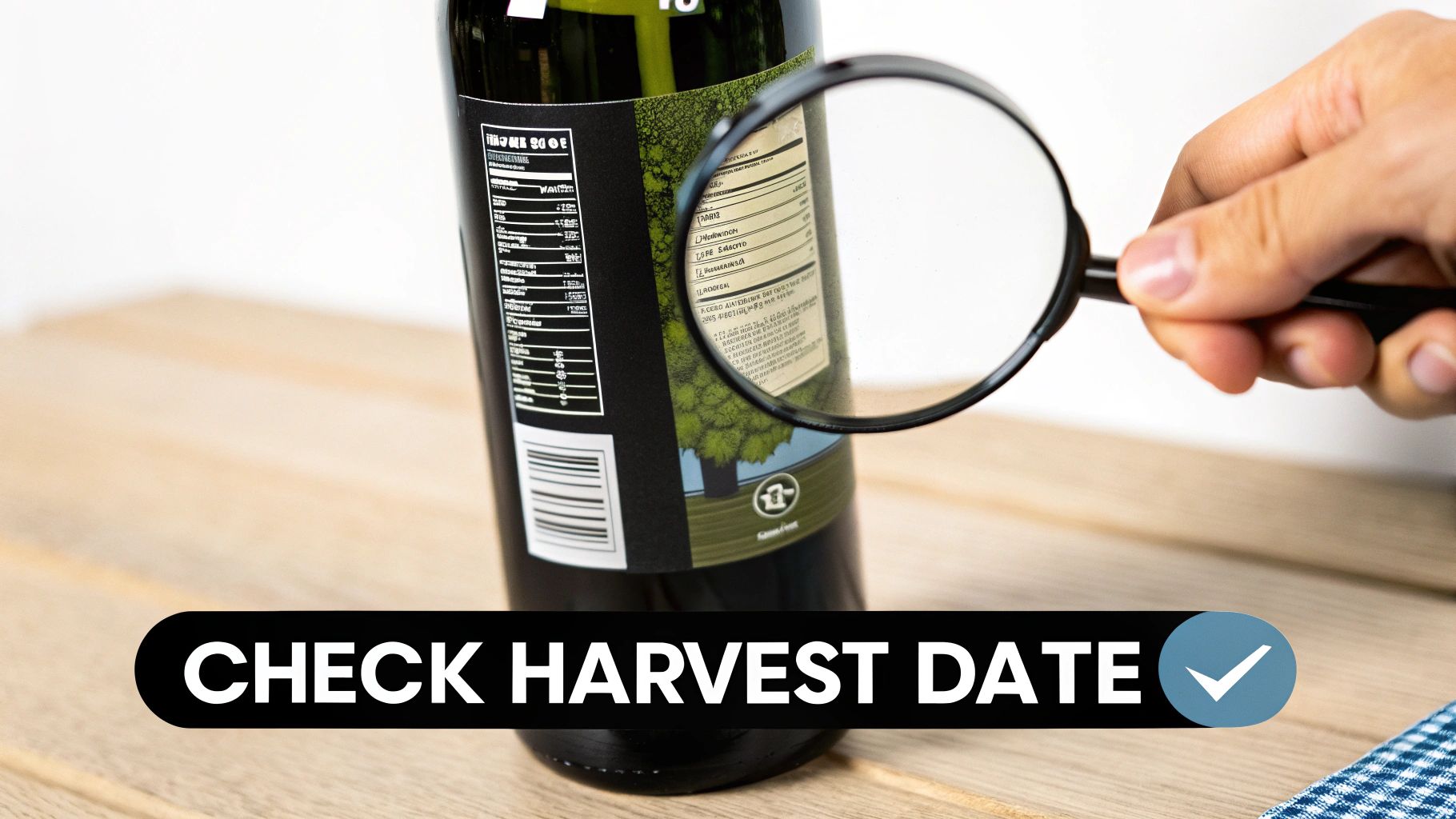
Standing in the olive oil aisle can feel overwhelming. With a wall of bottles all claiming to be "pure," "light," or "premium," how do you cut through the noise and find the real deal?
The secret isn’t in the fancy bottle design or the alluring marketing copy. Everything you truly need to know is printed right there on the label, you just need to learn its language. A few key details will tell you the whole story about the oil’s quality, freshness, and authenticity.
The Single Most Important Date on the Bottle
First thing’s first: ignore the "best by" or "bottling" date. The one piece of information that truly reveals an oil's freshness is the harvest date.
Think of olive oil as a fresh-pressed fruit juice, because that’s exactly what it is. And just like any juice, it's at its absolute peak right after it’s made. The clock starts ticking the moment the olives are crushed. The harvest date tells you exactly when that happened, so always look for oil from the most recent harvest you can find.
An oil without a harvest date is a bottle with a secret. A producer who is proud of their fresh, high-quality oil will always display this date prominently. If it's missing, you have to wonder what they might be hiding.
Decoding Seals of Quality
Beyond dates, keep an eye out for official seals of quality. These aren't just decorative stickers; they are legally protected certifications that guarantee the oil's origin and production standards.
- PDO (Protected Designation of Origin): This is the gold standard. It guarantees the olives were grown, harvested, and pressed into oil all within a specific geographical region, locking in its unique local character.
- PGI (Protected Geographical Indication): This is another excellent mark of quality, confirming that at least one major step of production—like growing or pressing—happened in the named region.
These seals are your best defense against fakes. For an even more in-depth look, our complete guide on how to read an olive oil label breaks down every last detail.
Finally, don't forget the bottle itself. Real extra virgin olive oil is incredibly sensitive to light, which breaks down its delicate flavors and healthy polyphenols. Always, always choose an oil packaged in a dark glass bottle or a tin. A clear bottle might look nice on the shelf, but it’s a huge red flag that the producer doesn’t prioritize what’s inside. It's a bit like learning to read a wine label, which you can also do to find great rustic wines for your winter table with confidence.
Answering Your Dipping Oil Questions
As you start exploring the world of premium olive oils, a few questions always pop up. Let's tackle some of the most common ones so you can choose, taste, and enjoy your dipping oil like a pro.
Can I Really Use Any Extra Virgin Olive Oil for Dipping?
Technically, yes. But should you? Absolutely not. An olive oil that's perfectly fine for a light sauté—often something mild and buttery—will taste bland and greasy when you dip bread into it. It simply won't have the personality to stand on its own.
For dipping, you demand an oil that is the star of the show. You are looking for a bottle with a bold, expressive character. Look for flavor notes like "grassy," "herbaceous," or a "peppery finish." These are the oils that bring a vibrant, exciting presence to the table.
Should a Good Dipping Oil Make Me Cough?
It certainly can! That little peppery tickle in the back of your throat, the one that might make you give a little cough, is actually a fantastic sign. It's the signature of a powerful antioxidant called oleocanthal.
Embrace the cough. It’s not a flaw; it’s proof. That peppery sensation, known as pungency, is one of the clearest indicators of a fresh, high-quality, and antioxidant-rich extra virgin olive oil. It tells you you’ve found the good stuff.
So, do not be alarmed. That peppery kick is a direct sign of the high polyphenol content you want in a top-tier dipping oil.
What’s the Best Way to Store My Dipping Oil?
Think of your dipping oil like a precious elixir. It has three mortal enemies you must protect it from: heat, light, and oxygen.
Always store the bottle in a cool, dark place, like a pantry or cupboard. The worst spot you could choose is right next to your stove, where the heat will rapidly degrade it. The dark glass bottle or tin it came in is its first line of defense, so never transfer it to a clear container.
Most importantly, seal the cap tightly after every single use. Oxygen is the number one enemy of freshness. A good seal is the best way to keep your oil from oxidizing and losing all those beautiful, complex flavors you paid for. Handled with care, it will stay delicious for months.
Here at Learn Olive Oil, we believe that understanding the story behind your oil makes every drop taste better. Discover the World of Premium Olive Oil and turn a simple pleasure into a true culinary art form.
 Learn Olive Oil
Leave a comment