Let's be brutally honest. The vast chasm between a sublime, life-giving olive oil and the lifeless yellow liquid in most pantries comes down to two things: how it’s made and its chemical fingerprint. At the absolute pinnacle sits Extra Virgin Olive Oil (EVOO)—nothing more than the fresh, cold-pressed juice of olives, untainted by heat or chemicals. Everything else is a salvage operation, starting with inferior oil that requires an industrial arsenal of heat and solvents to become edible, stripping it bare of flavor, aroma, and health in the process.
This one, single distinction in processing is the secret that separates an antioxidant-rich, culinary masterpiece from a bland, forgettable cooking fat.
Why Your Olive Oil Choice Is One of the Most Important Decisions in Your Kitchen
That bottle of olive oil sitting on your shelf is not a mere commodity. It possesses a grade, a unique history, and a specific calling. Choosing the right one is a secret weapon that can elevate a simple meal into an unforgettable experience—and profoundly impact your well-being.
It’s tempting, I know, to just grab the nearest bottle. But this common shortcut will cost you dearly, in both the flavor you sacrifice and the health benefits you never receive. A true extra virgin olive oil is a powerhouse, brimming with potent antioxidants and anti-inflammatory compounds. A low-grade, refined oil? It's often little more than empty calories in a pretty bottle.
The Official Grades of Olive Oil: Your First Clue to Quality
The olive oil industry, governed by strict international standards, grades oils based on how they were born and a gauntlet of chemical tests. Mastering these grades is your first, crucial step toward bringing home liquid gold instead of liquid disappointment.
Here’s your cheat sheet for decoding the shelf:
| Olive Oil Grade | Production Method | Flavor Profile | Key Characteristic |
|---|---|---|---|
| Extra Virgin (EVOO) | Mechanical pressing, no heat/chemicals | Fruity, peppery, complex | The highest grade; pure fruit juice with acidity under 0.8%. |
| Virgin Olive Oil | Mechanical pressing, no heat/chemicals | Mild flavor, some defects | Has minor flavor flaws and higher acidity (up to 2.0%). |
| Refined Olive Oil | Heat & chemical treatment | Neutral, odorless, colorless | Made from defective oils stripped of flavor and nutrients. |
| Olive Pomace Oil | Chemical solvent extraction | Neutral, bland | Extracted from the leftover pulp ("pomace") after pressing. |
These aren't just names; they represent a world of difference in taste, health, and purpose. A bold, peppery EVOO is a finishing touch, a condiment in its own right—a world away from a neutral refined oil meant for the frying pan. If you wish to understand this world of flavor on a deeper level, you can learn more about what olive oil tastes like and discover why those flavors are the very signature of quality.
"The difference between an authentic Extra Virgin Olive Oil and a refined 'Light' olive oil is as significant as the difference between a fresh-squeezed orange juice and an orange-flavored drink. One is a life-enhancing food; the other is a processed commodity."
In the end, understanding these grades empowers you to match the oil to the mission. Are you dressing a delicate salad or searing a steak? The answer will point you to the perfect bottle every time.
How Production Methods Create a World of Flavor
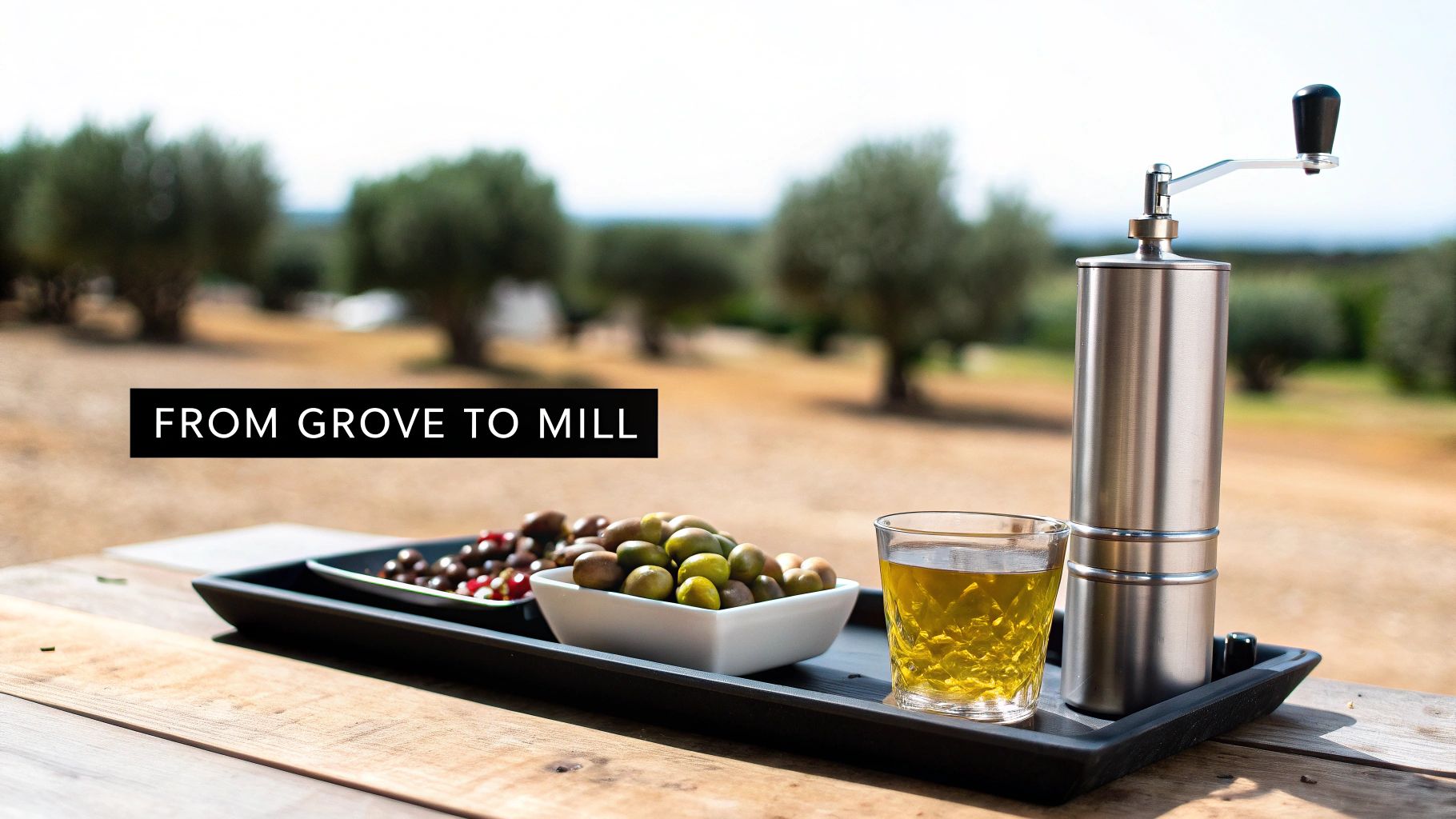
The breathtaking gap between a transcendent extra virgin olive oil and a generic bottle of refined oil is not some happy accident. It is the direct, unvarnished result of countless decisions made from the moment an olive is plucked from its branch to the second it is crushed. The path that single olive takes determines everything—its flavor, its health benefits, and even its legal name.
This journey is where the soul of an olive oil is forged. For the world’s best oils, it's a frantic, desperate race against the clock to preserve fragile, life-giving compounds. For the lower grades, it's a story of industrial recovery, using brute-force chemistry to salvage what time and mishandling have already begun to destroy.
The Ancient Art of Mechanical Extraction
The finest olive oils, Extra Virgin and Virgin, are born using only mechanical methods. This is a distinction of monumental importance. It means the oil is simply pressed or spun from the olive paste, without the violence of high heat or chemical solvents. This gentle, respectful approach is the only way to preserve the oil's very essence.
Think of it as fresh-squeezed juice versus a concentrate that's been chemically reassembled. The mechanical process ensures all the delicate, flavorful, and healthful compounds—like the powerful antioxidants known as polyphenols—stay right where nature intended.
The term 'first cold press' comes from this very idea. It means the olives were crushed and pressed just once at a low temperature (below 80.6°F or 27°C), preventing heat from incinerating those precious aromas and nutrients.
This method, by its very nature, isn't efficient; it leaves some oil behind. But the treasure it yields is the authentic, unadulterated expression of the olive—a true fruit juice. Should you wish to see this process for yourself, you can find a fascinating breakdown on how olive oil is made.
The Tyranny of the Clock: Speed and Precision
One of the greatest secrets separating an elite oil from a mediocre one is the time elapsed between harvest and milling. The instant an olive is severed from the tree, a clock starts ticking. It begins to oxidize and ferment. This decay rapidly raises its acidity and breeds foul, off-flavors.
The great producers are obsessed with this critical window. They race their olives to the mill within a breathtaking 4 to 12 hours of picking. This lightning-fast response slams the brakes on degradation, locking in freshness and creating an oil with vanishingly low acidity and a vibrant, clean taste.
That fanatical devotion to speed is precisely what you are paying for in a premium bottle. A delay of a single day can be the difference between an award-winning EVOO and an oil that fails to make the grade.
The Industrial Abyss: Refined and Pomace Oils
So, what becomes of an oil that fails the stringent chemical and sensory trials to be crowned "virgin"? It is not simply discarded. It is sent down a dark, industrial path for refining. This is where the differences between olive oils become brutally clear.
This defective oil, plagued by high acidity or a rancid taste, is subjected to a battery of harsh treatments:
- Neutralization: An alkaline solution strips out the excess free fatty acids.
- Deodorization: The oil is heated under a vacuum to boil away unpleasant smells and flavors.
- Bleaching: Activated carbon or clays are used to remove color, leaving the oil pale and lifeless.
The final product is a neutral, flavorless, odorless fat. Even the leftover olive mash, or "pomace," can be blasted with chemical solvents like hexane to extract the very last drops. This becomes olive pomace oil after it, too, is refined. While perfectly safe to eat, these oils have been stripped of the very soul that makes extra virgin olive oil a miracle of nature.
What the Label Doesn't Tell You: The Science of Great Olive Oil
When you pick up a bottle of olive oil, the grade on the label—"extra virgin"—is only the first chapter of the story. The real proof of quality lies hidden in the chemistry, in the secret numbers that tell you everything about the oil's health, freshness, and flavor. Think of it as looking under the hood of a high-performance engine.
Understanding these key metrics is the secret that separates a casual buyer from a true connoisseur. They reveal how the olives were handled, how quickly they were pressed, and how much of that healthy, flavorful magic is actually inside the bottle.
Free Fatty Acidity: The Ultimate Purity Test
The most important place to start is Free Fatty Acidity (FFA). Don't let the technical name fool you; it's simply a measure of decay. When olives are damaged, bruised, or left sitting for too long after harvest, their fats begin to break down, and acidity skyrockets.
For an oil to legally be called "extra virgin," its FFA must be at or below 0.8%. But here is a secret from the inside: the world's greatest producers consistently achieve levels below 0.3%. That astonishingly low number is a direct signal of pristine, healthy olives and a lightning-fast journey from tree to mill.
A low Free Fatty Acidity is the first and most critical sign of a high-quality oil. It tells you the fruit was perfect and the process was flawless, locking in freshness from the very start.
Think of FFA as the oil's foundation. A low number means the structure is sound, creating the perfect canvas for rich flavors and powerful health benefits to shine.
Polyphenols: The Source of Flavor and Health
If acidity is about purity, then polyphenols are all about power. These are the mighty antioxidants that give a great extra virgin olive oil its signature peppery kick in the throat and its pleasant bitter notes. They are also the compounds responsible for most of its celebrated anti-inflammatory health benefits.
The polyphenol count, measured in milligrams per kilogram (mg/kg), reveals just how robust an oil truly is.
- Low: Under 120 mg/kg, usually found in soft, buttery oils.
- Medium: Between 120 and 220 mg/kg, offering a beautiful balance of fruity and peppery notes.
- High: Over 220 mg/kg, delivering that intense, robust, and often bitter flavor sought after by health-conscious connoisseurs.
These miraculous compounds are also fragile; they are destroyed by heat, light, and air. An oil that begins with a high polyphenol count isn't just better for you—it's also more stable and will stay fresh for longer. To go deeper, you can learn more about olive oil polyphenol content and what it means for your health.
Peroxide Value: A Snapshot of Freshness
Finally, we arrive at the peroxide value. Think of it as a stopwatch that reveals how fresh the oil is. It measures the very first stages of oxidation—the same process that ultimately causes oil to become rancid. Oxygen is the mortal enemy of olive oil, and this value shows how much damage has already been done.
The legal limit for EVOO is a peroxide value below 20 meq O2/kg. However, a truly fresh, impeccably made oil will boast a value well under 12, and often in the single digits. A low number is your guarantee that the oil was handled with extreme care and is at the very peak of its life.
Together, these three metrics—acidity, polyphenols, and peroxide value—paint a complete, undeniable picture of an oil's quality. They are the secret language of olive oil, and now you can speak it fluently.
A Flavor Tour of Olive Oil Regions and Cultivars
Think of wine. The mysterious way the soil and sun conspire to shape a grapevine’s character, which then finds its voice in the bottle—this is precisely how an olive oil’s soul is formed. It all comes down to two forces: the cultivar (the specific variety of olive) and its terroir (the unique environment where it was raised). The moment you grasp this, you stop seeing "olive oil" as a single ingredient and enter a thrilling world of distinct, unforgettable flavors. This is where the real fun begins.
The differences between oils from various regions are not subtle suggestions; they can be as stark as night and day. Learning to identify them is like mastering a new language of taste, empowering you to choose an oil not just to cook with, but to create with. Suddenly, you can pair oils with food with the same precision and artistry a sommelier uses for wine.
This diagram breaks down the three pillars of oil quality—acidity, polyphenols, and freshness—which are all deeply connected to where and how the olives are grown.
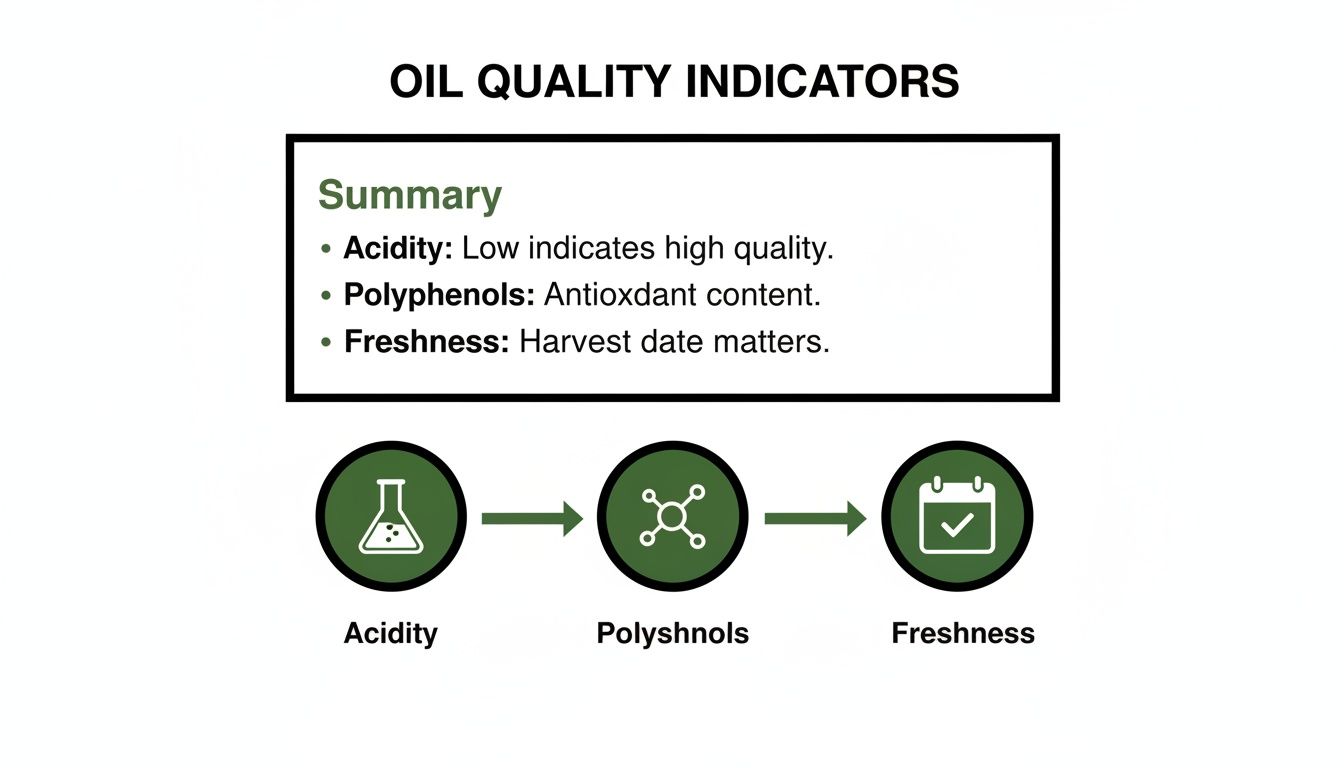
As you can see, a superior terroir and masterful cultivation deliver lower acidity, higher antioxidant levels, and peak freshness—the holy trinity of a world-class olive oil.
The Bold Character of Spanish Oils
Spain is the undisputed titan of the olive oil world, and while it produces a dizzying variety, many of its most celebrated oils are famous for their bold, fruity personality. The king of Spanish olives, Picual, is a perfect example. It typically produces an assertive oil with captivating notes of green tomato leaf and fig tree, all culminating in a satisfying peppery kick in the finish.
But then you encounter a Spanish jewel like the Arbequina olive, which delivers a completely different seduction. It produces a delicate, almost sweet oil with nutty, buttery flavors and whispers of apple and almond. It could not be more different from the robust power of a Picual, making it the perfect partner for delicate fish or a homemade mayonnaise. There is a whole universe to explore here, and you can learn much more about the astonishing variety of Spanish olive oil in our detailed guide.
The Green and Peppery Notes of Italy and Greece
The flavor map becomes even more intriguing as you travel east. Italian and Greek producers often work with ancient olive varieties that create intensely aromatic and pungent oils that sing with life.
A key difference in olive oil from this region is how dramatically production can swing from year to year. For example, recent Italian production hit 300,000 tons, a solid 30% jump from previous seasons, largely thanks to bountiful harvests in Apulia and Calabria. Their oils often lean into intense herbal and almond profiles. Greece, meanwhile, has been targeting 200,000-250,000 tons, doubling down on its famously robust and peppery Koroneiki oils, which are treasured for their health-giving properties.
The oils themselves tell the story:
- Italian Taggiasca: Hailing from the Liguria region, this olive gives us a famously mild, buttery, and delicate oil. It's brimming with sweet almond notes, making it an incredible choice for pesto or drizzled over fresh seafood.
- Greek Koroneiki: This tiny olive packs an explosive punch. It produces a golden-green oil known for its robust, grassy aroma and a powerful peppery finish—an unmistakable sign of high polyphenol content.
To taste a fresh, high-quality Koroneiki is to experience olive oil as a health tonic. That signature burn at the back of your throat? That’s the taste of potent antioxidants at work.
Why Terroir Matters in Every Drop
Ultimately, an olive tree is a child of its home. The rocky soils of Greece, the sun-drenched plains of Andalusia, and the rolling hills of Tuscany each leave an indelible fingerprint on the fruit. The local climate, the elevation, and even the surrounding flora all contribute to the final flavor profile.
This powerful concept of terroir is precisely why an Arbequina olive grown in California will taste different from one grown in its native Catalonia. This intricate dance between genetics and geography is what makes exploring regional olive oils an endlessly fascinating adventure. By paying attention to the cultivar and origin, you arm yourself with the power to predict the flavor in the bottle—transforming your shopping from a gamble into a confident choice.
How to Read Labels and Find Authentic Olive Oil
Walking down the olive oil aisle can feel like navigating a minefield. The shelves are crammed with bottles whose labels are masterpieces of deception, using vague phrases like "bottled in Italy" or "pure olive oil" that sound impressive but often conceal a low-quality, industrial product.
If you want to find the real thing, you must learn to cut through the marketing fog. This isn’t about luck; it’s about knowing exactly where to look. The label tells you everything you need to know to separate a fresh, antioxidant-rich oil from one that's old and stripped of its goodness. You just need to know the secret code.
Your First Commandment: Look for the Harvest Date
If you check only one thing on the label, make it the harvest date. Olive oil is, at its heart, a fruit juice. And like any juice, it is a fleeting miracle, at its absolute peak when fresh. Do not be fooled by an expiration date—that is often set two years from the bottling date, a nearly meaningless number. An oil can sit in a colossal storage tank for a year or more before it ever sees the inside of a bottle.
A recent harvest date, preferably within the last year, is the single most powerful indicator of freshness, vibrant flavor, and health benefits. If a bottle lacks a harvest date, put it back on the shelf immediately. Any producer proud of their oil will be shouting from the rooftops about when it was made.
A bottle without a harvest date is like a story without a beginning. It’s hiding the most important part of its past, and you should be immediately suspicious of what it has to conceal.
Deciphering Origin and Certifications
Next, scrutinize the country of origin. Vague terms like "Product of the Mediterranean" are a giant red flag. What you are searching for is a specific town, region, or even a single estate. The more precise the location, the more traceable the oil, and the more faith you can have in what you’re buying.
Certifications are your next line of defense, serving as an ironclad guarantee of authenticity backed by rigorous rules. Hunt for these seals:
- PDO (Protected Designation of Origin): This is a critical European Union certification. It ensures the oil was produced, processed, and prepared in a very specific geographical area using time-honored methods. It's a powerful stamp of quality and regional character.
- PGI (Protected Geographical Indication): This seal is also valuable, guaranteeing that at least one stage of production happened in a specific region.
- Third-Party Seals: Also look for seals from reputable independent groups like the California Olive Oil Council (COOC) or the Extra Virgin Alliance (EVA). These organizations conduct their own demanding chemical and sensory testing.
As global demand for high-quality oil explodes, knowing these markers is more critical than ever. Brazil, for example, recently became a top importer, snapping up 9% of the world's olive oil imports. Meanwhile, imports to the US, Canada, China, and Australia collectively jumped 6.4% in a similar timeframe. This tidal wave highlights why consumers must use certifications to spot genuine quality, especially since producers outside the EU now command 40% of the market.
By focusing on these key details, you can slice right through the marketing hype. You can find more practical tips in our complete guide on how to read an olive oil label effectively. Arm yourself with this knowledge, and you will bring home authentic, delicious olive oil every single time.
Your Olive Oil Questions Answered
Even after you master the different types, you are bound to have practical questions. The world of olive oil can feel surprisingly complex, but a few direct answers can shatter common myths and give you unshakable confidence in the kitchen.
Let's tackle some of the most persistent questions I hear. Consider this the final piece of the puzzle to becoming a truly savvy olive oil buyer.
Can I Really Cook with Extra Virgin Olive Oil?
This is probably the biggest and most damaging myth in the culinary world, so allow me to set the record straight: absolutely, unequivocally, yes. The tired old idea that EVOO is too delicate for heat is simply false. A high-quality extra virgin olive oil has a smoke point between 375°F and 410°F (190-210°C), which is significantly higher than the temperatures required for most home cooking, including sautéing and roasting.
What gives it this remarkable stability? Its incredibly low free fatty acid content and its army of protective antioxidants. While some of the most fragile, fleeting aromas might diminish under intense heat, the core flavor and the vast majority of its health benefits will hold up beautifully.
What Is the Most Important Thing on an Olive Oil Label?
If you look for only one thing, make it the harvest date. No exceptions. You must think of olive oil as fresh-pressed juice—because that is exactly what it is. The clock starts ticking the second it is made, and both its vibrant flavor and its powerful health properties begin to decay with each passing day.
An expiration date can be a cruel deception. It’s usually set two years from the bottling date, not the harvest.
An oil could sit in a storage tank for a year before it's even bottled, which makes a far-off expiration date pretty much useless. Always, always look for a recent harvest date. It's your best guarantee of freshness. If a bottle doesn't have one? That's a huge red flag.
Does the Color of Olive Oil Indicate Its Quality?
Not in the slightest. The color of an olive oil tells you absolutely nothing about its quality. The shade—whether it’s a brilliant, deep green or a light, golden yellow—is simply a reflection of the olive variety, its ripeness at harvest, and the amount of chlorophyll present.
- Green Oils: These are often made from olives picked when they're less ripe. You can expect them to be more robust, peppery, and grassy.
- Golden Oils: Typically pressed from riper olives, these oils tend to be softer, more buttery, and milder.
It’s telling that professional tasters use special cobalt-blue glasses so the oil's color cannot possibly influence their judgment. You should adopt the same mindset: trust your nose and your palate, never your eyes.
How Should I Store Olive Oil to Keep It Fresh?
Proper storage is the one thing you cannot afford to get wrong if you want to protect your investment. Olive oil has three mortal enemies: light, heat, and air. Exposing your precious oil to any of them will accelerate oxidation and turn it rancid with shocking speed.
To keep it fresh, always store your oil in a cool, dark place like a pantry or cupboard—and for heaven's sake, never next to the stove. Ensure the cap is sealed tightly after every use to keep oxygen out. This is also why the best producers use dark glass bottles or opaque tins. My unbreakable rule is to only buy a bottle you know you'll finish within a month or two of opening it.
At Learn Olive Oil, we believe that understanding these differences transforms how you eat and live. We provide the expert insights you need to choose, taste, and cook with confidence. Discover the World of Premium Olive Oil and elevate your culinary journey.
 Learn Olive Oil
Leave a comment