You’ve heard the myth, haven’t you? That your good extra virgin olive oil is too precious, too delicate for the skillet.
That you should save it for a final, reverent drizzle over a finished dish.
This piece of advice, repeated in kitchens for decades, is one of the biggest misunderstandings in the culinary world. And it’s robbing your food of incredible flavor.
The simple truth is this: high-quality extra virgin olive oil is not just for finishing; it’s a brilliant, resilient, and flavorful cooking oil. The old fear that heat destroys its magic is just that—a fear. It’s time to set the record straight.
The Great EVOO Cooking Myth, Finally Put to Rest
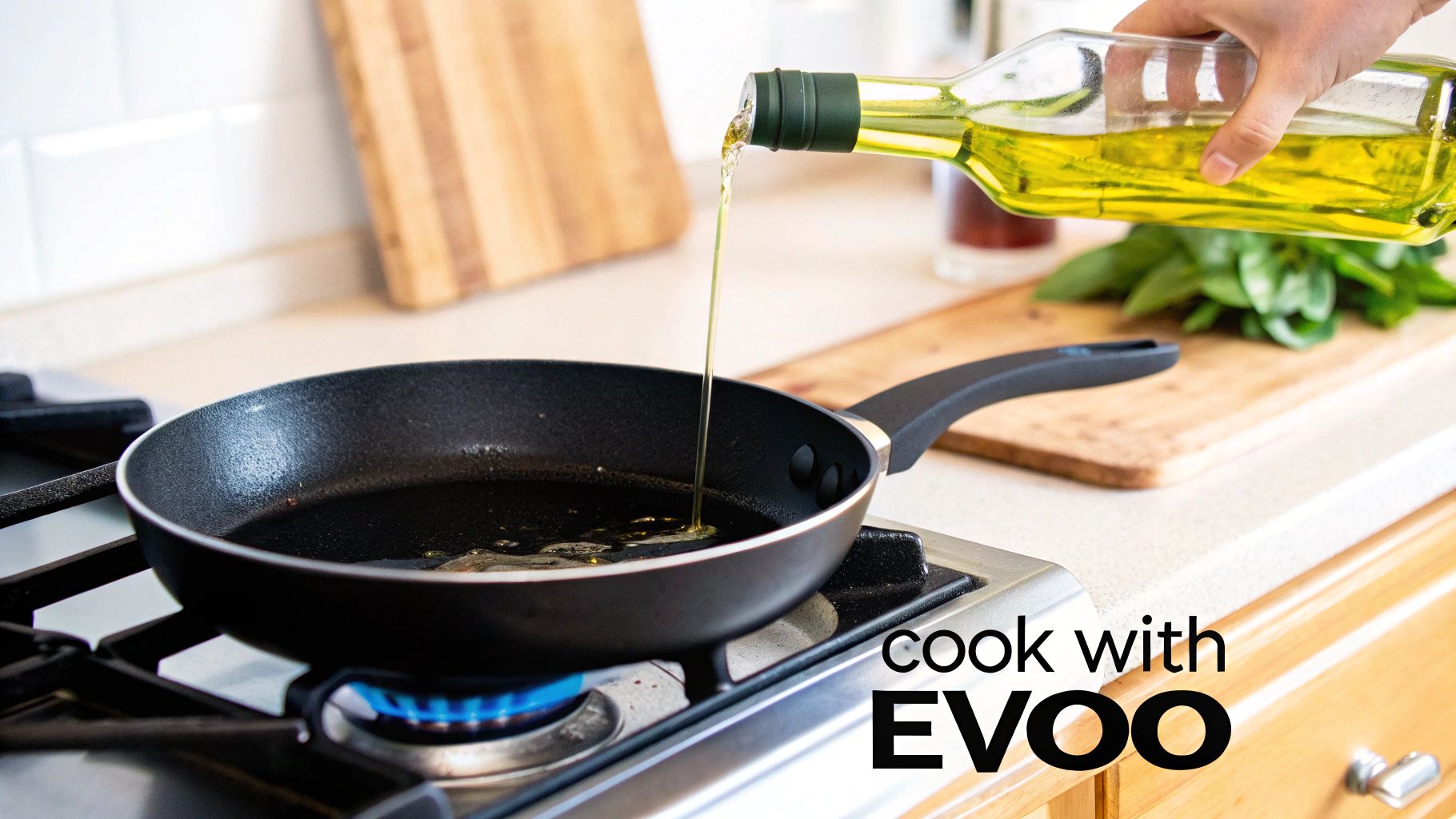
Let’s put this fiery debate on the back burner, once and for all. For years, the conventional wisdom was to treat your best EVOO like a rare spice—used sparingly, almost ceremonially. The humble frying pan, we were told, was no place for such liquid gold.
This advice, however, stems from a deep misunderstanding of what makes an oil fit for the fire. The notion that heat will vanquish its health benefits or that it possesses a timidly low smoke point is simply not true.
It’s time to liberate that beautiful bottle from the dark corner of your pantry and give it the place of honor it deserves—right next to your stove.
Unpacking the Science of Its Surprising Strength
The secret to EVOO’s remarkable resilience isn't magic. It's chemistry. Unlike highly refined seed oils that are often born from harsh industrial processes, true extra virgin olive oil arrives in your kitchen armed with two powerful lines of defense:
- Monounsaturated Fats: The hero here is oleic acid. This is a wonderfully stable type of fatty acid that stubbornly resists breaking down and oxidizing when things get hot.
- Polyphenols: Think of these as the oil’s personal bodyguards. These potent antioxidants do more than just offer health benefits; they actively shield the oil from the damaging effects of heat, making it far more stable than you’d expect.
This dynamic duo is precisely what gives high-quality EVOO its backbone, making it a champion in the kitchen.
But What About the Smoke Point?
Ah, the smoke point—the most misunderstood number in cooking. The argument that EVOO has a “low smoke point” is the cornerstone of this whole myth. While it does vary based on the quality and freshness of the oil, a genuine extra virgin olive oil boasts a smoke point ranging from 375°F to 410°F (190°C to 210°C).
Let that sink in for a moment. This range is more than sufficient for the vast majority of your home cooking.
"The idea that you can't cook with EVOO is one of the most persistent myths in the culinary world. Quality EVOO is not only safe for cooking but enhances food with both flavor and nutrients, thanks to its robust antioxidant profile."
This means you can sauté, roast, and even pan-fry with absolute confidence, without a second thought about creating harmful compounds. For a deeper look into the science, you can learn more about the smoke point of EVOO in our complete guide.
The real secret is to start with a fresh, high-quality product. Its purity and integrity are what determine its performance under fire. When you choose wisely, you’re not just choosing an oil; you're choosing to infuse every dish with superior flavor and the powerful nutrients that make this oil a pillar of a healthy life.
Understanding Smoke Point and Heat Tolerance
The term ‘smoke point’ is often treated like a rigid, uncrossable line. But in the real world of a busy kitchen, it’s less of a fixed number and more of a dynamic range—one that shifts with the quality, age, and freshness of your olive oil. Learning to feel this out is the first step toward becoming a truly confident cook.
So, what exactly is a smoke point? It’s simply the temperature at which an oil stops shimmering and starts sending up visible smoke. That first wisp is your signal that the oil's fats are beginning to break down, a process that can create off-flavors.
There's a persistent story that extra virgin olive oil can't take the heat. That's only a tiny piece of a much bigger, more interesting picture.
Why Quality EVOO Stands Up to the Fire
A high-quality, authentic extra virgin olive oil actually has a surprisingly high smoke point, capable of reaching up to 410°F (210°C). This isn't an accident. It's the direct result of two key factors: very low acidity and a wealth of antioxidants.
First, genuine EVOO has remarkably low free fatty acidity (FFA). Think of it this way: the lower the acidity, the more stable the oil, and the more heat it can withstand before it begins to smoke. Oils with higher FFA are inherently less stable and will break down much faster.
Second, EVOO is teeming with powerful antioxidants called polyphenols. These compounds are nature's protectors, shielding the oil from oxidative damage when heated. They make EVOO chemically more robust than many highly refined seed oils, which have been stripped of these natural defenses during aggressive processing.
In essence, the very same antioxidants that give EVOO its celebrated health benefits also make it a more durable and dependable cooking partner.
This incredible natural stability provides a wide, forgiving window for nearly all of your daily cooking needs.
Learning to Read the Heat in Your Pan
Forget the thermometer for a moment. Your eyes are the most valuable tool you have for gauging when your oil is ready. The secret is to learn the visual cues your oil provides as it heats.
- The Cold Start: Straight from the bottle, the oil is thick, viscous, and still.
- The Shimmer: As the pan heats, you’ll see delicate, wavy lines begin to dance across the oil's surface. This "shimmer" is your signal. The oil is now perfectly hot for sautéing vegetables or searing meat. This is your sweet spot.
- The First Wisps: If you see a tiny, fleeting wisp of smoke, you've reached the smoke point. The oil is still perfectly fine, but now is the time to add your food immediately or reduce the heat.
- Rolling Smoke: If a continuous stream of smoke is rising, the oil is burning. The flavor is now compromised. Your best move is to let the pan cool, discard the oil, and start fresh.
Learning to spot that shimmer will change the way you cook. It’s the visual language of the kitchen, empowering you to cook with precision and confidence, achieving a perfect sear without ever tipping into scorched territory. For a great comparison with other oils, check out this helpful cooking oil smoke points chart.
From Kitchen Staple to Global Connector
This remarkable heat tolerance makes EVOO incredibly versatile. For consumers, this means EVOO is ideal for high-heat cooking like stir-fries or baking, thanks to its smoke point around 410°F and rich monounsaturated fats. In Brazil, a rising star market, EU exports are climbing steadily, boosting culinary scenes worldwide. Whether you're in New York or Tokyo, cooking with EVOO connects you to this dynamic trade network. You can explore more insights into the global olive oil market on CertifiedOrigins.com.
Ultimately, understanding how EVOO truly behaves with heat frees you from old, restrictive rules. It empowers you to move beyond using it as just a finishing oil and embrace it as a foundational cooking fat—one that delivers superior flavor, better nutrition, and unmatched performance in your home kitchen.
Mastering Everyday Cooking with EVOO
Alright, let's move this knowledge from the page and put it to work on your stove. Now that you understand EVOO is a tough, versatile partner, you can finally use it with the confidence it deserves. Think of this as your playbook for making every meal a little richer, healthier, and profoundly more delicious.
It's time to stop thinking of olive oil as something to be used sparingly. To truly cook with EVOO is to harness its power to build incredible layers of flavor from the very first step. This isn't about greasing a pan; it's about laying the foundation of a great dish.
The Art of the Sauté
Sautéing is where a good extra virgin olive oil first reveals its true character. It's the opening act for countless sauces, soups, and stews, and getting it right changes everything. When you gently heat a quality EVOO, you're not just heating oil; you're creating a fragrant, flavorful base ready to unlock the soul of your ingredients.
Picture it: thinly sliced garlic hits that shimmering oil. It doesn't just turn brown; it melts, releasing its sweet, pungent essence directly into the EVOO, which then carries that beautiful flavor through the entire dish. A quality EVOO won't turn acrid at this medium heat. Instead, it merges with the ingredients, building a savory depth that water or blander oils simply cannot replicate.
For a perfect sauté, use enough oil to generously coat the pan's bottom. Listen for a lively sizzle, not a weak steam. Keep the heat around medium and let the EVOO work its magic, far from its smoke point.
Achieving the Perfect Roast
When you roast vegetables, you're chasing caramelization—that magical browning that transforms their natural sweetness into something deep and complex. A generous coat of a fruity EVOO is your greatest ally in this quest. It does more than prevent sticking; it kickstarts the Maillard reaction, delivering those crispy, browned edges and tender interiors we all crave.
Imagine tossing broccoli florets in EVOO before they enter a hot oven. The oil ensures every nook and cranny is coated, allowing the dry heat to crisp them perfectly. As an excellent conductor of heat, it helps the vegetables cook through while developing that irresistible golden crust.
Here’s a tip from my kitchen: don’t be timid. You want the vegetables to look glossy. As a rule of thumb, 1 to 2 tablespoons per pound of vegetables is a great starting point.
Not sure what to look for in the pan? This visual guide is incredibly helpful for gauging the right temperature.
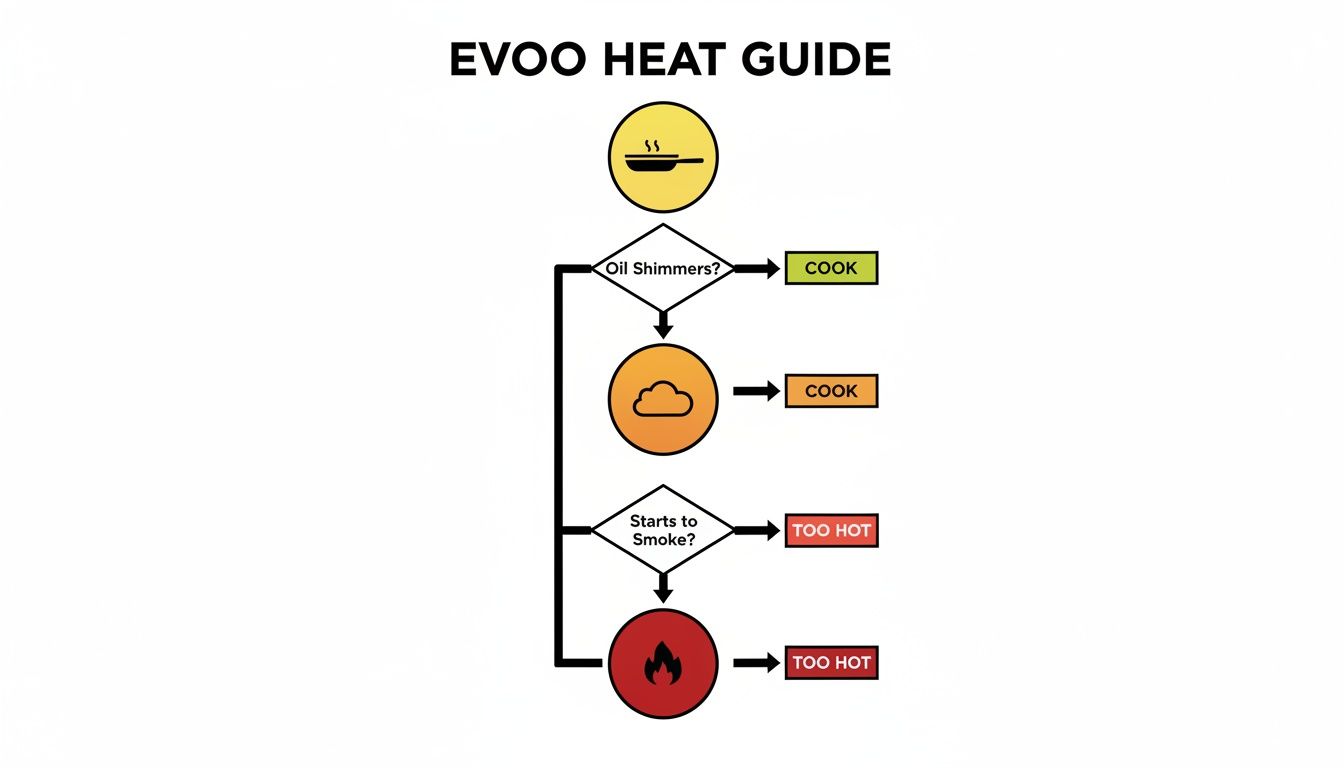
As you can see, that "shimmer" is your sweet spot for cooking. If you see visible smoke, it’s a clear sign your heat is too high and it's time to pull the pan off the burner.
Confident Pan-Frying with EVOO
Yes, you can absolutely pan-fry with extra virgin olive oil. Forget what you've heard. The entire game is about managing your heat and choosing the right oil. A high-quality EVOO with a smoke point up to 410°F can easily handle the temperature required to put a fantastic, golden crust on a piece of chicken or fish.
Here’s something fascinating: when you pan-fry with EVOO, the food often absorbs less oil than it would with many common seed oils. The result is lighter and less greasy, allowing the food's natural flavor to take center stage.
The secret to a perfect, non-stick pan-fry? A hot pan and room-temperature protein. Add your EVOO to a preheated skillet, wait for that signature shimmer, and then gently place your seasoned chicken breast or fish fillet in the pan. Now for the hardest part: resist the urge to move it until a beautiful crust has formed.
EVOO’s Surprising Role in Baking
Let's step away from the stovetop for a moment, because EVOO can be a revolutionary ingredient in your baking. Swapping it for butter or other oils can yield baked goods with a remarkably moist texture and a subtle, complex flavor. An olive oil cake, for instance, is legendary for its tender crumb that stays fresh for days.
The key is choosing the right EVOO for the flavor you want to achieve.
Matching EVOO Flavor Profiles to Your Dish
Picking the right EVOO—whether delicate, medium, or robust—can elevate a dish from good to great. Use this simple guide to pair the right oil with the right application.
| Flavor Profile | Best For | Example Dishes |
|---|---|---|
| Delicate | Light cakes, muffins, and cookies, where you want a subtle, buttery richness without a pronounced olive flavor. | Angel food cake, vanilla cupcakes, shortbread. |
| Medium | Citrus-based baked goods, where its fruity notes beautifully complement the other flavors. | Lemon loaf, orange-scented scones, carrot cake. |
| Robust | Savory baking, where its bold, peppery character is a welcome addition, not an overpowering one. | Focaccia, rustic breads, savory herb muffins. |
Ultimately, a little experimentation will reveal your personal preferences.
When you're ready to try, substitute EVOO for vegetable oil in a 1:1 ratio. If a recipe calls for butter, a good rule of thumb is to use about 3/4 of the amount in EVOO, as butter contains water and milk solids. Exploring the many olive oil uses in cooking will open up an entire new dimension of flavor in your kitchen.
Once you master these everyday techniques, you'll see EVOO not just as a cooking fat, but as an essential ingredient that makes everything it touches better.
Choosing the Right EVOO for the Job
Not all extra virgin olive oils are created equal. Far from it. Just as a winemaker chooses specific grapes for a bold Cabernet versus a delicate Pinot Grigio, olive oil producers cultivate different olive varieties to create a stunning spectrum of flavors.
Using the wrong one can be the difference between a good dish and a truly unforgettable one.
Think of your EVOO collection as a small but mighty toolkit. The pungent, peppery oil that makes a grilled steak sing would completely steamroll a delicate piece of baked cod. This is your guide to becoming your own olive oil sommelier—picking the perfect bottle for every job, every time.
The Three Main Flavor Profiles
Every high-quality EVOO falls somewhere along a spectrum of intensity. Once you get a feel for these categories, you'll start to intuitively know which oil will make your meal shine.
- Delicate EVOO: These are your subtle, smooth, and often buttery oils. You might taste gentle notes of almond or ripe fruit, with little to no peppery finish. They're the quiet supporters, meant to enhance without dominating.
- Medium EVOO: This is your versatile, all-rounder category. These oils have a fruitier, greener character, often with hints of fresh-cut grass or artichoke. They strike a pleasant balance, finishing with a mild peppery kick that lets you know those healthy polyphenols are there.
- Robust EVOO: These are the bold, assertive players. They’re intensely pungent and grassy, with a strong peppery or even spicy finish that can give you a little cough. That "kick" is the signature of high oleocanthal content, a powerful anti-inflammatory compound.
Choosing the right oil isn't about "good" or "bad"—it's about matching the intensity of the oil to the intensity of your dish. A robust oil isn't better than a delicate one; it just has a different job to do.
With these profiles in mind, you can start making more strategic choices. A delicate oil is perfect for baking a lemon loaf, while a robust one is the only way to go when drizzling over a hearty bean soup. You can find excellent recommendations by exploring guides on the best olive oils for cooking to match your culinary needs.
Decoding the Label: What to Look For
The olive oil aisle can feel overwhelming. Buzzwords are everywhere, but only a few pieces of information on the label truly tell you what's inside the bottle.
First things first, ignore vague terms like "pure," "light," or "olive oil blend." You are looking for one thing and one thing only: "Extra Virgin Olive Oil". This certification is your guarantee that the oil was extracted without chemicals and meets high standards for both purity and taste.
Next, hunt for these critical clues to freshness and quality:
- Harvest Date: This is the single most important date on the bottle. Olive oil is a fruit juice; it's at its best when it's fresh. Look for a harvest date within the last year to get the best flavor and health benefits. A "best by" date is far less reliable.
- Country of Origin: A specific region, like "Tuscany, Italy" or "Kalamata, Greece," is a much better sign of quality than a vague "Product of Multiple Countries." Single-origin oils often reflect higher standards and a more distinct, traceable flavor profile.
- Cold-Pressed or Cold-Extracted: These terms mean the oil wasn't heated above a certain temperature (around 80°F) during extraction. This gentle process protects the delicate phenols and nutrients that make EVOO so good for you.
This attention to detail is what makes quality EVOO a global culinary powerhouse. The industry has grown from an ancient staple to a modern kitchen essential, with Spain alone pumping out 1.4 million tons in a recent season—that's 40% of the world's total. For us in the kitchen, these numbers mean reliable access to EVOO's polyphenol-packed profile, perfect for everything from grilling fish to emulsifying vinaigrettes.
How to Properly Store Your Olive Oil
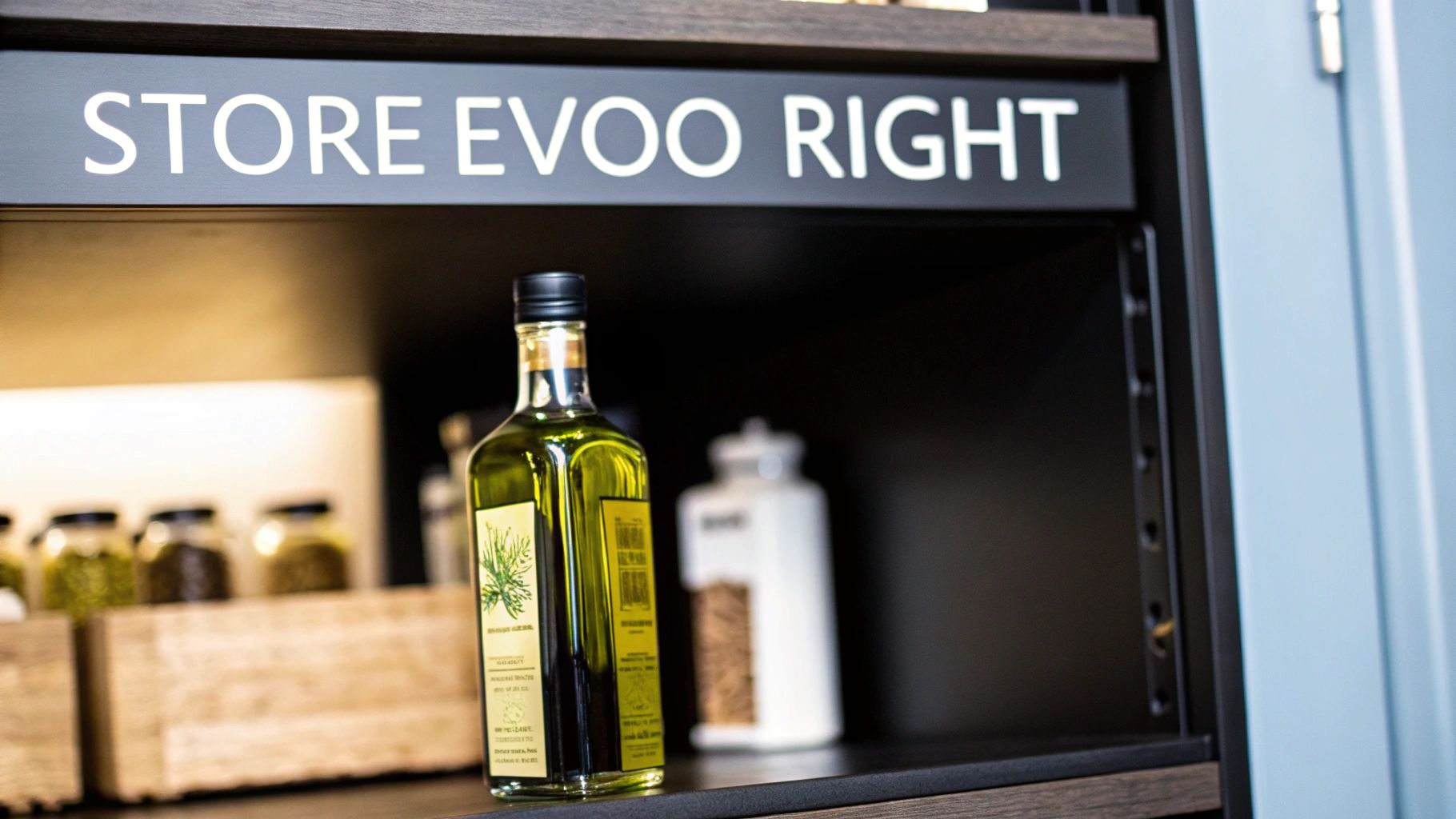
Think of that beautiful bottle of EVOO you just bought as fresh-squeezed juice rather than just another cooking oil. It’s a living product, packed with delicate compounds that create its incredible flavor and health benefits. And just like any fresh product, it has enemies.
Three things are constantly working to rob your oil of its vibrancy: light, air, and heat. Protecting your EVOO from these elements is the golden rule for making sure every drop you pour is as potent and delicious as the day it was pressed.
The Enemies of Flavor: Light and Air
First up is light. That sunny spot on your kitchen windowsill might look lovely, but it’s a death sentence for good olive oil. UV rays kickstart a process called photo-oxidation, which quickly degrades the oil and creates off, rancid flavors. This is precisely why any good producer will always bottle their oil in dark glass, tins, or opaque containers.
Oxygen is just as bad. Every time you open the bottle, air rushes in and begins to break down the oil. To slow this down, always screw the cap back on tightly right after you pour. Here's a pro tip: if you buy a large tin, try decanting a smaller amount into a dark bottle for daily use. This keeps the bulk of your oil from being exposed to air every time you cook.
The Ideal Home: A Cool, Dark Place
Now, let's talk about heat. The absolute worst place to keep your olive oil is right next to the stove. I know it’s convenient, but the constant temperature swings will destroy its quality faster than anything else. Heat acts as a catalyst for oxidation, turning that peppery, flavorful oil into something flat and stale.
The best storage spot is actually pretty simple: a cool, dark cupboard or pantry, far away from your oven and any direct sunlight.
The sweet spot for storing EVOO is around 57°F (14°C), but a consistent room temperature between 60-72°F (16-22°C) is perfectly acceptable for home kitchens. The real key is avoiding those wild temperature swings.
Proper temperature control is crucial for more than just olive oil. For a deeper dive into best practices, you can review guides on safe food storage temperature control.
The Refrigerator Question and Shelf Life
I get asked all the time: "Should I keep my olive oil in the fridge?" The short answer is no. While it won't ruin the oil, the cold will cause it to solidify. This repeated cycle of chilling, turning solid, and then coming back to room temperature can introduce condensation and mess with the oil’s complex flavors.
So, how long is it actually good for?
- Unopened: A well-sealed bottle of quality EVOO can last up to two years from its harvest date if you store it right.
- Opened: Once you crack that seal, the clock starts ticking much faster. For the best flavor and health benefits, try to use it within 30 to 60 days.
If you’re ever unsure if your oil has gone bad, just trust your nose and taste buds. Rancid oil often has a waxy smell, like crayons or stale nuts, and will taste greasy and unpleasant. Fresh EVOO, on the other hand, should smell vibrant, fruity, or grassy. To get more details on keeping your oil at its peak, you can read more about proper olive oil storage.
Your Top Questions About Cooking with EVOO, Answered
Let's face it, even seasoned cooks sometimes hesitate when it comes to extra virgin olive oil. The world of EVOO is wonderfully complex, and getting clear, straightforward answers can make a world of difference in the kitchen.
We're going to cut through the noise and tackle the most common questions I hear. This isn't about memorizing rules; it’s about understanding the why behind the way this incredible oil works.
Can I Really Deep-Fry with Extra Virgin Olive Oil?
The short answer? Absolutely, yes.
I know, it almost feels wrong to use your "good oil" for something like deep-frying, but the science actually backs it up. A high-quality extra virgin olive oil typically has a smoke point somewhere between 375°F and 410°F (190-210°C). This is well above the ideal temperature for deep-frying, which hovers around 350-375°F (175-190°C).
What's really interesting is how stable EVOO is under heat. Its high concentration of monounsaturated fats and a powerful team of antioxidants help it resist breaking down far better than many common seed oils. The result? Fewer harmful compounds are formed, and food often comes out lighter and crispier because it absorbs less grease. Just be sure you're using a good, robust EVOO and keeping a close watch on your thermometer.
Does Heat Destroy All the Health Benefits of EVOO?
This is probably the most persistent myth out there, and it’s time to put it to rest. While it's true that some of the most delicate antioxidant compounds (polyphenols) can diminish with prolonged, intense heat, the core health benefits of EVOO are surprisingly resilient.
The real star of the show is oleic acid, the heart-healthy monounsaturated fat that makes up the bulk of the oil. It's incredibly stable when heated. Plus, many of the other potent antioxidants hold up just fine during everyday cooking methods like sautéing and roasting.
Believe it or not, some studies have found that cooking vegetables in extra virgin olive oil can actually make certain nutrients, like carotenoids, more available for your body to absorb. As long as you stay below the smoke point, you're still getting a fantastic nutritional bang for your buck.
You aren't "destroying" the oil. You're using it to make your food healthier and, of course, way more delicious.
How Do I Know if My EVOO Is Good Enough for Cooking?
You don't need a trained palate to pick a solid cooking oil. A few simple clues on the bottle and in the oil itself will tell you everything you need to know about whether it can handle the heat.
- Look for Low Acidity: Check the label for its free fatty acid (FFA) level. This is a primary indicator of quality. A lower acidity, ideally under 0.5%, means a higher smoke point and better stability.
- Freshness is Everything: Always, always look for a harvest date. Olive oil is a fruit juice, and an old one is never a good one. An oil harvested within the last year will have the punchiest flavor and the most antioxidants.
- Trust the Tingle: A peppery, slightly bitter catch in the back of your throat is a great sign! That sensation comes from oleocanthal, a powerful antioxidant. That little "kick" tells you the oil is fresh and packed with good stuff.
- See the Packaging: Never buy EVOO in a clear bottle. Light is one of oil's biggest enemies. Reputable producers will always use dark glass or an opaque tin to protect their product.
If your oil smells stale, waxy, or like old crayons, it's rancid. Don't cook with it, don't drizzle it on anything—just toss it.
Why Is There Such a Huge Price Range for EVOO?
The price tag on a bottle of extra virgin olive oil tells a story about its journey, from the tree to your pantry. So many things factor into the final cost: the specific olive varietal, whether it was hand-picked or harvested by machine, its country of origin, and any special certifications it has. A single-estate oil from a tiny, artisanal farm is naturally going to cost more than a mass-market blend.
The good news is that the global market is booming. In a recent crop year, worldwide olive oil production hit a record 3.507 million tons. Spain is the undisputed king, producing a staggering 1.4 million tons—that's 67% of the EU's total and 40% of the entire world's supply. You can read more about these fascinating global olive oil production trends on OliveOilTimes.com.
What does this mean for you? It means you have more access than ever to excellent, affordable EVOO for everyday cooking. You don't need to use your most expensive, complex "finishing" oil for sautéing onions. A reliable, well-made, mid-range EVOO is the perfect kitchen workhorse. Save that special bottle for when its flavor can really shine, like drizzled over a finished dish.
At Learn Olive Oil, we believe that understanding this liquid gold is the first step to truly enjoying it. From decoding labels to mastering culinary techniques, we provide the expert insights you need to make olive oil a simple, rewarding, and delicious part of your life. Discover the World of Premium Olive Oil.
 Learn Olive Oil
Leave a comment