Stand in any grocery store aisle and you'll face a choice that seems simple, yet feels impossibly complex: extra light vs extra virgin olive oil. But beneath those labels lies a secret most home cooks never learn. One of these oils is a natural, unrefined fruit juice, bursting with the very soul of the olive. The other is a highly engineered product, stripped of its character by heat and chemicals.
Which is which?
The answer is the key to unlocking better flavor, better health, and more confidence in your kitchen. Extra Virgin is the real thing—pure, cold-pressed olive juice, loaded with the olive's true flavor and potent nutrients. On the other side of the divide, Extra Light olive oil is a ghost of its former self. It's highly refined using industrial processes, resulting in a perfectly neutral-tasting oil with one key advantage: a much higher smoke point.
And that little word "light"? It’s the most misleading term on the shelf. It refers only to the oil's ghost-like flavor and pale color—it has nothing to do with calories.
The Olive Oil Aisle Demystified
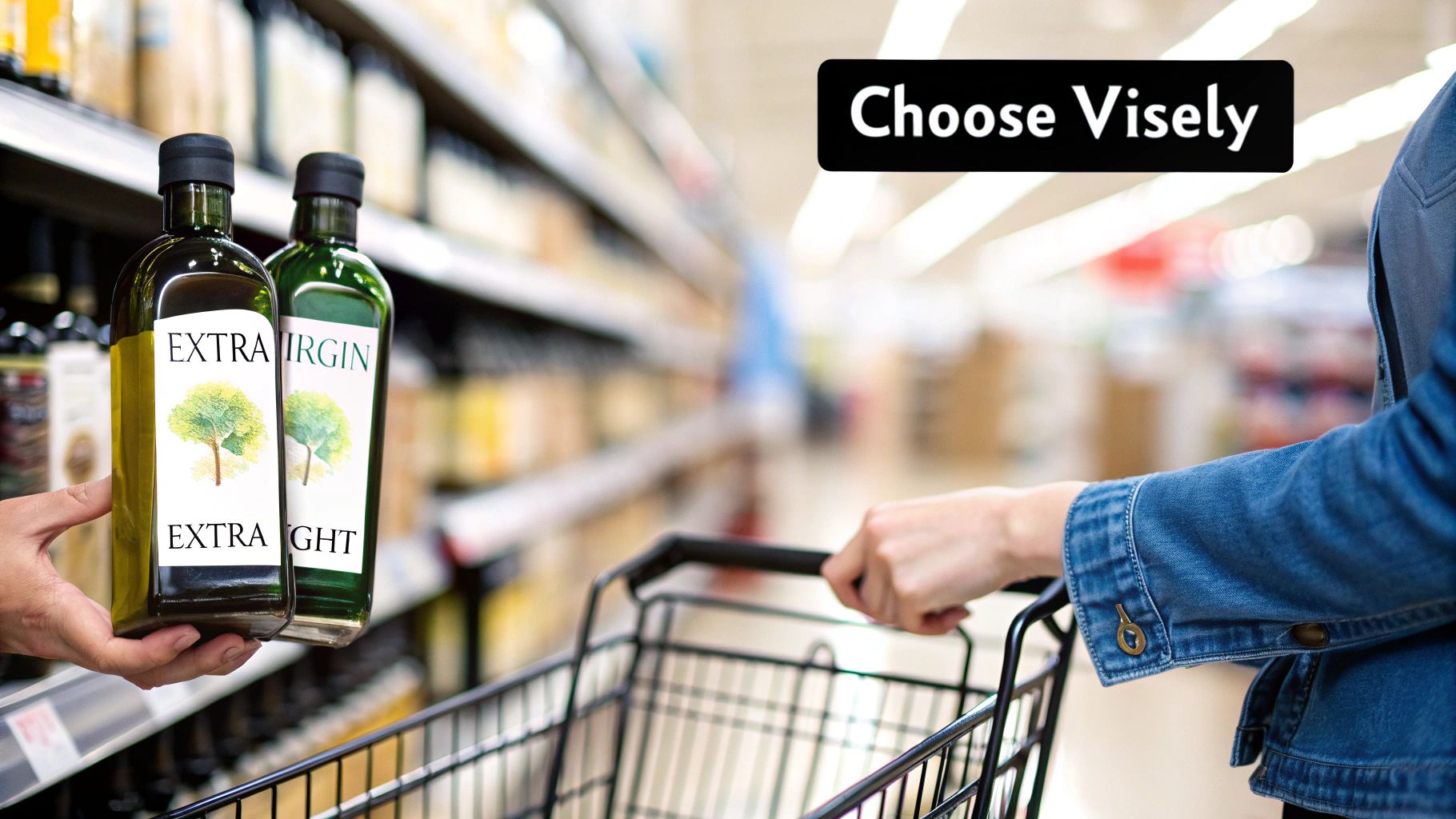
Let's be honest. Staring at that wall of bottles can feel overwhelming. ‘Extra Virgin’ or ‘Extra Light’? These labels represent more than just oil; they are two opposing philosophies. One is a testament to ancient tradition and purity, a liquid expression of the sun and soil it came from. The other is a triumph of modern food engineering, designed for a specific job.
This guide will cut through the marketing noise and give you the unvarnished truth. We'll reveal why Extra Virgin is the authentic soul of the olive—cold-pressed and brimming with character—while Extra Light is an engineered fat, refined for absolute neutrality and high-heat performance.
At a Glance Comparison Extra Virgin vs Extra Light Olive Oil
Before we dive deep, let's put them head-to-head. This simple chart lays bare the essential differences, giving you an immediate, crystal-clear overview of which oil to grab, and when.
| Attribute | Extra Virgin Olive Oil (EVOO) | Extra Light Olive Oil |
|---|---|---|
| Production | Cold-pressed, unrefined, no chemicals | Refined using heat and solvents |
| Flavor Profile | Robust, fruity, peppery, grassy | Neutral, mild, nearly flavorless |
| Color | Green to golden yellow | Pale yellow, almost clear |
| Best Uses | Drizzling, dressings, dipping, low-heat | High-heat frying, baking, searing |
With this foundation, you're already ahead of the game. To become a true master of your pantry, it helps to know how to read food labels like a pro.
Understanding the Core Distinction
The unbridgeable gap between these oils is forged in fire and chemistry. The "extra virgin" designation is a sacred mark of quality, protected by strict international standards. To earn this title, an oil must be extracted only by mechanical means and possess a free acidity of no more than 0.8%. It is, in essence, a perfect, unblemished fruit juice.
Here is the single most important secret you need to know: Extra Virgin Olive Oil is a natural food, prized for its flavor and life-giving benefits. Extra Light Olive Oil is a functional fat, valued for its high smoke point and total lack of flavor.
Once you truly grasp this, you will never be confused in the oil aisle again. By the time you finish reading, you'll know exactly when to reach for each bottle and cook with the confidence of a seasoned chef. Ready to put this knowledge to the test? Check out our simple guide on how to choose olive oil.
The Journey From Olive Grove to Your Kitchen
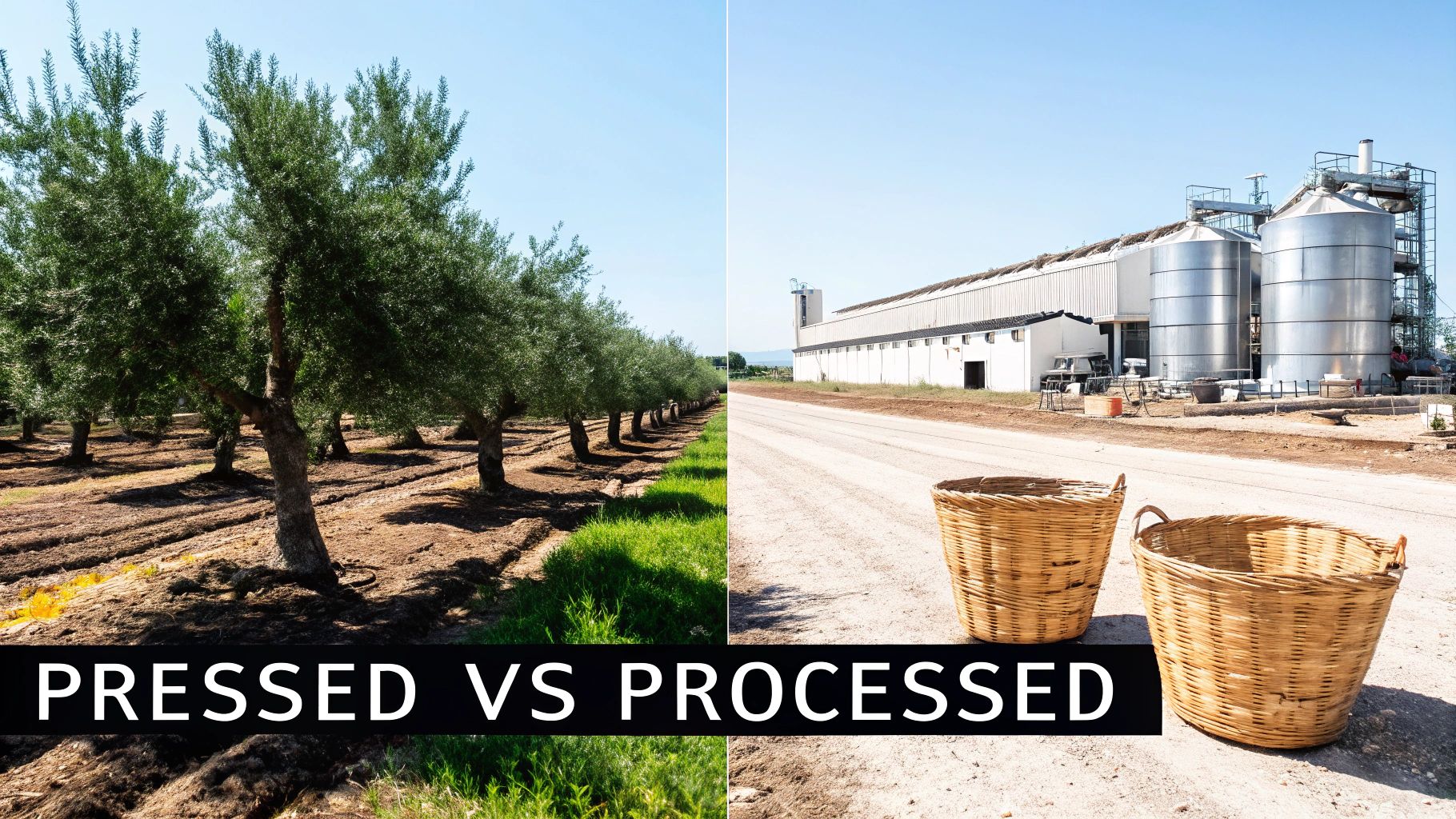
To truly understand what separates these two oils, you must follow them back to their source. Their stories could not be more different. One is a tale of tradition, patience, and minimal intervention. The other is a product of relentless, modern industrial efficiency.
One path begins with olives harvested with care in sun-drenched groves. The other path begins with a singular goal: create a neutral, functional fat, not a flavorful, life-enhancing food.
The Craftsmanship of Extra Virgin Olive Oil
Think of Extra Virgin Olive Oil (EVOO) as the first pressing of fresh-squeezed juice, straight from the olive. It is the purest, most treasured form you can find, and the entire production method is a sacred vow to keep it that way.
The technique is called cold-pressing. Olives are carefully ground into a thick paste and then pressed using only mechanical force—no scorching heat, no chemical solvents. That’s it.
This gentle, ancient approach is the secret to protecting the treasures locked inside the olive:
- Polyphenols: These are the potent antioxidants that give a great EVOO its signature peppery kick and delicious bitter finish. They are the source of its legendary health benefits.
- Vitamins: Fat-soluble vitamins, especially E and K, remain untouched and intact.
- Flavor Compounds: All those magnificent grassy, fruity, and aromatic notes are preserved because they haven't been vaporized by heat.
This unbreakable commitment to purity—a process free from heat and chemicals—is what separates authentic Extra Virgin Olive Oil from every other oil on the shelf. It’s not just oil; it’s the preserved essence of the olive.
This dedication to quality is the hallmark of the world's finest olive oil regions. Spain, for instance, is a global powerhouse, recently producing an astonishing 665,709 tonnes of olive oil—a full 24% of the world's supply. This makes them a key source for the kind of premium extra virgin oils that are born from these exacting, traditional methods.
The Industrial Refining of Extra Light Oil
Now, let's pull back the curtain on how ‘extra light’ olive oil is made. This is a journey of industrial transformation, not careful preservation.
The process often begins with olives not good enough for virgin oil, or with the leftover pulp after the first pressing. To wring out every last drop of oil, producers unleash a combination of scorching heat and chemical solvents.
This brutal treatment strips the oil of nearly everything that makes EVOO a superfood. The heat and chemical baths eliminate impurities, yes, but they also annihilate the delicate polyphenols, vitamins, and natural flavors.
What remains is a neutral, flavorless fat. But the industrial journey isn't over. The oil must then endure several more steps to become the final product:
- Neutralization: An alkaline solution is used to lower the now-high acidity.
- Bleaching: The oil is filtered through activated clays to strip out all of its natural color, leaving it pale and nearly transparent.
- Deodorization: High-temperature steam is forced through the oil in a vacuum to remove any last trace of olive aroma or taste.
The result is a highly engineered cooking fat, designed for a high smoke point and a completely neutral presence. Once you understand the vast difference between 'pressed' and 'processed,' it's easy to see why these two oils are worlds apart. To explore this further, you can learn more about the complete making of olive oil here.
A Showdown of Flavor, Aroma, and Color
Let's trust our senses for a moment. Imagine two glasses side-by-side. In one, you see a vibrant, deep green liquid, perhaps a little cloudy, shimmering with life. In the other, the oil is pale yellow, thin, and so perfectly clear it’s almost invisible. That first glance tells you nearly everything you need to know.
When we discuss extra light vs. extra virgin olive oil, we aren’t just comparing two grades of oil. We are comparing a pure expression of the olive and its terroir against a highly engineered cooking fat, designed specifically to have no personality whatsoever. Understanding this sensory chasm is the secret to choosing the right oil for the right job—and it will teach you to trust your own palate more than any marketing slogan on a label.
The Vibrant World of Extra Virgin Olive Oil
A great extra virgin olive oil has a story to tell. Pour a small amount into a glass and swirl it gently. Before you taste, bring it to your nose. What do you smell? A quality EVOO should greet you with a complex bouquet—perhaps fresh-cut grass, green almonds, tomato leaves, or even a hint of artichoke. These are not just poetic descriptions; they are the direct result of fresh olives and a high count of health-giving polyphenols.
Now, take a sip. Let it coat your tongue. You should first notice a distinct fruitiness, followed by a pleasant bitterness that grows on the sides of your tongue. The grand finale comes when you swallow: a peppery, sometimes spicy kick in the back of your throat. This can range from a gentle tickle to a full-on cough, depending on the oil's intensity.
Never mistake that peppery finish for a flaw. It is the undeniable signature of a fresh, high-quality EVOO. That sensation is caused by oleocanthal, a powerful anti-inflammatory compound, and it’s one of the clearest signs you are tasting the real deal.
Professional tasters judge an EVOO on three positive attributes: fruity, bitter, and pungent. If all three are present, you have an oil that's not just fresh but also brimming with nutritional benefits. It is an ingredient that actively contributes its own bold, beautiful character to your food. If you want to train your palate to spot these nuances, you can learn how to taste olive oil like an expert.
The Calculated Blandness of Extra Light Olive Oil
Now, let's perform the same ritual with the extra light olive oil. Pour, swirl, and inhale. What do you get? Almost certainly, nothing. You might detect a faint, generic oily scent, but all those vibrant, green aromas from the EVOO have been scrubbed away by the refining process.
The visual difference is just as revealing. That pale, almost watery color isn't natural; it’s the result of bleaching clays used during processing to strip out every last molecule of the olive's natural pigment.
The taste is equally neutral. There is no fruitiness, no bitterness, and certainly no peppery kick. The mouthfeel is often described as thin or greasy, with no flavor that lingers. This is not a defect—it is the entire point. Extra light olive oil is intentionally engineered to be a blank slate, a fat that can cook your food without adding any of its own taste or color.
Its entire sensory profile can be summarized in a single word: neutral. This makes it a useful tool for frying or for delicate baked goods where a robust olive flavor would be unwelcome, but it delivers none of the sensory joy or culinary personality of a true extra virgin.
Making the Right Choice in the Kitchen
Every great chef knows a secret that separates a good meal from an unforgettable one. It’s not just the quality of your ingredients, but the fat you choose to cook them in. The choice between extra light and extra virgin olive oil isn't a minor detail—it's a critical decision that can either elevate your dish to greatness or let it fall flat.
This is your practical guide to using both oils like a seasoned pro. And it’s time we finally put to rest the tired, old myth that you can’t cook with good extra virgin olive oil. The truth is far more exciting.
When to Reach for Extra Virgin Olive Oil
Let's settle this once and for all: you absolutely can, and often should, cook with extra virgin olive oil. The misguided notion that it's only for salads has robbed home cooks of incredible flavor for decades. The secret is simply to understand its strengths and its limits.
A quality EVOO has a smoke point somewhere between 375°F and 410°F, which is more than high enough for the vast majority of your daily cooking. Think about it. Most sautéing happens around 350°F, and you typically roast vegetables at 400°F.
Here’s where EVOO truly shines:
- Sautéing Aromatics: When you gently cook garlic and onions to build the foundation of a sauce or soup, the rich, fruity notes of the EVOO infuse themselves into your dish from the very start.
- Roasting Vegetables: Tossing potatoes or asparagus in EVOO does more than prevent sticking. It adds a delicious, peppery complexity that a neutral oil could never dream of providing.
- Finishing a Dish: This is where EVOO becomes liquid gold. A final drizzle over a finished steak, a bowl of soup, or a plate of pasta just before serving electrifies everything. It’s not just oil; it’s a condiment.
The rule of thumb is this: If you want to taste the oil and have its character become an integral part of the dish, extra virgin olive oil is your only choice. It’s an active ingredient, not just a cooking medium.
To master this technique, you can learn more about finding the best extra virgin olive oil for cooking and witness the transformation in your own meals.
When Extra Light Olive Oil Is the Hero
Now, let's turn our attention to the quiet workhorse of the kitchen: extra light olive oil. Its utter lack of flavor isn't a weakness—it's its greatest strength. Because it has been refined into submission, it acts as a blank canvas, a pure fat that does its job without interfering with your other ingredients.
With a smoke point soaring to around 468°F, extra light olive oil is built for the kind of serious heat that would turn a beautiful EVOO into a smoldering ruin. This high tolerance is essential for jobs like achieving a shatteringly crispy skin on perfectly pan-seared salmon, where a high smoke point is non-negotiable.
Here’s when to grab the extra light bottle:
- High-Heat Searing: To get that perfect, deep-brown crust on a steak or a piece of fish, you need a screaming hot pan. Extra light oil can handle that heat without triggering your smoke detectors.
- Deep-Frying: While you may not deep-fry often, its high smoke point makes it a stable, reliable choice for foods like doughnuts or tempura that demand clean, consistent high heat.
- Delicate Baking: When you’re making a light angel food cake or lemon poppy seed muffins, the last thing you want is a savory, peppery olive flavor sabotaging your creation. Extra light oil adds moisture and fat with zero flavor interference.
This decision tree gives you a quick visual for choosing between adding a rich olive flavor or a neutral one to your cooking.
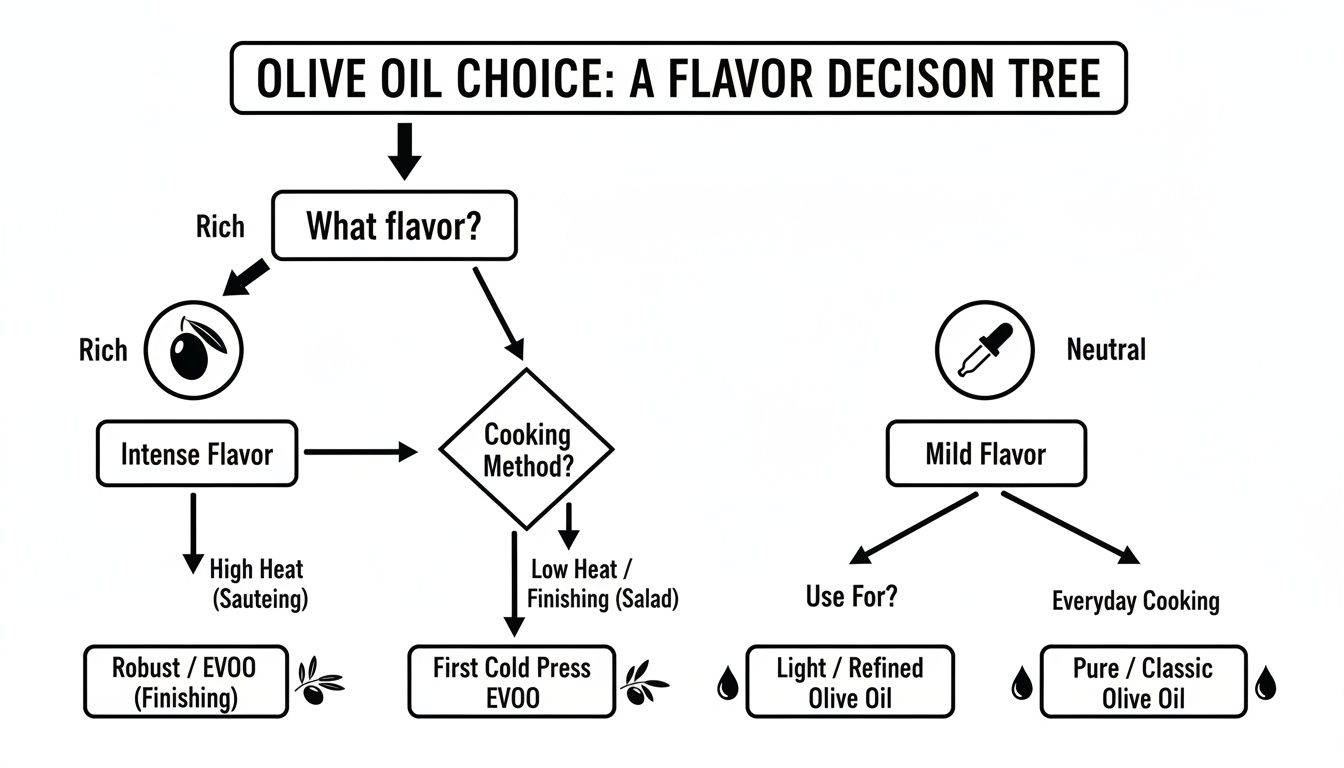
This handy table breaks it all down, matching the cooking method to the right oil so you can get the best results every time.
Practical Cooking Guide: Oil Uses and Smoke Points
| Cooking Method | Recommended Oil | Reasoning |
|---|---|---|
| Sautéing & Pan-Frying | Extra Virgin Olive Oil | The 375-410°F smoke point is perfect for medium-heat cooking. It infuses robust, peppery flavor directly into vegetables, meats, and sauces. |
| Roasting | Extra Virgin Olive Oil | Ideal for temperatures up to 410°F. Coats vegetables beautifully and adds a complex flavor that enhances their natural sweetness. |
| Searing & High-Heat Frying | Extra Light Olive Oil | With a smoke point around 468°F, this oil can handle the intense heat needed for a perfect crust without burning or smoking. |
| Baking | Extra Light Olive Oil | Its neutral flavor won't interfere with the delicate taste of cakes, muffins, or breads, providing moisture without unwanted notes. |
| Finishing & Drizzling | Extra Virgin Olive Oil | Used raw, its full flavor profile shines. A final drizzle adds a fresh, aromatic punch to salads, soups, pasta, and grilled meats. |
| Grilling | Extra Light Olive Oil | Great for brushing on grates or on food before grilling. Its high smoke point prevents flare-ups and ensures food doesn't stick or burn. |
Ultimately, your choice begins with a simple question: do I want my oil to be a flavor-maker or just a functional tool? Your answer will instantly point you to the right bottle, making the entire debate blessedly simple.
The Unseen Health Differences You Should Know
When you stand in that grocery aisle choosing between extra light and extra virgin olive oil, you are making a decision that goes far beyond your dinner plate. The choice is between a nutritionally vacant, refined product and a genuine superfood that forms the foundation of the world's healthiest diets. The gap between them isn't a small step; it's a chasm.
One is merely a source of monounsaturated fat. The other is a complex, living liquid packed with an arsenal of health-promoting compounds. That monumental difference all comes down to how each oil is made.
Extra Virgin Olive Oil: A Powerhouse of Polyphenols
The true magic of extra virgin olive oil lies in everything the gentle cold-pressing process manages to save. It is, for all intents and purposes, pure, unrefined olive juice. Because it never endures high heat or chemical solvents, it retains an incredible collection of bioactive compounds.
At the very top of that list are polyphenols. These are not just fancy-sounding chemicals; they are the potent antioxidants that give EVOO its signature peppery bite and work tirelessly to protect your body. They are tiny warriors fighting on your behalf.
- Oleocanthal: This remarkable polyphenol is celebrated for its natural anti-inflammatory properties, which work in a way that is strikingly similar to ibuprofen.
- Oleuropein: A crucial antioxidant that helps shield your body's cells from the relentless damage caused by unstable molecules called free radicals.
- Hydroxytyrosol: Often called one of nature's most powerful antioxidants, it plays a key role in protecting your blood lipids from oxidative stress.
These compounds work in concert to fight inflammation and oxidative stress—the two primary culprits behind many chronic diseases. This is precisely why a high-quality EVOO isn't just an ingredient; it's a tool for better health. To dive deeper, you can explore the details on which olive oil is healthiest.
The Refining Process and Its Nutritional Toll
Now, let's turn to extra light olive oil. The industrial refining process—that brutal combination of high heat, intense pressure, and chemical solvents—is ruthlessly effective at one thing: creating a neutral oil with a high smoke point. But that efficiency comes at a devastating nutritional cost.
This harsh treatment obliterates the very compounds that make EVOO a nutritional superstar. The intense heat and chemical washes strip away virtually all of the delicate polyphenols, antioxidants, and vitamins. What remains is almost entirely oleic acid, a heart-healthy monounsaturated fat.
While oleic acid is certainly a better choice than the saturated or trans fats in other cooking oils, an oil containing only oleic acid is a shadow of its former self. Extra light olive oil is what’s left after everything that makes an olive a nutritional powerhouse has been systematically destroyed.
It is a functional fat, but it is a nutritionally empty one. It provides calories and a stable medium for cooking, but none of the protective, wellness-boosting benefits of its unrefined cousin.
The Price of Purity and Health
The nutritional superiority of extra virgin olive oil is a secret that's getting out, and it's reflected directly in the price tag. The meticulous care and superior olives required to produce it simply cost more than the industrial-scale refining of extra light oil.
Recent market data from Spain reveals that organic extra virgin olive oil prices range from €5 to €5.5 per kilogram, with conventional EVOO sitting between €3.8 to €5 per kilogram. Both are significantly higher than typical refined oils. This price difference makes it clear that savvy shoppers understand they're paying a premium for a vastly superior nutritional profile and flavor. You can find more insights into global olive oil market trends that confirm this.
Ultimately, when you choose extra virgin olive oil, you're making an investment. You're picking an oil that actively works to protect your body. When you grab the extra light, you're just picking a cooking medium. Both have a place in your kitchen, but only one of them truly nourishes.
Answering Your Olive Oil Questions
Even after covering the essential details, a few common questions always seem to surface. The "extra light vs. extra virgin" debate, in particular, has spawned a great deal of confusion and a few stubborn myths. Let's tackle them head-on, so you can walk into your kitchen with complete confidence.
It's time to set the record straight for good.
Is "Light" Olive Oil Lower in Calories?
This is perhaps the biggest and most dangerous misconception in the entire grocery store. The answer is an emphatic no. The word ‘light’ on a bottle of olive oil refers only to its flavor and color—never its calorie content. The refining process strips out the robust taste and deep color, but it doesn't touch the fat content.
All olive oils, from the most pungent extra virgin to the palest extra light, contain about 120 calories and 14 grams of fat per tablespoon. Reaching for extra light oil will have zero impact on your diet or weight management goals. It is purely a culinary choice based on the flavor profile a specific dish requires.
Can I Swap Extra Virgin for Extra Light Olive Oil in Baking?
You can, but in most cases, you absolutely shouldn't. The reason comes down to the very quality that makes extra virgin olive oil so special: its powerful flavor.
EVOO often carries bold, peppery, and grassy notes that can completely overwhelm the delicate balance of a cake, a batch of cookies, or a flaky pastry. Imagine biting into a sweet lemon poppy seed muffin, only to be hit with a savory, olive-heavy aftertaste. It’s simply not what you want.
Extra light olive oil is the baker's friend because it is so completely neutral. It brings the necessary fat and moisture to your recipe without introducing any competing flavors, allowing the vanilla, chocolate, or citrus to be the true star of the show.
How Should I Store My Olive Oil to Keep It Fresh?
This is critical. Proper storage is the key to preserving the quality of any olive oil, and the rules are identical for both extra light and extra virgin. Your oil's three mortal enemies are heat, light, and air. Exposing your oil to these will accelerate oxidation, causing it to go rancid and develop off-flavors.
To keep your oil at its peak, follow these simple rules:
- Find a cool, dark home for it. A pantry or cupboard away from the stove and out of direct sunlight is ideal. Storing it on the countertop next to a sunny window or right above your oven is a surefire way to ruin it.
- Seal it up tight. Always ensure the cap is screwed on properly after each use. This keeps oxygen—a primary cause of rancidity—from getting in.
- Buy the right size bottle. If you don't use a lot of olive oil, it makes more sense to buy a smaller bottle you can use within a few months of opening. A giant tin sitting half-empty for a year is a recipe for disaster.
Does the Color of Olive Oil Tell Me Anything About Its Quality?
Here’s another area where our intuition can lead us astray. We often associate a deep, vibrant green with high-quality extra virgin olive oil, but color alone is not a reliable indicator. A greener hue typically just means the oil was pressed from early-harvest olives, which are higher in chlorophyll. In truth, some of the most complex and celebrated EVOOs in the world are a beautiful golden-yellow.
Flavor and aroma are the true judges of quality. A top-notch EVOO should smell fresh, fruity, and alive, and it should deliver that classic peppery kick at the back of your throat. When it comes to extra light oil, color is irrelevant by design—it’s been refined to be pale and clear. So, when you’re evaluating an oil, always trust your nose and palate, not your eyes.
At Learn Olive Oil, we believe that understanding the nuances of this incredible ingredient can transform your cooking. From the groves to your table, we're here to make the world of olive oil simple, enjoyable, and rewarding. Discover the World of Premium Olive Oil and start your journey with us today.
 Learn Olive Oil
Leave a comment