There's a secret hiding in your pantry, a culinary powerhouse disguised as a simple salad dressing. It's the classic pairing of olive oil and vinegar, and it's far more than a kitchen staple—it’s a foundational principle of flavor. This isn't just about mixing liquids. It's about a conversation between the rich, fruity body of the oil and the bright, acidic spark of the vinegar. Get this dynamic right, and you unlock a synergy that transforms everyday meals into something truly memorable.
The Perfect Marriage of Flavor and Health
Imagine, for a moment, the velvety texture of a world-class olive oil coating your tongue. Now, imagine a brilliant flash of vinegar cutting right through that richness, waking up your entire palate. This isn't just a recipe; it's a culinary dialogue that has echoed through kitchens for centuries. It's a true partnership, where two utterly different elements join forces to create something far more magnificent than either could be alone.
In this guide, we'll pull back the curtain on this timeless duo. You'll discover how the healthy fats in olive oil and the sharp acids in vinegar create a flavor synergy that can turn an ordinary meal into an extraordinary experience.
A Symphony of Balance
At its very heart, the relationship between olive oil and vinegar is a masterclass in balance.
Picture a seesaw. On one end sits the smooth, mouth-coating quality of olive oil, which, left to its own devices, can feel heavy. On the other, the sharp, tangy personality of vinegar provides the perfect lift, slicing through that richness with precision.
This dynamic interplay is the secret weapon against dishes that feel either greasy or overly acidic. Instead, it strikes a perfect harmony on the palate, making every single bite more interesting, more satisfying, and more delicious.
It's a principle so fundamental it forms the backbone of countless recipes, from the most basic vinaigrette to the most complex marinade.
More Than Just Taste
But the rewards of pairing olive oil and vinegar extend far beyond fantastic flavor. This combination is a cornerstone of heart-healthy eating, most famously in the renowned Mediterranean diet, which is celebrated for its profound health benefits. This proves a delicious truth: what’s good for your taste buds can also be incredibly good for your body.
Here’s a quick glimpse into why this pairing is a culinary knockout:
- Flavor Enhancement: The acidity in vinegar acts like a spotlight, brightening and intensifying the natural flavors of your food. The olive oil then masterfully carries those amplified flavors across your palate, adding a deeply satisfying texture.
- Culinary Versatility: The possibilities are virtually limitless. You can use this pair to dress crisp greens, marinate robust meats, or even create a surprising drizzle over fresh fruit and desserts.
- Health Synergy: You're getting the best of both worlds—heart-healthy monounsaturated fats from the olive oil and beneficial compounds from the vinegar that support everything from cardiovascular health to digestion.
You’ll soon see this pairing as your secret weapon for transforming roasted vegetables, building complex marinades, and even crafting surprising desserts. Forget the bottled stuff. You are about to become the architect of your own perfect flavors, armed with the knowledge to make these pantry staples sing in harmony.
Decoding the World of Olive Oil
Before you can discover the perfect vinegar, you must first truly understand your olive oil. Standing in the grocery aisle can be bewildering, with dozens of bottles vying for your attention. But once you cut through the marketing noise, you discover a simple truth: not all olive oils are created equal.
To truly master the art of pairing olive oil and vinegar, you must look beyond the label and understand the soul of the oil itself. Let's get to the heart of what makes an olive oil truly exceptional.
The Gold Standard: Extra Virgin Olive Oil
At the absolute pinnacle of the olive oil world, you'll find Extra Virgin Olive Oil, or EVOO. This isn’t just a fancy name; it’s a legally-defined seal of quality. Think of it as the purest expression of the olive—its first cold-pressed juice, extracted without chemicals or high heat. This gentle process is what preserves its phenomenal flavor and potent health benefits.
So, what makes it "extra virgin"? The critical factor is its incredibly low free fatty acidity, which must be below 0.8%. A low acidity level is a direct signal that the olives were healthy, handled with care, and pressed swiftly after harvest. It's the difference between an oil that tastes vibrant and alive and one that is simply… flat.
A great EVOO is a symphony of flavor and aroma. It’s packed with antioxidants called polyphenols, the very compounds that give a high-quality oil its signature peppery kick and slight bitterness—both tell-tale signs of freshness and potency.
This distinction is what sets it apart. EVOO isn't just another cooking fat; it's a finishing touch, a flavor booster, and a statement of quality all in one bottle.
Understanding Flavor Profiles
Like fine wine, every bottle of olive oil has its own distinct personality. Learning to identify these differences is the secret to creating pairings that truly sing. Most high-quality EVOOs fall into one of three main categories.
- Delicate: These oils are subtle, smooth, and often described as buttery or mellow. Their light fruitiness is perfect for drizzling over flaky white fish or whipping into a light, creamy mayonnaise.
- Medium: Here, you find a beautiful balance of fruity notes with a more pronounced peppery finish. You might taste hints of green almond or fresh herbs. This is your all-around hero, fantastic for everyday salad dressings and roasting vegetables.
- Robust: Bold, intense, and complex, these oils pack a serious punch. They are often intensely green and grassy, with a strong, peppery kick that can even make you cough. Use a robust oil to stand up to hearty flavors, like a grilled steak or a salad with bitter greens.
The global production of olive oil is massive. Spain alone produces about 40% of the world's supply from its 2.7 million hectares of groves. For anyone drawn to olive oil for its heart-healthy monounsaturated fats, this global scale means more access to top-notch extra virgin varieties perfect for crafting vinaigrettes.
Beyond Extra Virgin: What About Other Oils?
While EVOO is the undeniable star for dressings and finishing drizzles, its cousins have vital roles to play in the kitchen. Understanding the entire lineup will make you a more confident cook. For a deeper dive, check out this guide on the various types of olive oils available.
Here’s a quick rundown of the other common grades you’ll see on the shelf:
| Oil Type | Characteristics & Best Use |
|---|---|
| Virgin Olive Oil | With a slightly higher acidity than EVOO (up to 2%), this oil has a milder flavor. It's a solid, budget-friendly choice for general cooking and sautéing where you don't need the nuanced flavor of a premium EVOO. |
| Olive Oil | Often labeled "Pure" or "Classic," this is a blend of refined olive oil and a bit of virgin oil. Its neutral taste and higher smoke point make it a workhorse for all-purpose cooking, including frying. |
Once you grasp these differences, you're no longer just a shopper—you're an informed chef. You’re not just buying a bottle; you’re choosing the right tool for the job, ready to unlock a world of flavor that all starts with the perfect olive oil.
Navigating the Vibrant Spectrum of Vinegar
If olive oil lays down the rich, deep bassline in a dish, vinegar is the bright, zesty melody that cuts through and commands your attention. That acidic spark is the perfect counterpoint, lifting every other flavor and adding a much-needed splash of brilliance.
But to truly master the art of pairing olive oil and vinegar, you must look beyond that generic bottle of white distilled vinegar. There’s a whole world of them out there, each with a story to tell—from the fruit it began as to the patient process that transformed it.
The Crown Jewel of Modena: Balsamic Vinegar
When you hear "olive oil and vinegar," your mind probably jumps straight to balsamic. And for good reason! But here's a secret: not all balsamic is created equal. The real deal is a world away from the thin, sharp liquid that usually lines grocery store shelves. It's a true culinary treasure with a history as deep and complex as its flavor.
Let's take a quick journey to Modena, Italy, the heartland of this liquid gold. This is where Aceto Balsamico Tradizionale is made, and it's treated less like a condiment and more like an art form.
- The Process: It all begins with the "must" of Trebbiano or Lambrusco grapes—the freshly crushed juice. This is cooked down and then aged for a minimum of 12 years in a series of barrels made from different woods. This long, patient aging process concentrates its essence, creating a thick, syrupy vinegar that's perfectly balanced between sweet and tart.
- The Imposters: What you usually find is "Balsamic Vinegar of Modena (IGP)." It's a more accessible, everyday product made from a blend of wine vinegar and grape must, often with caramel coloring added, and aged for a much shorter time. It has its place, but it lacks the profound depth of a 'Tradizionale.'
Knowing this difference is everything. A true 'Tradizionale' is a finishing vinegar. You drizzle just a few precious drops over fresh strawberries, a wedge of Parmesan, or even vanilla ice cream. The everyday IGP version? That's your workhorse for vinaigrettes and glazes.
The Pillars of the Pantry: Wine Vinegars
Red and white wine vinegars are the absolute essentials of any well-stocked kitchen. They are straightforward, incredibly versatile, and bring a clean, bright acidity to nearly everything. Think of them as the foundational building blocks for countless recipes.
Their personalities come directly from the wines they’re made from. Red wine vinegar is bold and fruity, with a sharp kick that holds its own against strong flavors. It's fantastic in a hearty lentil salad or a marinade for steak. On the other hand, white wine vinegar is more delicate and crisp. Its clean, light profile is perfect for dishes you don't want to overpower, like poached fish or a salad of tender greens.
A good rule of thumb: consider the color of your dish. White wine vinegar is great for pale sauces where you want to maintain a clean color, while red wine vinegar can add a beautiful rosy hue.
Exploring the Extended Family
Once you move past the Italian and French classics, you'll discover an amazing variety of specialty vinegars. Each one brings its own unique character to the kitchen, shaped by its origin and what it's made from. Getting to know a few more will seriously elevate your cooking game.
Here are a few others to add to your repertoire:
- Apple Cider Vinegar: This one offers a gentle, fruity tang that feels right at home with pork, cabbage, and winter squash. Its hint of sweetness makes it a go-to for coleslaw dressing and barbecue sauces.
- Sherry Vinegar: Hailing from Spain, this vinegar is aged in oak barrels, which imparts a complex, nutty, and slightly mellow flavor. It adds incredible depth to soups, stews, and roasted vegetables.
- Rice Vinegar: A cornerstone of Asian cooking, rice vinegar is mild, clean, and often has a subtle sweetness. Because it's less acidic than other vinegars, it's perfect for seasoning sushi rice or making a light, balanced dressing for a cucumber salad.
Each of these vinegars brings something new to the table, giving you the power to craft more nuanced and exciting dishes. Once you start to learn their individual personalities, you can create the perfect olive oil and vinegar dressing for any meal. For a little inspiration, our foundational olive oil salad dressing recipe is the perfect place to start your experiments.
Mastering the Art of the Perfect Pairing
This is where the real magic happens. We’ve met the stars of the show—the complex, nuanced olive oils and the bright, zesty vinegars. Now it's time to play matchmaker and turn a simple duo into something truly extraordinary.
Pairing olive oil and vinegar isn't a random guess; it's an art guided by one powerful principle: balance.
Think of it like a conversation. If one person speaks with a bold, commanding voice, the other must respond with equal confidence to be heard. It's the same with your ingredients. The secret is to match the intensity of the oil with the intensity of the vinegar. Get this right, and you don’t just make a dressing—you create harmony on the plate.
A delicate, buttery olive oil, for instance, would be utterly steamrolled by a big, bold balsamic. It needs a partner that matches its subtle character, like a light champagne or a gentle white wine vinegar. Their quiet elegance complements each other instead of competing.
The Guiding Principle: Match Intensity
On the flip side, a robust and peppery Extra Virgin Olive Oil demands a partner that can hold its own. This is where a rich, syrupy aged balsamic or a full-bodied red wine vinegar truly shines. They meet the oil’s intensity head-on, creating a pairing that is powerful, balanced, and completely unforgettable.
This visual guide breaks down the foundational types of vinegar, showing how they get their start.
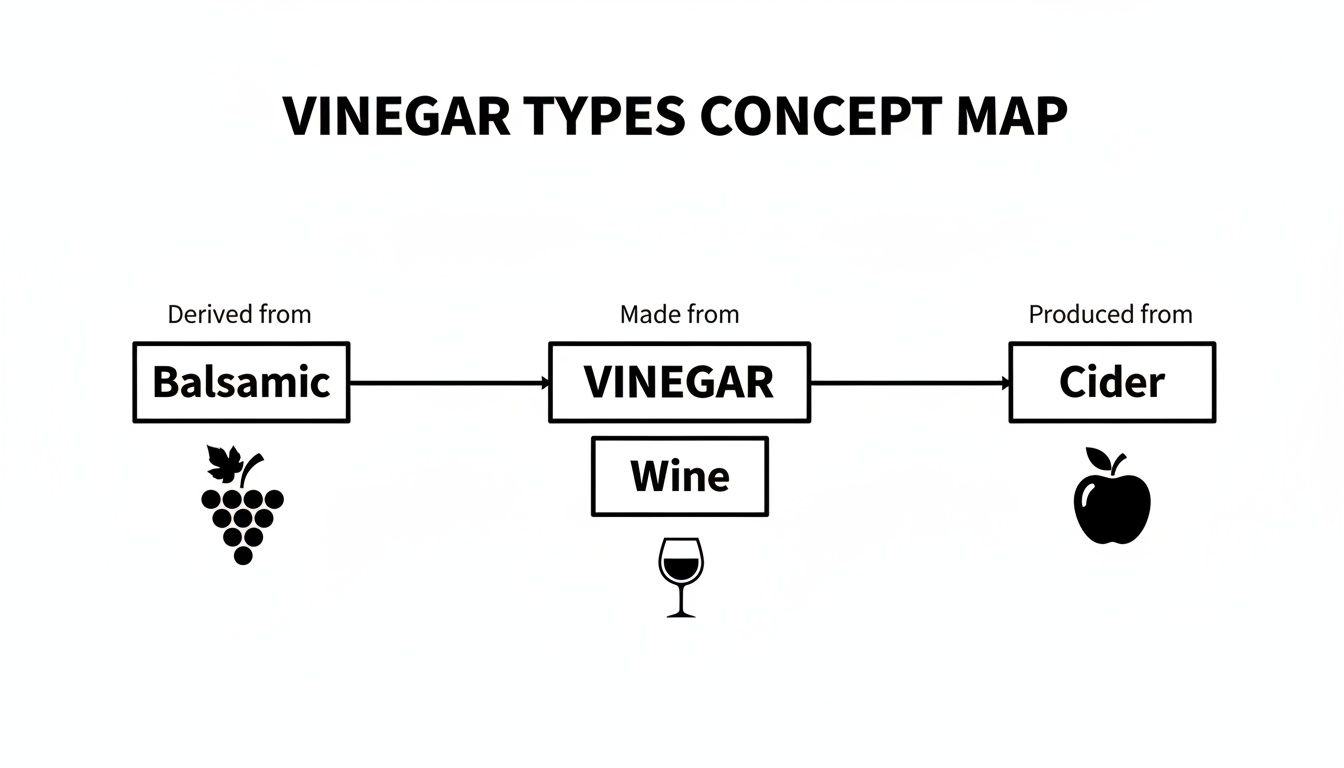
Knowing if a vinegar comes from grapes, wine, or apples is your first clue to understanding its flavor profile and strength. This core idea—matching strength with strength—is the compass that will guide all your pairing decisions, turning potential flavor clashes into perfect culinary moments.
The Classic Ratio (And When to Break It)
For ages, chefs have sworn by the classic 3-to-1 ratio: three parts oil to one part vinegar. This is your trusty starting point, a solid foundation for any vinaigrette. It creates a beautifully stable emulsion where the acidity cuts through the oil's richness without being overpowering.
But here's a little secret: the best cooks know that rules are made to be bent.
The true art of pairing comes from tasting and adjusting. Your palate is the ultimate judge, and different ingredients call for different approaches.
A sweeter, aged balsamic might not need as much oil; you could lean closer to a 2-to-1 ratio to let its complexity shine. A particularly sharp, acidic vinegar might need a little extra oil to mellow its bite. Don't be afraid to experiment—your confidence will grow with every taste.
Interestingly, the growing focus on health has also shaped pairing trends. More people are seeking out olive oils rich in oleocanthal for its anti-inflammatory properties, which fits perfectly with the Mediterranean diet's love for red wine vinegar. As you shop, look for certifications like PDO to ensure you're getting the real deal.
Classic Olive Oil and Vinegar Pairing Chart
To take the guesswork out of your next meal, I've put together this simple chart. Think of it as your go-to playbook for everything from a light summer salad to a hearty marinade.
| Olive Oil Profile | Best Vinegar Pairings | Ideal Culinary Use |
|---|---|---|
| Delicate & Buttery | White Wine Vinegar, Champagne Vinegar, Rice Vinegar | Drizzling over flaky fish, dressing tender greens, or pairing with subtle flavors like fresh mozzarella. Our guide to olive oil and cheese has more ideas. |
| Medium & Fruity | Apple Cider Vinegar, White Balsamic Vinegar | Perfect for everyday vinaigrettes, roasting vegetables like asparagus or bell peppers, and marinating chicken. |
| Robust & Peppery | Aged Balsamic Vinegar, Red Wine Vinegar, Sherry Vinegar | Standing up to bold flavors like grilled steak, bitter greens (like arugula or radicchio), or drizzling over a hearty bean soup. |
Once you've whipped up the perfect dressing, you'll need a way to take it on the go. A Swell Salad Bowl Kit is great for keeping your creations fresh.
With these principles in hand, you’re no longer just mixing ingredients. You are conducting a symphony of flavors, making sure every note works together to elevate the entire dish.
Creative Uses Beyond the Salad Bowl
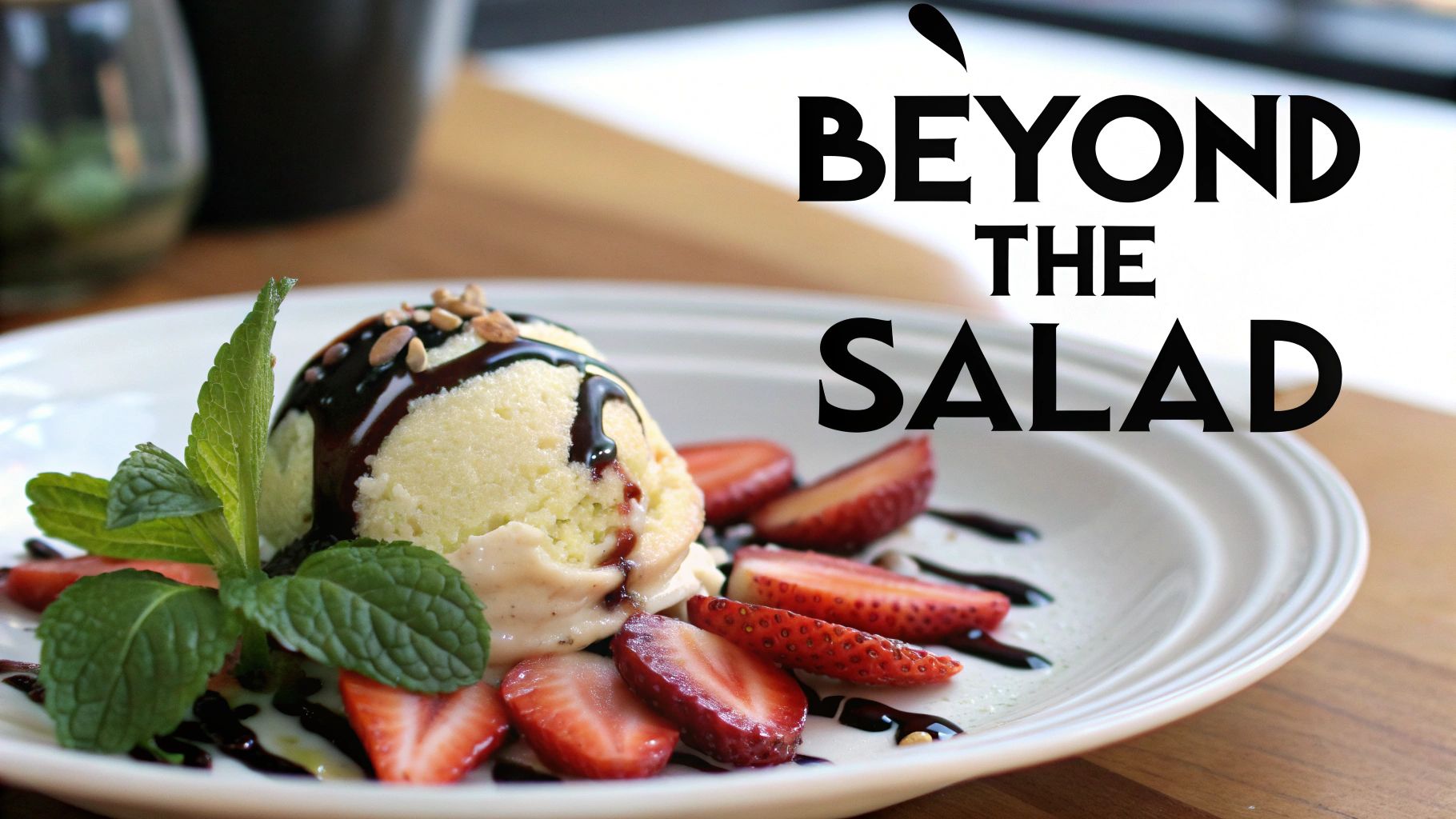
If you're only using olive oil and vinegar on salads, you're missing out on a world of culinary magic. Thinking of this pair as just a dressing is a major missed opportunity. It's time to break them out of that box and discover how they can elevate everything from marinades to desserts.
The secret is to see them as individual tools. Imagine a drizzle of a peppery, high-quality EVOO over a scoop of vanilla ice cream, finished with a few drops of thick, syrupy balsamic. It sounds strange, but it works beautifully. The oil brings a velvety texture and a savory surprise, while the vinegar’s tangy sweetness cuts right through the richness.
This trick isn't just for ice cream. A bowl of ripe strawberries or fresh peaches goes from simple snack to sophisticated dessert with just a whisper of great olive oil and a splash of balsamic.
Marinades That Do More Than Tenderize
A good marinade must do two things: make the protein tender and infuse it with flavor. Olive oil and vinegar are the perfect one-two punch for the job. The vinegar’s acid gets to work breaking down tough muscle fibers, while the olive oil acts as a carrier, pulling the flavors of your herbs and spices deep into the meat.
Here’s a go-to marinade that I use for everything from chicken and pork to a great steak:
- The Base: A robust extra virgin olive oil and a splash of red wine or sherry vinegar.
- The Aromatics: A few cloves of crushed garlic, a sprig of fresh rosemary, and some thyme.
- The Finish: A generous pinch of coarse salt and freshly ground black pepper.
This simple mix doesn't just tenderize; it builds an incredible crust of flavor when you grill or roast.
The Art of the Finishing Drizzle
One of the most powerful ways to use this duo is as a finishing touch, right before a dish hits the table. This final flourish adds a last-minute burst of brightness and aroma that cooking would otherwise destroy.
Take a hearty lentil soup, for example. Just before serving, a swirl of robust EVOO and a splash of sherry vinegar will wake up all the flavors, adding a sharp, acidic lift and a rich, peppery finish. It completely transforms the dish. The same goes for roasted vegetables, grilled fish, or even a simple plate of steamed asparagus.
A finishing drizzle isn't just an ingredient; it's an event. It’s the final brushstroke that completes the masterpiece, adding a layer of flavor and aroma that would be lost during cooking.
And let's not forget how useful these staples are around the house. Vinegar, for instance, can be a surprisingly effective tool, as seen in things like vinegar traps for fruit fly control. This pair really does work wonders. For more ideas on building flavor, check out our guide on making fantastic sauces with olive oil.
How to Choose and Protect Your Liquid Gold
Every great dish begins with great ingredients. When you're standing in the olive oil aisle, a little know-how can make all the difference, turning a good meal into a fantastic one. This is where you learn to spot the real deal.
Think of it like this: you're not just buying a cooking fat, you're investing in flavor. And like any good investment, it’s worth protecting. It all starts with knowing what to look for on the shelf.
Reading an Olive Oil Label Like a Pro
Forget the pretty picture of a Tuscan villa on the front of the bottle. The real story is always in the fine print on the back. This is where you’ll find the clues that separate a genuinely high-quality oil from a mediocre one.
The single most important piece of information is the harvest date. Olive oil is fresh-pressed fruit juice, and its flavor is best when it's young. Look for a date from the most recent harvest, ideally within the last year. Don't be fooled by a "best by" date—that can be set two years out, long after the oil has lost its vibrant character.
Next, look at the bottle itself. Light is the enemy of good olive oil, causing it to break down and go rancid.
- Dark glass is non-negotiable: Tins or ceramic containers are also fantastic because they block out all light.
- Steer clear of clear bottles: As pretty as that golden-green hue looks, a clear bottle is a major red flag. It tells you the producer isn't serious about protecting the quality of what's inside.
Finally, keep an eye out for seals of approval. Certifications like PDO (Protected Designation of Origin) or PGI (Protected Geographical Indication) aren't just marketing fluff; they're legally protected guarantees. They mean the oil comes from a specific place and was made according to strict, traditional standards. It’s a mark of authenticity you can trust.
Storing Your Investment for Lasting Freshness
So, you’ve brought your beautiful bottle of olive oil home. Now what? Your mission is to protect it from its three biggest foes: heat, light, and air. How you store it will directly impact how long it maintains its incredible flavor and health benefits.
A cool, dark pantry is your olive oil’s best friend. The absolute worst place for it is right next to the stove. That convenient spot is a surefire way to cook your oil before it ever hits the pan, making it go rancid in no time.
Always screw the cap on tightly after you pour—the less oxygen that gets in, the better. Tuck it away in a cupboard, far from the oven and out of direct sunlight. By treating your oil with a little care, you ensure every drop you use for your olive oil and vinegar pairing is as fresh and flavorful as the first.
A Few Common Questions
As you start experimenting with different olive oils and vinegars, you're bound to have some questions. It happens to everyone. Let's walk through a few of the most common ones that pop up in the kitchen so you can feel completely confident.
Can You Actually Cook with Extra Virgin Olive Oil?
Yes, you absolutely can! A persistent myth claims you can't, but it's simply not true. A good quality Extra Virgin Olive Oil is perfect for sautéing, baking, and even roasting at moderate temperatures. In fact, fresh EVOO has a smoke point around 400°F (204°C), which is more than high enough for most everyday cooking.
The line to draw is with high-heat cooking, like deep-frying. That kind of intense heat will break down the beautiful, delicate flavors and destroy the healthy polyphenols you paid for.
The best part of a high-quality EVOO is its incredible flavor. To ensure that shines through, save your most prized bottles for finishing a dish. A simple drizzle over hot pasta, a warm soup, or some grilled fish right before serving is where it truly makes an impact.
What’s the Real Difference Between Balsamic Vinegar and a Balsamic Glaze?
This is a great question, and knowing the answer can save a dish. Think of traditional balsamic vinegar as a masterpiece. It's made in Italy from "grape must" and aged for years, sometimes decades, in a series of wooden barrels. This long, slow process yields a complex, syrupy liquid with a perfect, harmonious balance of sweet and tangy notes.
A balsamic glaze, on the other hand, is a modern shortcut. It's usually made from an inexpensive balsamic vinegar that's been cooked down with added sweeteners like sugar or corn syrup to make it thick and syrupy. What you get is a very thick, very sweet sauce.
They both have their uses, but you can't swap one for the other.
- True Balsamic: Reach for this when you want a nuanced, complex flavor. It's amazing drizzled over fresh mozzarella, strawberries, or a creamy risotto.
- Balsamic Glaze: Use this when you're looking for a thick, sweet, and decorative sauce to zigzag over a plate.
How Long Do Olive Oil and Vinegar Last After They’re Opened?
Once you open a bottle of olive oil, the clock starts ticking. Its primary enemy is oxygen, which slowly begins to degrade its fresh flavor and health benefits. As a rule of thumb, it’s best to use up an opened bottle of olive oil within 3 to 6 months. And always, always store it in a cool, dark place, away from the stove and sunlight.
Vinegar is a completely different animal. Its high acidity makes it a natural preservative, so it's incredibly stable. An opened bottle of vinegar will keep for years in your pantry without any risk of spoiling. The flavor might soften a tiny bit over a very long time, but it’s still perfectly good to use.
Here at Learn Olive Oil, we believe knowing these details is what elevates cooking from good to great. Now that you're armed with this knowledge, you’re more than ready to go out and explore all the amazing flavors waiting for you.
Ready to dive deeper? Visit us at Learn Olive Oil to continue your journey and find your next favorite bottle of liquid gold.
 Learn Olive Oil
Leave a comment