What’s the real difference in olive oils? It’s a question that cuts to the heart of what you bring into your kitchen, and the answer is surprisingly simple: Are you buying fresh-squeezed fruit juice, or an industrially refined cooking fat?
At its soul, authentic Extra Virgin Olive Oil (EVOO) is precisely that—the pure, unadulterated juice of fresh olives, captured through mechanical pressing without a single chemical shortcut. Everything else is a compromise, a lesser grade stripped of its natural flavor, its captivating aroma, and its life-giving health benefits by the harsh realities of industrial processing.
The Great Divide in Your Kitchen Cabinet
Step into the oil aisle of any grocery store and you’re met with a bewildering wall of bottles. Labels whisper promises of "Pure," "Light," and "Extra Virgin," tempting you to believe the choice is merely a matter of taste. But this is where the story gets interesting, because the difference is far more fundamental. It’s a stark line drawn between a natural, health-promoting food and a heavily processed commodity.
An olive oil’s journey begins in the grove, but its true character—its very soul—is forged in how it gets from the branch to the bottle. This is where the great separation happens.
On one side, you have the artisan's path: olives are harvested at the peak of perfection, rushed to a nearby mill, and cold-pressed within hours. This meticulous ritual is a vow to protect the vibrant, delicate flavors and preserve the powerful antioxidants, known as polyphenols, that earned olive oil its nickname: "liquid gold." This is the sacred promise of a true Extra Virgin Olive Oil.
On the other side lies the industrial highway. This path often begins with olives that are damaged, overripe, or simply not up to snuff. The oil squeezed from them is often so flawed it’s unfit for consumption. To rescue it for the marketplace, it’s subjected to intense heat, chemical baths, and brutal refining processes that strip away not only the defects but also the flavor, the aroma, and nearly every trace of its beneficial nutrients.
The term 'Extra Virgin' isn't just a marketing slogan; it's a guarantee of purity. It means the oil is nothing more than the cold-pressed juice of an olive, free from any chemical alteration and full of natural character.
A Tale of Two Oils: Production Matters
The core difference between these two paths is stark. It affects everything from how the oil is made to the final flavor you taste in your food.
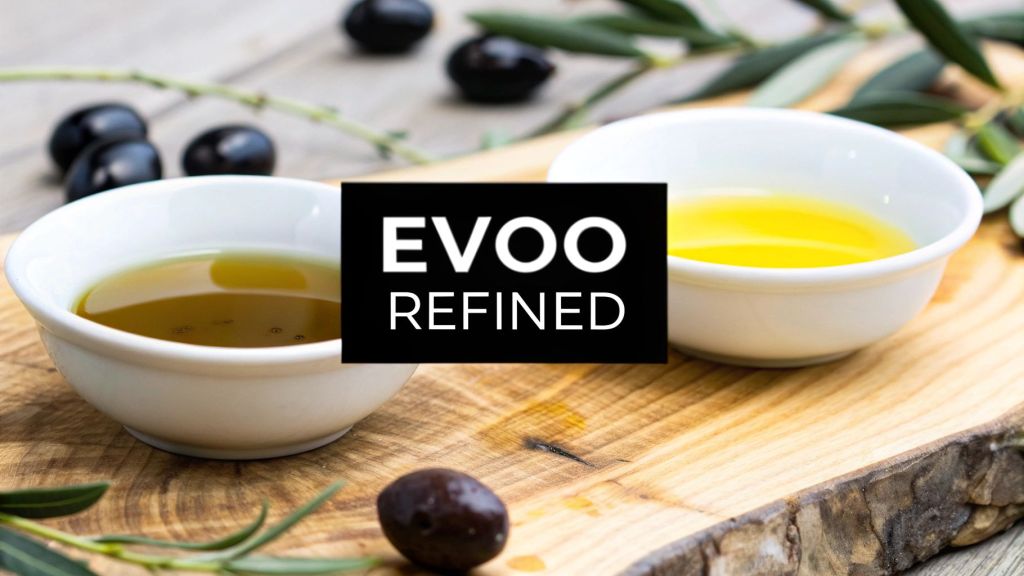
The infographic below shows this contrast perfectly, pitting a natural, mechanically produced Extra Virgin Olive Oil against a chemically processed, refined oil.
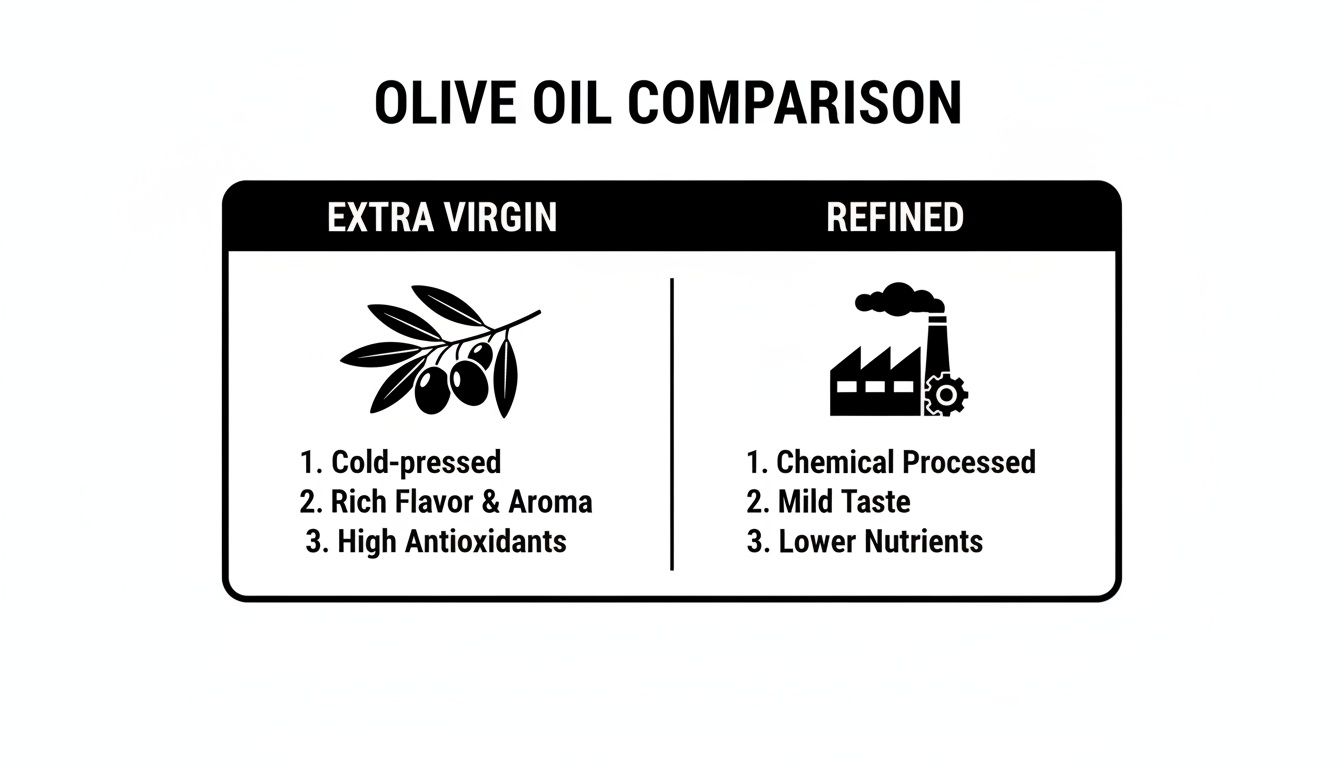
As you can see, one path preserves the olive's natural integrity, while the other completely alters it for mass production. This quick summary table breaks down the main players you'll find on the shelf.
Olive Oil Grades at a Glance
| Olive Oil Grade | Production Method | Acidity Level | Flavor Profile |
|---|---|---|---|
| Extra Virgin | Cold-pressed, no chemicals or heat | < 0.8% | Fruity, peppery, bitter; robust aroma |
| Virgin | Cold-pressed, no chemicals or heat | < 2.0% | Milder flavor, less aroma; may have slight defects |
| Refined ("Pure") | Chemically/heat-treated to remove flaws | < 0.3% | Neutral, little to no flavor or aroma |
| Light/Neutral | Refined oil, often blended with some virgin oil | < 1.0% | Very mild, neutral taste; designed for cooking |
Understanding these distinctions is the first step to becoming a smarter buyer. To dig even deeper, you can explore our detailed guide on the different olive oil types and what each one is best suited for.
How to Decode Olive Oil Labels
Walking down the olive oil aisle can be overwhelming. Bottles gleam under the grocery store lights, plastered with alluring words like ‘Pure,’ ‘Light,’ and ‘Extra Virgin.’ It’s easy to think the difference is just a matter of taste, but that’s exactly what savvy marketers want you to believe. The truth is, these labels tell a story—a story of pure, fresh-pressed juice versus a product of industrial intervention.
Understanding these labels is your best defense. The terms aren't just descriptive adjectives; they're legal classifications that reveal exactly how the oil got from the olive grove to your kitchen. Once you learn to speak the language of the label, you can cut through the marketing fluff and choose an oil that actually delivers on flavor, health, and quality.
Extra Virgin: The Gold Standard
At the very top of the quality ladder, you'll find Extra Virgin Olive Oil (EVOO). This isn't just a fancy marketing term; it's a legally defined grade that signifies the absolute best. Think of true EVOO as fresh-squeezed fruit juice, made by simply crushing olives without any high heat or chemical solvents. It’s the purest expression of the olive.
To earn the "extra virgin" title, an oil has to pass two make-or-break tests:
- A Chemical Test: The oil’s ‘free acidity’ must be below 0.8%. A low acidity level is a great sign—it means the olives were healthy, undamaged, and pressed quickly after being picked.
- A Sensory Test: A certified tasting panel scrutinizes the oil. It must have zero flavor defects and exhibit positive notes like fruitiness, a pleasant bitterness, and a peppery kick known as pungency.
These strict standards ensure that EVOO retains its natural, vibrant flavor, its beautiful aroma, and, crucially, its full arsenal of health-promoting antioxidants. It’s this quality that shoppers are increasingly looking for. According to the International Olive Council, in May 2025, a massive 74.6% of the EU’s extra-EU olive oil exports were classified as extra virgin. This shows a clear global trend toward quality.
The Truth Behind ‘Pure’ and ‘Light’ Labels
Here’s where things get tricky and the marketing language can really mislead you. When you see a bottle labeled 'Pure Olive Oil' or 'Light Olive Oil,' it’s natural to assume those are good things. In reality, these terms signal a heavily processed product. These oils start out as low-grade virgin oils with so many flavor defects that they have to be sent to an industrial refinery to be made palatable.
The refining process is intense and involves:
- High Heat: To boil off the unpleasant tastes and smells from the low-quality oil.
- Chemical Solvents: Used to neutralize the high acidity and strip out impurities.
- Bleaching and Deodorizing: These final steps create a completely neutral, colorless, and odorless fat.
What’s left is a bland, uninspired cooking oil. To give it a hint of olive character, producers then blend a tiny amount of virgin or extra virgin olive oil back in. The word ‘Pure’ is a marketing invention, not an official quality grade.
“Light” is probably the most deceptive term on the shelf. It has absolutely nothing to do with calories or fat content. It only refers to the oil’s light flavor and pale color. It’s an oil engineered for neutrality, but it comes at the cost of its nutritional soul.
So, when you're deciding between EVOO and a ‘Light’ oil, you're really choosing between a whole, natural food and a highly refined ingredient. For a deeper dive into the nitty-gritty of what to look for, check out our complete guide on https://learnoliveoil.com/olive-oil-labeling.
As you learn to read between the lines, a product like this Smooth Organic Extra Virgin Olive Oil becomes a great example. Words like 'organic' and 'extra virgin' immediately tell a story about its quality and how it was made. Being able to spot these key details is the best tool you have for making a truly informed choice.
The Hidden Markers of Quality
The real story of an olive oil isn't on the front label. It's written in the liquid itself—in the subtle chemical and sensory fingerprints that separate a vibrant, living oil from a dull, lifeless one. These markers tell you everything from how healthy the olives were on the tree to how quickly they were pressed.
Two key indicators reveal this story with total honesty: free fatty acidity and polyphenol content. They might sound technical, but understanding them is your secret weapon for seeing past marketing claims to find true quality.
The Crucial Role of Acidity
First up, acidity. In the olive oil world, lower is always better. Acidity is a direct measure of the oil’s freshness and the condition of the olives when they were crushed.
Here’s a simple way to think about it: when an olive gets bruised, bitten by a pest, or sits around too long after being picked, its cell walls start to break down. This process releases enzymes that degrade the oil, creating free fatty acids. A high acidity level, therefore, is a huge red flag—it points to damaged fruit, delayed pressing, or just plain poor handling.
For an oil to earn the Extra Virgin title, its free acidity must be below 0.8%. But the real pros, the premium producers, consistently hit levels far lower, often dipping below 0.3%. This isn't just a number on a lab report; it's a difference you can taste, resulting in a cleaner, smoother, and more stable oil.
Meet the Polyphenols: Your Health Heroes
If low acidity is about avoiding negatives, then a high polyphenol count is all about the powerful positives. Polyphenols are a class of potent antioxidants, and they're the real source of Extra Virgin Olive Oil’s famous health benefits and its most exciting flavors.
These incredible compounds are what give a great EVOO its personality. They’re responsible for:
- Pungency: That peppery kick you feel in the back of your throat. This comes mainly from a polyphenol called oleocanthal, which has well-documented anti-inflammatory properties.
- Bitterness: A clean, pleasant bitter note on your tongue is a fantastic sign. It means the oil was made from green, unripe olives that were packed with antioxidants.
- Aroma: Many of those fresh, "green" smells—like cut grass, tomato leaf, or artichoke—are tied directly to these compounds.
That peppery cough and pleasant bitterness in a top-tier EVOO aren't flaws. They are the signature of a powerful, antioxidant-rich oil working its magic. Don't fear the bite; celebrate it as a mark of authenticity and health.
The difference here is stark. The refining process that creates ‘Pure’ or ‘Light’ oils completely obliterates these delicate, beneficial compounds. What you’re left with is a neutral fat, stripped of its protective antioxidants and its entire personality. You can learn more about why these compounds are so important by exploring this guide to olive oil polyphenol content.
Let's break down how these quality markers stack up across different oil types.
Sensory and Chemical Quality Markers
This table shows the key chemical and flavor indicators that define an olive oil's quality, from its acidity level to its antioxidant content.
| Quality Marker | What It Means for EVOO | What It Means for Refined Oil | Why It Matters to You |
|---|---|---|---|
| Free Fatty Acidity | Must be <0.8%. Premium oils are often <0.3%. | No official limit after refining, as the process neutralizes acids. | A low number signals fresh, undamaged olives and expert handling. |
| Polyphenols (Antioxidants) | High levels, creating peppery and bitter flavors. Ranges from 100-1000+ mg/kg. | Virtually zero. They are destroyed during the refining process. | These compounds are behind the major health benefits and complex flavors. |
| Flavor Profile | Complex and varied: fruity, grassy, herbal, nutty. | Neutral, bland, or oily taste with no distinct character. | You get to experience the true taste of the olive variety and terroir. |
| Aroma | Fresh and fragrant, smelling of green fruit, vegetables, or herbs. | Odorless, or may have a faint waxy or greasy smell. | Aroma is a primary indicator of freshness and quality. No scent means no life. |
Understanding these differences is the key to choosing an oil that delivers both the flavor and the health benefits you're paying for.
How to Taste Like a Professional
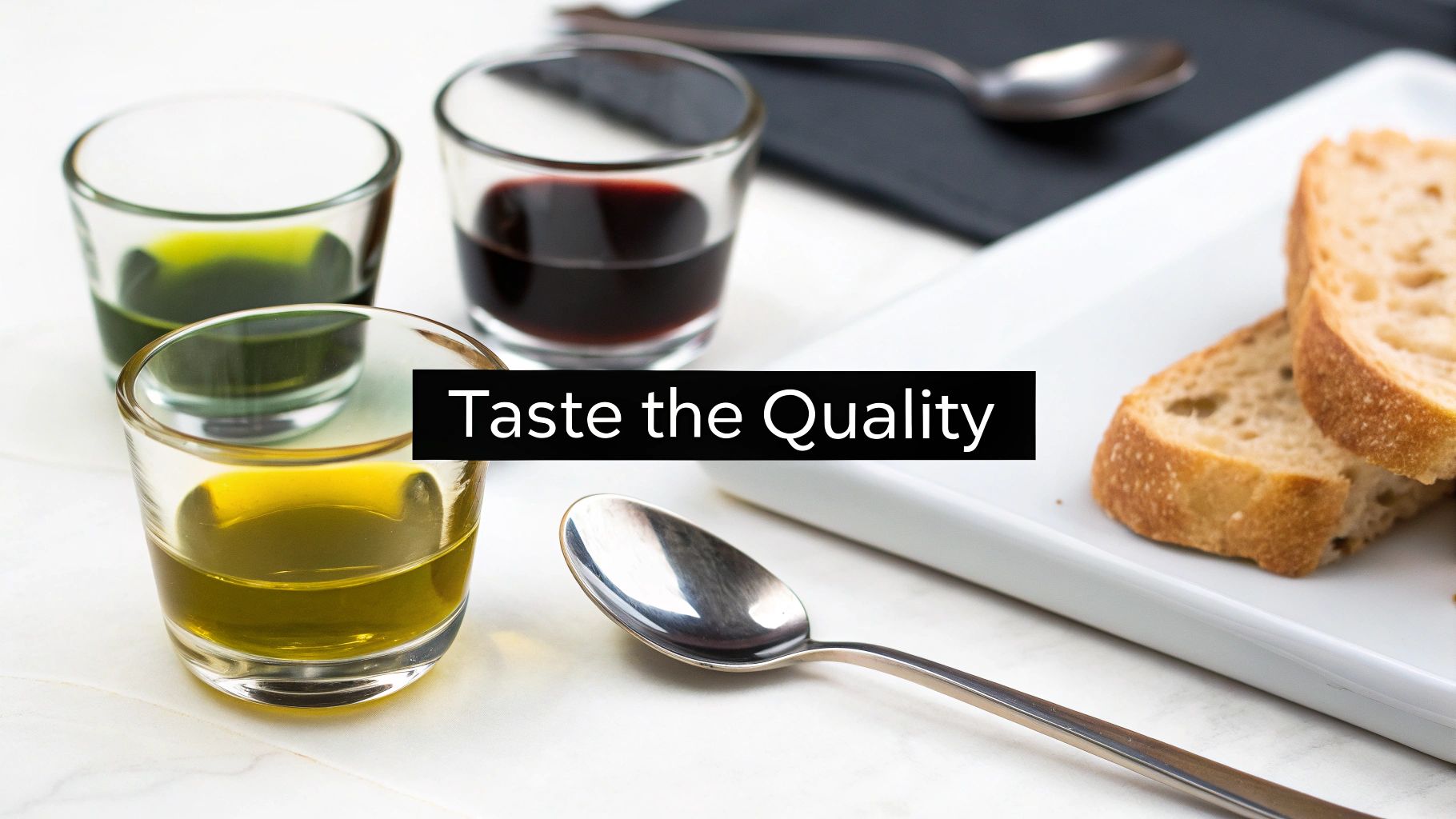
You don’t need a lab coat to spot a quality oil. Your own senses are your best allies. Here's a simple technique professional tasters use to wake up an oil's aromas and flavors—and you can do it right in your kitchen.
- Pour: Drizzle about a tablespoon of olive oil into a small, clean glass. A wine glass works great, but even a small cup will do.
- Warm: Cup the glass in one hand and cover the top with your other. Swirl the oil gently for about 30 seconds. Your body heat helps release its volatile aromatic compounds.
- Smell: Lift your hand from the top, bring the glass to your nose, and take a good sniff. A great EVOO should smell fresh—think grass, herbs, fruit, or vegetables. If you get whiffs of wax, old nuts, or anything musty, the oil is rancid or defective.
- Slurp: Take a small sip. Now, suck in some air through the oil, just like you’re slurping soup. This action sprays the oil across all your taste buds, letting you perceive the full range of flavors: the fruitiness, the bitterness, and that peppery finish at the back of your throat.
By truly engaging your senses, you can look past the label and connect directly with the oil's character. This simple ritual is the most reliable way to understand the profound difference in olive oils.
The Health Benefits of Real Olive Oil
When you hear health experts praise the benefits of olive oil, it's easy to miss a critical detail. They aren't talking about just any bottle on the shelf. Their advice is almost always aimed squarely at extra virgin olive oil, which is a world apart from its refined cousins in terms of what it can do for your body.
From a wellness standpoint, the gap between these oils is huge. One is a powerful, bioactive food, while the other is often just a nutritionally empty cooking fat. Real EVOO is a staple of heart-healthy diets for good reason—it’s full of monounsaturated fats like oleic acid, which are known to help support healthy cholesterol levels.
But the real magic is in the compounds that industrial refining completely wipes out: the polyphenols.
The Power of Polyphenols
Polyphenols are the powerful antioxidants that give high-quality EVOO its distinctive, peppery character. These compounds are the olive's natural defense system, and when we consume them, they offer that same protection to our bodies, shielding our cells from the kind of oxidative stress that leads to chronic disease.
One of the most well-known of these is oleocanthal. This amazing polyphenol is what creates that signature peppery sensation you feel in the back of your throat. Its effects are so potent that studies have shown it acts as a natural anti-inflammatory, working in a similar way to ibuprofen. That's a profound benefit, and it's locked inside a simple fruit juice.
Choosing a high-polyphenol EVOO isn't just a culinary upgrade; it's a strategic health decision. That bitter note and peppery finish are not flaws—they are the unmistakable signs of an oil rich in life-preserving antioxidants.
This growing awareness is changing how people shop. For health-conscious consumers, the difference between a nutrient-packed extra virgin and a cheaper refined blend is a major factor. This trend is visible in global markets. In the United States, for instance, imports between October 2024 and June 2025 contributed to an 11.4% overall import increase among major markets. Even though high prices during the 2023/24 harvest pushed some consumers toward alternatives, the demand for high-polyphenol EVOO is expected to bounce back as global supply stabilizes.
The Nutritional Void of Refined Oils
So what happens to all these valuable compounds in oils labeled 'Pure' or 'Light'? The industrial refining process is harsh. It uses high heat, chemical solvents, and bleaching agents to strip away any defects from low-quality oil, but it takes all the delicate polyphenols with it.
The final product is a neutral, bland fat. While you can certainly cook with it, it’s missing the vibrant, health-promoting qualities that make EVOO a superfood. You get the calories without the character or the protective benefits. The refining process essentially turns a living, bioactive food into a sterile, nutritionally barren product.
This is the most important difference to understand for your well-being. By choosing a genuine EVOO, you're not just adding flavor to your meal; you're adding a dose of powerful, plant-based medicine to your diet.
- Heart Health: Supports healthy cholesterol levels and cardiovascular function.
- Anti-Inflammatory Action: Oleocanthal offers natural, gentle anti-inflammatory benefits.
- Antioxidant Defense: Helps protect your cells from damage caused by free radicals.
- Brain Health: Contributes to cognitive wellness and may help protect against age-related decline.
The science is clear: the most profound olive oil health benefits are found exclusively in high-quality, unrefined extra virgin olive oil. Making this simple switch in your kitchen is one of the most impactful choices you can make for your long-term health.
Choosing the Right Oil for Your Cooking
Picking the wrong olive oil can ruin a great meal before it even starts. This is where all the talk about acidity and polyphenols actually matters—right at your stovetop. But don't worry, making the right call is much simpler than it sounds. Think of this as your playbook for getting the most flavor out of every dish.
First, let's get one persistent myth out of the way: the idea that you can’t cook with Extra Virgin Olive Oil. This old wives' tale is almost always tied to its smoke point, which is the temperature where an oil starts to break down and smoke. The reality, however, is far more interesting.
A fresh, high-quality EVOO is actually quite stable. Its resilience isn't just about its smoke point (which can be anywhere from 350°F to 410°F). It’s the high concentration of antioxidants that really protects the oil from breaking down under heat, making it an excellent choice for most home cooking, from sautéing vegetables to roasting chicken.
Pairing the Oil to the Purpose
The real question isn't if you should cook with EVOO, but which one to use for the job. The difference in olive oils truly comes to life when you start matching the intensity of the oil to the flavors in your food.
A bold, pungent EVOO with that signature peppery finish is more than just a fat—it's an ingredient. Use it to drizzle over a finished steak, a rustic bean soup, or a salad of bitter greens. Its robust character adds a layer of complexity that a bland, neutral oil simply can't.
On the flip side, a delicate and buttery EVOO works wonders in more subtle dishes. It’s perfect for gently cooking a piece of flaky white fish, whisking into a light vinaigrette, or even baking a lemon and olive oil cake. Its mild fruitiness complements the food without stealing the show. To dive deeper, check out our guide on the best olive oils for cooking, which has pairings for almost any dish you can think of.
The Role of Refined Oils
So, where do the neutral, refined "light" or "pure" olive oils fit in? Honestly, their role is pretty limited. Their higher smoke point of around 465°F makes them an option for high-heat deep frying where you want to avoid imparting any flavor.
But that neutrality is also their biggest flaw. When you opt for a refined oil, you're giving up all the incredible flavor, aroma, and health benefits that make olive oil so special. For the vast majority of your cooking, a good EVOO is not only perfectly safe but will give you a much more delicious and nutritious meal.
Here's a simple rule to live by: cook with an oil you'd be happy to eat raw. If it tastes like nothing on a spoon, it will contribute nothing but fat to your dish.
Remember, your choice of cookware can also make a big difference in your results, so it pays to spend time understanding different cookware materials like stainless steel and nonstick. When you start treating your olive oil as a core ingredient instead of just a slick surface for your pan, it will completely change the way you cook.
Why an Olive Oil's Origin Matters
Where an olive oil comes from truly defines its character. A bottle from the sun-drenched hills of Tuscany tells a completely different story than one from the vast groves of Andalusia. This is the magic of terroir—that unique combination of climate, soil, and olive variety that gives an oil its distinct personality.
It's a mistake to think of olive oil as a single, uniform product. The real difference in olive oils comes from understanding that each bottle is a liquid snapshot of a specific place and time. The character of the land is literally pressed into the oil.
The Influence of Terroir on Flavor
Just like with wine, an olive oil's origin dictates its flavor with remarkable precision. The land, the weather, and the specific olive cultivar all work together to create a sensory experience you won't find anywhere else. A few examples really bring this to life.
- Spain: Often known for its robust Picual olives, Spanish oils can be intensely peppery and bold with notes of green tomato leaf. They're powerful and assertive.
- Italy: Home to hundreds of olive varieties, Italian oils are incredibly diverse. A Coratina from Puglia might be intensely fruity and bitter, while an oil from Liguria could be delicate and buttery.
- Greece: Celebrated for its Koroneiki olives, Greek oils often have a softer, more herbaceous profile with hints of fresh-cut grass and a gentle peppery finish.
Understanding an oil's origin isn't just for connoisseurs. It's the most powerful tool you have for finding the exact flavors you want for your kitchen, turning shopping from a guessing game into a deliberate choice.
Global Production and What It Means for You
These regional distinctions are backed by the scale of global production. A quick look at the map of olive oil production makes the difference in olive oils crystal clear: Europe is the undisputed powerhouse. The EU produces "well over half" of the world's olive oil, hitting an estimated 2.1 million tonnes in the 2024/25 crop year. Spain alone contributed a massive 1.41 million tonnes.
These production hubs don't just influence the styles available; they also affect the price and quality you see on the shelf. You can dig deeper into these market dynamics in this comprehensive report.
Knowing this lets you shop with purpose. If you want a bold, pungent oil for finishing a steak, you might start by looking for a Spanish Picual. For a delicate dressing for fish, a northern Italian Taggiasca could be perfect. Your journey to finding the right olive oil doesn't start in the aisle—it starts with a map.
Common Questions About Olive Oil
Even after you've learned about production, labels, and quality, a few persistent questions seem to pop up again and again. Getting these wrong can easily lead you back to grabbing the wrong bottle. Let's clear up the most common points of confusion so you have the final pieces of the puzzle.
These aren't just minor details; they're the practical realities that separate a smart shopper from someone fooled by clever marketing.
Does ‘Light’ Olive Oil Have Fewer Calories?
No. This is probably the most misleading marketing trick in the olive oil aisle. The word 'Light' refers only to the oil's muted flavor and pale color—a direct result of it being heavily refined. It has the exact same calorie and fat content as extra virgin olive oil.
The refining process essentially strips away the oil's personality, flavor, and most of its powerful health benefits. What's left is a nutritionally inferior product. You aren't cutting calories; you're just sacrificing quality.
How Do I Know if My EVOO Is Authentic?
Real EVOO is bursting with freshness and character, and you don't need a lab to tell the difference. Your own senses are your best tool for uncovering the truth.
- Check the Date: First thing, look for a harvest or press date on the bottle. The more recent, the better. Freshness is everything.
- Trust Your Senses: A genuine extra virgin olive oil should have a vibrant, fruity aroma. When you taste it, you should notice a pleasant bitterness on your tongue and a peppery kick at the back of your throat.
Those sensations aren't flaws; they are the telltale signs of healthy polyphenols hard at work. A good oil should smell green and alive, not waxy, stale, or like old crayons. If it’s bland and lifeless, it’s not the real deal.
When in doubt, always buy from reputable sources that are transparent about the olive variety and where it came from.
Is It Worth Paying More for High-Quality EVOO?
Absolutely. That price gap you see on the shelf reflects a massive difference in quality, flavor, and health benefits. Think of it this way: cheap, mass-market oils are often made from damaged, overripe olives that have to be industrially processed just to be made edible. They're basically a salvage operation.
Premium EVOO, on the other hand, is the fresh, pure juice of carefully harvested, healthy olives, pressed within hours to preserve every drop of its natural goodness. You're paying for a superior ingredient that will elevate your food and for powerful antioxidants that protect your health. It’s an investment in both flavor and your well-being.
At Learn Olive Oil, we believe that understanding the story behind the bottle transforms your entire culinary experience. We provide the expert insights and tasting guides you need to choose with confidence. Discover the World of Premium Olive Oil and start your journey today.
 Learn Olive Oil
Leave a comment