Let's settle this once and for all. The real difference between using vegetable oil and olive oil in your baking boils down to a single, critical question: do you want your oil to be a silent partner, or a featured ingredient?
Think of it this way. Vegetable oil is the reliable workhorse, bringing a clean, neutral flavor and whisper-light texture. It’s the secret weapon you pull out when you want other ingredients to take center stage. Olive oil, on the other hand, arrives with its own distinct personality. It contributes a rich, often fruity flavor and creates a denser, more luxurious crumb that can transform a simple recipe into something truly memorable.
Choosing The Right Oil For Your Next Bake
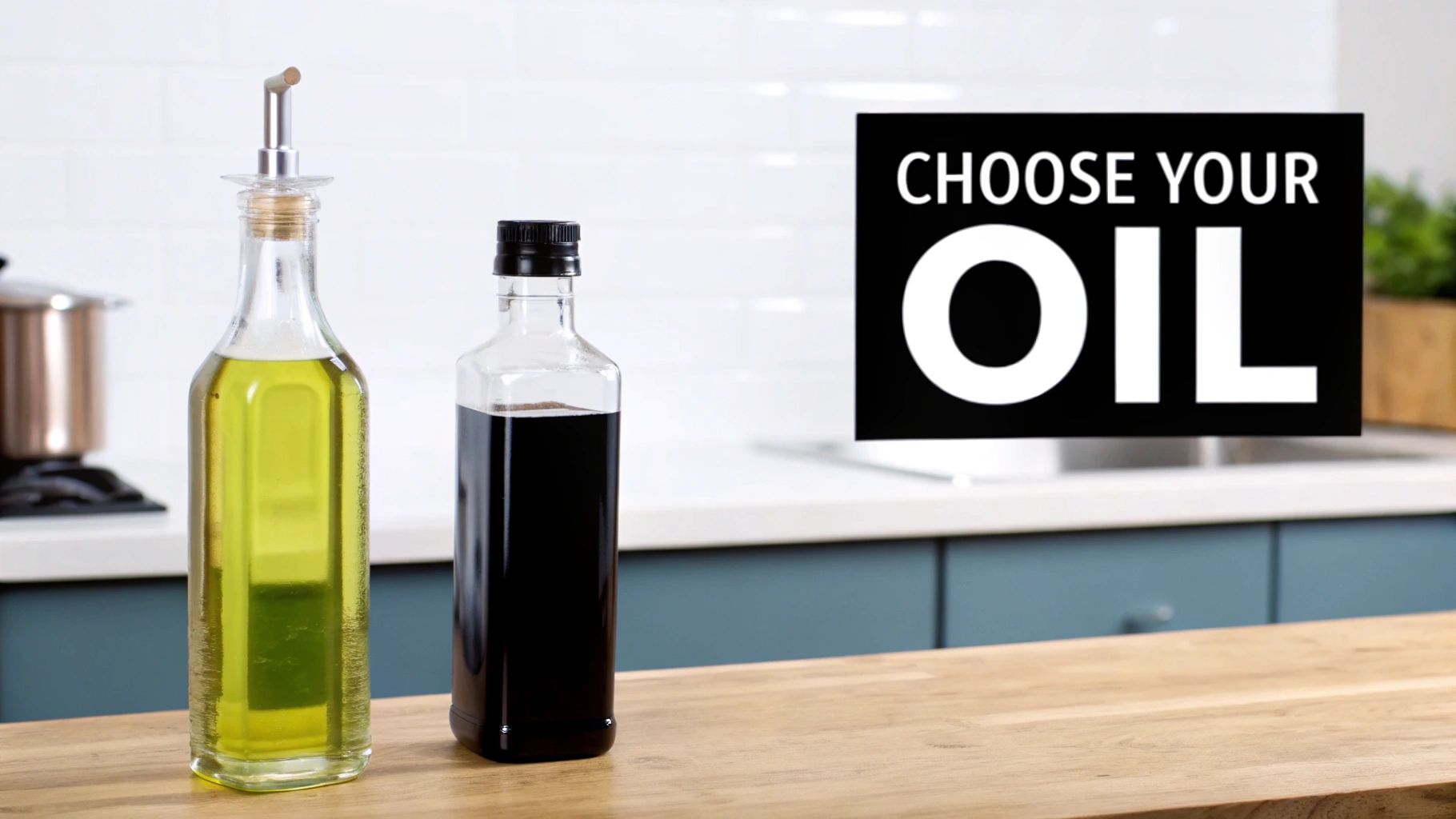
We’ve all been there. You’re standing in your kitchen, recipe in hand, staring into the pantry and wondering which bottle to grab. The trusty, all-purpose vegetable oil? Or that beautiful, golden-green olive oil? Let me tell you, this decision is more than a simple swap. It’s a choice that fundamentally alters the final texture, the crumb, and even the aromatic soul of whatever you’re baking.
It’s tempting to just reach for what you’ve always used. But making a thoughtful, deliberate choice is the secret that elevates a good recipe into a truly great one. Let’s unravel the essential differences so you can make a smarter, more confident decision before you even think about preheating the oven.
A Head-to-Head Comparison
To get you started, here's a quick look at how these two oils truly stack up against each other in the baker’s arena. This table is your cheat sheet for making a fast, informed choice the next time you pull out the mixing bowls.
Quick Comparison: Vegetable Oil vs. Olive Oil in Baking
| Attribute | Vegetable Oil (Neutral Blends) | Olive Oil (Light & Extra Virgin) |
|---|---|---|
| Flavor Profile | A true blank canvas; completely neutral, letting other ingredients shine. | Varies from mildly fruity (light) to peppery and robust (EVOO). |
| Best For Texture | Creates a light, airy, and exceptionally tender crumb. | Produces a denser, richer, and more satisfyingly moist texture. |
| Ideal Recipes | Delicate cakes (vanilla, white), classic sugar cookies, quick breads. | Rustic breads, olive oil cakes, muffins, fudgy brownies, savory bakes. |
| Health Profile | Primarily polyunsaturated fats; quality varies wildly by blend. | Rich in heart-healthy monounsaturated fats and powerful antioxidants. |
As you can see, there’s no single "winner"—only the right tool for the right job.
Key Considerations For Your Kitchen
When you're deciding between vegetable oil and olive oil, let your recipe’s ultimate goal be your guide. What kind of masterpiece are you trying to create?
- Flavor Dominance: Are you baking a classic vanilla birthday cake where that pure, delicate flavor must be the star? Vegetable oil is your only choice. Its invisibility won’t get in the way.
- Texture and Moisture: If you’re making a rustic lemon loaf or a batch of impossibly fudgy brownies, olive oil will add a satisfying density and keep your bake moist for days. It works miracles here.
- Nutritional Goals: For those looking to bake a little smarter, olive oil is the undisputed champion, thanks to its high content of heart-healthy monounsaturated fats.
Remember, not all olive oils are created equal. The type you choose—from a light, refined option to a bold Extra Virgin—will dramatically change the outcome. To truly master this, you can explore the different kinds of olive oil and find the perfect partner for your pantry.
Ultimately, the right oil isn't about which one is "better," but which one is better for the specific delight you have in mind.
How Oil Choice Defines Texture and Crumb
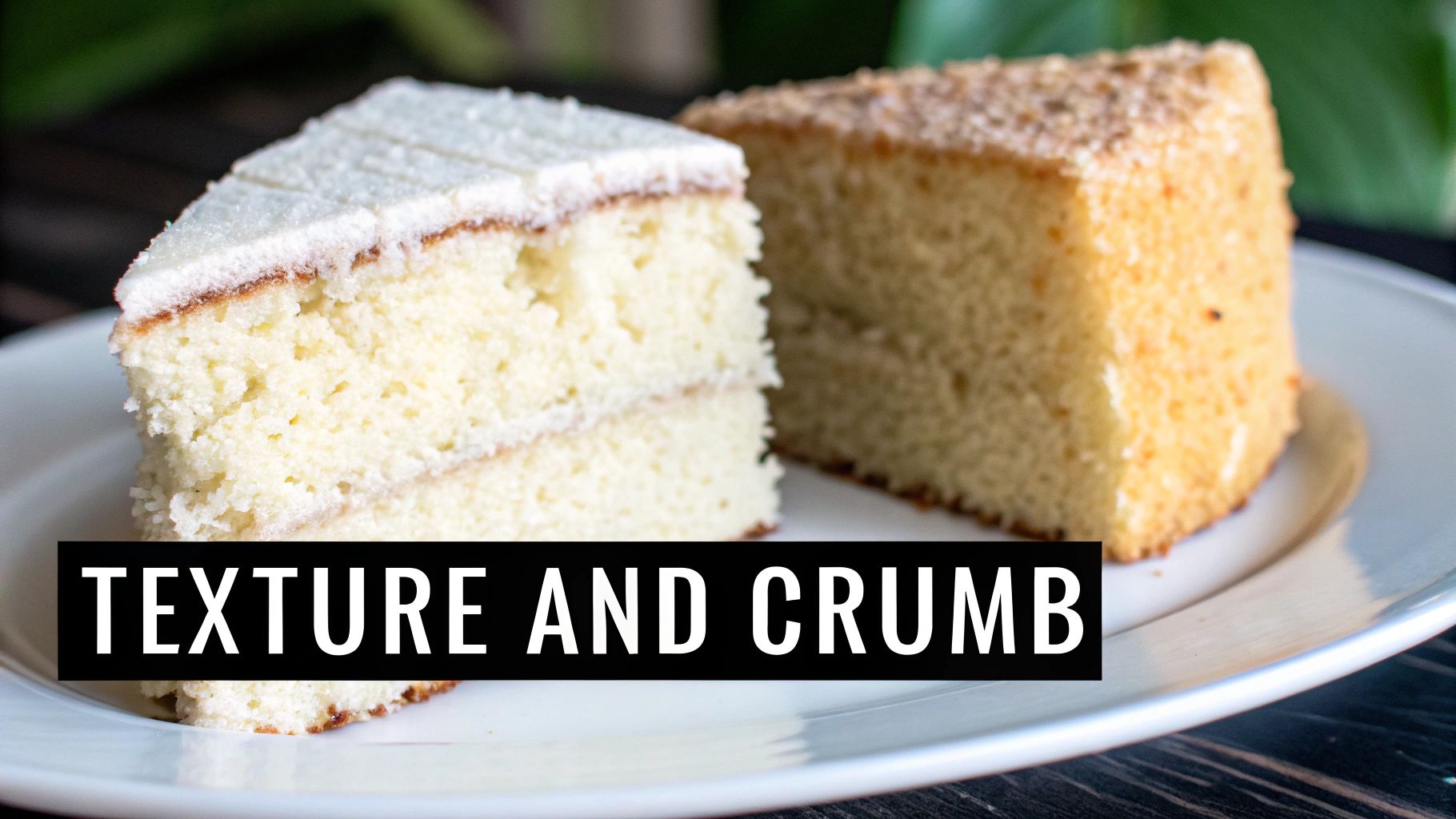
The oil you pour into the mixing bowl is the silent architect of your bake. It governs everything from moisture and tenderness to shelf life in ways most recipes never bother to explain. This is where the real competition between vegetable oil and olive oil is won or lost—not just on flavor, but in the very structure of your final creation.
Forget what you can taste for a moment. Instead, picture what’s happening on a hidden, molecular level inside your batter. As you mix, oil molecules rush in to coat the flour proteins, physically blocking them from linking up to form long, tough gluten strands. This beautiful interference is the real secret to a tender, melt-in-your-mouth result.
But here’s the fascinating part: not all oils work the same way. The specific fatty acid profile of an oil dictates the final architecture of your bake, creating vastly different eating experiences from the exact same recipe.
The Science of a Tender Crumb
Think of standard vegetable oil as the master of lightness. It's typically high in polyunsaturated fats, which have a less dense molecular structure. This allows the oil to disperse incredibly finely and evenly throughout the batter, creating countless microscopic pockets of tenderness.
This uniform coating is what produces that consistently light, airy, and delicate crumb. It’s why vegetable oil is the undisputed champion for bakes where a soft, fluffy texture is the ultimate prize.
- Angel Food and Chiffon Cakes: These recipes depend on a feather-light structure that vegetable oil delivers flawlessly.
- Classic White or Yellow Cakes: It ensures a uniform, soft crumb that doesn't compete with fragile vanilla or almond flavors.
- Soft-Baked Cookies: Vegetable oil helps achieve that perfect soft, chewy center without adding a hint of unwanted density.
This oil doesn't just create tenderness; it preserves it. By locking in moisture so effectively, vegetable oil helps keep cakes from drying out, extending their fresh-from-the-oven appeal for an extra day or two.
Crafting a Richer, More Satisfying Bite
Olive oil, on the other hand, builds a completely different kind of structure. Rich in monounsaturated fats—primarily oleic acid—its molecules are heavier and create a denser, more luxurious crumb. It doesn't just tenderize; it enriches.
The result is a bake with a more substantial, satisfying "chew" and a moistness that feels almost velvety. The texture is less about airy lightness and more about decadent substance. A cake made with olive oil feels more rustic and significant, a quality that can elevate simple recipes into memorable desserts.
The difference is palpable. A vegetable oil cake is light and disappears on the tongue. An olive oil cake is something you can sink your teeth into, with a pleasing weight and a deeply satisfying, moist crumb that holds together beautifully.
This unique texture makes it a powerful ingredient for specific baking projects. Imagine a rustic lemon and polenta cake that is both moist and slightly crumbly, or a dense, fudgy brownie where the richness is amplified by the oil's character. For bakers looking to experiment, exploring some classic baking with olive oil recipes is a fantastic way to experience this textural magic firsthand.
Ultimately, the choice is far more significant than a simple fat-for-fat substitution. It’s a deliberate decision about the kind of experience you want to create. Do you want a texture that is ethereal and light, or one that is rich, hearty, and deeply comforting? The answer lies in the bottle you choose.
The Critical Role of Flavor in Baking Oils
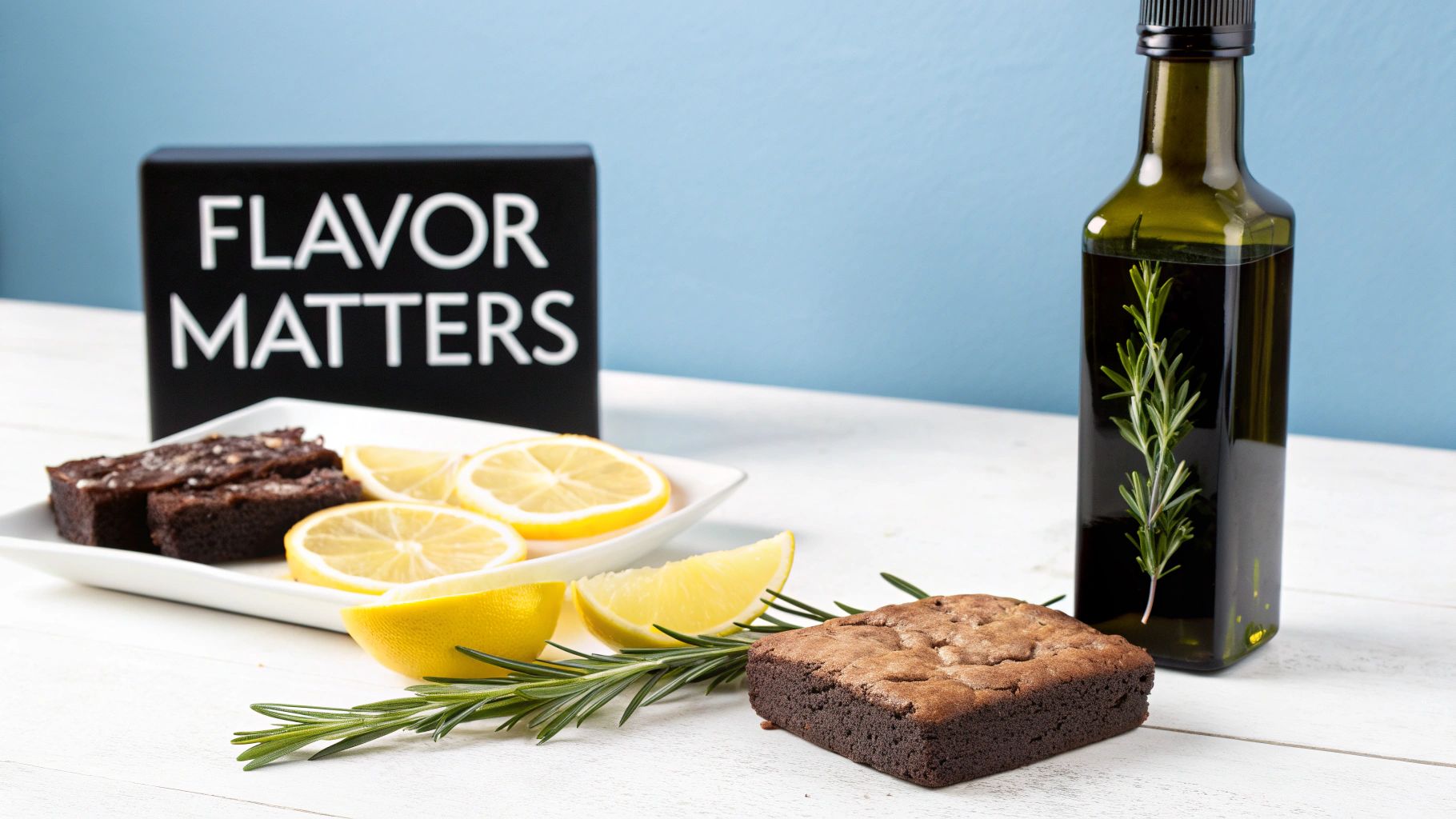
When you're standing in your kitchen, deciding between vegetable oil and olive oil, this is the moment that matters most. Forget smoke points and nutrition for a second. The real question is: do you want the fat in your recipe to be a quiet supporter or a main character?
Your answer here changes the entire game. The oil you choose can either fade into the background, letting other ingredients sing, or it can step into the spotlight and add its own distinct personality. Get this right, and your baking goes from pretty good to truly unforgettable.
Vegetable Oil: The Silent Partner
Think of vegetable oil as the ultimate team player. It's specifically engineered to be neutral, a true blank canvas for your baking artistry. Its whole purpose is to add moisture and create a tender crumb without leaving any flavor footprint behind.
This chameleon-like quality is its greatest strength. When you're making classic sugar cookies or a delicate white cake, the last thing you want is a peppery or grassy note interfering with the pure vanilla, almond, or butter flavors you cherish. Vegetable oil ensures those primary tastes remain the undisputed stars of the show.
It’s the reliable, predictable choice for any recipe that depends on subtlety. It doesn't compete; it simply supports.
Olive Oil: The Flavor Contributor
Olive oil, on the other hand, always shows up with a point of view. It doesn’t just bring fat to the party; it brings character. Choosing to bake with olive oil is a deliberate flavor decision, one that can transform a simple recipe into something far more complex and intriguing.
Even a mild, 'light' olive oil will introduce subtle fruity or nutty notes that add a layer of depth you might not be able to name but will definitely notice. A more robust extra virgin olive oil can lend a complex, peppery finish that turns a basic loaf cake into a culinary statement. If you're curious, you can learn more about what does olive oil taste like to really understand these nuances.
This built-in flavor profile makes olive oil an incredible partner for specific ingredients.
- Citrus: The fruity notes in a good olive oil amplify lemon, orange, and grapefruit zest, making cakes and muffins incredibly bright and fragrant.
- Chocolate: Olive oil can intensify the dark, bitter notes in high-quality chocolate, giving brownies and tortes a richer, more profound flavor.
- Herbs and Spices: Savory bakes featuring rosemary, thyme, or even warm spices like cardamom are beautifully complemented by the earthy, herbaceous qualities of olive oil.
Using olive oil isn’t just a simple swap; it's a flavor upgrade. It’s for the baker who wants to create something with a story—a bake that makes people stop and ask, "What is that amazing flavor?"
Market dynamics also reveal part of this story. The global vegetable oil market is valued at a staggering USD 280–296 billion, completely dwarfing the olive oil market at around USD 16.9 billion. This scale is why commercial bakeries lean on neutral vegetable oils for consistency and cost-effectiveness. Olive oil, in contrast, remains a more premium choice for home bakers and artisans who prioritize creating a unique flavor experience.
So, when it comes to flavor, the decision is strategic. Grab the vegetable oil when you need a silent worker, but reach for the olive oil when you want your fat to make a delicious and memorable statement.
How Your Choice of Oil Shapes Nutrition
When you're baking, every ingredient counts. The oil you choose does more than just add moisture—it becomes a core part of the final nutritional profile. This isn't just about calories; it's about the very type of fats and compounds you're adding to your food and, ultimately, to your body.
Let’s get straight to the point. Comparing vegetable oil and olive oil on a nutritional level is like comparing two completely different philosophies of health. One is purely functional, designed for neutrality. The other brings a powerhouse of well-researched health benefits right into your mixing bowl.
A Look Inside Common Baking Oils
Most bottles simply labeled "vegetable oil" are actually a blend of different oils, often soybean, canola, or palm oil. These are generally high in polyunsaturated Omega-6 fats. While our bodies need Omega-6, most modern diets have far too much of it compared to Omega-3, an imbalance that can contribute to inflammation.
Olive oil, however, tells a much different story—especially the extra-virgin kind. It is famous for its high concentration of monounsaturated fats, which are consistently linked to better heart health. It's no surprise that olive oil is a cornerstone when discussing foods with anti-inflammatory properties.
The Nutritional Edge of Olive Oil
The true hero in olive oil is oleic acid, the primary monounsaturated fat that makes up most of its composition. This is the "good fat" that gets all the credit for olive oil's health accolades, setting it worlds apart from many other fats you'd find in the baking aisle.
Extra-virgin olive oil (EVOO) is packed with it, typically containing around 73% oleic acid. It's also relatively low in saturated fat, at just 10–14%. This fantastic fatty acid profile is supercharged by the presence of powerful antioxidants called polyphenols. So, when you swap out vegetable oil for olive oil, you're directly upping the monounsaturated fat content of your brownies or bread—a huge win if you're baking with health in mind.
But does all that goodness survive the heat of the oven? It's a fair question.
A common myth is that baking destroys all the health benefits of olive oil. The truth is, most of them hold up surprisingly well. Standard baking temperatures, usually around 350-400°F (175-200°C), are not high enough to degrade all the valuable compounds. Many of the antioxidants and healthy fats remain intact, making their way into the final baked good.
This means the nutritional benefits aren't just theoretical—they're actually baked into your muffins and cakes. If you want to dive deeper, you can find a complete breakdown of the nutrition facts for extra virgin olive oil and see just what it brings to the table.
Ultimately, your choice of oil has a real impact. Vegetable oil gets the job done as a neutral fat source. But olive oil delivers a genuine nutritional boost that travels from the bottle to the final bite, letting you bake for both incredible taste and true nourishment.
Real-World Baking: When to Use Vegetable Oil vs. Olive Oil
Theory is one thing, but the real magic happens in the kitchen. Let's get practical and talk about exactly when to reach for each bottle. Knowing which oil to use isn't just about following a recipe; it's about understanding what you want your final bake to be.
The choice really boils down to your goal. Are you after a cloud-like, delicate crumb where other flavors can take center stage? Or do you want to create something with a richer, more rustic character and a uniquely moist texture? Each oil has its moment to shine.
The Case for Vegetable Oil
Sometimes, you don't want the oil to be part of the conversation. For certain recipes, vegetable oil’s complete neutrality is its greatest strength. It brings moisture and a tender crumb to the party without stealing the spotlight from the delicate flavors you’ve worked so hard to create.
Think of vegetable oil as the ultimate supporting actor. It’s the perfect choice when your recipe is all about subtlety.
- Angel Food, Chiffon, and White Cakes: These cakes are all about their light, airy texture and delicate taste. Vegetable oil delivers the necessary moisture without weighing them down or introducing any competing flavors.
- Classic Vanilla or Almond Sugar Cookies: When the pure, fragrant notes of vanilla or almond are the main event, vegetable oil quietly does its job in the background.
- Boxed Cake Mixes: Let’s be honest, most boxed mixes were designed with vegetable oil in mind. The recipes are calibrated for its neutral flavor and consistent results, so swapping it out can really change the final product.
In these recipes, using a flavorful olive oil would be like asking a rockstar lead guitarist to play a quiet rhythm part. It’s just not the right fit for its personality. Vegetable oil lets the primary flavors sing.
This need for consistency is a big reason why the global baking and confectionery industry, valued at around USD 244.1 billion, so often relies on it. While you'll find plenty of artisan bakeries in Europe using olive oil, large-scale commercial operations almost always choose vegetable oil for its predictable performance and cost-effectiveness. You can find additional edible oil market insights on gminsights.com to see how these trends play out on a larger scale.
When Olive Oil Steals the Show
Olive oil is for those moments when you want to add another layer of flavor and create something truly memorable. It's the ingredient you pick when its distinct character can enhance, rather than overpower, the other elements in your recipe. This is where baking gets really interesting.
Embrace olive oil in bakes with bold, complementary flavors that can stand up to its personality.
- Lemon, Orange, or Other Citrus Cakes: The bright, fruity notes in a good olive oil are a natural match for citrus zest. The combination creates a beautifully aromatic cake that tastes incredibly fresh.
- Rich Chocolate Desserts: In fudgy brownies or a dense chocolate cake, the right olive oil can deepen the cocoa flavor while adding a sophisticated, long-lasting moistness.
- Savory Breads and Muffins: This is a no-brainer. If your recipe includes herbs like rosemary or thyme, or savory ingredients like cheese and olives, olive oil’s earthy notes will feel right at home.
- Rustic Fruit and Nut Bakes: Think of a hearty apple spice cake or a classic carrot cake. The subtle complexity of olive oil harmonizes perfectly with the warm spices and earthy ingredients.
How to Make the Swap: Ratios and Picking the Right Olive Oil
Ready to experiment? The good news is that it’s incredibly easy. You can substitute olive oil for vegetable oil using a simple 1:1 ratio. If your recipe calls for 1 cup of vegetable oil, just use 1 cup of olive oil.
But which olive oil should you grab? The type you choose makes a huge difference.
- For a subtle flavor: Start with a "light" or "pure" olive oil. These have been refined for a milder taste, making them a great gateway oil for baking.
- For a bold statement: Go for a high-quality extra virgin olive oil (EVOO). This is your best bet when the oil is meant to be a star ingredient, like in a traditional Italian olive oil cake.
Many bakers worry about the smoke point, but most baking happens between 325-375°F, well below the point where oils start to degrade. If you're curious, this cooking oil smoke points chart shows that even most EVOOs are perfectly safe for standard baking temperatures.
Making the Right Choice for Every Recipe
Now that we’ve broken down the nitty-gritty differences between vegetable and olive oil, you can stop just following recipes and start making intentional, creative choices in your own kitchen. There's no single "best" oil—only the right oil for the specific bake you have in mind.
The goal is to be deliberate. Think about what you're trying to achieve with your final product. Are you after a whisper-subtle flavor, a super moist texture, a health-conscious swap, or just an affordable, reliable option? Each oil has its moment to shine, and knowing when to use which is what separates a good baker from a great one.
A Simple Framework for Choosing Your Oil
Most of the time, your decision boils down to one simple question: do you want the oil to be a neutral background player or a bold flavor contributor? Answering that will point you to the right bottle almost every single time.
This flowchart breaks it down visually. It’s a handy little guide for that core decision between a neutral profile (where vegetable oil is king) and a bolder one (where olive oil steals the show).
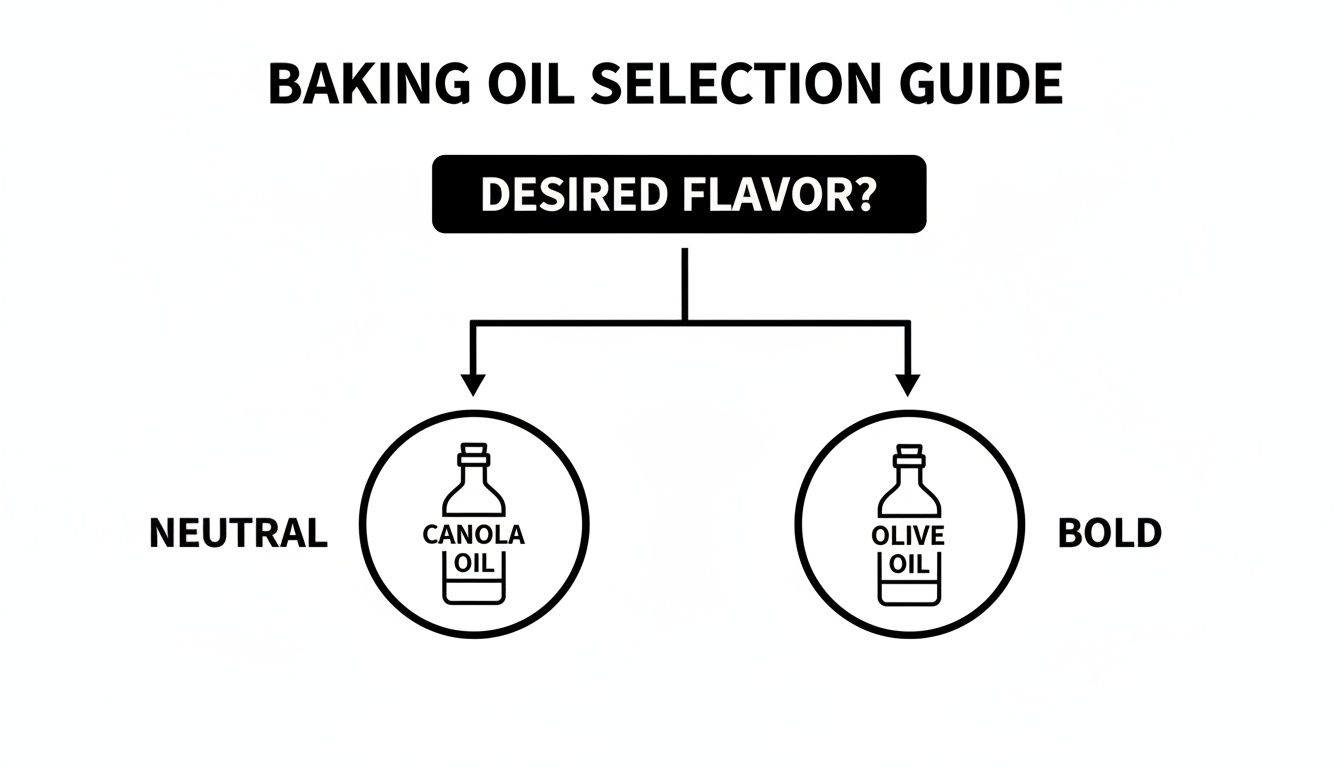
As you can see, if you want the other ingredients—like delicate vanilla or rich chocolate—to be the star, a neutral oil like canola is the way to go. But when you want to add a layer of complexity and character, olive oil is the clear choice.
Your Final Mental Checklist
Let’s pull all this info together into a quick checklist. Before you start your next baking project, run through these questions to pick the perfect oil with total confidence.
- What’s my flavor goal? If the answer is "let the vanilla shine," grab the vegetable oil. If it’s "add something special to this lemon and rosemary cake," you'll want the olive oil.
- What texture am I aiming for? For a classic birthday cake with a light, airy, and delicate crumb, vegetable oil is your best bet. For a denser, richer, and more satisfyingly moist bake like a rustic cornbread, olive oil is the way to go.
- Are health benefits a priority? All fats should be enjoyed in moderation, of course. But if you're looking for a nutritional edge, olive oil's high content of monounsaturated fats and antioxidants makes it a clear winner over most generic vegetable oil blends.
Thinking through these three points turns you from a recipe-follower into the architect of your bake. You’re no longer just mixing ingredients; you’re making every choice with purpose to shape the final taste and texture.
A Few Common Questions
When you're standing in your kitchen, deciding between vegetable oil and olive oil, a few questions always pop up. Let's clear the air so you can bake with confidence and get the exact results you're after.
Can I Really Substitute Olive Oil for Vegetable Oil in Any Cake Recipe?
Technically, yes, you can swap them in a 1:1 ratio, but it’s a move you should make thoughtfully. It's definitely not the best choice for every single recipe.
For cakes with very delicate, nuanced flavors—think a classic white cake or an angel food cake—the distinct taste of olive oil can easily steal the show, even if you use a light variety. In these cases, the neutrality of vegetable oil is your best bet to let the vanilla or almond notes shine through.
On the other hand, olive oil is a rockstar in recipes with bold flavors that can stand up to its character. It's fantastic in citrus cakes, anything with warm spices like cinnamon or cardamom, rich chocolate desserts, and of course, savory bakes like focaccia and herb-filled muffins.
Does the Smoke Point of Olive Oil Matter When Baking?
This is a really common worry, but here’s the short answer: no, not really. Smoke point is a huge deal for high-heat cooking like searing a steak on the stovetop, but it’s much less of a concern inside your oven.
Most cakes, cookies, and breads are baked somewhere between 325-425°F (160-220°C). That temperature range sits comfortably below the smoke point of both your average vegetable oil and most decent olive oils. A good quality extra virgin olive oil has a smoke point hovering around 375°F (190°C), making it perfectly safe for the vast majority of recipes without any risk of burning or creating off-flavors.
Which Type of Olive Oil Is Best for Baking?
The "best" one really depends on what you're trying to achieve with your recipe. There’s no single right answer, but you can make a clear choice based on your flavor goals.
- For a subtle touch: A 'light' or 'pure' olive oil is a fantastic all-rounder for most baking. These are milder and more neutral-tasting, plus they're usually easier on the wallet. They're the perfect gateway oil if you're just starting to experiment.
- For a bold flavor statement: When you want that olive oil flavor to be a main character—like in an Italian olive oil cake or a rustic focaccia—reach for a high-quality extra virgin olive oil (EVOO). It contributes a wonderful fruity, peppery complexity that elevates the whole bake.
Here at Learn Olive Oil, we're all about helping you find the perfect olive oil for any culinary adventure. Check out our expert guides and discover your next favorite bottle.
Discover the World of Premium Olive Oil at https://learnoliveoil.com

 Learn Olive Oil
Leave a comment