Walk down the olive oil aisle of any grocery store, and you're met with a bewildering wall of choices. Bottles whisper promises of ‘extra virgin,’ ‘pure,’ and ‘light.’ The confusion is enough to make you surrender, grab the cheapest bottle, and simply hope for the best.
But here’s a secret known to the world’s best chefs: the magic isn’t in the fancy label or the brand name. It’s hidden in how the oil is made. The less an oil is touched, tampered with, or processed, the more of its natural, vibrant goodness—both in flavor and in health—it holds for you.
Unlocking the Secrets of Olive Oil
You've been there. Staring at that imposing shelf, wondering if the $30 bottle is truly ten times better than the $3 one sitting right beside it. It’s a classic shopper's dilemma. But imagine striding down that same aisle with the quiet confidence of a culinary master, knowing instinctively which oil will make your salad dressing sing and which is destined for a blistering-hot sauté.
The key isn’t memorizing dozens of foreign-sounding labels. It’s grasping one simple, powerful idea: the hierarchy of quality.
Picture it like fruit juice. First, you have the ambrosia of freshly squeezed juice, captured straight from the fruit. A step down, you find juice made from concentrate. And at the bottom, a fruit-flavored sugar drink. All may have started with a piece of fruit, but the journey from the orchard to your glass changes everything. Olive oil follows an almost identical path, from a state of pure, unrefined perfection to one that is heavily processed.
The Quality Tiers Explained
To truly appreciate why olive oil is so revered, you need only look to places like the rich culinary traditions of Italy's Food Valley, where this liquid gold is woven into the very fabric of life. The main types of olive oil are organized into clear quality tiers, from the highest, most coveted grade down to the lowest.

As you can see, Extra Virgin Olive Oil (EVOO) sits enthroned at the very top. It is the highest-quality, least-processed, and most flavorful option you can buy. From there, we descend to Virgin and then to the various Refined oils.
This simple structure is your new road map for the grocery store. It allows you to see past the marketing fog and focus on what truly matters: the grade of the oil locked inside the bottle. If you're hungry for more specifics, you can get a deeper look at the different types of olive oil and what defines their character.
Now, let's pull back the curtain on each of these categories. By the time we're done, you'll have transformed from a hesitant shopper into a confident cook.
Olive Oil At a Glance Your Quick Guide
To make this journey even simpler, here’s a quick-reference table that summarizes the essential differences. Consider it your secret cheat sheet for the olive oil aisle.
| Olive Oil Type | Processing Method | Flavor Profile | Best For |
|---|---|---|---|
| Extra Virgin | Cold-pressed, no chemicals or heat | Robust, fruity, peppery | Dipping, dressings, finishing |
| Virgin | Cold-pressed, slight defects | Milder, less intense flavor | Everyday cooking, sautéing |
| Refined/Pure | Chemically/heat-treated | Neutral, very light flavor | High-heat cooking, baking |
| Pomace | Extracted from pulp with solvents | Neutral | Industrial use, not for home cooking |
This table lays out the fundamentals, giving you a solid foundation before we dive deeper into what makes each type unique.
Extra Virgin: The Gold Standard of Olive Oil
What image flashes in your mind when you hear the words "extra virgin"? For most of us, it’s a promise of unparalleled quality—a sign that what’s inside the bottle is pure, potent, and top-of-the-line. And in the world of olive oil, you would be absolutely right. Extra Virgin Olive Oil (EVOO) isn't just another cooking fat; it's the pure, unadulterated, life-giving juice of fresh olives.
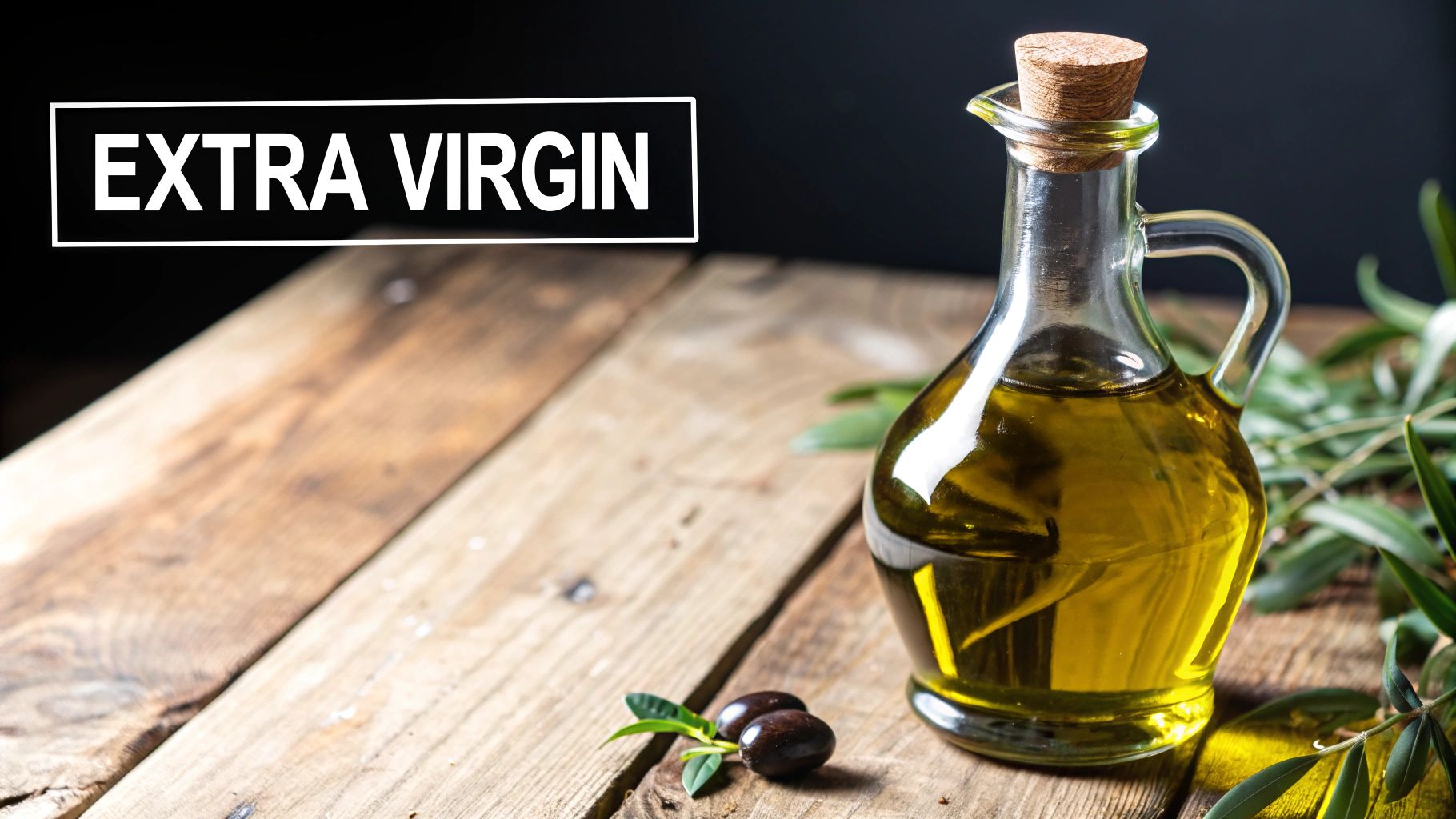
Think of it as fresh-squeezed orange juice versus concentrate. To earn its coveted "extra virgin" status, the oil must be extracted using only mechanical methods. This means no scorching heat and absolutely no chemical solvents.
This meticulous process is often called “first cold press,” a time-honored method designed to protect the oil's fragile flavors and health-boosting compounds. The result is an oil that’s not just pure but truly alive with character.
What “First Cold Press” Really Means
The term "first cold press" isn't just clever marketing; it's a sacred vow to the oil's integrity. It tells you the olives were crushed and pressed only one time, at a temperature carefully kept below 80.6°F (27°C) to preserve every last one of those precious antioxidants and polyphenols.
This gentle handling is precisely what makes EVOO the undisputed gold standard. By shunning high heat and chemical refining, producers ensure the final product is as close to its natural state as humanly possible. This unwavering commitment to purity is the true meaning of extra virgin olive oil and what places it leagues above all other grades.
A Symphony of Flavors
Here's where the real excitement begins: no two EVOOs are the same. Just like with wine grapes, the specific type of olive, the soil it grew in, and the year's climate all conspire to shape its final taste. This creates a breathtaking spectrum of flavors waiting to be discovered.
The flavor of an EVOO is its signature. It tells the story of its origin, from the specific olive varietal to the very moment it was harvested. A high-quality EVOO should taste fresh, green, and vibrant—never greasy or bland.
Some oils are buttery and smooth with soft whispers of ripe fruit and almond, making them perfect for drizzling over a delicate piece of fish. Others are robust and grassy, striking your palate with a sharp, peppery finish that tickles the back of your throat—a tell-tale sign of potent, healthy antioxidants. These bolder oils are magnificent for finishing a hearty bean soup or dressing a bitter green salad.
This incredible diversity makes EVOO more than just a cooking medium; it's a finishing ingredient. It is that final, transformative flourish that can elevate a simple dish into something extraordinary and is a cornerstone of the celebrated Mediterranean diet for good reason. Its job isn't just to cook, but to enhance, complete, and delight.
Virgin Olive Oil: The Reliable Everyday Choice
If Extra Virgin is the dazzling star of the show, think of Virgin Olive Oil as its incredibly talented, dependable understudy. It’s often overlooked, living in the long shadow of its more famous sibling, but dismissing it is a terrible mistake. Virgin Olive Oil is a pure, unrefined hero in its own right and a phenomenal choice for your everyday kitchen adventures.
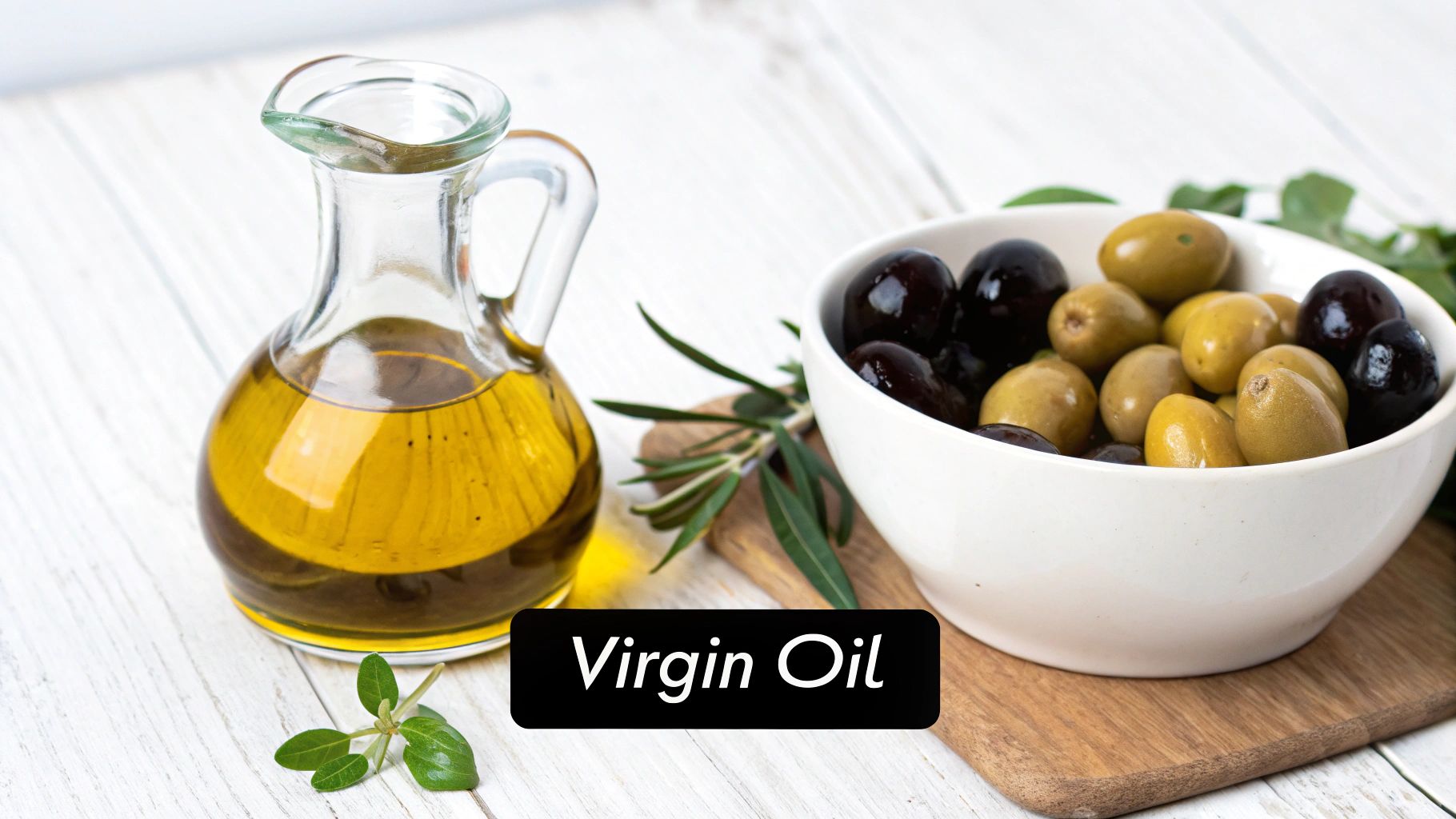
It’s crafted using the exact same mechanical methods as EVOO—no chemicals, no excessive heat. The only real difference is that it doesn’t quite meet the flawless chemical and sensory standards required to earn that "extra" title. It’s permitted a slightly higher acidity level (up to 2.0%, compared to EVOO’s strict 0.8% maximum) and might possess some minor flavor imperfections.
But this doesn’t make it a "bad" oil. Far from it. It simply means its character is a bit more restrained.
Finding the Sweet Spot in Flavor and Price
The true power of Virgin Olive Oil lies in its perfect balance. You get all the wholesome goodness of an unrefined oil without the assertive personality—or the premium price tag—of a top-shelf EVOO. Its flavor is noticeably milder, with less of that peppery kick and robust fruitiness you find in the finest extra virgins.
This gentler profile is what makes it so astonishingly versatile. It’s the kind of oil you can use generously without it ever overpowering the other ingredients on the plate.
Virgin Olive Oil is the reliable workhorse of the kitchen. It delivers the health benefits and authentic taste of real olives but is priced for daily use, making it an ideal partner for all sorts of cooking.
When you’re deciding between the different kinds of olive oil for everyday meals, this grade hits that perfect sweet spot. It provides more character than a refined oil but lets the natural flavors of your food shine through.
Ideal Culinary Uses for Virgin Olive Oil
So, where does this dependable oil truly excel? Its mellow flavor and slightly higher smoke point (compared to some of the more delicate EVOOs) make it perfect for general, all-purpose cooking. It’s an excellent, cost-effective partner for a whole host of kitchen tasks.
Consider reaching for Virgin Olive Oil when you are:
- Sautéing and Pan-Frying: It’s just right for cooking down aromatics like garlic and onions or giving chicken cutlets a beautiful golden crust.
- Roasting Vegetables: Toss it with broccoli, carrots, or potatoes before they head into the oven for consistently delicious results.
- Making Marinades: Its subtle olive notes are a great base, complementing herbs and spices without dominating them.
- Everyday Dressings: It creates a lovely, light vinaigrette for those times when you don’t want a powerful, peppery finish.
Essentially, any time you want the pure, unadulterated quality of a mechanically pressed oil for your daily cooking, Virgin Olive Oil is the smart, practical choice.
3. Refined Oils: The Kitchen's Quiet Performers
So far, we've explored oils that get their personality straight from the olive. But what happens when an oil, for whatever reason, doesn't make the cut for "virgin" status? It doesn't get thrown away. Instead, it is given a second chance at life.
This is where refined olive oils enter the picture. When you see a bottle simply labeled "Olive Oil" or "Light Olive Oil," you're looking at one of these. They are the reliable, unsung workhorses of the kitchen, designed for high performance when you don't want a strong olive flavor crashing the party.
The process begins with oils that have some flaws—perhaps an off-flavor or acidity that's too high. These oils are put through a refining process using heat and other agents to neutralize those unwanted tastes and strip out any impurities. What you're left with is an incredibly neutral, consistent oil with a much higher smoke point. It may have lost its personality, but it has gained a tremendous amount of utility.
What Does "Light" Olive Oil Actually Mean?
Let's shatter one of the biggest myths in the oil aisle. "Light" has absolutely nothing to do with calories or fat. It's a marketing term, and a very clever one at that.
All olive oils have the exact same calorie count—around 120 calories per tablespoon. The term "light" refers only to the oil's flavor and color.
A "Light Olive Oil" is a refined oil that's been processed to be exceptionally mild in taste and pale in color. It's built for high-heat cooking, not for finishing a dish.
Think of it as the ultimate background actor. It’s perfect for frying, baking, and searing because it gets the job done without adding any olive-y flavor to your food. It lets your star ingredients shine.
The Powerhouses of Production
The global appetite for olive oil is immense, and a handful of countries do the heavy lifting. The Mediterranean region is, unsurprisingly, the heart of it all. Spain is the undisputed king, pumping out 1.3 to 1.4 million metric tons a year. That's a staggering 40% of the entire world's supply. To get a sense of just how big this industry is, you can discover more about global olive oil production trends.
When to Reach for a Refined Oil
So, when should you grab that bottle of "Light" or regular "Olive Oil"? The decision comes down to one thing: heat. Because the refining process gives these oils a high smoke point (often up to 465°F / 240°C), they excel in situations where an extra virgin olive oil would start to smoke, break down, and taste bitter.
This is your go-to oil for:
- Deep-Frying: Need to achieve that perfect, crispy coating on chicken or fries? A refined oil can handle the sustained high heat without breaking a sweat.
- Baking: When a recipe calls for a neutral oil, this is a phenomenal choice. It adds moisture to cakes and muffins without imparting any unwanted flavor.
- Searing and Sautéing: It's ideal for getting a beautiful golden-brown crust on a steak or stir-frying vegetables without filling your kitchen with smoke.
Refined oils might lack the romance of a fresh EVOO, but they are the practical, indispensable members of the olive oil family. Their steadfast reliability is exactly what you need for everyday high-heat cooking.
Matching the Right Oil to Your Cooking
Now that you command a full understanding of the different types of olive oil, let's bring that knowledge into the kitchen. This is where theory meets reality—and delicious food is born. Learning which oil to grab isn't about memorizing strict rules; it's about awakening your instincts as a cook.
The right oil does more than just keep food from sticking to a pan; it can completely transform a dish. A bold, peppery Extra Virgin Olive Oil might be the star ingredient that makes a simple vinaigrette electrifying, whereas the wrong choice could leave it tasting bitter or heavy. The secret is to match the oil's personality to your cooking method.
From Finishing Touches to High Heat
Let’s pair the most common cooking techniques with their perfect olive oil partner. Once you master these relationships, you'll be on your way to getting fantastic, consistent results every single time you step up to the stove.
-
For Drizzling and Dressing: This is the moment to unveil your finest Extra Virgin Olive Oil. Its true stage is on finished dishes—drizzled over a warm soup, splashed onto grilled fish, or whisked into a bright salad dressing. Its complex, fruity flavors are the main event, and because there’s no heat involved, all those delicate notes and health benefits are perfectly preserved. Never waste your best finishing oil in a hot pan.
-
For Everyday Sautéing and Roasting: A good, dependable Virgin Olive Oil or a solid all-purpose EVOO is your go-to here. These oils have enough character to lend a subtle, pleasant flavor to roasted vegetables or sautéed aromatics without stealing the show. They also have smoke points that are more than stable enough for this kind of moderate-heat cooking.
High-Heat Heroes and Baking Essentials
So, what about when you need to really crank up the heat for a good sear, or when you’re baking something where you don't want a strong olive flavor? This is where the unsung heroes of the olive oil world shine.
A light, refined olive oil can bring wonderful moisture and richness to baked goods without adding any savory notes you don't want. It’s a surprisingly versatile team player in the baker’s pantry.
Choosing the right oil for the job is like casting an actor for a role. You need a bold star for the lead (EVOO for finishing) and a reliable character actor for the supporting scenes (refined oil for frying). Each one is essential for a successful production.
For any high-heat cooking, you absolutely need an oil that can stand up to the temperature without breaking down and filling your kitchen with smoke.
- For Frying and Searing: Your best bet is a Refined or "Light" Olive Oil. These oils have been specifically processed to have a high smoke point, which makes them perfect for getting a beautiful crust on a steak or frying up crispy potatoes. Their neutral flavor also means they won’t get in the way of the food's natural taste. And remember, to ensure any oil performs its best under heat, it helps to understand the signs of good olive oil freshness and how to store it properly.
Specialty Oils and What You Need to Know
Beyond the mainstays like extra virgin and refined oils, there exists another world of specialty olive oils. Think of these not as your everyday, all-purpose players, but as highly-trained specialists brought in for very specific assignments. Getting to know them will complete your mastery of the olive oil universe.
Olive Pomace Oil: The Industrial Secret
First up is a product you likely won't find in the gourmet aisle: olive pomace oil. This oil is a testament to the industry’s powerful drive to waste absolutely nothing.
After the olives have been pressed and squeezed for all their virgin oils, what’s left is a damp, solid mash of pits, skins, and pulp. This is the "pomace." To extract every last drop of oil, this pomace is treated with solvents and high heat.
As you can imagine, this is the most heavily processed type of olive oil. Its flavor is a complete non-starter for things like salads or dipping. However, its incredibly high smoke point and rock-bottom price make it a practical choice for some high-volume industrial frying, where a neutral oil that can withstand the heat is all that matters.
The Creative World of Flavored Oils
Now, let's leave the industrial world behind and step back into the creative kitchen. Flavored and infused olive oils are where the real fun begins. These aren't a formal grade of oil, but rather a delicious spin on a good quality base oil, usually extra virgin.
There are two primary ways these flavor-packed oils are born:
- The Agrumato Method: This is the old-school, traditional way. It involves crushing whole ingredients, like fresh lemons or fiery chiles, right alongside the olives during the milling process. This co-pressing creates a deep, vibrant fusion of flavors that’s impossible to replicate.
- The Infusion Method: This is the more common method you’ll see today. Here, ingredients like garlic cloves, rosemary sprigs, or truffle slices are steeped in finished olive oil. Over time, the oil takes on the aromatic essence of the ingredients.
Flavored oils are like a chef's secret weapon. A quick drizzle adds a complex layer of flavor with minimal effort, transforming a simple dish into something truly special. It's a finishing oil and a seasoning all in one.
Picture a basil-infused oil over a caprese salad, or a splash of chili oil on a hot pizza. For anyone watching their health, these oils deliver a huge burst of flavor without adding salt or a lot of calories, which is just one of the many surprising olive oil health benefits to discover. They're a simple, elegant shortcut to a more delicious meal.
Your Olive Oil Questions Answered
Even with all the different grades laid out, a few persistent questions always seem to pop up when you're standing in that grocery aisle. Let's clear up some of the most common myths and ensure you feel unshakably confident about the bottle you bring home.
Can You Really Cook with Extra Virgin Olive Oil?
The smoke point debate is perhaps the biggest of all. You've likely heard the myth that you can't cook with extra virgin olive oil, but that's simply not true. While it's a fact that highly refined oils can handle more heat, a good quality EVOO is surprisingly sturdy, with a smoke point that can reach up to 410°F (210°C).
That’s more than high enough for everyday sautéing and pan-frying. The old wives' tale about EVOO being a no-go for cooking is one we can officially put to rest.
How to Keep Your Olive Oil Fresh
Choosing the right oil is only half the battle; how you store it is just as crucial. Olive oil has three mortal enemies: heat, light, and air. Letting any of them get to your oil will rapidly destroy its beautiful flavor and break down its healthy compounds.
The solution is simple: always keep your olive oil in a cool, dark place. A pantry or a cupboard away from the stove is perfect. Once you open a bottle, try to use it within a few months to enjoy it at its absolute peak.
It helps to think of olive oil less like a canned good and more like fresh-squeezed juice. It's a natural product with a peak freshness that doesn't last forever. You're always better off buying a smaller bottle you'll use quickly than a giant one that will sit around for a year.
Getting a handle on these details, from how an oil is made to how it lives in your pantry, makes all the difference. If you want to dive even deeper into what's inside the bottle, you can explore detailed olive oil nutrition facts that break down all the good stuff.
At Learn Olive Oil, our mission is to help you find the perfect oil for every dish. Keep exploring our guides and recommendations to take your cooking to the next level at https://learnoliveoil.com.

 Learn Olive Oil
Leave a comment