Let me ask you a question. When you dip a piece of warm, crusty bread into a pool of golden-green olive oil, what are you hoping for? A bland, oily coating? Or a vibrant explosion of flavor—a taste so fresh and alive it transports you to a sun-drenched grove in Tuscany or Andalusia?
If you chose the latter, you’ve come to the right place. The truth is, the bottle of oil you choose is the difference between a forgettable appetizer and a truly memorable culinary moment. The secret isn't complicated, but it is specific: you need a world-class Extra Virgin Olive Oil (EVOO). Look for a recent harvest date and the words "first cold press." These are your first clues that you’re holding pure, unrefined liquid gold—the kind that elevates simple bread into a delicacy.
What Elevates an Olive Oil from Good to Perfect for Dipping?
For dipping, there is no substitute. The grade must be Extra Virgin Olive Oil (EVOO). This isn't just marketing jargon; it's the highest grade an olive oil can receive, a guarantee of purity and quality. It means the oil was coaxed from the olives using only mechanical force—no harsh chemicals, no destructive high heat, just the pure essence of the fruit.
This gentle process is what preserves the oil’s soul: its delicate flavor compounds and its treasure trove of powerful antioxidants, known as polyphenols. Those polyphenols are the source of that glorious peppery kick you feel in the back of your throat, that pleasant bitterness on the tongue. These are not flaws; they are the undeniable signatures of a fresh, high-caliber oil. Any bottle simply labeled "pure" or "light" olive oil has been refined, its character stripped away for the sake of neutrality. It has no place in your dipping bowl.
The Hidden Clue That Matters More Than "First Cold Press"
You’ll see "first cold press" on many fine bottles. While it sounds impressive, it’s largely a nostalgic term. Today, virtually all true EVOO is produced this way. The real secret, the detail that separates the truly great from the merely good, is the harvest date.
Imagine the olive as a fresh fruit, and its oil as a fresh-squeezed juice. Would you ever reach for a carton of juice that was a year old? Of course not. Olive oil is no different. You must seek out a harvest date within the last year, 18 months at the absolute outside. A bottle that hides its harvest date is waving a giant red flag. Freshness is the key that unlocks the vibrant, aromatic experience you crave.
You're not just buying a condiment; you're tasting a snapshot of a specific harvest from a specific grove. The goal is to find an oil with a personality that sings, not one that's been muted by time or industrial processing.
The Science of Superiority
Another inside indicator of quality is its free fatty acid (FFA) level. To legally earn the EVOO crown, an oil's FFA must be 0.8% or less. A lower acidity is a powerful signal. It tells you the olives were pristine and healthy, rushed to the mill immediately after picking to prevent any decay.
This growing appreciation for quality has sent demand soaring. The world is projected to consume over 3 million metric tons in the 2024/25 crop year. Compare that to the 1.8 million tons consumed in the 1990s, and you see a clear picture: a global awakening to the magic of authentic, flavorful oils.
An Expedition Through the World's Premier Olive Oil Terroirs
Just as a legendary wine whispers the story of its vineyard, an exceptional olive oil is a liquid postcard from its terroir—that magical symphony of soil, climate, and olive varietal. Knowing an oil’s origin is the single greatest clue to the adventure waiting inside the bottle. This isn’t about geography; it's about flavor.
Different regions give birth to oils with wildly different personalities. An oil from Tuscany might greet you with the scent of fresh-cut grass and green tomato, while one from southern Spain could deliver an intensely fruity punch with a peppery uppercut. Learning to read these regional roadmaps is your passport to choosing your next dipping oil with supreme confidence.
Spain: The Bold and Fruity Giant
When you taste Spanish olive oil, prepare for a robust and powerful experience. As the world's largest producer, Spain—and specifically, the Andalusia region—is the kingdom of the mighty Picual olive. Oils pressed from this varietal are legendary for their assertive fruitiness and a distinctive peppery finish that announces its presence and lingers with authority.
These golden-green oils are a dream pairing for rustic, crusty breads that possess enough character to go toe-to-toe with the oil’s bold flavor. If you want an olive oil that makes a definitive statement, a Spanish Picual is a magnificent choice.
Europe remains the undisputed champion of premium olive oil. In the 2024/25 crop year, the European Union is estimated to have produced 2.1 million tons. Spain alone accounted for roughly 1.41 million tons of that, leading the charge.
Italy: The Diverse and Aromatic Artist
Italian olive oils are a universe unto themselves, celebrated for an incredible diversity that mirrors the country's own varied soul. You cannot speak of a single "Italian" flavor; you must speak of many.
- Tuscany (Central Italy): Here, you will discover oils of elegance and complexity. They are often grassy and herbaceous, whispering of artichoke and finishing with a pleasing bitterness.
- Sicily (Southern Italy): Journey south, and the oils become more robust and full-bodied. Imagine the aroma of tomato leaf, a vibrant fruitiness that tastes of the island's relentless sunshine.
This incredible regional variety is precisely what makes exploring olive oils from Italy such a thrilling adventure. Each bottle tells a story of its home.
Key Takeaway: An oil's origin is a powerful clue to its flavor. A Greek Koroneiki will be delicate and floral, while a Portuguese Cobrançosa will be intensely pungent and spicy.
Greece: The Golden and Delicate Classic
Greek olive oil, especially from legendary regions like Crete and Kalamata, is often born from the beloved Koroneiki olive. These oils tend to possess a stunning golden hue and a much more delicate, buttery flavor profile. You’ll often detect hints of soft fruit, fresh herbs, and a gentle, whisper-soft peppery finish.
Their inherent smoothness makes them wonderfully versatile and a guaranteed crowd-pleaser for dipping. They complement the bread without overpowering it, making them an ideal starting point if you are new to the world of tasting premium oils or simply prefer a more subtle, less bitter character.
The Art of Tasting Olive Oil Like a Professional
Tasting olive oil is a sensory journey, and it is far less intimidating than it sounds. This isn't about becoming a world-renowned connoisseur overnight. It is about waking up your senses and learning to understand the story a high-quality oil is trying to tell you. Once you grasp the language, you will never look at that bottle on your counter the same way again.
First, forget everything you think you know about color. Professionals use special blue tasting glasses to completely hide the oil's hue, because color reveals absolutely nothing about quality. The real story is told through aroma and flavor. All you need are your nose and your palate.
The Swirl, Sniff, and Slurp Method
To begin your training, pour about a tablespoon of oil into a small glass—a stemless wine glass works beautifully.
Cup the glass in one hand while covering the top with your other. You are using your own body heat to gently warm the oil. This is a crucial step. This warmth coaxes the oil to release its aromatic compounds—the very heart of its flavor profile.
Gently swirl the oil for 30 seconds. Now, lift your hand and bring the glass to your nose. Inhale deeply. What messages are you receiving? Is it grassy and fresh? Do you detect green apple, tomato leaf, perhaps a hint of almond? These are the first clues to its unique character.
Next comes the "slurp," a technique that feels strange at first but is absolutely essential. Take a small sip of oil. With your teeth slightly apart, suck in a quick burst of air. This is called strippaggio in Italian, and it emulsifies the oil, spraying it across your entire palate and awakening every single taste bud. This is how you unlock the full spectrum of flavor.
This isn't just for show. The slurp aerates the oil, amplifying its aroma and flavor notes, ensuring you taste everything from the fruity front notes to the peppery finish.
Decoding the Three Pillars of Quality EVOO
When you taste, you are searching for three key positive attributes. The world's finest olive oils display a beautiful, harmonious balance of these characteristics—the undeniable hallmarks of a fresh, masterfully made product.
- Fruitiness: This doesn't mean it tastes like fruit juice. It refers to the aromas and flavors of fresh olives, which can range from green and herbaceous (think artichoke, fresh-cut grass) to ripe and buttery (like banana or almond).
- Bitterness: Do not fear a little bitterness on your tongue! This is a classic indicator of fresh olives and a powerful sign that the oil is brimming with healthy antioxidants, specifically polyphenols.
- Pungency: This is that classic peppery kick or spicy tingle you feel at the back of your throat. It might even make you cough. That wonderful sensation is caused by oleocanthal, a potent anti-inflammatory compound found only in high-quality, fresh extra virgin olive oil.
The more you practice, the more attuned your senses will become to these nuances. Honing your senses is a skill, and you can learn how to effectively train your palate with techniques often borrowed from the world of wine tasting.
For an even more detailed walkthrough, our guide on how to taste olive oil breaks down every step. A little practice will completely transform how you buy and enjoy this liquid gold.
Crafting the Ultimate Dipping Experience
A spectacular dipping oil needs no help to shine. But the real magic begins when you start to layer in other flavors. A simple bowl of oil with crusty bread is one of life's purest pleasures, but a thoughtful blend can transform that simple appetizer into the star of the show.
The goal is not to mask the beautiful flavor of your oil, but to make it sing. Think of how a dash of smoked paprika can draw out the earthy undertones of a robust Spanish oil, or how the bright zing of fresh lemon zest can lift a delicate Greek oil to soaring new heights. The objective is harmony, where every ingredient makes the others better.
Building Your Perfect Flavor Canvas
Consider your olive oil the canvas. A buttery, mild Italian oil is practically begging for classic Mediterranean herbs. A pungent, peppery oil has the backbone to stand shoulder-to-shoulder with bolder partners like spicy Aleppo pepper or earthy za'atar. It is an exercise in creating delicious balance.
A fantastic starting point for many dips is a simple 3 parts olive oil to 1 part balsamic vinegar ratio. Here’s an insider's tip: use a thicker balsamic glaze instead of a watery vinegar. It contributes a touch of sweetness and, crucially, won't separate from the oil immediately. Always serve your masterpiece in a shallow dish—this ensures every piece of bread gets a little bit of everything.
Before you begin mixing, you must taste the oil on its own to truly understand its character. This simple graphic shows you how the pros do it.
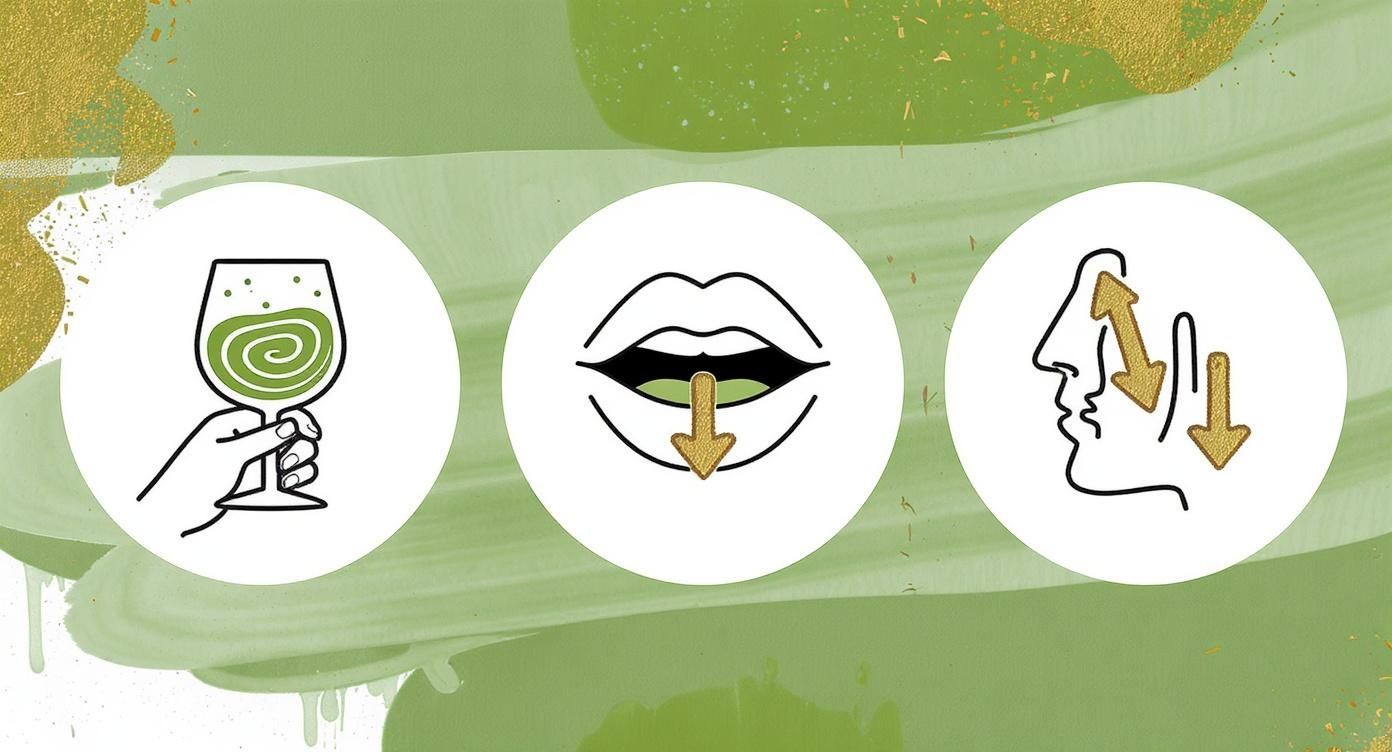
Performing this small ritual of swirling, slurping, and swallowing allows you to experience the oil's full aromatic profile. Once you know what you're working with, your decisions about which flavors will complement it best will be infinitely better.
Signature Dipping Oil Recipes
Ready to create? These combinations are time-tested favorites that venture far beyond simple garlic and herbs. Begin with a base of 3 tablespoons of your chosen EVOO and let the masterpiece unfold.
-
The Mediterranean Classic:
- 1 tablespoon balsamic glaze
- 1 small minced garlic clove
- ¼ teaspoon each of dried oregano, parsley, and basil
- A pinch of flaky sea salt
-
The Turkish Twist:
- ½ teaspoon sumac for a bright, lemony tang
- ¼ teaspoon Aleppo pepper for a mild, fruity heat
- A final sprinkle of flaky sea salt
Don't become a slave to recipes. The real joy is in discovery. Use these as a launching pad, and then let your own taste buds pilot the journey. Perhaps a pinch of red pepper flakes? Or a fresh grating of Parmesan cheese? There are no wrong answers.
This growing interest in culinary creativity is a huge force driving the market. The global olive oil market was valued at around USD 19.4 billion in 2024 and is projected to surge to over USD 30.6 billion by 2032. It’s an undeniable sign that people everywhere are developing a genuine passion for high-quality ingredients.
If you want more ideas, you can also explore a complete guide to a classic olive oil and bread dipping recipe. Your journey to creating the perfect dip starts with a single, delicious experiment.
The Cardinal Rules for Protecting Your Olive Oil
https://www.youtube.com/embed/S23K7qE1Qx0
You've found it—a beautiful, vibrant olive oil that makes your palate sing with joy. But that glorious flavor is fragile and fleeting. The moment you open that bottle, a clock begins to tick. Improper storage is the fastest way to turn your liquid gold into a dull, disappointing memory.
You must think of your premium olive oil as a delicate, living product. Its greatest enemies are all around us: light, heat, and oxygen. Each of these villains actively works to degrade the oil, breaking down its healthy polyphenols and obliterating the very compounds that give it the complex, peppery flavor you paid for.
Defending Your Investment Against the Elements
Your first line of defense is choosing the right location. That charming, sun-drenched spot on your windowsill next to the stove? It’s a death sentence for your oil. Heat from sunlight and your cooktop will rapidly accelerate oxidation, turning the oil stale or even rancid in shockingly little time.
Instead, seek out a cool, dark sanctuary. A kitchen cupboard or pantry, far from any heat source, is the ideal home for your bottle. The goal is to maintain a stable temperature, shielding the oil from the daily fluctuations that savage its delicate structure. Mastering these foundational principles of proper olive oil storage is crucial, and you can learn more at https://learnoliveoil.com/olive-oil-storage.
Treat your olive oil like a fine red wine. You wouldn’t store a prized Cabernet on top of your oven, and the same respect should be given to a high-quality EVOO.
The Power of the Proper Container
Most reputable producers bottle their oil in dark glass or opaque tins for one simple reason—it’s vital protection against light. Light is a powerful catalyst for oxidation. This is why you must never, ever decant your oil into a clear glass container for storage, no matter how beautiful it looks. Keep it in its original dark, protective home.
Oxygen is the final villain in this saga. Every time you open the bottle, air rushes in. To minimize the damage, screw the cap on tightly after every single use. If you purchase oil in a large tin, a brilliant pro-tip is to decant a smaller amount into a dark bottle for daily use. This keeps the vast majority of your oil sealed and safe from constant exposure. While our focus is on olive oil, the universal principles of product storage apply to many other fine consumables.
Your Burning Questions About Dipping Oils, Answered.
Even after you've grasped the fundamentals, a few practical questions inevitably arise. When you're standing in the store aisle, facing a wall of bottles, that's when a little extra clarity can make all the difference.
Consider this your definitive cheat sheet for those nagging uncertainties. My mission is to ensure you feel utterly confident every time you choose, pour, and share a phenomenal dipping oil.
What Is the Single Most Important Thing to Look For?
Without a moment's hesitation: freshness. Taste may be subjective, but freshness is absolute.
Always hunt for a harvest date on the bottle. You are looking for one from the most recent season, ideally harvested within the last 12 months. Fresh extra virgin olive oil is an explosion of bright, nuanced flavors and is packed with healthy polyphenols.
An old oil, no matter how fancy its label or steep its price, will taste flat, greasy, and tired. It’s the costliest mistake I see people make, and it can completely ruin what should be a spectacular dipping experience.
If you’re stuck choosing between a gorgeous bottle with no date and a plain one with a recent harvest date, grab the fresh one. Every. Single. Time.
Can I Just Use Regular or Light Olive Oil for Dipping?
You can, but why would you want to? It would be a tragic missed opportunity. Using refined oils like "regular," "pure," or "light" olive oil for dipping is like trying to appreciate a fine wine by drinking cheap cooking sherry.
These oils are brutalized with heat and chemicals, a process that strips away nearly all their flavor, aroma, and health benefits. The entire purpose of dipping is to savor the pure, unadulterated taste of the olive. For that experience, you absolutely must have a high-quality Extra Virgin Olive Oil.
How Do I Know if My Olive Oil Has Gone Bad?
Your own senses are the only detectives you need. Bad oil sends out unmistakable signals. Trust your nose first, then your taste buds.
- The Smell Test: Rancid oil has a distinct, unpleasant smell, often like crayons, stale nuts, or old putty. A fresh EVOO should smell vibrant and alive—of fresh-cut grass, green fruit, or other delightful, plant-like aromas.
- The Taste Test: If the smell raises suspicion, a tiny sip will confirm your verdict. Bad oil tastes waxy, greasy, and devoid of any real flavor.
A good oil should taste clean and fruity, perhaps with a touch of bitterness, and finish with that signature peppery tickle in your throat. If it tastes wrong, do not use it for dipping. It is that simple.
Does a Higher Price Tag Always Mean a Better Oil?
Not always, but there is a powerful correlation. A higher price typically reflects the true costs of quality: things like hand-harvesting, organic farming, small-batch production, and certifications from a protected region. It simply costs more to make olive oil the right way.
A dirt-cheap EVOO is almost always a screaming red flag for low quality or, worse, a fraudulent blend of inferior oils. That being said, the most expensive bottle isn't guaranteed to be your personal favorite. Use price as a general guide, but in the end, your own palate must be the final judge.
At Learn Olive Oil, we are obsessed with helping you explore the rich, delicious world of premium olive oil. From mastering tasting techniques to diving deep into regional varietals, we offer the expert insights you need to make every meal better. Explore our guides and start your journey today at https://learnoliveoil.com.
 Learn Olive Oil
Leave a comment