You're standing in the grocery aisle, facing a wall of olive oil. The labels stare back: "Extra Virgin," "Virgin," "Light-Tasting," "Pure." It’s a dizzying display. You just want to buy a good bottle of oil, but instead, you’re left wondering… what is the real difference?
The secret isn't just in the name; it’s in the journey. Imagine two distinct paths an olive can take from the sun-drenched grove to your kitchen counter. One path is a simple, ancient mechanical press. The other involves modern refining. This journey is everything. It dictates the oil’s flavor, its aroma, its health benefits, and exactly how you should use it to make your food sing.
The Great Divide: What Really Separates Olive Oils
This isn’t just marketing fluff. It’s the difference between an oil with a bold, vibrant personality and one that’s quiet and subdued. At one end of the spectrum, you have the robust, grassy punch of a world-class extra virgin olive oil—a flavor so alive it practically bites back. At the other, the gentle, neutral character of a refined oil, content to play a supporting role.
This chart reveals the two main routes an olive can take to become oil.
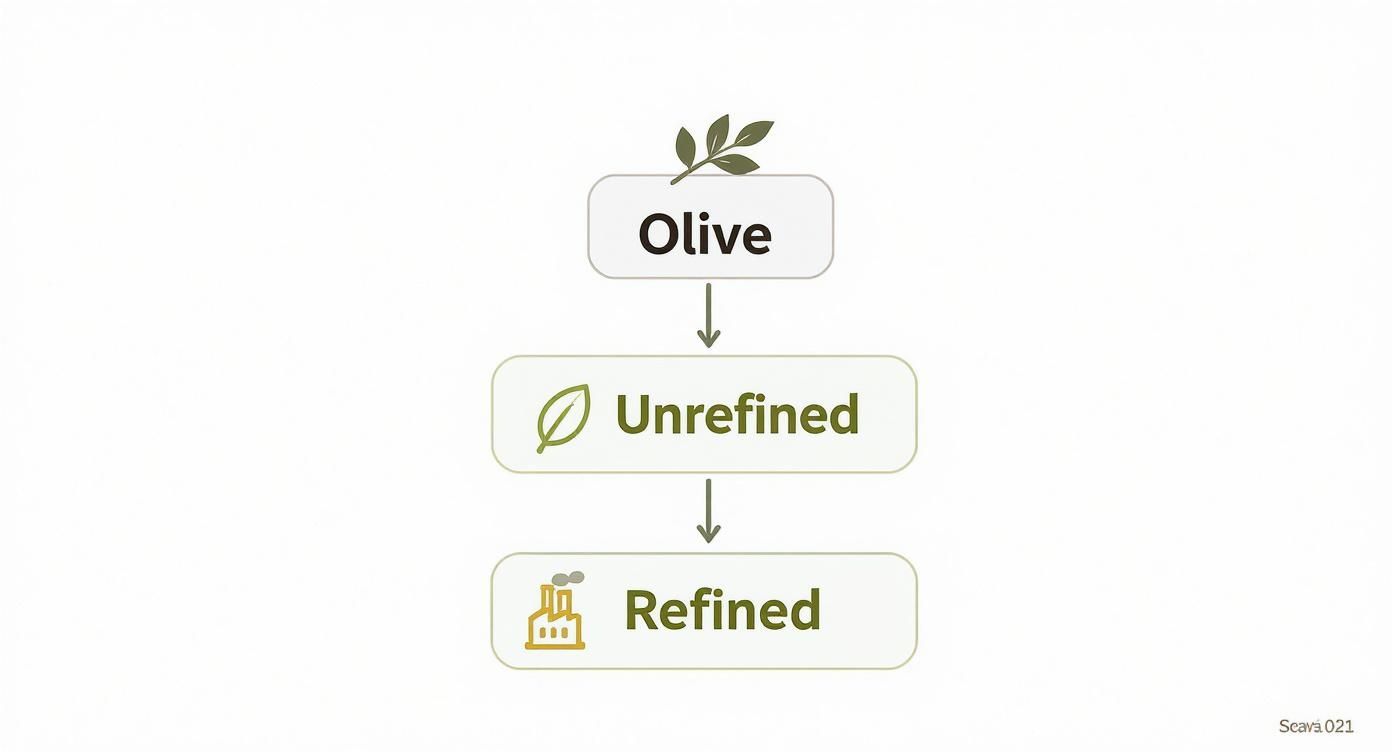
As you can see, every drop begins with the same humble fruit. The fork in the road appears during processing. One of the most critical chemical markers separating these categories is free fatty acidity. A deeper look into olive oil acidity will show you just how vital this single number is to an oil’s final grade and quality.
To make this crystal clear, let's meet the main players you’ll find on the shelf.
Olive Oil At a Glance
Here's a quick-reference table to help you distinguish between the different types of olive oil at a glance.
| Olive Oil Type | Production Method | Flavor Profile | Best Culinary Use |
|---|---|---|---|
| Extra Virgin | Cold-pressed, unrefined | Robust, fruity, peppery | Dipping, dressings, finishing |
| Virgin | Cold-pressed, unrefined | Mild, less intense fruitiness | Sautéing, roasting, dressings |
| Refined (Light) | Refined with heat/solvents | Neutral, very mild | High-heat cooking, baking |
| Olive Pomace | Extracted from pulp with solvents | Neutral, lacks character | Industrial frying, not for home |
This table is your field guide. But to truly master the art of choosing olive oil, you must understand the story behind each bottle.
The Gold Standard: Extra Virgin Olive Oil
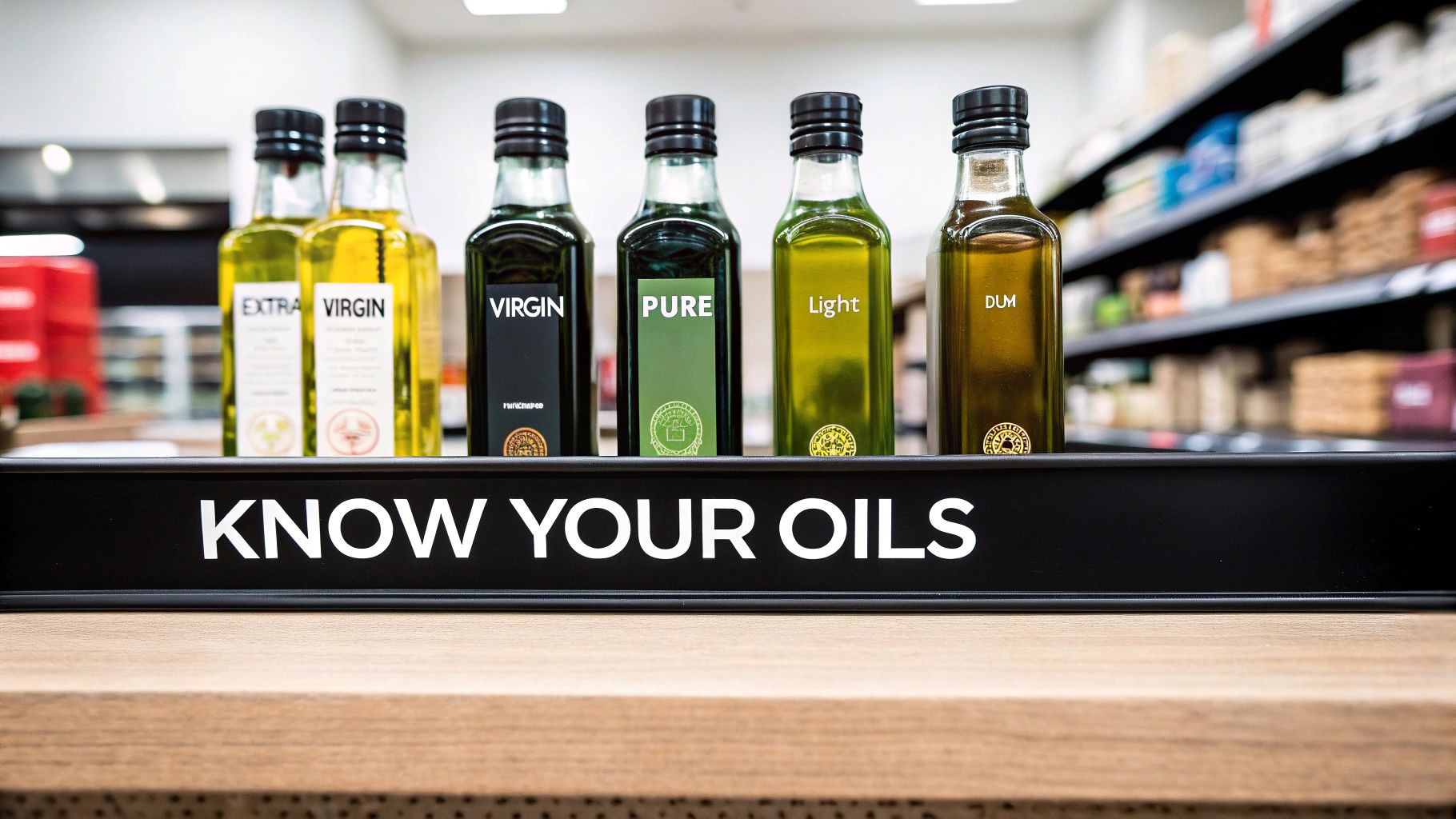
When you hear the term Extra Virgin Olive Oil (EVOO), I want you to erase the image of a simple cooking fat from your mind. Instead, picture this: fresh, raw olive juice, captured in a bottle at the peak of its perfection. This is the absolute highest grade of olive oil attainable, a culinary treasure celebrated for its pristine purity and breathtakingly complex flavors.
EVOO is born from a simple, elegant process: olives are crushed, and their precious juice is extracted. This method, often called "cold-pressing," is purely mechanical. No heat. No chemicals. This gentle handling is the secret to preserving the oil's natural peppery notes and fruity aromas, delivering an experience that is as close to the olive grove as you can get.
What Makes It "Extra Virgin"?
This top-tier status is no marketing slogan; it is a legally enforced international standard. To earn the coveted EVOO label, an oil must survive a gauntlet of rigorous chemical tests and pass a sensory evaluation by a panel of trained tasters. If you'd like to discover the fascinating science behind this seal of approval, you can learn what "extra virgin" olive oil really means here.
The public's desire for this quality is unmistakable. In the US, a staggering 71% of all olive oil imports are virgin grades, signaling a powerful shift towards authentic, high-quality oils.
Because of its bold, assertive character, EVOO is at its best when its flavor can be the star of the show. It is the undisputed champion for dressings, for drizzling over a finished steak or soup, or for the simple, perfect pleasure of dipping a piece of crusty bread.
What About Virgin and Refined Olive Oils?
So, what happens when a batch of olive oil doesn't quite meet the exacting standards to be crowned 'extra virgin'? It's not discarded. Instead, it embarks on a new journey, finding its purpose as either Virgin or Refined olive oil, each with its own role to play in your kitchen.
Think of Virgin olive oil as EVOO's slightly less polished, but equally hardworking, sibling. It's produced in the exact same way—mechanically pressed from olives without chemicals—but it may have some minor sensory flaws or a slightly higher acidity level. It is a solid, dependable oil, perfectly suited for your everyday cooking needs. If you’re curious about the fine line between these two grades, you can dive deeper into what makes olive oil virgin and discover what separates it from the very best.
Refined Olive Oil: The Kitchen Workhorse
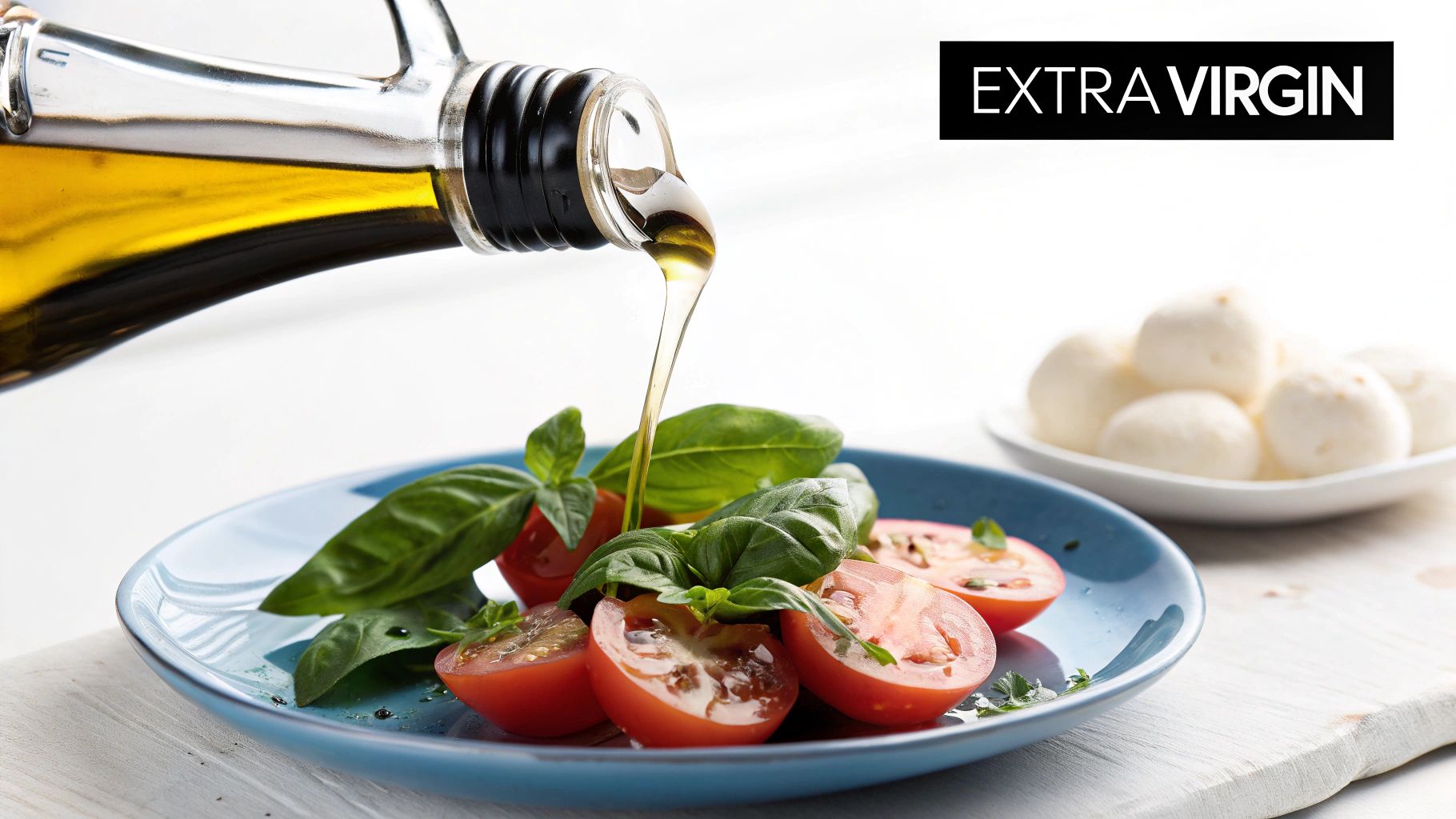
Then you have the quiet, unassuming bottles labeled simply ‘Olive Oil,’ ‘Pure Olive Oil,’ or the misleading ‘Light-Tasting Olive Oil.’ This is refined oil. Its life begins as virgin oil that has more significant defects. This oil is then sent through a refining process using heat and filters to neutralize the off-flavors and odors.
The result is a remarkably neutral-tasting oil with a much higher smoke point, making it a reliable choice for high-heat cooking. But here’s the trade-off: this refining process strips away nearly all the robust flavors, fragrant aromas, and beneficial polyphenols that make virgin oils so extraordinary.
It's a different tool for a different job. The market for refined oil is massive, and it’s a brilliant example of the industry’s commitment to ensuring that not a single drop from the olive harvest goes to waste.
Getting to Know Olive Pomace Oil
What becomes of the olive after it has been pressed for its precious virgin oils? You’re left with a dense, nearly dry pulp of skins, pit fragments, and stems. This leftover material is called pomace. It may seem like the end of the story, but it’s actually the beginning for Olive Pomace Oil.
Instead of being pressed again, this pomace is sent to an industrial facility where it's treated with solvents (like hexane). This chemical extraction is incredibly powerful, pulling out every last hidden drop of oil that mechanical pressing simply couldn't reach.
The raw oil that emerges is harsh and unpalatable. It must undergo an intense refining process to strip away the solvents and impurities. To make it edible and restore a faint hint of olive character, producers then blend this neutral, refined pomace oil with a small amount of virgin olive oil.
While it technically comes from olives, the heavy industrial processing places it in a completely different category from its virgin cousins. The journey from pomace to a usable oil is a true testament to modern food science. If you're intrigued by the contrast between this and traditional methods, you can read more about how olive oil is made on our site.
Ultimately, you get an oil with a very neutral taste and a high smoke point, which is why it's often the go-to for industrial kitchens and large-scale frying operations where cost is the primary concern.
You now have the fundamental knowledge of the different types of olive oil. Now for the exciting part: putting this knowledge to work in your kitchen. This is where you graduate from simply knowing the facts to developing an intuitive feel for what each oil can do for your cooking.
Think of it this way: a powerful, peppery Extra Virgin Olive Oil is the secret weapon for drizzling over a fresh Caprese salad, but you would never waste that liquid gold on deep-frying—its complex flavor would be lost. For that, a reliable, standard refined olive oil is the workhorse you need. Mastering which bottle to grab for which job is how you begin to elevate every single meal you make. For a more detailed guide, our article on how to cook with olive oil is an invaluable resource.
Whether you're building a main course or looking for brilliant ideas for salads and side dishes, olive oil is almost always a part of the answer, especially as the foundation for dressings. The incredible variety we enjoy is deeply rooted in Mediterranean tradition. In fact, countries like Spain and Italy were responsible for about 59% of the world's entire olive oil supply in 2022. It's incredible to think about how these global production centers directly influence the choices we have in our local stores.
Your Olive Oil Questions Answered
Let's clear up any lingering questions. When you're standing in that grocery aisle, the labels and marketing terms can still feel like a foreign language. This is where we cut through the confusion and give you the confidence you need.
Consider this the final piece of the puzzle. We will slice through the jargon and deliver straightforward answers, empowering you to shop and cook with absolute certainty every time you reach for a bottle of olive oil.

 Learn Olive Oil
Leave a comment