Is unfiltered olive oil better? Ask ten different chefs, and you might get ten different answers. There is no simple truth here, only a choice that hinges on a secret most people overlook: what are you truly seeking in your kitchen?
If your heart races for a bold, almost wild flavor and the highest payload of health-boosting antioxidants, then unfiltered olive oil is your champion. But if you demand a reliable, all-purpose oil with a longer life and a taste that doesn’t shout over your other ingredients, filtered olive oil will win your loyalty every time.
Imagine this: unfiltered olive oil is like raw, fresh-squeezed juice, pulp and all. It’s cloudy, intense, and humming with character. Filtered olive oil, by contrast, is the crystal-clear juice you trust—clean, smooth, and dependable. The defining difference? Those tiny, flavorful particles of olive fruit, deliberately left behind in the unfiltered version and meticulously removed from its filtered cousin.
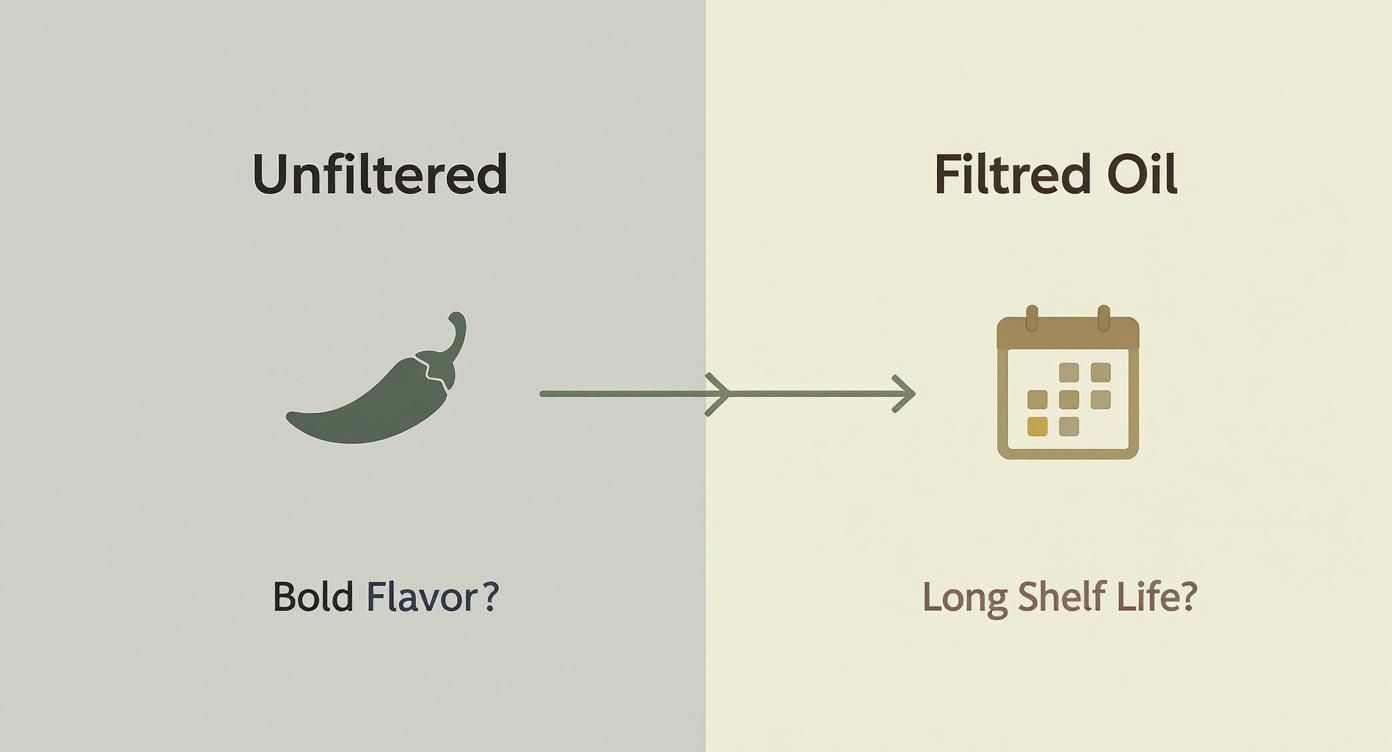
This infographic cuts through the noise, helping you decide between a bottle that bursts with flavor and one that promises to last.
Ultimately, what matters most isn’t what a label says is "best," but what your own palate and cooking style demand.
Unfiltered vs. Filtered Olive Oil A Quick Comparison
To make the choice even easier, here's a quick side-by-side look at how these two oils stack up.
| Characteristic | Unfiltered 'Cloudy' Olive Oil | Filtered 'Clear' Olive Oil |
|---|---|---|
| Appearance | Hazy and opaque due to olive sediment | Bright, clear, and transparent |
| Flavor Profile | Intense, peppery, robust, and grassy | Milder, smoother, more buttery |
| Shelf Life | Shorter (3-6 months); sediment can spoil | Longer (18-24 months); very stable |
| Health Benefits | Higher polyphenol content (antioxidants) | Retains healthy fats but has fewer polyphenols |
| Best For | Finishing dishes, dipping, salad dressings | Everyday cooking, sautéing, baking |
As you can see, there is no single "better" option—only the better one for a specific task. The right oil depends entirely on the meal you’re crafting and the flavor story you want to tell.
What's Behind the Cloud in Unfiltered Olive Oil?
What is the secret behind that mysterious cloud in unfiltered olive oil? It's nothing more than the soul of the olive itself—tiny, microscopic bits of fruit left suspended in the oil, a direct message from the grove to your kitchen. Think of it as the most honest, unrefined expression of the olive.
This cloudiness isn't a defect; it's a badge of honor. It signals a traditional, minimally processed oil. The best analogy is fresh-squeezed orange juice, bursting with pulp, compared to the perfectly clear juice from a carton.
Those little olive particles are treasure chests of flavor, contributing to the oil’s robust, sometimes peppery personality and a significant portion of its health-giving compounds. This raw, untamed state delivers a completely different experience in both taste and texture—the very reason so many food lovers ask if unfiltered olive oil is better. For a deeper look, our guide on why olive oil can look cloudy uncovers the full story.
Comparing the Health Benefits
When we turn to health, the plot thickens. Many whisper that unfiltered olive oil holds a powerful advantage, and they're not wrong. Those tiny flecks of olive fruit floating in the oil are densely packed with polyphenols—the celebrated antioxidants responsible for olive oil’s legendary health benefits.
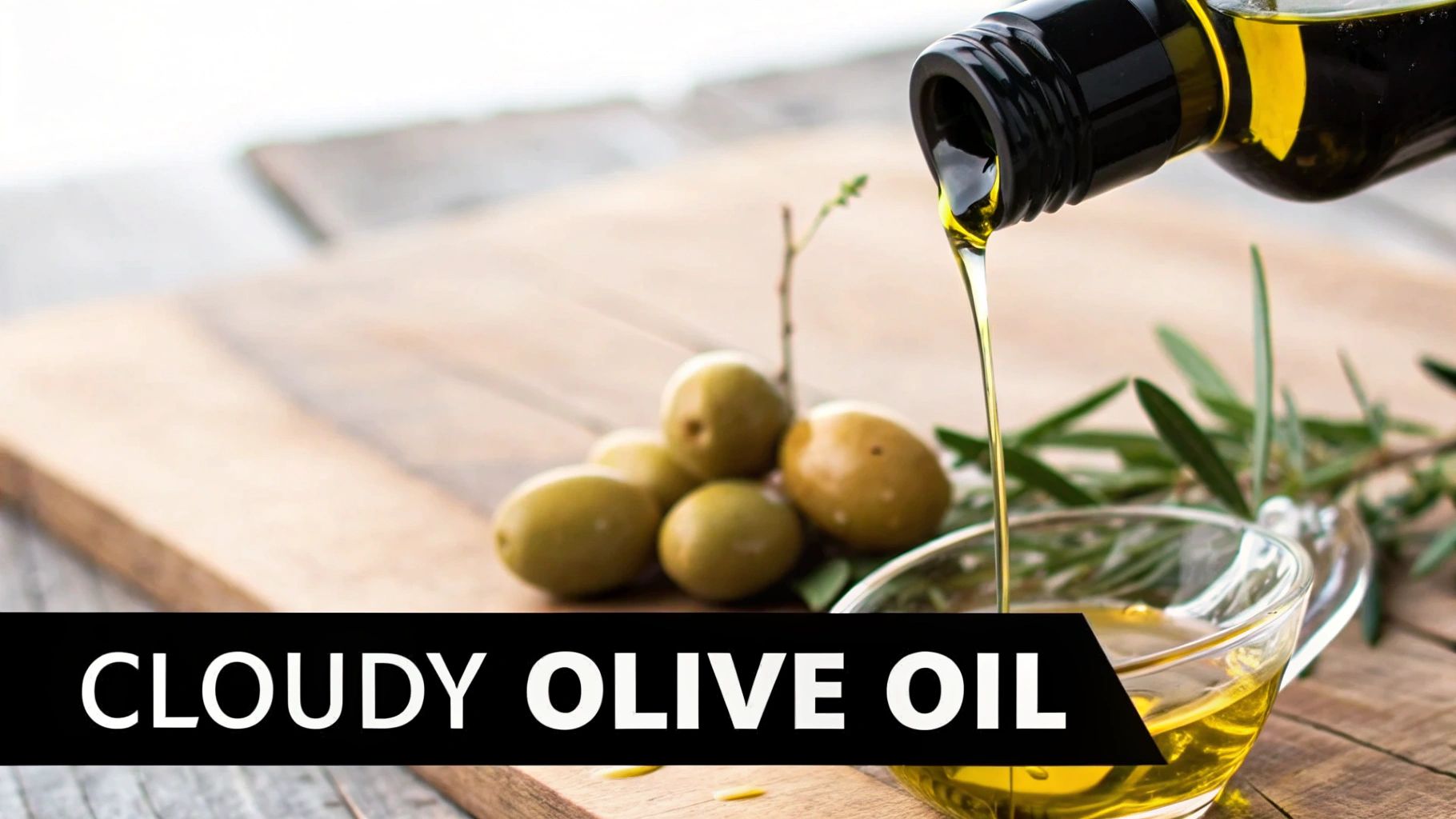
Here's the catch: the very process designed to give filtered oil its clarity and long life also strips away some of these potent compounds. To create a clear, stable oil, the very particles that carry these extra polyphenols must be removed.
Research reveals that unfiltered extra virgin olive oil can boast up to 30% more polyphenols than its filtered counterpart. These antioxidants are your body's allies, renowned for their power to reduce inflammation and fortify heart health. If you're intrigued, you can explore the science behind olive oil's polyphenol content for a more technical breakdown.
But let's be crystal clear: while unfiltered oil may offer a slight nutritional upper hand, filtered extra virgin olive oil remains a phenomenally healthy choice. You are still arming your body with a powerful dose of these beneficial compounds.
The Definitive Flavor and Texture Showdown
On the palate, the difference is not subtle. It’s the difference between a whisper and a declaration.
Unfiltered olive oil is an experience. It greets you with a robust, almost grassy flavor and often leaves a peppery kick in the back of your throat—the signature of its freshness and high polyphenol count. Its texture is thicker, with a creamy body gifted by those tiny particles of olive fruit.
Filtered olive oil, in contrast, is the epitome of elegance. It is noticeably smoother and lighter, presenting a more delicate, often buttery flavor profile. It doesn’t demand the spotlight; it makes everything around it shine brighter.
The real question isn't just "is unfiltered olive oil better," but "better for what?" One is a bold statement piece; the other is a versatile kitchen staple.
The only way to truly grasp this is to taste them. Learning how to properly taste olive oil will unlock a new dimension in your cooking, revealing how each type can utterly transform a dish.
Choosing the Right Oil for Your Kitchen
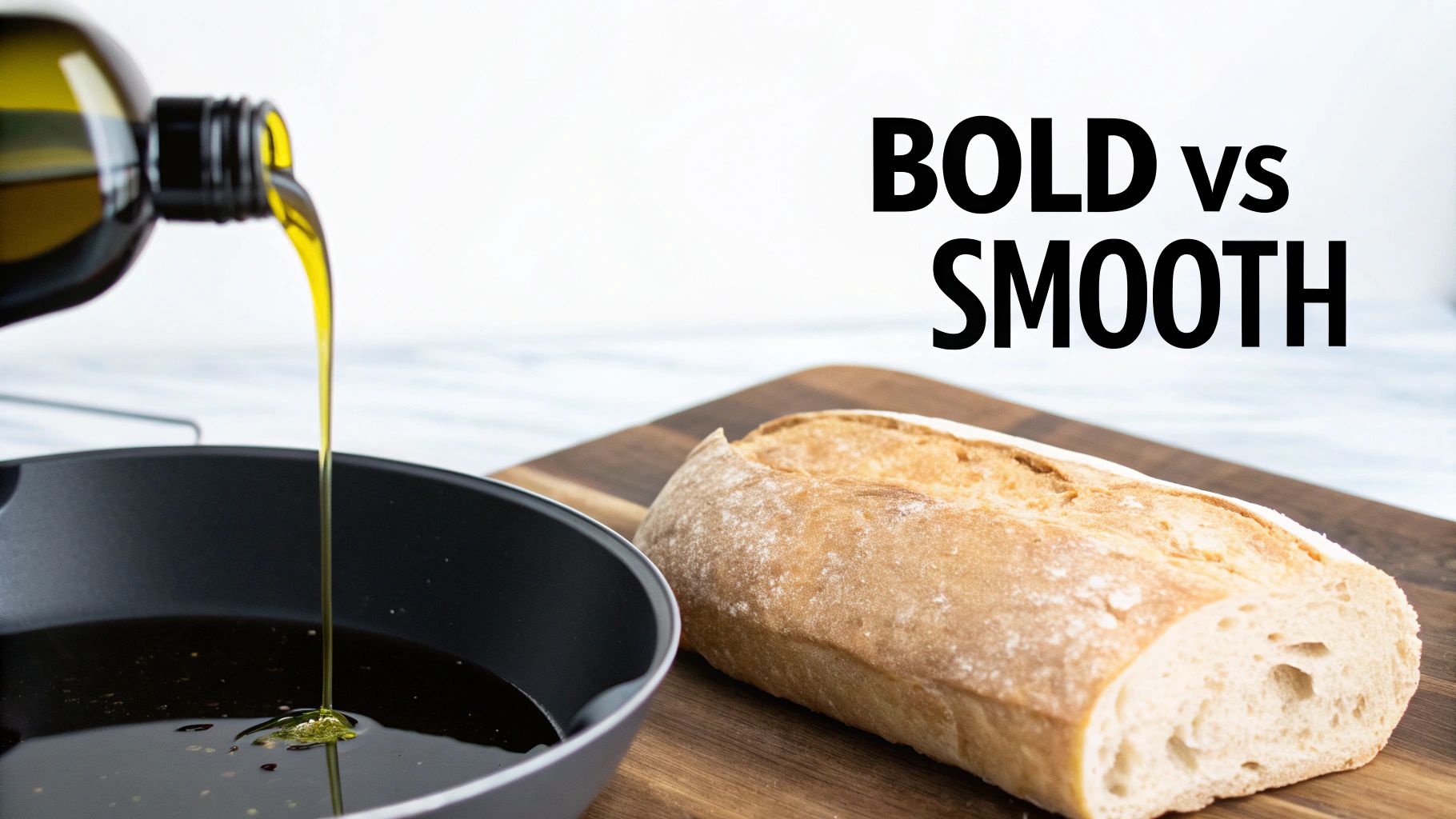
No amount of theory can replace the wisdom of the kitchen. The true answer to whether unfiltered olive oil is "better" is found in the pan, on the plate, and at the table.
Think of unfiltered olive oil as a finishing oil. Its purpose is to be the final, dramatic brushstroke of flavor. That bold, peppery, and fruity character is liquid gold when drizzled over a crusty loaf of bread, a garden-fresh salad, or a rustic soup just before serving.
Filtered olive oil, however, is your trusted kitchen partner. It’s the one you’ll reach for to sauté vegetables, roast potatoes, or create a vinaigrette where you need a clean, balanced flavor that elevates, not dominates.
Understanding this vital distinction is a cornerstone of learning how to buy olive oil that truly serves your culinary ambitions.
Why Shelf Life Is a Deciding Factor
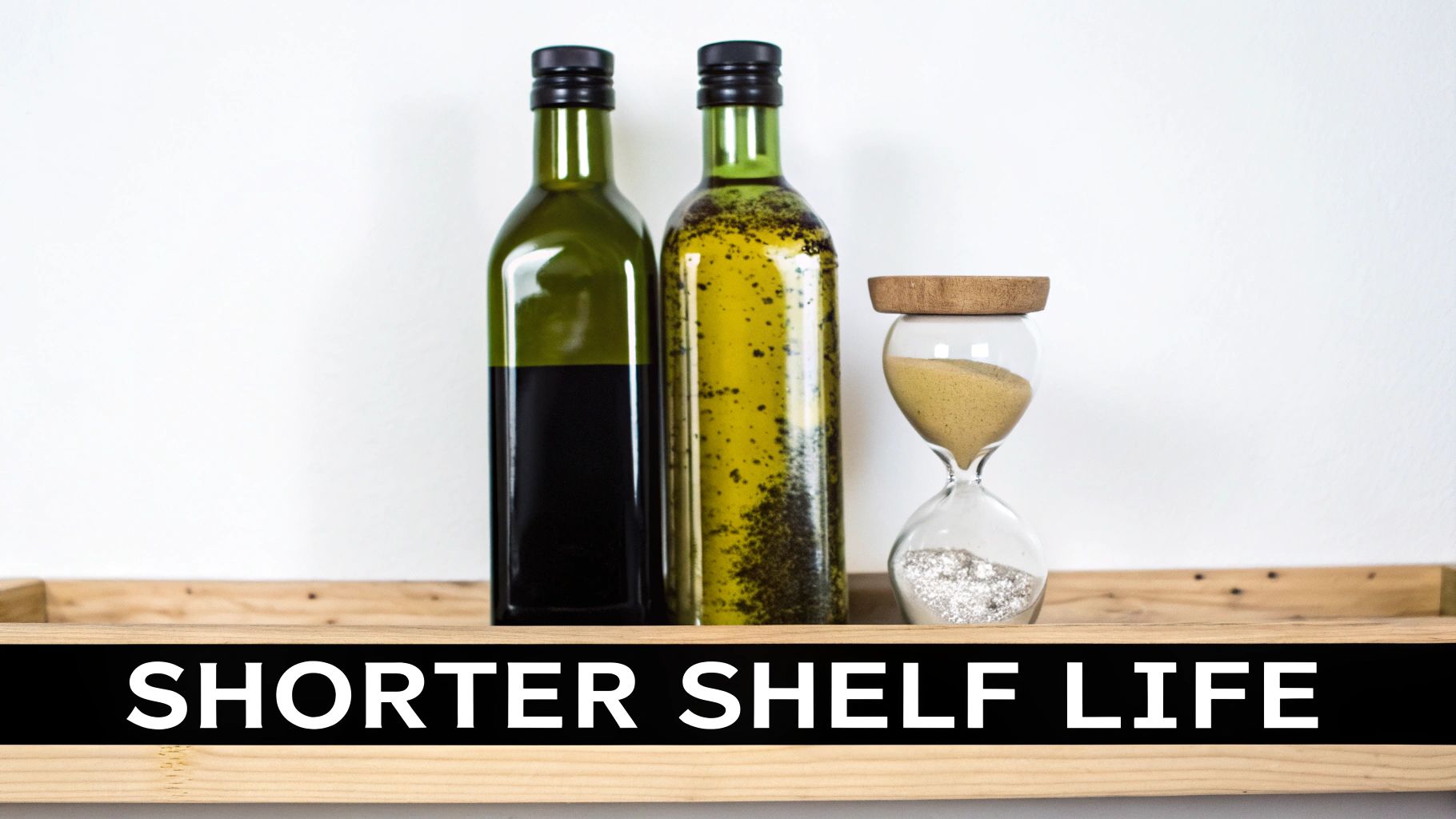
Herein lies the great trade-off, the one that catches so many home cooks by surprise. Those tiny bits of olive fruit that give unfiltered oil its gorgeous cloud and vibrant flavor? They are also its Achilles' heel.
These leftover particles are not dormant; they continue to ferment and react within the oil. This biological activity dramatically accelerates oxidation—a scientific term for the process that turns a beautiful oil rancid.
As a result, while an unopened bottle of high-quality filtered oil can last up to 24 months with ease, its unfiltered cousin lives on borrowed time—typically just 3 to 6 months after bottling. Once you open it, the clock ticks even faster. In fact, a recent survey showed 65% of consumers felt the flavor of their unfiltered oil declined in less than a year after opening. You can dive deeper into the science behind unfiltered oil's stability on spanish-oil.com.
The lesson here is simple and vital. Treat unfiltered olive oil like a precious, perishable ingredient—buy it in small quantities and use it with joyous urgency. For the everyday bottle that lives in your pantry, filtered is the wise and dependable choice. Knowing how long olive oil lasts will save you from the tragedy of a ruined dish.
So, Which Bottle Should You Choose?
Standing in the grocery aisle, the question you must ask is not which oil is better, but which oil is better for you and for the meal you dream of creating. The choice rests entirely on what you value most.
If you are a flavor hunter, a culinary artist who craves the most intense, straight-from-the-grove taste for finishing a perfect dish, then unfiltered olive oil is your muse. Its bold, complex character is its entire reason for being. But you must promise to use it quickly.
If, however, you seek a reliable, all-purpose oil for your daily craft—something that delivers superb health benefits and consistent quality without overpowering your food—then a classic filtered oil is the undisputed champion. It is the dependable workhorse of any great kitchen.
In the end, let your cooking style be your guide. Are you dressing a salad or searing a steak? How quickly will you empty the bottle? Answer these, and you will find your perfect oil.

 Learn Olive Oil
Leave a comment