Let's settle a quiet debate that happens in kitchens everywhere. Does that beautiful bottle of extra virgin olive oil—the one you paid good money for—actually go bad?
The answer is a resounding, unequivocal YES.
It won't sprout fur like forgotten cheese or announce its demise like sour milk. Instead, it will silently surrender everything that makes it magical. Its vibrant, grassy flavor. Its peppery, throat-catching kick. Its arsenal of health-giving antioxidants. It all fades away, leaving a hollow, greasy ghost of the liquid gold you thought you owned.
Think of it not as a fine wine, improving with age in a dusty cellar, but as fresh-squeezed juice. Its brilliance is dazzling, but tragically brief.
Why Your Olive Oil Has a Secret Expiration Date
From the very second an olive is crushed, releasing its precious oil, a countdown timer begins. This isn't a flaw; it's a testament to its purity. Unlike its highly processed, refined cousins, extra virgin olive oil is raw, unadulterated fruit juice. Its purity is its greatest glory and its most profound weakness.
On its journey from the grove to your countertop, your EVOO is stalked by three relentless enemies: light, heat, and air. Each one wages a silent war on the oil's delicate molecular structure, methodically dismantling the very compounds responsible for its spectacular taste and health benefits.
The Brutal Truth About Shelf Life
A perfectly sealed, unopened bottle of high-quality EVOO can last 12–18 months from the day it was bottled. But here is the secret most people never learn: the moment you twist open that cap, the timer accelerates with alarming speed. Once oxygen enters the battle, you have a mere 3–6 months to use that oil before it falls from its peak.
This is why the "best by" date printed on the bottle is more of a hopeful suggestion than an ironclad guarantee. It’s the manufacturer's best guess for when the oil will begin losing its "extra virgin" soul. But the real timeline? That's dictated entirely by how you treat it once it’s in your home.
The question isn't just "does extra virgin olive oil go bad?" It's "how quickly am I letting mine die?" To protect your investment, you must understand this delicate timeline and become its fiercest guardian.
Once you open that bottle, the clock is ticking. Loudly. The fresh, vibrant qualities of your oil are fading much, much faster than you think.
The Ticking Clock of EVOO Freshness
This chart reveals the heartbreakingly fast decline in quality once your olive oil is opened.
| Time Since Opening | Expected Flavor Profile | Health Benefit Level |
|---|---|---|
| 0–2 Months | Peak performance: explosive notes of pepper, grass, and fruit. A flavor that sings. | Maximum |
| 3–4 Months | Still good, but the vibrant, peppery fire begins to dim. It's becoming milder, quieter. | Good |
| 5–6 Months | Noticeably faded. The "fresh" character is a distant memory. A shadow of its former self. | Declining |
| 6+ Months | Stale, likely rancid. Tastes of crayons, old nuts, or putty. A culinary tragedy. | Minimal |
As you can see, using your oil with urgency isn’t just a suggestion; it’s a command if you want the flavor and health benefits you paid for.
Beyond just olive oil, applying general food safety practices is essential for keeping all your pantry staples in top condition. For a deeper dive, check out our guide on how long does olive oil last to empower you to protect your investment and ensure every drop delivers the quality you expect.
The Invisible Thief Stealing Your Olive Oil's Soul
What is this phantom menace that turns liquid gold into greasy disappointment? It’s a silent, microscopic process called oxidation. It's the same chemical reaction that turns a sliced apple a ghastly brown when left exposed on a countertop.
Your extra virgin olive oil is packed with powerful antioxidants called polyphenols. These are the tiny miracle workers behind the peppery bite and the oil's legendary health claims. Think of them as a microscopic army of bodyguards, sworn to protect the fragile fat molecules from harm.
Every time you open the bottle, you unleash the enemy—light, heat, and oxygen. Each time, the polyphenol bodyguards leap into action, sacrificing themselves to keep the oil fresh. But their numbers are not infinite.
One by one, they fall. Eventually, after countless battles, the army is gone. The oil is left defenseless. Its fat molecules begin to break down, forming new compounds that create those stale, waxy, unpleasant flavors. This is the precise moment your beautiful, vibrant oil begins its sad, inevitable march toward rancidity.
The Role of Temperature in Oil Degradation
Heat is the ultimate super-villain in this chemical drama. It acts as an accelerant, drastically speeding up the rate at which your polyphenol army is defeated. Even a few degrees' difference in storage temperature can have a catastrophic effect on how long your olive oil survives.
This isn’t kitchen folklore; it's proven science. Studies have revealed that a premium EVOO stored at a cool 10°C (50°F) could remain fresh for over 36 months. Now, take that exact same oil and store it at just 16°C (61°F). Its lifespan is slashed, turning rancid in only 21 months. That shocking difference is why keeping your bottle far, far away from your stovetop isn’t just a good idea—it’s a command.
This chemical breakdown isn't merely a loss of flavor. It is a fundamental transformation of the oil's very essence, erasing the elements that classify it as a healthy fat.
When you understand what olive oil is made of at a molecular level, you realize why protecting it is a sacred duty. Once those beneficial compounds are destroyed, you're left with a hollow fraud—an oil that can no longer deliver on its promise of incredible taste and health.
How to Spot a Fallen Bottle Using Only Your Senses
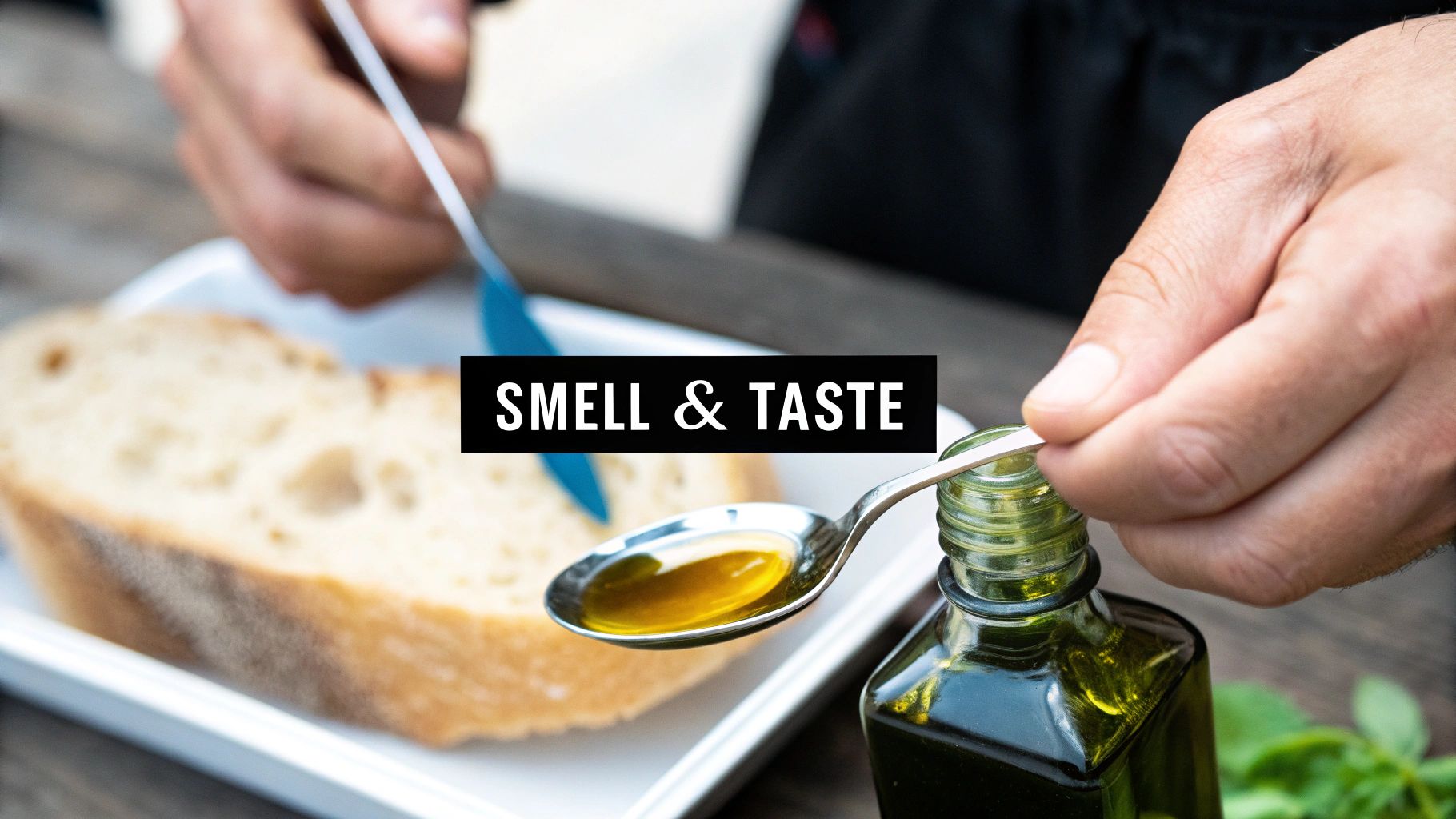
You don’t need a high-tech laboratory to determine if your olive oil has surrendered to the enemy. Your greatest allies are built right into your own body: your nose and your palate. Trusting what they tell you is the most foolproof method for identifying an oil that is past its prime.
If you suspect your oil is in trouble, perform a simple sniff test. A fresh, vibrant extra virgin olive oil should smell alive and green—like a freshly mown lawn, crushed tomato leaves, or even a crisp apple.
Rancid oil, however, has a smell you can't mistake. It's the dull, waxy, tired scent of an old box of crayons, Elmer's glue, or that forgotten bag of walnuts in the back of your pantry. That depressing, musty aroma is the unmistakable funeral dirge of oxidation.
The Taste Test: The Final Verdict
If the aroma isn't conclusive, a small taste will reveal the truth. But to get an accurate reading, you must perform the test like a professional.
Here’s your mission:
- Pour a small amount—about a tablespoon—into a small glass.
- Warm the cup in your palms for a minute. This gentle warmth coaxes the oil to release its aromatic compounds, making its true character—good or bad—impossible to hide.
- Take a small sip and slurp it, pulling air across your tongue to spray the oil across every taste bud.
And here’s what you must avoid:
- Never judge an oil by its color. A pale gold or a deep green hue is determined by the olive varietal and harvest time, not freshness.
- Ignore the "fridge test." The old wives' tale that real EVOO solidifies in the cold is utterly false. Different oils freeze at different temperatures. This test is completely unreliable.
- Don't swallow immediately. Let the oil rest in your mouth for a moment. This is where its secrets are revealed.
A fresh, high-quality oil will reward you with pleasant fruity or grassy notes, often followed by a delightful peppery kick in the back of your throat. A rancid oil offers only a greasy, waxy mouthfeel and a flat, stale aftertaste devoid of all life.
Learning how to properly taste olive oil is a skill that will change your culinary life. It not only exposes rancidity but unlocks a deeper appreciation for the breathtaking flavors of a truly magnificent oil. Once you know what you're looking for, you will never be fooled by a bad bottle again.
Your Battle Plan to Defeat the Three Enemies of Freshness
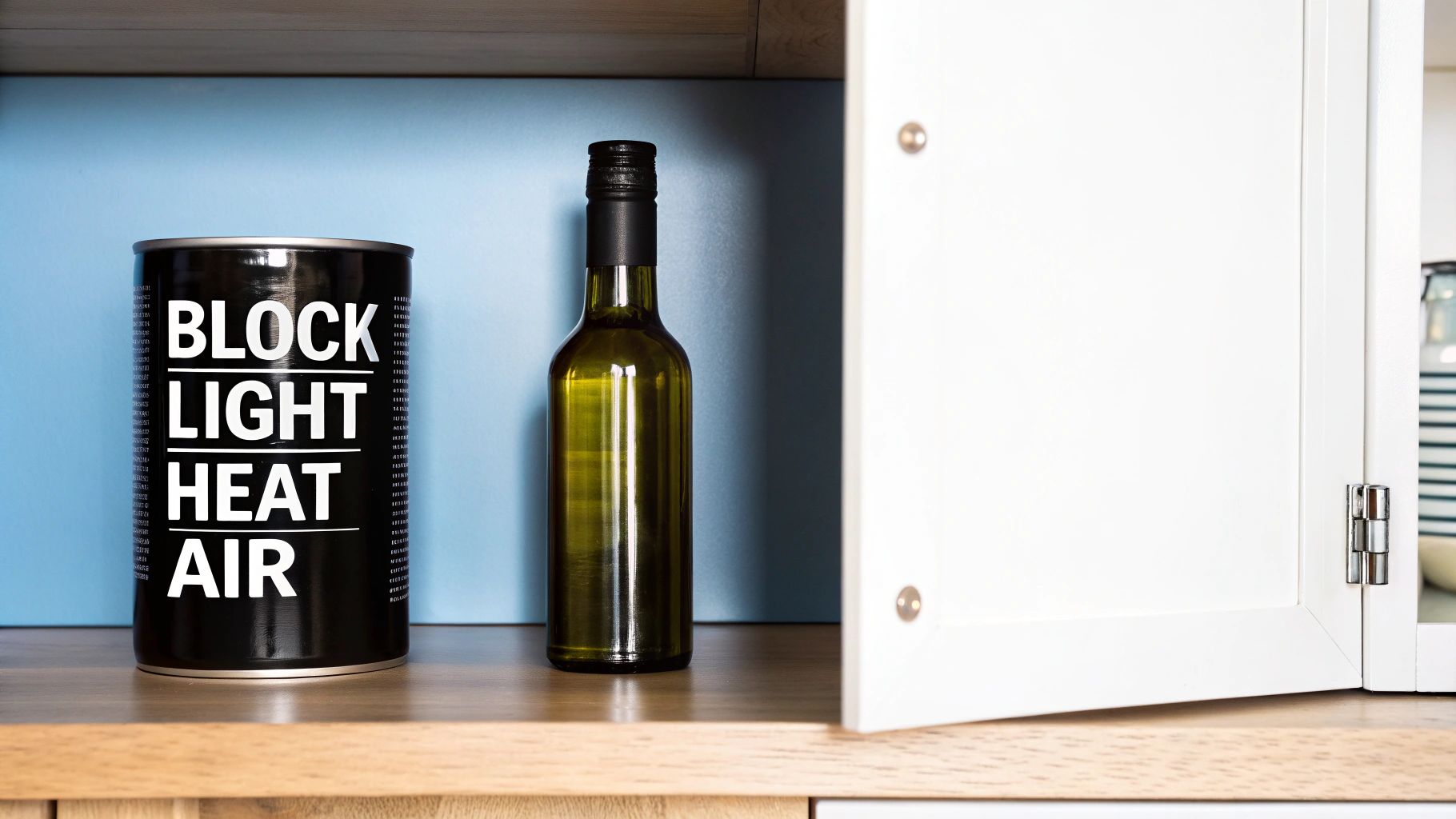
Now that you can identify a fallen soldier, it's time to go on the offensive. You cannot stop the clock on your olive oil, but you can wage a successful war against the three agents of its destruction: Light, Heat, and Oxygen.
Victory depends on smart storage. The good news? It requires no expensive equipment. A few simple adjustments to your kitchen habits will dramatically extend the vibrant life of your oil, guaranteeing every last drop is as delicious as the first.
The War on Light
Of the three enemies, light is arguably the most vicious. It triggers a devastating chain reaction that accelerates oxidation at a terrifying rate, annihilating the antioxidants that stand guard over the oil's flavor and health benefits.
This is precisely why you should never, ever purchase olive oil sold in a clear glass bottle. It may look beautiful on the shelf, but it's a veritable death chamber for the oil within. The quality plummets so rapidly that oil in clear bottles can lose its 'extra virgin' status in just a few months. Some studies suggest that up to 30% of EVOO sold this way has already suffered significant damage before you even buy it.
Your best defense is an impenetrable shield. Always choose olive oil packaged in dark green or brown glass, or even better, an opaque tin. This choice, made in the grocery aisle, is your first and most critical act of war.
Winning the Fight Against Heat and Oxygen
Next in your sights are heat and air, a deadly duo working in tandem to hasten the oil's demise. Your strategy here is twofold: choose the right location and limit exposure.
Find a home for your oil in a cool, dark place—a pantry or cupboard far from the stove or any other heat source. The cabinet directly above your oven or a sunny spot on the counter are two of the absolute worst places you could keep it.
Finally, you must conquer oxygen. Every single time you open the bottle, you are inviting the enemy inside.
Here is how you minimize the damage:
- Seal it tight: Immediately after pouring, screw the cap back on securely. Never leave it sitting open while you cook.
- Buy the right size: It is far wiser to buy a smaller bottle you will use within a month or two than a giant tin that will sit half-empty for a year, constantly exposing the remaining oil to a growing volume of air.
By mastering these simple tactics, you seize control of your olive oil's destiny. For an even deeper dive into defensive strategies, consult our complete guide on proper olive oil storage.
How to Buy Fresher Longer Lasting Olive Oil
https://www.youtube.com/embed/weNoxPQVj1E
Your fight for freshness begins not in your kitchen, but in the harsh, fluorescent-lit battlefield of the grocery store aisle. To determine if a bottle of extra virgin olive oil has a long, glorious life ahead of it, you must become a label detective. The clues are all there, separating the vibrant, fresh oils from those that are already dying.
The single most important piece of information on the bottle is not the "best by" date—that’s often a wild guess. The secret you are looking for is a harvest date or press date. This is the oil's true birthday. The more recent this date, the more life, flavor, and power it has left. For peak quality, always hunt for an oil harvested within the last year.
Choose Your Container Wisely
Next, scrutinize the container itself. A beautifully designed clear glass bottle is a siren's call, luring you in only to destroy the delicate oil inside by exposing it to its mortal enemy: light.
Always reach for olive oil packaged in one of these protective armors:
- Dark glass: Those deep green or brown bottles are not a stylistic choice; they are functional shields designed to block damaging light.
- Opaque tins or cans: These offer the ultimate defense, plunging the oil into complete, protective darkness.
Here is a pro tip from seasoned shoppers: never grab the bottle at the very front of the shelf. Reach for one from the back, where it has been shielded from the relentless glare of the store's overhead lights.
For those curious about how initial production impacts quality, digging into the science behind understanding cold-pressed oil extraction can be truly eye-opening.
Ultimately, a producer who cherishes their oil will be proud to share every detail. Picking the right bottle may seem daunting at first, but it becomes second nature once you know the secrets. To truly master the art of selection, consult our complete guide on how to choose olive oil and ensure you always bring home a champion.
Your Olive Oil Questions, Answered
Even with this intel, a few persistent questions always arise. Let's settle them once and for all, so you can handle your olive oil with absolute confidence.
Can I Use Olive Oil After the "Best By" Date?
Yes, but proceed with extreme caution. That date is the manufacturer's guarantee of peak quality, not a safety deadline. If you have been a champion of proper storage—keeping it in a cool, dark sanctuary—it may still be perfectly delicious.
The only way to know for sure is to trust your senses. Conduct the sniff and taste test we discussed. If you detect that waxy, crayon-like odor or a stale, greasy flavor, its time has passed. It won't harm you, but it will absolutely sabotage the flavor of your dish.
Does Refrigerating Olive Oil Make It Last Longer?
This is a persistent myth, and frankly, it can do more harm than good. While cold does slow oxidation, the refrigerator is the wrong environment for your olive oil.
Chilling causes the oil to solidify. Each time you remove it, condensation can form inside the bottle, introducing drops of water—a potent enemy of freshness. This moisture actually accelerates the oil's decline.
Stick with a cool, dark pantry or cupboard. The ideal storage temperature is around 57°F (14°C)—significantly warmer than a refrigerator but cooler than most kitchen counters.
Is Rancid Olive Oil Actually Bad for You?
Consuming a small amount of rancid oil isn't going to send you to the emergency room, but it is certainly not good for you. The process of oxidation completely destroys the very compounds that make extra virgin olive oil a health food—those magnificent antioxidants and polyphenols are gone.
You are left with an oxidized fat that delivers zero health benefits. The real crime, however, is culinary. That unpleasant, stale flavor is an unforgivable offense to your food.
What Should I Do with Old or Rancid Olive Oil?
First and foremost: do not pour it down the drain! It can congeal in your pipes, creating a costly and disastrous clog.
While it's no longer fit for consumption, that old oil can be reborn. Use it to polish wood furniture, condition a leather belt, or silence a squeaky hinge. It's surprisingly useful. If you have no use for it, pour it into a sealed, non-recyclable container (like an old milk carton) and dispose of it in the trash.
At Learn Olive Oil, we believe that knowing the story behind your oil—from the tree to your table—makes every dish better. We’re here to help you explore the world of premium olive oil with confidence and joy. Check out our expert guides and tasting notes to deepen your appreciation for this liquid gold. Start your journey today at https://learnoliveoil.com.

 Learn Olive Oil
Leave a comment