Let’s be honest. You probably see that bottle of olive oil on your counter as just another cooking fat. A simple, everyday staple. But what if I told you that inside that very bottle lies a secret—a powerhouse ingredient so versatile it can elevate your meals, revitalize your skin, and even solve nagging household problems?
This isn’t just about cooking. This is about unlocking the full, astonishing potential of what ancient civilizations rightfully called ‘liquid gold.’ They didn’t give it that name just for its flavor. They revered it for its remarkable power to nourish, heal, and beautify.
Before you dismiss this as hype, consider this: the world is waking up to its power. Global consumption has exploded from a mere 1.8 million tons in the 1990s to over 3 million tons today. Why? Because people are rediscovering that the answer to countless daily challenges might just be sitting in their kitchen. The secret is knowing how to use it. Once you understand what olive oil is made of, its incredible versatility starts to make perfect sense.
Discover the Power in Every Drop
Forget for a moment that it’s a kitchen ingredient. Think of it as a multi-tool. Its uses are so breathtakingly broad that forecasts predict demand will surge to an incredible 4.7 million tons by 2040. This isn't a fleeting trend; it’s a global shift towards a smarter, more natural way of living.
The true magic of olive oil is its adaptability. It can be the star of a dish, the secret to radiant skin, or the simple fix for a squeaky door. Few ingredients offer such a wide spectrum of benefits.
To give you a glimpse of this power, here is a snapshot of its primary roles.
Olive Oil At a Glance: Key Uses and Benefits
| Category | Primary Use | Key Benefit |
|---|---|---|
| Culinary | Cooking, dressing, finishing, baking | Adds flavor, richness, and healthy fats |
| Health & Wellness | Dietary supplement, digestive aid | Rich in antioxidants and healthy monounsaturated fats |
| Cosmetics & Beauty | Skin moisturizer, hair conditioner, makeup remover | Natural hydration and nourishment |
| Household & Practical | Lubricant, wood polish, cleaner | Non-toxic and effective home solution |
This table only scratches the surface. In this guide, we will pull back the curtain and reveal how this ancient oil can transform your cooking, supercharge your wellness routine, and solve problems you never knew it could. Prepare to see your pantry staple in a completely new light.
Mastering Olive Oil in the Kitchen
Here is where most people’s journey with olive oil begins—and, unfortunately, where it often ends. But what if you could move beyond simply pouring it in a pan and start using it with the precision of a seasoned chef? The secret isn’t about complicated techniques. It's about seeing your olive oil not as one ingredient, but as a toolkit of distinct flavors and functions.
Imagine a bold, peppery Extra Virgin Olive Oil. A final, confident drizzle over grilled fish or a simple tomato soup is not just an addition; it’s a transformation. It adds a vibrant, finishing punch that elevates the entire dish. Now, picture a milder, regular olive oil. It is your trusted ally for sautéing vegetables, coaxing out their sweetness without ever stealing the show. It’s about choosing the right tool for the job.
This visual guide can help you decide which path to take when you grab that bottle.
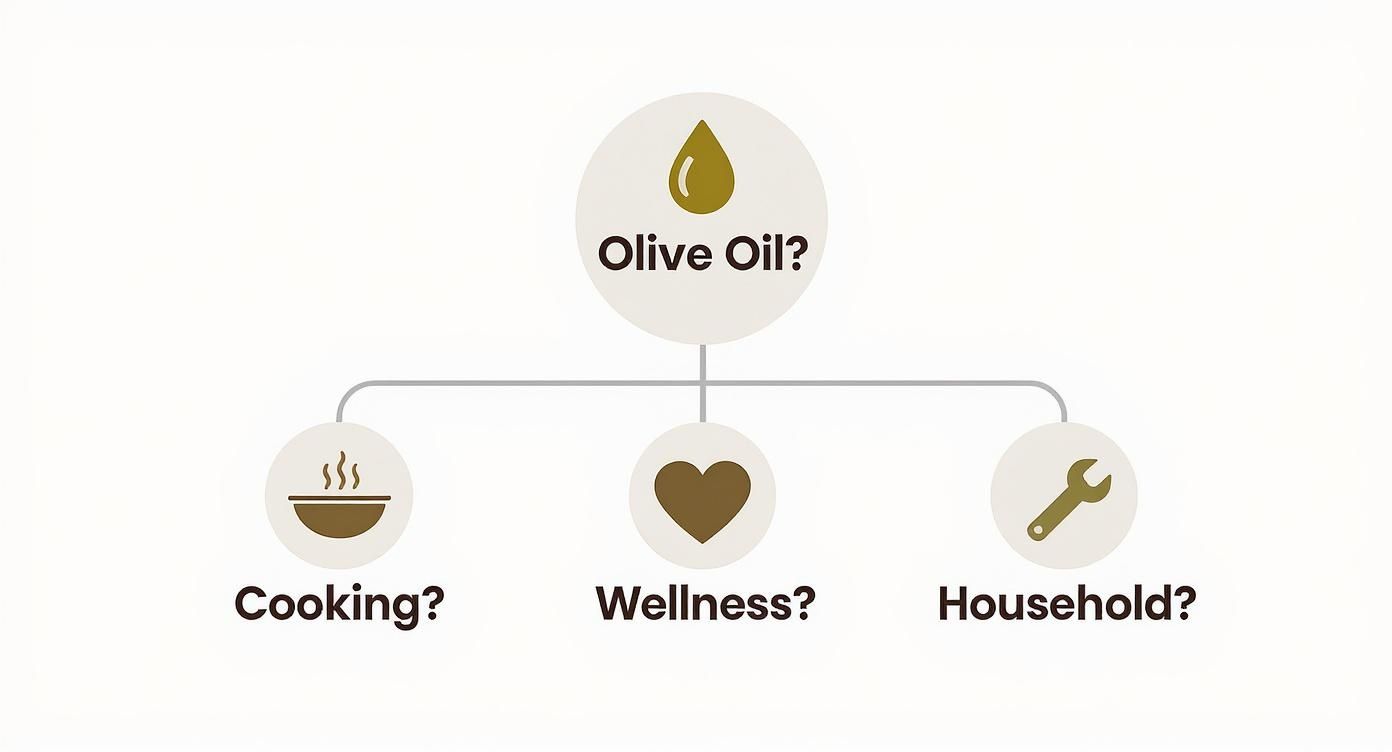
As you can see, the kitchen is just one of many places olive oil belongs, but it’s where most of us begin our journey with this liquid gold.
The #1 Mistake Home Cooks Make (And How to Avoid It)
Here it is: treating all olive oil as if it were the same. This single error is responsible for countless lackluster meals. The difference between a delicate Extra Virgin Olive Oil and a standard "light" olive oil is as vast as the difference between a finely aged wine and table grape juice.
Each type possesses a unique flavor profile and, critically, a different smoke point—the temperature at which the oil begins to break down and smoke. Using the wrong one is a surefire way to ruin a meal you’ve poured your heart into.
The secret to great cooking is control. Choosing the right olive oil gives you precise control over the final flavor and texture of your food, turning a good dish into an unforgettable one.
To make this dead simple, here is your definitive guide. This chart breaks down the most common types and their ideal roles.
Choosing The Right Olive Oil For Your Dish
| Type of Olive Oil | Best Culinary Use | Flavor Profile | Smoke Point |
|---|---|---|---|
| Extra Virgin (EVOO) | Drizzling, dressings, dipping, finishing | Robust, peppery, fruity, grassy | Low (325-375°F) |
| Virgin Olive Oil | Sautéing, roasting at low heat | Mildly fruity, less intense than EVOO | Medium (390°F) |
| Regular (Pure) Olive Oil | Everyday sautéing, roasting, grilling | Neutral, very mild olive flavor | Medium-High (410°F) |
| Light/Extra Light Olive Oil | Frying, baking, high-heat searing | Very neutral, almost flavorless | High (465°F) |
Think of this table as your trusted road map. Armed with this knowledge, you are already on your way to cooking with the confidence of a pro.
From Vinaigrettes to Stovetop Popcorn
Once you have the right oil, mastery is just a few simple techniques away. A flawless vinaigrette, for example, is a matter of a simple ratio—I swear by the classic one part vinegar to three parts EVOO, whisked vigorously until it forms an emulsion that clings beautifully to your greens. For a deeper dive, our complete guide on using different types of olive oil for cooking is your next step.
But don't stop there. Ever made stovetop popcorn with olive oil? A thin layer of regular olive oil in a pot with kernels over high heat yields perfectly crisp popcorn with a subtle, savory depth you'll never get from a microwave bag.
It is this incredible versatility that fuels the global demand. To keep our kitchens supplied, major producers like Spain, Italy, and Greece are projected to produce a jaw-dropping 2.65 million metric tons in the 2025/26 crop year alone.
Unlocking Its Health and Wellness Benefits
Let’s be honest. The words ‘health food’ often conjure images of bland, joyless meals. But what if one of the most potent wellness tools on the planet was also one of the most delicious? This is where olive oil ceases to be a mere cooking ingredient and becomes a cornerstone of a vibrant, healthy life.
Think of olive oil less like a supplement and more like nature’s investment in your long-term well-being. Its power comes from two key components working in perfect harmony.
First, you have the heart-friendly monounsaturated fats, primarily a fatty acid called oleic acid. Unlike the saturated fats you're constantly warned against, these are the heroes of the story. They actively support your cardiovascular system, helping to maintain healthy cholesterol levels.
But then comes the real powerhouse: the potent antioxidants known as polyphenols. Imagine these compounds as a dedicated security team for your body’s cells, tirelessly defending them against the daily onslaught of environmental stress and damage.
The Anti-Inflammatory Powerhouse
There is one specific polyphenol that demands the spotlight: oleocanthal. It is the source of that signature peppery tickle you feel at the back of your throat when you taste an exceptional extra virgin olive oil. But that sensation is a signal that something profound is happening.
This unique compound boasts remarkable natural anti-inflammatory properties. In a world where chronic inflammation is linked to countless modern health issues, incorporating foods rich in oleocanthal is a simple, proactive strategy to help your body maintain its natural balance. That daily drizzle of good olive oil isn't just for flavor; it's actively working to protect you from the inside out. For a more detailed exploration, our guide to the full spectrum of olive oil health benefits reveals the science in greater depth.
"The true value of high-quality olive oil lies not just in what it adds to your food, but in what it contributes to your life. It’s a simple, delicious investment in your long-term wellness."
This growing awareness has sent its popularity into the stratosphere. The global market for olive oil is projected to reach an astonishing $15.6 billion by 2025. To put that into perspective, North America alone is expected to account for nearly 29% of that market. You can explore more data on the global olive oil market trends on cognitivemarketresearch.com.
Simple Ways to Boost Your Intake
You don’t need a radical diet overhaul to harness these benefits. It’s about making small, intelligent additions to your existing routine. Here are a few effortless ideas:
- Swap Your Butter: Replace butter on your morning toast or for finishing roasted vegetables with a drizzle of high-quality extra virgin olive oil.
- Create Your Own Dressings: Ditch the preservative-laden bottled dressings. A simple whisk of EVOO, fresh lemon juice, and your favorite herbs creates a dressing that is both healthier and infinitely more delicious.
- Finish Your Soups: A final swirl of a robust olive oil over a warm bowl of soup or stew adds a magnificent layer of flavor and a powerful dose of those beneficial fats.
When you understand what olive oil is used for beyond cooking, it transforms from mere food into a foundational pillar of a healthier, more vibrant life.
Your Natural Secret for Radiant Skin and Hair
Long before bathroom shelves overflowed with complex serums and chemical-laden creams, humanity relied on a simpler, more profound beauty secret. For centuries, olive oil was the trusted elixir for achieving luminous skin and lustrous hair. It’s time to rediscover this ancient wisdom.
This isn't about slathering kitchen oil on your face. The secret lies in its remarkable chemistry. Olive oil is rich in fat-soluble vitamins, particularly Vitamin E and K, and is loaded with powerful antioxidants. This potent combination provides deep hydration that works in harmony with your skin’s natural oils, moisturizing profoundly without clogging pores. It's an elegant, time-tested solution for a reason.
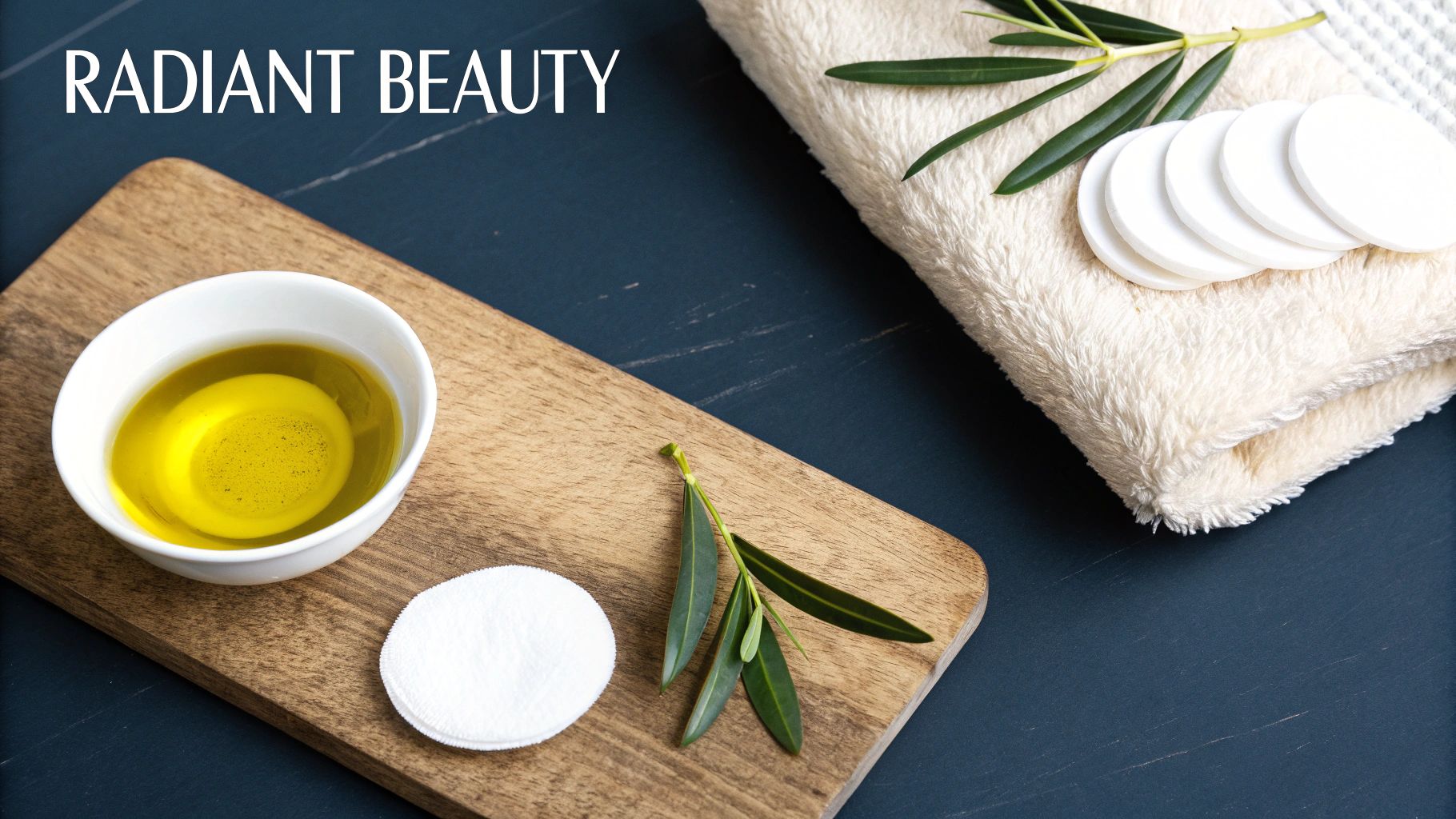
Think of it not as a replacement for your favorite products, but as a foundational booster that can elevate your entire beauty regimen.
Simple DIY Beauty Applications
Putting olive oil to work for your beauty routine is refreshingly simple. There are no complicated instructions or expensive tools required—just a quality bottle of extra virgin olive oil and a few moments of your time. These are some of the most effective ways to integrate this natural wonder into your daily rituals.
Here are a few ways to get started:
- Gentle Makeup Remover: Why attack your skin with harsh chemicals? A small amount of olive oil on a cotton pad dissolves even the most stubborn waterproof mascara and foundation. It cleanses and moisturizes simultaneously, leaving your skin feeling soft and nourished, never stripped and dry.
- Soothing Cuticle Oil: A single drop massaged into your cuticles instantly softens them and helps strengthen your nails. Its nourishing properties are phenomenal for preventing cracks and promoting healthier growth.
- Cracked Heel Savior: Before bed, massage a generous amount of olive oil onto your feet, paying close attention to dry, cracked areas. Slip on a pair of cotton socks to lock in the moisture overnight, and you will wake up to astonishingly softer skin.
The most effective beauty treatments are often the simplest. Olive oil works with your body, not against it, providing the essential nutrients your skin and hair crave without unnecessary additives.
A Deeply Nourishing Hair Mask
If you battle frizz, dullness, or split ends, a simple olive oil hair mask can be a game-changer. This isn't a superficial treatment that merely coats the hair; the oil has the unique ability to penetrate the hair shaft, delivering moisture from the inside out. It's a secret passed down through generations for one simple reason: it works.
To create your own, gently warm a few tablespoons of olive oil. Work it through your dry hair, from root to tip. Wrap your hair in a warm towel and allow it to penetrate for at least 30 minutes before washing with shampoo. The result is hair that feels silkier, looks shinier, and is demonstrably stronger.
Thanks to its incredible emollient properties, olive oil is a superb natural foundation for anyone building an effective skincare routine for dry skin, as it provides deep, lasting moisture. You can delve into the specifics of olive oil benefits for skin in our detailed guide. Once you understand the "why" behind its power, you can start using it with total confidence.
Clever and Practical Household Solutions
Prepare to see that bottle of olive oil in a new light. Far beyond the kitchen and the bathroom, it stands as a surprisingly effective, all-natural multi-tool for solving a host of common household frustrations.
With just a few drops, you can tackle tasks that would normally send you reaching for harsh, chemical-laden products. This is about being resourceful, saving money, and discovering the true versatility of this ancient oil. Often, a single dab is all you need.
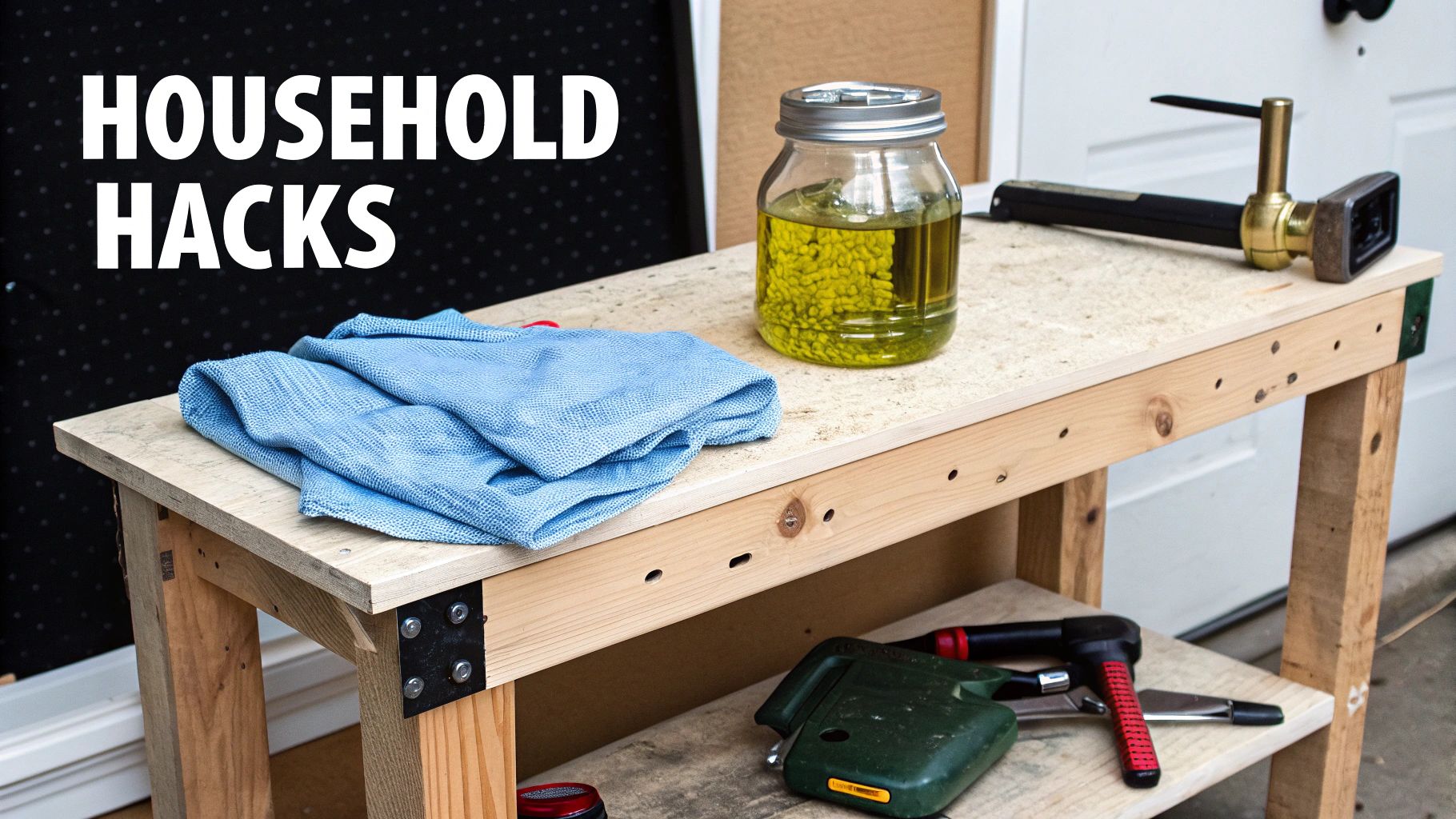
Quick Fixes for Common Problems
Some of the most irritating household problems have the simplest solutions. Before you grab that can of aerosol lubricant or a specialty cleaner, reach for your olive oil. You may be shocked by how effectively it handles these everyday headaches.
Here are a few of my favorite resourceful hacks:
- Silence a Squeaky Hinge: A single drop of olive oil applied directly to a noisy door hinge is all it takes. Swing the door back and forth a few times to work it in, and the squeak vanishes.
- Unstick a Stubborn Zipper: Is a stuck zipper on your favorite jacket driving you crazy? Don’t force it. Dab a tiny bit of oil onto the zipper teeth with a cotton swab and gently work the pull. It will glide smoothly again.
- Remove Sticky Labels Effortlessly: That stubborn price tag on a new glass or jar is no match for olive oil. Saturate the sticker, let it soak for 10-15 minutes, and the adhesive will break down, allowing you to wipe it away without a trace.
The best solutions are often the simplest ones. Olive oil is a perfect example, proving that a natural ingredient can outperform specialized products for many everyday tasks.
Polish and Protect Around Your Home
Beyond the quick fixes, olive oil is a superb conditioner and protectant for a variety of surfaces. Its natural properties can breathe new life into tired-looking items, imparting a beautiful luster and a protective layer—all without toxic fumes.
It works wonders on stainless steel appliances, giving them a brilliant, streak-free shine. Simply apply a small amount to a soft cloth and buff in the direction of the grain. It's also a surprisingly effective choice for cookware; in fact, many experts argue it's the best oil for seasoning cast iron, keeping pans in peak condition.
Olive oil is also a classic treatment for wood and leather. Mix two parts olive oil with one part lemon juice to create a fantastic furniture polish that cleans and conditions simultaneously. You can also rub a small amount into worn leather shoes or bags to restore moisture, bring back their shine, and prevent the material from cracking over time.
Got Questions About Olive Oil? Let's Clear Things Up.
Even with its long and celebrated history, a few stubborn myths about olive oil persist. These misconceptions can prevent you from unlocking its full potential. It's time to set the record straight and arm you with the truth, so you can use every bottle with absolute confidence.
Consider this your rapid-fire guide to busting these myths. You now know how to use olive oil in the kitchen, for your health, and around the home—let’s ensure these common hangups don't hold you back.
Can I Really Cook With Extra Virgin Olive Oil?
Yes. Absolutely. This is perhaps the most persistent myth of all, and it is flat-out wrong. The notion that you cannot heat EVOO is a complete fallacy.
A quality extra virgin olive oil has a smoke point between 375°F and 410°F (190–210°C). This is more than sufficient for the vast majority of everyday cooking, from sautéing vegetables to pan-frying chicken.
While a more refined oil might be a better choice for deep-frying at extremely high temperatures, for nearly everything else, cooking with EVOO is not only safe—it infuses your food with incredible flavor and all the health benefits we've discussed.
How Can I Tell if My Olive Oil Is Good Quality?
You don’t need to be a certified expert to spot a quality oil. It comes down to checking for a few key details on the bottle and then trusting your own senses.
First, always look for a harvest date. Olive oil is a fruit juice; fresher is always better. Second, insist on a dark glass bottle or a tin. This isn't for aesthetics—it's crucial protection against light, which rapidly degrades the oil.
Your own senses are the best test. A great olive oil should smell fresh and green, almost like cut grass or artichokes. When you taste it, you should notice a peppery kick or a pleasant bitterness in the back of your throat. That's the signature of healthy polyphenols doing their job.
What's the Best Way to Store Olive Oil?
Simply remember its three mortal enemies: heat, light, and air. To preserve your olive oil’s freshness, store it in a cool, dark place like a pantry, far away from the stove. The constant heat fluctuations near a stovetop are a guaranteed way to ruin it.
And always—always—screw the cap on tightly immediately after use. Oxygen is the primary culprit behind oil going rancid.
What about the refrigerator? It's best avoided. While it won't permanently damage the oil, refrigeration causes it to solidify, and the repeated warming and cooling cycles will eventually dull its vibrant flavor. Proper storage is paramount, but it’s also wise to know the signs of spoilage. You can learn more about how to tell if olive oil has gone rancid in our detailed guide.
Does "Light" Olive Oil Have Fewer Calories?
No. This is a classic marketing trap that fools countless consumers. "Light" or "Extra Light" olive oil has the exact same number of calories and fat as any other olive oil.
The term "light" refers only to the oil's flavor and color, which are extremely neutral. It has been highly refined, stripping it of its character, which can be useful for baking where no olive flavor is desired. But that same refining process also removes the very antioxidants and rich taste that make extra virgin olive oil so extraordinary.
At Learn Olive Oil, we believe that understanding olive oil is the first step to truly enjoying it. From the groves to your table, we make navigating the world of this liquid gold simple and rewarding. Discover the World of Premium Olive Oil and start your journey with us today.

 Learn Olive Oil
Leave a comment