Why Olive Oil Changes Everything in Your Kitchen
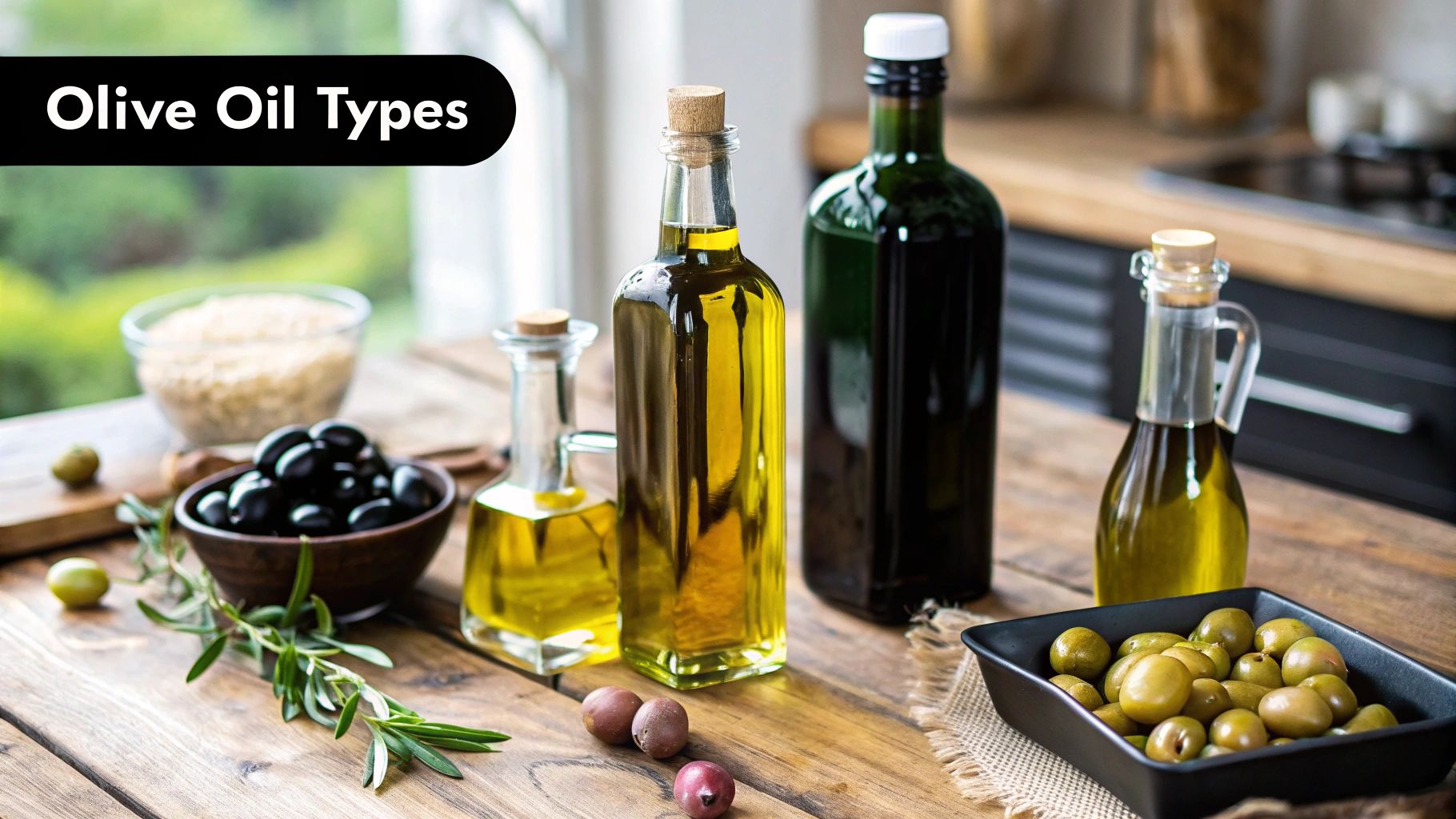
Imagine sautéing vegetables in your everyday cooking oil. They’re palatable, sure. But now, visualize those same vegetables kissed by olive oil. Suddenly, the flavors pop— grassy notes, a hint of pepper, maybe even a whisper of fruit depending on the olive variety. This isn’t kitchen alchemy, it’s the remarkable chemistry of olive oil. This section explores what sets olive oil apart from other cooking fats, delving into its versatility, the range of flavor profiles, and why it’s so much more than just another bottle in your pantry.
Olive oil is like a culinary chameleon, adapting to different dishes with remarkable ease. A delicate extra virgin olive oil can highlight the natural sweetness of roasted vegetables, while a more robust variety can add depth and complexity to a hearty stew. Think of it as the conductor of your kitchen orchestra, harmonizing all the different flavors in your meal.
Take, for example, a simple pasta dish with garlic, chili flakes, and fresh parsley. A drizzle of good quality olive oil elevates it entirely. It's that finishing touch that brings all the elements together in perfect harmony.
The Diversity of Olive Oil
This culinary versatility comes from the sheer diversity of olive varieties and processing methods. From the buttery smoothness of a Tuscan olive oil to the peppery bite of a Spanish variety, the world of olive oil offers a vast spectrum of flavors waiting to be discovered.
Furthermore, how the olives are processed—from the timing of the harvest to the extraction method—plays a significant role in the final product's taste and quality. Choosing the right olive oil can genuinely transform a dish, taking it from simple to sublime.
The Growing Popularity of Olive Oil
The increasing popularity of olive oil isn’t just anecdotal; it's reflected in market trends. The global olive oil market is projected to reach 4.2 million tons by 2035, a significant increase from 3.9 million tons in 2024. This growing demand is driven by consumers becoming more aware of healthier and more sustainable food choices. Discover more insights into the growing olive oil market. Understanding the nuances of olive oil empowers you to make more informed choices in the kitchen, unlocking a world of flavor and culinary possibilities.
Navigating the Olive Oil Maze: Which Bottle Belongs in Your Cart
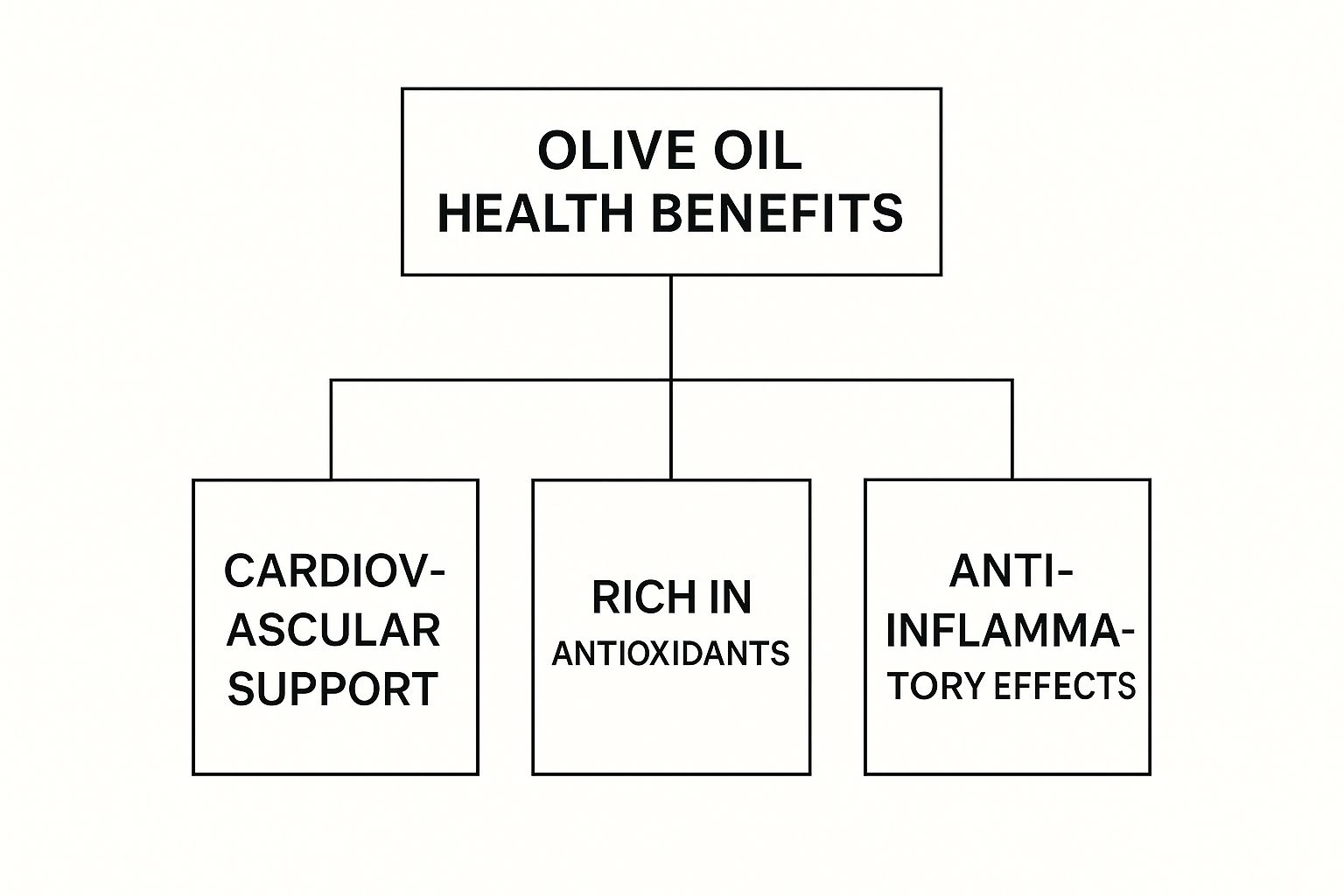
The infographic above gives you a quick snapshot of the amazing health benefits you get from using olive oil. From a happy heart to fighting inflammation, it’s a real powerhouse for well-being.
Walking down the olive oil aisle can be like trying to decipher a secret code. Extra virgin? Virgin? Light? Cold-pressed? Let's break it down together, just like we would over a cup of coffee.
First up, extra virgin olive oil. This is your all-star, MVP of olive oils. It packs the most flavor and the most health benefits. It’s perfect for drizzling over finished dishes or using in low-heat cooking. Think of a bright, fresh salad or a final flourish on a plate of pasta.
Beyond Extra Virgin: Exploring Other Olive Oils
But wait, there's more! Extra virgin isn't the only olive oil out there. Virgin olive oil is another great option. It has a milder flavor, making it a good choice when you don't want the olive oil to be the main character. You might use it in baking or when you're sautéing delicate foods that could be overpowered by a stronger flavor.
And then we have light olive oil. Don't be fooled by the name—it doesn't have fewer calories. "Light" simply refers to its neutral flavor. This makes it perfect for high-heat cooking where you don't want a strong olive oil taste competing with your dish. Think stir-fries or searing a steak, where high temperatures are a must.
Matching Olive Oil to Your Cooking Needs
Choosing the right olive oil is a bit like choosing the right wine. The wrong pairing can clash, but the right one can elevate the entire meal. Imagine you're making a delicate vinaigrette. A robust extra virgin olive oil could overwhelm the subtle flavors. A lighter olive oil would be a much better choice, allowing the other ingredients to shine through.
On the other hand, if you're roasting vegetables, a robust extra virgin olive oil can add a wonderful depth of flavor. Its higher smoke point means it can handle the oven's heat, resulting in perfectly caramelized vegetables with a hint of peppery olive oil goodness.
To help you choose the best olive oil for every occasion, take a look at the table below. It summarizes the key characteristics, smoke points, and ideal uses for different varieties.
To help illustrate these differences and make choosing the right olive oil a little easier, let’s look at the following table:
Olive Oil Varieties and Their Best Cooking Applications: Comparison of different olive oil types showing their characteristics, smoke points, and ideal cooking uses
| Olive Oil Type | Smoke Point (°F) | Flavor Profile | Best Cooking Methods | Price Range |
|---|---|---|---|---|
| Extra Virgin Olive Oil | 375-405 | Robust, Peppery, Fruity | Salad dressings, Dipping, Finishing dishes, Low-heat sautéing | Moderate-High |
| Virgin Olive Oil | 420-450 | Mild, Buttery | Baking, Sautéing delicate ingredients, Light frying | Moderate |
| Light Olive Oil | 465-470 | Neutral | High-heat cooking, Stir-fries, Searing, Deep frying | Low-Moderate |
| Refined Olive Oil | 465-470 | Neutral | Similar to light olive oil | Low |
| Olive Pomace Oil | 460-470 | Very neutral | High-heat cooking, Deep frying | Lowest |
As you can see, each variety of olive oil has its own strengths and weaknesses. By understanding these differences, you can ensure you're always choosing the best oil for the job and getting the most out of this kitchen staple. Choosing the right olive oil for cooking is a key to unlocking flavor and achieving culinary success.
The Temperature Sweet Spot: Understanding Your Oil's Limits
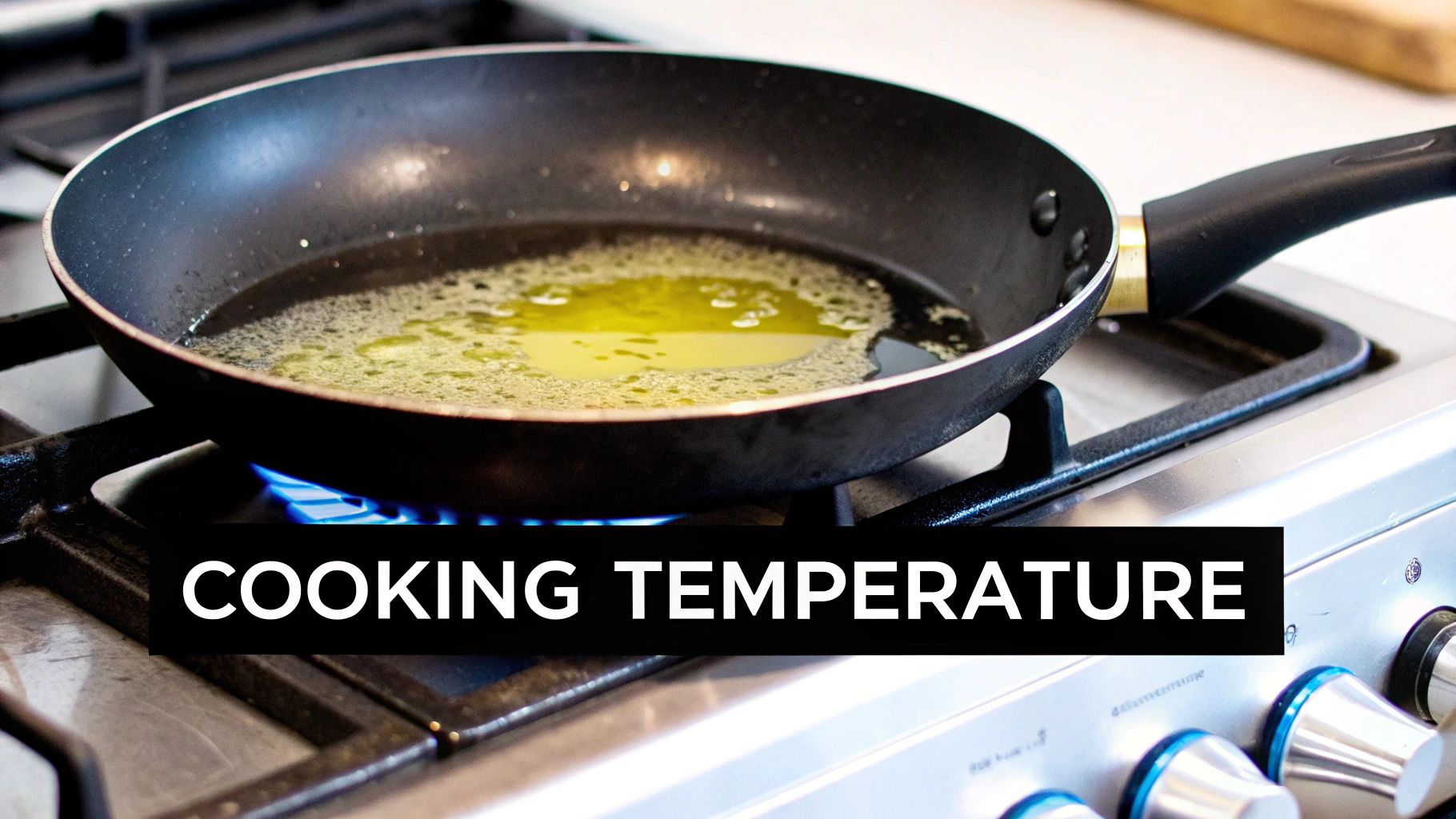
Think of olive oil as having a "comfort zone" when you're cooking with it. Like Goldilocks, it likes things just right. Too cold, and its flavors stay locked away. Too hot, and things get… unpleasant. This "just right" zone is called the smoke point.
This smoke point is the temperature at which the oil begins to break down and, well, smoke. Understanding this crucial threshold is the key to unlocking delicious dishes and avoiding culinary disasters. Knowing your oil's smoke point is the difference between a meal that sings and one that scorches.
When olive oil reaches its smoke point, it doesn't just start smoking; it actually begins to change chemically. This creates off-flavors—that bitter, acrid taste—and can even produce potentially harmful compounds. There's a persistent myth that olive oil is too delicate for cooking, but that's simply not true. A good extra virgin olive oil can handle medium-high heat, making it surprisingly versatile for most home cooking.
Decoding the Temperature Ranges
Let's walk through what happens to olive oil at different temperatures. At lower temperatures, gentle warming coaxes out the oil's aromatic compounds, releasing its fragrant personality. Think of it like warming up your vocal cords before a performance.
As the temperature climbs, the oil becomes more fluid, like a dancer loosening up before taking the stage. This fluidity is perfect for coating ingredients and ensuring even cooking.
Medium-high heat allows us to achieve the beautiful browning of proteins and caramelization of vegetables, the hallmarks of delicious cooking. It's at this temperature that the magic truly happens.
For example, imagine sautéing vegetables. You want the oil hot enough to sizzle and brown them quickly, giving them that perfect golden crust and vibrant flavor. But if the oil gets too hot, it will smoke and turn acrid, ruining your dish. This balance is everything. It's also worth noting that different types of olive oil have different smoke points. The best olive oil for searing a steak at high heat might not be the best choice for a delicate vinaigrette.
Let's look at the smoke points of various olive oils and their ideal uses:
| Oil Type | Smoke Point | Cooking Technique | Temperature Range | Flavor Impact |
|---|---|---|---|---|
| Extra Virgin Olive Oil (Delicate) | 325-375°F (163-191°C) | Sautéing, Baking, Dressings | Low to Medium | Robust, Peppery |
| Extra Virgin Olive Oil (Robust) | 375-400°F (191-204°C) | Roasting, Light Frying | Medium | Fruity, Bitter |
| Virgin Olive Oil | 420°F (216°C) | Stir-frying, Baking | Medium-High | Mild |
| Refined Olive Oil/Light Olive Oil | 465°F (241°C) | Deep Frying, Searing | High | Neutral |
| Olive Pomace Oil | 460-470°F (238-243°C) | Deep Frying, High-Heat Cooking | High | Neutral |
This table provides a general guide. Specific smoke points can vary depending on the quality and processing of the olive oil. Always check the label of your particular bottle for the most accurate information. Remember, using the right oil at the right temperature makes all the difference in flavor and health.
Reading Your Oil’s Signals
Learning to read your oil's signals is like developing a sixth sense in the kitchen. Those tiny bubbles that appear as the oil heats are a visual cue, telling you the oil is approaching its working temperature. A subtle shimmer on the surface is another sign that the oil is ready for action.
However, if you see wisps of smoke, it's a clear warning sign that the oil is too hot. Immediately reduce the heat to prevent burning and off-flavors. Mastering these visual cues gives you greater control over the cooking process and helps you achieve culinary perfection.
Shopping Like a Pro: Spotting Quality Behind the Marketing
Let's face it, choosing olive oil can feel like navigating a maze. Bright labels and high prices don't always translate to the best oil for your kitchen. Becoming a savvy olive oil shopper is like unlocking a secret code. Once you know what to look for, you'll avoid wasting money on subpar oil.
The Harvest Date: Your First Clue
Forget the expiration date; the harvest date is the key. Olive oil is essentially fresh-pressed fruit juice, so think of it like buying apples. You’d naturally gravitate towards the freshest, recently picked fruit. The same principle applies to olive oil.
A recent harvest date signals a fresher, more vibrant oil. This matters because the delicate flavors and aromas of olive oil naturally diminish over time.
Packaging Matters: Protecting the Liquid Gold
Next, seek out dark bottles or tins. Light is olive oil’s nemesis, degrading its beneficial compounds and altering the taste. Think about how you store vitamins – in a cool, dark place.
Olive oil needs similar protection from light. Dark glass or metal acts as a shield, preserving those precious flavors and extending the oil’s shelf life.
Decoding the Label Lingo
Don't fall for marketing buzzwords like "first cold press." With modern production methods, this term has become largely irrelevant. Most high-quality olive oils are already extracted using mechanical processes that maintain low temperatures.
Instead, focus on geographic indicators. Oils from specific regions, like Tuscany or Crete, often carry Protected Designations of Origin (PDO) certifications. This designation assures you that the oil was produced, processed, and prepared in a specific region, following strict quality guidelines.
Speaking of regions, olive oil consumption varies dramatically around the globe. Greece leads the pack, consuming approximately 24 liters per person annually. This contrasts sharply with countries like Japan and Brazil, where consumption is much lower. Find out more about global olive oil consumption trends. The United States and Canada fall somewhere in the middle, consuming 1.1 kg and 1.2 kg per person, respectively.
Building Relationships: Your Olive Oil Insider
Finally, think about developing a relationship with your local specialty food store. The staff are often passionate about food and can be invaluable resources for finding excellent olive oil.
They can introduce you to specific producers, describe flavor profiles, and guide you towards the perfect oil for your cooking needs. This personalized advice can truly elevate your culinary experience. By learning to navigate the world of olive oil, you’ll be well on your way to transforming everyday dishes into something extraordinary.
Mastering the Heat: Techniques That Make Olive Oil Shine
This screenshot from Wikipedia's Olive Oil page illustrates the diverse world of olive oil, highlighting the range of grades and types—from Extra Virgin to Lampante. It’s a visual reminder that not all olive oils are the same, each possessing unique characteristics that lend themselves to different culinary applications. Think of it like a toolbox: you wouldn't use a hammer for every job, right? Similarly, understanding the different types of olive oil is crucial for achieving the best results in the kitchen.
Just like a fine wine, high-quality olive oil deserves careful consideration. The difference between a delicious dish and a truly exceptional one often hinges on understanding the nuances of using olive oil—when to add it, the ideal temperature, and the specific cooking technique. Professional chefs are masters of this, using olive oil strategically rather than just pouring it indiscriminately into a pan.
Low and Slow vs. High Heat: A Tale of Two Techniques
Olive oil's versatility shines through in its ability to handle both low and high heat cooking methods. Confiting, a classic low and slow technique, gently submerges ingredients like vegetables in olive oil, transforming them into incredibly tender and flavorful morsels. Imagine carrots, garlic, and herbs slowly simmering in olive oil, their flavors intensifying as the oil gently infuses them.
At the other end of the spectrum, high-heat cooking with olive oil creates a beautiful crust on proteins and vegetables, sealing in juices and adding a depth of flavor. Picture a steak sizzling in a hot pan with olive oil, developing a rich, caramelized crust while remaining juicy inside. The trick here is using an olive oil with a higher smoke point—the temperature at which the oil begins to break down—to prevent burning.
The Art of Sautéing, Roasting, and Finishing
When it comes to sautéing with olive oil, timing plays a crucial role. Adding the oil before heating allows its flavors to gently meld with the ingredients. Adding it during heating creates a quick sear, locking in moisture. And finally, using olive oil as a finishing touch, drizzled over a dish just before serving, adds a burst of fresh flavor and a touch of elegance.
Roasting vegetables to perfection involves selecting the right olive oil and temperature. A robust extra virgin olive oil can withstand higher oven temperatures, allowing vegetables to develop a beautiful caramelization. Imagine crispy roasted potatoes, glistening with olive oil and herbs—a testament to the harmonious pairing of technique and ingredient.
Creating a silky smooth salad dressing that emulsifies beautifully relies on choosing an olive oil that blends well with other ingredients. This ensures a cohesive blend of flavors and textures, adding a delightful touch to your salads.
Finally, the secret to those glossy pan sauces chefs effortlessly create often involves deglazing the pan with wine or stock, then swirling in a knob of butter or a drizzle of olive oil to create a rich, emulsified sauce that clings perfectly to the main ingredient. Mastering these techniques allows you to unlock the full potential of olive oil, elevating your everyday cooking to new heights.
Beyond Flavor: The Health Story That Actually Matters
Olive oil brings more to your cooking than just a delicious taste; it's packed with health benefits. We often hear about the Mediterranean diet and its positive impact, but it's not just about the olive oil. It's a whole way of eating. However, olive oil does play a starring role, providing monounsaturated fats, the kind of healthy fats your body thrives on. Think of it as giving your cells a premium fuel upgrade.
Olive oil also contains antioxidants, those powerful compounds that protect your body from damage. What's remarkable is that these antioxidants are pretty resilient during cooking. They retain their beneficial properties even when heated, so you still get the benefits whether you're drizzling it on a salad or using it to sauté your favorite veggies.
More Than the Sum of Its Parts
The health perks of olive oil go beyond its individual components. It actually helps your body absorb nutrients from other foods, especially those fat-soluble vitamins found in vegetables. Imagine tossing a colorful salad with olive oil. The olive oil is like a key unlocking a treasure chest of vitamins within those vibrant veggies, helping your body absorb them more effectively.
Extra virgin olive oil, the highest quality olive oil, packs even more of a health punch than refined versions. This is because of polyphenols, the compounds that give it that distinctive peppery bite and slight throat tickle. That little tickle is a good thing! It signals the presence of these potent antioxidants. And it seems the world is catching on. Global olive oil consumption is on the rise and is projected to surpass 3 million tonnes by the 2024/25 crop year, a 10% increase from 2023. Learn more about olive oil consumption trends.
Practical Application and Smart Swaps
Using olive oil daily doesn’t have to mean increasing your calorie intake. It’s all about making smart substitutions. Replacing less healthy fats, like butter or saturated oils, with olive oil offers more substantial health benefits than simply adding olive oil on top of your usual diet. It's like upgrading your car's engine to a more fuel-efficient model, not just topping off the tank of an older, less efficient one.
For example, try using olive oil instead of butter when sautéing vegetables or baking. You'll be adding a healthy boost without piling on extra calories. Switching from your regular cooking oil to olive oil can significantly improve the types of fats in your diet. These small changes can make a world of difference over time. By understanding how to use olive oil strategically, you can enhance both the flavor and the nutritional value of your meals.
Keeping Your Investment Fresh: Storage Secrets That Work
You’ve finally found that perfect olive oil. Now, how do you keep it at its peak? It might surprise you, but olive oil is delicate. Store it incorrectly, and that liquid gold can turn rancid faster than you think. The enemies of fresh olive oil? Light, heat, air, and time. Luckily, keeping your olive oil happy is easier than you might think.
Understanding the Enemy: Why Olive Oil Degrades
Unlike wine, olive oil doesn’t get better with age. Its prime is right after harvest. Think of it like fresh juice: vibrant and flavorful at first, but gradually losing its punch. This is due to oxidation, a process triggered by exposure to air. Light and heat speed things up, breaking down the oil's healthy compounds and those delicate flavors.
Practical Storage Strategies for Your Kitchen
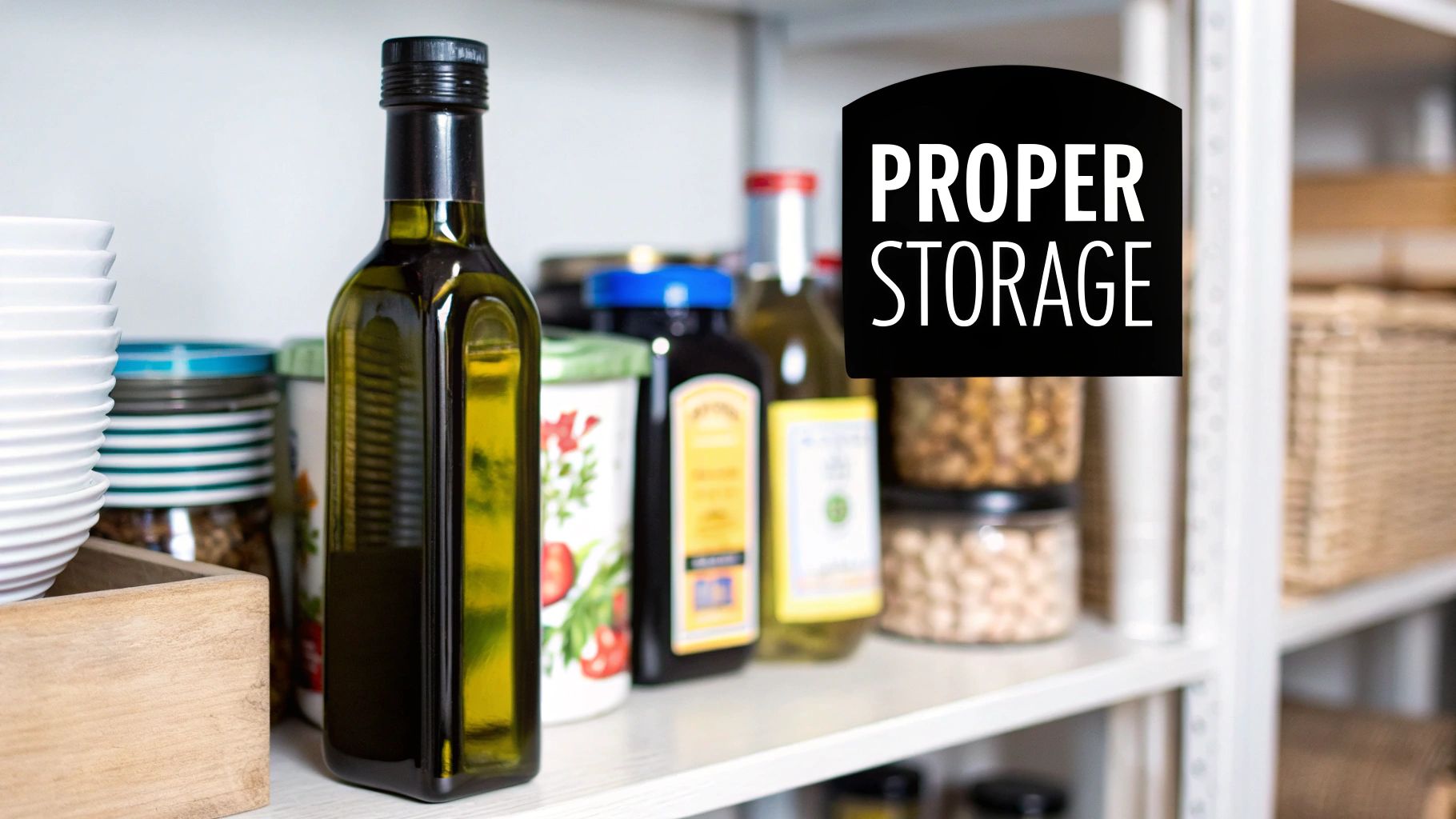
So, where's the best place for your olive oil? A cool, dark spot is ideal. Your pantry is perfect, but a dark cupboard away from the stove works well too. Treat your olive oil like a vampire – keep it out of direct sunlight! A dark-colored bottle or tin is your oil's best friend. These help block light, preserving the flavor and antioxidants. If your olive oil came in a clear bottle, consider transferring it to a darker one or simply storing the clear bottle inside a cupboard.
Bottle Size and Freshness: The Smaller, the Better
Here's a simple tip: buy smaller bottles more frequently. This ensures you're always cooking with the freshest, most flavorful oil. Buying in bulk might seem like a good deal, but it increases the chance of your oil going bad before you can use it all. It’s like buying a giant bag of chips – tempting, but will they still be crispy at the bottom of the bag?
Debunking Storage Myths and Addressing Real Concerns
Let’s clear up some common olive oil storage myths. Does refrigerating olive oil help? It can extend shelf life, but it can also cause the oil to solidify and turn cloudy. This is perfectly normal and doesn't harm the oil; just let it return to room temperature before using.
What about those stylish stainless steel dispensers? They look great on the counter, but unless they're designed to block light and air, they can actually expose your oil to more oxidation. A simple, dark-colored bottle tucked away in the pantry is usually the best choice.
Storing different types of olive oil follows the same principles. However, think about how quickly you’ll use them. For instance, extra virgin olive oil, known for its delicate flavor, is best enjoyed within a few months of opening. Choose a bottle size that fits your cooking habits.
By following these simple storage tips, you can enjoy the full flavor and extend the life of your olive oil, making sure every dish you create benefits from its golden goodness.
Ready to elevate your cooking with premium olive oil? Explore the world of exceptional olive oils and discover the secrets to selecting, tasting, and using this culinary treasure at Learn Olive Oil.


Leave a Reply