Picture two bottles standing side-by-side in your kitchen. One, a deep green glass, holds the liquid gold of the Mediterranean. The other, a clear plastic container, holds a pale, unassuming liquid. You reach for them every day, but do you truly understand the profound difference between them?
The truth is, the core difference between olive and canola oil is breathtakingly simple: olive oil is the vibrant, flavorful juice pressed from a fruit, while canola oil is a neutral seed oil, engineered by science for sheer versatility.
Choosing between them isn't just a matter of habit. It’s a decision that dramatically alters the flavor, the nutrition, and the very soul of your meal. It's the choice between adding a layer of character to your dish or simply using a functional fat to get the job done. This guide will cut through the clutter and reveal how to use each one like a seasoned chef.
Decoding Your Pantry Staples
Most of us have both. But we rarely stop to ask why.
Let’s set aside the confusing health debates for a moment and get to the heart of the matter. One oil is the product of an ancient tradition, physically squeezed from a fruit to capture its very essence. The other is a marvel of modern food science, designed from the ground up for a neutral taste and unflinching stability under high heat. This isn’t just a small difference—it’s a story of two entirely different worlds.
Olive Oil vs Canola Oil: The Decisive Differences
Here’s a quick-glance guide to help you make smarter choices in your kitchen, right now.
| Attribute | Olive Oil | Canola Oil |
|---|---|---|
| Source | Pressed from olives (a fruit) | Extracted from rapeseed (a seed) |
| Flavor Profile | Ranges from fruity & peppery to mild | Neutral and nearly flavorless |
| Primary Fat Type | Monounsaturated Fat (Oleic Acid) | Polyunsaturated & Monounsaturated |
| Best For | Dressings, finishing, low-to-medium heat | High-heat cooking, baking, frying |
| Processing | Cold-pressed (Extra Virgin) or refined | Typically refined using solvents/heat |
This table lays bare the fundamental distinctions. You can see how their origins dictate their destiny in your cooking.
The image below drives home the stark contrast in their roles on a chef's countertop.
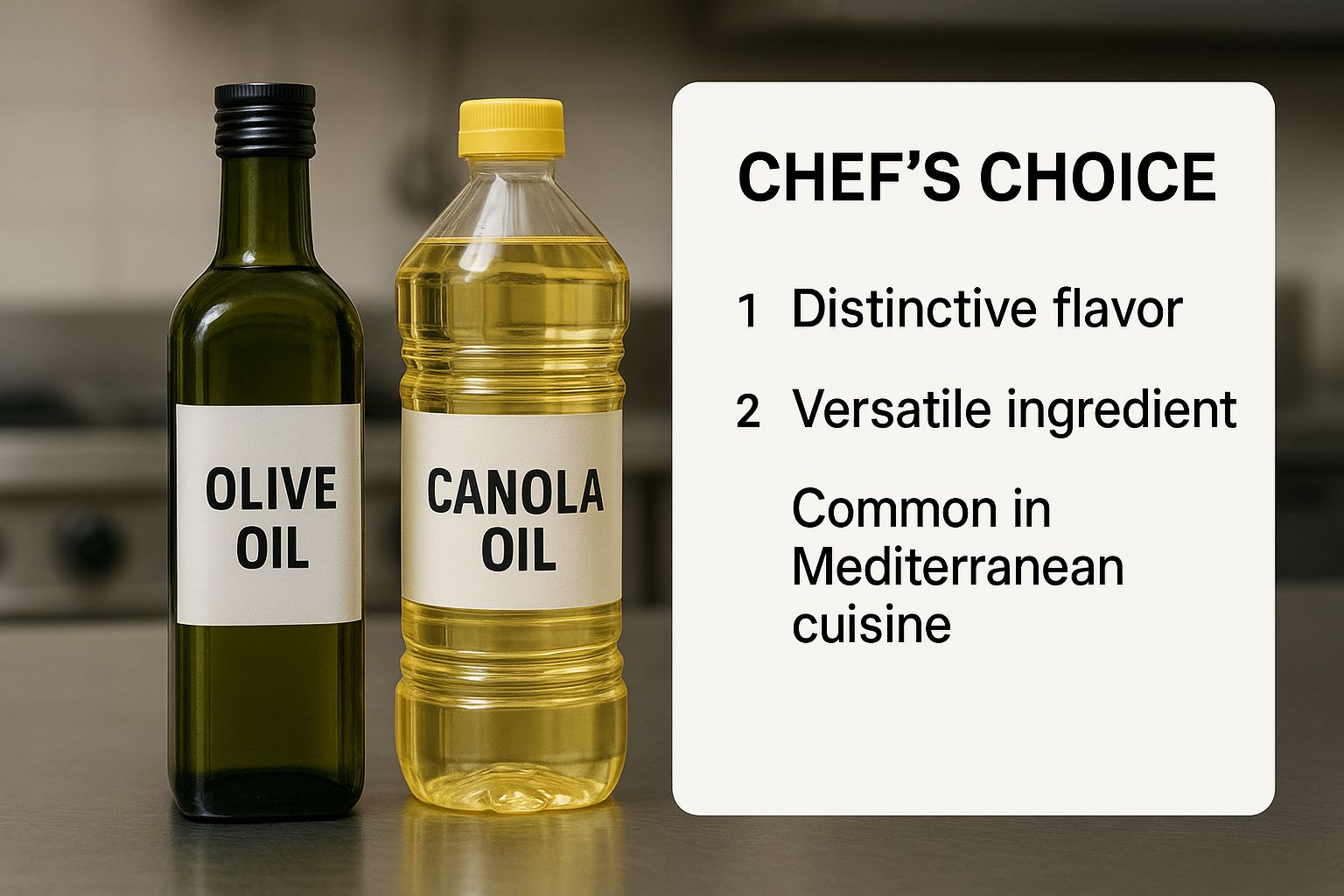
One is a finishing touch, a final flourish of flavor. The other is a workhorse, built for the heavy lifting. To truly master their use, you must understand not just what separates them, but why. For those looking to master cooking with this liquid gold, you can discover the best extra virgin olive oil for cooking and instantly elevate your dishes.
From Ancient Groves to Modern Science
To get to the soul of these two oils, you must look at where they come from. It’s a tale of opposites: one born from ancient tradition, the other from modern invention.
Olive oil is history in a bottle. It is pressed from the fruit of gnarled, centuries-old trees, its very existence woven into the fabric of Mediterranean culture for millennia. Its creation is a craft, a direct expression of the soil, the sun, and the skill of the harvest. This time-honored, often simple mechanical process is precisely why you get such an incredible symphony of flavors.
Canola oil, on the other hand, is a product of 20th-century ingenuity. It has no ancient backstory; it was conceived in a laboratory.
The Rise of a Modern Staple
Developed in the 1970s, canola oil was the brainchild of Canadian scientists who took the rapeseed plant and, through painstaking selective breeding, stripped it of its less desirable compounds. They created an entirely new crop, perfect for mass production. Its name tells the story: “Can” for Canada and “ola” for oil.
This feat of agricultural science created an indispensable staple for the modern world. It was designed from the very beginning to be a neutral, incredibly stable ingredient, which is why it’s the invisible backbone of countless packaged foods and commercial kitchens. Its industrial origins explain its predictable performance and affordable price.
The soul of an oil is tied directly to its source. Olive oil is the pure essence of a fruit, a snapshot of a specific place and time. Canola oil is the result of a process, built for function and consistency above all else.
Understanding this core difference—artisanal heritage versus industrial innovation—is the secret to knowing why they behave so differently in your kitchen. One brings a distinct personality to the dish. The other offers a blank slate.
A Tale of Two Scales
The sheer scale of production paints a vivid picture. While olive oil has been a cornerstone of Mediterranean diets for thousands of years, its global production is a drop in the ocean compared to canola. The European Union is expected to produce around 2.1 million tons of olive oil for the 2024/25 season.
Now, compare that to the staggering 28 million metric tons of canola oil the world produced in 2021. This massive 13-fold difference reveals just how dominant canola oil is in mass food manufacturing, while olive oil retains its status as a more cherished, premium product.
To truly appreciate this liquid gold's heritage, you can explore the rich origins of olive oil and see how deeply it's woven into human history. This massive gap in scale and origin story influences everything from price to how you use it in the kitchen.
Unlocking Flavor: Peppery vs. Neutral
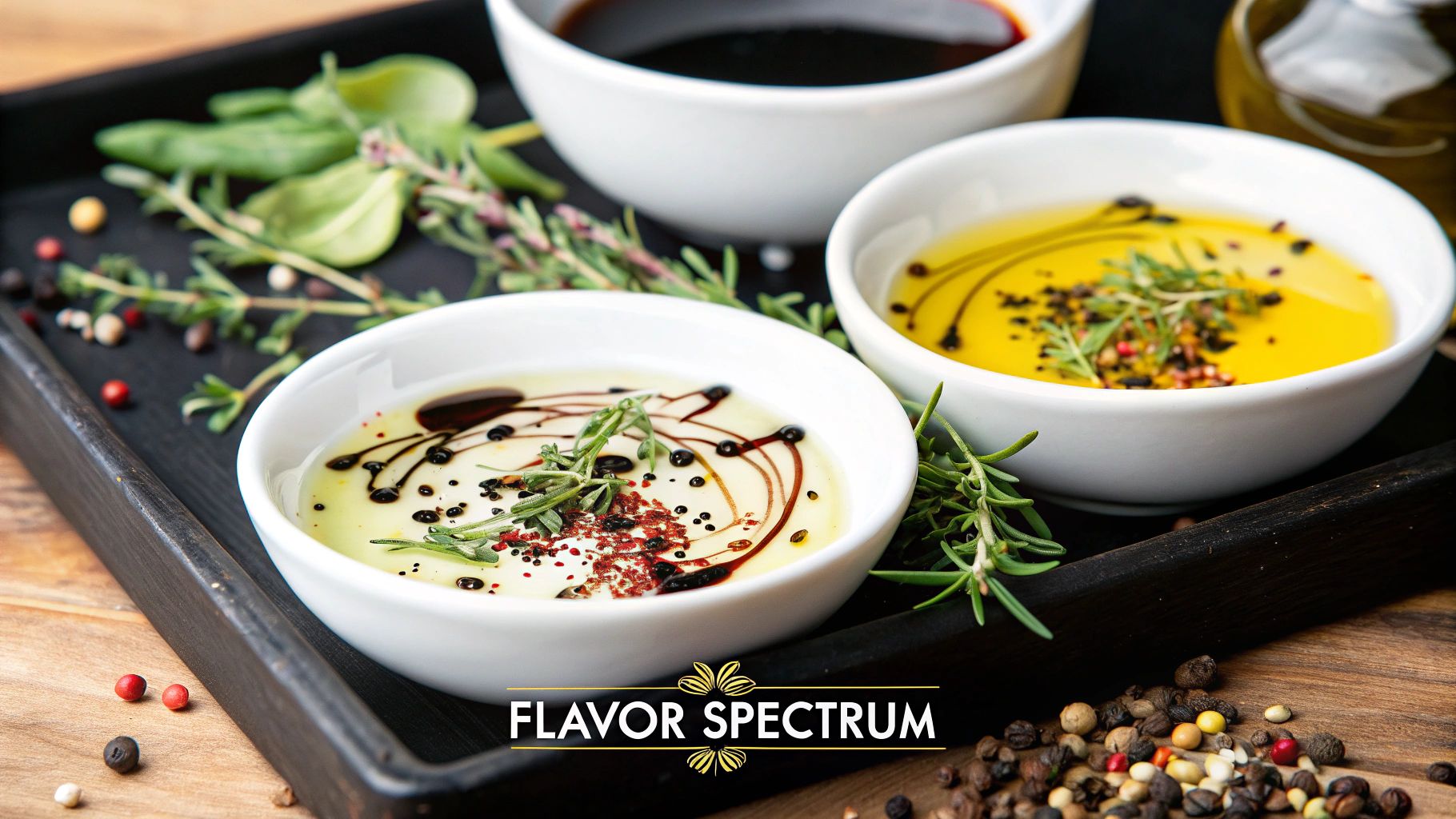
Let’s move past how these oils are made and get right to the part you can taste. To call olive oil "fruity" and canola oil "neutral" is a good start, but it barely scratches the surface. The real story is far more compelling.
A high-quality extra virgin olive oil is not just a single flavor; it's an entire experience for your palate. It carries the unique signature of its terroir—the specific soil, climate, and olive variety—imparting a fascinating spectrum of tastes.
Some olive oils are smooth, buttery, and mild, perfect for gently poaching fish or dressing a delicate salad. Others are bold and assertive, leaving a peppery kick at the back of your throat that sings when paired with grilled steak or bitter greens. That pungent finish, prized by connoisseurs, is actually a sign of healthy polyphenols. To dive deeper into this world, explore this guide on what does olive oil taste like and learn to identify these remarkable notes yourself.
The Strength of Silence
On the complete opposite end of the spectrum is canola oil, whose greatest strength lies in its carefully engineered neutrality. It is the ultimate invisible workhorse in the kitchen.
This intentional lack of flavor is precisely its selling point. Canola oil is designed to be a silent partner, providing moisture and transferring heat without ever stealing the spotlight from your other ingredients. It lets the deep chocolate in your brownies or the fragrant spices in your stir-fry take center stage.
Think of it this way: Extra virgin olive oil is an ingredient, chosen to add a specific character and depth to a dish. Canola oil is a tool, selected to perform a job without leaving a trace of its own personality behind.
This fundamental difference is what dictates their roles. You would never want a peppery olive oil to overpower a delicate vanilla cake, just as you wouldn’t use flavorless canola oil to finish a rustic bruschetta crying out for a final punch of flavor. Grasping this is the key to mastering when to reach for each bottle. One speaks with a bold voice; the other works in quiet efficiency.
Navigating the Health Claims
When you stand in the cooking oil aisle, you're not just choosing a fat—you're making a choice for your health. The labels can be a dizzying storm of buzzwords, but what truly separates olive oil from canola oil is what’s inside the bottle. Let's cut through the noise and get straight to the facts.
The conversation begins with their fatty acid profiles. A good extra virgin olive oil is brimming with monounsaturated fats, primarily oleic acid. This is the heart-healthy fat that has become synonymous with the benefits of the Mediterranean diet, making up about 73% of the oil's composition and celebrated for its positive impact on cholesterol.
Canola oil tells a different story. While also high in monounsaturated fats, it contains a much larger share of polyunsaturated fats, including both omega-3s and omega-6s. These are essential fatty acids, to be sure, but the debate often centers on the ratio between them.
To get a clearer picture, let's look at the numbers.
Nutritional Profile Per Tablespoon
Here is a direct comparison of the key nutritional data for one tablespoon of extra virgin olive oil and canola oil.
| Nutrient | Extra Virgin Olive Oil | Canola Oil |
|---|---|---|
| Calories | 120 | 124 |
| Total Fat | 14 g | 14 g |
| Saturated Fat | 2 g | 1 g |
| Monounsaturated Fat | 10 g | 8 g |
| Polyunsaturated Fat | 1.5 g | 4 g |
| Vitamin E | 1.9 mg (13% DV) | 2.4 mg (16% DV) |
| Vitamin K | 8.1 mcg (7% DV) | 10 mcg (8% DV) |
While calories and total fat are nearly identical, the type of fat is where the significant differences lie.
The Antioxidant Advantage of Olive Oil
Beyond the fats, the real game-changer for extra virgin olive oil is something canola oil simply cannot offer: polyphenols. These are powerful, naturally occurring antioxidants that do far more than just give the oil its signature peppery kick.
These compounds are lauded for their anti-inflammatory properties and their ability to shield our cells from damage. The presence of polyphenols like oleocanthal is a major reason why countless studies have linked extra virgin olive oil to a broad spectrum of health benefits. To truly understand why this matters, you can learn more about olive oil polyphenol content and its impact.
The crucial takeaway is this: While both oils provide "good" fats, only extra virgin olive oil delivers a meaningful dose of health-protective antioxidants. This is a direct result of it being an unrefined fruit juice versus a highly processed seed oil.
The Processing Debate
This brings us to a critical point: how they're made. Canola oil is almost always refined, bleached, and deodorized. This industrial process uses high heat and chemical solvents to create a neutral-tasting oil with a high smoke point. However, critics argue that this harsh process strips the oil of potential nutrients.
In stark contrast, extra virgin olive oil is simply cold-pressed from olives without any chemicals or high heat. This gentle method is what preserves its natural compounds, vibrant flavor, and powerful health profile. It's no surprise that guides to healthy eating, like these Mediterranean diet plans, consistently place unrefined olive oil front and center.
Ultimately, your choice depends on your priorities. Are you merely looking for a functional fat for high-heat cooking, or do you want an oil that actively contributes to your well-being with every pour? The difference isn't just in the fats; it's in the entire nutritional package that comes from two vastly different journeys from plant to pantry.
Choosing the Right Oil for Every Dish
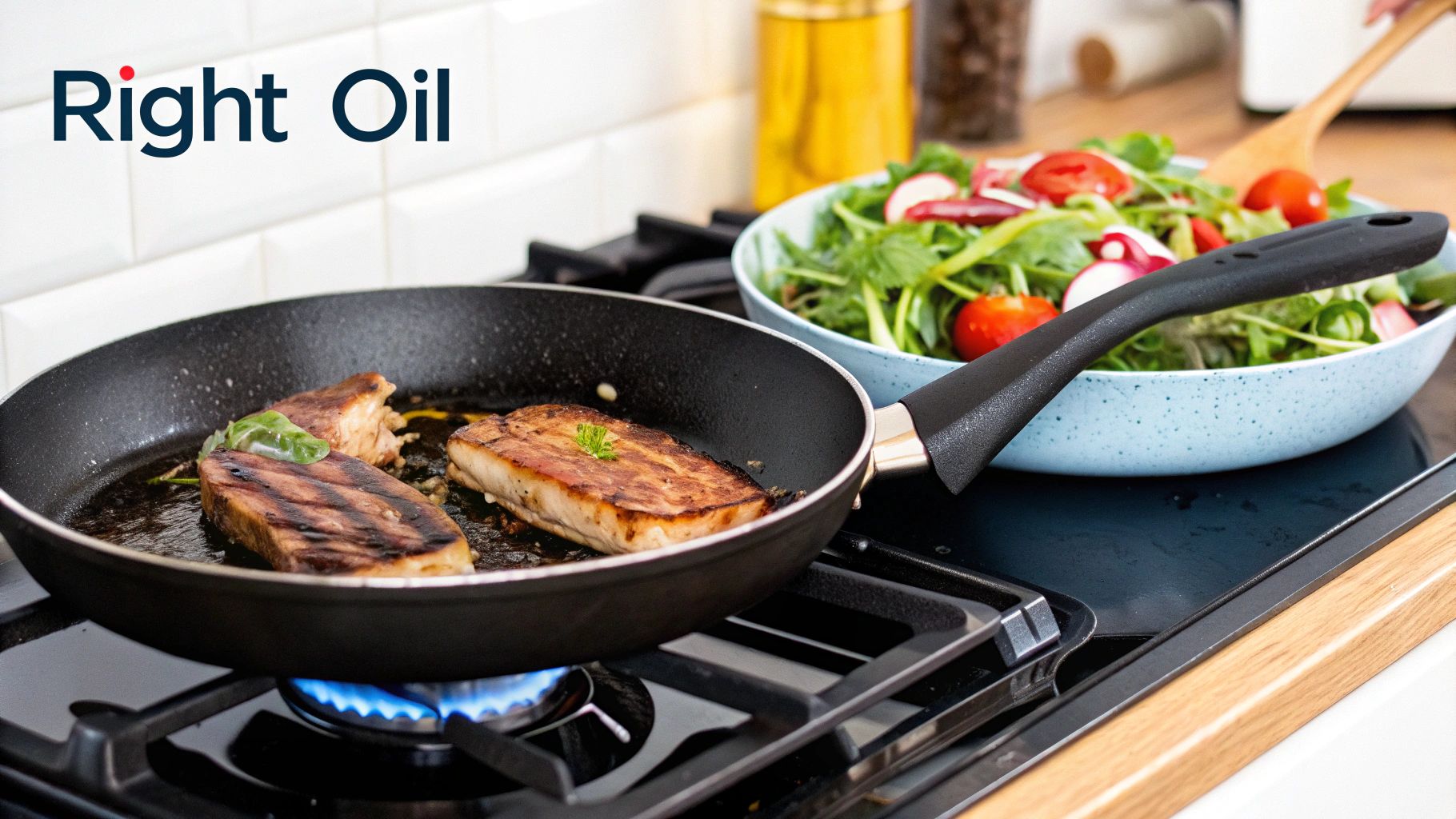
All the theory in the world means little when you’re standing before a hot stove. This is where you see the real difference between olive and canola oil in action. Knowing which bottle to grab can elevate a good meal into a truly great one.
It’s not about crowning one oil as the "best." It’s about understanding each oil's unique talent and matching it to the task at hand.
High-Heat Hero: Canola Oil
When the temperature soars, canola oil is the undisputed champion. With a high smoke point of around 400°F (204°C), it's the oil you want for any job that demands serious heat without filling your kitchen with smoke.
Picture searing a thick steak to get that perfect, deep brown crust. Or deep-frying chicken until it’s impossibly golden and crisp. For moments like these, canola oil’s neutral flavor and rock-solid stability are exactly what you need.
- Searing and Frying: Because it can handle the heat, your food cooks evenly without the oil breaking down and imparting a burnt, bitter taste.
- Stir-frying: It provides a clean canvas, letting the vibrant flavors of your vegetables, aromatics, and sauces shine through as the stars of the dish.
- Baking: When you're making a delicate cake or a batch of muffins, you want the vanilla or fruit to be the main event. Canola adds moisture and a tender texture without getting in the way.
Canola oil is the quiet professional in your kitchen. It's a functional fat that excels at high-heat cooking and delicate baking, doing its job without ever stealing the spotlight.
The Flavorful Finish: Olive Oil
If canola oil is the dependable workhorse, a good extra virgin olive oil is the artist. You wouldn’t use it for deep-frying; its genius lies in adding flavor, aroma, and a touch of richness, especially to a finished dish.
Its lower smoke point makes it better for low-to-medium heat, but its true magic is revealed when used raw. A final drizzle of a peppery, grassy olive oil over pasta, grilled fish, or a simple tomato salad adds a layer of complexity that canola can’t touch.
- Salad Dressings: A flavorful extra virgin olive oil is the very soul of a great vinaigrette. Its fruity or spicy notes are an ingredient, not just a fat.
- Drizzling and Finishing: A swirl over a bowl of soup, a piece of crusty bread, or roasted vegetables can elevate the entire dish from simple to sublime.
- Gentle Sautéing: It's perfect for slowly cooking garlic and onions to build a base of flavor, infusing your dish with its character from the very beginning.
Knowing the strengths of each is key. You can even discover some truly creative applications, like these 11 surprising uses for olive oil that go far beyond the kitchen. The world of olive oil is also incredibly diverse; learning about the different types of olive oil will help you pick the perfect bottle for any recipe. A well-stocked kitchen truly needs both, each ready to play its vital, specific role.
From Field to Table: How Olive and Canola Oil Reach Your Kitchen
To truly grasp the nature of the bottles on your shelf, you have to understand how they got there. The journey of olive and canola oil isn't just about farming—it's a story of powerful economic and cultural forces that shape what we pay, what’s available, and ultimately, how we eat.
Olive oil is all about its connection to the land. It’s a premium, culturally significant product forever linked to the Mediterranean way of life. The supply chain is often small and localized, capturing the unique character of a specific region, grove, or even a single harvest. It's treated more like a fine wine than just another cooking ingredient, and for good reason.
Canola oil, however, operates on an entirely different scale. It was developed to be a global commodity, and its entire supply chain is engineered around that goal.
A Tale of Two Trade Routes
The global trade dynamics for these oils couldn't be more different. Olive oil production and consumption are still heavily concentrated in the Mediterranean, a world that revolves around tradition and terroir. In stark contrast, the canola market is dominated by industrial giants like Canada, which stands as the world’s top exporter, shipping out over 3 million tons each year. You can dive deeper into these global production trends over at Olive Oil Times.
The price you pay and the bottles you see on the shelf come down to two opposing forces. Olive oil’s value is rooted in its cultural heritage and limited supply, while canola’s value is all about industrial scale and efficiency.
This fundamental difference explains everything. Olive oil's limited geography and artisanal production methods make it a celebrated, higher-priced specialty item. Meanwhile, canola’s widespread cultivation and lower production costs have made it an invisible but indispensable ingredient that quietly fuels the global food industry, from bakeries in North America to restaurants across Asia.
One oil tells the story of a place. The other fuels a planet.
Frequently Asked Questions
Even after comparing them side-by-side, a few practical questions always seem to pop up when you're standing in the kitchen. Let’s clear up that last bit of confusion so you can cook with confidence.
Can I Substitute Olive Oil for Canola Oil in Baking?
You can, but you must be strategic. Canola oil is a baker's go-to for a reason: it's completely neutral and won't interfere with your cake's delicate vanilla or rich chocolate flavor. A bold, peppery extra virgin olive oil, on the other hand, will absolutely make its presence known.
If you must make a swap, your best bet is to reach for a "light" or "mild" olive oil, as its flavor is far less assertive. For most pastries and cakes, canola's quiet neutrality is exactly what you want.
The rule of thumb for baking is simple: if the fat needs to be invisible, use canola. If the oil's flavor can complement the recipe (like in an olive oil cake), then a mild olive oil can work beautifully.
Which Oil Is Better for High-Heat Cooking Like Frying?
For high-heat cooking, canola oil is the undisputed champion. It has a reliably high smoke point of around 400°F (204°C), which means it stays stable and safe whether you're deep-frying chicken or putting a hard sear on a steak.
Most extra virgin olive oils have a lower smoke point, typically around 375°F (191°C). Push it past that point, and it begins to break down, which can create off-flavors and release compounds you don't want in your food.
Is Light Olive Oil Lower in Calories?
Not at all. This is one of the biggest misconceptions in the cooking oil aisle. All oils—whether it's "light" olive oil, extra virgin, or canola—have the same nutritional stats: about 120 calories and 14 grams of fat per tablespoon.
The term "light" on an olive oil bottle refers strictly to its lighter color and milder flavor profile. It's a more refined oil, not a diet product.
Here at Learn Olive Oil, we believe that truly understanding your ingredients is the key to making incredible food. We're here to give you the expert insights and tasting guides you need to choose amazing olive oils with total confidence.
Discover the world of premium olive oil and elevate your cooking today at https://learnoliveoil.com.
 Learn Olive Oil
Leave a comment