Let me ask you a question. What if I told you that one of the most stubborn rules of baking—the one that insists on butter, butter, and more butter—is the very thing holding you back from creating baked goods that are not just good, but truly unforgettable?
The short answer to our big question is a resounding yes, you can absolutely bake with olive oil. But please, don't mistake this for a simple swap. For many recipes, this isn't just an alternative to butter or other fats—it's a monumental upgrade. The result is often baked goods that are shockingly moist, bursting with a richer, more complex flavor, and blessed with a tender crumb that practically melts in your mouth.
The Surprising Truth About Baking with Olive Oil
For generations, we’ve had it drilled into our heads that solid fats like butter are the gold standard of baking. The sacred instruction to "cream butter and sugar" is practically baked into our collective culinary DNA, creating an almost unshakeable belief that liquid fats simply can't compete. But what if that time-honored rule is actually a myth? What if it's the one thing preventing you from baking at a level you never thought possible?
A Time-Honored Tradition of Superior Baking
Bakers across the Mediterranean have known the secret for centuries. Their rustic breads, delicate cakes, and even certain pastries owe their signature texture and soul-satisfying flavor to the region's liquid gold. By choosing heart-healthy monounsaturated fats over saturated ones, they create a superior crumb that is not only unbelievably moist but also stays fresh far longer than baked goods made with butter.
This is no longer a quaint, old-world technique; it’s a full-blown global phenomenon. As more people hunt for healthier, more interesting ingredients, olive oil's role in the food industry has exploded, now commanding 43.4% of a market that soared to USD 18.62 billion in 2024. This isn't just a trend. It's a powerful shift toward embracing traditional, high-quality ingredients in the modern kitchen. You can explore more about the olive oil market to see the astonishing scale of this movement.
The real magic of olive oil in baking lies in its power to enhance, not just replace. It conspires with your other ingredients to unlock richer, more profound flavors, turning a simple recipe into something truly memorable.
So, when you ask, "can olive oil be used for baking?" you're really tapping into a time-honored tradition that delivers spectacular results. This isn't about making a compromise; it’s about discovering a better way to bake. Now that you understand the "why," let's dive into the practical "how," so you can begin your own olive oil baking journey with unshakeable confidence.
How to Choose the Right Olive Oil for Your Recipe
Have you ever stood in the olive oil aisle and felt a wave of confusion wash over you? You're faced with a wall of bottles—different shapes, sizes, and cryptic labels all promising something special. When you're about to bake, which one do you actually need? Those words on the label—extra virgin, light, robust—aren't just marketing fluff. They are your roadmap to a perfect result.
Making the right choice is what separates a good bake from a truly great one. It’s the difference between an oil that quietly supports your other ingredients and one that crashes the party and steals the show. Think of olive oils as you would spices. Some are bold and punchy; others are soft and subtle. Nailing this choice is the key to unlocking extraordinary flavor and texture in your baked goods.
The Great Divide: Extra Virgin vs. Light Olive Oil
Let's cut through the confusion right now. The two main types you'll encounter are Extra Virgin Olive Oil (EVOO) and oils simply labeled "olive oil" or "light-tasting olive oil." They could not be more different, especially when it comes to your baking.
-
Extra Virgin Olive Oil (EVOO): This is the pure, unrefined, top-shelf stuff, brimming with personality. It's made by simply pressing olives, with no heat or chemicals, which means it fiercely holds onto its natural, vibrant flavors. Those flavors can range from fruity and buttery to peppery and grassy. You'll want to reach for EVOO when its taste is meant to be a noticeable, delicious star of the show.
-
Light-Tasting or Regular Olive Oil: This type has been refined, a process that strips away much of its color and flavor. What remains is a neutral, all-purpose oil. It’s a fantastic workhorse for more delicate recipes where you don’t want the oil to wrestle with vanilla, almond, or other subtle notes.
Let your recipe's flavor profile be your North Star. A dense, dark chocolate torte is practically begging for a bold, peppery EVOO to deepen its complexity. But a delicate angel food cake? It needs the quiet, background support of a light-tasting olive oil so its airy sweetness can truly sing.
Matching Intensity to Your Masterpiece
Once you've decided between EVOO and a lighter oil, you can fine-tune your choice by considering its intensity. Many producers now label their extra virgin oils as mild, medium, or robust. While this isn’t an official grade, it’s an incredibly helpful clue about what’s waiting for you inside the bottle.
This simple distinction gives you a tremendous amount of control. To really master it, it's worth taking a moment to learn more about how to choose olive oil for all your cooking needs, not just baking.
A mild EVOO is often smooth and buttery, making it a perfect partner for things like simple quick breads or a classic vanilla cake. A medium oil might have brighter, grassy notes that are absolutely stunning with citrus, like in a lemon-poppyseed loaf or an orange-polenta cake. And a robust EVOO? With its assertive, peppery kick, it's a secret weapon for savory bakes like focaccia and zucchini bread, and it adds an unbelievable depth to anything made with chocolate.
The Simple Math of Substituting Oil for Butter
Alright, this is where the real transformation begins. You've selected the perfect olive oil and you're ready to give your favorite recipe a serious upgrade. But before you start pouring, there's one critical piece of information you must know: swapping butter for oil is not a simple one-for-one exchange.
Get this part wrong, and you're on a fast track to a greasy, dense disaster.
It all boils down to simple science. Butter isn't pure fat. It's actually only about 80-85% fat; the rest is a combination of water and milk solids. Olive oil, on the other hand, is 100% pure fat. If you just swap them cup for cup, you're injecting far more fat into the recipe than it was ever designed to handle. The result? A heavy, oily bake that will leave you disappointed.
That’s why a small reduction is the key to success. The golden rule is to use about three-quarters of the amount of olive oil as you would butter.
The Foolproof Conversion Formula
You don't need to break out a calculator every time you want to bake. The math is quite simple, and after you've done it a few times, it will become second nature.
Just remember the simple 3:4 ratio: for every four parts of butter a recipe calls for, you will use three parts of olive oil.
This next visual gives you a handy cheat sheet to help you master these essential baking swaps.
This guide drives home the most critical point: reducing the amount of oil is essential for achieving that perfect balance and texture in your baked goods.
Butter to Olive Oil Conversion Chart
To make things even easier, I've put together this quick-reference chart. It's a practical guide for substituting olive oil for butter in your favorite baking recipes, eliminating all the guesswork.
| Butter Amount | Olive Oil Equivalent |
|---|---|
| 1 cup (227g) | ¾ cup (180ml) |
| ½ cup (113g) | ¼ cup + 2 tbsp (90ml) |
| ¼ cup (57g) | 3 tablespoons (45ml) |
| 1 tablespoon (14g) | 2 ¼ teaspoons (11.25ml) |
Keep this chart handy, and you'll be on your way to light, moist, and perfectly textured results every single time. It ensures you get all the benefits of baking with olive oil without bogging down your recipe.
Putting It Into Practice
Let’s walk through a real-world example. Imagine you’re whipping up a batch of fudgy brownies that calls for one cup of melted butter. The conversion is simple—just measure out ¾ cup of olive oil instead. Or perhaps you're making muffins that require ½ cup of butter? You’d simply use ¼ cup plus two tablespoons of a mild olive oil.
This slight reduction in fat might not seem like a big deal, but it also means you’re cutting back on calories. If you're curious about the numbers, you can explore a detailed breakdown of olive oil calories per tablespoon to see the nutritional difference for yourself.
The goal isn’t just to replace butter, but to create a superior result. By respecting the simple math of substitution, you empower the olive oil to do its best work—adding moisture and flavor without weighing your creation down.
Getting this adjustment right is, without a doubt, the most important step in adapting your recipes. It’s a small change that delivers a massive payoff in the final product.
How Olive Oil Unlocks Deeper Flavors in Baked Goods
Now we arrive at the truly exciting part. Moving beyond a simple swap, using olive oil in baking is an act of flavor alchemy. It’s about the incredible, complex reaction that happens when the unique character of a good olive oil meets the other ingredients in your mixing bowl.
Think of it this way: butter provides a familiar, creamy background note. But a quality olive oil brings its own distinct voice to the performance. Its subtle fruity, grassy, or even peppery notes don't just add a new flavor; they actually amplify the flavors of everything around them. This is how you elevate your baking from pretty good to truly unforgettable.
The Art of Flavor Pairing
The real magic happens when you pair the right oil with the right ingredients. For instance, a bold, peppery Extra Virgin Olive Oil has a natural bitterness that can intensify the deep notes of dark chocolate in a torte or a batch of brownies. It beautifully cuts through the sweetness, adding a sophisticated depth that butter simply cannot replicate.
On the other hand, a milder, more buttery olive oil can make a simple vanilla or almond cake sing. It provides all the necessary moisture without overpowering the delicate aromatics, letting them shine through with startling clarity. The oil acts like a conductor, making every ingredient in the orchestra sound more like itself.
When you choose an olive oil with a specific flavor profile, you're not just adding fat for texture. You are strategically layering in complexity, turning a simple recipe into a multi-dimensional experience for the senses.
Enhancing Aromatics and Spices
This flavor-boosting effect extends beyond just the main ingredients. Olive oil possesses a remarkable talent for drawing out and heightening the aromatic compounds in everything else in your recipe.
- Citrus Zest: The bright, volatile oils in lemon, lime, or orange zest explode when combined with olive oil. Your lemon poppy seed loaf will have a much brighter, sunnier citrus punch.
- Warm Spices: Spices like cinnamon, nutmeg, and cardamom truly bloom in the presence of olive oil. Their warm, earthy notes become rounder and more fragrant, infusing every single bite with a richer aroma.
- Herbs and Nuts: In savory bakes like focaccia or zucchini bread, a robust EVOO can elevate the fragrance of herbs like rosemary and thyme, while also toasting and enriching the flavor of any nuts you include.
To master these nuances, you must build your sensory skills. A great place to start is by learning the fundamentals of how to taste olive oil. This knowledge gives you the power to move beyond just following a recipe and start creating your own signature bakes with intention and artistry.
When to Use Olive Oil and When Butter Is Better
While olive oil can be a game-changer in the baking world, a seasoned baker knows it’s not a magic bullet for every single recipe. The real secret to baking intuition is understanding the unique strengths of both olive oil and butter. This isn't about picking a side; it's about knowing which tool to pull from your toolbox for the job at hand.
So, when should you reach for the olive oil? It truly shines in recipes where a moist, tender crumb is the ultimate goal. Think of most cakes, muffins, and quick breads. Because it’s a liquid at room temperature, olive oil coats the flour particles more efficiently than a solid fat like butter, which helps prevent too much gluten from forming. The result is a wonderfully soft, delicate texture.
However, butter remains the undisputed champion for recipes that depend on the specific structure only a solid fat can provide.
Where Butter’s Structure Is King
The most critical technique to understand here is the creaming method. This is the classic first step in many recipes where you beat softened butter and sugar together until the mixture is light and fluffy. This isn't just about mixing; you're physically whipping thousands of tiny air pockets into the fat. These little pockets are what give classic desserts their light, airy structure.
You simply cannot achieve the same result without butter for recipes like:
- Pound Cakes and Classic Butter Cakes: That fine, even crumb is a direct result of creaming.
- Shortbread Cookies: Their signature flaky, melt-in-your-mouth texture comes from cutting cold, solid butter into the flour.
- Flaky Pastries and Pie Crusts: Those beautiful, delicate layers are formed when pockets of solid butter create steam as they melt in the oven, lifting the dough.
Trying to use olive oil in these recipes is a fast track to disappointment. A pound cake would be dense and heavy, and shortbread would turn into a greasy, crumbly mess. The entire structure collapses without the solid fat to hold it all together.
Recipes Practically Begging for Olive Oil
But when we flip the script, some recipes feel as if they were invented for olive oil. In these cases, it’s not just a substitute—it's a genuine upgrade. Here, the focus is on achieving incredible moisture, adding nuanced flavor, and getting a tender bite. For a broader comparison of how these fats work in the kitchen, our guide on olive oil versus butter in cooking goes into more detail.
Olive oil is the star player in:
- Muffins and Quick Breads: Think banana bread or zucchini loaf. Olive oil makes them incredibly moist and actually helps them stay fresh for longer.
- Focaccia and Rustic Breads: It’s essential for that classic chewy crumb and rich, savory flavor.
- Most Brownies and Chocolate Cakes: A robust olive oil can beautifully complement and deepen the rich notes of cocoa.
- Yogurt or Polenta Cakes: These bakes are already designed to be tender, and olive oil just enhances that quality perfectly.
Knowing when to use each is the hallmark of a baker who truly understands their ingredients. It’s about knowing when you need butter to build an airy structure and when you need olive oil to deliver unbeatable moisture.
Why the World Is Falling in Love with Olive Oil Baking
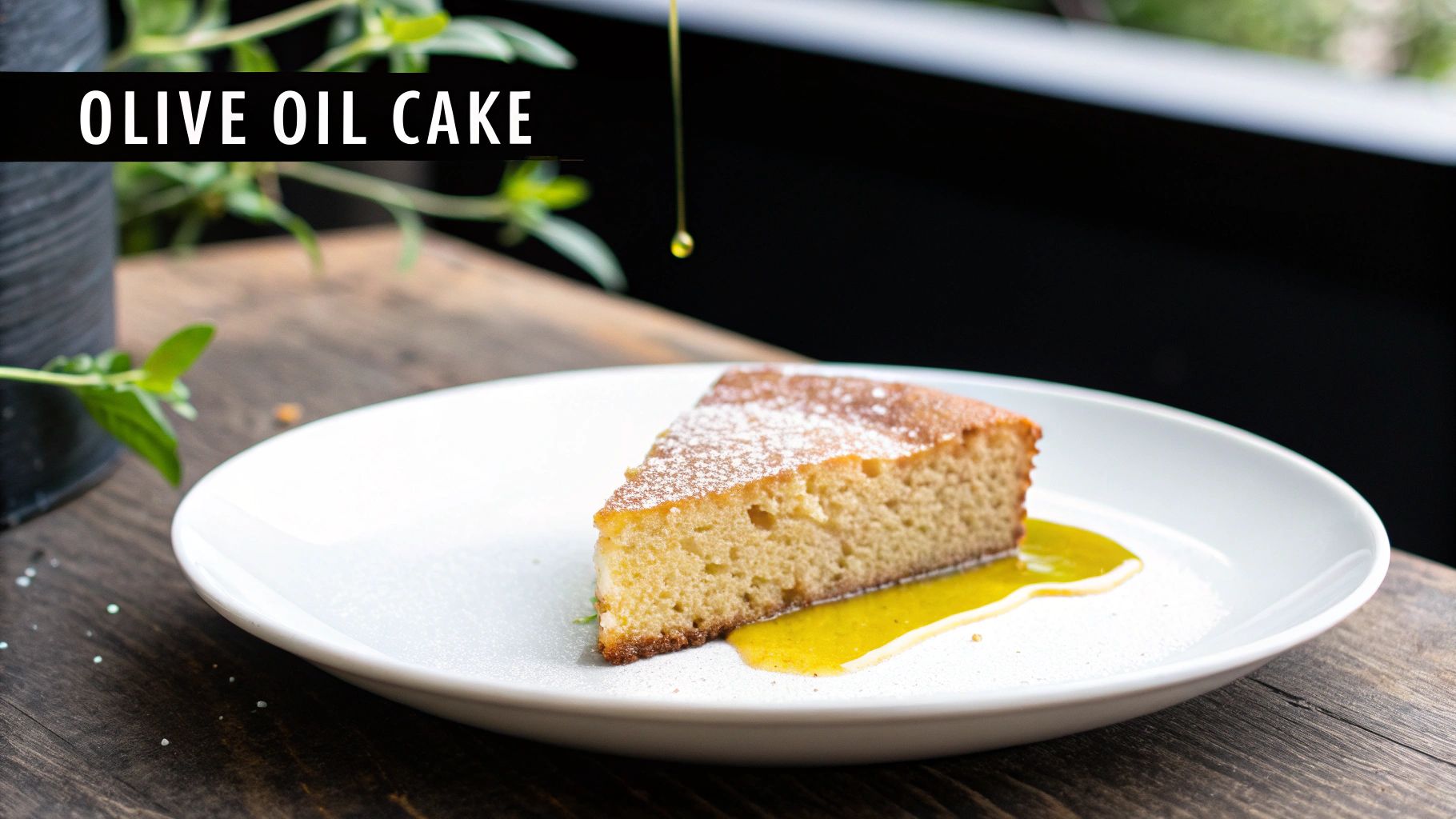
The old, outdated idea that olive oil belongs only in savory dishes is quickly becoming a relic of the past. What was once a cherished Mediterranean secret has exploded into a global movement, rewriting the rules of modern baking. This is not just another fleeting trend; it’s a genuine shift in how we think about flavor, health, and tradition in the kitchen.
This culinary wave is washing over kitchens far beyond Italy and Greece. You'll find innovative patisseries in Tokyo crafting delicate, sought-after cakes with nuanced olive oils. In Mumbai, artisan bakeries are infusing traditional breads with its fruity notes, creating products that fly off the shelves. It’s a beautiful example of timeless tradition meeting modern curiosity, proving that great taste truly knows no borders.
A Star Ingredient in the Spotlight
Even in the United States, where butter has long reigned supreme, olive oil is making a dramatic entrance into the baking scene. Pushed into the spotlight by health-conscious food bloggers and celebrated chefs, it’s gone from a simple pantry staple to a star ingredient. This shift is so significant that it's changing what we see on our grocery store shelves.
The question of can olive oil be used for baking is being answered with a resounding "yes" across the globe. In Asian markets like China and India, imports have surged. In Japan, olive oil-infused cakes have seen sales climb by an impressive 12–15% year-on-year. And right here in the U.S., culinary surveys show that its use in baking jumped by 22% between 2015 and 2023. Supermarkets, which handle 36.8% of distribution, are taking notice and dedicating more shelf space to baking-specific varieties. You can even explore the full market analysis on Grand View Research to see the numbers for yourself.
This isn't simply about swapping one fat for another. It's about a collective realization that you can achieve a superior result—a moister crumb, a richer flavor, and a better nutritional profile—all from one timeless ingredient.
The story of olive oil in baking is really the story of a classic ingredient finding a brilliant new purpose. It’s a testament to how a simple, honest product can capture the imagination of bakers everywhere, proving that some secrets are just too good to keep.
Your Olive Oil Baking Questions Answered
Even with a solid game plan, trying something new in the kitchen can feel a bit nerve-wracking. It’s natural for questions to pop up, and you need clear answers to bake with confidence. Let’s tackle some of the most common uncertainties people have when they start using olive oil in their baking.
The biggest question I hear is about the smoke point. People worry that a hot oven will be too much for olive oil to handle. But here's the reality: most baking happens between 325°F and 375°F (160-190°C). That temperature range is comfortably below the smoke point of good quality extra virgin olive oil. For a deeper dive into the science, check out our guide on the olive oil smoke point.
Can I Use Olive Oil in a Stand Mixer?
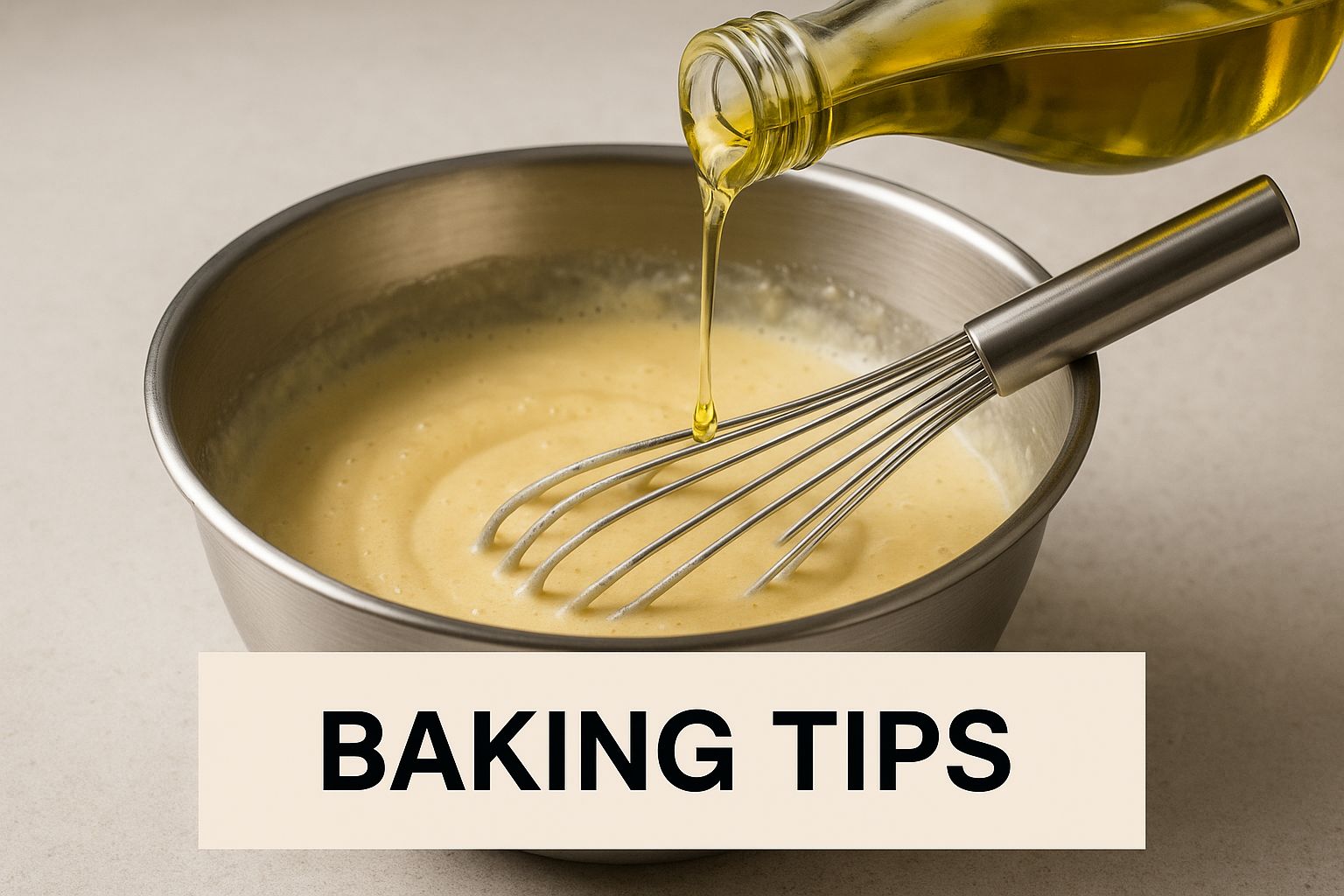
You absolutely can! In fact, it's often much simpler than working with butter. Since olive oil is already a liquid, you can just stream it right into your wet ingredients—no softening or creaming required. This really streamlines things for recipes like quick breads or muffins, saving you time and helping the fat mix in perfectly.
The trick is to pour the oil in a slow, steady stream while the mixer is on low. This helps create a stable emulsion, which is just a fancy way of saying everything gets mixed together properly. The payoff is a consistent batter and a wonderfully tender crumb in your finished bake.
What Happens If My Baked Goods Taste Too Oily?
If you bite into your cake or muffin and it feels greasy or tastes too much like oil, the problem almost always comes down to the substitution math. You must remember that olive oil is 100% pure fat, while butter also contains water and milk solids.
An easy fix is to simply reduce the amount of oil by about 25% compared to the butter called for in the recipe. This small adjustment usually solves the problem right away, giving you that moist, perfect texture without any unwanted heaviness.
If you’re excited to level up your baking and really master new techniques, taking one of the best online cooking classes can be a fantastic way to build your skills and confidence.
Ready to put this knowledge to the test? At Learn Olive Oil, we provide the expert insights and tasting guides you need to choose the perfect bottle for your next baking adventure.
Discover the World of Premium Olive Oil at learnoliveoil.com
 Learn Olive Oil
Leave a comment