Sautéing with olive oil is a cornerstone of any great kitchen, but a stunning secret separates the novice from the master: choosing the right oil for the job. For those whisper-soft, flavor-driven dishes, a magnificent extra virgin olive oil over low-to-medium heat is your trusted confidant. But when you need to unleash a torrent of heat for a magnificent sear, a refined olive oil becomes your secret weapon. This one decision—made before a single drop hits the pan—can elevate a perfectly fine meal into a truly unforgettable one.
The Shocking Truth About Olive Oil and High Heat
Let’s tear down a stubborn kitchen myth right now: the fallacy that you can’t cook with olive oil over a roaring flame. The truth, as is often the case, is far more delicious. The real art of sautéing lies in a deep understanding of the intimate relationship between your oil and your skillet. We must move past the cloud of confusion surrounding the "smoke point" and discover why a superior extra virgin olive oil is astonishingly more resilient than you've been led to believe.
After all, there’s an ocean of difference between gently sweating onions to build a soulful flavor foundation and hitting a thick-cut steak with volcanic heat to forge that perfect, crisp crust. It's simply about choosing the right tool for the task at hand.
Which Olive Oil Will You Trust in Your Pan?
Here is your field guide to making the right choice, every time.
Think of this simple chart as your trusted advisor, your cheat sheet for instantly selecting the perfect oil based on the dish you envision, the flavor you crave, and the heat you must command.
| Olive Oil Type | Best For | Flavor Profile | Smoke Point Range |
|---|---|---|---|
| Extra Virgin | Sautéing, pan-frying, dressings, finishing | Robust, peppery, grassy | 350-410°F (177-210°C) |
| Refined/Light | Searing, deep-frying, high-heat cooking | Neutral, mild | 425-465°F (218-240°C) |
Knowing when the bold, peppery spirit of an EVOO will make your dish sing—versus when the quiet strength of a neutral, refined oil is the smarter, safer choice—is a genuine game-changer. This is the secret knowledge that separates cooks who merely follow recipes from those who truly understand the soul of their ingredients.
CRITICAL INSIGHT: The smoke point isn’t a single, unyielding number—it's a flexible range. High-quality extra virgin olive oils are brimming with antioxidants, which grant them superior stability and the power to handle higher temperatures than you'd dare imagine. That stability is your secret weapon for a flavorful, perfectly executed sauté.
This visual tells the story in a single glance.
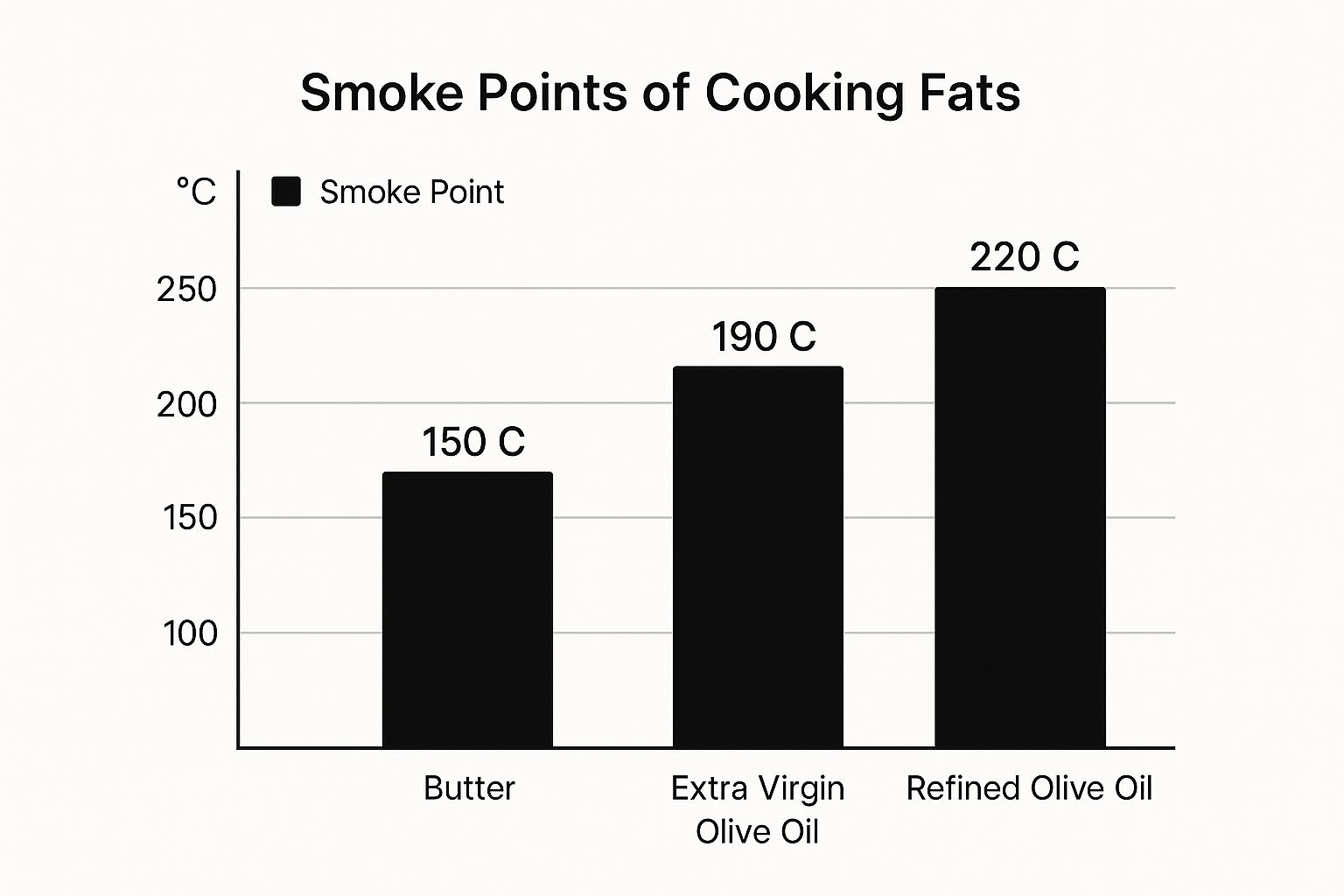
As you can see, refined olive oil boasts a much higher heat tolerance, making it the undisputed champion for high-temperature cooking. Meanwhile, EVOO is perfectly, beautifully suited for the vast majority of your daily sautéing needs.
Unlocking the Relationship Between Heat and Flavor
This breathtaking versatility is why olive oil is revered in kitchens across the globe. Its steadfast stability and universally adored flavor helped rocket the global olive oil market to an astonishing USD 22.3 billion in 2022. It is a stunning fact that refined olive oil held the largest market share at 31.1%, proving just how much cooks everywhere value a reliable ally for higher-heat cooking.
Grasping the heat tolerance of different fats is your first step toward achieving mastery. You can always consult a comprehensive cooking oil smoke point chart to guarantee you're operating in that perfect sweet spot.
For a truly eye-opening deep dive, you can learn more about the complexities of the olive oil smoke point and how it profoundly impacts your cooking. Nailing this piece of kitchen science is the first real step toward achieving flawless results, every single time.
How to Command Your Pan for the Perfect Sauté
A masterful sauté is never a happy accident. It is a deliberate, graceful dance between heat, timing, and technique, and it begins with the vessel you choose. Your skillet is the unsung hero, the secret weapon that defines how heat is captured, stored, and transferred to your food.
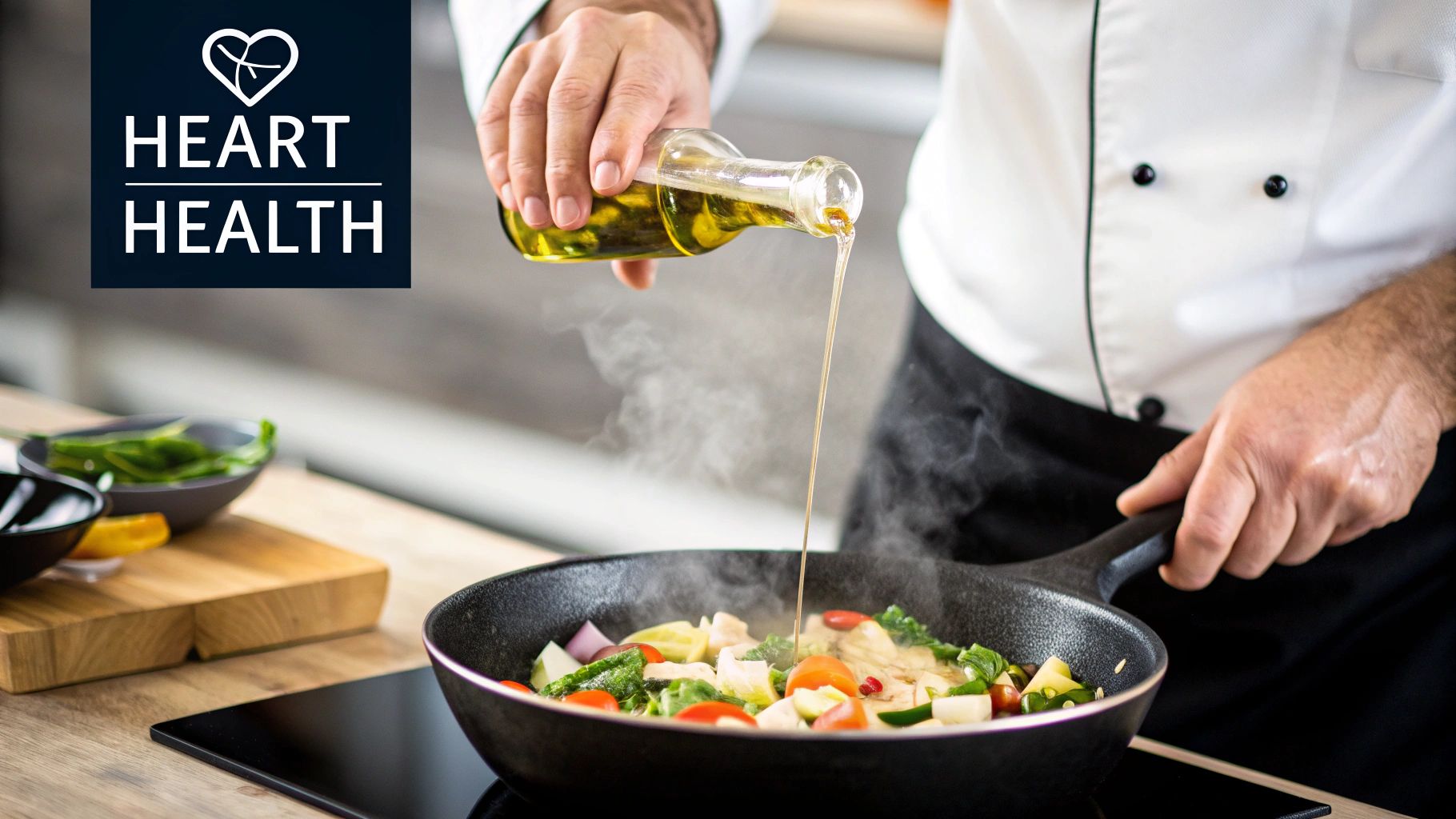
Picture it this way: a thin stainless steel pan is like a nimble sports car—it responds instantly, almost telepathically, to your commands. A heavy cast iron skillet, however, is a freight train. It takes a moment to build momentum, but once it’s hot, it thunders forward with a steady, relentless heat that is simply unbeatable for creating a profound sear. Understanding this difference is the first step to seizing total control over the outcome of your dish.
Sometimes, achieving that perfect sauté is a simple matter of proper pan care. Learning how to season cast iron pans creates a naturally non-stick surface that is worth its weight in gold. It's a simple ritual that makes a world of difference, ensuring your food glides effortlessly instead of sticking and tearing.
Can You Read the Shimmer?
Once you've chosen your pan, the next skill to master is reading the secret language of the oil itself. The most reliable signal your pan is ready for action is what I call the "shimmer test." Preheat your dry pan over medium heat for a minute or two, then pour in your olive oil.
Now, watch closely. As the oil heats, it will magically thin out and begin to ripple across the surface, creating a distinct, elegant shimmering effect. That is your cue. That is the precise moment to add your ingredients to achieve a glorious, energetic sizzle—not a sad, steamy fizzle. This visual cue is infinitely more reliable than guesswork or flicking water into the pan.
A hot pan and shimmering oil are the twin pillars of a successful sauté. This powerful combination ensures that food begins cooking the instant it makes contact, forging a delicious crust and preventing it from absorbing excess oil.
The Unbreakable Rhythm of the Sauté
There is a rhythm to a great sauté, a specific sequence of operations designed to build breathtaking layers of flavor. There's a powerful reason nearly every great recipe instructs you to add onions before garlic.
- Aromatics Lead the Charge: Begin with your sturdier aromatics like onions, carrots, and celery. They require more time in the pan to soften and release their natural sugars, which creates the very soul of your dish.
- Delicate Flavors Follow: Minced garlic, on the other hand, can burn in less than a minute, turning bitter and poisoning your entire creation. Introduce it near the end of the cooking process, giving it just enough time to become gloriously fragrant.
- Give Your Food Room to Breathe: Overcrowding the pan is the single greatest sin in sautéing. It’s the fast track to a culinary disaster of soggy, steamed vegetables. When the pan is too full, food releases moisture, the temperature plummets, and that beautiful browning you crave becomes impossible. Cook in batches if you must—the final result is absolutely worth the extra minute.
This isn’t just a list of steps; it's a proven method for controlling flavor and texture from the moment you ignite the stove. For any cook looking to build unshakable confidence, truly understanding how to cook with olive oil is a spectacular place to start. It is this command over the pan that transforms a simple meal into something truly special.
Forging Unforgettable Flavor in Your Pan
Once you master the sizzle and timing, sautéing ceases to be just a cooking step and becomes a profound act of flavor creation. This is where the real magic happens—you move beyond simply cooking food to building layers of complexity that make a dish truly sing.
This astonishing ability to elevate a simple technique is why olive oil is so fundamental to cuisines across the globe. Its starring role in sautéing drove consumption from around 1.8 million tons in the early 1990s to a staggering 3 million tons by 2016. That's a 67% increase in just a quarter-century. This boom reveals just how much home cooks and professional chefs rely on olive oil to build flavor from the ground up, a trend you can explore further in this piece on global olive oil consumption.
The Secret Art of Blooming Spices
One of the most powerful yet breathtakingly simple techniques I ever learned is "blooming" spices. Instead of carelessly tossing dried herbs and spices into a dish at the end, you first awaken them in warm, shimmering olive oil.
Think of whole spices like cumin seeds, coriander, or fennel as tiny, dormant treasure chests of flavor. By gently heating them in the oil for a minute before adding anything else, you unlock their precious essential oils. Your kitchen will suddenly erupt with an incredible aroma—that is your proof that the flavor has been released and infused directly into the oil, which will then coat every single ingredient you add next.
Unleashing Flavor with the Magic of Deglazing
Have you ever noticed those browned, almost-burnt bits stuck to the bottom of your pan after searing meat or sautéing vegetables? That is not a mistake to be scrubbed away. That is fond, and it is pure, concentrated flavor gold.
Leaving it behind is a culinary crime. The secret to capturing this treasure is a classic technique called deglazing.
Deglazing is the simple act of adding a splash of liquid—like wine, stock, or even water—to a hot pan to release the fond. As the liquid hits the hot surface and explodes into bubbles, use a wooden spoon or spatula to scrape the bottom of the pan, lifting all those flavorful jewels and incorporating them into a rich, instant pan sauce.
This single move often separates a good home-cooked meal from a truly great one. You are creating a sauce with incredible depth in a matter of seconds, using flavor you literally just forged from fire and steel.
Building a Symphony of Flavor, Layer by Layer
Truly exceptional dishes are built in layers, and your sauté pan is the perfect stage for this performance. Each step adds a new instrument to the orchestra.
Here’s how a typical flavor symphony plays out in my kitchen:
- Layer One – The Foundation: I always begin by searing the protein—chicken thighs, sausage, or even firm tofu—in olive oil. This not only cooks it but also renders fat and creates that priceless fond. Once browned, I remove the protein and set it aside.
- Layer Two – The Aromatics: Into that very same pan, now shimmering with flavorful drippings, I'll sauté the aromatics. The onions, garlic, or celery will greedily soak up all that residual flavor from the protein, becoming infinitely more delicious than if they were cooked in a sterile pan.
- Layer Three – The Finale: Finally, I return the protein to the pan, add the other ingredients, and perhaps deglaze with a little something to bring it all together into a cohesive, magnificent sauce.
This method ensures flavor is built upon flavor, creating a dish far more complex and satisfying than the sum of its parts. For those looking to take this even further, experimenting with flavored olive oil recipes can add another thrilling dimension, infusing unique tastes from the very first drop.
How to Sidestep the Most Common Sautéing Disasters
We’ve all been there. You envisioned a stunning, golden-brown sear, but instead, you're staring down at a sad pan of limp, gray vegetables. It's a deeply frustrating moment, but thankfully, the most common sautéing pitfalls are surprisingly easy to correct.
The biggest culprit is almost always overcrowding the pan. I understand the temptation—you want to toss everything in at once and get dinner on the table faster. But this is the surest way to ruin a good sauté. When food is piled high, it traps moisture and effectively steams itself instead of searing. The pan's temperature plummets, and you can kiss that crispy, delicious texture goodbye.
The solution demands a little patience, but the reward is immense. Give your ingredients some elbow room. If you have to, work in batches. It is the only way to ensure every piece of onion or slice of mushroom makes direct, intimate contact with that hot, oiled surface to achieve that gorgeous color and profound flavor of the Maillard reaction.
The Treachery of Timing and Temperature
Another classic misstep is incinerating your garlic. Have you ever thrown minced garlic into a screaming hot pan, only to watch it turn black and bitter in the blink of an eye? That's a classic timing error. Garlic has very little water and a lot of sugar, so it burns with astonishing speed—far faster than an onion.
To nail it every time, simply get your sequence right:
- Hard vegetables go first. Onions, carrots, bell peppers—anything firm needs a head start. Give them a few minutes to soften and begin releasing their soul into the pan.
- Garlic and spices go last. Add your minced garlic and any ground spices in the final 30-60 seconds of cooking. That's just enough time to awaken them and make them fragrant without any risk of scorching.
Following this sacred order helps build layers of flavor instead of creating a bitter, burnt catastrophe.
A catastrophic mistake I see people make is starting with a cold pan. Tossing oil and food into a skillet before turning on the heat is a surefire recipe for greasy, oil-logged results. Always preheat your pan first. Then add the oil. Once you see it shimmer, you are ready to add your food for a clean, explosive sear.
Finally, using the wrong oil can sabotage all your careful preparation. While a quality extra virgin olive oil is perfectly fine for most everyday sautéing, you risk destroying its delicate flavors at super-high temperatures. There are many dangerous misconceptions out there, but you can separate fact from fiction by learning about the most common olive oil myths.
For a truly aggressive, high-heat sear, reaching for a more refined olive oil is a much smarter move. Think of it as your culinary insurance policy—knowing which oil to grab and when will make you a far more confident and successful cook.
A Global Masterclass in Sautéing with Olive Oil
Sautéing with olive oil is a universal language in the kitchen, yet every culture speaks it with its own delicious accent. The type of oil, the ingredients it embraces in the pan, and the final dish all tell a rich story about a place and its people. To truly grasp what olive oil can do, we must look beyond our own stovetops and witness its magic around the world.
Nowhere is this tradition more deeply rooted than in the Mediterranean, where olive oil is not merely a cooking fat—it is the absolute lifeblood of the cuisine. While Europe still leads the world in consumption, it is a stunning fact that the United States has become the largest single importer, consuming about 381,000 tonnes each year. Much of that goes directly into pans for sautéing, a clear signal that these brilliant Mediterranean techniques have truly conquered the world. If you're curious about the numbers, you can explore more details on worldwide olive oil consumption patterns.
Spain: The Dance of the Bold Sear
Picture a buzzing tapas bar in Andalusia. You can almost smell it, can't you? That unmistakable, explosive aroma of garlic and shrimp hitting hot olive oil. That is the scent of Gambas al Ajillo, a classic Spanish dish that perfectly captures their entire philosophy of sautéing.
Spanish cooks are fearless. They often reach for a bold, fruity, and peppery olive oil, like a Picual or Hojiblanca. They get the pan blisteringly hot, let the oil shimmer, and then unleash the sliced garlic and sweet shrimp. That robust oil is crucial—it stands up to the powerful flavors and infuses the shrimp with its own fiery character in just a few heart-pounding minutes.
Italy: The Art of the Gentle Sizzle
Let's journey to an Italian kitchen, perhaps somewhere in Liguria, where things move at a more languid pace. Imagine a cook preparing the base for a delicate pasta sauce with fresh zucchini. The goal here isn’t a violent, fast sear but a gentle coaxing of flavor.
For this, they will choose a milder, more buttery olive oil, perhaps one made from local Taggiasca olives. The oil is heated gently before finely diced zucchini is added to soften slowly, releasing its natural sweetness without taking on much color. Here, the olive oil plays a supporting role, a subtle background note that enhances the vegetable rather than stealing the spotlight.
Olive oil in a global kitchen is never a one-size-fits-all ingredient. It is a profound strategic choice. The same technique—sautéing—produces dramatically different results based entirely on the character of the oil selected, from a fiery Spanish sear to a mellow Italian persuasion.
Greece: The Unapologetic Grassy Foundation
Our final stop is Greece, where the olive oil is often unapologetically robust, green, and grassy. A perfect example is a simple dish of sautéed wild greens, known as horta. A generous river of a strong, herbaceous Koroneiki olive oil flows into the pan.
The greens are wilted down in this intensely flavorful oil, which essentially becomes the backbone of the entire dish. A squeeze of lemon at the end provides a flash of acidic brightness, but the distinct, peppery taste of the oil remains front and center. It is far more than a cooking medium; it is a primary seasoning, every bit as essential as salt itself.
Your Burning Questions on Sautéing with Olive Oil Answered
Let's finally put to rest some of the most common questions—and myths—about sautéing with olive oil. Here are the straight, unvarnished answers I've learned from years at the stove, so you can cook with absolute confidence.
Can I Really Sauté with Extra Virgin Olive Oil?
Yes, you absolutely can, but you must know when to unleash its power. A high-quality EVOO has a smoke point somewhere between 374-405°F (190-207°C). This is dramatically higher than most people believe and well above the heat required for most everyday sautéing.
It is magnificent for gently cooking vegetables, chicken cutlets, or fish where you desperately want that fruity, peppery flavor to perfume the entire dish.
But if you are aiming for a brutal, high-heat sear on a steak, a more refined, regular olive oil is the smarter (and more economical) choice. You're not paying a premium for those delicate flavor compounds only to watch them burn away into nothingness at scorching temperatures.
How Do I Know When the Olive Oil Is Hot Enough?
This is where so many home cooks stumble, but there's an easy visual secret. Forget flicking water in the pan or guessing. Simply use the "shimmer test."
Add your oil to the preheated pan and watch it with an eagle eye. As it heats, you'll witness its viscosity change. It will thin out and begin to ripple, creating a beautiful, hypnotic shimmer across the pan's surface.
That is your signal. The instant you see that shimmer, your pan is perfectly hot and ready for your ingredients. If you see lazy wisps of smoke, you’re on the edge. If you see thick, angry smoke, you've gone too far—yank the pan off the heat immediately and let it cool before you even think about adding your food.
This simple observation is the key to achieving that glorious sizzle instead of a pathetic, steamy fizzle.
What Is the Single Biggest Mistake People Make?
Hands down, without a shadow of a doubt, the single biggest mistake is overcrowding the pan. It is the cardinal sin of sautéing. When you pile too much food in at once, two disastrous things happen: the pan's temperature drops like a stone, and the food begins to release a flood of moisture.
Instead of searing, your food ends up steaming in its own liquid. The result? Gray, soggy chicken or limp, pale vegetables instead of a magnificent, golden-brown crust.
The fix is simple: cook in batches. It might take a few extra minutes, but the payoff is monumental. Ensure every single piece of food has the space to breathe and make direct, glorious contact with that hot pan.
How Should I Store My Olive Oil?
Think of your olive oil as a precious, fragile ingredient. It has three mortal enemies: heat, light, and air. To protect its fresh, vibrant flavor, you must shield it from all three.
- Find a cool, dark sanctuary: A pantry or a cupboard far from the heat of the oven or a sunny window is perfect. Never store it right next to the stove!
- Seal it tight: Oxygen is the enemy of freshness. Always screw the cap back on securely the moment you are done using it.
- Use it, don't save it: Olive oil is not like wine; it does not improve with age. Once a bottle is opened, do your best to use it within 3-6 months to experience its peak flavor.
Buying your oil in a dark glass bottle or an opaque tin is a brilliant start. Of course, knowing how to buy olive oil in the first place ensures you're starting with a product that is actually worth protecting. Proper storage simply guarantees that magnificent taste lasts.
At Learn Olive Oil, we believe that understanding the nuances of this liquid gold can transform your cooking. Explore our guides to choose, taste, and cook with the world's best olive oils. Start your journey today at https://learnoliveoil.com.

 Learn Olive Oil
Leave a comment