What’s the real difference between all those bottles of olive oil? It all comes down to a single, crucial secret: how the oil is made and, as a result, how pure it is.
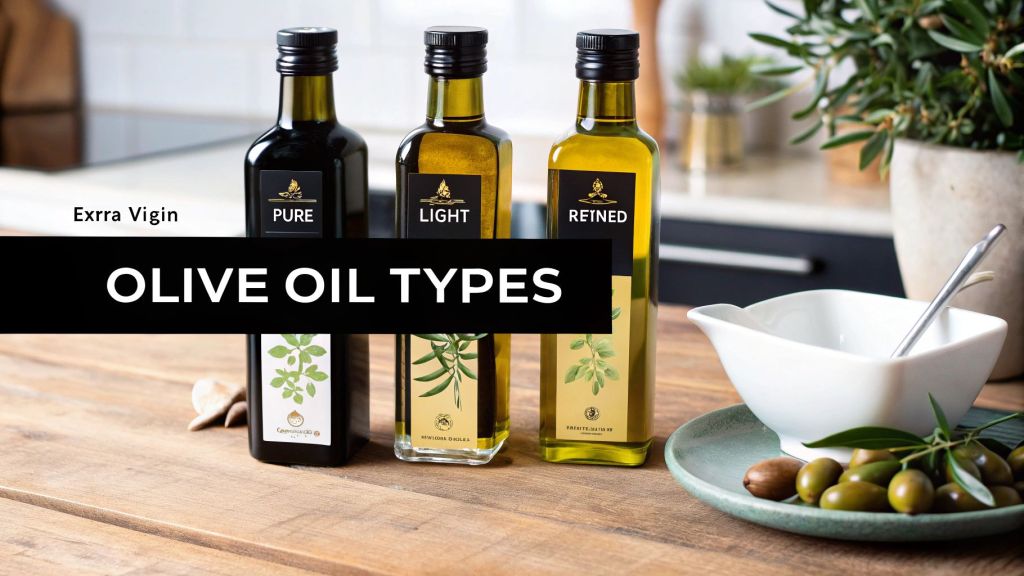
Imagine biting into a fresh, sun-ripened olive straight from the tree. Extra Virgin Olive Oil is the closest you can get to that experience—it’s essentially the fresh-squeezed, unblemished juice of the olive. But those bottles labeled ‘Pure’ or ‘Light’? They’ve been through an industrial ordeal of heat and chemicals, a refining process designed to strip away every flaw… and almost everything else of value along with it.
This one fork in the road—pure extraction versus industrial refining—changes everything. It dictates how the oil tastes, how it smells, its nutritional firepower, and how it will perform for you in the kitchen.
Unlocking the Secrets on the Shelf
That wall of olive oil at your local market isn't just a display of pretty bottles. It’s a spectrum of quality, flavor, and culinary purpose, waiting to be understood. But what truly separates a premium Extra Virgin from a basic bottle of ‘Pure’ oil? The answer isn’t just in the price tag; it’s in the journey from the olive grove to your kitchen.
This guide is here to help you cut through the marketing noise. We’re going to expose the fundamental differences in how each type of oil is produced and, more importantly, what it means for the food you cook. My goal is to transform your next trip down the oil aisle from a guessing game into a confident, informed decision.
For anyone curious about where it all begins, this guide to growing an indoor olive tree offers a fascinating glimpse at the source.
A Quick Look at Olive Oil Grades
The grades of olive oil aren't marketing fluff; they are officially defined by production methods and key chemical markers, like acidity. To get into the nitty-gritty of its makeup, you can read our piece on what olive oil is made of.
Extra Virgin Olive Oil (EVOO) stands alone at the pinnacle. It is extracted from the first pressing of olives using only mechanical means—no high heat, no chemical solvents. Critically, it must have a free acidity level of less than 0.8%, a sign of its purity and freshness.
Decoding the Different Types of Olive Oil
Let’s get straight to what really matters. When you're standing in that aisle, the profound differences between all those bottles come down to two simple things: how the oil was made and its level of free acidity. These two factors are the puppet masters, controlling everything from taste and aroma to the payload of health-boosting antioxidants.
Think of Extra Virgin Olive Oil (EVOO) as the purest expression of the olive—its lifeblood. It is completely unrefined, extracted using only mechanical force. This gentle process keeps its free acidity below a strict 0.8% and, crucially, preserves the oil's vibrant, peppery flavor and its full arsenal of beneficial polyphenols.
Just one step down the ladder is Virgin Olive Oil. It's produced in the exact same way—mechanically pressed, no funny business—but the olives used might be a little riper or have tiny imperfections. This nudges the free acidity up to a maximum of 2.0%, resulting in an oil with a noticeably milder, less complex flavor.
The Purity Divide
The infographic below perfectly captures the essential differences between extra virgin and virgin olive oil, highlighting acidity, flavor, and how much of each is actually produced.
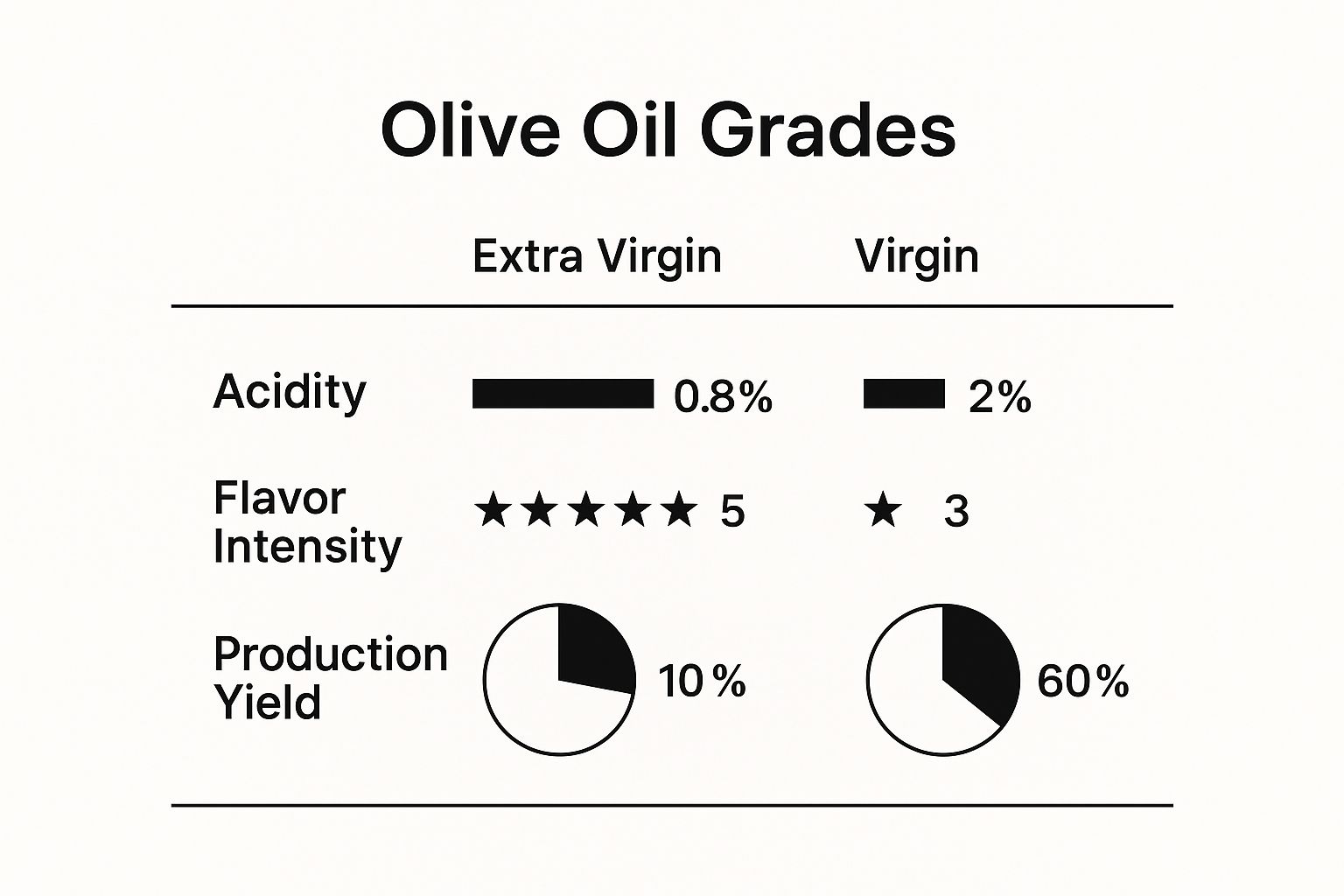
As you can see, EVOO's lower acidity and more intense flavor make it the top-tier product, which is also why it represents a smaller slice of total olive oil production compared to its virgin counterpart.
The real story is in the processing. While EVOO and Virgin oils are celebrated for what they retain, refined oils are defined by what’s been removed.
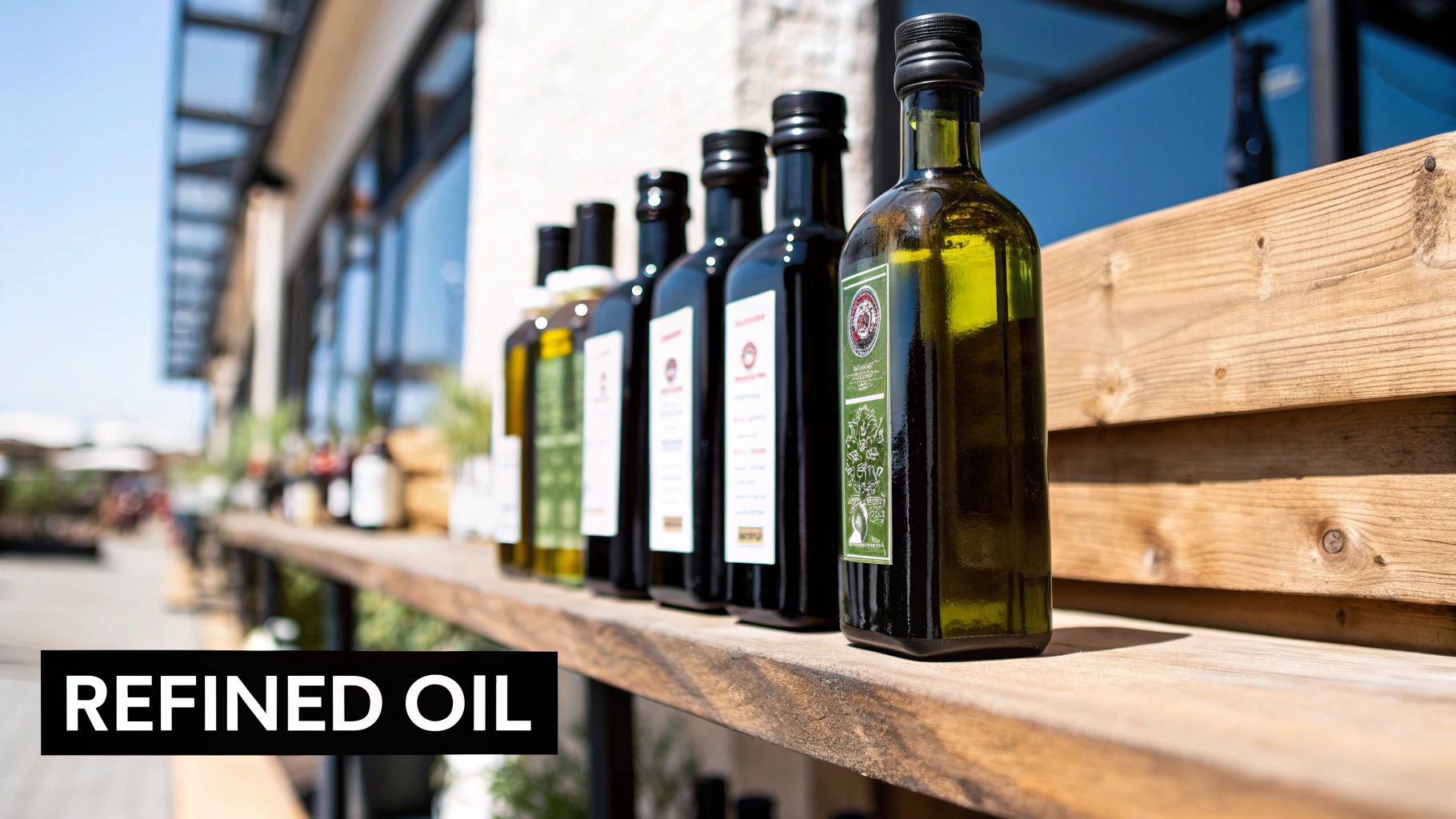
This is where the rest of the shelf comes into play. Bottles labeled 'Pure Olive Oil,' 'Light Olive Oil,' and just plain 'Olive Oil' are your signal that you're looking at a refined product. If an oil has flavor defects or a bad aroma, it gets sent through a harsh industrial process involving heat and solvents to strip away those flaws.
This refining process completely neutralizes the flavor, lightens the color, and unfortunately, wipes out nearly all of the delicate antioxidants and vitamins. What’s left is a bland, very stable oil with a high smoke point. To give it some semblance of life, producers often blend in a small amount of virgin or extra virgin oil for a hint of flavor and color. And that "light" label? It refers only to the mild taste and pale color, not the calorie count.
Interestingly, this refined category is much more common than you might realize. In fact, refined olive oil held the largest market share at 31.1% in 2022. This shows a huge global demand for everyday cooking oils that balances cost and utility against the premium qualities of unrefined oils. It also brings up the topic of labeling clarity; learning about the difference between filtered or unfiltered olive oil can give you even more insight into what you're buying.
Olive Oil At a Glance: A Practical Comparison
To make sense of it all, here's a quick breakdown of the main olive oil grades you'll find at the store. This table cuts through the noise and gives you a clear picture of what each oil is and how best to use it.
| Olive Oil Grade | Production Method | Flavor Profile | Ideal Culinary Use |
|---|---|---|---|
| Extra Virgin | Cold-pressed, unrefined, < 0.8% acidity | Robust, fruity, peppery | Dipping bread, salad dressings, finishing dishes |
| Virgin | Cold-pressed, unrefined, < 2.0% acidity | Milder olive flavor | Sautéing, roasting, everyday cooking |
| Pure / 'Olive Oil' | Blend of refined and virgin oils | Neutral, with a faint olive hint | All-purpose cooking, frying, baking |
| Light | Refined oil, often blended | Very mild, almost tasteless | High-heat frying, baking where no flavor is wanted |
This chart is your secret weapon for matching the right oil to the right dish. Using your best EVOO for deep-frying is a waste of money and flavor, while a "light" olive oil will do absolutely nothing for your fresh salad. Knowing the difference is the key to unlocking the full potential of your cooking.
How Processing Methods Define Quality
The real story of an olive oil isn’t written on the label; it’s written in the moments right after the olive leaves the branch. This journey from tree to bottle is what separates a vibrant, healthful oil from a flat, characterless one, shaping everything from its taste and aroma to its nutritional punch.
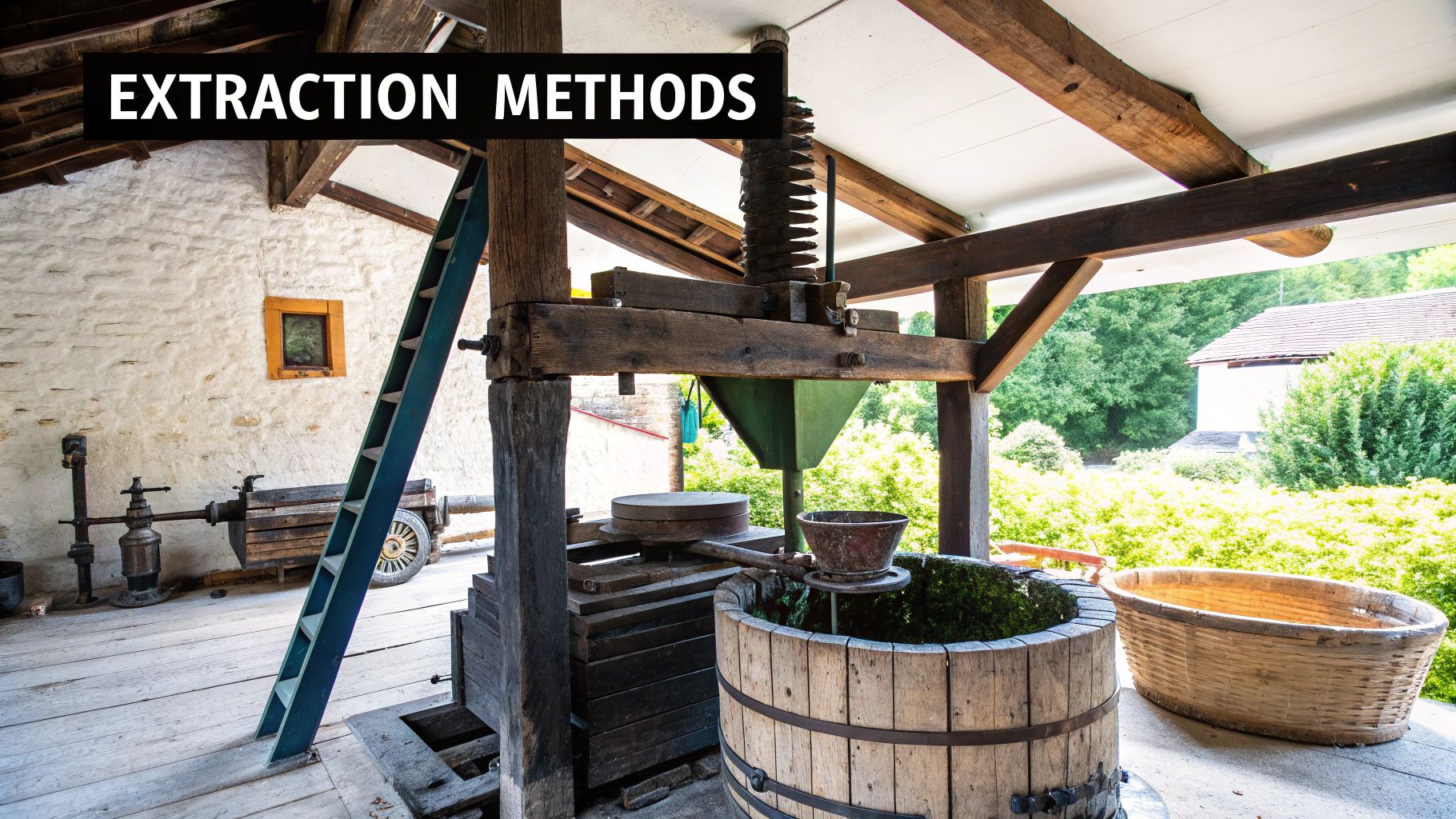
At the very peak of the quality pyramid sits Extra Virgin Olive Oil, defined by its pure, minimalist processing. The gold standard here is cold-pressing, a simple mechanical method. Olives are crushed and pressed to release their oil, with temperatures carefully controlled to keep the oil's delicate natural compounds intact.
This gentle approach is everything. It’s what protects the polyphenols—the antioxidants responsible for that signature peppery finish and the anti-inflammatory benefits that make great olive oil famous. The entire process is about capturing the truest, most potent expression of the olive.
The Contrast Between Craft and Commodity
Move down the quality ladder, and you encounter the industrial refining used for lesser oils. This is the path taken when the olives are of poor quality or the resulting oil has defects. Forget a gentle press; this process involves high heat and chemical solvents to strip out off-flavors and unpleasant odors.
The difference is simple but profound: Premium oils are defined by what they preserve, while refined oils are defined by what’s been removed.
This heavy-handed intervention results in a neutral, shelf-stable oil, but it comes at a steep price. The very elements that make extra virgin olive oil a nutritional superstar—the polyphenols, vitamins, and complex flavors—are all but obliterated. Grasping the fundamental differences in how olive oil is extracted is the first step to appreciating its true worth.
This dedication to quality processing is most evident in the world's premier olive oil regions. In 2022, global production reached around 2.74 million tonnes, with powerhouse producers like Spain, Italy, and Greece contributing nearly half of that total, thanks largely to their deep-rooted traditions of crafting exceptional extra virgin and virgin oils.
Matching the Right Oil to Your Cooking
Picking the right olive oil isn't about memorizing rules. It’s about making an intelligent culinary choice that will either elevate or undermine your dish. Using the wrong oil is like playing a beautiful song on an out-of-tune guitar—all the potential is there, but the execution falls flat. The trick is to stop thinking of "olive oil" as a single ingredient and start seeing it as a collection of specialized tools in your kitchen arsenal.
For example, a bold, peppery Extra Virgin Olive Oil is utterly perfect for finishing a hearty Tuscan soup or drizzling over a freshly grilled steak. Its vibrant notes slice through the richness and add a dazzling layer of complexity. But use that same powerful oil on a delicate piece of pan-seared flounder, and you will completely overwhelm its subtle, sweet flavor.
Choosing Your Tool for the Job
This is where knowing the real differences between olive oils gives you a serious advantage. The easiest way to think about it is to ask yourself one question: am I trying to add flavor, or do I just need fat to cook with?
-
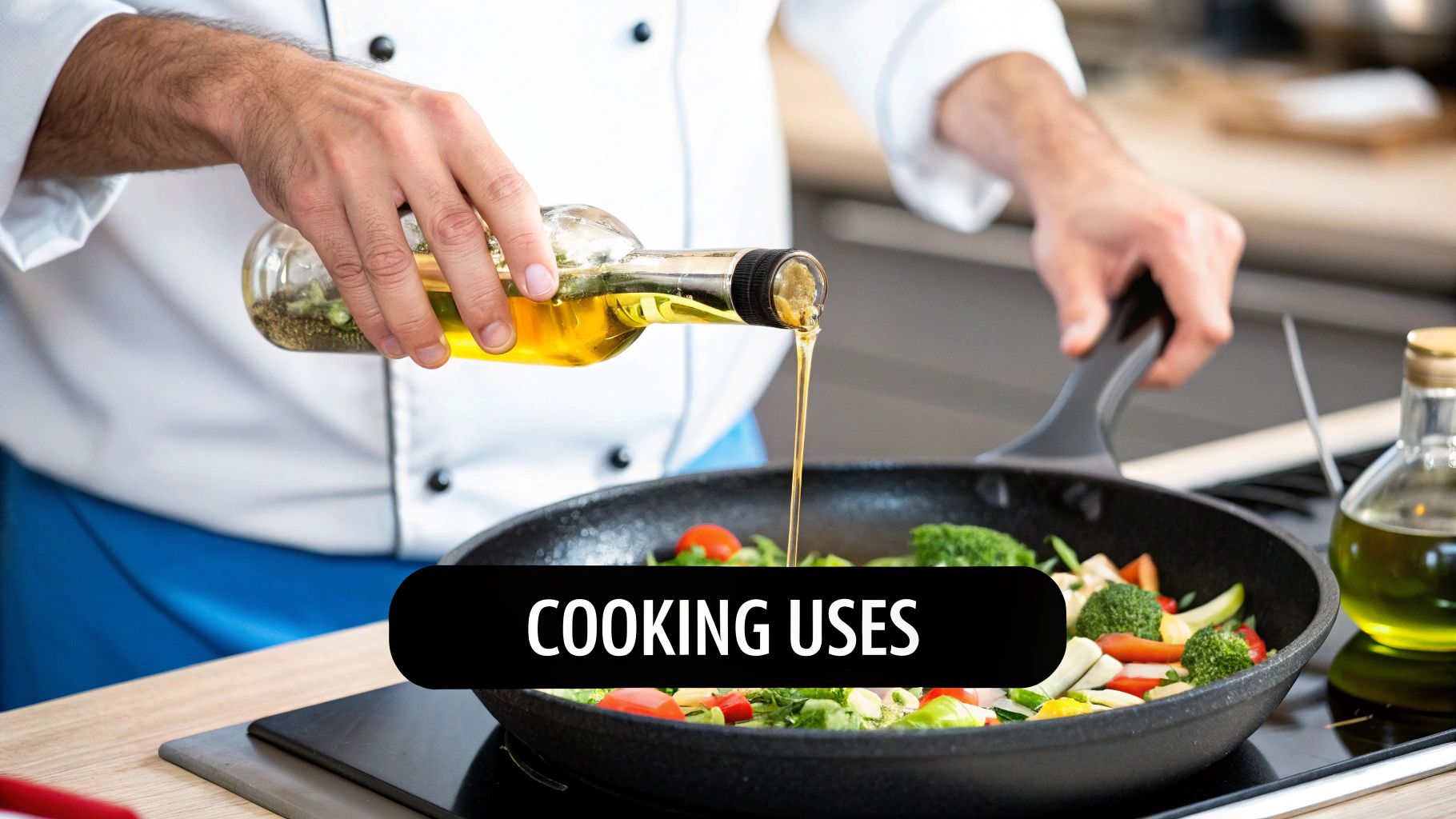
For Finishing & Flavor: A high-quality EVOO is your secret weapon. Use it raw for vinaigrettes, drizzle it over roasted vegetables the moment they leave the oven, or use it to finish a pasta dish. Its job is to be noticed and savored.
-
For General Cooking: A milder Virgin or even a good Pure Olive Oil works beautifully for sautéing aromatics like onions and garlic, pan-frying chicken, or roasting potatoes. You get a gentle hint of olive flavor that supports other ingredients instead of dominating them.
-
For High-Heat & Neutrality: When you just need performance without any flavor getting in the way, a refined or 'Light' olive oil is the right tool. It’s ideal for getting a hard sear on a steak or for baking a cake where you don't want any olive taste making a surprise appearance.
The secret to a well-stocked pantry isn't having just one "good" oil, but having the right oil for the right job. One acts as a bold finishing statement, while another works quietly in the background to let other ingredients shine.
This strategic approach also applies to cooking temperatures. Many people are afraid to cook with EVOO, but a quality bottle actually has a respectable smoke point that’s perfectly fine for most everyday cooking. Still, for deep-frying or searing at screaming-hot temperatures, a refined oil is simply more stable and a lot easier on your wallet. You can dive deeper into the science in our guide on the olive oil smoke point.
Once you’ve got the perfect olive oil picked out for your meal, making sure your kitchen is set up for success can make the whole experience even better. For some great ideas on setting the right mood, this guide to choosing the perfect kitchen lighting has some helpful tips.
The Hidden Nutritional Differences
If you're buying olive oil for its legendary health benefits, the difference between what's in the bottle is everything. The nutritional gap between a true extra virgin olive oil and a refined 'Light' oil isn't a small step—it's a chasm. It all comes down to a group of powerful microscopic compounds.
I'm talking about polyphenols. These are potent antioxidants that are the heroes behind nearly all of olive oil's biggest health claims. They're what provide EVOO its famous anti-inflammatory properties and its reputation for supporting heart health. In fact, that peppery kick or grassy aroma you find in a high-quality oil is a direct signal of its polyphenol content and its vitality.
The Cost of Refinement
Making extra virgin olive oil is a gentle process by design. The cold-press method is purely mechanical, carefully extracting the oil without heat or chemicals. This protects those delicate nutrients, ensuring the oil that ends up in your kitchen is bursting with goodness.
Contrast that with the brutal industrial process for 'Pure' and 'Light' oils. The combination of high heat and chemical solvents is a death sentence for nutrition. It completely destroys the sensitive polyphenols, effectively gutting the oil of what makes it so healthy. What you're left with is, well, mostly just fat.
While all olive oils have the same number of calories, their nutritional profiles are worlds apart. Choosing a refined oil for its health benefits is like buying a car without an engine—it might look the part, but it has none of the power.
This isn't just about polyphenols, either. Vitamin E, another crucial antioxidant, is found in much higher concentrations in unrefined oils. When you pick a bottle off the shelf, you're making a clear choice. If health is your goal, the decision is simple: extra virgin is the only real contender.
To get a better handle on the specific compounds at play, you can learn more about the polyphenol content in olive oil and see what makes it so special.
Your Top Olive Oil Questions, Answered
Let's clear up some of the most common points of confusion. Getting these basics right will completely change how you shop for and use olive oil in your own kitchen.
Can I Actually Fry with Extra Virgin Olive Oil?
Yes, you absolutely can. The idea that you can't is perhaps the biggest and most stubborn myth in the olive oil world. A good quality EVOO has a smoke point somewhere between 375°F and 410°F (190-210°C), which is well above the temperatures needed for most home cooking, including pan-frying and sautéing.
While that old myth about its super-low smoke point is mostly just noise, you probably don’t want to use your best finishing oil for deep-frying. For that, a more budget-friendly refined olive oil is a smarter pick, mainly because it's cheaper and holds up better under prolonged, intense heat.
What Does "Light" Olive Oil Really Mean?
This term is a work of marketing genius, and it's incredibly misleading. "Light" has absolutely nothing to do with calories or fat—all olive oils pack the same caloric punch.
"Light" only refers to the oil's color and flavor. It’s a heavily refined oil, which gives it a very pale appearance and a neutral taste. It was created for baking or cooking situations where you specifically don't want any olive flavor coming through.
What Is the Best Way to Store Olive Oil?
Think of your olive oil as having three mortal enemies: light, heat, and air. To preserve its beautiful flavor and all those healthy compounds, proper storage is non-negotiable.
Always store it in a cool, dark place, like a pantry or cupboard—never next to the stove. And make sure you screw the cap on tight after every use. This is why you'll see premium oils sold in dark glass bottles or opaque tins; they offer far better protection from light damage than clear glass ever could.
At Learn Olive Oil, we believe understanding these details transforms your cooking. We provide expert insights to help you choose, taste, and use the world's finest olive oils. Discover the World of Premium Olive Oil.
 Learn Olive Oil
Leave a comment