When you see the word "virgin" on a bottle of olive oil, it’s not just a label. It’s a promise. A promise that what you're holding is the pure, unadulterated juice of the olive, extracted the old-fashioned way—through mechanical means alone, with no heat or chemicals invited to the party.
It's the most direct path you can travel from a sun-drenched grove to your kitchen table.
The Guarantee of Purity in Every Drop
Let’s be honest. For most people, a bottle of olive oil is just another cooking fat. But the "virgin" designation on its label is a mark of authenticity that elevates it far beyond that. It tells a story of a natural process, one that honors the fruit by gently pressing out its golden oil without resorting to the shortcuts of industrial chemistry.
Here’s a simple way to think about it. Virgin olive oil is like the fresh-squeezed orange juice you make at home—pure, vibrant, and bursting with character. Refined oils? They're like the concentrate you find in the freezer aisle; they've been processed, stripped down, and put back together. One is the real deal. The other is merely an echo.
The Two Pillars of Virgin Quality
So, what are the absolute, non-negotiable requirements that allow an oil to be called "virgin"? It all comes down to two fundamental standards:
- How It's Made: The extraction process must be entirely mechanical. Olives are crushed and pressed, never violated by chemical solvents or high heat that would scorch the delicate oil.
- How It Measures Up: The resulting oil must then pass a series of strict chemical and sensory evaluations. These tests confirm its freshness and ensure it has the right flavor and aroma, with zero defects.
Virgin olive oil is the most natural expression of the olive. Its unique character is shaped by the sun, the soil, and the miller’s craft—never by a chemical process in a lab.
This guide will walk you through precisely what these principles mean. By the time you finish, you won't just see olive oil as a pantry staple, but as an artisan product, rich in flavor and history.
From Grove to Press: The Mechanical Secret of Virgin Oil
The story of virgin olive oil doesn't begin at the mill; it begins in the grove, where everything hangs on the quality of the olive itself. The fruit must be picked with care, often by hand, to avoid the bruises and cuts that kickstart oxidation and can spoil the oil before the journey has even begun.
Once the olives are off the branch, the clock starts ticking. They are whisked away to the mill, ideally within just a few hours. This race against time is crucial for preserving the olive’s freshness and integrity. Any delay means fermentation and defects can creep in, threatening the very purity the "virgin" label promises.
The Gentle Art of Cold Extraction
At the mill, the real magic happens through what we call mechanical extraction. It's less an industrial process and more a purely physical one. The olives are crushed into a thick paste, and from there, the oil is gently coaxed out. Most importantly, this is all done without adding any external heat, a method famously known as "cold-pressing."
This gentle, temperature-controlled process is the unbending heart of what makes an olive oil "virgin." By steering clear of high heat and chemical solvents, the oil retains its full, natural profile of flavors, aromas, and life-giving nutrients. To see exactly how this works, you can check out our deep dive into how oil is extracted from olives.
The term "mechanical means" is a promise. It tells you that the oil in the bottle is nothing more than the pure, unadulterated juice of the olive, coaxed out through physical force alone.
This devotion to a natural, hands-off approach ensures the final oil is as close as you can possibly get to the fresh fruit it came from.
You can taste the benefits of this painstaking method in every single drop:
- Nutrient Preservation: All the good stuff—vitamins, powerful antioxidants, and those healthy polyphenols—remains intact.
- Authentic Flavor: The true, vibrant, and often wonderfully complex taste of the olive shines through.
- Uncompromised Quality: The oil's natural chemical makeup isn't broken down or altered by aggressive treatments.
In the end, this "mechanical secret" is the bright, clear line dividing virgin olive oils from their refined cousins. It’s a testament to a method that puts purity far ahead of mass-production efficiency, delivering an oil that is authentic and truly full of life.
The Science Behind the Virgin Designation
When we talk about purity in olive oil, we're not just being poetic. It’s a matter of cold, hard science. While the mechanical, no-heat extraction process is the starting point, an oil must pass two rigorous tests to officially earn the "virgin" title.
The first hurdle is a detailed chemical analysis. This lab test is all about measuring the oil's stability and overall quality.
Of all the metrics, free acidity is the most revealing. You can think of it as a freshness gauge—the lower the acidity, the healthier the olives were at the moment they were pressed. A high number suggests the fruit might have been bruised, overripe, or sat around too long before milling, causing the oil to begin breaking down.
To be classified as virgin olive oil, the international standard is iron-clad: the oil must have a free acidity level of no more than 2%. This specific number is what separates a true virgin oil from a lower-quality product.
The Human Element of Quality Control
But numbers on a lab report only tell part of the story. The second, and arguably more difficult, test is the organoleptic assessment. This is a formal tasting by a panel of highly trained sensory experts. An oil can have a perfect acidity score and still fail this test if its flavor simply isn't right.
These pros are trained to sniff out the slightest imperfections—what the industry calls "defects." They’re on the hunt for any off-flavors or aromas that indicate something went wrong during production, storage, or bottling.
A virgin olive oil must have a median of defects of zero. It has to be completely free of negative notes like musty, fusty, or rancid, while still presenting a pleasant, fruity character.
This two-part verification system is what gives the virgin designation its real meaning. The oil first has to prove its chemical integrity in a lab, then it must pass the ultimate test of human taste and smell. Only when it clears both of these hurdles can it proudly be called virgin. This process is a great guide for understanding what olive oil should taste like.
Understanding The Olive Oil Family Tree
https://www.youtube.com/embed/BBHdXPi4DTM
Walk down the oil aisle in any grocery store, and you'll face a dizzying array of olive oils. But here's the secret: they're not all the same. Not even close. It's best to think of them as a family, with a clear hierarchy from the pristine to the heavily processed. Knowing where virgin olive oil fits in is the key to choosing the right bottle for your kitchen.
At the very top, you have Extra Virgin Olive Oil, or EVOO. This is the gold standard—the purest expression of the olive. It's prized for its flawless, fruity taste and its remarkably low acidity, which must be below 0.8%. This is olive oil at its peak performance.
Right next to it is its sibling, Virgin Olive Oil. This is still a high-quality, unrefined oil made the exact same way as EVOO—by simply pressing the olives. The only difference is that it has some minor sensory imperfections or a slightly higher acidity level, landing between 0.8% and 2.0%. It’s good oil, but it just doesn't quite make the "extra" cut.
The Distant Cousin: Refined Olive Oil
Then there are the bottles simply labeled "Olive Oil" or "Light Olive Oil." Think of these as the distant, and somewhat troubled, cousins of the family. These are refined oils. They started out as such poor-quality virgin oils (often with high acidity and unpleasant flavors) that they had to be sent to a refinery. There, they are treated with chemicals and high heat to strip away all the defects.
This industrial process neutralizes the flavor and color, but it also obliterates the delicate aromas, antioxidants, and polyphenols that make olive oil so healthy. To give it some semblance of olive oil character, producers usually blend in a small amount of virgin or extra virgin olive oil before bottling.
The word 'virgin' is your guarantee that the oil is a natural, unrefined juice from the olive. In contrast, 'refined' oil is an industrially altered product.
This visual guide shows the healthy compounds you get from unrefined virgin olive oils.
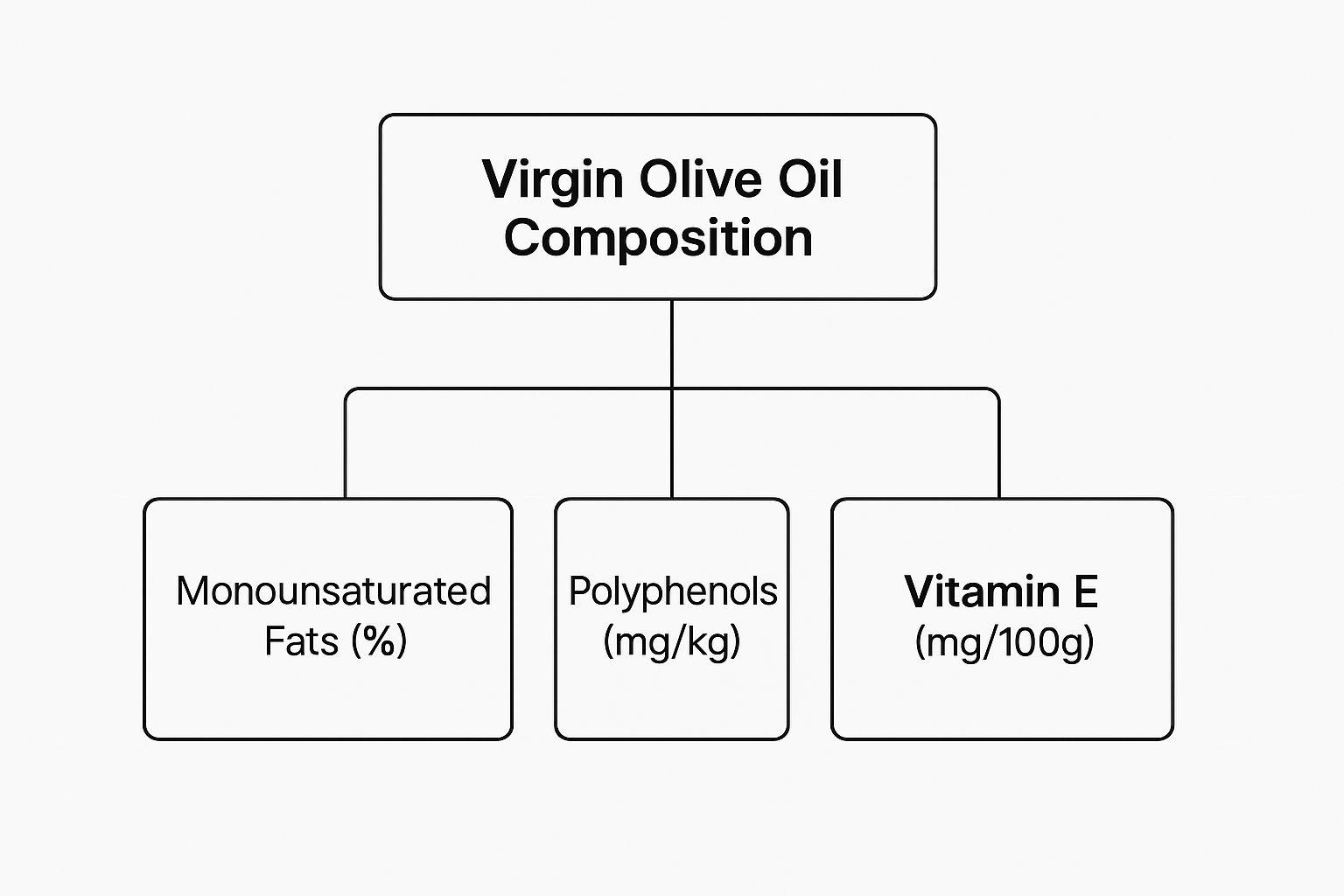
The high percentage of healthy fats and antioxidants is precisely what sets the virgin oils apart from their refined counterparts. To get a better handle on this key quality marker, you can learn more about olive oil acidity levels and what they mean.
Olive Oil Grades At a Glance
To make it even clearer, here’s a simple breakdown of how these three main categories stack up against each other.
| Attribute | Extra Virgin Olive Oil | Virgin Olive Oil | Refined Olive Oil |
|---|---|---|---|
| Extraction Method | Mechanical (cold-pressed) | Mechanical (cold-pressed) | Chemical and heat refining |
| Free Acidity | Less than 0.8% | Between 0.8% and 2.0% | Often over 2.0% before refining |
| Flavor Profile | Fruity, no defects | Acceptable flavor, may have minor defects | Neutral, bland taste |
As you can see, the production method and resulting acidity are what truly define the quality and flavor you can expect from each grade.
Why Discerning Palates Choose Virgin Olive Oil
It’s easy to get lost in the chemistry and production rules, but the real reason to seek out genuine virgin olive oil is much simpler. It all comes down to the way it's made—a gentle, mechanical process that acts as a guardian for both flavor and health.
This method carefully preserves the complex, nuanced flavors that industrial refining processes would simply burn away. Crucially, it also protects the powerful antioxidants like polyphenols, which are the very source of olive oil’s legendary health benefits.
Ever wonder about that characteristic peppery kick you get from a high-quality oil? That’s the polyphenols making their presence known, the same compounds praised for their anti-inflammatory properties.
A Legacy of Flavor and Wellness
This commitment to purity is exactly why so many people view great olive oil as an investment in their health. The natural compounds kept intact during production are what link the oil to serious heart health support and other wellness perks. Beyond just taste, many people choose it specifically for this reason; understanding the role of olive oil in a healthy lifestyle can help you make better choices at the store.
And the demand for this authentic quality is absolutely massive. As of 2024, Europe is still the powerhouse of both production and consumption. Spain, for instance, pumps out around 1.41 million tons every single year. You can discover more insights about the global olive oil market from Certified Origins.
The global appetite for quality olive oil is fueled by people who get it. They understand that what makes an oil virgin—its unrefined purity and nutrient density—is something worth paying for. A higher price tag often signals a healthier, more flavorful, and all-around superior product.
This appreciation for quality is the perfect bridge to understanding its top-tier sibling, extra virgin olive oil. To learn more, check out our deep dive into the specific benefits of extra virgin olive oil.
Your Virgin Olive Oil Questions Answered
Stepping into the world of olive oil can feel like learning a new language. With all the different grades, terms, and bottles on the shelf, it’s easy to get confused. Let's cut through the noise and answer some of the most common questions people have about virgin olive oil.
Can I Cook with Virgin Olive Oil?
Yes, absolutely! This is one of the biggest myths we hear. While its rich, fruity flavor makes it incredible for finishing a dish, virgin olive oil is a fantastic choice for cooking, including sautéing and even light frying. It has a smoke point that’s more than high enough for the vast majority of things you'd cook at home.
The trick is to use it where its flavor can really shine. It’s perfect for dishes where the oil isn't just a lubricant but a core ingredient. Think about the incredible depth it adds to roasted vegetables, pan-seared fish, or a simple, beautiful pasta sauce.
Don’t be afraid to get your virgin olive oil in the pan. The idea that it's only for drizzling is a myth that keeps people from exploring its full potential. Good oil is meant to be used and enjoyed, not just admired on a shelf.
Is Virgin Olive Oil Better Than Extra Virgin?
It’s less about "better" or "worse" and more about degrees of perfection. Extra Virgin Olive Oil (EVOO) is the top of the pyramid—the highest grade possible. It has to be perfect in taste and aroma, with an acidity level below 0.8%. It delivers a more complex, pronounced flavor.
Virgin olive oil is made the exact same way but just misses that mark of perfection. It might have a very slight sensory imperfection or a slightly higher acidity (up to 2.0%). It's still a fantastic, high-quality, unrefined oil that’s worlds apart from any refined product. For everyday cooking where you want a wonderful olive flavor that isn't overpowering, virgin olive oil is an excellent—and often more budget-friendly—choice.
How Can I Tell If My Virgin Olive Oil Is Good Quality?
Your own senses are the best tools you have. A good virgin olive oil should smell fresh and pleasant, reminding you of green grass, fruit, or the olives themselves. When you taste it, it should be clean and fruity, maybe with a little bitterness or a peppery kick in the back of your throat. That peppery sensation is a great sign—it’s the healthy polyphenols letting you know they’re there!
Here are a few red flags that something is off:
- No Scent: If it smells like nothing at all, it's probably old or has been refined.
- Waxy or Crayon-like Smell: This often points to an oil that's old or was poorly made.
- Musty or Muddy Odors: These are major defects, often caused by olives that were stored improperly before being pressed.
Beyond a taste test, check the label for a harvest or bottling date. Freshness is everything, so always grab the most recent one you can find. Unfortunately, fraud is a real problem in the olive oil business, so learning how to spot fake olive oil is a skill every home cook should have.
How Should I Store It?
If you've invested in a good bottle of oil, proper storage is non-negotiable. Olive oil has three mortal enemies: light, heat, and air. Any one of them will quickly start to break down the oil, stripping it of its beautiful flavors and health benefits.
Always keep your bottle in a cool, dark place like a pantry or cupboard. Never leave it next to the stove or on a sunny windowsill. And make sure you seal the cap on tight after every use to keep oxygen out. The best packaging is dark glass or a tin, which protects the oil from damaging light right from the start.
At Learn Olive Oil, we believe that understanding the story behind your food makes every meal better. We're here to guide you through the rich and flavorful world of high-quality olive oil, from the grove to your table.

 Learn Olive Oil
Leave a comment