If there is one simple secret to elevating both the flavor and the health of everything you cook, it is this: make a high-quality Extra Virgin Olive Oil (EVOO) the cornerstone of your kitchen. Why? Because its astonishingly rich antioxidant content and stable monounsaturated fats make it a fortress against heat, protecting not only its own nutritional treasures but your health as well.
Why Your Choice of Cooking Oil Truly Matters
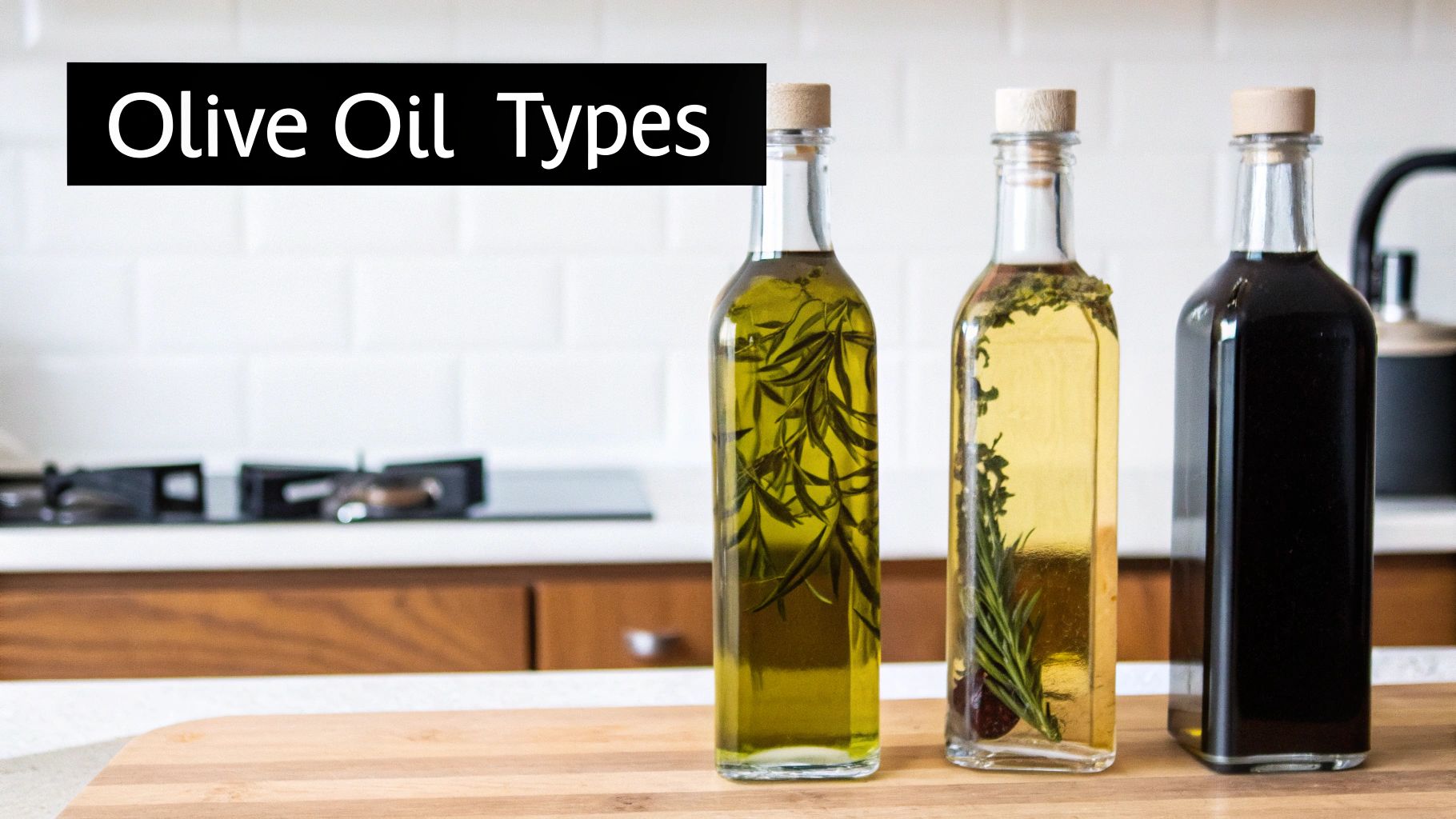
It’s tempting to think of that bottle of oil on your counter as a mere utility—a simple tool to keep food from sticking to the pan. But this humble liquid plays a far more profound role in your health than you might ever imagine.
The oil you cook with doesn't just sit there. It becomes part of your food on a molecular level. The moment you turn on the heat, a silent battle begins between the oil’s protective, health-giving compounds and the damaging forces of oxidation.
This goes beyond flavor or calories. It's about the very integrity of your meal. The right oil acts as a shield, preserving nutrients and even adding its own powerful benefits to your food. The wrong one? It can shatter under heat, creating harmful free radicals and sabotaging all the good you were trying to do with those fresh, wholesome ingredients.
The Foundation of Healthy Cooking
I want you to think of your cooking oil as the foundation of a house. If that foundation is weak and unstable, the entire structure is compromised, no matter how beautiful the design. It’s precisely the same in your kitchen. Using a flimsy, highly processed oil will undermine an otherwise nutritious meal, regardless of how fresh your vegetables or lean your protein may be.
This is exactly why discovering the healthiest olive oil for cooking is so vital. We're not merely looking for something to grease a pan. We're searching for an active partner in our wellness—an ingredient that brings its own formidable health benefits to the table.
Your choice of cooking oil is one of the most powerful daily decisions you can make for your long-term health. It is a small habit with a staggering cumulative effect.
So, what transforms an ordinary oil into a true health champion? It comes down to three crucial secrets:
- Antioxidant Power: These natural compounds are like tiny bodyguards, fiercely protecting both the oil and your body from cellular damage. A true olive oil is teeming with them.
- Fatty Acid Profile: The type of fat in an oil determines its courage under fire. Monounsaturated fats, the undisputed star of olive oil, are exceptionally tough and resilient.
- Processing Method: How an oil is made determines what’s left inside. The less it’s processed, the more of its life-giving goodness remains.
Mastering these simple principles is the first step toward making confident, brilliant choices in your kitchen, every single day.
Decoding the Difference: Extra Virgin vs. Refined Oils
To find the healthiest olive oil for your kitchen, you must first understand the great divide in the grocery aisle: Extra Virgin versus everything else. This isn't just marketing jargon—it's the fundamental difference between a health-boosting powerhouse and a stripped-down, lifeless commodity.
Picture this: a glass of freshly squeezed orange juice, vibrant with color, bursting with aroma, and pulsing with nutrients. That is your Extra Virgin Olive Oil (EVOO). It is the pure, unadulterated juice of the olive, mechanically cold-pressed without a trace of chemicals or intense heat. This gentle process is crucial, for it preserves the very soul of the oil—its delicate flavors, its rich aromas, and most importantly, its army of powerful antioxidants.
Now, imagine a juice made from concentrate. It has been heated, processed, and filtered until it is but a pale ghost of its former self. This is the world of refined olive oils, often disguised with labels like 'Pure,' 'Light,' or simply 'Olive Oil.' These oils are treated with solvents and heat to remove any flaws, but this aggressive process also strips them of their color, their flavor, and every last one of those precious health compounds.
The Antioxidant Advantage
The real magic of a great EVOO is hidden in its high concentration of polyphenols. Think of these as the oil’s personal Praetorian Guard. Not only do they deliver profound anti-inflammatory benefits to your body, but they also ferociously protect the oil itself from breaking down when you turn up the heat.
Refined oils have had these natural defenders almost entirely eliminated during processing. This leaves them vulnerable and defenseless, ready to create harmful compounds the moment they're cooked.
This is precisely why a high-quality EVOO is fundamentally more stable for cooking than its refined cousins, even if a refined oil boasts a technically higher smoke point. That antioxidant shield is what truly matters when the heat is on.
"The true measure of a cooking oil’s health isn’t just its smoke point, but its oxidative stability. An oil rich in polyphenols, like EVOO, resists degradation under heat far better than a refined oil that has been stripped of its natural protectors."
To help you see the difference at a glance, here is a simple breakdown of what sets these oils worlds apart.
Olive Oil Grades At a Glance
| Feature | Extra Virgin Olive Oil (EVOO) | Refined Olive Oil (Pure/Light) | What This Means for Your Health |
|---|---|---|---|
| Processing Method | Cold-pressed; no heat or chemicals | Heat and/or chemical solvents used | EVOO's gentle processing preserves natural antioxidants and healthy fats. Refined oils lose most of these beneficial compounds. |
| Antioxidant Level | High in polyphenols & Vitamin E | Very low; stripped during refining | The antioxidants in EVOO protect your cells from damage and make the oil more stable for cooking. Refined oils offer few protective benefits. |
| Flavor & Aroma | Robust, fruity, peppery, grassy | Neutral, mild, often flavorless | The vibrant flavor of EVOO comes from its health-promoting compounds. The lack of flavor in refined oil signals a lack of nutrients. |
| Typical Use | Sautéing, roasting, dressings, finishing | High-heat frying, baking (when neutral flavor is desired) | EVOO is a versatile, healthy choice for most everyday cooking, while refined oils are primarily a source of fat with minimal nutritional upside. |
Ultimately, the equation is simple: the less an oil is processed, the more of its natural goodness it retains for your health and your cooking.
What the Science Says
Nutritionally, the evidence is a landslide. EVOO’s minimal processing preserves a treasure chest of beneficial compounds. It consists of 55-83% monounsaturated fats—mostly oleic acid—which is incredibly resistant to oxidation and linked to powerful cardiovascular benefits.
Even more impressive, when heated to 180°C (356°F), a good EVOO retains up to 95% of its vital polyphenol compounds. This performance utterly demolishes common seed oils, which degrade far more quickly under heat.
Choosing the right oil comes down to this simple truth: processing dictates purity, and purity dictates the health benefits you receive. To make the best decision for your kitchen, discover our complete guide on how to choose olive oil.
Debunking the Smoke Point Myth
For decades, a single piece of misinformation has terrorized home cooks, scaring them away from using the healthiest fat in their pantry for actual cooking. You’ve heard it before: “Don’t cook with Extra Virgin Olive Oil; its smoke point is too low.” It is one of the most stubborn—and harmful—myths in the culinary world, and it’s time we put it to rest, for good.
The "smoke point" is the temperature where an oil stops behaving and starts breaking down, smoking, and creating nasty compounds. The common wisdom has been that for EVOO, this threshold is dangerously low, condemning it to a sad life of merely dressing salads.
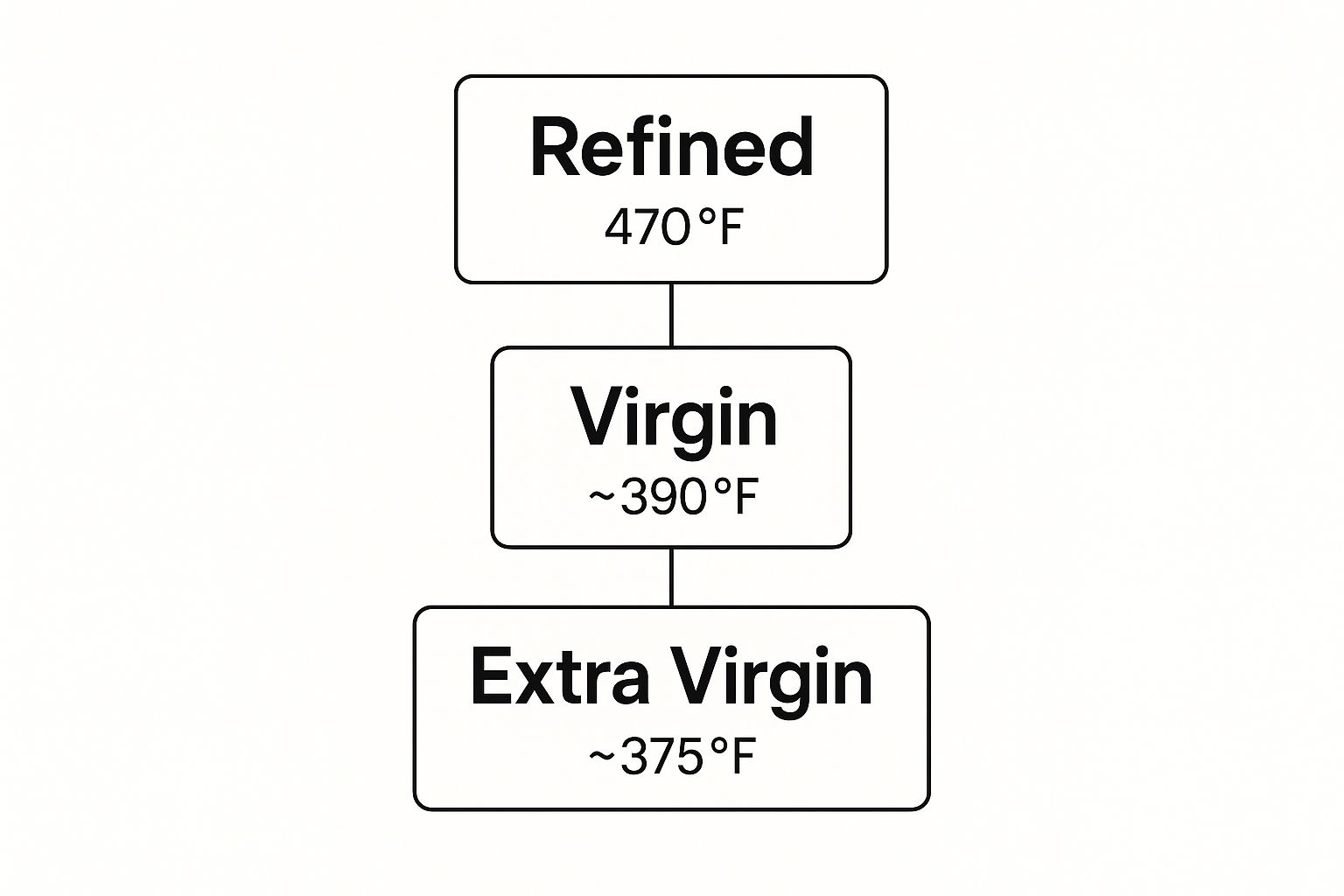
But here is what the science actually reveals: a high-quality Extra Virgin Olive Oil has a smoke point that sits comfortably between 375°F and 410°F (190°C to 210°C). This range is far above what you need for the vast majority of your everyday cooking.
Why Smoke Point Isn’t the Whole Story
Think about how you actually cook. Sautéing on your stovetop typically happens around 300°F (150°C). Roasting in your oven is usually done between 350-400°F (175-200°C). Unless you plan on deep-frying at blast-furnace temperatures, you are highly unlikely to ever push a good EVOO past its limit.
But here is the bigger secret, the one the food industry hopes you never discover. The single most important factor for an oil's health and safety under heat is not its smoke point. It's a concept called oxidative stability.
Oxidative stability is an oil’s inherent power to resist breaking down and forming harmful free radicals under heat. And this is where a true EVOO shines, outclassing almost every other oil on the shelf.
Here's an analogy: a smoke point is like the redline on a car's tachometer. Oxidative stability is the quality of the engine itself. You could have a car with a sky-high redline, but if the engine is cheaply made, it will fall apart under stress long before it ever gets there. You want the well-built engine, not just the one with a flashy gauge.
The Real Hero of Healthy Cooking
What gives EVOO this incredible stability? It comes down to two key components we've already met:
- Monounsaturated Fats: The dominant fatty acid in olive oil, oleic acid, has a simple, stable chemical structure with few "openings" to react with oxygen when heated, keeping it strong and intact.
- Polyphenols: These are the powerful antioxidants that act as bodyguards. When the oil is heated, they sacrifice themselves to protect the delicate fatty acids from damage.
Refined seed oils, even those boasting high smoke points, have been stripped of these natural protectors. When they get hot, they are far more likely to oxidize and create inflammatory compounds, often well before they even begin to smoke. In stark contrast, the antioxidant shield in EVOO makes it a true champion of stability. To see why this matters so much, explore the full breakdown of the olive oil smoking point.
The takeaway is simple. You can sauté, roast, and even lightly fry with your Extra Virgin Olive Oil. Its natural structure is working tirelessly to keep your food—and you—safe. The myth is officially busted.
How To Cook With EVOO for Maximum Benefit
We've busted the myths and crowned Extra Virgin Olive Oil as the undisputed champion of a healthy kitchen. Now, let’s get practical. Using a high-quality olive oil isn't just about pouring it into a hot pan; it’s about mastering a few simple techniques to protect its precious cargo of antioxidants and unlock its full health potential.
Think of EVOO’s health benefits as delicate treasures. The right amount of heat is like displaying them in a perfectly lit gallery—it enhances their beauty. But cranking the heat too high is like leaving a masterpiece out in the sun to fade. Our goal is to cook brilliantly without destroying the very compounds that make this oil so extraordinary.
This is where the true art of cooking with liquid gold begins.
Mastering the Right Temperatures
The first rule of cooking with EVOO? Respect the oil. While a quality EVOO is surprisingly resilient, it shines brightest when used with care. For most of your cooking, aim for a low-to-medium setting on your stove.
Gentle sautéing, for example, is where EVOO feels most at home. This keeps the pan safely below the oil's smoke point, allowing you to soften vegetables or brown proteins while infusing them with both incredible flavor and those powerful antioxidants. Roasting vegetables in the oven at temperatures up to 400°F (200°C) is another fantastic—and delicious—way to harness its power.
The secret to cooking with EVOO is control. When you manage the heat, you preserve its health benefits and its nuanced, vibrant flavors. A scorched oil is a flavorless and unhealthy oil.
To get the most out of every single bottle, here are the best ways to use it:
- Sautéing and Stir-Frying: Keep your burner on medium. You want to see the oil shimmer, never smoke. This is perfect for everything from garlic and onions to leafy greens and lean chicken.
- Roasting: Tossing vegetables or fish with EVOO before they enter the oven creates a beautiful, caramelized crust while sealing in moisture.
- Baking: You can often swap EVOO for butter or other oils in recipes for a heart-healthy upgrade. It works especially well in savory breads, muffins, and even certain cakes.
- Finishing and Dressings: The most potent way to get EVOO’s benefits is to use it raw. A generous drizzle over a finished soup, a plate of pasta, or grilled steak delivers a powerful, direct hit of polyphenols.
Protecting the Antioxidants From Bottle to Plate
At the end of the day, our goal is to maximize those health benefits. The star of the show is oleic acid, a monounsaturated fat that makes up about 73% of EVOO. It is this stable fat, combined with a polyphenol content that can reach up to 500 mg/kg, that makes EVOO so formidable in the kitchen.
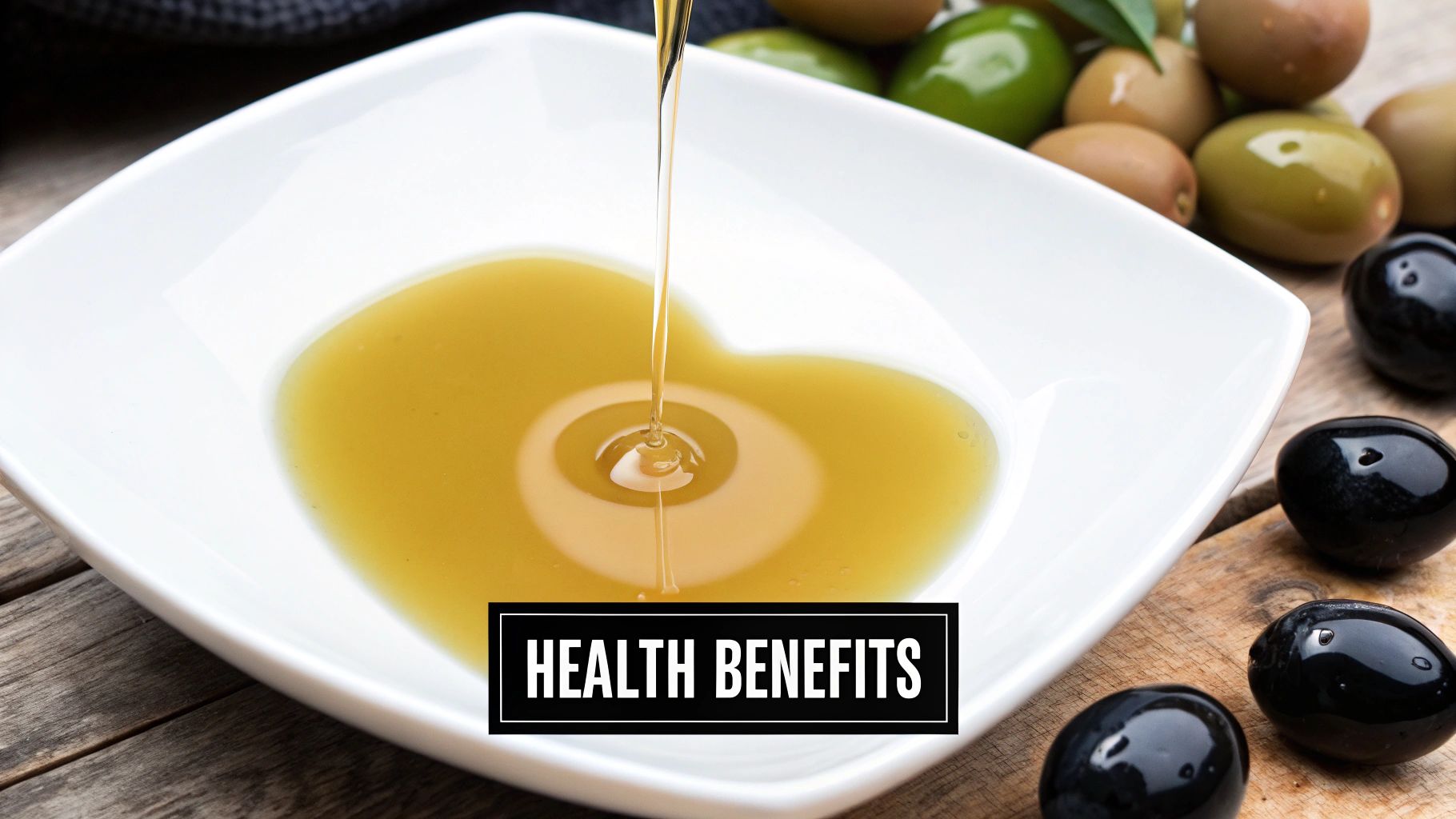
Even the FDA recognizes that consuming about two tablespoons daily may reduce the risk of coronary heart disease. The wonderful news is that these benefits hold strong as long as you cook below 356°F (180°C), a temperature where the key components remain largely intact.
For a deeper dive into specific techniques and recipes, you may be interested in our guide on how to cook with olive oil. By following these simple strategies, you can be certain that every single drop is contributing to your health.
How to Choose and Store Olive Oil Like a Pro
Walking down the olive oil aisle can feel like navigating a minefield. You're bombarded with a wall of dark green bottles, fancy seals, and confusing terms that make you want to just grab the nearest one and escape. But finding a truly great, healthy olive oil is not as complicated as it seems. It's about knowing what to look for—and what to ignore.
Your one and only goal is to find the freshest, highest-quality Extra Virgin Olive Oil you can get your hands on. Why freshness? Because freshness is a direct measure of antioxidant power. The moment an olive oil begins to age, it starts losing the very polyphenols that make it so beneficial.
So, how do you spot the real deal? You must become a label detective. Ignore the flashy marketing on the front of the bottle; the real story is always hidden on the back.
Your Label-Reading Checklist
Here are the key clues that separate a world-class EVOO from an imposter on the shelf:
-
Harvest Date: This is, without question, the single most critical piece of information. Look for a specific date, like "Fall 2023." If a bottle only lists a "Best By" date, be wary. That date is usually set two years from bottling, not harvesting, telling you nothing about the oil's true age. Always choose the most recent harvest date.
-
Dark Bottle or Tin: Light is one of the greatest enemies of olive oil. Any producer who cares about quality will use dark glass or an opaque tin to shield the oil from light damage. A clear bottle is a major red flag.
-
Seal of Authenticity: Look for seals from third-party certifiers. Symbols like the PDO (Protected Designation of Origin) seal, or certifications from the California Olive Oil Council (COOC) or the Extra Virgin Alliance (EVA), are signs of excellence. These seals mean the oil has passed rigorous chemical and sensory tests to prove it meets the highest standards.
An olive oil has three enemies: light, heat, and air. Your job is to protect your oil from these thieves to keep its flavor and health benefits intact from the first pour to the last.
Once you’ve brought that beautiful bottle home, your job isn't done. Storing it correctly is just as important as choosing it well.
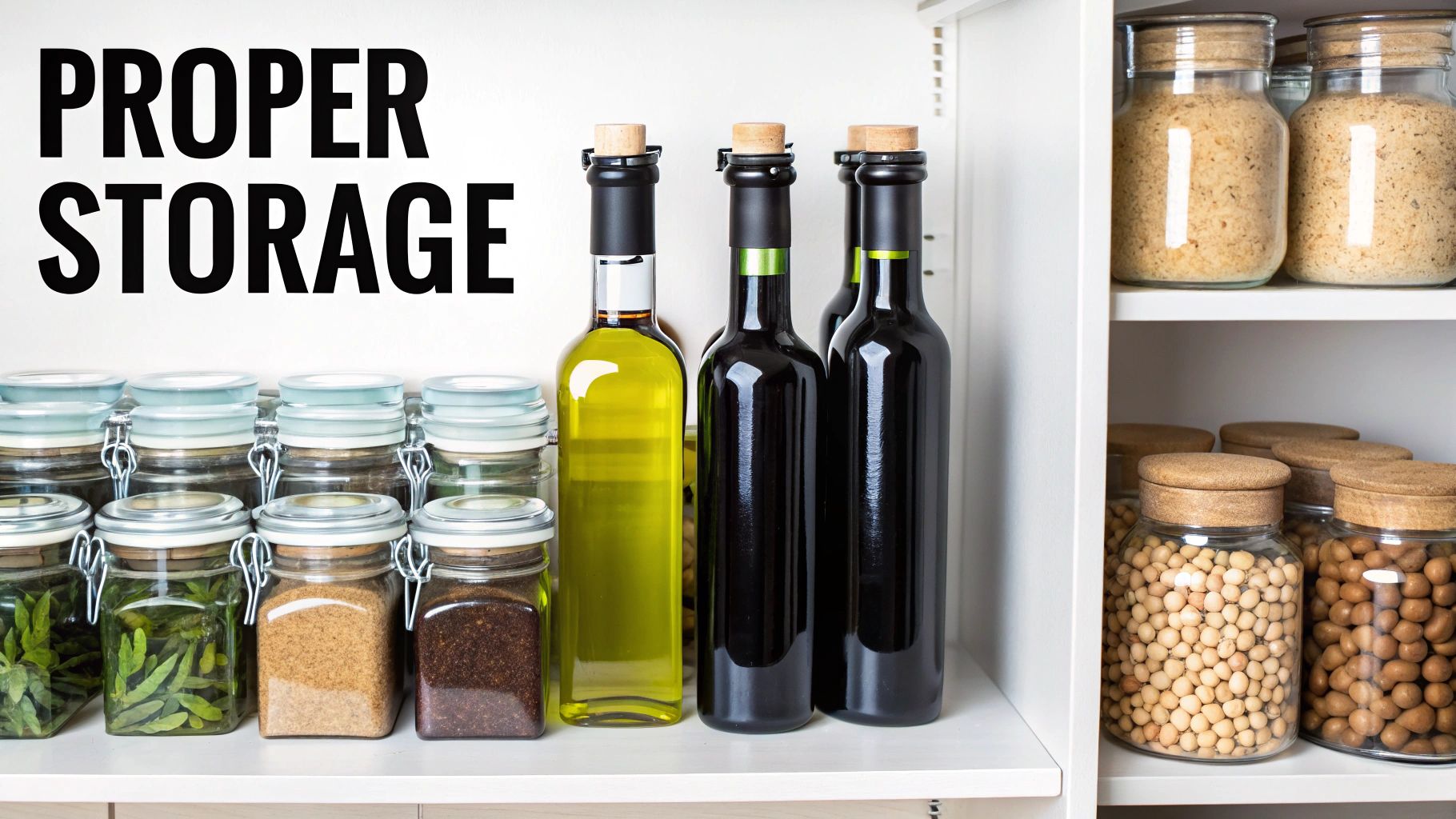
Never keep your olive oil next to the stove or on a sunny countertop. Heat and light will destroy it with alarming speed. The best place for it is in a cool, dark spot like a pantry or a cupboard, far from your oven.
And always twist that cap on tight immediately after use. Oxygen is the third enemy, and a tight seal keeps it out. By following these simple rules, you're ensuring the healthy olive oil you chose actually delivers all the goodness it promised. For a deeper look at what you're protecting, explore the complete olive oil nutrition facts.
The Global Shift Toward Healthier Cooking Fats
If you've recently started thinking more deeply about the health of your cooking oil, you are not alone. This isn't just a personal choice; it's part of a much larger story unfolding in kitchens across the globe. More and more, people are looking past clever marketing and asking a simple, powerful question: what is really in the food I eat?
This wave of awareness has sparked a major shift away from highly processed, unstable cooking fats and toward whole-food options like extra virgin olive oil. It's a movement powered by a growing understanding of just how profoundly our daily food choices impact our long-term health. From the sun-drenched hills of the Mediterranean to bustling kitchens in North America, the message is becoming undeniable.
The numbers tell the story. Worldwide olive oil consumption is on track to jump by over 15% in a single year, climbing from 2.45 million metric tons to an estimated 2.84 million metric tons by 2025. North America is a huge part of this, with a market now valued at around $4.5 billion. You can dive deeper into the global olive oil market trends to see the full scope of this culinary evolution.
This isn't just about statistics; it's about a collective awakening. The simple act of switching your cooking oil is a deliberate investment in your health, echoed by millions of others who are also choosing to live better.
So when you reach for that dark green bottle of high-quality EVOO at the store, know that you’re doing more than just buying another cooking fat. You’re casting a vote for a more intentional, healthier way of eating—a choice that is slowly but surely reshaping our global food culture, one delicious meal at a time.
A Few Common Questions About Cooking With Olive Oil
Walking down the olive oil aisle can feel overwhelming. Let's clear up some of the most common questions I hear, so you can cook with confidence and get the most out of every bottle.
Is "Light" Olive Oil Healthier or Lower in Calories?
This is perhaps the most deceptive trick in the grocery aisle, and it's all due to clever marketing. The word "light" on an olive oil bottle has absolutely nothing to do with calories or health. It refers only to the oil's lighter color and milder flavor.
"Light" olive oil is a refined product. It's been processed in a way that strips out the very things that make extra virgin olive oil so good for you—its powerful antioxidants and polyphenols. Every type of olive oil contains the same number of calories, but EVOO is the undisputed champion of health benefits.
Can I Reuse Olive Oil After Frying?
Technically, you can, but I strongly advise against it. Each time you heat olive oil, its chemical structure begins to break down. This process degrades its quality, destroys its beneficial compounds, and can even create harmful free radicals.
For the best flavor and the most powerful health punch, always start with fresh oil for every meal.
Think of it this way: the health magic is in the fresh oil. Reusing it is like trying to get the same benefit from a vitamin you've already taken.
Does the Color of Olive Oil Tell Me About Its Quality?
It's a common belief, but surprisingly, the answer is no. A world-class olive oil can range from a bright, grassy green to a deep, buttery gold. The color simply depends on the variety of olive used and how early it was harvested.
A far better indicator of a high-quality, antioxidant-rich EVOO is its aroma and taste. You want a fresh, fruity smell and that signature peppery kick in the back of your throat. That little tingle is the calling card of potent, health-giving polyphenols. To learn more about what these compounds can do for you, check out the health benefits of high-quality olive oil.
How Long Does Olive Oil Last Once I've Opened the Bottle?
Once you break that seal, the clock starts ticking. Oxygen is the enemy of fresh oil, and exposure to air immediately begins to degrade its delicate flavors and health properties.
For the absolute best quality, you should aim to use up an opened bottle of EVOO within two to three months. And always, always store it in a cool, dark place with the cap screwed on tight.
At Learn Olive Oil, we believe that understanding this liquid gold makes every meal better. We're here to guide you through the groves and into your kitchen with confidence. Discover the World of Premium Olive Oil.
 Learn Olive Oil
Leave a comment