You’ve seen it a thousand times, standing puzzled in the grocery aisle.
A gleaming $40 bottle of extra virgin olive oil sits beside a humble $10 bottle. Both seem to promise the same thing. Yet, one costs four times as much as the other.
Is it just clever marketing? Smoke and mirrors?
The truth is, that staggering price gap tells a story. It’s a story of soil, of struggle, and of craftsmanship that begins in a sun-drenched olive grove thousands of miles away. And understanding it is the key to never wasting another dollar on olive oil again.
Why a Forty Dollar Olive Oil Sits Next to a Ten Dollar Bottle
Imagine comparing a rare, single-vineyard wine to a generic jug of table wine. Both are made from grapes, yes. But that’s where the comparison ends. The same stark difference exists in the world of olive oil, where the journey from a tree to your kitchen pantry dictates every penny of its price.
One bottle is an agricultural commodity, mass-produced for anonymous, everyday cooking.
The other is a true culinary masterpiece—an artisanal creation born of a specific place, a specific harvest, and a producer’s fanatical dedication to their craft.
Decoding the Price Tiers
Learning to read the unspoken language of the price tag is your first step toward becoming a truly savvy olive oil buyer. The cost is a direct signal of the oil's purpose and the level of care invested in its creation. A higher price almost always points to an oil meant for finishing—for drizzling, for dipping—where its complex, vibrant flavors are the star of the show.
The price you see is a direct reflection of the journey inside that bottle—from a farmer’s desperate fight against drought to the meticulous cold-pressing process that sacrifices high yield for astonishing flavor.
This guide will pull back the curtain on the surprisingly dramatic world of EVOO pricing. We’re going to expose the global market forces, the grueling on-the-ground production costs, and the hidden quality markers that create this massive price chasm. By the time you’re done reading, you’ll grasp the true difference in taste and value, empowering you to choose the right bottle, for the right moment, every single time.
A Quick Look at Olive Oil Price Tiers
To see this in black and white, let's break down what you can generally expect from a standard 500ml (16.9 oz) bottle at different price points.
| Price Range (USD) | Typical Quality | Best For |
|---|---|---|
| $8 – $15 | Mass-Market Blend | Everyday cooking and high-heat applications where subtle flavors are not the primary goal. |
| $16 – $25 | Quality Single Region | Salad dressings and finishing dishes, offering far more distinct flavor notes and a noticeable leap in quality. |
| $26 – $40+ | Artisanal Estate Grown | Dipping, drizzling, and any flavor-forward use where its complex, often peppery profile can truly sing. |
This simple breakdown reveals a clear truth: you really do get what you pay for. The secret is knowing what you need the oil to do before you buy.
The Global Forces Driving Olive Oil Prices
Have you ever wondered why the price of that good bottle of extra virgin olive oil seems to be on a wild rollercoaster? The answer is often written by nature and world events, a volatile dance between weather and war.
Picture a family-run olive grove in Spain, the world's largest olive oil producer, gasping through a blistering, rainless summer. The harvest is pitifully small. The supply tightens. And suddenly, that scarcity is felt in the price on store shelves thousands of miles away. This isn't a hypothetical—it is the brutal reality behind the price tag.
The Unpredictable Hand of Climate
If one single force holds the olive oil supply hostage, it is the weather. The Mediterranean, the cradle of olive oil civilization, is on the front lines of a changing climate, and the ancient trees are feeling the strain.
This creates a perfect storm for shocking price swings:
- Searing Heatwaves: Extreme summer heat can literally scorch the delicate olive blossoms right off the branch, turning a future harvest into a phantom memory in a matter of days.
- Persistent Droughts: Olive trees are famously tough, but they aren't invincible. The prolonged droughts gripping Southern Europe are stressing them to their limits, forcing them to yield smaller, less juicy olives that produce far less oil.
- Unseasonable Frosts: A sudden, late-spring frost is a grower's ultimate nightmare. It can freeze the tiny buds just as they prepare to bloom, wiping out an entire year's crop—and a family’s income—overnight.
When a production powerhouse like Spain or Italy suffers a bad year—and recent yields have plummeted by as much as 50% in some regions—the entire global supply shrinks. Basic economics takes over, and that scarcity drives up extra virgin olive oil prices for everyone, everywhere.
Geopolitical Tremors and Economic Shocks
Beyond the olive grove, the stability of our interconnected world plays a massive role. Geopolitical conflicts can snarl critical shipping lanes, while runaway inflation makes everything from glass bottles to tractor fuel more expensive.
A conflict thousands of miles away can choke supply chains, making it more expensive just to get a bottle from a port in Italy to your local supermarket. Think of it as a hidden "geopolitical tax" that gets passed directly on to you.
We saw this play out with brutal force recently. Between mid-2022 and late 2023, the market went haywire. In North America, the average cost per metric ton skyrocketed from around $4,227 to over $6,024 in just six months—a staggering 42% increase. A huge part of that surge was fueled by trade disruptions from the Russia-Ukraine conflict, which created a bottleneck for shipments out of Europe.
You can explore these olive oil price trends to see just how viciously world events can impact our wallets. This potent mix of a volatile climate and an unstable world is precisely why prices have felt so turbulent.
The Journey from Olive Grove to Your Kitchen
While global markets and weather patterns set the stage, the real story of olive oil’s price begins much smaller—right there in the grove. The long, arduous road from a single olive blossom to the bottle in your pantry is paved with specific, very real costs. It is a process where every decision—from how the fruit is picked to the type of bottle it’s stored in—has a price tag attached.
Harvesting: The First Big Cost Driver
The first great expense is the harvest itself. Think of it this way: you can do it fast, or you can do it right.
The fast way involves giant machines that violently shake the trees, letting olives rain down indiscriminately—ripe, unripe, bruised, and broken. It’s brutally efficient and keeps labor costs low, but you pay a steep price in quality. Bruised fruit begins to oxidize immediately, creating defects in the final oil.
Then there is the ancient, traditional method: hand-picking. This is slow, painstaking work. Crews move through the groves like artists, carefully selecting only the perfectly ripe olives and ensuring none of the precious fruit is damaged. This gentle approach is incredibly labor-intensive and, frankly, expensive. But for any producer serious about crafting a world-class oil, it is the non-negotiable first step. That higher labor cost is immediately baked into the price of the bottle.
The Race Against the Clock to the Mill
Once those olives are off the tree, a frantic race against time begins. The clock starts ticking. Loudly.
To earn the coveted "extra virgin" seal, the fruit must be crushed into a paste and milled almost immediately—ideally within 12-24 hours. Any delay invites oxidation and fermentation, the two sworn enemies of great olive oil, which create foul off-flavors that can ruin an entire batch.
This urgency adds another layer of cost. Producers either need their own expensive mill on the estate or a trusted partner nearby, ready to spring into action the moment the harvest arrives. The very best producers use a method called cold pressing. This means keeping the olive paste at a cool, controlled temperature throughout the process to protect the delicate flavors and health-giving polyphenols. It yields significantly less oil, but the quality is breathtaking. To see how this all works, this guide to the olive oil manufacturing process is a fantastic resource.
The infographic below reveals how these different factors—from the farm to the store shelf—conspire to determine the price you pay.
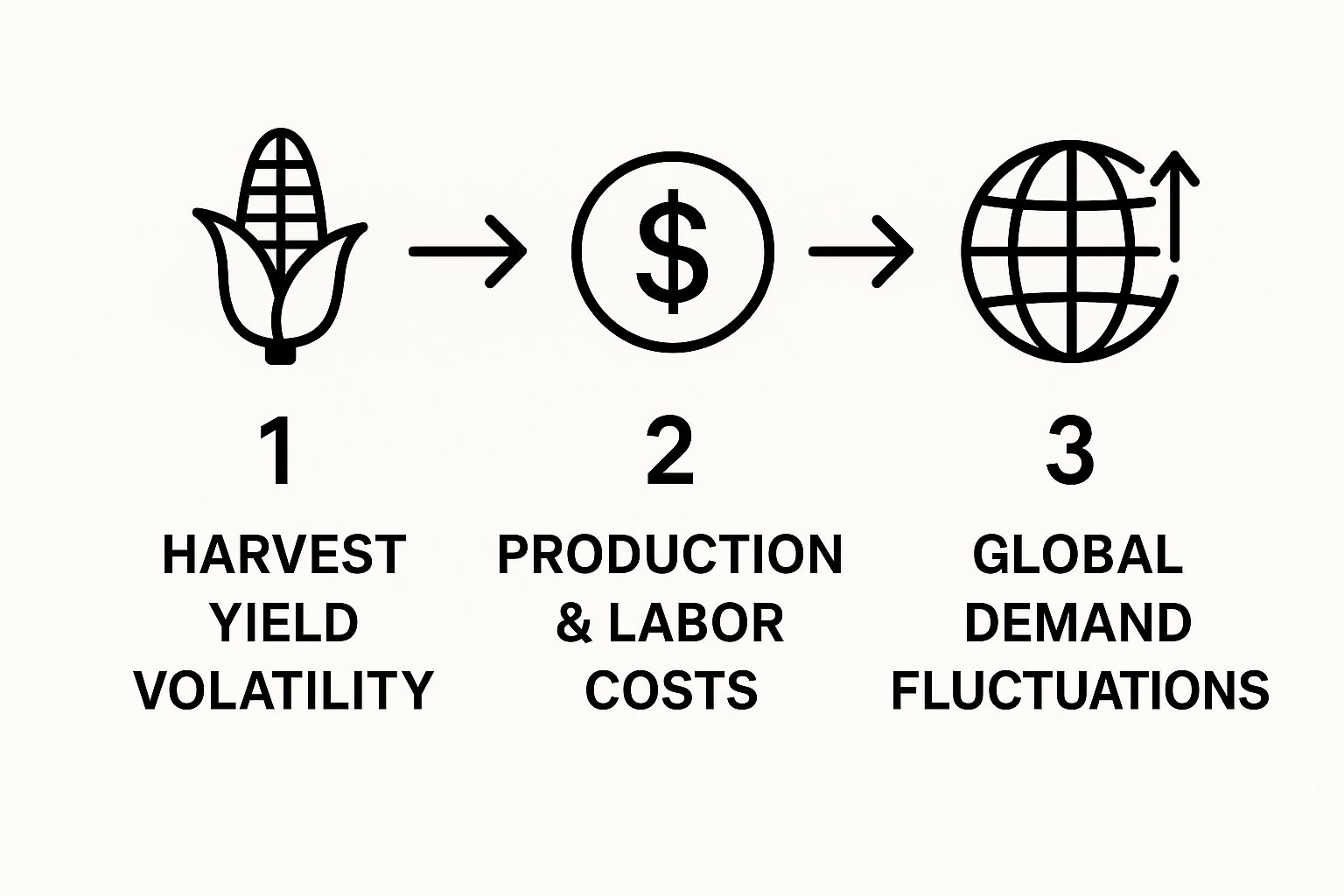
As you can see, it is a complex ballet between volatile harvests, the real costs of production, and the simple laws of supply and demand.
It Doesn't End at the Press
The costs don’t stop once the oil flows from the press. Several other crucial factors play a major role in the final price of that premium bottle.
- Rare Olive Cultivars: Just like wine grapes, some olive varieties are simply fussier to grow, less common, or produce a smaller amount of oil. A bottle made from a single, prized cultivar will always command a higher price than an anonymous blend of high-yield olives.
- Organic Certification: Earning that "organic" seal is neither easy nor cheap. It’s a long, rigorous, and expensive process for farmers, who must adhere to strict rules for years. Those added operational costs are passed on to you, but for many, the peace of mind is worth every extra penny.
- Smart Packaging: Even the bottle itself makes a difference. To protect the precious oil from light—its mortal enemy—quality producers use dark glass bottles or opaque tins. These materials are far more expensive than the cheap, clear plastic bottles you see littering the bottom shelf at the supermarket.
Every one of these decisions—hand-harvesting, immediate cold pressing, organic farming, protective packaging—is a deliberate, costly investment in quality. A higher price tag is often the direct reflection of a producer's unwavering commitment to getting every single step right.
Does a Higher Price Mean Higher Quality?
This is the million-dollar question you ask yourself in the grocery aisle: if I spend more, am I truly getting a better product?
The honest, if frustrating, answer is… usually, but not always.
While a high price can signal exceptional quality, it can just as easily be the result of slick marketing. The secret is to stop being a passive shopper and start becoming a label detective. You must look past the simple "extra virgin" claim, which, sadly, is not always the ironclad guarantee of excellence it should be.
Your first clue—and arguably the most critical—is the harvest date. Think of great olive oil as fresh-squeezed fruit juice. It is at its absolute peak of flavor and health benefits right after it's made. Unlike wine, it does not get better with age. If a bottle doesn’t proudly display its harvest date, consider it a giant red flag. Put it down and walk away.
Uncovering the Hallmarks of Quality
Once you've found a fresh oil, it's time to dig deeper. The true signs of a top-tier oil are almost always printed right on the label, separating the truly special from the merely average.
Here’s what to hunt for:
- Specific Origin: Look for a single estate, a specific region, or at the very least, a single country of origin. Vague, romantic phrases like "Product of the Mediterranean" are a classic trick to disguise a cheap blend of leftover oils from multiple countries and of varying quality.
- Official Seals: Keep an eye out for certifications like PDO (Protected Designation of Origin) or PGI (Protected Geographical Indication). These aren't just fancy stickers; they are legally binding guarantees that the oil was grown, processed, and bottled in a specific region using traditional, high-quality methods.
A high price often reflects an oil's polyphenol count. These powerful antioxidants are the source of that delightful peppery kick in the back of your throat—a signature of a fresh, healthy, and high-quality extra virgin olive oil.
The Power of Polyphenols
This brings us to one of the biggest drivers of both quality and price: polyphenols. These are the natural antioxidant compounds that give premium EVOO its characteristic peppery finish and its robust, sometimes slightly bitter, flavor notes. They are also the powerhouse behind many of the incredible health benefits of extra virgin olive oil.
Creating an oil with a high polyphenol count is difficult and expensive. It requires harvesting the olives when they are still young and green (which yields less oil), rushing them to the mill within hours, and using meticulous cold-extraction techniques.
Producers who go to all this trouble create an oil that’s not just more flavorful but also exponentially healthier. That extra effort, that obsessive care, and that lower yield is precisely what a higher price tag reflects. Once you learn to spot these clues, you can shop with the confidence of an expert, knowing exactly when a higher price really does mean a better oil.
A Quick Tour of the Global Olive Oil Market

To truly grasp what drives extra virgin olive oil prices, you must see the bigger picture. The world of olive oil is a fascinating tapestry of regions, each with its own unique story, flavor, and price point.
Think of it as a culinary world tour. A journey to Tuscany, Italy, will introduce you to robust, peppery oils that rightfully command a premium price. Hop over to Andalusia, Spain, and you'll find golden, fruity varieties from vast groves that often become the backbone of more affordable, everyday blends.
And you cannot forget Greece, where the legendary Koroneiki olive produces an oil bursting with intensely grassy and herbaceous notes. Each region’s specific climate, soil, and ancient olive varieties create a distinct flavor profile—and that regional identity is a massive factor in what you pay. A bottle from a small, celebrated estate in Crete will always be priced differently than a generic, placeless blend.
The Economics Behind the Bottle
But this story isn't just about terroir and taste; it’s also about who is buying. The extra virgin olive oil market is a massive global business, on track to hit USD 9.65 billion in 2024.
Leading the charge is North America, which snaps up the largest regional share, accounting for over 40% of all revenue. Europe and the Asia Pacific region follow closely, creating a powerful, worldwide demand for the highest quality oils.
It is a simple but powerful economic truth: a growing global appetite for high-quality, healthy fats puts constant upward pressure on prices, especially for the very best oils.
This isn't a fleeting trend. It's a fundamental shift in how people think about food. As health consciousness explodes, more and more consumers are hunting for authentic, high-antioxidant foods. They are learning that not all fats are created equal, and that a true extra virgin olive oil is a delicious investment in their well-being.
This intense focus on health benefits, particularly antioxidant content, is a major price driver. To dive deeper, you can start by understanding olive oil polyphenol content in our detailed guide. This ongoing consumer education creates new, discerning customers every day, ensuring that the demand for premium oil—and the prices it commands—will remain strong for years to come.
What’s Next for Olive Oil Prices?
After years of scarcity and shocking price hikes, what can you expect to see at the grocery store? The market, much like nature itself, is always striving for balance. The good news is that a strong rebound in production is on the horizon, which should bring some welcome relief.
Better weather in key growing regions is expected to boost the global supply significantly. But do not expect extra virgin olive oil prices to plummet back to old levels overnight. The market is caught in a fascinating tug-of-war between this desperately needed new supply and a ravenous, growing global appetite for the good stuff.
The Push and Pull of Supply and Demand
The latest numbers paint a very interesting picture. After a punishing few years, the 2024/25 harvest is projected to bounce back in a huge way. Global output is forecasted to jump by 32% to an estimated 3,375,500 tonnes. This recovery, driven mostly by a kinder climate in Europe, is exactly what the industry needed.
But here’s the other side of the coin: that production boost is running headlong into incredibly strong consumer demand. Global consumption is also expected to climb by about 10%. This isn't a blip; it reflects a major worldwide shift toward healthier, premium foods. For a closer look at the raw numbers, you can dig into the latest olive oil market data.
While more supply should certainly soften the extreme price peaks we've been seeing, it's highly unlikely we will ever return to the old lows. Strong global demand and the persistent costs producers face will likely establish a new, higher price floor.
So, what does this mean for you? We can likely expect some much-needed price stabilization. The wild swings should calm down, but the days of finding truly high-quality EVOO for rock-bottom prices are probably gone for good.
As you navigate this new normal, having a smart strategy is everything. Our guide on how to buy olive oil can help you ensure you’re always getting the best possible value. At the end of the day, these new prices simply reflect the true cost of producing liquid gold in the modern world.
Common Questions About Olive Oil Prices
Walking down the olive oil aisle can feel overwhelming. With prices all over the map, you’re bound to have questions. Let's tackle some of the most common ones so you can feel confident you're getting exactly what you pay for.
One of the first things you'll notice on a premium bottle is the term “first cold pressed.” This isn't just fancy marketing—it's a sign of a very specific, high-quality production method.
“First press” tells you the olives were crushed just one time, yielding the purest, most flavorful oil. "Cold press" means no heat was used during extraction, a crucial step for preserving the oil's delicate aromas and health-boosting antioxidants. You are paying for the superior quality that comes from this gentle, flavor-first process.
This meticulous method produces a much smaller amount of oil compared to industrial, heat-assisted techniques. That lower yield, combined with the incredible quality, is a huge part of what drives up the cost.
Why Color Isn't a Sign of Quality
It's a common and costly misconception that a deep, rich green olive oil is automatically better. In truth, the color of a genuine extra virgin olive oil tells you almost nothing about its quality.
The final hue, which can range from a vibrant green to a pale, buttery gold, is determined by the specific olive variety and its ripeness at harvest. Professional tasters even use special blue-tinted glasses to hide the oil's color so it won't bias their judgment. A suspiciously low price tag is a far more reliable red flag, and you can learn more in our guide on how to spot fake olive oil.
Is It Worth Cooking with Expensive Oil?
This is a fantastic question, and the answer comes down to one thing: heat.
High cooking temperatures will rapidly destroy the delicate, complex flavors and beneficial compounds that make a premium artisanal oil special. Using that prized $40 bottle for frying is like pouring it down the drain; you lose everything that makes it great.
Here's a simple rule of thumb:
- For high-heat cooking like searing or sautéing, a solid, mid-range EVOO is your workhorse. It gets the job done without breaking the bank.
- For finishing dishes, drizzling over salads, making vinaigrettes, or dipping bread, your best, most expensive oil is absolutely worth it. This is where its nuanced, peppery notes can truly take center stage and transform a meal.
Here at Learn Olive Oil, we believe that knowing the story behind the price helps you make smarter choices in the kitchen. Dive into our other guides and start your journey to becoming an olive oil aficionado today. Find out more at https://learnoliveoil.com.
 Learn Olive Oil
Leave a comment