That unopened bottle of olive oil sitting in your pantry isn't a ticking time bomb. Far from it. A truly great extra virgin olive oil has a generous shelf life of 18 to 24 months from the moment it was harvested. So, banish the thought that it spoils in a hurry; sealed and stored with a little wisdom, it’s a treasure just waiting to be uncorked.
How Long Does Unopened Olive Oil Really Last?
Think of a sealed bottle of olive oil less like a perishable carton of milk and more like a protected time capsule of flavor. Its three mortal enemies—light, heat, and air—are all locked out. As long as that seal remains unbroken, the vibrant, peppery, and healthful qualities you paid for are remarkably well-preserved.
The date stamped on the bottle is a "Best Before" date, not an expiration command. It’s the producer’s promise that the oil will deliver its peak sensory experience up to that point. The true countdown, however, begins not at the bottling plant, but in the olive grove itself—at the very moment of harvest. A quality oil is robust, armed with natural antioxidants called polyphenols that act as its personal bodyguards, fighting off decay from within.
Unopened Olive Oil Shelf Life At a Glance
To give you a clearer picture, here's a quick breakdown of how different grades of olive oil typically fare before you break the seal, assuming they're stored properly.
| Olive Oil Grade | Typical Shelf Life (Unopened) | Key Factor |
|---|---|---|
| Extra Virgin Olive Oil (EVOO) | 18-24 Months | High antioxidant (polyphenol) content provides natural protection against degradation. |
| Virgin Olive Oil | 18 Months | Still contains natural antioxidants but typically fewer than top-tier EVOO. |
| Refined/Light Olive Oil | 12-18 Months | The refining process removes many antioxidants, making it more susceptible to aging. |
This generous timeframe isn't just a guess; it's a standard recognized across the industry. The shelf life for unopened olive oil, especially extra virgin varieties, reliably falls between 18 to 24 months from its production date. This is why manufacturers use "Best Before" dates—they're a guide for when the oil will be at its absolute best.
The most important secret to remember is this: An unopened bottle doesn't magically go bad the day after its "best by" date. It simply begins a slow, graceful decline from its peak personality.
While this section reveals the secret life of the unopened bottle, understanding how long olive oil lasts after you've cracked it open is the next crucial piece of the puzzle. The moment you twist that cap, the clock truly begins to tick.
The Three Enemies of Olive Oil Freshness
Every bottle of olive oil, even when sealed shut, is in a quiet, constant battle with three major adversaries: light, heat, and oxygen. These aren't minor annoyances; they are the primary forces that will systematically break down your oil, stripping it of its vibrant flavor, aroma, and health benefits. Think of them as a team of thieves working together to turn a beautiful, peppery oil into something bland and disappointing.
It helps to see an unopened bottle not as a perfectly preserved time capsule, but as a well-guarded vault. The seal is strong, but there’s already a tiny bit of oxygen—the "headspace" air trapped at the top—working silently from the inside. The olive oil shelf life unopened really comes down to how well you protect that vault from the saboteurs on the outside.
Light: The Instigator of Decay
Light is, without a doubt, olive oil’s worst enemy, especially the UV rays from the sun. When light penetrates the oil, it triggers a destructive chain reaction called photo-oxidation. This process is like a wrecking ball for all the good stuff inside. It demolishes the polyphenols (the healthy antioxidants) and chlorophyll that give high-quality oil its character and natural protection.
Leaving a clear glass bottle on a sunny kitchen counter is an open invitation to disaster. The damage happens much faster than you’d think. This is precisely why the best oils are packaged in dark green glass, brown glass, or even better, completely opaque tins. The container is truly the first line of defense.
Heat: The Accomplice in Rancidity
Heat is the accelerator. It doesn't start the decay, but it makes every chemical reaction happen much, much faster. It's the getaway driver for light and oxygen, helping them do their damage in record time. As a rule of thumb, for every 18°F (10°C) rise in temperature, the oxidation rate nearly doubles. That’s why storing a bottle next to your stove or in a warm cabinet is one of the worst things you can do.
The sweet spot for storage is a cool, stable temperature, ideally between 55-65°F (13-18°C). Think of a wine cellar or a cool pantry. This slows the molecular aging process to a crawl, keeping the oil’s fresh, lively character intact for as long as possible.
Oxygen: The Slow Poison
Even with a perfect seal, that small pocket of air trapped inside the bottle is enough to begin the slow, inevitable process of oxidation. This is the natural aging that all oils go through. Over time, oxygen attacks the fatty acids, which is what eventually leads to that stale, waxy, or crayon-like smell of rancid oil.
The battle against oxygen is why the quality of the oil and its container are so crucial. High-quality extra virgin olive oil is rich in natural antioxidants that fight off this oxidation, while a proper seal ensures no more of this enemy can get inside.
Once you understand these three threats, you're armed with the knowledge to protect your olive oil's quality. This insight is also your secret weapon at the grocery store. Being able to identify a quality product on the shelf is a crucial skill, and you can learn more by checking out our guide on how to spot fake olive oil to make sure you're getting the real deal. By choosing the right bottle and giving it the right home, you can ensure it tastes just as incredible as the day it was made.
Decoding the Dates on the Bottle
The numbers stamped on a bottle of olive oil are your single best guide to its quality and freshness. Understanding them is the one skill that will instantly elevate you from a casual buyer to an informed connoisseur. It’s how you spot the good stuff—the real liquid gold.
These dates tell a story, but you have to know which one to read. You’ll typically find two: the Harvest Date and the Best Before Date. One is a hard fact, the other is little more than an educated guess.
The Harvest Date Is The Only Truth
Think of the Harvest Date as the oil's birth certificate. It pinpoints the exact time—usually the month and year—that the olives were picked and pressed. This is ground zero. It’s the moment the freshness clock officially starts ticking.
Once pressed, a top-notch extra virgin olive oil has a window of about 18 to 24 months to deliver its peak flavor and full health benefits. The harvest date is an unchangeable timestamp of its origin. A recent date is a promise of that vibrant, peppery kick and the full payload of antioxidants you're paying for.
When you see a Harvest Date, you’re looking at a piece of verifiable history. It’s a transparent sign of a producer who’s proud of their product and wants you to know exactly how fresh it is.
Finding a bottle that clearly displays the harvest date is a fantastic sign. It shows the producer isn't trying to hide behind vague timelines. They're handing you the single most important piece of information you need to make a smart choice.
The Best Before Date Is An Educated Guess
The “Best Before” date is a completely different animal. This isn't an expiration date and it has nothing to do with safety. It's simply the manufacturer's estimate of how long the oil will stay at peak quality, assuming it's stored perfectly.
Here's the secret most people miss: this date is almost always calculated from when the oil was bottled, not when it was harvested. That’s a huge distinction. An oil could sit in a giant storage tank for a year before it's ever bottled. In that case, the "Best Before" date would make it seem much fresher than it truly is.
This is why you must prioritize the harvest date. While a "Best Before" date is a helpful guide, it doesn't tell the whole story about the olive oil shelf life unopened. You can find out more about this from the experts at Artem Oliva.
So, the next time you're in the grocery store aisle, play detective. Your eyes should immediately scan for the Harvest Date. By choosing the bottle with the most recent harvest, you are guaranteeing yourself the freshest, most flavorful, and healthiest oil on the shelf.
What's Happening Inside That Sealed Bottle?
Ever stop to wonder what’s actually going on inside that unopened bottle of olive oil? It might look perfectly still, but there’s a quiet, microscopic battle being waged within. The heroes of this story are powerful compounds called polyphenols, and their mission is defense.
Think of polyphenols as the oil's personal army of bodyguards. Their sworn duty is to protect it from its greatest enemy: oxygen. In a properly sealed bottle, with almost no new oxygen present, these guardians can do their job with stunning efficiency. They're the very same compounds that give a great extra virgin olive oil its signature peppery kick and fresh, grassy aroma. But their most critical role is fighting off oxidation—the chemical reaction that will eventually turn a vibrant, flavorful oil into something flat and rancid.
The Power of Polyphenols
So, what exactly are these bodyguards? Polyphenols are naturally occurring antioxidants, and the higher their concentration, the better the oil's quality and the longer it will last. They act like tiny shields, sacrificing themselves to stop stray oxygen molecules from attacking the oil's delicate fatty acids. It’s this built-in defense system that gives a top-tier, unopened olive oil its incredible shelf life.
That airtight seal is more than just a lid; it’s a fortress wall. It locks out the air that wants to get in and degrade the oil, keeping the flavor and aroma safely trapped inside. With only a minuscule amount of oxygen in the bottle to begin with, the polyphenols can stand guard for months, preserving the oil’s character until you’re ready to break the seal.
It's not magic that makes a high-polyphenol oil taste fresh for so long. It's science—nature's own perfect preservation system at work.
The Science Backing It Up
This isn’t just culinary folklore; it’s proven science. Researchers conduct controlled studies to measure how different storage conditions impact an oil's stability. Time and again, this research confirms that the near-total lack of new oxygen in an unopened bottle is the single most important factor in slowing the oxidative process. It essentially puts the oil's aging process on pause. You can find more details on this scientific testing on link.springer.com.
This natural resilience doesn't just protect the taste—it preserves the health benefits, too. The very same polyphenols that keep the oil fresh are celebrated for their powerful anti-inflammatory properties. To get the full picture of olive oil nutrition facts, you have to understand that freshness is everything. When you protect the oil from decay, you’re also protecting its incredible health benefits.
How to Store Unopened Olive Oil Perfectly
You've done the hard part. You’ve navigated the store shelves, deciphered the harvest dates, and chosen a beautiful bottle of liquid gold. Now, your job is simple but absolutely critical: become its guardian.
That vague advice to find a "cool, dark place" is a decent start, but we can do much better. Your mission is to create a sanctuary for your unopened oil, ensuring that the moment you break that seal, it tastes as fresh as the day it was bottled.
The first rule is mastering temperature control. Olive oil despises dramatic temperature swings. The ideal environment is a consistent 55-65°F (13-18°C). This is the sweet spot that slows the natural aging process to a crawl.
Think of it like a fine wine. You wouldn't store a prized bottle next to your oven, and the same logic applies here. The cabinet above or next to your stove is your olive oil's worst enemy, as the constant waves of heat will rapidly accelerate its decline.
Finding The Perfect Home
Not all storage spots are created equal. Where you keep that unopened bottle can make a massive difference in its flavor and longevity. Let’s break down some common household locations to reveal where your oil will truly thrive.
Below is a quick comparison of good versus bad spots to stash your unopened olive oil.
Ideal vs. Problematic Storage Locations for Unopened Olive Oil
| Storage Location | Why It Works (or Doesn't) | Freshness Impact |
|---|---|---|
| Pantry or Cupboard | Excellent. As long as it's away from the stove and direct sunlight, it offers a stable, dark environment. | Optimal. This is the easiest and most effective way to preserve freshness. |
| Basement or Cellar | Ideal. Naturally cool and dark, this is the gold standard for long-term storage. | Maximum. The consistent, cool temperature dramatically extends the oil's peak quality. |
| Kitchen Countertop | Poor. Direct exposure to sunlight and fluctuating kitchen temperatures causes rapid degradation. | Negative. You'll significantly shorten the oil's life and diminish its flavor profile. |
| Next to the Stove | Disastrous. The constant heat is a guaranteed recipe for premature rancidity. | Severe. This is the fastest way to ruin a good bottle of olive oil. |
As you can see, the choice is clear. A cool, dark spot is the undisputed champion for keeping your olive oil in peak condition.
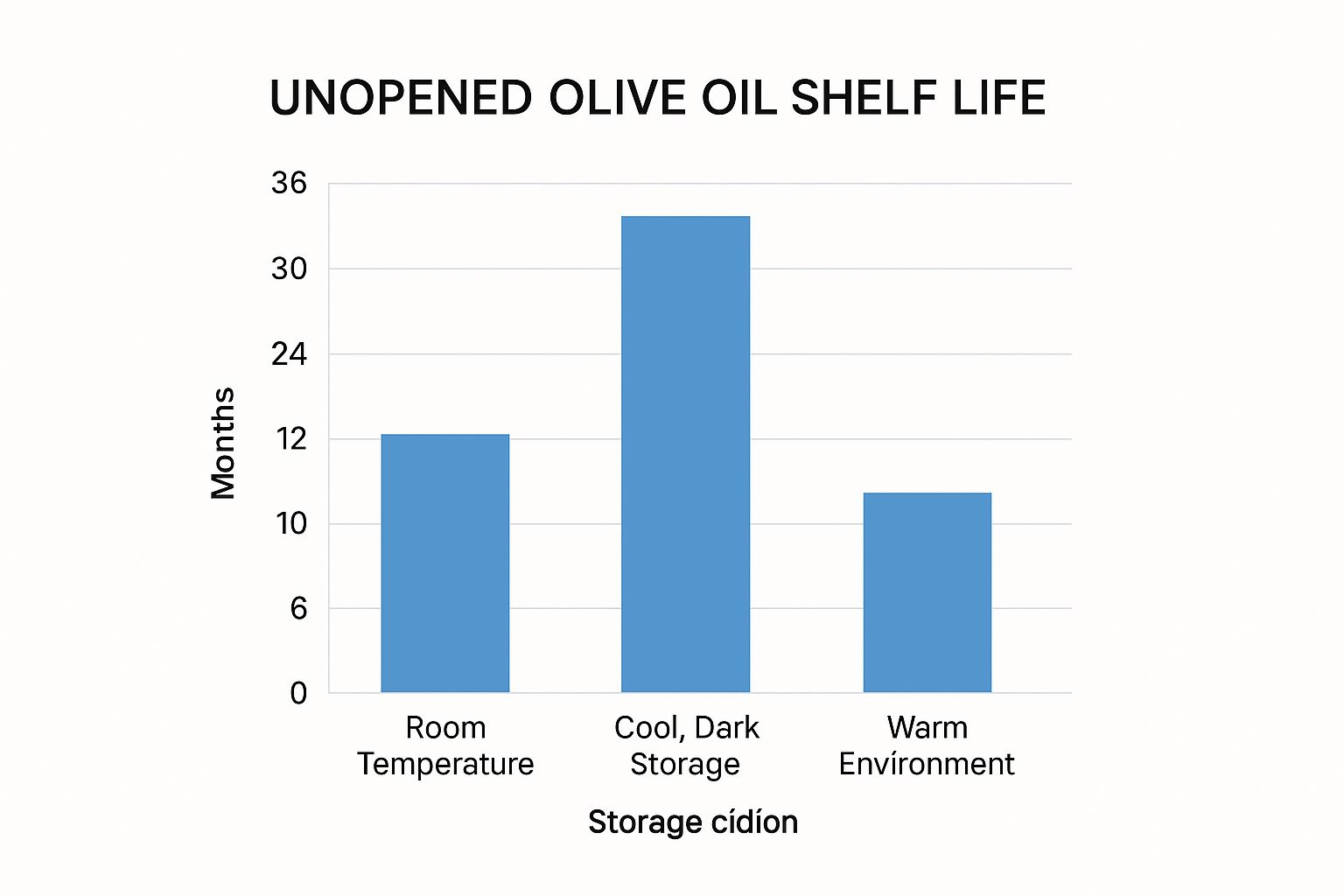
The data speaks for itself—simply moving your oil from a warm spot to a proper cool, dark environment can potentially triple its lifespan. For a complete overview, our in-depth guide offers even more tips on proper olive oil storage.
Remember, the goal is stability. An environment that maintains a consistent temperature and stays dark is the secret to preserving the delicate flavors and powerful antioxidants inside that sealed bottle.
Understanding how to properly store olive oil fits into a larger picture of smart kitchen habits and sustainability. For a broader perspective on making your pantry staples last, you might find a modern guide to preserving food at home quite useful.
By treating your olive oil with this small measure of care, you’re not just protecting your investment; you’re guaranteeing a more delicious and healthful experience down the road.
Common Questions About Unopened Olive Oil
Even when you know the basics of storing olive oil, a few nagging questions always seem to pop up. Let's tackle some of the most common concerns and myths about unopened olive oil, so you can feel confident every time you reach for a bottle.
We've all been there—staring at a bottle that’s past its "best before" date, wondering if it's still a culinary treasure or if it's destined for the bin. The good news? With unopened olive oil, the answers are usually quite simple.
Can I Use Oil After Its Best Before Date?
Yes, you absolutely can. Think of that date as the producer's promise of peak quality, not a hard-and-fast expiration date. An unopened bottle that's been stored properly won't suddenly become unsafe to eat. It just begins a slow, graceful decline from its most vibrant self.
The oil might lose some of its peppery kick or taste a bit flat or greasy. While it's still perfectly fine to use for cooking, it won't have the complex, lively flavor you'd expect from a fresh extra virgin olive oil. It’s safe, just less impressive.
Does The Container Really Matter That Much?
It matters more than you can imagine. The container is your oil's first and best line of defense against its greatest enemy: light. An opaque tin or a dark glass bottle in a deep green or brown acts like a powerful shield, blocking the light that causes oil to break down with alarming speed.
A clear glass bottle, however, offers zero protection. Olive oil in clear glass will degrade much faster, even if you keep it tucked away in a dark pantry. To get the most out of the olive oil shelf life unopened, always choose a bottle that guards what's inside. Our guide on how to choose olive oil can help you make the right call right from the start.
The rule is simple: if you can see the oil clearly through the bottle, the light can get to it just as easily. Protective packaging is a non-negotiable sign of a quality producer.
Should I Refrigerate Unopened Olive Oil?
This is a common myth, but the answer is a firm no. Sticking an unopened bottle in the fridge doesn't help preserve it, and it can actually cause problems later. The cold temperatures can cause the natural waxes in the oil to solidify, making it look cloudy and sludgy.
This cloudiness will disappear once the oil warms back up to room temperature, but the cycle of chilling and warming can create condensation inside the bottle. Moisture is terrible for olive oil, and it can accelerate spoilage once you finally open it. A consistently cool, dark pantry is a far better home for your oil.
Are The Health Benefits Still There in Older Oil?
You’ll still get some of the benefits, but they won't be nearly as potent. The powerful antioxidants in olive oil, called polyphenols, are responsible for many of its most celebrated health properties. Unfortunately, these compounds are fragile and degrade over time.
An older oil still contains healthy monounsaturated fats, but the concentration of its most powerful anti-inflammatory components will have dropped off significantly. To get the maximum health benefits and the best flavor, your best bet is always to use your oil within 18 to 24 months of its harvest date.

 Learn Olive Oil
Leave a comment