Ever stood in a grocery aisle, paralyzed by a wall of olive oil bottles? You see the words "first cold pressed" and sense they mean something special, but what is the real story behind that premium promise?
Here's the secret: "first cold pressed" is far more than a fancy label. It's a guarantee. It's the producer's vow that the oil in that bottle is the purest, most flavorful expression of the olive—an unadulterated "liquid gold" extracted with ancient wisdom to preserve every drop of its life-giving goodness.
The Secret Code of "First Cold Pressed" Unlocked
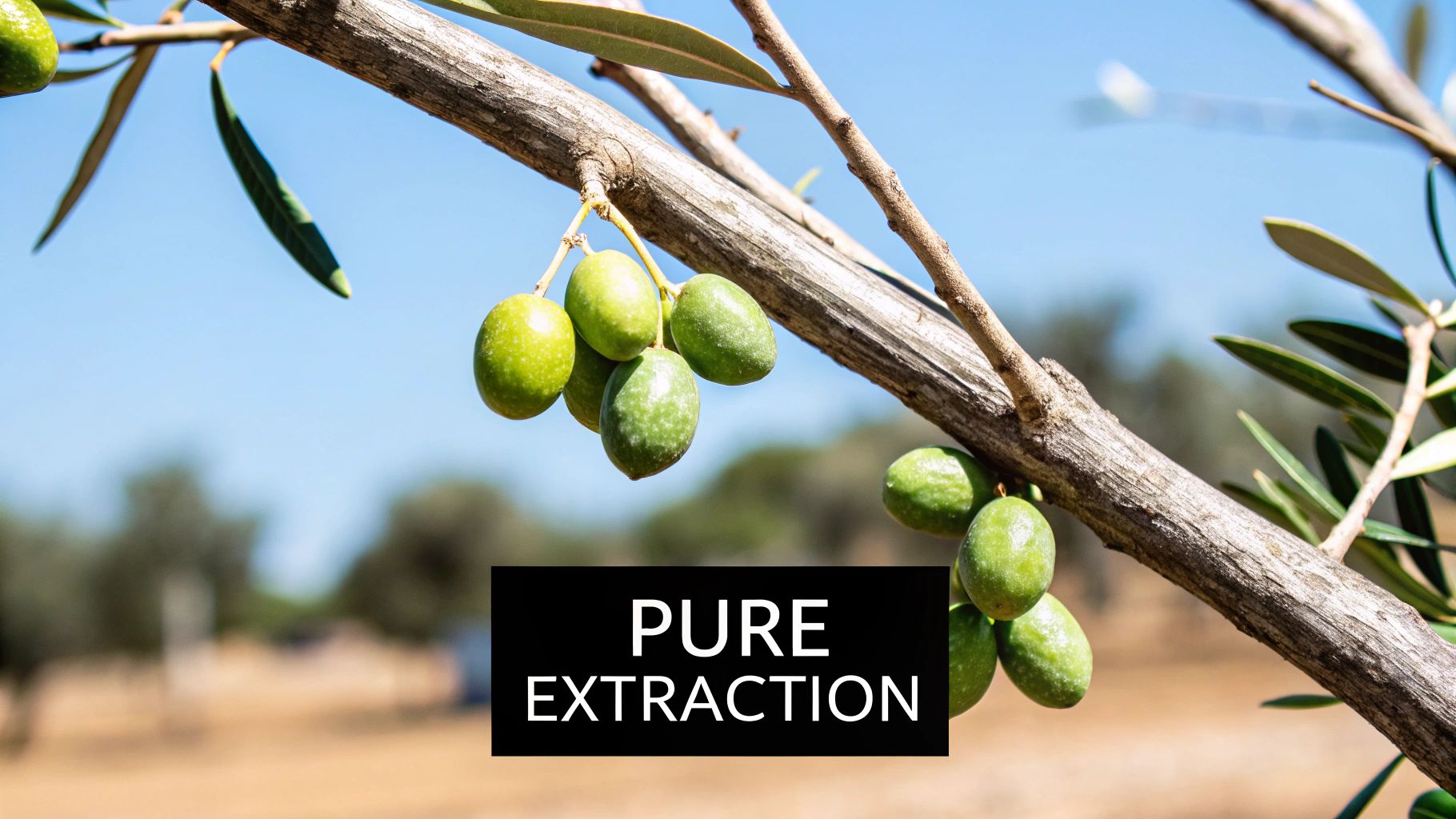
That phrase, "first cold pressed," isn't some modern marketing invention. It speaks to a time-honored tradition, a specific method designed to capture the very soul of the olive. Think of it less as a technical term and more as a seal of craftsmanship, a story of how that oil journeyed from a sun-drenched grove to your kitchen.
To grasp its power, you must understand the two promises hidden within the phrase.
The Irreplaceable Power of the "First Press"
The term "first press" means precisely what it suggests: the olives were crushed and pressed only one time. This initial, gentle squeeze yields the most exquisite oil—the nectar of the fruit. This is the oil brimming with the most vibrant flavors, an intoxicating aroma, and the highest concentration of health-giving nutrients.
Imagine making orange juice. The first squeeze gives you the richest, sweetest, most flavorful juice. You could wring out the pulp a second time, but the result would be a pale, watery imitation. It’s the same with olives. While industrial producers can use scorching heat or chemical solvents to bleed more oil from the leftover paste, that second-rate oil will always lack the character and quality of the first. To witness the entire process, see our deep dive into how olive oil is made.
Why "Cold" Is the Unbreakable Rule
The "cold press" half of the promise is just as critical. It certifies that the temperature during extraction never exceeded 27°C (or 80.6°F). This detail is everything. Why? Because heat is the sworn enemy of magnificent olive oil.
While higher temperatures can squeeze out more oil, this efficiency comes at a catastrophic cost. Heat demolishes the delicate, complex flavors and annihilates the very antioxidants—like polyphenols—that give the oil its incredible health benefits.
Keeping the process cool is a non-negotiable act of preservation. It ensures those wonderful peppery, fruity, and grassy notes are not just present but sing on your palate. It guarantees you receive every ounce of the authentic taste and potent goodness that makes this oil so revered by chefs and health experts alike.
From Ancient Groves to Your Kitchen Counter
Picture an ancient tradition: massive stone wheels, turned by patient donkeys, slowly grinding freshly picked olives into a thick, fragrant paste. This is the very heart of the "first cold pressed" method—a process born from a profound respect for the fruit. It was, and still is, a labor of love, designed to gently coax the oil out without doing it violence.
While stone wheels are now a romantic memory, the spirit of that gentle persuasion lives on. Today’s mills use state-of-the-art stainless-steel machinery, but the core principle is sacredly held. The process is now more accurately called “cold extraction,” but the mission is identical: to shield the oil from its two greatest foes—heat and aggressive repeat processing.
The term "first cold pressed" is, in reality, a sacred promise. It guarantees the oil is from the one and only extraction of the olives, and that no heat was used to wring out a few extra drops. This is what preserves the oil’s soul—its peppery bite, its fruity aroma, and its army of powerful antioxidants.
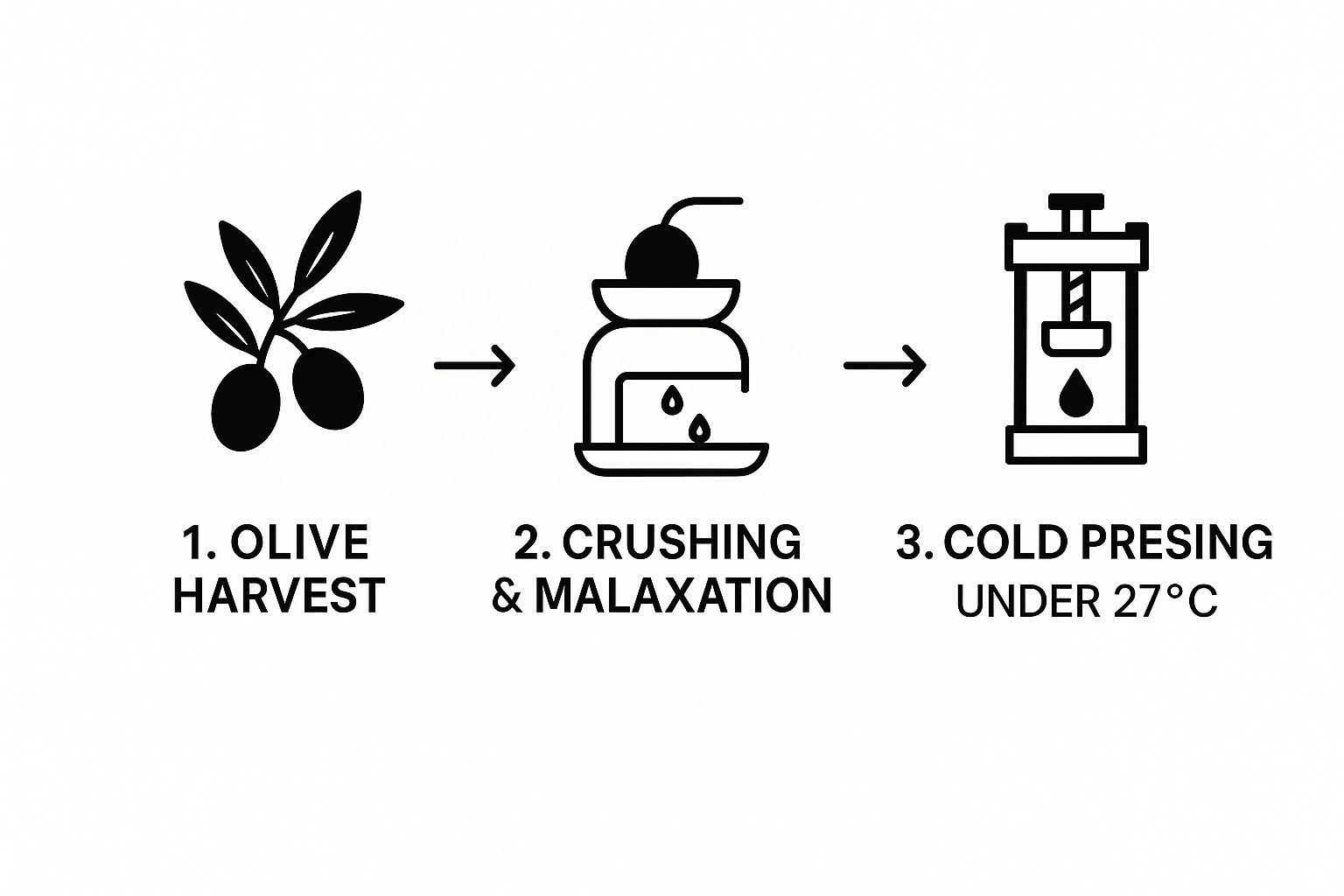
This modern method, while far more efficient, still pays homage to tradition. For anyone fascinated by the origins of this liquid gold, connecting with the olive tree itself is key. You can even try your hand at growing an indoor olive tree to deepen that connection. It’s this profound respect for the source that makes the final oil so extraordinary.
This gentle, temperature-controlled method is the gold standard in regions that have perfected olive oil over millennia. What "first cold pressed" signifies today is oil extracted only by mechanical means, completely free from added heat or chemicals. To be precise, "cold pressing" demands temperatures stay strictly below 27°C (80°F) to protect the delicate phenols and antioxidants that make the oil a health powerhouse.
It's no coincidence that the Mediterranean basin, producing around 72% of the world's supply, has long championed these quality-first techniques. This meticulous care defines exceptional olive oil, but it also means you must learn to separate the real deal from the fakes. Our guide on how to spot fake olive oil will arm you with the knowledge to shop like a pro.
How To Spot The Real Deal: Unmasking Authentic Olive Oil
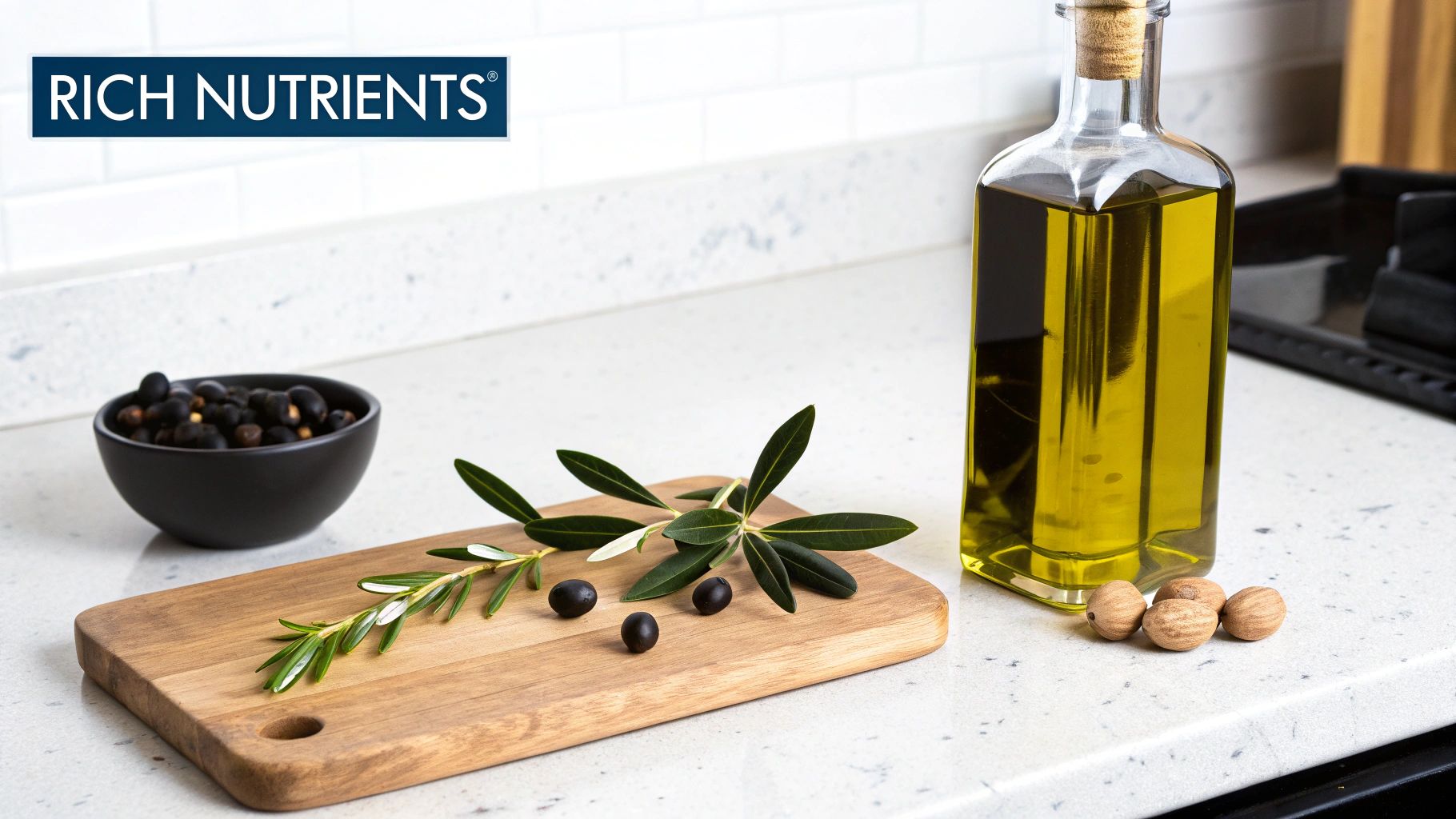
Walking down the olive oil aisle can feel like navigating a minefield. With countless bottles all screaming "extra virgin," how can you possibly separate the truly magnificent from the mediocre? It’s far easier than you think. Forget the seductive marketing and front-label fiction—the real story is hidden in plain sight.
Becoming a savvy shopper isn't about guesswork. It’s about knowing precisely where to look, transforming you into a label-reading expert who can spot true quality from a mile away.
Decode The Label: Your Guide To Finding Liquid Gold
The truth is almost always printed right on the bottle, if you just know the code. Ignore the idyllic pictures of sun-dappled groves and focus on the hard facts.
Here are the tell-tale clues that a producer is deadly serious about their craft:
- Harvest Date: This is your most powerful clue to freshness. Look for a specific harvest month and year, such as "November 2023." A vague "best by" date, usually two years from bottling, tells you almost nothing about the oil's true age.
- Dark Bottle or Tin: Light is a ruthless assassin of good olive oil. It causes the delicate flavors and powerful antioxidants to break down with shocking speed. A producer who invests in dark glass or an opaque tin is actively defending their product. Clear glass is a giant red flag.
- Acidity Level: This is a lab-tested measure of purity and quality. To be classified as extra virgin, an oil must have a free acidity of 0.8% or less. Truly world-class oils often boast levels well below 0.3%. A lower number means the olives were healthier and processed with greater care.
Think of it this way: low acidity in olive oil is like a low fever in a person. It’s a direct, measurable sign of health and vitality, reflecting how well the olives were cared for from tree to bottle.
Quality Markers At A Glance
To make it even simpler, here's a quick reference guide you can use in the store. It reveals the most important factors that separate high-quality oil from all the rest.
Quality Markers of Authentic First Cold Pressed Olive Oil
| Quality Factor | What to Look For | Why It Matters |
|---|---|---|
| Freshness | A specific harvest date (month/year) on the label. | Oil is a fresh fruit juice; it degrades over time. Fresher is always better for flavor and health benefits. |
| Protection | Dark glass bottle or an opaque tin. | Light causes rapid oxidation, destroying flavor and nutrients. Dark packaging is essential for preservation. |
| Acidity | Free acidity listed as ≤0.8% (premium oils are often <0.3%). | This is a chemical indicator of quality. Lower acidity means healthier olives and better processing. |
| Origin | A specific estate, region, or country of origin. | Vague terms like "Product of Italy" can mean oils from various countries were just blended and bottled there. |
| Certification | Official seals (e.g., PDO, PGI) or third-party verification. | These seals guarantee the oil meets strict production standards for its designated region. |
Using this table as your guide, you'll be able to quickly assess any bottle and feel confident you're choosing a product that's truly worth your money.
By keeping these simple tips in mind, you can cut through the noise and consistently choose a superior olive oil. If you want to dig even deeper, you can explore more about what makes first press olive oil a mark of distinction in the culinary world.
The Life-Changing Health Benefits Hiding in Your Bottle
Ever wonder why Mediterranean grandmothers and cutting-edge scientists both swear by this golden liquid? It’s not just about flavor. A truly authentic first cold pressed olive oil is a treasure chest of health benefits, making it far more than a simple cooking ingredient—it’s a genuine functional food.
The real magic is in the powerful natural compounds preserved by the gentle, heat-free extraction. The two stars of this show are polyphenols and a specific one called oleocanthal. Together, they create that signature peppery kick you feel at the back of your throat. Think of that sensation as proof—it's the undeniable sign you have a high-quality, potent oil.
The Power of Polyphenols
So, what do these compounds actually do? Polyphenols are antioxidants, your body's elite security team against cellular damage. They fight back against oxidative stress, a primary villain behind aging and many chronic diseases. By neutralizing rogue molecules known as free radicals, they help defend your body right down to the cellular level.
This microscopic defense translates into some very real, life-enhancing benefits:
- Heart Health: These antioxidants are champions of supporting healthy blood vessels and robust cardiovascular function.
- Anti-Inflammatory Effects: Oleocanthal, in particular, has been studied for its profound anti-inflammatory properties, which some researchers have compared to a low dose of ibuprofen.
- Brain Function: Diets rich in high-quality olive oil have been linked to sharper cognitive health and better memory retention over time.
People are catching on. This growing awareness is fueling a massive demand for minimally processed, antioxidant-rich foods. In fact, the cold pressed olive oil market is projected to grow to about $1.0 billion by 2032. While olive oil is a powerhouse, it's also worth learning about other natural oils, like the best carrier oils for skin, which offer their own unique benefits.
Choosing first cold pressed olive oil is more than a culinary upgrade; it’s a conscious decision to invest in your long-term wellness.
Ultimately, making this oil a regular part of your diet is one of the simplest and most delicious things you can do for your health. To get the most from every drop, check out our guide on the benefits of cooking with olive oil.
Unleashing the Power of First Cold Pressed Oil In Your Kitchen
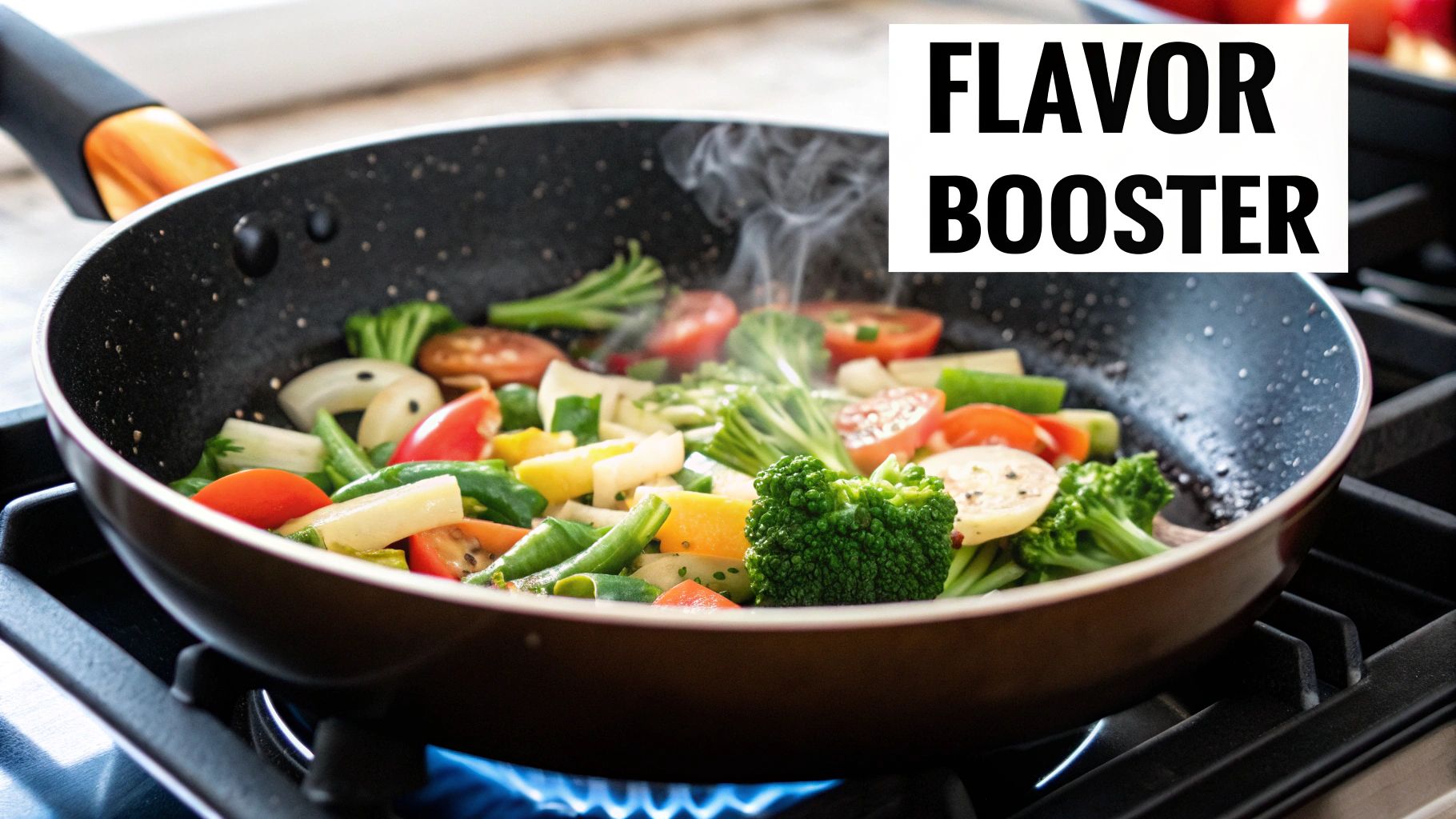
So, you've finally brought home a bottle of the good stuff. Now what? Most people instinctively save their best olive oil for salad dressing. While that’s a fine start, it’s like owning a Ferrari and only driving it to the post office. You’re missing the real thrill. The true potential of a first cold pressed olive oil is only unlocked when you let it take center stage in your everyday cooking.
First, let's smash a common myth: you can't cook with high-quality olive oil. That’s simply not true. A genuine extra virgin olive oil has a smoke point around 190–207°C (375–405°F), which is more than high enough for nearly all home cooking, from sautéing to roasting. The secret is knowing how to use it so its incredible flavor isn't lost to the heat.
Your Go-To Finishing Touch
The simplest yet most dramatic way to use first cold pressed olive oil is as a finishing oil. Stop thinking of it as a cooking fat and start seeing it as a condiment—the final, transformative flourish, like a pinch of flaky sea salt or a crack of black pepper. Its purpose here is to electrify the dish just before it reaches the table.
A quick drizzle can completely reinvent a meal:
- Soups and Stews: Swirl it over a hearty lentil soup or a vibrant tomato bisque. The oil's peppery, fruity notes will cut through the richness and make every spoonful brighter.
- Grilled Meats and Fish: After grilling a steak or poaching salmon, brush a little oil over the top. It adds a fresh, grassy perfume that makes the entire dish come alive.
- Roasted Vegetables: Once your Brussels sprouts or asparagus come out of the oven, toss them with a generous splash of oil. The heat from the vegetables will release the oil’s aromatic compounds, creating an irresistible aroma.
Think of it as a flavor amplifier. A simple bowl of pasta with garlic becomes a gourmet experience. A plain piece of toast with avocado turns into a masterpiece. This is where the oil’s character—grassy, bold, or buttery—gets its moment in the spotlight.
Beyond The Drizzle
But why stop there? This oil is the perfect foundation for uncooked sauces where its flavor is the undisputed star. Imagine a brilliant, zesty pesto, a fiery chimichurri, or a classic vinaigrette made with an oil that sings. The quality of the oil makes all the difference.
You can even get creative and use it in baking. Swapping butter for olive oil in certain cakes or quick breads can produce a wonderfully moist texture and a subtle, sophisticated flavor you just can't get otherwise. This is how you go from simply owning great olive oil to making it a true hero in your kitchen.
Answering Your Olive Oil Questions
Even after you've mastered the basics, a few questions about first cold-pressed olive oil always seem to linger. Let's tackle these common curiosities head-on. My goal is to demolish any lingering confusion so you can buy, use, and enjoy this liquid gold with total confidence.
Getting these details right is what separates a casual buyer from a truly informed olive oil connoisseur.
Is First Cold Pressed the Same as Extra Virgin?
For all practical purposes in today's market, yes. The term "first cold-pressed" is a romantic holdover from the era of stone presses, but its meaning is what truly matters. Modern standards for Extra Virgin Olive Oil (EVOO) are incredibly strict. To earn that coveted label, the oil must be extracted only with mechanical methods—no high heat or chemical shortcuts are ever permitted.
So, when you see a legitimate bottle of EVOO, you can be certain you're getting oil made under the same principles as a "first cold press." The terms have essentially merged, both signifying the highest, purest grade of unrefined olive oil.
Can You Really Cook With It?
This is probably the biggest myth in the culinary world, so let's set the record straight: yes, absolutely, you can and should cook with it. A good quality extra virgin olive oil generally has a smoke point between 190–207°C (375–405°F). That's more than high enough for the vast majority of your everyday cooking, from sautéing vegetables to roasting chicken.
Sure, its incredible peppery flavors are most vibrant when drizzled on a finished dish. But cooking with it is perfectly safe and a fantastic way to build deep, nuanced flavor right into your meal from the start. It's simply a matter of knowing how to play to its strengths.
What Is The Best Way To Store Olive Oil?
To protect your investment and keep your oil tasting fresh, you must shield it from its three mortal enemies: light, heat, and air.
Think of high-quality olive oil like a fine wine—improper storage can ruin it. Never keep it next to your stove where it gets warm, and always avoid a sunny spot on the counter.
The best strategy is simple: store it in a cool, dark place like a cupboard or pantry. And always, always screw the cap on tight after each use to keep oxygen out. You can tell a producer is serious about quality when they use dark glass bottles or opaque tins; they're protecting the oil from the moment it's made.
To truly appreciate what's in the bottle, you have to use your senses. In fact, you can even learn how to taste olive oil like an expert to sharpen your own palate. The cultural value of great oil is on full display in the Mediterranean. Per capita consumption in Greece is around 24 liters a year, with Spain at 15 and Italy at 13 liters, showing just how central it is to their cuisine. If you're curious about these global trends, you can explore more facts about olive oil on Wikipedia.
At Learn Olive Oil, we are dedicated to helping you discover the rich world of premium olive oil. From the grove to your table, we make understanding this liquid gold simple and rewarding. Start your journey with us today!

 Learn Olive Oil
Leave a comment