What Makes Olive Oil Truly Fresh (And Why It Matters)
Think of olive oil not as a stable cooking fat, but as a freshly squeezed fruit juice. This simple mental shift is the key to understanding what olive oil freshness really means. Unlike wine, which can get better with age, olive oil is in a race against time from the second it's picked from the tree. Its best moment—that perfect blend of bright flavor and powerful health benefits—is temporary.
True freshness isn't just a label; it's a real quality you can taste and feel. It's what separates an amazing olive oil from an average one.
The Countdown from Harvest to Bottle
The road to an exceptional olive oil starts in the grove. The timing of the harvest is the first make-or-break moment. It sets the stage for the oil's initial flavor and antioxidant levels. Olives picked early in the season typically yield robust, peppery, and grassy oils that are packed with more beneficial compounds.
Once the olives are off the branch, the clock is ticking. To lock in that peak quality, they must be milled (pressed) within hours—ideally, less than 24 hours after being picked. This speed is crucial to prevent oxidation and fermentation, the two main enemies of freshness. The entire goal is to capture the living essence of the fruit and seal it in the bottle.
Flavor as a Freshness Indicator
Ever taste a high-quality olive oil and feel a sharp, peppery sensation at the back of your throat? That isn't a defect; it's a sign of quality. This kick, known as pungency, is a direct signal that polyphenols are present. These are powerful antioxidants that define fresh, well-made extra virgin olive oil.
Polyphenols are what make olive oil a genuine superfood, but they are also fragile and break down over time. As olive oil gets older, these complex flavors start to disappear:
- Vibrant Notes: The lively tastes of green grass, almond, or artichoke begin to fade.
- Peppery Bite: That healthy pungency softens and eventually vanishes.
- Aroma: The fruity, fresh scent gives way to a duller, more neutral smell.
At the end of the day, the more vivid and complex the flavor, the fresher the oil is likely to be. Olive oil freshness is also heavily dependent on storage, with quality dropping significantly within 12 to 18 months of bottling. You can find more detailed statistics about olive oil quality on the International Olive Council’s website.
Spotting Rancid Oil Before It Ruins Your Meal
While a harvest date is a great starting point for judging olive oil, your own senses are the final and most reliable inspectors. Just as you wouldn't drink milk that smells sour, you shouldn't cook with oil that has gone bad. Learning to spot the warning signs of rancidity can save a dish from disaster and confirm you're getting the quality you paid for. Many people unknowingly use compromised oil simply because they don’t know what to look for.
Think of rancidity as the oil's flavor profile slowly breaking down. This process, called oxidation, kicks in when the oil is exposed to air, light, or heat. It systematically dismantles the healthy fats and vibrant compounds, replacing them with unpleasant ones.
The Tell-Tale Signs of Rancidity
The most obvious giveaway is the smell. Fresh extra virgin olive oil should have a lively, fruity, or grassy aroma. In contrast, rancid oil often smells:
- Like old, stale nuts or putty
- Reminiscent of wax crayons
- Musty, like a damp basement or wet cardboard
If the aroma leaves you uncertain, a quick taste will tell you everything you need to know. You only need a small sip. While a good oil can have a pleasant bitterness or a peppery kick, a rancid oil is simply unpleasant. The flavor is often described as greasy, with a harsh aftertaste that feels stale and heavy in your mouth. If you've ever eaten old crackers or nuts that were left open too long, you already know this specific off-flavor. There is no fruitiness, no pleasant bitterness—just a flat, unappealing taste.
Why Good Oil Goes Bad
Even a premium bottle of olive oil isn't immune to spoilage. Its greatest enemies are time and exposure. An oil left on a sunny kitchen counter or next to a warm stove will degrade much faster than one stored properly. Similarly, a bottle that has been opened and left with a loose cap will oxidize quickly, as oxygen is a primary cause of rancidity.
It’s a common mistake to assume an oil is fine just because it's within its "best by" date. This date is merely an estimate and doesn't account for how the oil was handled after it was bottled. By training your senses, you can confidently evaluate any bottle and ensure the olive oil freshness you expect is what ends up in your food. To further develop this skill and discover premium oils, you can find more guidance on platforms like Learn Olive Oil.
Kitchen Tests That Reveal Oil Quality Instantly
You don’t need a high-tech lab to check for olive oil freshness; your own kitchen and senses are the most dependable tools you have. With a few simple techniques, you can confidently tell whether a bottle is at its peak or well past its prime. These methods are easy to learn and will quickly become second nature.
The following infographic shows the key stages that protect freshness long before the oil ever gets to your kitchen.
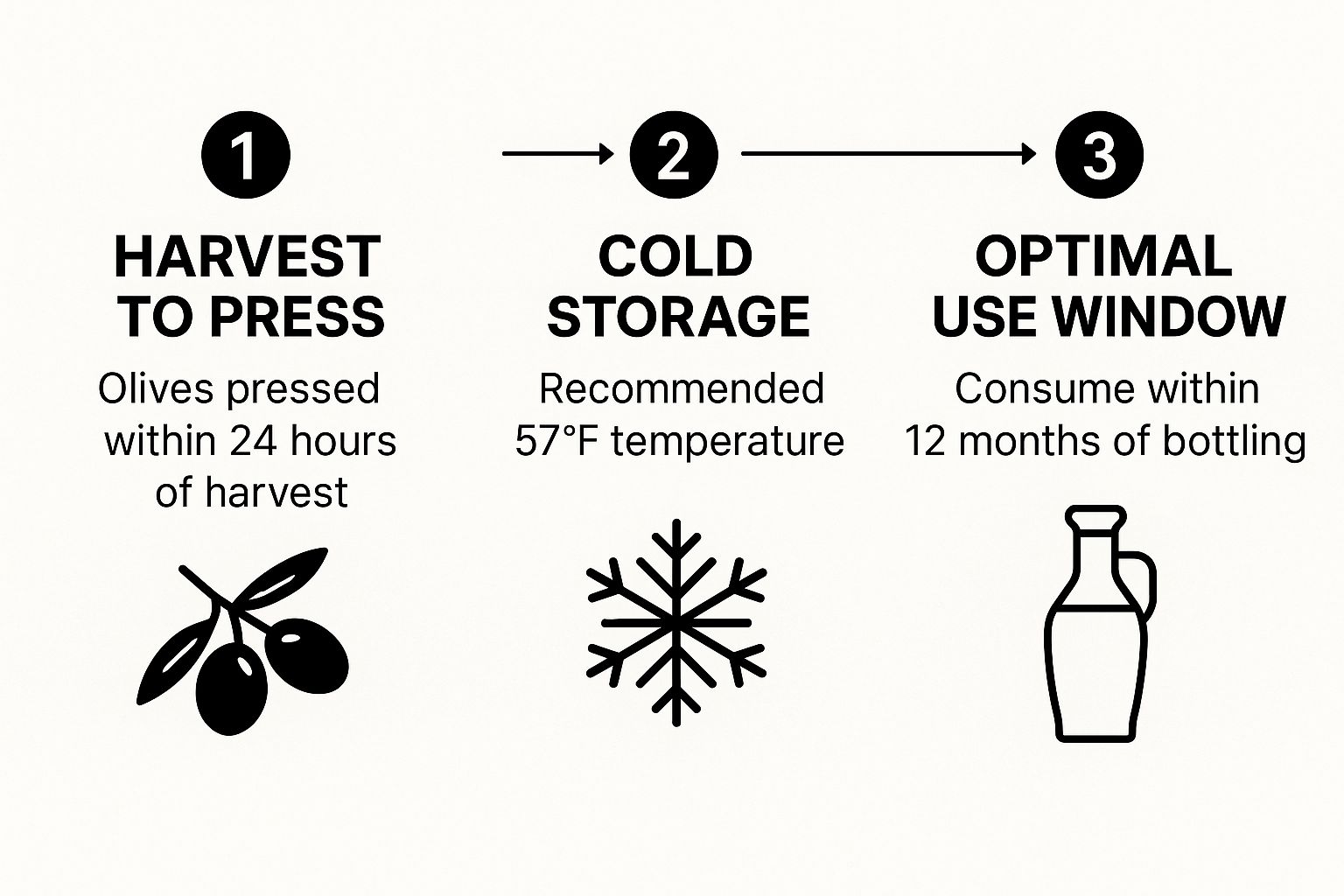
This process reveals how quality is locked in early, from rapid pressing within 24 hours of harvest to careful storage. It highlights how much depends on what happens before you even pick a bottle off the shelf.
To help you become your own olive oil expert, here are a few simple tests you can perform at home. The table below compares these methods, outlining what they detect and how reliable they are.
| Test Method | What It Detects | Difficulty Level | Time Required | Reliability |
|---|---|---|---|---|
| Warm-and-Sniff | Volatile aromatic compounds, rancidity (crayon, old nuts), fruitiness (grass, green tomato) | Easy | 1-2 minutes | High |
| Sip Test | Flavor profile (fruity, bitter), pungency (peppery kick), off-flavors (greasy, stale) | Easy to Moderate | 1 minute | Very High |
| Fridge Test (Myth) | Saturation of fats (solidification) | Easy | 12-24 hours | Very Low |
| Color Check (Myth) | Color (from green to gold) | Easy | Instant | Not Reliable |
As you can see, your senses of smell and taste are far more reliable than common myths like the fridge test or judging by color. Now, let's walk through how to perform the two most effective tests.
The Professional’s Warm-and-Sniff Method
This is the gold standard for sensory analysis, used by professional tasters worldwide. By gently warming the oil, you encourage its volatile aromatic compounds to release, making its true character—good or bad—much easier to identify. Think of it like warming brandy in a snifter to release its complex bouquet.
Here’s how to do it:
- Pour about a tablespoon of olive oil into a small, clean glass. A wine glass or even a shot glass works perfectly.
- Cover the top of the glass with one hand and cradle the bottom with your other hand to gently warm it for about a minute.
- Bring the uncovered glass to your nose and take a deep, deliberate sniff.
A fresh, high-quality extra virgin olive oil should have a vibrant and "green" aroma, with notes of fresh-cut grass, green tomato, or even almond. If you detect smells of waxy crayons, stale nuts, or damp cardboard, the oil is rancid. This simple sniff test is often all you need to spot a problem.
The Sip Test for Final Confirmation
If the aroma passes the test, the final step is a small taste. This confirms what your nose suspects and reveals the oil's structure and complexity on the palate.
Take a small sip of the oil—not a gulp. Now, slurp it by drawing air across your tongue. This action, known as strippaggio in Italian, is similar to wine tasting. It helps emulsify the oil with air, spreading it across all your taste buds and amplifying its flavors.
A good oil will have a fruity start, a touch of bitterness on the tongue, and a peppery or pungent kick in the back of your throat. That peppery sensation is a direct sign of healthy polyphenols, a hallmark of fresh, well-made oil. If the oil just tastes greasy, stale, or flat, it lacks the fresh character you're looking for. By mastering these two simple tests, you can ensure every bottle you use is a great one.
Storage Secrets That Preserve Peak Quality for Months
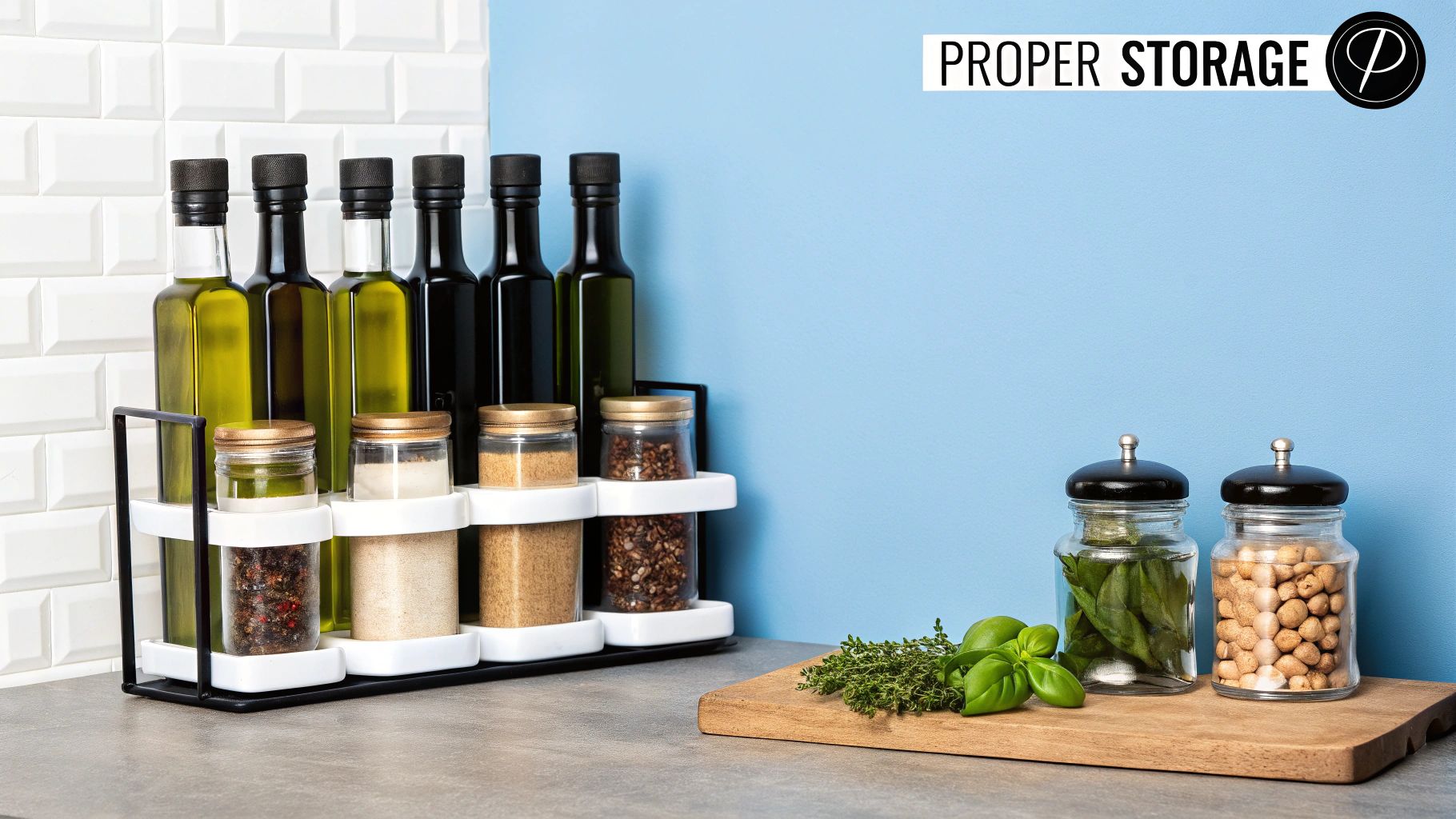
Properly storing olive oil is like creating a time capsule for its flavor and health benefits. It isn't just about finding a spot in the pantry; it's about actively protecting it from its natural enemies. Think of your beautiful bottle of extra virgin olive oil as a living product, fragile and full of potential. Its greatest adversaries are Heat, Air, Light, and Time. Mastering these four elements is the secret to keeping your oil tasting fresh for months, not just weeks.
Just as you wouldn't leave a fine cheese out on the counter to spoil, your olive oil requires a controlled environment to slow down its inevitable aging process. By making a few simple adjustments, you can preserve those vibrant, peppery notes that signal a high-quality oil.
HALT: Your Freshness Preservation Checklist
A simple way to remember the core principles of olive oil storage is the acronym HALT. This strategy directly counters the four primary factors that degrade oil quality.
- Heat: Heat is the fastest way to accelerate oxidation and ruin your oil. A warm kitchen can make a fresh oil taste old in a matter of weeks. The ideal storage temperature is around 57°F (14°C), but a consistent, cool room temperature (below 70°F or 21°C) in a dark cupboard is a fantastic real-world solution. Never store your olive oil next to the stove, above the oven, or on a sunny windowsill where it can bake.
- Air: Oxygen is the fuel for oxidation. Every time you open the bottle, air rushes in and begins to break down the oil’s delicate compounds. Always seal the bottle tightly immediately after you're done pouring. If you buy oil in a large tin, consider decanting a smaller amount into a dark glass bottle for daily use while keeping the larger container sealed shut.
- Light: Light, both from the sun and from your kitchen bulbs, triggers a process called photo-oxidation, which rapidly creates off-flavors. This is why top-tier oils are almost always sold in dark glass bottles or opaque tins—they act as a protective shield. You should always avoid clear glass bottles, no matter how pretty they look on the shelf.
- Time: Unlike a fine wine, olive oil does not get better with age. It is a fresh product, best enjoyed as close to its harvest date as possible. Once you open a bottle, its quality begins to decline more rapidly. To enjoy it at its absolute best, aim to use an open bottle within one to two months.
By following the HALT method, you create the perfect environment to safeguard your investment, ensuring every pour delivers the full flavor and health benefits you paid for.
Shopping Like a Pro: Finding Fresh Oil Every Time
Walking down the olive oil aisle can feel like a pop quiz you didn't study for. Dozens of bottles, with elegant labels and varying price points, all compete for your attention. To find true olive oil freshness, you have to look beyond the marketing. Think of yourself as a detective searching for clues on the bottle itself.
The most important evidence isn't found in flashy descriptions but in the small print. An informed buyer understands that an oil's quality is told through its key dates. These numbers are your best tool for ensuring you bring home a vibrant, healthy oil instead of one that's past its prime.
Decode the Label: Your Freshness Blueprint
The information printed on the bottle is your guide. It tells you the oil's story—where it's from and, more importantly, when. When you inspect a potential purchase, here’s what to look for:
- Harvest Date: This is the single most important detail. It marks the day the olives were picked and pressed into oil. Since olive oil is at its peak within 18-24 months of this date, you have a clear window into its remaining lifespan. Always choose the bottle with the most recent harvest date you can find.
- Best-By Date: This date is much less reliable. It’s a date chosen by the bottler and doesn't tell you anything about how the oil was handled or stored before landing on the shelf. Treat it as secondary information at best.
- Country of Origin: Look for oils that name a specific country, such as "Product of Italy" or "Product of Spain." Bottles labeled as a blend from several countries are often produced to hit a low price point, not to achieve peak quality. These oils may also have endured longer transit and storage periods.
Where You Shop Matters
The store where you buy your olive oil plays a big part in the quality you take home. Certain retailers are simply better at managing their inventory to maintain olive oil freshness. Specialty food shops and grocers that focus on quality often have a quicker turnover, meaning the bottles haven't been sitting on the shelves for months on end.
Market dynamics also influence what’s available. In countries like Italy and Greece, where per capita consumption is high, fresh olive oil is always in demand, leading to faster stock rotation. In contrast, markets with slower sales may have older oil lingering on shelves. You can explore detailed olive oil market statistics on Statista.com to see these global trends in action.
Finally, don't hesitate to ask questions. An employee at a quality shop should be able to tell you when they received their last shipment and point you toward the freshest bottles in stock. With this knowledge, you can confidently choose an olive oil that delivers on its promise of flavor and quality.
Market Forces That Impact the Oil on Your Shelf
The journey of olive oil from a sun-drenched grove to your kitchen pantry is more complex than it might seem. The olive oil freshness you taste is directly shaped by a global web of market forces, including pricing, supply chains, and production cycles. Understanding these dynamics can help you make smarter purchasing decisions, ensuring the oil you buy is vibrant and full of flavor, not tired and stale.
Just like fresh produce, olive oil is an agricultural product and is subject to the rhythms of the seasons. This means there are specific times of the year when the freshest oils hit the market, creating optimal windows for you to buy the best possible product.
Reading the Market for Freshness
The price of olive oil on the shelf can offer subtle clues about its journey and potential freshness. In major producing regions like Spain, Italy, and Greece, economic pressures influence how quickly oil moves from the producer to your local store. For instance, lower prices might encourage producers to sell their stock faster to maintain cash flow, which means fresher oil reaches the market.
On the other hand, higher prices might lead distributors to store oil for longer, waiting for more favorable market conditions. This delay can come at the expense of peak freshness, as the oil sits waiting instead of being enjoyed. You can discover more about how market trends affect olive oil quality and what it means for your choices as a shopper.
Seasonal Buying for Peak Quality
One of the most effective strategies for securing top-quality oil is to time your purchases with the olive harvest. Think of it like buying strawberries in summer—you want it as close to the harvest as possible. Since olives in the Northern Hemisphere (Italy, Spain, Greece, California) are typically harvested in the fall, the freshest oils from these regions begin appearing on shelves from late autumn through winter.
To help you plan your purchases, here's a guide to olive harvest seasons around the world.
| Seasonality Guide: Olive Oil | When to Expect the Freshest Oils and Optimal Buying Windows |
|---|---|
| Region | Harvest Season |
| Northern Hemisphere (Italy, Spain, Greece) | October – December |
| California (USA) | October – December |
| Southern Hemisphere (Chile, Argentina, Australia) | April – June |
| General (Year-Round Availability) | Varies |
By paying attention to these cycles, you can anticipate when new, vibrant oils will arrive. For example, buying a California extra virgin olive oil in January likely means you are getting a product that is just a few months old—the absolute peak of its olive oil freshness. This simple knowledge transforms you from a passive consumer into an informed buyer, empowered to choose the best.
Your Complete Fresh Oil Mastery Plan
Knowing the difference between fresh and rancid olive oil is one thing, but turning that knowledge into a habit is the final step. This is where all the testing methods, storage tips, and buying advice come together into a practical system. The goal is to make having high-quality olive oil in your kitchen a simple part of your daily routine, not an occasional luxury or a chore.
Think of this plan not as a set of strict rules, but as a flexible framework you can adapt to your own cooking and shopping habits. By weaving together the ideas we've covered, you can build an effortless roadmap to culinary excellence.
Building Your Freshness System
A solid system begins with how you buy and use your oil. One of the most effective strategies is to align your purchases with harvest seasons. For instance, buying Northern Hemisphere oils between November and March means you're getting them at their absolute peak of freshness. This simple seasonal shift automatically improves the quality of the oil in your pantry.
Next, create a simple care routine for your oil. This means consistently protecting it from its four main enemies: Heat, Air, Light, and Time. Your oil's best friend is a cool, dark cupboard. You don't need a complicated tracking system; just writing the date you opened the bottle with a marker is enough. Try to use opened bottles within one to two months to experience their best flavor and health benefits.
Realistic Timelines and Budget-Friendly Quality
The size of your household will naturally affect how quickly you use olive oil. If you live alone or with a partner, smaller 250ml or 500ml bottles are a smart choice. This ensures you can finish the bottle long before the oil has a chance to turn. A larger family can buy bigger tins more confidently, decanting what they need for daily use into a smaller bottle to keep the main supply sealed and protected.
Great quality doesn't always have to come with a high price tag. By paying more attention to harvest dates than to fancy labels and buying from trusted local shops or directly from producers, you can find amazing value. Often, the freshest oil comes from a small, passionate producer rather than the most expensive bottle on the shelf. It's also wise to have a backup plan. If your usual source is out of stock, knowing which other local stores have a good turnover or which online sellers list harvest dates means you’re never stuck without a quality option. This strategic approach makes olive oil freshness an accessible and consistent part of your kitchen.
Ready to deepen your expertise and explore the world’s best oils? Visit Learn Olive Oil to discover premium selections and tasting guides that will elevate your culinary journey.


Leave a comment