Picture the vast chasm between a generic "red wine" and a magnificent Pinot Noir, born of a specific, sun-drenched vineyard. You are about to leap across that same chasm, leaving behind standard 'extra virgin' olive oil for the breathtaking world of single varietal olive oil. This is the moment your journey truly begins, exploring oils that whisper the secrets of the very soil they grew in.
Unlocking a World of Flavor

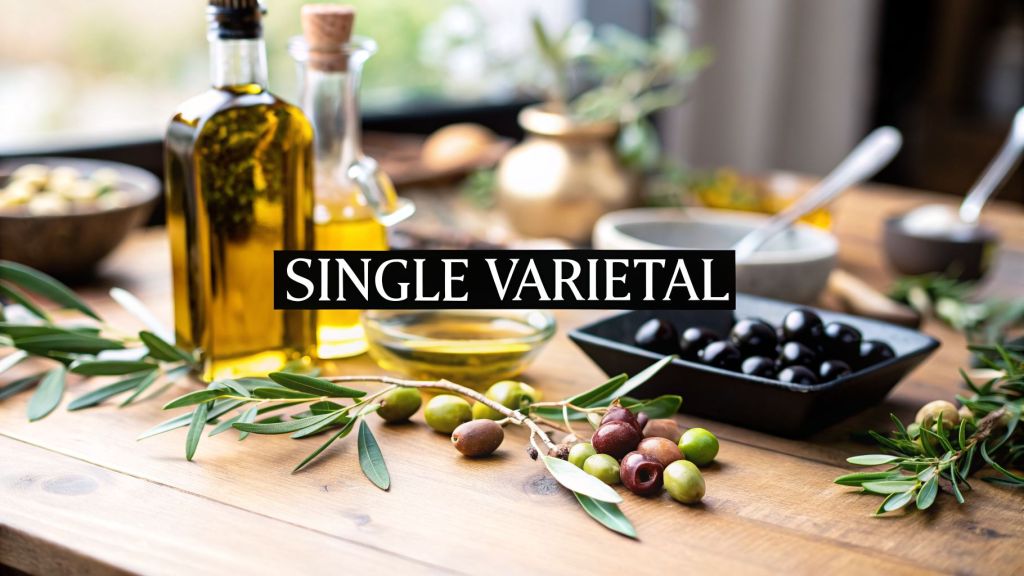
Have you ever wondered why one olive oil explodes with a peppery, grassy fire, while another glides across your palate like liquid butter? That vast difference is no marketing gimmick. It is the soul of the olive itself. A single varietal olive oil is, quite simply, an oil born from one, and only one, type of olive—a "cultivar," as we call it in the trade.
The idea mirrors that of single-origin coffee. You know, instinctively, that a bean from the highlands of Ethiopia will sing a different song than one from the mountains of Colombia. One might be bright and floral, the other profound with notes of chocolate. The very same law governs the olive. An oil pressed from nothing but Greek Koroneiki olives delivers a unique symphony of flavor you will never, ever find in a generic blend.
This is not mere cooking fat; it is a finishing flourish. Each bottle is a time capsule, capturing the unique personality, climate, and soil—the very essence—of its home.
This is the secret that separates an everyday oil from a culinary masterpiece. The bottles crowding your supermarket shelf are almost always blends, crafted by mixing oils from different olives, often from different countries, to hit a flat, consistent taste profile year after year. A single varietal, however, is a declaration of character. It is an unapologetic, soul-baring solo performance.
Why Connoisseurs Seek Them Out
For anyone who hunts for flavor as an adventure, these oils are a revelation. They refuse to simply blend into a dish; they seize it, elevate it, and transform it. Imagine a torrent of robust, spicy oil cascading over a perfectly grilled steak, or a delicate, nutty one anointing fresh mozzarella. It is an entirely new dimension of taste, unlocked.
This simple shift will forever change how you see olive oil. It ceases to be an afterthought and becomes a deliberate, tactical choice. You begin to understand that the type of olive is as critical as the grape in your wine or the cut of meat on your plate. To grasp the fundamentals, our guide on the different types of olive oil is an essential first step.
Prepare to enter a world where flavor is sovereign, and every bottle is a direct line to the land that gave it life. It is time to taste olive oil as it was meant to be tasted—in all its singular, magnificent glory.
How an Olive's True Character is Bottled

Have you ever held a bottle of olive oil and marveled at how it could contain such a specific, thunderous flavor? It is not magic. It is the prize won through an incredibly precise and demanding process—a ritual that feels more like an artisan's craft than a factory's routine.
The drama begins in the grove, with a harvest that is a breathless race against the clock. Olives are not a patient fruit. They reach a fleeting, perfect moment of ripeness when their unique flavors and health-giving polyphenol compounds are at their absolute zenith. Miss that razor-thin window, and the olive’s distinct character begins to fade into memory.
Once plucked from the branch, the olives are treated with heroic urgency. They are often rushed to the mill within mere hours, a desperate sprint to stop oxidation and fermentation dead in their tracks—the two thieves that can instantly rob an oil of its pure, vibrant taste. If you are curious about the mechanics behind this race, this guide on how olive oil is made reveals why this speed is absolutely critical.
The Art of Keeping Things Separate
This is the crucible where a single varietal olive oil forges its identity, where the producer's true mastery is revealed. Unlike blended oils born from countless groves and varieties, the artisan producer enforces a strict, fanatical separation. A batch of Picual olives will never, ever be allowed to mingle with a batch of Arbequina.
This sacred commitment to separation defines the entire craft.
- The Mission: To isolate and protect the unique, unrepeatable personality of one single olive varietal.
- The Process: Each type of olive is harvested, washed, and milled in its own solitary run, with all equipment scoured clean between batches.
- The Payoff: An oil that is the pure, unadulterated soul of a single olive.
It is a painstaking and far more expensive way to produce oil. But for these artisans, blending different olives would be like a winemaker pouring Cabernet into a precious barrel of Pinot Noir—it would utterly destroy the very essence they fought so hard to capture.
The producer is a guardian, ensuring that the voice of that one olive varietal—and only that one—is what you hear when you open the bottle. It is an oil with an unshakable point of view.
Ultimately, this is not about creating a perfectly consistent product that tastes the same every year. It is about bottling the truth of a specific harvest, from a specific place, at a specific moment in time. It is what gives an oil the power to tell you the story of its origins, all in a single, glorious taste.
Meet the Stars of the Olive World
Now that you understand the relentless craft behind these oils, it is time for the greatest pleasure—getting to know the oils themselves. Think of this not as a boring textbook, but as a personal introduction to the most celebrated personalities in the olive oil universe. Each one commands a distinct character, a story told through its flavor.
Once you know even a few of these key players, shopping for olive oil will be transformed. You will stop guessing and start choosing. You will stride with confidence toward a bottle of Picual or Arbequina, knowing with certainty the culinary power you are bringing home.
The Spanish Superstars
You cannot speak of olive oil without first bowing to Spain. The country is an absolute titan, a goliath that consistently produces around 45% of the world's olive oil. But this is not a story of mere volume; Spain is a hotbed of quality, a pioneer of the single varietal oils that have become global legends.
Let us meet two of its most famous exports:
-
Picual: This is the bold one, the character actor who steals every scene. Picual is famed for its assertive, peppery uppercut and electrifying notes of green tomato leaf and fig tree. Its naturally high polyphenol count not only delivers that punch but also makes it incredibly stable for cooking.
- Intensity: Robust
- Best For: Any dish that demands a powerful partner. Drizzle it over grilled steaks, hearty winter stews, or a sharp, aged Manchego cheese.
-
Arbequina: At the opposite end of the flavor universe lies Arbequina. It is the gentle, nuanced star—delicate, buttery, and exceptionally smooth. Its signature is a sweet aroma with whispers of almond, ripe apple, and even a hint of artichoke. You can find truly extraordinary examples, like this Arbequina Olive Oil, that showcase its sublime, refined flavor.
- Intensity: Delicate
- Best For: Lighter dishes where its subtlety can be the hero. Use it as a finishing touch on baked fish, in a simple vinaigrette, or—for a delightful shock—drizzled over a scoop of vanilla ice cream. To explore it further, read our complete guide to Arbequina extra virgin olive oil.
Icons from Italy and Greece
While Spain may lead in production, Italy and Greece are the ancestral homes of their own legendary varietals, each with flavors woven deep into the soul of their cuisines.
The true magic happens when you pair the right oil with the right food. It’s like casting the perfect actor for a role—suddenly, the entire dish leaps to life.
Here are two more titans of taste that every olive oil lover must know:
-
Koroneiki (Greece): This is Greek sunshine, captured in a bottle. Koroneiki is famously grassy and herbaceous, unleashing that classic peppery finish that grabs you in the back of your throat. That little tickle, by the way, is the tell-tale sign of fresh, high-antioxidant oil.
- Intensity: Medium to Robust
- Best For: Unleashing a bright, green thunderclap on a classic Greek salad, roasted vegetables, or grilled whole fish.
-
Frantoio (Italy): As one of Tuscany's flagship olives, Frantoio is wonderfully aromatic and thrillingly complex. It strikes a breathtaking balance between fruity notes, a pleasant bitterness (think chicory or endive), and a lingering peppery zing that tastes of fresh herbs and artichoke.
- Intensity: Medium
- Best For: Classic Italian masterpieces. It is heaven drizzled over a hearty bean soup like ribollita, on bruschetta, or simply tossed with fresh pasta and garlic.
To make navigating these flavors even easier, here is a quick-reference guide to some of the most popular single varietals you will meet on your journey.
Tasting Profiles of Common Single Varietal Olive Oils
| Varietal (Origin) | Typical Flavor Profile | Intensity | Best For |
|---|---|---|---|
| Arbequina (Spain) | Fruity, buttery, sweet; notes of apple & almond | Delicate | Fish, salads, baking, desserts |
| Picual (Spain) | Peppery, green tomato leaf, fig, bitter finish | Robust | Red meat, stews, aged cheese |
| Koroneiki (Greece) | Grassy, herbaceous, strong peppery finish | Medium to Robust | Greek salads, roasted vegetables, fish |
| Frantoio (Italy) | Fruity, herbal, artichoke; balanced bitterness | Medium | Soups, bruschetta, pasta, grilled veg |
This table is merely a map. The real adventure begins when you start tasting them for yourself and discover which ones make your own palate sing.
Single Varietal Versus Blends
For anyone who takes their cooking seriously, this is where the conversation gets fascinating. When should you reach for a bold single varietal, and when does a great blend make more sense? The truth is, one is not "better" than the other. It is all about knowing what you want the oil to do for your dish.
I like to think of it in musical terms. A blended oil is like a well-rehearsed orchestra. A master blender meticulously selects and combines different oils to create a harmonious, balanced, and consistent flavor profile. The goal here is reliability—a pleasant, often mild oil that behaves the same way, bottle after bottle.
A single varietal olive oil? That is a virtuoso soloist. It is one captivating voice, front and center, demanding your attention with its unique personality. There is no hiding—you get the full, unadulterated character of that one olive, whether it’s the peppery blast of a Picual or the buttery, smooth whisper of an Arbequina.
The Reliable Workhorse Versus the Showstopper
What does this mean for your kitchen? Blends are fantastic, dependable workhorses. They are your go-to for general cooking—sautéing onions and garlic, pan-searing fish, or whipping up a simple vinaigrette. They perform their duty beautifully without ever stealing the show.
Single varietals, on the other hand, are your showstoppers. You choose them deliberately, as a final, dramatic flourish for a dish where their distinct flavor can take center stage and shine.
This is your secret weapon for turning a simple meal into something extraordinary. That final drizzle isn't just an ingredient; it's the grand finale.
Think about how this one choice can completely transform a dish:
- A delicate Arbequina, with its notes of almond and fruit, drizzled over a perfectly flaky piece of roasted salmon—or even a scoop of vanilla ice cream.
- A robust, grassy Coratina poured over a sizzling steak right off the grill, its peppery notes slicing through the richness of the meat.
- A complex and herbaceous Frantoio finishing a hearty bowl of white bean and rosemary soup.
While we celebrate the magnificent voice of single varietal olive oil, it is worth admiring the art and science of blending, a craft long perfected in the world of wine. The philosophy is identical: one path is about achieving balance and consistency, while the other is a pure celebration of untamed individuality.
This concept map breaks down the unique personalities of a few key varietals, revealing how their dominant flavors tell you exactly where they will perform best.

You can see immediately that a Picual will deliver that peppery bite, whereas an Arbequina brings a much softer, nuttier quality. Keeping one of each in your pantry gives you an incredible culinary arsenal, allowing you to perfectly pair your oil to make any dish sing.
For decades, if you thought of great olive oil, your mind likely flew straight to Italy, Spain, or Greece. But the olive oil map is being redrawn. A new wave of brilliant producers from unexpected corners of the globe is crafting spectacular single varietal oils, and it is time for you to pay attention.
These are not mere copycat operations. These are regions with their own unique climates, soils, and traditions—their distinct terroirs—that are gifting us entirely new flavor experiences. This is where you will discover your next favorite bottle, the one that will astonish your palate and become a new pillar of your kitchen.
Beyond the Mediterranean Heartland
The world of olive cultivation has exploded, with production now spanning 58 countries across five continents. This colossal expansion is shining a brilliant spotlight on single varietal oils from fascinating new places. Upstarts from Ethiopia, Azerbaijan, and even El Salvador are now cultivating olives perfectly suited to their local lands. You can dig deeper into the data on global olive oil production trends on Statista.com.
What does this mean for you? A brave new world of flavor beyond the classic Mediterranean profiles.
- Turkey: Keep your eyes peeled for the Ayvalik varietal. It often yields a robust, fruity oil with wonderful notes of green almond and a crisp, peppery finish.
- Tunisia: The native Chemlali olive here produces an oil that is famously delicate and mild, treasured for its soft, almond-like sweetness.
Think of it like discovering a new wine region. Just as your heart might race at the thought of a Malbec from Argentina or a Sauvignon Blanc from New Zealand, these emerging producers offer a thrilling and authentic taste of place.
New World, New Flavors
This movement is not just happening in distant lands. Countries you may already associate with fine food and wine are making a serious claim. Portugal, for instance, is rapidly earning a reputation for its vibrant, complex oils. Over in Croatia, the Istrian Peninsula is sweeping international awards for its intensely aromatic and peppery varietals.
Even here in the United States, producers in California—and a growing legion in states like Texas and Georgia—are crafting world-class single varietal oils. They are taking classic European olive types and planting them in new soils and climates, creating profiles that are at once familiar and breathtakingly new. If you are especially interested in the wellness benefits, our article on high phenolic olive oil is an excellent resource.
The bottom line is this: It is time to look beyond the old guard. Your next great culinary revelation might just be a bottle from a place you never, ever expected.
How to Buy and Protect Your Liquid Gold

So, you have decided to enter the world of single varietals. This is a magnificent decision. But bringing home a bottle with a unique story is just the first step. Ensuring that vibrant, one-of-a-kind flavor makes it to your plate—that is where the real work begins.
Before a bottle ever makes it into your cart, you must become a label detective. Look past the beautiful design and hunt for two crucial pieces of intelligence: the harvest date and the specific olive varietal. Freshness is everything. I always search for a harvest date within the last year, and 18 months at the absolute outside. If a bottle hides its harvest date, put it back on the shelf. It is a gamble you cannot afford to take.
Next, check its armor. Any serious producer knows that olive oil has three mortal enemies: light, heat, and air. A dark glass bottle or an opaque tin is non-negotiable. These containers are a shield, guarding the delicate flavors and health benefits from the ravages of light.
Safeguarding Your Oil at Home
Once you get that precious oil home, your mission is to continue protecting it from those same three villains. The rules are simple, but obeying them is the difference between an oil that sings and one that merely exists. Proper storage is the final, crucial piece of the puzzle.
Here are the golden rules I live by:
- Find a Cool, Dark Hideout: A kitchen pantry or a closed cupboard is perfect. The ideal temperature is around 57°F (14°C), but a consistent, cool room temperature far from any heat source will do just fine.
- Avoid the Danger Zone: That spot next to your stove may seem convenient, but it is a death sentence for olive oil. The constant cycles of heat will obliterate its flavor and antioxidants faster than anything else.
- Keep a Tight Lid on It: Oxygen is the enemy of freshness. Seal the cap tightly after every single pour to keep the air out.
Think of a beautiful single varietal oil like a fine wine after you've pulled the cork. You wouldn't leave it sitting open on a sunny windowsill, would you? Your olive oil demands that same respect.
For a more detailed battle plan on what to look for in the aisle, our guide on how to buy olive oil is an indispensable ally to have in your pocket.
A Region to Watch
As you grow more familiar with different oils, you will begin to notice that certain places are simply on fire. Right now, Portugal is a region that has my undivided attention. It has become a serious force, producing nearly 220,000 tons of olive oil a year, with an astonishing 98% of it qualifying as extra virgin or virgin.
This tells me there is a nationwide obsession with quality over quantity—thrilling news for anyone who cherishes the distinct character of a single varietal. You can read more about these exciting developments in olive oil production here.
Common Questions About Single Varietal Oils
As you begin your adventure into the world of single varietal olive oil, it is only natural for questions to surface. Let's tackle some of the most common ones head-on, so you can feel armed with confidence the next time you browse the olive oil aisle.
Is Single Varietal Oil Always Better Than a Blend?
That is the million-dollar question, is it not? The honest answer is that one is not inherently "better"—they simply have different missions in your kitchen.
Think of a single varietal as a soloist, born to deliver a powerful, distinct performance. It is the quintessential finishing oil, where you want its unique character to roar. A well-made blend, in contrast, is a symphony orchestra, masterfully created for balance and consistency. It is your reliable workhorse for everyday cooking. It all comes down to what you are trying to achieve with your dish.
Why Do They Sometimes Cost More?
The price tag is a direct reflection of the incredible, specialized labor poured into each bottle. Single varietal oils often hail from smaller, dedicated groves. To preserve their singular flavor, producers must harvest and mill each olive type in complete isolation.
This is a far more painstaking and labor-intensive crusade than simply combining everything for mass production. These are often limited-run, artisanal creations. You are not just paying for olive oil; you are paying for an unrepeatable taste of a specific place and a specific season.
A reputable bottle tells a clear story. Look for three key pieces of evidence on the label: the specific name of the olive varietal (e.g., 'Arbequina,' 'Picual'), a harvest date, and the country or specific estate of origin. Trustworthy producers are proud to declare this information.
How Do I Know I'm Buying the Real Deal?
A good bottle of single varietal oil will never be shy about its identity. If the label is vague or secretive, you are likely not getting the authentic experience you are paying for.
Always flip the bottle and inspect the details. Does it proudly name the varietal? Is there a recent harvest date printed clearly? Does it tell you the specific country or estate where it was born and milled? If the answers are yes, you are on the right path to greatness.
Ready to explore the world of premium olive oils with unshakable confidence? At Learn Olive Oil, we provide the expert insights and tasting guides you need to discover your next favorite bottle. Start your journey today at learnoliveoil.com.
 Learn Olive Oil
Leave a comment