Imagine a diet that asks you not to count calories, but to celebrate flavor. A diet that isn't about restriction, but about abundance. This isn't a new fad. It's a time-tested secret to a longer, more vibrant life, practiced for generations along the sun-drenched coasts of Greece, Italy, and Spain. Their secret isn't found in a pill or a complicated regimen, but on their plates. They don’t starve themselves; they nourish themselves with food that is as delicious as it is life-giving, all brought together by one golden thread: premium olive oil.
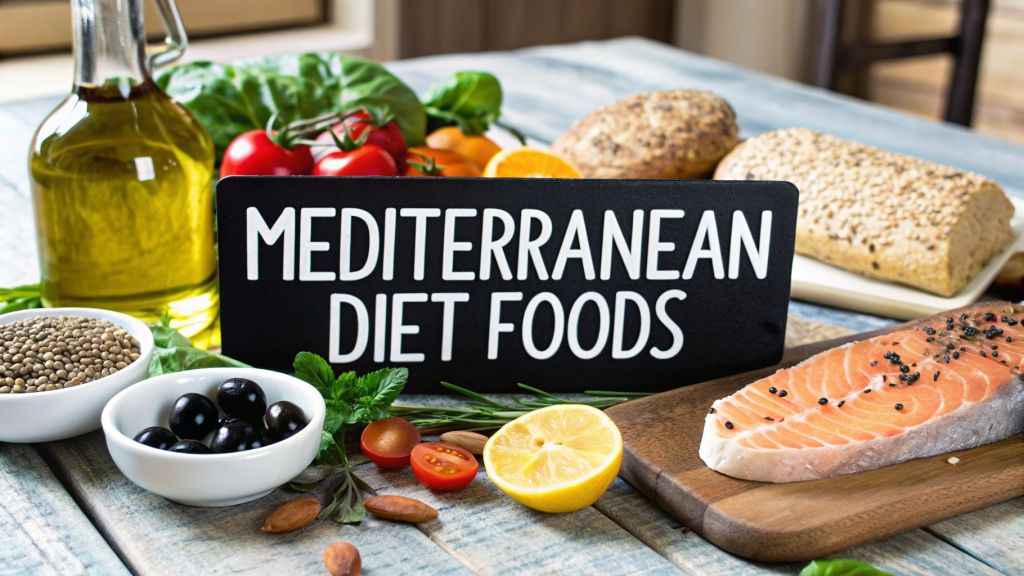
Forget everything you’ve been told about "dieting." This guide isn’t a list of forbidden foods. It is an invitation to welcome a world of flavor, color, and vitality into your kitchen. We are handing you the ultimate shopping list, the definitive mediterranean diet food list that forms the very foundation of this celebrated lifestyle. From the cornerstone of extra virgin olive oil to the vibrant array of fresh vegetables, whole grains, and savory herbs, each item is a building block for better health.
This is more than a simple grocery guide. It's a blueprint for stocking your pantry and refrigerator with the tools for creating a healthier, more delicious life. We will break down the essential food groups, reveal their profound importance, and give you simple, practical ways to make them the heart of your daily meals. Let’s go shopping for a better you.
1. Extra Virgin Olive Oil
At the very heart of the Mediterranean diet flows its liquid gold: extra virgin olive oil. Make no mistake, this is not just another cooking oil. It is the primary source of fat, the foundation of flavor, and a nutritional powerhouse all in one bottle. True extra virgin olive oil (EVOO) is the purest form, cold-pressed from fresh olives to protect its precious cargo of polyphenols and antioxidants. Science has proven that these compounds are the secret weapons behind the diet's famous ability to reduce inflammation and fortify your heart.

The difference between a generic olive oil and a high-quality EVOO is the difference between night and day. Premium EVOOs, championed by culinary pioneers like Alice Waters, offer a symphony of flavors—from peppery and grassy to buttery and mild. Think of the fruity notes in a Spanish Arbequina oil or the robust, spicy kick of an Italian Frantoio. These oils aren't just for cooking; they are for finishing. A simple drizzle adds a layer of complexity and richness that defines the entire cuisine. To truly understand its power, you must explore the connection between olive oil and the Mediterranean diet.
How to Use and Store EVOO
To unlock the full power of your EVOO, you must protect it. Its delicate flavor and health-giving compounds are fragile and degrade when exposed to heat, light, and air.
- Storage: Always keep your olive oil in a dark, cool place—like a pantry, never next to the stove. Store it in a dark glass bottle or tin.
- Cooking: Use it generously for drizzling over salads, soups, and grilled fish. It is also your go-to for sautéing vegetables over low-to-medium heat.
- Freshness: A quality EVOO should have a harvest date on the bottle. For peak flavor and nutritional potency, use it within 18-24 months of that date.
2. Leafy Greens & Vegetables
In the Mediterranean, vegetables are not a sad, forgotten side dish; they are the star of the show. This crucial part of the Mediterranean diet food list is built on a foundation of seasonal, nutrient-rich produce, from the peppery bite of arugula to the earthy depth of spinach and kale. Vegetables are celebrated—roasted, grilled, or served fresh, and almost always bathed in a generous drizzle of extra virgin olive oil. This simple act transforms them into meals that are not only vibrant and flavorful but also incredibly dense in vitamins, minerals, and life-extending fiber.

This focus on whole, unprocessed vegetables is a core principle validated by researchers at the Harvard School of Public Health. Imagine a simple Greek horta (boiled wild greens) finished with lemon and quality oil, a Tuscan kale salad massaged until tender, or roasted broccoli with garlic that becomes sweet and caramelized. These dishes prove that simple preparation can elevate the natural goodness of the ingredients, turning everyday vegetables into a satisfying and essential part of your meal. The key is variety, which ensures you get a wide array of protective phytonutrients.
How to Use and Store Vegetables
To make vegetables the star of your meals, focus on freshness and proper preparation to maximize both their flavor and their potent nutritional benefits.
- Storage: Keep leafy greens crisp by storing them in a moisture-controlled container in the refrigerator, often with a paper towel to absorb excess water. Store root vegetables in a cool, dark place.
- Cooking: Roast cruciferous vegetables like broccoli and cauliflower with olive oil and garlic to bring out their natural sweetness. Sauté spinach or chard lightly, or enjoy arugula and other tender greens raw in salads.
- Nutrient Absorption: Here is a critical secret: always pair your vegetables with a healthy fat like extra virgin olive oil. It is not just for flavor; your body needs it to absorb fat-soluble vitamins like A, D, E, and K, which are abundant in leafy greens.
3. Whole Grains & Legumes
At the foundation of the Mediterranean diet you will find the humble yet mighty whole grains and legumes. These are not mere side dishes; they are the bedrock of countless meals, providing sustained energy, gut-healthy fiber, and a wealth of essential nutrients. This powerful pairing offers a complete plant-based protein, a cornerstone of the diet's affordability and sustainability that has been proven effective by Blue Zone researchers studying the world's longest-lived people in Sardinia and Greece.
From hearty lentil soups simmered with vegetables to creamy white bean dips and farro risottos, these ingredients are incredibly versatile. To create hearty, wholesome meals, embrace whole grains, including delicious pasta dishes. This category is a key reason why the Mediterranean diet food list is so satisfying. It focuses on complex carbohydrates like barley, oats, and whole wheat that keep you full for hours and deeply nourish your body. The synergy between a grain and a legume creates meals that are both nutritionally perfect and deeply comforting.
How to Use and Store Grains & Legumes
To fully benefit from these staples, preparing and storing them correctly is the secret to unlocking their texture, flavor, and digestibility.
- Preparation: Soak dried beans, chickpeas, and lentils for at least 12 hours before cooking. This simple step reduces compounds that can cause digestive issues and dramatically shortens cooking time.
- Cooking: Cook your grains and legumes in flavorful liquids like vegetable or chicken broth infused with a generous glug of olive oil and herbs.
- Finishing: Always finish your cooked dishes with a drizzle of a high-quality, peppery extra virgin olive oil. This elevates the flavor and adds a dose of powerful healthy fats.
- Storage: Keep dried grains and legumes in airtight containers in a cool, dark pantry to protect them from moisture and pests, ensuring they last for months.
4. Fresh Fish & Seafood
Given the Mediterranean's vast coastline, it should come as no surprise that fresh fish and seafood are cornerstones of this life-giving diet. This isn't about heavy, battered fillets; it’s a celebration of the ocean's bounty, prepared simply to let the natural flavors shine through. Omega-3-rich fish like sardines, mackerel, and sea bass provide high-quality protein and essential fatty acids that are critical for brain and heart health. This regular inclusion of seafood is a key differentiator from many other eating styles.

The traditional approach, championed by coastal chefs and validated by diet researchers, is one of minimal intervention. Think of grilled sea bass drizzled with lemon and olive oil in Greece or anchovies preserved in oil and served on crusty bread in Italy. The goal is to enhance, not mask, the delicate taste of the fish. This simple preparation method—often just a good extra virgin olive oil, herbs, and citrus—creates dishes that are as delicious as they are nourishing, making this an easy and enjoyable habit to adopt in your own kitchen.
How to Choose and Prepare Seafood
Integrating fish into your meals two to three times a week is a central pillar of the Mediterranean diet. Here’s how to do it right.
- Sourcing: Opt for smaller fish like sardines and anchovies, which are lower in mercury. When possible, look for wild-caught and sustainably sourced options to support ocean health.
- Preparation: Simple is best. Try baking white fish en papillote (in parchment paper) with vegetables and a splash of olive oil, grilling whole fish with herbs, or making a quick shrimp saganaki.
- Freshness: Seafood is best enjoyed fresh. Plan to cook it within a day or two of purchasing. The quality of your ingredients is paramount to your success.
5. Tomatoes & Tomato Products
From the sun-drenched fields of Italy to the vibrant markets of Spain, the tomato is a non-negotiable cornerstone of Mediterranean cuisine. It's far more than a simple ingredient; it’s the base for countless sauces, the star of fresh salads, and a concentrated source of flavor and nutrition. Central to their value is lycopene, a potent antioxidant whose power is famously increased when tomatoes are cooked, especially with a healthy dose of olive oil. This synergistic pairing is a hallmark of the entire Mediterranean approach to eating.

The versatility of the tomato is showcased across the region. Think of the classic Italian pasta al pomodoro, a simple yet profound dish where the quality of the tomatoes and olive oil makes all the difference, or the refreshing chill of a Spanish gazpacho. The deep, rich flavors of a Mediterranean shakshuka are built upon a foundation of cooked tomatoes and spices. This item is essential to any authentic Mediterranean diet food list, popularized by generations of Italian culinary tradition and validated by modern researchers studying lycopene's powerful health benefits.
How to Use and Store Tomatoes
Making the most of tomatoes, whether fresh or preserved, comes down to a few simple practices that honor their natural flavor and nutritional power.
- Storage: Keep fresh, whole tomatoes at room temperature, stem-side down, and away from direct sunlight. Refrigeration kills their flavor and gives them a mealy texture.
- Cooking: Always cook tomato-based sauces and dishes with a generous amount of extra virgin olive oil. This simple step helps your body absorb the fat-soluble lycopene more effectively. Aim for 2-3 tomato-based meals weekly.
- Quality: For sauces, seek out high-quality canned tomatoes like San Marzano, known for their lower acidity and robust, sweet flavor. For raw preparations like a Caprese salad, use the freshest, ripest tomatoes you can find.
6. Nuts & Seeds
If olive oil is the liquid gold of the Mediterranean, then nuts and seeds are its precious gems. These nutrient-dense morsels—including almonds, walnuts, hazelnuts, and seeds like sesame and pumpkin—are a cornerstone of the diet. They provide a satisfying crunch along with a wealth of healthy fats, plant-based protein, fiber, and essential minerals. Whether eaten as a simple snack or incorporated into complex dishes, they are a fundamental part of the region's culinary and nutritional identity.
The celebrated PREDIMED study, a landmark clinical trial on the Mediterranean diet, famously proved the incredible cardiovascular benefits of daily nut consumption. Researchers at institutions like the University of Barcelona have consistently shown how the monounsaturated fats in nuts complement those in olive oil to protect your heart. From creamy tahini (sesame paste) forming the base of hummus to crunchy pine nuts scattered over a fresh salad, their versatility is unmatched. You can read more about the PREDIMED study results to understand their scientific importance.
How to Use and Store Nuts & Seeds
To preserve their flavor and prevent their healthy oils from going rancid, proper handling is essential.
- Storage: Keep raw nuts and seeds in an airtight container in a cool, dark place like a pantry. For longer-term storage, especially for high-fat nuts like walnuts and pine nuts, the refrigerator or freezer is your best friend.
- Preparation: Toasting nuts and seeds in a dry pan over low heat for a few minutes unlocks their aromatic oils and deepens their flavor.
- Portioning: A typical serving is a small handful, or about one ounce (28 grams), daily. Choose raw or dry-roasted varieties without added oils or excessive salt.
7. Herbs & Spices
The vibrant, soul-satisfying flavors of Mediterranean cooking don't come from heavy sauces or mountains of salt; they are born from an abundant use of fresh and dried herbs and spices. More than just flavor enhancers, ingredients like oregano, basil, rosemary, and garlic are the aromatic heart of the cuisine. This reliance on botanicals is a key part of what makes the Mediterranean diet food list so powerful. They provide a dense source of polyphenols and bioactive compounds that work to reduce inflammation and protect your cells from damage.
The genius of this approach, celebrated in culinary traditions from Greece to Southern Italy, lies in its simplicity. A sprinkle of dried oregano and a drizzle of olive oil transforms a simple block of feta. A few cloves of garlic and a sprig of rosemary roasted with vegetables creates a dish with profound depth. These flavor combinations are timeless for a reason: think of the classic Italian pairing of fresh basil with tomatoes, or the French herbes de Provence blend that elevates poultry and stews. These are not afterthoughts; they are central to the meal's character and health profile.
How to Use and Store Herbs & Spices
To unlock the full potential of your herbs and spices, freshness and proper handling are crucial. Their delicate aromatic oils and health-giving compounds are sensitive to the elements.
- Storage: Keep dried herbs and spices in airtight containers in a cool, dark cabinet away from the stove's heat and light to preserve their potency.
- Fresh vs. Dried: Use fresh herbs whenever possible for the most vibrant flavor and highest concentration of beneficial compounds. A good rule of thumb is to use one tablespoon of fresh herbs for every one teaspoon of dried.
- Cooking: Add hardy herbs like rosemary and thyme early in the cooking process to infuse their flavor. Add delicate herbs like parsley, basil, and cilantro at the very end to protect their bright taste.
- Grow Your Own: A small pot of basil, rosemary, or mint on a windowsill provides instant access to fresh flavor, encouraging more frequent use.
8. Cheese & Dairy (Moderation)
In a stark departure from the dairy-heavy Western diet, the Mediterranean approach treats cheese and yogurt not as main courses but as powerful flavor accents. These items, particularly fermented varieties like feta and Greek yogurt, are enjoyed in moderation. They add a creamy, tangy richness that complements the fresh vegetables and olive oil, providing calcium, probiotics, and high-quality protein without overwhelming the plate. This principle of mindful inclusion is a key part of the Mediterranean diet food list.
The secret is in the portion and the purpose. A classic Greek salad uses crumbles of feta to add a salty punch, not a blanket of cheese. Similarly, the culinary traditions of Greece and Italy use yogurt as a base for sauces or a simple dessert with honey and nuts. This measured consumption allows for the enjoyment of rich flavors while maintaining the diet's celebrated balance and health benefits, such as improved gut health from live cultures.
How to Include Dairy
Incorporating dairy the Mediterranean way is about quality over quantity. Use it to elevate other ingredients, not to be the star of the show.
- Portion Control: Limit cheese intake to small portions, roughly 1-2 ounces a day. Think of it as a garnish.
- Choose Fermented: Prioritize aged, fermented varieties like feta, Parmesan, and goat cheese, along with full-fat Greek yogurt, for their probiotic content.
- Smart Pairings: Combine dairy with healthy fats. Drizzle olive oil over a block of feta with herbs for a simple appetizer, or add a dollop of yogurt to a vegetable soup.
- Source Wisely: When possible, select products from grass-fed animals, as they often contain a better fatty acid profile.
9. Wine (Red, Moderate Consumption)
An emblematic part of Mediterranean culture, wine—particularly red wine—is traditionally enjoyed with meals, creating a ritual of both flavor and fellowship. This is not about overindulgence; it's about moderation and its role within the diet as a whole. Red wine contains a wealth of polyphenols, most notably resveratrol, which functions as a potent antioxidant. These compounds are believed to contribute to the heart-protective benefits of the diet, mirroring the antioxidant properties found in extra virgin olive oil.
The inclusion of red wine in the Mediterranean diet food list is supported by decades of observation. Studies have repeatedly found that moderate consumption, as part of a balanced diet, was associated with positive health outcomes. Think of a Spanish Tempranillo served with small plates of tapas or a classic Italian Chianti alongside a tomato-based pasta dish. This practice underscores a philosophy of enjoying food and drink in a social, measured way.
How to Include Wine Mindfully
To embrace wine in the Mediterranean spirit, context and quantity are everything. It is meant to complement the meal and the moment, not to be the main event.
- Moderation is Key: The guideline is typically one 5-ounce glass per day for women and up to two for men. Adhering to these limits is crucial.
- Enjoy with Meals: Consuming wine with food, as is traditional, can help slow its absorption and integrates it into the dietary pattern.
- Choose Quality: Consider seeking out organic or biodynamic wines, which may offer a higher concentration of beneficial polyphenols. The focus is always on quality over quantity.
- Know When to Abstain: Wine is not for everyone. If you have certain health conditions or prefer not to drink, it is not a required component to reap the diet's benefits.
10. Fruits (Seasonal & Fresh)
In the Mediterranean, fruit isn’t just an afterthought; it’s the primary dessert and a daily source of vibrant flavor and nutrition. Unlike processed sweets packed with refined sugars, the natural sweetness of fresh, seasonal fruit provides a satisfying end to a meal. This approach centers on what the earth provides at any given time—from juicy figs and pomegranates in late summer to bright citrus in the winter. The focus is on whole fruits, consumed with minimal fuss, which preserves their fiber, vitamins, and potent antioxidants.
The tradition of eating with the seasons means enjoying produce at its nutritional peak. Imagine the taste of sun-warmed grapes plucked straight from the vine in Greece or a simple salad of sliced oranges and pomegranate arils from Spain, drizzled with olive oil. These are not complex recipes; they are celebrations of peak-season flavor. The simplicity is key: think fresh figs served with a sliver of goat cheese or a handful of berries enjoyed as a simple snack, providing essential nutrients that support overall health without the empty calories of conventional desserts.
How to Incorporate Seasonal Fruits
Integrating fresh fruits into your daily meals is simple. Proper selection and pairing can turn a simple fruit into a balanced, satisfying part of your diet.
- Shopping: Prioritize seasonal and locally grown fruits. They are often more flavorful, nutrient-dense, and sustainable.
- Pairing: To create a more balanced snack that helps moderate blood sugar, pair fruit with a source of healthy fat or protein, such as a handful of almonds or a dollop of Greek yogurt.
- Portioning: A good guideline is to aim for two to three servings of fruit per day. A serving is typically one medium-sized fruit (like an apple) or about a cup of berries.
- Preparation: Enjoy fruits whole with the skin on whenever possible, like with apples and pears, to maximize your fiber intake. This helps with digestion and promotes a feeling of fullness.
Mediterranean Diet: 10-Food Comparison
| Item | 🔄 Implementation complexity | ⚡ Resource requirements | 📊 Expected outcomes | 💡 Ideal use cases | ⭐ Key advantages |
|---|---|---|---|---|---|
| Extra Virgin Olive Oil | Low — simple use, requires quality selection & storage | Moderate cost; dark bottle, cool storage | High antioxidant and anti-inflammatory benefits | Dressings, finishing, low-heat cooking | High polyphenols, rich flavor, cardiovascular support |
| Leafy Greens & Vegetables | Moderate — washing, chopping, seasonal sourcing | Low cost; frequent fresh purchase, refrigeration | High vitamins, fiber; supports satiety & digestion | Salads, sides, roasted greens with EVOO | Nutrient-dense, affordable, pairs well with olive oil |
| Whole Grains & Legumes | Moderate — soaking/cooking time; basic techniques | Low cost; dry, airtight storage; cooking fuel/time | Sustained energy, fiber, plant protein, gut health | Soups, grain bowls, salads | Shelf-stable, sustainable, steady blood sugar support |
| Fresh Fish & Seafood | Moderate–high — sourcing fresh, quick cooking required | Higher cost; refrigeration/freezing; sustainability checks | High EPA/DHA benefits for heart and brain | Grilled, baked or pan-fried with olive oil | Rich omega-3s; strong anti-inflammatory synergy with EVOO |
| Tomatoes & Tomato Products | Low — simple prep; canned options reduce prep | Low cost; pantry staples or seasonal fresh storage | Lycopene (↑ when cooked with fat); cardiovascular benefits | Sauces, stews, salads, cooked dishes with olive oil | Versatile, enhances flavor, increases fat‑soluble nutrient absorption |
| Nuts & Seeds | Low — ready-to-eat, optional toasting | Moderate cost; cool, dry storage to prevent rancidity | Healthy fats, protein; supports heart and brain | Snacks, salads, pestos, sprinkled over dishes | Nutrient-dense, complementary healthy fats with olive oil |
| Herbs & Spices | Low — easy to grow/use; fresh has short shelf life | Very low cost; fresh or dried storage considerations | Adds polyphenols and flavor; reduces need for salt | Seasoning, herb-infused oils, finishing dishes | High flavor with minimal calories; bioactive compounds |
| Cheese & Dairy (Moderation) | Low — simple portioning; mindful use advised | Moderate cost; refrigeration; quality sourcing | Calcium, probiotics, protein but higher saturated fat/sodium risk | Accents on salads, yogurt with olive oil, small portions | Probiotics and richness; enhances satiety when used sparingly |
| Wine (Red, Moderate Consumption) | Low — controlled serving and timing required | Variable cost; optional cellar storage; moderation rules | Polyphenol benefits if moderate; risks if excessive | With meals and social dining | Resveratrol and polyphenols; cultural and sensory benefits |
| Fruits (Seasonal & Fresh) | Low — minimal prep; seasonal planning helpful | Low cost in season; short shelf life; refrigeration as needed | Vitamins, fiber, natural antioxidants; moderate sugars | Snacks, desserts, salads, paired with nuts/cheese | Natural sweetness, high fiber, broad micronutrient profile |
Your Journey to the Mediterranean Begins on Your Next Shopping Trip
You now hold more than just a mediterranean diet food list; you possess a blueprint for a richer, more flavorful way of living. We've journeyed through sun-drenched groves of olive trees, bustling coastal fish markets, and quiet family gardens bursting with tomatoes and herbs. The true power of this eating pattern isn’t found in a single "superfood" but in the symphony they create together. It's the way a high-quality extra virgin olive oil elevates simple roasted vegetables, how fresh lemon and herbs transform a piece of grilled fish, and how a handful of almonds can turn a midday snack into a moment of satisfying nourishment.
The essence of the Mediterranean diet isn’t about deprivation or complex calorie counting. It's an ethos of abundance, seasonality, and pleasure. It asks you to slow down, to taste your food, and to appreciate the profound connection between what you eat and how you feel. The most significant shift isn't just swapping butter for olive oil; it's adopting a mindset where meals are events to be savored, not tasks to be rushed.
Key Takeaway: The Mediterranean diet is not a restrictive regimen, but a flexible and enjoyable lifestyle built on a foundation of whole, nutrient-dense foods. Success comes from small, consistent additions, not a radical, overnight overhaul.
Turning Your Knowledge into Action
Feeling inspired is one thing; turning that inspiration into a lasting habit is another. The path forward is paved with small, deliberate choices that accumulate over time. You don't need to master everything at once. Focus on one or two simple changes this week.
Here are your actionable next steps, distilled from our comprehensive list:
- Prioritize the Foundation: Your very next grocery run should focus on the undisputed cornerstone of Mediterranean cooking: a genuine, high-quality extra virgin olive oil. This single ingredient is your most powerful tool. It will change the flavor profile of everything from salads to sautéed greens, making healthy choices inherently more delicious.
- Color Your Plate: Aim to add one more vegetable to your lunch and dinner. It could be as simple as a side of sliced tomatoes drizzled with olive oil and oregano, or a handful of spinach wilted into your morning eggs. Don’t overthink it; just add color.
- Make a Smart Swap: Exchange one processed snack for a Mediterranean alternative. Instead of chips, reach for a handful of walnuts or almonds. Instead of a sugary yogurt, opt for plain Greek yogurt topped with fresh berries and a drizzle of honey.
Embracing this lifestyle is also about appreciating the culture of food itself. Many find that delving into the "why" behind the flavors deepens their commitment. To truly embrace the Mediterranean lifestyle, you might also consider immersing yourself in various food and drink experiences that highlight its culinary traditions. These can provide hands-on learning and a greater appreciation for the heritage behind the ingredients on your plate.
This mediterranean diet food list is your guide, your map to a destination of vibrant health and culinary delight. The journey doesn't require a plane ticket, only a trip to the market and a willingness to explore. Begin today, and let every meal be a delicious step toward a more energetic and satisfying life.
The single most impactful step you can take is to understand and source an exceptional extra virgin olive oil. At Learn Olive Oil, we demystify the world of olive oil, helping you distinguish the authentic from the artificial, so you can bring the true taste of the Mediterranean into your kitchen. Discover how the right olive oil can transform your cooking and your health at Learn Olive Oil.
 Learn Olive Oil
Leave a comment