Ever drizzled an olive oil over a simple piece of bread and felt, for a moment, like you were sitting under the Mediterranean sun? That shocking rush of fresh, peppery flavor isn’t some foodie fantasy. It’s the promise—the soul—of genuine organic cold pressed extra virgin olive oil. But let’s be frank. Finding an oil that delivers on that promise can feel like a fool’s errand in a grocery aisle filled with impostors.
The Undiscovered World of Real Olive Oil
Let's be honest: a lot of what's sold as premium olive oil is a pale, lifeless imitation of the real thing. In a world of confusing labels and clever marketing, it’s easy to get lost.
The terms ‘organic,’ ‘cold pressed,’ and ‘extra virgin’ aren’t just fancy words. They're sacred vows. Each one tells a specific story about how that golden liquid journeyed from a sun-drenched olive grove all the way to your kitchen.
Think of this guide as your backstage pass to the world of real olive oil. We’re here to cut through the noise and show you why chefs and health experts get so excited about this particular oil. This is about more than just buying a better product; it’s about discovering and appreciating olive oil for the culinary art form it truly is.
What Makes This Oil Different
So, what’s the big deal about organic cold pressed extra virgin olive oil? It all comes down to a few key promises that set it miles apart from everything else on the shelf.
- Organic: This is a pledge of purity from the very start. It means the olives were grown in soil free from synthetic pesticides or chemical fertilizers. You're getting the pure, unadulterated soul of the fruit.
- Cold Pressed: This is all about the extraction method. By keeping temperatures whisper-low during the pressing process, the delicate flavors and powerful, health-boosting polyphenols are preserved. Heat is the mortal enemy of great olive oil.
- Extra Virgin: This is the highest grade possible—the gold standard. It’s a certification that the oil is perfect in both chemistry and taste, confirmed by a panel of sensory experts. No defects are allowed to pass.
A Promise of Purity and Flavor
When you find all three of these descriptions on a single bottle, you’ve hit the jackpot. It’s a sign that you’re holding the absolute pinnacle of olive oil—a pure fruit juice packed with the true character of the olives it came from. The health benefits are equally impressive, which you can dive into with our guide to cold press olive oil benefits.
The difference is profound. A genuinely great olive oil doesn’t just sit in the background; it elevates everything it touches, transforming a simple dish into something truly memorable.
Consider this guide your map. We'll give you the tools and confidence to walk into any store, scan the shelves, and pick out an exceptional bottle. You'll learn how to spot the markers of quality and sidestep the common traps that fool so many shoppers. Welcome to the real world of olive oil.
Decoding the Secrets on the Olive Oil Label
Walking down the olive oil aisle can feel like facing a wall of shouts. Labels scream at you with a dozen different terms, each trying to sound more impressive than the last. Words like ‘First Cold Press,’ ‘Unfiltered,’ and ‘PDO’ often create more confusion than clarity.
But what if you could cut through that noise? What if you could glance at a bottle and understand its journey—from the specific grove where the olives grew to the meticulous care taken in its making? That’s exactly what we’re about to do. These terms aren't just marketing fluff; they are vital clues to finding truly exceptional olive oil.
The Crown Jewel: Extra Virgin
Before we dive any deeper, let's start with the most important term of all: Extra Virgin. This isn't just a fancy adjective; it's the highest grade an olive oil can achieve. Think of it as a master craftsman’s seal of approval, a solemn promise of absolute quality and purity.
To earn this prestigious title, an oil must pass two strict tests. First, a chemical analysis must confirm its free fatty acidity is incredibly low—below 0.8%. Second, a certified tasting panel must find it completely free of any taste or aroma defects while also confirming it has some degree of fruity flavor.
In essence, 'Extra Virgin' is a guarantee that the oil is nothing more than pure, unadulterated olive juice, perfect in both its chemical composition and its taste. Anything less is a compromise you don’t have to make.
This is why a true organic cold pressed extra virgin olive oil is so highly prized. It has met the most demanding standards at every single step, from the health of the soil to the final bottle. It’s the pinnacle of the craft.
Cold Pressed vs. Cold Extracted
This is where a lot of people get tripped up. The terms ‘cold pressed’ and ‘cold extraction’ sound almost identical, but they actually refer to different eras of olive oil production. Both, however, are focused on one critical goal: protecting the oil's fragile character.
The temperature during milling is absolutely non-negotiable for making high-quality oil. To lock in the vibrant flavors and powerful health benefits, the entire process must stay below a strict 27°C (80.6°F). Heat is the ultimate enemy, as it quickly degrades the very compounds that make great olive oil so special.
This commitment to low-temperature production makes a huge difference. Keeping things cool can preserve up to 30% more polyphenols compared to methods using higher heat, which is why these oils are so sought-after for their antioxidant and anti-inflammatory properties. This consumer demand is driving major growth, with the cold-pressed sector projected to expand at a 14.20% CAGR through 2033, well ahead of the overall market. You can read more about these trends in this insightful industry report.
- Cold Pressed: This is the old-school, traditional method. Olives were crushed into a paste, which was then literally pressed between fiber mats to squeeze out the oil. While it sounds romantic, this technique is rare today for top-tier oils because it exposes the paste to more oxygen, which can harm the final flavor.
- Cold Extraction: This is the modern standard. Today, almost all high-quality oil is made using a centrifuge that spins the oil away from the olive paste and water. It’s a quicker, cleaner, and much more controlled process that still follows the same low-temperature rule, protecting the oil's integrity from start to finish.
So, while you might still see "First Cold Press" on labels, it's mostly a nod to tradition. The keyword to look for is "cold," as it signals the producer's dedication to preserving every drop of flavor and nutrition. For a deeper look at these terms, you can check out our guide on how to read an olive oil label.
To put these quality tiers into perspective, here's a quick comparison.
A Simple Guide to Olive Oil Quality
This table breaks down the core differences you'll find between the main grades of olive oil.
| Quality Tier | Extraction Method | Acidity Level | Flavor Profile |
|---|---|---|---|
| Extra Virgin | Mechanical, no heat/chemicals | Below 0.8% | Fresh, fruity, peppery; no defects |
| Virgin | Mechanical, no heat/chemicals | Below 2.0% | Milder flavor, may have slight defects |
| Olive Oil | Refined (heat/chemicals) + Virgin | Over 2.0% (before refining) | Very mild, neutral, lacks complexity |
As you can see, only Extra Virgin guarantees both the chemical purity and the sensory perfection that define a top-quality product.
The Organic Promise
Finally, let's talk about ‘Organic.’ This seal is much more than a trendy buzzword; it’s a pact between the farmer, the land, and you. An official certification, like the USDA Organic seal, is your assurance that the olives were grown entirely without synthetic pesticides, herbicides, or chemical fertilizers.
This means the trees grew in clean, living soil, drawing their strength naturally. The result is not only a cleaner product for your kitchen but also a healthier, more sustainable ecosystem. When you choose organic, you’re supporting a way of farming that values purity and balance from the very start.
The Journey from Ancient Grove to Golden Oil
A bottle of genuine organic, cold-pressed extra virgin olive oil doesn’t just magically appear on a store shelf. It’s the result of a frantic, nerve-wracking race against time—a process honed over millennia where every single second is critical. This journey begins not in a sterile factory, but out in the sun-drenched, ancient groves where the real work is done.
It all starts with the harvest. The world's finest oils come from olives picked at the precise moment of invaiatura—that fleeting window when the fruit begins to blush, turning from green to a deep violet. If you pick them too early, the oil will be bracingly bitter. Wait too long, and you end up with something bland and fatty. Master growers learn to read their trees, walking the groves daily, waiting for that perfect moment that might only last for a few days.
Then, the race is on.
From Tree to Mill in Mere Hours
Once an olive leaves its branch, the clock starts ticking—loudly. Oxygen immediately becomes the enemy. The moment it's picked, the fruit begins to oxidize and ferment, two processes that create nasty defects and obliterate the fresh, vibrant flavors that define a true extra virgin oil.
To head this off, the olives have to be rushed from the grove to the mill right away. The gold standard is getting them crushed within four to six hours of being harvested. Anything longer is a compromise. This isn't just a "nice to have" practice; it's the fundamental rule that separates the truly great producers from the merely good ones.
Think of an olive like a sliced apple. The moment you cut it open, it starts to brown and decay. The same thing happens to an olive once it's picked. Crushing it immediately is the only way to halt that process and capture its living essence in the oil.
This incredible sense of urgency is why you’ll often find the olive mill built right in the middle of the groves. It’s not for scenic effect—it’s a practical necessity born from an obsession with quality.
The Gentle Art of Cold Extraction
Inside the mill, the modern magic of cold extraction begins. This isn't some violent, heat-driven industrial process. It’s more like a sophisticated, high-tech juicer designed to gently persuade the oil from the fruit without bruising its fragile soul. The olives are first crushed into a thick, pulpy paste, pits and all.
This olive paste then moves into a decanter centrifuge, a machine that spins at high speed to separate the three main components: the precious oil, the fruit's natural water, and the solid leftover pomace. Throughout this step, the temperature is watched like a hawk and is never allowed to rise above 27°C (80.6°F). This gentle, heat-free method is exactly what preserves the oil’s fiery polyphenols and delicate, complex aromas. For a closer look at this fascinating process, you can explore the intricate steps of making world-class olive oil in our detailed guide.
This meticulous approach is standard practice across the Mediterranean, the undisputed heartland of olive oil. Europe produces 67% of the world's olive oil, with Spain leading the charge. In recent seasons, Spain has produced over 1,400,000 tons—more than half of the entire global total. This massive output is needed to satisfy an equally massive demand, as the EU alone consumes 53% of the world's supply. To learn more about the global olive oil market, you can check out this comprehensive market report.
The Final Judgment
Even after the oil has been carefully extracted, it's not ready for the bottle. It still has to pass the final, and arguably most difficult, test: the official tasting panel. Before any oil can be legally labeled "extra virgin," it has to be submitted to a certified panel of sensory experts.
These highly trained tasters sip and assess the oil, looking for positive attributes—like fruitiness, bitterness, and a peppery pungency—while also hunting for any of the dozens of potential defects. Even a faint hint of mustiness, a vinegary tang, or a rancid note means immediate disqualification. Only oils judged to be perfectly flawless in both aroma and taste can earn the coveted "extra virgin" title. It’s the final, human seal of approval on a long and demanding journey.
Unlocking the Health Secrets Inside the Bottle
There's a reason true organic cold pressed extra virgin olive oil is a cornerstone of the world's healthiest diets, and it goes far beyond tradition. It's pure, elegant science. This isn't just another cooking fat; it's a functional food, a daily wellness ritual packed with powerful compounds that protect your body from the inside out.
At the heart of the story are polyphenols, a class of potent antioxidants that give high-quality olive oil its distinctive character and its incredible health benefits. They act as the oil's personal bodyguards, protecting it from spoiling—and they do the very same job inside your body.
Ever notice that bitterness on your tongue or the peppery sensation in the back of your throat from a good olive oil? That’s them. That kick isn't a flaw; it's a feature, and it’s a sign you've got the good stuff.
The Power of Polyphenols
One of the star players in this group is a compound called oleocanthal. This specific polyphenol is what creates that signature peppery tickle. What's amazing is that it functions as a powerful natural anti-inflammatory, working in a way that's remarkably similar to ibuprofen.
Think of these polyphenols as your body’s personal security team. They are tireless defenders against oxidative stress—the cellular-level damage from free radicals that contributes to aging and chronic diseases. By neutralizing these threats, they help keep your cells healthy and resilient. If you're looking for an oil with exceptional protective qualities, you can learn more about olive oil with the highest polyphenols in our dedicated guide.
The Heart-Healthy Fat
Beyond the antioxidants, the very fat profile of the oil is built for wellness. Extra virgin olive oil is predominantly made up of monounsaturated fats, specifically a powerhouse called oleic acid. This isn't the kind of fat you need to fear; it's the kind your body thrives on.
Countless studies have shown that oleic acid supports cardiovascular health. It helps maintain healthy cholesterol levels by lowering LDL (the "bad" cholesterol) while supporting HDL (the "good" cholesterol), making it a fundamental part of a heart-smart diet.
The words 'organic' and 'cold pressed' on a label aren't just marketing buzz. They are your guarantee that the delicate, health-giving compounds inside have been meticulously preserved, all the way from the olive grove to your kitchen. Heat and chemicals would simply destroy them.
This simple, careful process is what protects all those valuable nutrients.
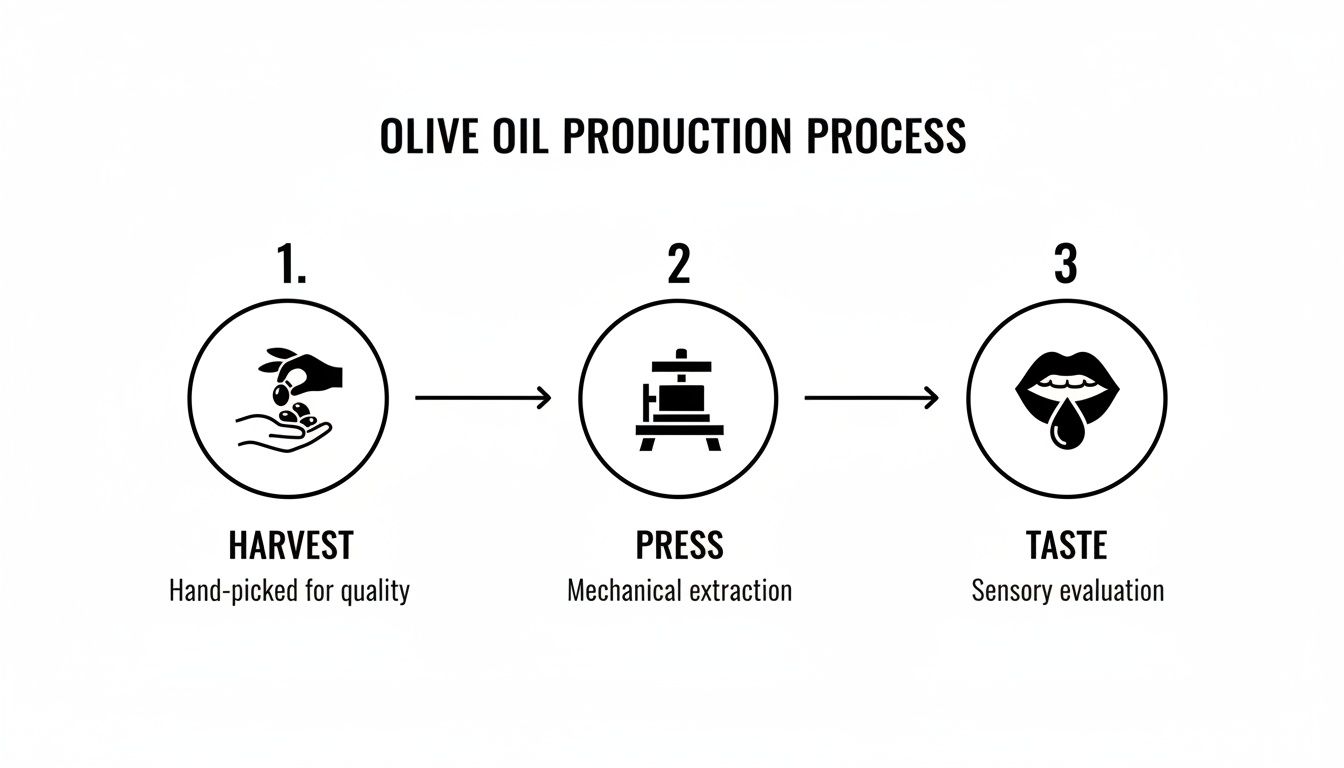
As the visual shows, every step—from gentle harvesting to low-temperature pressing and expert tasting—is designed to maximize and preserve the oil's natural goodness.
This growing awareness is fueling incredible demand. The global organic olive oil market was valued at $932.6 million in 2021 and is projected to soar to $2,183.3 million by 2031, growing at a steady 8.9% CAGR. This boom is largely driven by health-conscious consumers, especially in Europe, who are seeking authentic, chemical-free oils as part of the celebrated Mediterranean diet.
Ultimately, choosing a high-quality organic cold pressed extra virgin olive oil isn't just about grabbing another ingredient. It's an investment in your long-term well-being.
How to Taste Olive Oil and Uncover Its True Character
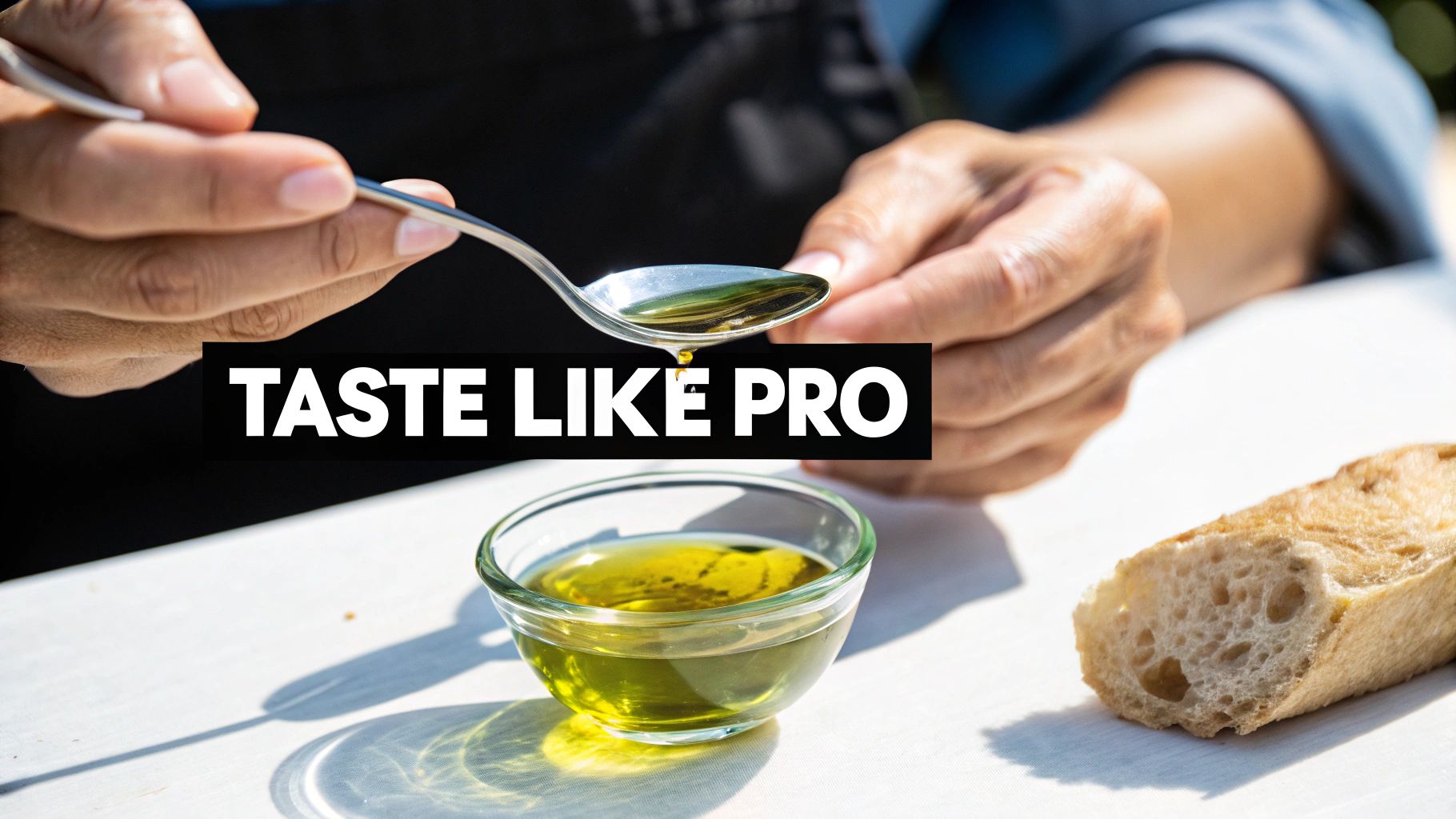
Tasting olive oil properly is a lot like tasting wine. It’s a sensory experience that tells you a story about where the oil came from, how it was made, and how fresh it is. A single sip can reveal its entire personality.
To really get to know an oil, you have to taste it straight. Forget the bread for a moment; that's for enjoying later. Tasting it pure is the professional method, and it's surprisingly easy to learn. It will completely change how you think about olive oil.
The Professional Tasting Method
Ready to find out what's really in your bottle? These four steps are all it takes to taste like a pro. The whole point is to warm the oil slightly to release its aromas and then coat your mouth to get the full range of flavors.
-
Pour and Warm: Pour about a tablespoon of oil into a small, sturdy glass. Cup the bottom of the glass with one hand and cover the top with your other. This traps the aromas inside while your body heat gently warms the oil. Swirl it for about a minute.
-
Sniff Deeply: Lift the glass to your nose, remove your hand, and take a good, deep sniff. What do you smell? A high-quality organic cold pressed extra virgin olive oil can have aromas of fresh-cut grass, artichoke, green almonds, or even tomato leaf.
-
Sip and Slurp: Take a small sip. Now for the crucial part: suck some air through your teeth with the oil in your mouth. This makes a slurping sound and is a technique called stripaggio in Italian. It sprays the oil across your palate, letting you taste all its complexities.
-
Swallow and Assess: Finally, swallow the oil. Pay close attention to the finish. Do you feel a peppery tickle or a spicy kick in the back of your throat? That’s a fantastic sign.
What to Look For: The Three Positive Signs
A truly great extra virgin olive oil has three positive attributes. Think of them as the hallmarks of quality. When you find an oil with all three in harmony, you've struck gold.
The goal isn't to find an oil that is simply "not bad." The goal is to find an oil that is vibrantly, wonderfully good—an oil that sings with life and flavor.
Here are the three notes you're looking for:
- Fruitiness: This is the first thing you should notice—the smell of fresh, healthy olives. It can be delicate and floral or intense and grassy, but it should always be present in both aroma and taste.
- Bitterness: Don’t be afraid of bitterness! A little bitterness on your tongue is a sign that the oil was made from green, unripe olives, which are packed with healthy antioxidants.
- Pungency: This is that spicy, peppery sensation that hits the back of your throat when you swallow. This "kick" comes from oleocanthal, a powerful anti-inflammatory polyphenol, and is a dead giveaway of a fresh, high-quality oil.
Spotting a Defective Oil
Knowing what's good is only half the battle; you also need to know how to spot a bad oil. If an oil has any sensory defects, it legally cannot be labeled "extra virgin."
Keep an eye (and nose) out for these common red flags:
- Rancid: This is the most common flaw. A rancid oil smells and tastes like old nuts, wax crayons, or putty. It’s the smell of oil that has gone bad due to oxidation.
- Musty or Fusty: This defect happens when olives are piled up and stored for too long before being milled. They begin to ferment, creating a smell like moldy, sweaty socks.
Learning these simple techniques will give you the confidence to tell a genuine, healthy olive oil from a fraudulent one. If you want to dive deeper and really sharpen your skills, you can learn more about how to taste olive oil with our complete tasting guide.
A Buyer's Guide to Finding Authentic Olive Oil
You’ve learned the language, decoded the labels, and now you understand the craft behind true olive oil. It's time to put that knowledge to the test in the real world—the supermarket aisle. This is your practical field guide for outsmarting the marketers and bringing home only the liquid gold you deserve.
Think of yourself as a detective. The bottle is the scene, and the label is full of clues. Your mission is to separate the genuine articles from the impostors. With just a few key things to look for, you can shop with total confidence, knowing you’re choosing an oil that actually delivers on its promise of flavor and health.
Your Shopping Checklist
Before you even grab a bottle, have this mental checklist ready. These are the non-negotiable signs of a high-quality, authentic organic extra virgin olive oil.
-
Look for a Harvest Date: This is, without a doubt, the most important piece of information on the label. A "best by" date can be set two years after bottling, telling you nothing about the oil's real age. A harvest date, on the other hand, tells you exactly when the olives were picked, giving you a true measure of freshness. Always look for a date from the most recent harvest season.
-
Choose a Dark Bottle: Light is one of olive oil's worst enemies, causing it to break down and go rancid quickly. Any producer who cares about their product will package it in dark glass (like deep green or brown) or a completely opaque tin to protect it. Clear glass bottles might look pretty on the shelf, but they are a massive red flag.
-
Seek Out Seals of Approval: Certifications are your best friends in the olive oil aisle. The USDA Organic seal is a great start, guaranteeing the olives were grown without synthetic pesticides or fertilizers. Even better are European seals like PDO (Protected Designation of Origin) or PGI (Protected Geographical Indication). These are ironclad certifications verifying the oil's exact origin and production methods, so you know it's not a fraudulent blend from who-knows-where.
Red Flags That Scream "Stay Away"
Knowing what to look for is only half the battle; knowing what to avoid is just as critical. Fraudulent or low-quality oils often hide in plain sight, using clever language to fool you.
A suspiciously low price is almost never a bargain; it’s a warning. The meticulous process of creating genuine extra virgin olive oil is labor-intensive and expensive. If a price seems too good to be true, it almost certainly is.
Keep an eye out for these tell-tale signs of a subpar product:
- Vague Origin Descriptions: Be wary of phrases like "Packed in Italy" or "Product of the Mediterranean." This is often a trick to hide that the bottle contains a blend of cheap oils from various countries. A proud producer will always state the specific country, and often the exact region or even the estate, where their oil was made.
- Plastic Bottles: While some use plastic to cut costs, it's generally a sign of a lower-grade product. Plastic is permeable to oxygen, which makes the oil go rancid faster. Glass or tin is always the superior choice for keeping oil fresh and flavorful.
- Deceptive Marketing Terms: Words like "Pure," "Light," or just "Olive Oil" on a label mean the product is a refined oil, not extra virgin. These oils have been treated with heat and chemicals, stripping them of the very flavor and health benefits you’re looking for.
Your Checklist for Buying Authentic Olive Oil
Here’s a quick-reference table to help you make smart choices at a glance. Think of it as your cheat sheet for spotting the real deal.
| What to Look For | Why It Matters | Red Flags to Avoid |
|---|---|---|
| Harvest Date | The best indicator of freshness. Olive oil is a fruit juice; fresher is better. | A "Best By" or "Bottling" date with no harvest date. |
| Dark Glass or Tin | Protects the oil from light, which causes rapid degradation and rancidity. | Clear or light-colored glass bottles. Plastic bottles. |
| Specific Origin | A specific region, estate, or mill name indicates traceability and pride. | Vague terms like "Product of Mediterranean" or "Packed in Italy." |
| Seals (USDA, PDO, PGI) | Third-party verification of organic practices and geographical authenticity. | An absence of any recognized certifications. |
| "Extra Virgin" Label | The highest grade, indicating low acidity and no flavor defects. | Terms like "Pure," "Light," "Classic," or simply "Olive Oil." |
| Fair Price Point | Reflects the high cost of quality production, from harvesting to milling. | A price that seems too good to be true. |
Armed with this checklist, you are now fully equipped to navigate the olive oil aisle like an expert. You can spot the markers of true quality and sidestep the traps, ensuring every bottle you bring home is fresh, authentic, and absolutely delicious.
Your Questions About Olive Oil Answered
Walking through the olive oil aisle can feel like a pop quiz. With so much information—and misinformation—floating around, it’s easy to feel a little lost. Let's clear the air and tackle some of the most common questions head-on.
Can I Really Cook with Organic Extra Virgin Olive Oil?
Yes, absolutely. This is probably one of the most persistent myths out there, but it's time to put it to rest. A high-quality organic cold pressed extra virgin olive oil has a smoke point that sits comfortably between 375–410°F (190–210°C).
That range makes it perfectly fine for most of the cooking you do every day, whether you're sautéing vegetables, roasting potatoes, or even doing a light fry. What’s more, the antioxidants in EVOO actually make it more stable when heated compared to many refined seed oils. You might want to save that super-premium bottle for drizzling, but a good, everyday EVOO is a fantastic and healthy choice for the stovetop.
What Is the Best Way to Store Olive Oil?
It helps to think of olive oil as fresh-pressed fruit juice, because that’s exactly what it is. And just like juice, it has three mortal enemies: heat, light, and air.
Your best bet is to store it in a cool, dark place, like a pantry or cupboard—definitely not next to the stove or on a sunny windowsill. Make sure you twist that cap on tight after every pour to keep oxygen out, which is the primary culprit behind rancidity. And despite what you might have heard, skip the refrigerator. It can cause condensation to form inside the bottle, which will only harm the oil once it’s back at room temperature.
Proper storage isn't just a suggestion; it's the single best way to protect the flavor, aroma, and health benefits you paid for. A few simple habits can extend the life of your oil significantly.
Does the Color of Olive Oil Mean Anything?
This might surprise you, but the color of olive oil tells you almost nothing about its quality. The shade—from a deep, grassy green to a soft, golden yellow—is all about the type of olive used and how ripe it was when picked.
Vibrant green oils are usually from less ripe olives, which often results in a bold, peppery flavor. Golden oils tend to come from riper olives, giving them a milder, more buttery taste. In fact, professional tasters use special blue-tinted glasses so that color can't sway their judgment one way or the other.
How Long Does a Bottle of Olive Oil Last Once Opened?
As soon as you break that seal, the countdown begins. To get the best flavor and all the health benefits, you should try to finish an open bottle of olive oil within 3 to 4 months.
It won't go bad like a gallon of milk, but it will slowly lose its character. The vibrant aromas, fresh taste, and powerful antioxidants will all fade over time as the oil oxidizes. That's why it's always a good idea to buy a bottle size you know you can get through in a few months, rather than a giant tin that will linger in your pantry for a year.
Ready to experience the true character of authentic olive oil? At Learn Olive Oil, we provide expert guides, tasting notes, and recommendations to help you discover your next favorite bottle. Start your journey into the world of premium olive oil with us today. Find out more at learnoliveoil.com.
 Learn Olive Oil
Leave a comment