Your olive oil absolutely goes bad. Let that sink in. Unlike a fine wine that matures into something magnificent, olive oil is much more like fresh-squeezed juice. It is perfect, vibrant, and bursting with life the moment it is made… and begins a slow, graceful decline from there.
The Unspoken Truth About Your Olive Oil
It’s a question we’ve all asked, usually while staring at a dusty bottle in the back of the pantry: does olive oil go bad? The answer is a resounding yes.
And this one fact should forever change how you buy, store, and use this cornerstone of your kitchen. The journey from a vibrant, peppery, and nutrient-packed oil to something flat, stale, or even unpleasant begins the second the olives are crushed. This isn’t a flaw—it’s the hallmark of a fresh, natural product.
From Peak Freshness to Gradual Decline
Picture a bouquet of fresh flowers. When you first bring them home, the colors are brilliant, the fragrance intoxicating. A week later, they’re wilting, the scent fading into a memory. The very same process happens inside your olive oil bottle, just on a much slower and less visible timeline.
The moment an olive is pressed, the clock starts ticking. Every day, exposure to its natural enemies—light, heat, and air—chips away at its quality, flavor, and health benefits.
This decline isn't just about taste. The very things that make extra virgin olive oil a nutritional powerhouse—those potent antioxidants and polyphenols—are incredibly delicate. As the oil ages and oxidizes, these beneficial compounds break down, leaving you with little more than plain old fat.
A Critical Shift in Your Mindset About Olive Oil
The biggest mistake you can make is treating olive oil as if it were immortal. We buy giant tins to get a good deal, then let them languish for months, or even years. To unlock the true magic of your oil, you must start thinking differently.
- Prioritize Freshness: Think "fresh first." Hunt for the freshest oil you can find and use it with joyous abandon.
- Buy for Now, Not Later: It's far wiser to buy a bottle size you can actually use within a few months of opening it. A smaller, fresher bottle is always a better value than a large one that goes rancid.
- Embrace Timely Enjoyment: Stop "saving" your good olive oil for a special occasion! The special occasion is now, when its flavor and health benefits are at their zenith.
When you begin to treat olive oil like the fresh, perishable product it is, you guarantee that every drop you pour is as vibrant and healthy as it was meant to be. Your food will thank you for it.
Why Good Olive Oil Turns Bad
To truly understand why olive oil goes bad, you must picture a slow-motion battle raging inside every bottle. It’s a silent war between the oil's delicate, healthy compounds and a few relentless enemies. Understanding this invisible process is the real secret to preserving your oil's incredible flavor and nutritional punch.
The arch-villain in this story is oxidation. If you've ever sliced an apple and left it on the counter, you've witnessed oxidation in action. The apple's flesh turns brown, and that crisp, fresh taste vanishes. The exact same chemical reaction happens to olive oil, just over a much longer period.
Oxygen is the primary attacker. It assaults the healthy unsaturated fats in the oil, causing them to break down. This process creates new compounds responsible for those awful, stale flavors we call rancidity. For a deeper scientific look, you can explore the details of olive oil rancidity on learnoliveoil.com.
The Four Enemies of Freshness
While oxygen is the direct culprit, a few other factors act as its powerful accomplices, dramatically speeding up the oil's decline. Think of them as the four horsemen of the olive oil apocalypse: Time, Light, Heat, and Air.
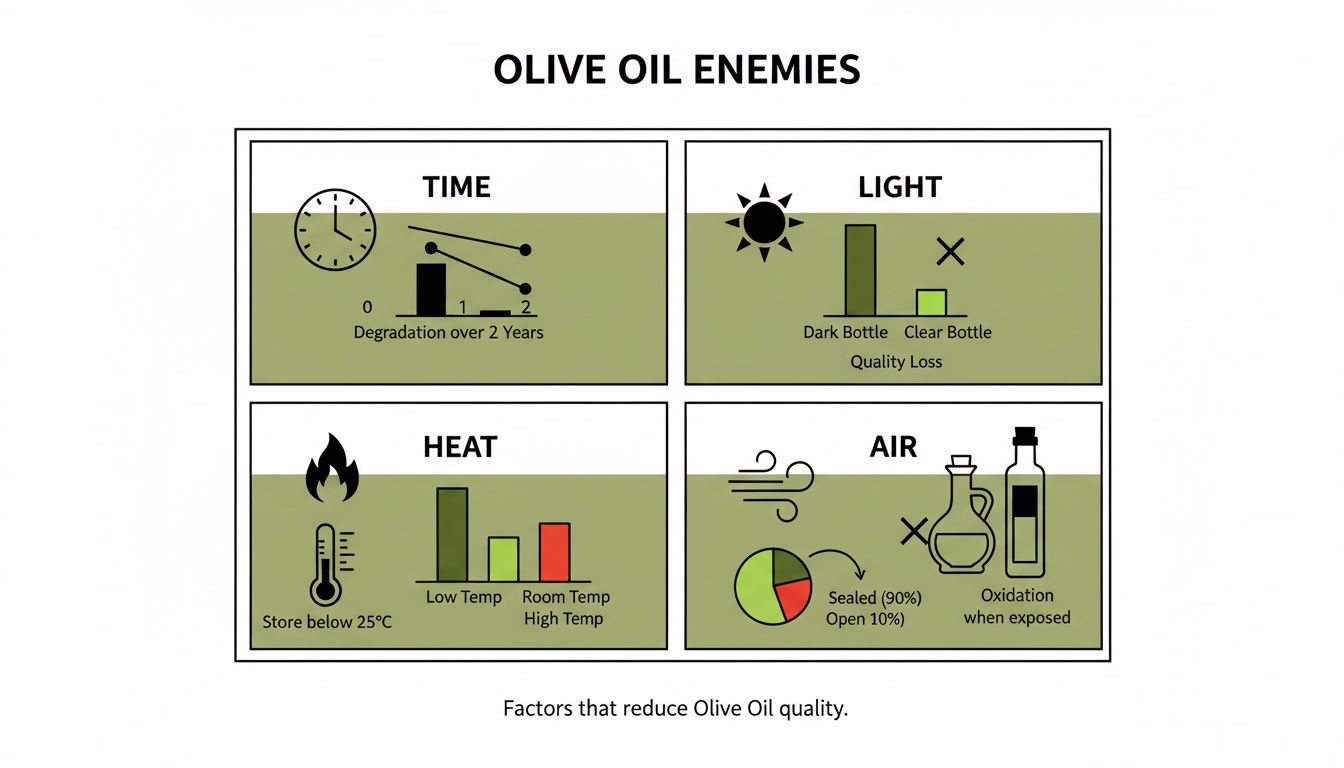
Controlling these four elements is the single most powerful thing you can do to preserve the quality of your oil.
Heat: The Accelerator
Heat acts like a gas pedal for oxidation. Storing your olive oil next to the stove or in a sunny spot on the counter is a surefire way to age it prematurely. Even a small increase in temperature can dramatically accelerate the chemical reactions that lead to rancidity.
In fact, some studies suggest that temperature plays an even larger role than oxygen exposure. An oil stored in a cool cellar at 10°C (50°F) might remain in pristine condition for over 36 months. Take that same oil and keep it at room temperature, around 22°C (72°F), and its quality could plummet in just a year. It's not a straight line, either—every little jump in temperature makes a big difference.
Light: The Energizer
Light, particularly UV light, provides the energy needed to kickstart the oxidative process. This is precisely why high-quality olive oils are sold in dark glass bottles or opaque metal tins. A beautiful clear bottle sitting on a bright windowsill is a recipe for disaster.
Light exposure doesn't just speed up rancidity; it also annihilates the delicate vitamins and powerful antioxidants (polyphenols) that make extra virgin olive oil so good for you. Protecting your oil from light is just as crucial as keeping it cool.
Once you understand this invisible battle, you're no longer a victim. You become the guardian of your olive oil. By controlling its environment, you protect your investment and ensure every single drop delivers the vibrant flavor and health benefits you paid for. While you can't stop time, you can absolutely help your oil win the fight against its other enemies.
How to Spot Bad Olive Oil Using Your Senses
For a moment, ignore the expiration date on the bottle. That date is little more than a suggestion, a guess printed in a factory far away. The most sophisticated and reliable tools you have for telling if olive oil has gone bad are the ones you were born with: your nose and your palate.
Learning to trust your senses is the single most important skill you can develop to protect your cooking. It’s the difference between a salad dressing that sings with flavor and one that just tastes… funky. This isn't about becoming a world-class olive oil sommelier; it’s about having the confidence to know, instantly, if the oil in your hand will elevate or sabotage your meal.
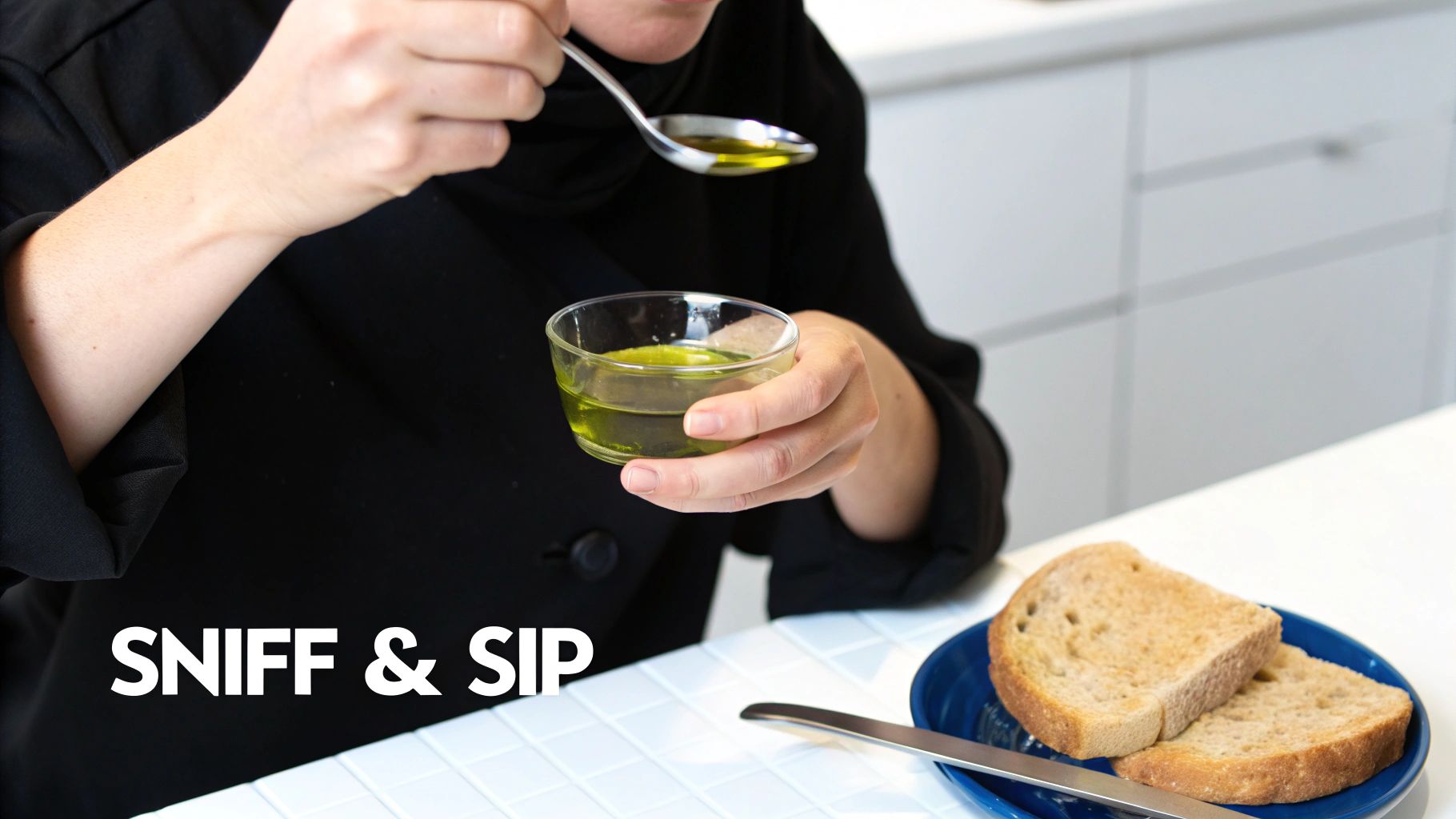
The entire process is simple. It's a quick “sniff and sip” that takes less than a minute but reveals everything you need to know.
The Essential Sniff Test
Before you even think about tasting, give the oil a good, long sniff. This is your first line of defense, and it’s where the most glaring signs of trouble appear.
A fresh, high-quality extra virgin olive oil should smell alive and vibrant. You might detect notes of fresh-cut grass, green banana, artichoke, or even a pleasant peppery tickle in your nose. These are all signs of excellence.
What you don't want to smell is… nothing. A complete lack of aroma is a huge red flag that the oil is old and has lost all its personality. Worse still are the unmistakable scents of spoilage.
An oil that smells like waxy crayons, old putty, stale walnuts, or the inside of a greasy potato chip bag has gone bad. That’s the smell of oxidation, and there’s no coming back from it.
If you smell any of those off-putting aromas, the test is over. That bottle belongs in the bin, not in your food.
The Final Verdict: The Sip Test
If the oil passed the sniff test, it's time for a small taste. You don’t need much—just a tiny sip is plenty. Pour a little onto a spoon, warm the bottom with your palm for a few seconds, and give it a try.
Professionals use a technique called stripaggio, where they slurp the oil with a bit of air to spray it across their palate. This helps amplify all the flavors, both good and bad.
So, what are you looking for? A good, fresh olive oil should taste clean and vibrant. It might be buttery and smooth or robust and peppery, with a distinct bitterness or a pungent kick at the back of your throat. That peppery finish is a fantastic sign—it comes from the healthy polyphenols!
Now, let's compare the good, the bad, and the ugly.
Fresh vs. Rancid Olive Oil: A Sensory Showdown
This table breaks down the key differences you'll notice when you smell and taste your oil. It's the ultimate cheat sheet for your senses.
| Sensory Cue | What Fresh Olive Oil Is Like | What Bad Olive Oil Is Like |
|---|---|---|
| Smell | Smells fresh, green, and fruity. Think grass, herbs, or fruit. | Smells like crayons, stale nuts, putty, or old varnish. |
| Taste | Tastes clean and vibrant. May have bitter or peppery notes. | Tastes greasy, flat, metallic, or like old cooking oil. |
If the oil tastes greasy, stale, or just flat and unpleasantly fatty, it's rancid. There's no pleasant fruitiness, no life to it at all. If your first instinct is that something tastes "off," you're almost certainly right. Trust that gut feeling.
This simple evaluation gives you all the power. You can learn even more by checking out this great resource that details how to test olive oil at home on learnoliveoil.com. Once you do this a few times, you’ll be amazed at how quickly your senses become finely tuned to spot the good from the bad.
Decoding the Dates on the Bottle
Staring at the dates on an olive oil bottle can feel like deciphering a code. It’s easy to just grab the one with the “Best By” date furthest away, thinking you’ve scored the freshest oil. But honestly, that date can be more of a marketing gimmick than a genuine guarantee of quality.
To discover what you’re really buying, you must look closer. The “Best By” or “Use By” date is typically set for 18 to 24 months after the oil was put in the bottle. See the problem? It tells you when it was bottled, not when the olives were picked and pressed—and that is the moment that truly matters.
The Harvest Date Is Your Gold Standard
The single most important date on any bottle is the Harvest Date. This is the oil’s true birthday. It marks the moment the olives were picked from the tree and started their journey to becoming the oil in your hands. Reputable producers are proud of this date and display it clearly.
Think of it this way: the “Best By” date is about the packaging. The Harvest Date is about the precious oil inside the packaging. An oil harvested in late 2022 but not bottled until mid-2024 is already old news, even if its "Best By" date is still two years away.
When you have a choice, always, always choose the most recent Harvest Date. This one habit alone will revolutionize the quality of the olive oil you bring into your kitchen. If a bottle doesn’t show a Harvest Date at all? That’s often a red flag that the producer may be hiding something about its age.
Realistic Timelines for Your Olive Oil
So, what’s a realistic shelf life? It really comes down to two simple factors: whether the bottle is sealed and how you’re storing it.
- Unopened Bottles: A high-quality, sealed bottle of extra virgin olive oil, kept in a cool, dark place, will stay at its best for about 18 to 24 months from its harvest date.
- Opened Bottles: The moment you break that seal, oxygen rushes in and the clock starts ticking much faster. For the best flavor and health benefits, you’ll want to use an opened bottle within 3 to 6 months. It won’t become harmful after that, but all those beautiful, peppery notes will have faded into a whisper.
Think of these timelines as your guide. The moment you twist that cap, the final countdown begins. It's why buying those huge tins of olive oil, while tempting, can be a waste if you don't cook with it constantly. You're far better off buying a smaller bottle that you know you'll finish while it’s still at its magnificent peak. To dig deeper into this, you can learn all about understanding olive oil labels on learnoliveoil.com.
How Packaging Influences Longevity
The bottle isn't just a container; it's the oil’s first line of defense. The right packaging makes a huge difference in how long your oil will last.
| Packaging Type | Protection Level | Why It Matters |
|---|---|---|
| Dark Glass | Excellent | It’s like sunglasses for your oil, blocking the UV light that triggers oxidation. |
| Opaque Tin | Excellent | Offers total protection from light and won't shatter if you drop it. |
| Clear Glass | Poor | This is a major warning sign. It lets light flood in, rapidly ruining the oil. Avoid it. |
| Plastic | Varies | It's acceptable for short-term storage, but there's a risk of chemicals leaching over time. |
Your best bets are always dark glass or a metal tin. That beautiful bottle of golden oil sitting in clear glass on a sunny supermarket shelf? It’s already degrading before you even get it home. The big takeaway is that the clock starts ticking at the harvest, not when you buy it. Once you know how to read the dates and judge the packaging, you’re in control.
The Art of Storing Olive Oil Correctly
You’ve brought home a beautiful bottle of fresh, vibrant olive oil. Now, think of yourself as its guardian. Your one job is to protect it from the three enemies that want to turn it rancid: heat, light, and air. Luckily, this is not complicated. Just turn this simple mantra into a habit: keep it cool, dark, and sealed.
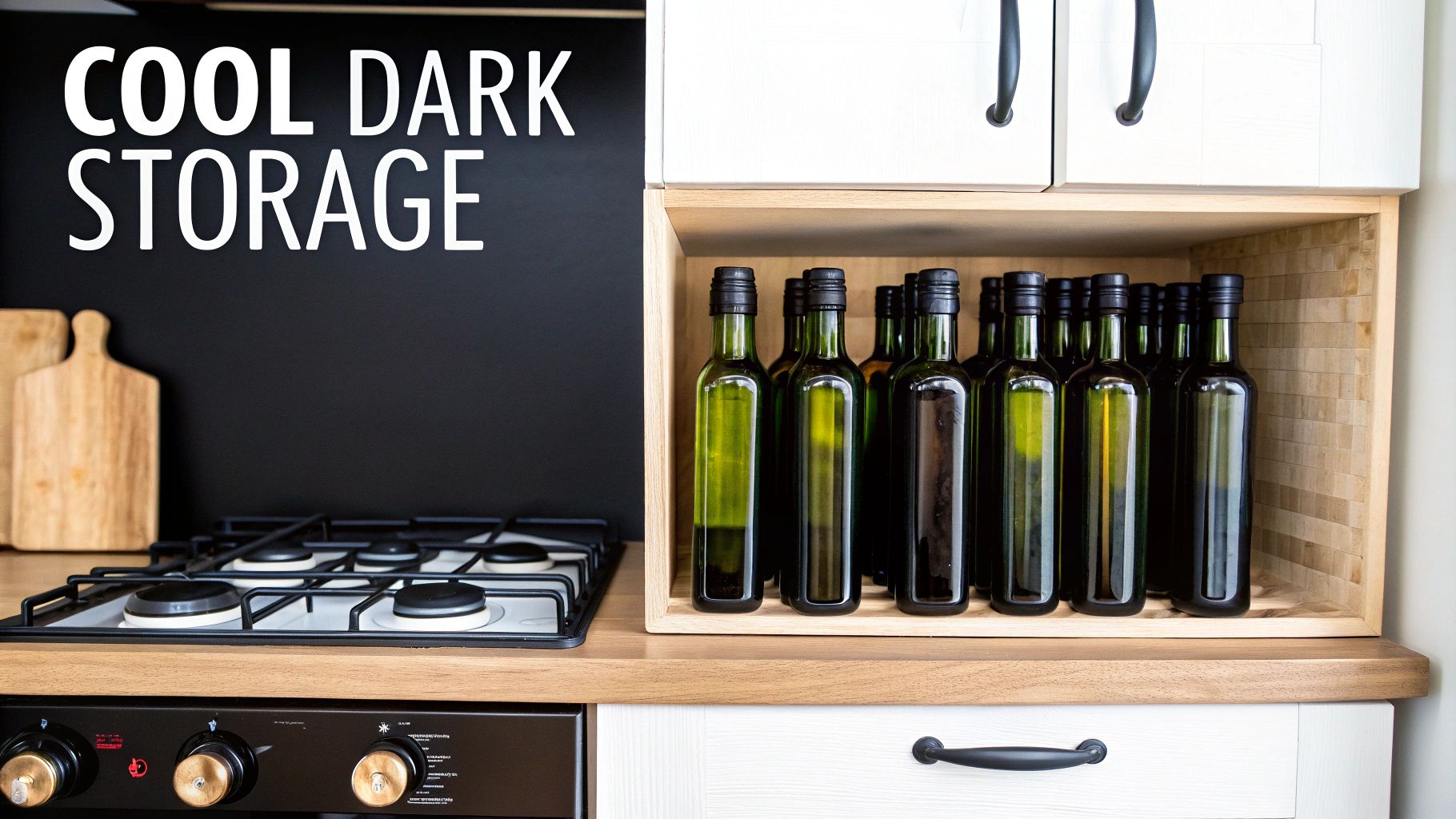
Getting this right isn't just about preventing waste. It’s about preserving the very soul of the oil—its bright, grassy flavor, its peppery finish, and all those powerful health benefits. Every time you store it properly, you're guaranteeing your next dish will taste just as incredible as the first.
Debunking Common Storage Myths
Let's clear the air on a few common storage mistakes. They often come from good intentions but can do more harm than good, accelerating the very decay you're trying to prevent.
One of the biggest culprits? Pouring your lovely oil into a clear glass cruet and leaving it on the windowsill. Sure, it looks beautiful, but it's a death sentence for your oil. That constant, direct sunlight provides the energy for oxidation to run wild, rapidly destroying its delicate flavors and antioxidants.
Then there's the refrigerator myth. It seems logical, doesn't it? Cold preserves things. But not olive oil. Storing it in the fridge causes the natural waxes to clump together, turning it cloudy and thick. The constant chilling and warming can also introduce condensation, and as we know, water and oil are bitter enemies.
The sweet spot for olive oil is a consistent, cool room temperature, somewhere between 14°C and 22°C (57°F to 72°F). A dark pantry or kitchen cabinet away from the stove is its perfect home.
Practical Steps to Preserve Freshness
You don't need a special cellar to protect your investment. A little mindfulness is all it takes. These simple habits will make a world of difference.
Find a Cool, Dark Home: The best place for your olive oil is in a cabinet, away from the oven, stove, and any windows. Heat is the number one accelerator for rancidity, so creating physical distance from your cooking appliances is a must.
Always Seal It Tightly: Oxygen is the main offender when it comes to turning olive oil. Every single time you use your oil, make sure you twist that cap back on securely. This simple action minimizes air exposure and dramatically slows down the oxidation process.
Buy the Right Size: That huge, value-sized tin might seem like a bargain, but unless you're running a professional kitchen, it's a false economy. Once you open it, the clock starts ticking. A much better strategy is to buy smaller bottles that you can realistically use within 3 to 6 months. For a deeper dive on post-opening care, check out this guide on how to store olive oil after opening on learnoliveoil.com.
By making these simple strategies second nature, you take control. You ensure that every drop you pour is bursting with the life, flavor, and health benefits you paid for, turning your everyday cooking into something truly exceptional.
How Global Challenges Affect Your Olive Oil
That bottle of olive oil in your kitchen has a bigger story to tell than you might think. Its journey from a sunny grove to your pantry shelf is tied to a complex web of global weather patterns, supply chains, and economics. The question "does olive oil go bad?" starts long before the oil ever reaches your home.
Think about the historic droughts scorching Spain or the brutal heatwaves punishing Italy. These aren't just headlines; they inflict incredible stress on the olive trees. When trees are stressed, they produce fewer olives, and the ones they do yield are often smaller. This creates a powerful ripple effect, starting with a difficult harvest and ending with a strained global supply.
From the Grove to the Shelf
These agricultural challenges have a direct impact on the freshness of the oil you buy. A poor harvest means less oil to go around, which can lead to it sitting in storage tanks or warehouses for much longer before it's even bottled. Its freshness clock starts ticking the moment it's pressed, so those delays truly matter.
The global olive oil market is more concentrated than most people realize. Just eight countries produce the vast majority of the world's supply, with Spain alone responsible for a staggering 40.2%. This means a major weather event in one of those key regions can throw the entire market into chaos. For example, Morocco, battling a prolonged drought, is expecting its harvest to fall to a mere 90,000 tons—a steep decline from its five-year average of 141,600 tons. When supply gets that tight, prices inevitably rise. You can read more about these global production challenges and their economic impact on pmc.ncbi.nlm.nih.gov.
How Market Pressures Affect Your Purchase
This kind of price volatility directly influences what we buy and how we use it. When prices are high, it’s tempting to buy a giant tin to get a better deal. The problem? That oil might sit on your shelf for a year, slowly losing its vibrant flavor and health benefits.
Understanding the journey from grove to bottle helps you appreciate the true value of a genuinely fresh, well-sourced olive oil. It is a perishable product shaped by both nature and economics.
Knowing the connection between what’s happening in the world and what’s available on your local shelf makes you a much smarter shopper. Here’s what to look for:
- Pay Attention to Harvest Dates: This is your single best clue to freshness. A recent date means the oil hasn't been sitting around for ages.
- Understand Price Fluctuations: If you see prices suddenly spike, it’s often a sign of a bad harvest somewhere. This makes checking those harvest dates even more critical. To learn more, check out our guide on what drives extra virgin olive oil prices on learnoliveoil.com.
- Choose Reputable Producers: Smaller, quality-focused producers are usually more transparent. They’re proud of their harvest and will tell you exactly when and how their oil was made.
When you recognize that your bottle of olive oil is the final stop on a long, often difficult global journey, you start to see it differently. This knowledge helps you make better choices, ensuring the oil you bring home is not just good, but truly great.
Common Questions About Olive Oil Freshness
Even after mastering the basics, a few common questions always seem to pop up. Let’s clear up these lingering uncertainties so you can handle your olive oil with total confidence.
Think of this as your expert-in-the-pantry section.
Can I Still Use Expired Olive Oil?
Technically, you can, but you really, really shouldn't. While it's not going to make you sick in the way spoiled meat would, rancid olive oil is a culinary crime.
All those wonderful, nuanced flavors are gone, replaced by a flat, greasy taste reminiscent of crayons or stale nuts. More importantly, the very antioxidants that make extra virgin olive oil a health powerhouse have degraded completely. You're left with an empty fat that offers none of the benefits and can ruin a perfectly good dish.
When in doubt, trust your senses. If it smells off, its time is up.
Does Storing Olive Oil in the Fridge Make It Last Longer?
This is a persistent myth, and the answer is a hard no. In fact, refrigerating your olive oil can do more harm than good.
The cold temperatures will cause the natural waxes in the oil to solidify. This is why it turns cloudy and semi-solid, making it a pain to use. But the real problem is the repeated warming and chilling, which can cause condensation to form inside the bottle. Water is a major enemy of olive oil and will actually speed up its decline.
Stick to a cool, dark place like a pantry or cupboard. The sweet spot for storage is between 14-22°C (57-72°F).
What Should I Do with Old or Rancid Olive Oil?
First things first: never, ever pour it down the drain. It will solidify and cause a world of plumbing problems. For a great deep-dive on this topic, check out this guide on how long cooking oil lasts and how to store it safely.
If you’ve determined an oil is no longer fit for your food, it can still have a second life around the house. Consider using it for non-culinary tasks like:
- Conditioning a wooden cutting board or furniture
- Polishing stainless steel appliances
- Quieting a squeaky hinge
When it’s time to dispose of it, pour the oil into a sealable, non-recyclable container (like an old carton or plastic bottle) and check with your local waste management services for their specific collection guidelines.
At Learn Olive Oil, we believe that understanding the journey from the grove to your table is the key to enjoying this liquid gold. We provide the expert insights you need to choose, taste, and use the world's best olive oils with confidence. Discover the World of Premium Olive Oil.
 Learn Olive Oil
Leave a comment