Let's get one thing straight, right now. The notion that you shouldn’t cook with good olive oil is perhaps one of the most persistent—and destructive—myths in the modern kitchen. Not only can you sauté with extra virgin olive oil, it is one of the single best things you can do for the flavor and health of your food. It’s time to banish those old wives’ tales about it being too delicate for heat. A truly good extra virgin olive oil is far tougher—and more essential—than you’ve been led to believe.
Why Your Sauté Pan Begs for a Great Olive Oil
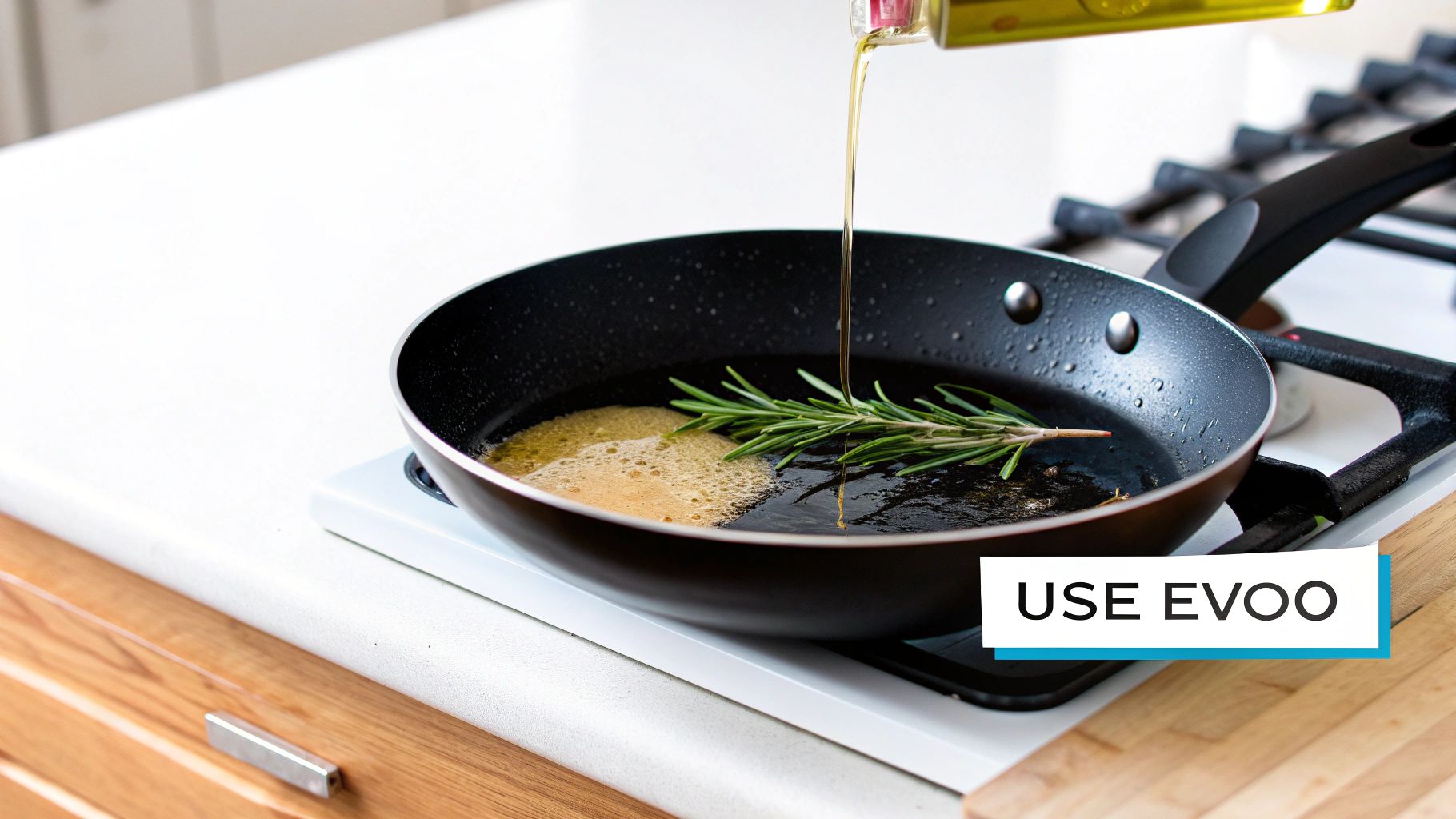
There’s a rumor that has haunted home kitchens for decades: a fine olive oil is only for drizzling, never for heating. Frankly, that single piece of misinformation is responsible for a tragic number of bland, uninspired meals. The simple truth is that high-quality extra virgin olive oil (EVOO) doesn't just tolerate the heat of your sauté pan—it thrives in it.
The secret lies deep within its chemical makeup. EVOO is rich in monounsaturated fats, a type of fat that is dramatically more stable when heated compared to the polyunsaturated fats found in many common seed oils. That stability is the key. It means the oil resists breaking down and forming harmful compounds when you cook.
It's More Than Just a Cooking Fat
Beyond its robust fatty acid profile, EVOO is teeming with powerful antioxidants called polyphenols. These are the very compounds that give a great oil its peppery bite and grassy aroma, and they are nutritional gold. When you sauté with olive oil, these antioxidants perform a kind of kitchen magic.
- They protect the oil itself: The antioxidants act like tiny bodyguards, shielding the oil from oxidation as it heats up, keeping it stable and wholesome.
- They infuse your food: The oil becomes a delivery system, transferring its incredible flavor and its health-boosting compounds directly into your vegetables, chicken, or whatever you’re cooking.
The idea that heat obliterates all the goodness in olive oil is a gross oversimplification. While some compounds may diminish slightly, many of the core health benefits are surprisingly resilient, making a true EVOO a far superior choice for your daily sauté than you ever imagined.
The Science Doesn't Lie
Still skeptical? Let's look at the proof. Researchers at the University of Barcelona simulated home cooking by heating EVOO to a typical sauté temperature of 170°C (338°F). They discovered that while some polyphenols were lost, the oil retained more than enough to meet the European Food Safety Authority's stringent standards for health claims, like protecting LDL cholesterol from oxidative damage. You can read more about the full research on these https://learnoliveoil.com/benefits-of-cooking-with-olive-oil findings.
Of course, the right oil is only half the story. Your equipment is your partner in crime. A high-quality stainless steel or cast iron skillet is the foundation for achieving a perfect sear. For a closer look at professional-grade tools, a guide to a 7 Qt Saute Pan With Lid can be an eye-opener. When you marry the right oil with the right pan, you're not just cooking; you’re setting the stage for culinary triumph.
How to Choose an Olive Oil That Sizzles, Not Smokes
Walking down the olive oil aisle can feel like deciphering an ancient code. You're bombarded with a wall of bottles, their labels screaming terms like "first cold-pressed," "pure," and "extra virgin." What does any of it mean when you just want to cook some glorious vegetables?
It's far simpler than the industry wants you to believe. You only need to know what to look for—and, more importantly, what to ignore.
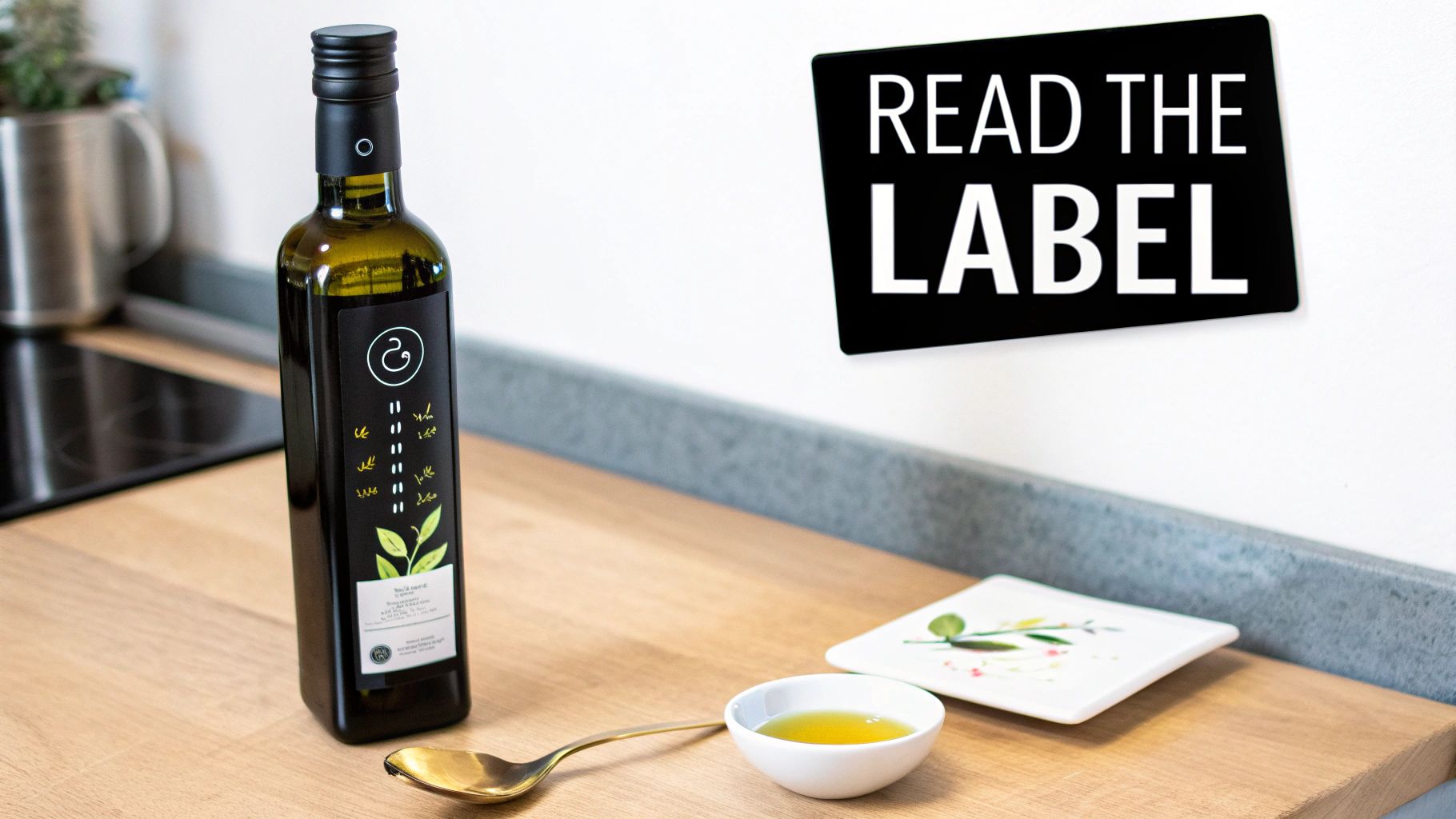
The single most critical distinction is between Extra Virgin Olive Oil (EVOO) and everything else. EVOO is the real deal—the highest grade, extracted without the use of chemicals or high heat. This gentle process preserves its vibrant flavor and, crucially, the powerful polyphenols that give it backbone under heat.
Anything labeled simply "olive oil," "pure," or "light" is a refined product. It's been processed in a way that strips out those magnificent flavors and health benefits. For sautéing, a quality EVOO isn't just an option; it's the only real choice.
Read the Bottle Like an Insider
Forget the romantic pictures of Tuscan hills on the front label; the truth is always on the back. A few key details will tell you everything you need to know about the oil's character and quality.
- Demand a Harvest Date: Freshness is everything. An olive oil's flavor and antioxidant power begin to fade the moment it's pressed. A clear harvest or press date is the mark of an honest producer. I never buy an oil without one and always look for a harvest within the last year.
- Insist on Dark Glass or Tins: Light is the mortal enemy of olive oil. It triggers oxidation, turning a beautiful oil into a rancid disappointment with shocking speed. Any producer who cares about their product will use dark, protective packaging. My rule is ironclad: never buy olive oil in a clear bottle.
- Seek Out a Single Origin: An oil that comes from a specific region, or even better, a single estate, is a powerful sign of quality. It demonstrates a level of care and traceability that you will never find in a generic blend sourced from multiple countries.
A common, and costly, mistake is to believe all extra virgin olive oils are created equal. The reality is that a fresh, high-polyphenol EVOO from a recent harvest is an entirely different creature from a generic blend that has languished on a shelf for months. One is a robust, flavorful cooking partner; the other is a recipe for mediocrity.
If you’re ready to master the art of decoding labels and understanding certifications, you can learn more about how to choose olive oil in our detailed guide. This knowledge is a game-changer, empowering you to see past marketing fluff and select a bottle that will genuinely transform your cooking.
Comparing Your Sautéing Options
To make your next trip to the store less of a guessing game, here is a simple breakdown of the common olive oils you'll encounter and how they perform in the pan.
Olive Oil Selection Guide for Sautéing
This table breaks down the best options based on what truly matters: stability, flavor, and those all-important antioxidants (polyphenols).
| Olive Oil Type | Best For Sautéing | Flavor Profile | Polyphenol Content |
|---|---|---|---|
| Extra Virgin | Excellent. Its stability and flavor make it the champion for everyday cooking. | Fruity, peppery, grassy—adds profound complexity to dishes. | High |
| Virgin | Good. Still unrefined, but a step down in quality and flavor complexity. | Milder, less complex than EVOO. | Medium |
| "Light" Olive Oil | Poor. Heavily refined, stripped of flavor and health benefits. | Neutral, bland. | Very Low |
| Olive Pomace Oil | Avoid. Extracted from leftover pulp with chemical solvents. | Undesirable, greasy. | Negligible |
Ultimately, choosing the right olive oil isn't about finding the most expensive bottle. It’s about the relentless pursuit of freshness and quality.
By focusing on that "extra virgin" designation, a recent harvest date, and protective packaging, you are arming your kitchen for success. You'll possess an oil that can not only handle the heat but will make everything you cook taste immeasurably better.
The Secret to a Perfect Sauté Is All in the Sizzle
The difference between a glorious golden-brown sear and a plate of sad, soggy food isn't a secret ingredient. It all comes down to mastering one fundamental force: heat. Honestly, this is where a little kitchen science separates the amateurs from the artists.
Learning to manage your pan's temperature is like learning to read a room. You must listen for the sizzle and watch the oil for its subtle language. The goal is to hit that magic window—hot enough to cook ingredients with speed and precision, but not so hot that the oil begins to break down and turn bitter.
The Hot Pan, Cold Oil Revelation
Here is a secret that feels backward but will change your cooking forever: always heat your pan before you add the olive oil. I see countless home cooks do the exact opposite, adding oil to a cold pan and letting them heat up together. That is a one-way ticket to oil-logged food.
When you preheat the pan, the metal expands and gets hot enough to create an instantaneous sear. Then, when you add your oil, it heats in seconds, creating a slick, shimmering surface. This is what allows your ingredients—from delicate fish fillets to humble onions—to sizzle and brown on contact instead of stewing in lukewarm oil.
Reading the Cues: The Difference Between a Shimmer and a Shriek
Your pan is hot. Now add the oil and watch it like a hawk. It will give you unmistakable visual signs when it's ready for food.
- The Shimmer: This is your green light. As the oil heats, you will see faint, wavy lines ripple across its surface. It literally looks like it's shimmering. This is the absolute sweet spot for sautéing with olive oil.
- A Gentle Wisp of Smoke: If you see just a tiny, fleeting wisp of smoke, you are at the absolute peak of the ideal temperature range. Get your food in the pan immediately.
- Plumes of Smoke: This is your emergency brake. If the pan is billowing smoke, the oil has gone too far and is breaking down. This doesn't just create a burnt, acrid flavor; it destroys the oil's beneficial qualities. If this happens, do not proceed. Carefully remove the pan from the heat, let it cool completely, wipe it out, and begin again.
The most common mistake I see when sautéing is simple impatience. Giving your pan those extra few moments to heat properly before the oil goes in is the single most powerful thing you can do to guarantee a crisp, beautifully browned result. Every single time.
Relying on these visual cues is infinitely more accurate than turning your stove dial to "medium-high." Every stove is different, and every pan conducts heat uniquely. Learning to read the oil itself gives you precise control, no matter whose kitchen you are in. If you want to dive deeper into the science, you can learn more about olive oil smoke point considerations in our detailed guide. It will demystify the process and give you the confidence to command heat like a true professional.
Your Step-by-Step Guide to a Flawless Sauté
Once your oil is warmed and shimmering, the real magic begins. This is where you move from merely heating things up to actively cooking—building layers of profound flavor with every step. Of course, it all starts with the right tool for the job. Having one or two superb pans is a non-negotiable, so it pays to spend time choosing quality frying pans that distribute heat like a dream.
The secret to a calm, controlled sauté happens before anything even thinks about touching the pan. Prepare all your ingredients and have them ready to go—chopped, measured, and waiting patiently beside the stove. Sautéing is a fast-paced dance. You simply do not have time to be dicing a pepper while your garlic is in the pan. We call this mise en place in professional kitchens, and it is your single greatest ally against chaos and burned food.
This simple visual guide breaks down the most critical sequence in all of cooking: getting the pan ready.
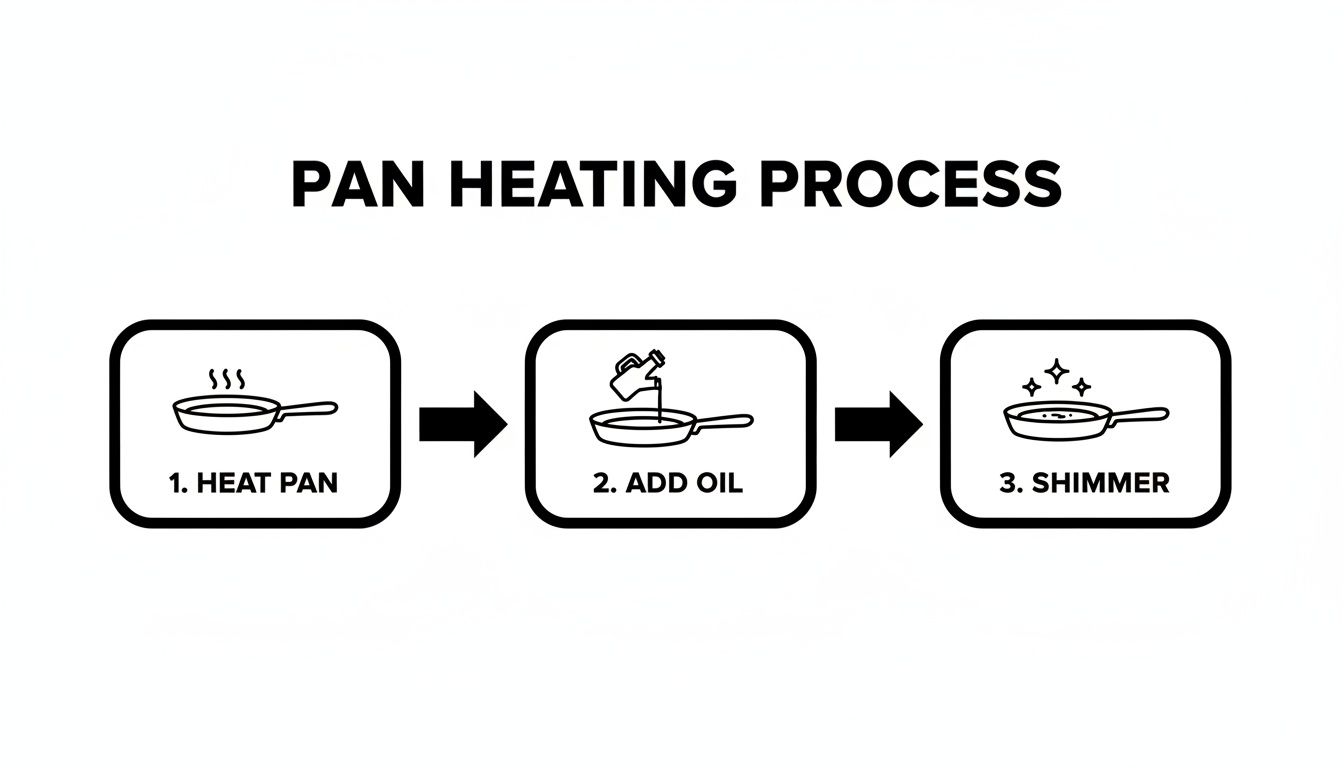
Commit this sequence to memory: hot pan, then oil, then wait for the shimmer. It’s the single most effective way to prevent food from sticking and guarantee a perfect, immediate sear.
The High Crime of Overcrowding
Here is one of the biggest mistakes I see people make: they pile everything into the pan at once. This is a culinary felony. Overcrowding the pan instantly crashes the temperature, which traps moisture and causes your ingredients to steam instead of sear. The result? Pale, waterlogged vegetables instead of beautifully caramelized, crisp ones.
If you are cooking a large batch of mushrooms or zucchini, do it in two or three smaller batches. That extra five minutes is a small price to pay for the incredible color and texture you will achieve.
A crowded pan is a steamy pan. If you do not hear a steady, confident sizzle the moment your food hits the oil, you have added too much. That sound is your compass—it is the signature of a proper sauté.
Building Flavor with Intelligence
A truly masterful sauté is about building flavor in deliberate stages. You never just dump everything in at once. Think of it as a carefully choreographed performance, adding ingredients based on how long they need to cook.
- Start with the Foundation: Always begin with your heartier aromatics, like diced onions, carrots, and celery. Give them the time they need to soften and release their fragrant sweetness. This creates a deep, savory base for the entire dish.
- Add the Quicker Cooks: Once the onions are translucent, it's time for ingredients that cook more quickly, like mushrooms, bell peppers, or minced garlic. Be vigilant here—garlic can go from fragrant to burnt in under 30 seconds.
- Finish with a Flourish: Finally, add your quick-cooking proteins (like shrimp or thinly sliced chicken) or delicate greens (like spinach or arugula). These typically need only a minute or two to be cooked to perfection.
This isn't just about making delicious food; it's a technique with profound health implications. The landmark PREDIMED trial famously discovered that diets supplemented with EVOO reduced cardiovascular events by a stunning 30% compared to low-fat diets. This reveals the immense power of this simple ingredient, even in everyday cooking like sautéing. By mastering this skill, you're not just making a better meal—you're making a powerful investment in your well-being.
How to Fix the Most Common Sautéing Disasters
Even the most seasoned cooks have watched a beautiful piece of fish weld itself to a pan or pulled out vegetables that are more greasy than golden. These kitchen mishaps aren't failures; they are lessons in disguise. Honestly, understanding what went wrong is the fastest path to becoming a more intuitive and confident cook.
Most sautéing problems boil down to just a few common culprits. The good news? They're all surprisingly easy to fix once you know what to look for. Let's diagnose and cure the most frequent issues you'll encounter when you sauté with olive oil.
Why Is My Food Sticking to the Pan?
Nine times out of ten, sticking is a temperature problem. You've either started with a pan that wasn't hot enough, or you've introduced food that was too wet.
The Cold Pan Problem: Dropping oil and food into a cold pan is the number one cause of sticking. The metal's pores are still open, and the food essentially fuses to the surface before it ever has a chance to sear. The fix is elegantly simple: always heat your empty pan first, then add your olive oil, and wait for that telltale shimmer before any food enters.
The Moisture Menace: Water is the sworn enemy of a good sear. It instantly drops the pan's temperature and creates a burst of steam, which essentially glues your food to the surface. Always, always pat your proteins and vegetables thoroughly dry with a paper towel before they go anywhere near the hot oil.
From Greasy Mess to Golden-Brown Glory
Did your food emerge oily and limp instead of crisp and vibrant? This isn't about the oil itself, but about how much breathing room your ingredients had. You've overcrowded the pan.
The surest path to a greasy result is overcrowding. When too much food is crammed into the pan, the temperature plummets, and the ingredients begin to steam in their own juices instead of searing in the hot oil.
It may feel counterintuitive, but working in batches is your secret weapon. The payoff in texture and flavor is monumental. A single, spaced-out layer of ingredients is the golden rule for achieving that perfect, crisp finish.
A less obvious cause of greasiness can be the oil itself. If your technique is flawless but your food still tastes off, the oil might be old and rancid. You can learn more about how to tell if olive oil is rancid, because a bad oil will impart a greasy, unpleasant flavor no matter how perfectly you cook.
Dodging Bitter Aromatics
There is a razor-thin line between fragrant, sweet garlic and a bitter, acrid disaster. And that line is about 30 seconds long. Garlic, shallots, and other delicate aromatics burn with astonishing speed.
Always add them near the end of the cooking process, long after your heartier vegetables have had a significant head start.
Keep them moving constantly in the pan. The instant you smell that wonderful, fragrant aroma, it's time to add liquid or your next ingredient to cool things down. Whatever you do, never turn your back on garlic in a hot pan.
Answering Your Toughest Questions About Sautéing with Olive Oil
You have questions, and that's a very good thing. The world of cooking fats is rife with confusion, but when it comes to sautéing with olive oil, the truth is much simpler than you've been led to believe. Let's dismantle the biggest myths and get you cooking with absolute confidence.
The number one fear I hear is about safety and smoke. People worry that heating a good extra virgin olive oil is somehow unhealthy or creates dangerous compounds. The reality is that a quality EVOO is incredibly stable when you cook with it, thanks entirely to its high concentration of monounsaturated fats and protective antioxidants.
Sautéing is a medium-heat technique, typically performed between 120°C and 170°C (248°F and 338°F). A good extra virgin olive oil won’t even begin to smoke until it reaches anywhere from 190°C to 215°C (375°F to 420°F). You would have to blast the heat far beyond what's necessary for a normal sauté to ever approach that temperature.
Isn't It a Waste to Use Good EVOO for Cooking?
This is a fantastic question, and the answer is an emphatic no! Using a flavorful, high-quality extra virgin olive oil for sautéing is not wasteful at all—it's a calculated investment in flavor. The oil is a primary ingredient, and its unique fruity or peppery notes will infuse directly into your food, elevating the entire dish in a way a bland, neutral oil never could.
Think of it this way: you would never use a cheap, tasteless wine in a sauce, would you? The same exact principle applies here. The vibrant character of a fresh EVOO is precisely what you want building the flavor foundation for your vegetables, fish, or chicken.
The old-fashioned idea of "saving the good stuff" for finishing is a kitchen myth that is crippling your cooking. When you sauté with a high-quality EVOO, you're not destroying its flavor; you're using it to build a deeper, more delicious meal from the ground up.
Can I Reuse Olive Oil After I've Sautéed with It?
This really depends on what you cooked and how hot the pan became. If you just completed a light sauté of some garlic and vegetables and the oil still looks clean and smells fresh, you can likely use it again for a similar dish later that day.
However, if you cooked something that left behind a lot of food particles, like breaded cutlets, or if the oil got a bit too hot and smells even slightly "off," it is time to discard it. The oil has already absorbed flavors from the food and will break down much more quickly the second time around. When in doubt, always start fresh.
Does My Pan Really Make a Difference?
Absolutely. The right pan is just as vital as the right oil. For sautéing, you demand a pan that heats evenly and holds that heat with unwavering consistency. This prevents the hot spots that can scorch your oil and your ingredients.
- Stainless Steel: This is my workhorse for most sautéing. It heats evenly, is incredibly durable, and gives you a clear visual on how your food is browning.
- Cast Iron: Nothing can beat cast iron for sheer heat retention. It is the master of creating a beautiful, hard sear on ingredients. It requires a little extra care, but it is a true kitchen powerhouse.
The material of your pan directly influences how you manage your burner. You can find excellent advice that connects these dots, like this guide on olive oil for high-heat cooking, which brilliantly explains the relationship between your oil, the heat, and your pan.
At Learn Olive Oil, we believe understanding the fundamentals is the key to unlocking amazing flavor. We provide the expert insights and clear guidance you need to choose, taste, and cook with the world's best olive oils. Discover the World of Premium Olive Oil.
 Learn Olive Oil
Leave a comment