There's a secret hiding in plain sight in your kitchen. It’s a tradition whispered down through generations, a cornerstone of Mediterranean wellness celebrated for centuries. It’s the simple, almost magical act of combining olive oil and lemon juice. This is more than a recipe step. It’s a powerhouse partnership that unlocks unforgettable flavors and delivers a startling array of health benefits, marrying heart-loving fats with a sun-drenched blast of vitamin C.
Why This Simple Pairing Is a Culinary Game Changer
Imagine, for a moment, two of the most trusted pillars of your pantry: olive oil, the liquid gold squeezed from ancient groves, and lemon juice, the bright, electric essence of sunshine itself. On their own, they are formidable.
But when you introduce them? Something extraordinary happens. You forge a harmony of flavor so profound it can elevate the humblest of ingredients. This isn't just about mixing oil and acid; it's about unleashing a culinary secret weapon. It’s the very soul of that unforgettable grilled fish on a Greek island, the reason a simple green salad can suddenly become an object of craving.
The Foundation of Flavor
The true genius here lies in a principle as old as cooking itself: balance. A spectacular extra virgin olive oil lays down a rich, fruity, sometimes peppery foundation that coats your palate with warmth. Then, like a bolt of lightning, fresh lemon juice cuts through that richness with its clean, sharp acidity, making the entire dish spring to life.
This exquisite interplay does more than just taste magnificent; it fundamentally changes how we perceive food. The acid from the lemon awakens your taste buds, priming them to receive the full spectrum of nuanced flavors in the olive oil and everything else on your plate.
"Think of olive oil as the deep, resonant cello in an orchestra, providing body and warmth. Lemon juice is the crisp, brilliant violin, adding notes that make the entire composition soar."
More Than Just a Dressing
While this combination is the undisputed king of vinaigrettes, its brilliance extends far beyond the salad bowl. For generations, masterful cooks have relied on it to:
- Tenderize and Marinate: The lemon's acidity is a master at gently breaking down the proteins in meat and fish, rendering them incredibly tender. The olive oil, in turn, acts as the perfect delivery system, carrying herbs and spices deep into the food while locking in moisture.
- Finish and Elevate: A final, confident drizzle over roasted vegetables straight from the oven, a swirl into a hearty bean soup, or a splash over grilled bread—this is the move that separates the good from the truly memorable.
- Create Instant Sauces: A vigorous whisk is all it takes to transform these two ingredients into a creamy, temporary emulsion. It’s an effortlessly elegant sauce for everything from steamed asparagus to grilled chicken.
The enduring beauty of this pairing is its profound simplicity. No complex techniques, no laundry list of ingredients. It is irrefutable proof that the most unforgettable flavors are often born from the most humble of beginnings. Prepare to see two of your pantry’s most faithful staples in an entirely new, and much more powerful, light.
Crafting the Perfect Vinaigrette Every Single Time
It's time to declare independence from those sad, sugary bottles languishing in your refrigerator door. Mastering the art of the olive oil and lemon juice vinaigrette is perhaps the single most empowering skill you can learn to transform a mundane salad into a masterpiece. This isn't about complex chemistry; it's about the timeless art of balance.
You've likely heard the classic 3-to-1 ratio: three parts oil to one part acid. This is your bedrock, a time-tested foundation that will never fail you. But the real breakthrough arrives when you grasp why it works—and more importantly, when to artfully bend the rules.
That simple ratio creates a beautiful, temporary marriage where the oil’s richness is perfectly pierced by the lemon's sharp, zesty brightness. It’s the difference between a dressing that lovingly cloaks every leaf and one that surrenders into a watery puddle at the bottom of your bowl.
This simple process is where the culinary magic really happens, turning two ingredients into something far greater than the sum of their parts.
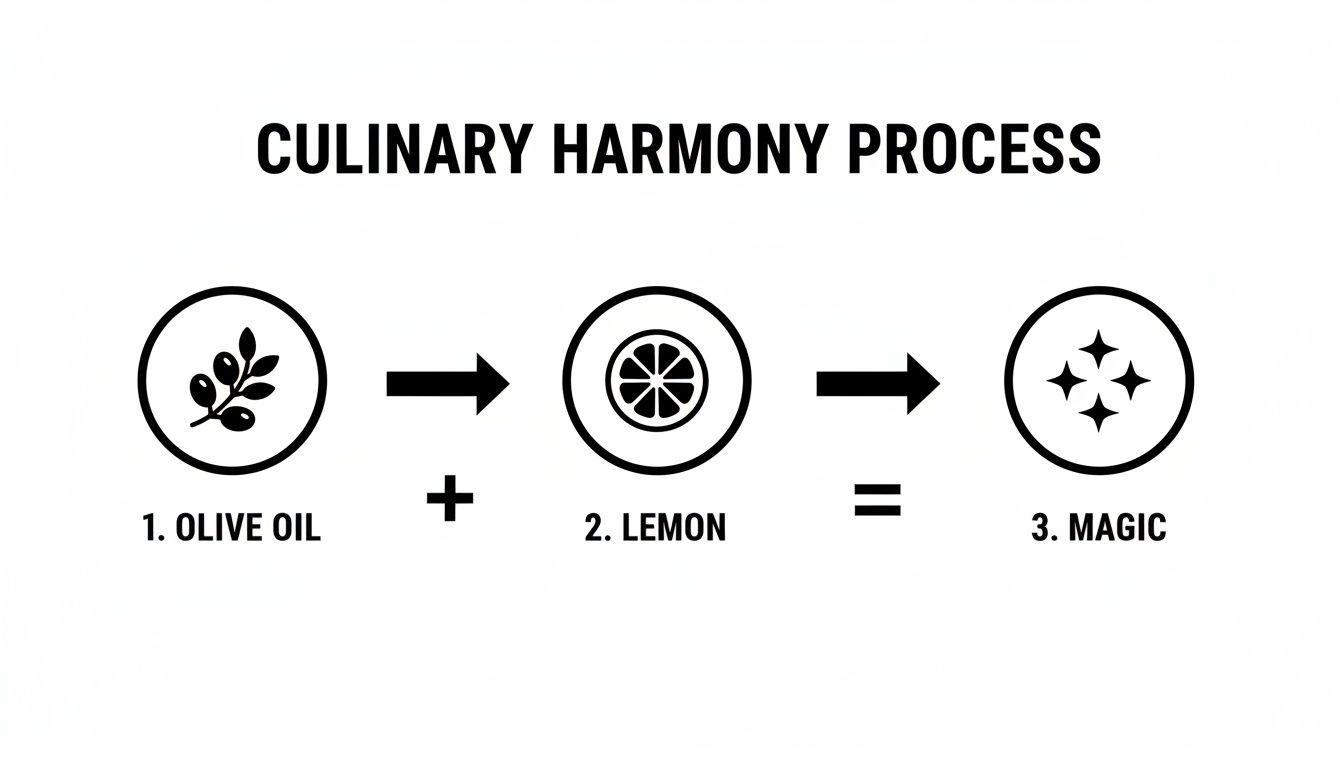
As you can see, this isn't just a mixture. It's a genuine flavor transformation.
Matching Oil to Greens
Here is a secret that separates the good salads from the unforgettable ones: you must choose the right olive oil for the job. Not all greens are created equal, and your oil should be their perfect dance partner.
Think of it this way: a bold, peppery Spanish Picual olive oil possesses the backbone to stand up to assertive greens like arugula or radicchio. Its commanding character complements their bitterness rather than being swallowed by it.
For delicate butter lettuce or tender spring greens, however, a softer touch is required. A buttery Italian Taggiasca or a mild, fruity French Picholine will enhance these greens without bulldozing their subtle flavor.
The Secret to Creamy Dressings
Have you ever wondered how restaurants achieve those perfectly unified, creamy vinaigrettes that never seem to separate? The answer is a single word: emulsification. An emulsifier is simply an agent that persuades two ingredients that naturally repel each other—like oil and lemon juice—to join forces.
A furious whisk will create a temporary truce, but adding a secret weapon makes the alliance last. A small spoonful of Dijon mustard is the classic choice, and for good reason—it works flawlessly. Compounds within the mustard act like tiny hands, grabbing onto both the oil and the water-based lemon juice, holding them together in a beautiful, creamy suspension.
By simply adding a teaspoon of Dijon mustard, you’re not just adding flavor; you are fundamentally changing the structure of your dressing, ensuring it clings perfectly to every leaf and bite.
Three Vinaigrettes You Will Use Forever
Once you’ve mastered these fundamentals, a world of infinite variation opens up. For a more in-depth walkthrough, explore our complete olive oil salad dressing recipe to truly perfect the technique. In the meantime, here are three essential versions to get you started:
-
The Classic Greek: Combine 6 tablespoons of a robust extra virgin olive oil, 2 tablespoons of fresh lemon juice, 1 teaspoon of dried oregano, and a pinch of salt and pepper. This is the only dressing you will ever need for a true Greek salad with feta, cucumbers, and Kalamata olives.
-
Vibrant Herb-Infused: Whisk together 6 tablespoons of a fruity olive oil, 2 tablespoons of lemon juice, 1 minced garlic clove, and 2 tablespoons of finely chopped fresh herbs like parsley, chives, and dill. This bright, electric dressing is magnificent on simple green salads or drizzled over grilled fish.
-
Creamy Dijon Dream: In a small bowl, whisk 1 tablespoon of Dijon mustard with 2 tablespoons of lemon juice until it's smooth. Now, whisking constantly, begin to slowly drizzle in 6 tablespoons of extra virgin olive oil. Continue until the dressing is thick and creamy, then season with salt and pepper. This one is a game-changer for everything from a hearty Cobb salad to roasted asparagus.
More Than a Salad Dressing: Bringing Olive Oil & Lemon to the Main Course
If your use of olive oil and lemon juice begins and ends with salads, you are missing out on its true potential. It's like owning a grand piano and only using it as a coffee table. The real magic ignites when this dynamic duo graduates from the vinaigrette and commands every corner of your kitchen, transforming good meals into unforgettable feasts.
Its secret weapon is its breathtaking versatility. From the first moments of preparation to the final flourish, olive oil and lemon work in concert to build astonishing layers of flavor.
The Ultimate Marinade for Juicy, Tender Meats
One of the most powerful applications for olive oil and lemon juice is as a marinade. The gentle acidity in lemon juice is a natural tenderizer, masterfully working its way into proteins and breaking down tougher fibers. This is a revelation for chicken, fish, and even lamb, turning a potentially dry cut into something succulent and unbelievably tender.
But this isn't merely about texture. The olive oil acts as the perfect courier, carrying that bright lemon essence deep into the meat, along with any herbs and spices you introduce. This one-two punch ensures every single bite explodes with a vibrant, savory taste that a simple sprinkle of salt and pepper could never hope to achieve.
Forget complicated, store-bought marinades. A simple immersion in olive oil, lemon juice, garlic, and herbs is often all that stands between a basic chicken breast and a truly fantastic meal.
This method also acts as a shield, preventing proteins from drying out under the intense heat of a grill or a hot oven. The oil creates a delicate barrier that locks in moisture, while the lemon keeps the flavors clean and zesty, never heavy or greasy.
A Chef's Finishing Touch
Watch a professional chef in their element. Just before a plate is sent out, they almost invariably add a final, masterful drizzle of something special. More often than not, it's a splash of high-quality extra virgin olive oil and a squeeze of fresh lemon. This is not for show—it is a critical final step that awakens every single flavor in the dish.
This finishing move works wonders on an incredible range of foods:
- Hearty Soups and Stews: A simple swirl of olive oil and lemon can instantly cut through the richness of an earthy lentil soup, adding a bright, fresh complexity.
- Roasted and Grilled Vegetables: Once your asparagus, broccoli, or potatoes are perfectly charred, toss them in this combination. It makes their natural sweetness and smoky notes absolutely sing.
- A Simple Dip for Bread: Pour good olive oil into a small dish, squeeze in fresh lemon, add a crack of black pepper, and you have created a rustic, elegant dip for warm, crusty bread. It is timeless.
Adding these ingredients at the end provides a layer of raw, uncooked flavor that contrasts beautifully with the cooked elements, making the entire dish feel more dynamic and alive. To discover more about how a great oil can transform a meal at the very end, you can explore the many extra virgin olive oil uses that go well beyond the frying pan.
Your Secret Weapon for Instant Pan Sauces
Here is a technique that will make you feel like a culinary genius. After you’ve pan-seared a piece of chicken, fish, or a pork chop, you will notice small browned bits clinging to the bottom of your pan. That is called the fond, and it is pure, concentrated flavor. Do not dare wash it away!
Instead, reduce the heat to low and pour in a splash of lemon juice to deglaze the pan. It will sizzle instantly. Use a wooden spoon to scrape up all those precious brown bits as they dissolve into the juice. Once the pan is clean, turn off the heat and whisk in a generous pour of olive oil.
In less than 60 seconds, you have just created a rich, intensely flavorful pan sauce to pour over your protein. It's a simple, two-ingredient trick that captures all the best parts of the cooking process and transforms them into a restaurant-quality finish.
Choosing the Right Olive Oil to Unlock Full Flavor
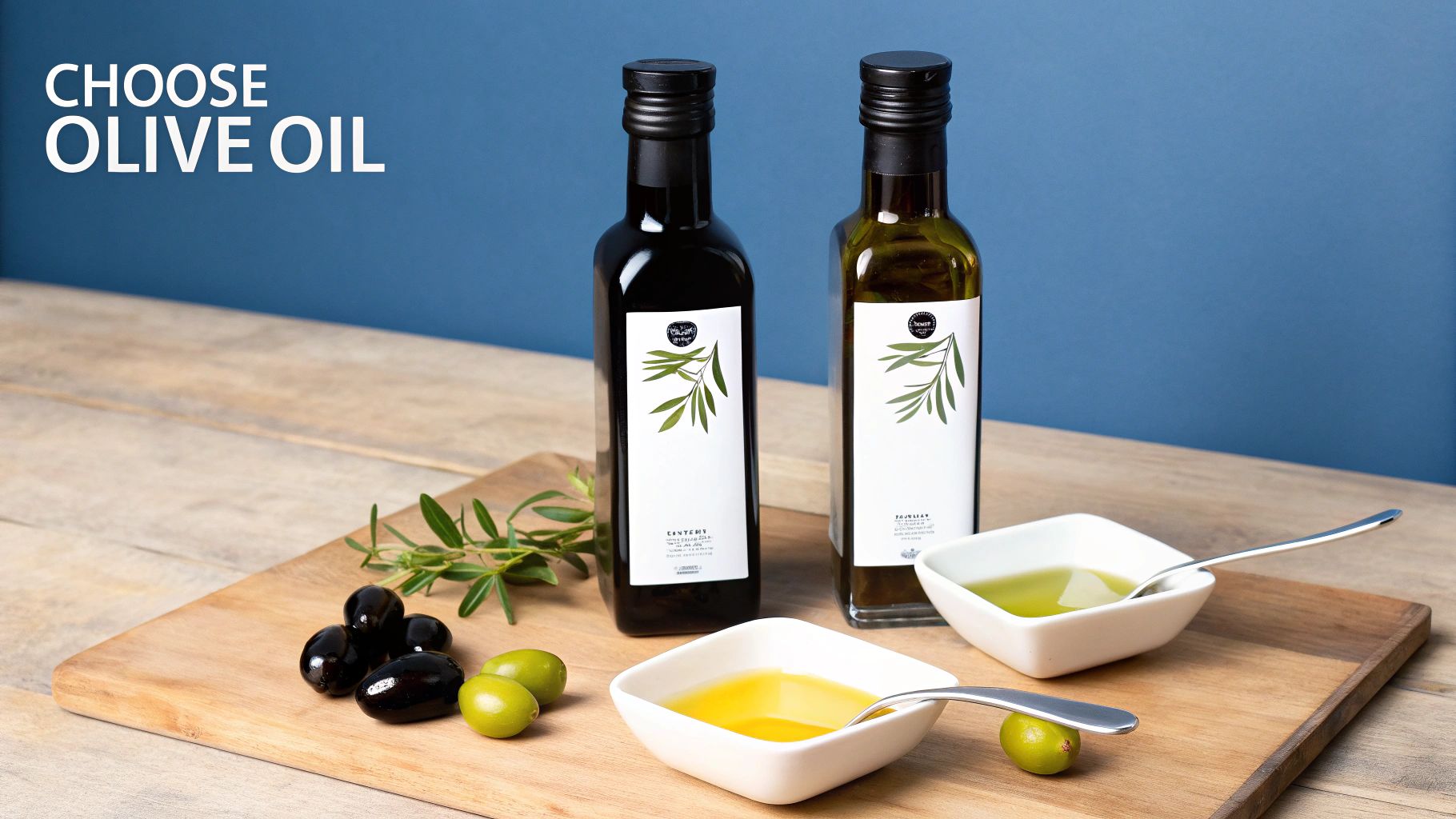
Walking down the olive oil aisle can feel overwhelming, can't it? Bottles from Italy, Greece, and Spain all shout for your attention, tossing around terms like ‘cold-pressed’ and ‘first press.’ The secret, however, is this: not all olive oil is created equal. Selecting the right one is the crucial step that will make your olive oil and lemon juice creations truly sing.
Think of it like choosing wine for a recipe. You wouldn't use a heavy, bold red in a delicate white wine sauce. Likewise, a powerful, peppery olive oil can completely overwhelm the subtle flavor of fresh fish, while a mild, buttery oil will get lost in a hearty marinade. It’s not just about buying "good" olive oil; it's about buying the right olive oil for the mission at hand.
Decoding the Labels: Extra Virgin and Beyond
Let’s cut through the confusion. When you are using olive oil in its raw state—in a vinaigrette or for dipping bread—the most important term you must look for is Extra Virgin Olive Oil (EVOO). This isn't just marketing speak; it is a regulated grade that guarantees the highest possible quality.
To earn the EVOO designation, the oil must be extracted using only mechanical means, without high heat or chemical solvents. This process, often called 'cold-pressed,' is what preserves the delicate flavor compounds and, crucially, the powerful antioxidants like oleocanthal that give premium oils their signature peppery finish. This is the good stuff. The oil you want for drizzling and dressing.
Extra Virgin Olive Oil isn't just an ingredient; it's a condiment. Its flavor is meant to be noticed and celebrated, providing the rich, complex foundation that bright lemon juice can dance upon.
Virgin olive oil is a small step down in quality, but it's still a fantastic workhorse for marinades where its flavor will mingle with other strong ingredients. Any other grade, like 'pure' or 'light' olive oil, has been refined. It's better suited for high-heat cooking where a neutral flavor is desired, not for a fresh, vibrant dressing.
Matching Flavor Profiles Like a Pro
Once you've narrowed your choice to EVOO, the real adventure begins. Just like wine, olive oils possess an incredible spectrum of flavors based on the olive variety, the terror, and the timing of the harvest. Understanding these different personalities is your next step to mastery. If you wish to go even deeper, our guide on how to choose olive oil is an invaluable resource.
Here is a simple framework for pairing them:
- Delicate & Buttery Oils: Often from France or certain regions of Italy, these oils are smooth, mellow, and may have notes of ripe almond. They are perfect for light lettuces, poached fish, or any dish where you want the bright lemon flavor to be the star.
- Fruity & Grassy Oils: Imagine the oils of Tuscany or Greece. They often have a vibrant, fresh-cut-grass aroma and a pleasantly green taste. These are brilliant all-rounders, ideal for general-purpose dressings, drizzling over roasted vegetables, or making a classic pesto.
- Bold & Peppery Oils: These robust oils, many hailing from Spain, pack a real punch. They have a distinct spiciness that you can feel at the back of your throat—a tell-tale sign of high antioxidant content. Use their strength to stand up to bitter greens like arugula, hearty bean salads, or a perfectly grilled steak.
Speaking of Spain, its role in the olive oil world is immense. The country is responsible for roughly 40% of the entire world's olive oil production. During one recent crop year alone, Spain produced a staggering 1,419,128 tons. You can find more details about this production boom on the USDA's site.
Understanding the Science Behind the Health Claims
For generations, families across the sun-drenched Mediterranean have treated a simple mixture of olive oil and lemon juice as something more than food. It was a daily wellness ritual—a spoonful of liquid gold and sunshine to start the day. So, what does modern science have to say about this age-old wisdom?
Let's separate the hard facts from the folklore. The real magic here isn't magic at all. It is the powerful synergy between the unique compounds found in each ingredient. This isn’t about a miracle cure, but rather a delicious and sensible way to support your long-term health.
The Power of Healthy Fats and Antioxidants
At the very heart of any high-quality extra virgin olive oil are its monounsaturated fats, particularly a fatty acid known as oleic acid. Think of these as the clean, efficient fuel your cardiovascular system is designed to run on. They are celebrated for their role in supporting healthy cholesterol levels and form a cornerstone of heart-conscious diets worldwide.
But that is only half the story. A true extra virgin olive oil is also teeming with potent plant compounds called polyphenols. One of the most famous is oleocanthal, the very compound responsible for that peppery kick in the back of your throat. That tingle is a direct signal of powerful anti-inflammatory action at work.
If you're curious to learn more, our guide on olive oil polyphenol content explains exactly what makes a premium oil so beneficial.
Now, introduce the lemon. When you add fresh lemon juice, you are deploying a whole new team of defenders. Lemons are loaded with Vitamin C and citrus flavonoids, both world-class antioxidants. They act as cellular bodyguards, helping to shield your body from the daily assault of oxidative stress.
Together, the anti-inflammatory polyphenols from the olive oil and the antioxidant Vitamin C from the lemon create a team that works to calm inflammation and support your body’s natural defense systems.
A Supportive Boost for Digestion
While the internet is filled with breathless claims, there is a solid scientific reason this duo can support healthy digestion. Olive oil acts as a natural lubricant for the digestive tract, which can gently and effectively promote regularity.
It also encourages the gallbladder to release bile, which is essential for properly digesting fats. This is why a small spoonful before a meal can feel so settling for some people. The citric acid from the lemon simply aids the entire process, creating an environment that encourages efficient digestion from the very start.
The Global Demand for Quality Olive Oil
The world is catching on. The growing hunger for high-quality olive oil is evident in global trade figures. Recently, EU extra-EU olive oil exports hit 74,914 tonnes, a massive 36.1% leap from the previous year.
The United States, in particular, has become a key importer. In a single summer month, imports reached an incredible 66,049 tonnes—a staggering 98.7% increase year-over-year. This surge isn't just a blip; it signals a genuine shift toward the very ingredients we're discussing.
To see how healthy fats like olive oil fit into the larger picture of well-being, look at the principles behind delicious Mediterranean diet foods, where this pairing is a fundamental building block. By combining these two simple ingredients, you’re doing more than making a tasty dressing—you’re tapping into a legacy of wellness now backed by modern science.
Simple and Safe Natural Beauty Solutions
The nourishing power of olive oil and lemon juice extends far beyond the kitchen. This classic, time-tested combination can become a cornerstone of your natural beauty routine, offering potent solutions for hair and skin without a litany of harsh chemicals.
Think about how your hair feels after a long week—dull, perhaps frizzy, and crying out for moisture. Olive oil acts as a deep, penetrating conditioner, rich in fatty acids and vitamin E that restore elasticity and smoothness. Then you have lemon juice, whose natural citric acid helps clarify the scalp and imparts a brilliant shine.
A Restorative Hair Mask for Deep Hydration
Whipping up a powerful hair treatment is astonishingly simple. You don’t need a bathroom shelf overflowing with expensive products, just two trusted ingredients from your pantry. This mask is designed to breathe life back into tired, dry hair.
Here’s how to do it:
- Combine Your Ingredients: In a small bowl, mix 3 tablespoons of extra virgin olive oil with 1 tablespoon of fresh lemon juice. If you have particularly long or thick hair, simply double the recipe.
- Apply to Hair: Work the mixture through dry or slightly damp hair, focusing on the ends where damage is most visible. Gently massage any leftover oil into your scalp to help with dryness.
- Let It Penetrate: Put on a shower cap or wrap your hair in a warm towel and let the mask sit for 20-30 minutes. The warmth helps the oil penetrate the hair shaft for a deeper treatment.
- Rinse and Shampoo: Rinse thoroughly with warm water, then follow with your usual shampoo and conditioner. You may need to shampoo twice to ensure all the oil is removed.
You will notice the results immediately: softer, shinier, and far more manageable hair. If you're curious about other ways olive oil can be used outside of cooking, you can explore the benefits of olive oil in hair growth therapy.
A Brightening Skin Treatment with a Word of Caution
For your skin, this dynamic duo offers a gentle way to brighten your complexion and even out skin tone. The antioxidants in olive oil help nourish and protect, while the vitamin C in lemon juice can help fade the appearance of dark spots over time. For a deeper dive, our guide on the olive oil benefits for skin is a fantastic resource.
Crucial Safety Note: Lemon juice can make your skin highly sensitive to sunlight (photosensitive). NEVER apply this treatment before going outside. It is strictly for evening use, and you must wash it off completely before you're done.
To create a simple brightening scrub, mix one tablespoon of olive oil with one teaspoon of lemon juice and two tablespoons of fine sugar. Gently massage the scrub onto clean, damp skin for about a minute, then rinse it off thoroughly. Always perform a patch test on your inner arm 24 hours before trying it on your face to ensure your skin does not have an adverse reaction.
Common Questions About Olive Oil and Lemon Juice
We've covered a lot of ground, but a few questions consistently arise when people begin to explore the power of olive oil and lemon juice. Let's tackle those common queries head-on with some practical, no-nonsense answers.
Is It Safe to Drink Olive Oil and Lemon Juice Daily?
For most healthy adults, yes, a daily dose is perfectly safe and can be a fantastic addition to a wellness routine. A sensible starting point is about one tablespoon of high-quality extra virgin olive oil mixed with the juice from half a lemon. Think of it less as a magic potion and more as a concentrated nutritional boost.
Of course, moderation is key. A single tablespoon of olive oil contains around 120 calories, so you will want to account for that in your daily intake. The most important rule is to listen to your body. If you experience any digestive upset, simply scale back or consult with your doctor.
Can This Combination Really Help with Weight Loss?
While it is not a direct weight-loss miracle, this pairing can be a surprisingly effective ally. The healthy monounsaturated fats in olive oil are incredibly effective at promoting a feeling of fullness and satisfaction. That feeling of satiety can be a powerful tool in taming cravings and preventing overeating later in the day.
Furthermore, the vitamin C from the lemon juice is a key player in your metabolism. Some research suggests that adequate vitamin C levels are linked to the body's ability to burn fat more efficiently, especially during exercise. It is a supportive tool, not a shortcut.
This duo won't melt pounds away on its own, but it can be a valuable partner in a healthy weight management plan by helping you feel satisfied and supporting your body's natural metabolic processes.
Will This Mixture Break an Intermittent Fast?
This is a critical question for anyone practicing intermittent fasting. The short answer is yes, it will absolutely break your fast.
From a purely caloric standpoint, that tablespoon of olive oil brings about 120 calories to the table. Any significant calorie intake is enough to pull your body out of a fasted state. If you are aiming for a "clean" fast with zero calories, you will want to save your olive oil and lemon juice for your designated eating window.
Ready to experience the difference that truly exceptional olive oil can make? At Learn Olive Oil, we are your ultimate guide to the world's finest olive oils, helping you choose, taste, and cook with confidence. Discover premium selections and expert insights by visiting us at https://learnoliveoil.com.
 Learn Olive Oil
Leave a comment