Let's cut right to it. If you're looking for the single healthiest olive oil you can buy, the answer is high-polyphenol Extra-Virgin Olive Oil (EVOO). This isn't just another bottle on the shelf; it's a fresh, unrefined fruit juice brimming with powerful antioxidants and healthy fats that put it in a class all by itself.
Your Guide To The Healthiest Olive Oil
When you walk down the grocery aisle, the wall of olive oil can feel overwhelming. You’ll see labels like “Pure,” “Light,” and “Refined” next to “Extra-Virgin.” These aren’t just clever marketing words. They signal vast differences in quality, how the oil was made, and what it can—or can't—do for your health.
Most common olive oils are heavily processed, often using heat and chemical solvents. This industrial process strips away the very compounds that make olive oil a champion of health.
But true EVOO is different. It’s made by simply cold-pressing fresh olives—a mechanical process with no high heat or chemicals. This gentle handling is what keeps its two most vital health-promoting components intact.
The Power Duo Inside Every Drop
The health magic of top-tier olive oil comes down to a potent partnership between two key players:
- Monounsaturated Fats: Mostly made up of oleic acid, these are the famous "good fats" that give olive oil its heart-healthy reputation. They play a crucial role in keeping cholesterol levels in check and supporting your entire cardiovascular system.
- Polyphenols: These are the unsung heroes. They’re powerful antioxidants that act like a personal security detail for your cells, fighting off inflammation and protecting your body from the damage caused by free radicals. This is what gives authentic EVOO that signature peppery, slightly bitter taste—a sign of quality you can actually feel on your tongue.
This one-two punch of healthy fats and protective antioxidants is precisely why EVOO is a cornerstone of the world-renowned Mediterranean diet. Its benefits aren't folklore; they're backed by hard science. For example, the landmark PREDIMED trial found that people who added extra-virgin olive oil to their diet saw a ~30% relative reduction in major cardiovascular events.
That peppery kick or slight burn at the back of your throat? That isn't a flaw—it's the flavor of health. The sensation comes from a specific polyphenol called oleocanthal, which has powerful anti-inflammatory properties.
Understanding this fundamental difference is the first step. The healthiest olive oil isn’t just about the "extra-virgin" label; it's about choosing an unrefined, antioxidant-rich oil that actively contributes to your well-being. If you want to dive deeper, you can learn all about finding the olive oil with the highest polyphenols in our dedicated guide.
How Olive Oil Composition Boosts Your Health
To truly grasp what makes one olive oil healthier than another, we have to look past the label and into its chemical makeup. Think of it less as a simple cooking fat and more like a natural health tonic. Its power doesn’t come from a single ingredient, but from the brilliant synergy of its components.
The star of the show is oleic acid, a monounsaturated fat that makes up the vast majority of the oil. This isn't just filler; it's the steady, reliable workhorse behind many of olive oil’s health benefits. Oleic acid is widely praised for its role in supporting heart health, mainly by helping maintain good cholesterol levels.
It’s the quiet hero doing the heavy lifting for your cardiovascular system. But while oleic acid is the foundation, the real magic—the spark that turns a good oil into a great one—comes from a different set of compounds. For a closer look at the full picture, our guide on what olive oil is made of breaks it all down.
The Antioxidant Elite Force
If oleic acid is the foundation, then polyphenols are the elite special forces. These are the powerful antioxidant compounds that give high-quality, authentic extra virgin olive oil its classic peppery kick and slightly bitter taste. That tingle in the back of your throat is a direct sign that they're present and potent.
Think of these polyphenols as a team of highly trained bodyguards for your cells. They have two critical jobs:
- Neutralize Free Radicals: They hunt down and disarm unstable molecules called free radicals, notorious for causing the cellular damage that leads to aging and chronic disease.
- Calm Inflammation: Specific polyphenols, like oleocanthal, have astonishing anti-inflammatory properties. That peppery sensation is actually oleocanthal at work, and its effect has been compared to that of ibuprofen.
This is a huge deal. Chronic inflammation is the silent culprit behind many of today's most serious health problems. Getting a daily dose of natural anti-inflammatory compounds from your food can be a game-changer for your long-term health.
When you taste that distinct bitterness or get a little cough from a peppery finish, don't think it's a flaw. Celebrate it. That's the taste of powerful, health-promoting polyphenols getting to work before you've even swallowed.
A Symphony Of Health Benefits
Working together, oleic acid and polyphenols create a synergy that benefits your entire body. The monounsaturated fats offer a stable, heart-friendly source of energy, while the antioxidants act as a shield, protecting your cells from everyday stress. This powerful combination is exactly why the Mediterranean diet, with EVOO as its cornerstone, is so strongly associated with longevity and good health.
This dynamic duo is fantastic for helping manage cholesterol, but they aren't the only tool in the shed. Beyond olive oil, you may want to look into other cholesterol-lowering foods that health experts often recommend.
Once you understand this composition, you see olive oil differently. It's not just another ingredient; it's an active choice for better health. You're not just adding flavor to your meal—you're giving your body the building blocks and defensive tools it needs to thrive. The healthiest olive oil is simply the one that packs the highest concentration of these compounds, turning every drizzle into a delicious act of self-care.
Understanding Olive Oil Grades And Health Impact
Walk down any grocery store aisle and you’re faced with a wall of choices. Extra-Virgin. Virgin. Pure. Light. These aren’t just marketing fluff; they are official grades that tell a dramatic story of purity versus processing. And choosing the healthiest olive oil comes down to understanding that story.
Think of it like apple juice. You could press juice from a fresh-picked, crisp apple. It would be vibrant, complex, and full of life. Or, you could boil down older apples, filter the juice, and add sweeteners. That’s the difference between true Extra-Virgin Olive Oil (EVOO) and its refined cousins.
EVOO is that fresh-pressed juice. It's made using only mechanical methods—a process called cold-pressing—with absolutely no high heat or chemical solvents. This gentle extraction is what keeps all the delicate, health-giving compounds intact. It's the highest grade you can get, a pure expression of the olive itself.
The Great Divide: Why EVOO Stands Apart
Once you step down from Extra-Virgin, the processing gets more intense. "Virgin" olive oil is a small step down, still unrefined but with minor flavor defects. After that, you enter the world of highly processed oils, often labeled as "Pure" or "Light" olive oil.
These oils start with lower-quality fruit and are subjected to an industrial gauntlet. They get treated with heat, deodorized, and even bleached with chemicals to mask flaws. This aggressive process strips away nearly all the color, flavor, and most critically, the health-boosting polyphenols. What's left is basically just empty fat.
Think of it this way: EVOO is a whole food, while refined olive oil is a processed product. The real health magic lives in the "whole" part—the antioxidants and anti-inflammatory compounds that are destroyed during refining.
To make these refined oils sellable, producers often blend in a tiny amount of EVOO for a hint of flavor and color. But don't be fooled. It’s a shadow of the real thing. To get a better handle on the official classifications, you can dive into this detailed guide on the different types of olive oils.
The table below breaks down how processing impacts the final product you see on the shelf.
Olive Oil Processing Methods And Health Impact
| Grade | Extraction Method | Heat/Chemicals Used | Polyphenol & Nutrient Retention |
|---|---|---|---|
| Extra-Virgin Olive Oil (EVOO) | Mechanical cold-pressing only | None | Highest. All natural compounds preserved. |
| Virgin Olive Oil | Mechanical cold-pressing only | None | High. Slightly lower than EVOO due to fruit quality. |
| "Pure" or "Light" Olive Oil | High-heat and chemical refining | Yes | Very Low. Most beneficial compounds are destroyed. |
| Pomace Oil | Chemical solvent extraction from leftover pulp | Yes | Negligible. Considered the lowest quality grade. |
As you can see, the path from the olive tree to the bottle makes all the difference. Only unrefined, cold-pressed methods truly protect the oil's nutritional integrity.
Why Harvest Time and Olive Variety Matter
Even within the top-tier EVOO category, not all oils are created equal. Two factors separate the good from the great: when the olives were picked and which variety was used.
- Early-Harvest Oils: Olives picked early in the season, while still green, yield less oil. But what they do produce is a concentrated powerhouse of polyphenols. This is what gives the best oils their signature robust, peppery, and sometimes bitter kick—that's the taste of health!
- Olive Cultivar: Just like grapes for wine, different olive varieties (cultivars) have unique chemical profiles. Some, like Coratina or Picual, are naturally loaded with polyphenols, which makes for more pungent and stable oils.
This simple diagram shows what a high-quality olive oil is really made of.
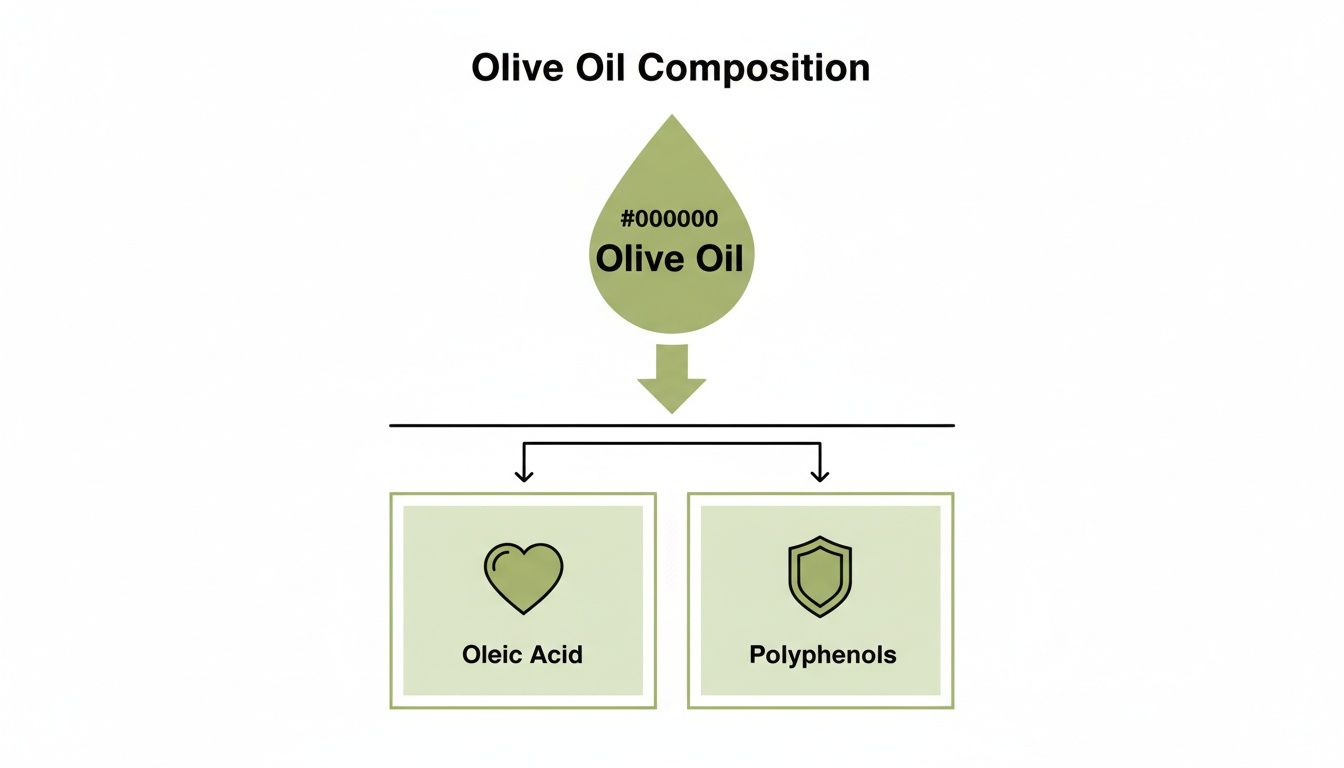
The real health punch comes from that combination of healthy oleic acid and the protective army of polyphenols.
The difference in antioxidant levels isn't small. Polyphenol concentration can vary wildly, from a low of 50 mg/kg to over 500 mg/kg in a premium, early-harvest EVOO. In stark contrast, refined olive oils are often stripped down to single-digit levels, effectively wiping out their antioxidant power.
So when you're on the hunt for the healthiest olive oil, your mission is clear. Look past the generic labels and search for an early-harvest, cold-pressed Extra-Virgin Olive Oil. That's the real liquid gold.
How To Buy The Healthiest Olive Oil
Now that you know what makes olive oil a nutritional powerhouse, you can walk into the grocery store like a pro. That crowded shelf of oils isn't so intimidating anymore, is it? It's a field of contenders, and you have the inside scoop on how to pick a true champion.
Forget the romantic images and charming descriptions on the front of the bottle. The real story—the one that matters for your health—is always in the fine print on the back. A few key details are all you need to see past the marketing fluff and choose an oil that actually delivers.
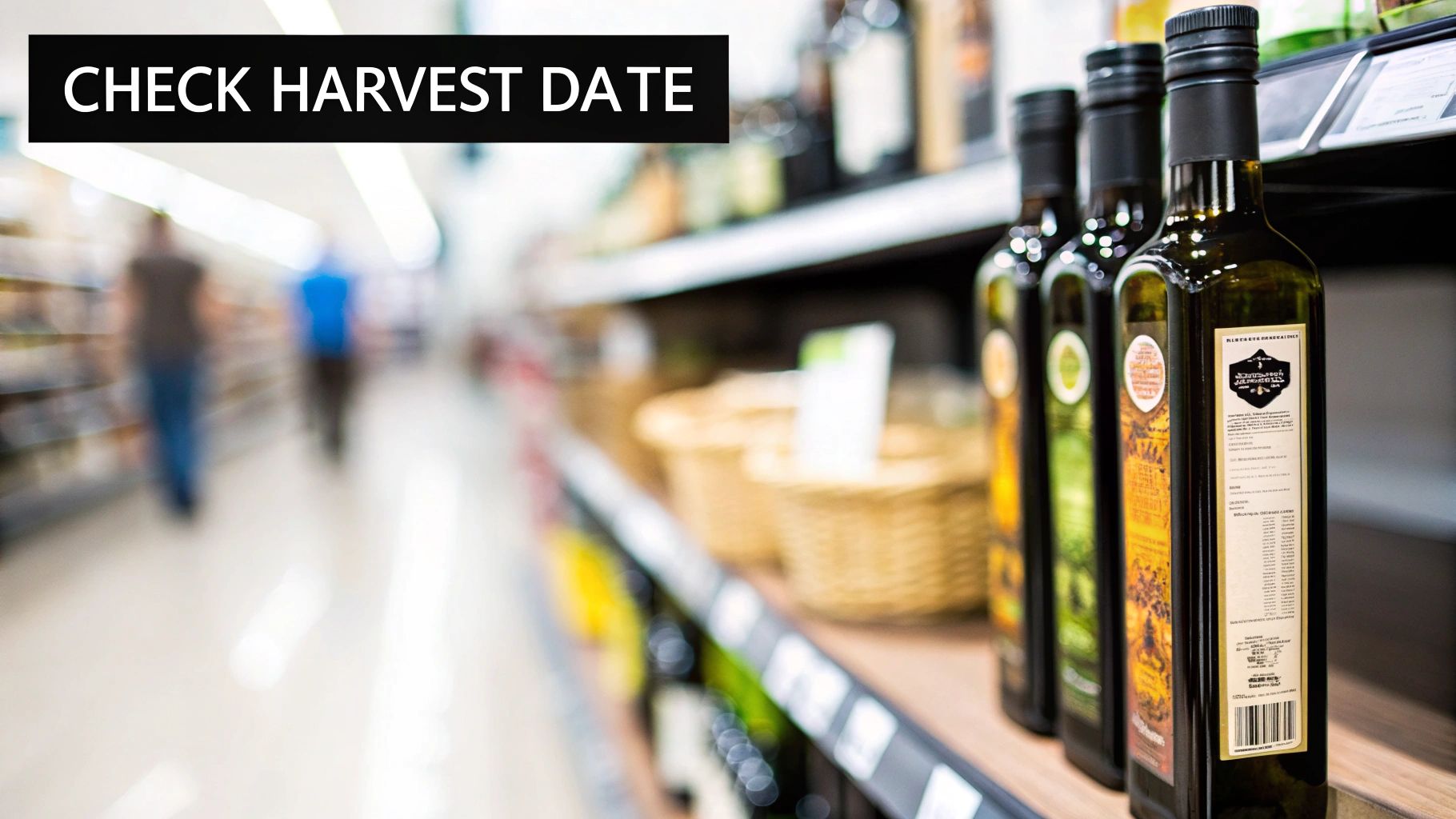
Look For The Harvest Date
This is, without a doubt, the most critical piece of information on the entire bottle. Olive oil is essentially fresh-pressed fruit juice. And just like any juice, it does not get better with age. In fact, its health-boosting polyphenols start breaking down from the moment the olives are crushed.
Don't be fooled by a "Best By" date. This date is often set two years from bottling, not harvesting. A batch of oil could have been sitting in a massive storage tank for a year before it was even bottled, making it old news before it ever reaches you.
Always hunt for a specific Harvest Date or "Pressed On" date. You want an oil harvested within the last 12 to 18 months. If you can't find one, put the bottle back and move on.
Scrutinize The Bottle Itself
Think of the bottle as the oil's personal bodyguard. Its job is to protect the precious contents from its three worst enemies: light, heat, and oxygen. A producer who cares about quality will choose their packaging wisely.
- Dark Glass or Tin: Light is a killer. It accelerates rancidity and destroys those delicate antioxidants. That's why you should never buy olive oil that comes in a clear bottle. Look for dark green or black glass, or even better, an opaque tin container.
- Correct Size: Bigger isn't always better. Once you break that seal, oxygen starts to do its damage. Buy a bottle size you know you'll use up within a month or two of opening it. A giant, half-empty bottle sitting in your pantry for months will lose its flavor and health benefits fast.
Just by checking the packaging, you can immediately weed out producers who cut corners on quality. For more on this, our complete guide on how to buy olive oil has you covered.
Decode The Label Like A Pro
After you’ve confirmed a recent harvest date and protective packaging, the label holds a few more clues to help you lock in a great choice. These aren't just buzzwords; they’re your guarantee of quality.
First, the basics: make sure it clearly says "Extra Virgin" and "Cold-Pressed" (or cold-extracted). This tells you the oil was made the right way—mechanically, without high heat or chemical solvents that destroy its nutritional value.
Next, look for seals of approval. These third-party certifications are your assurance that an independent group has verified the oil's quality.
- PDO (Protected Designation of Origin): This European seal is a fantastic sign. It guarantees the olives were grown, harvested, and processed in a specific geographical region, ensuring traceability and authenticity.
- California Olive Oil Council (COOC) Seal: For oils from California, this seal means the product passed chemical and sensory tests that are actually stricter than the international standards.
- Polyphenol Count: The best of the best often list the polyphenol count right on the label (e.g., "500+ mg/kg"). This is a direct measurement of its antioxidant content and a clear sign that the producer is focused on health.
Treat your shopping trip like a small investigation. Check the harvest date, inspect the bottle, and hunt for those seals. It's that simple. Following these steps will ensure the olive oil you bring home is the real, healthy deal.
How To Store And Use Olive Oil For Maximum Benefits
So you've done the hard part. You tracked down a bottle of real-deal, high-polyphenol extra virgin olive oil with a fresh harvest date. Think of this liquid gold as an investment in your health—so don't let all that goodness fade away on your kitchen counter.
Like any fresh fruit juice, olive oil is perishable. Its health-promoting compounds are surprisingly delicate and can be easily destroyed by a few common enemies lurking in every kitchen. To get the full benefit from every last drop, you have to protect it.
Shield Your Oil From Its Three Arch-Enemies
Imagine your premium olive oil as a fragile treasure. Its greatest foes are constantly working to rob it of its signature flavor, vibrant aroma, and antioxidant punch. These enemies are light, heat, and oxygen.
-
Light: Direct sunlight or even bright fluorescent kitchen lights kick off a process called photo-oxidation, which rapidly degrades the oil and obliterates those precious polyphenols. This is exactly why you should never buy olive oil that comes in a clear glass bottle.
-
Heat: Keeping your oil right next to the stove might feel convenient, but it's a catastrophe for its quality. Heat dramatically speeds up oxidation, turning a peppery, healthy oil into something flat, rancid, and useless in no time.
-
Oxygen: The moment you open the bottle, air starts to react with the oil. This slow, steady exposure breaks down its healthy fats and antioxidants. The more empty space—and air—in the bottle, the faster this degradation happens.
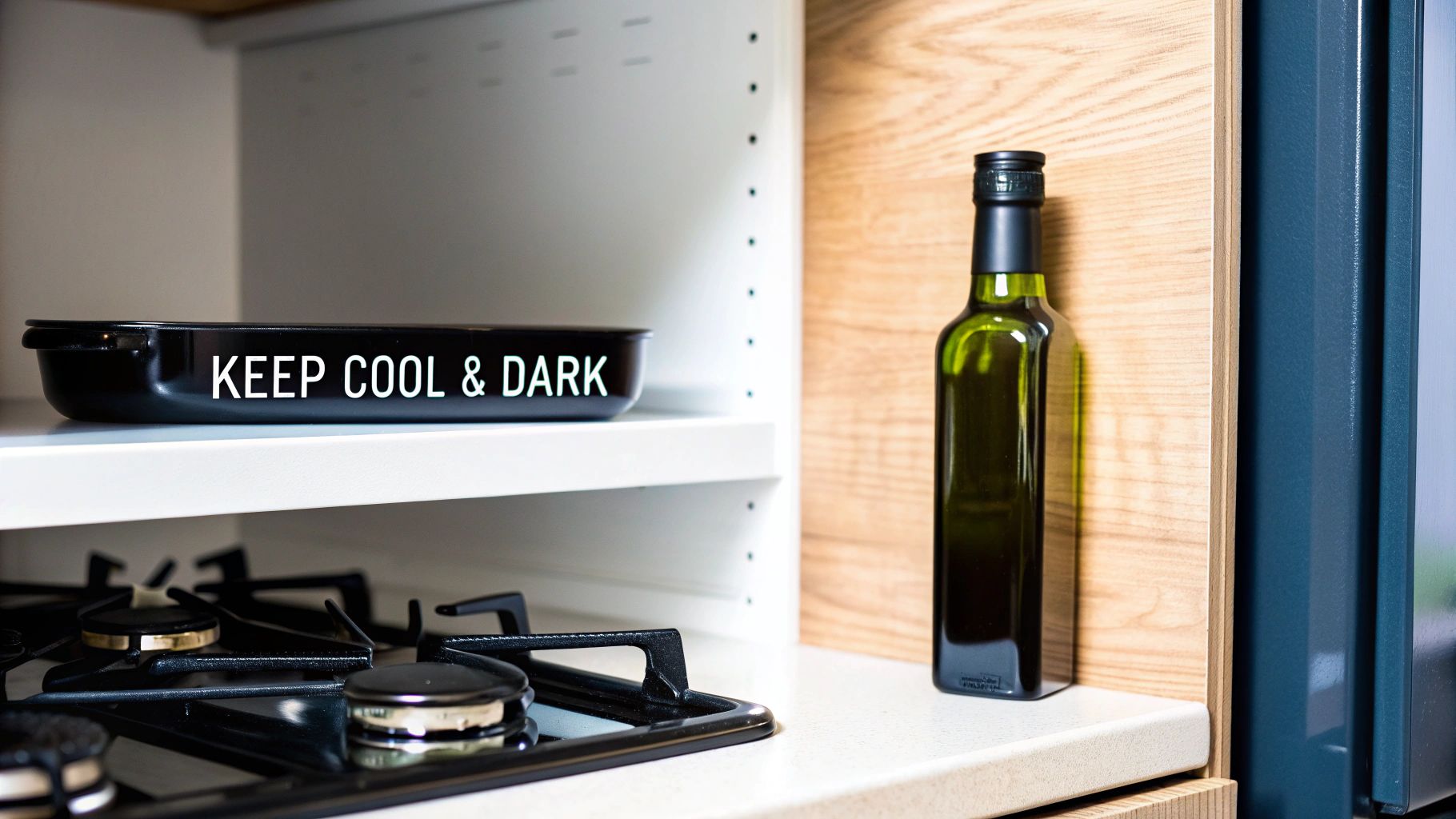
Your best defense is a simple one: store your olive oil in a cool, dark place, like a pantry or a cupboard far from the oven. And always, always make sure the cap is screwed on tight after each use.
When stored correctly, an unopened bottle can last up to 18 months from its harvest date. Once you've opened it, it's best to use it up within one to two months to enjoy its peak flavor and health benefits. For a deeper dive, our guide on proper https://learnoliveoil.com/olive-oil-storage provides even more expert tips.
Shattering The Myth About Cooking With EVOO
One of the most stubborn myths I hear about olive oil is that you can't cook with it. A lot of people believe its smoke point is too low, which would make it useless for anything beyond a salad dressing. This is just plain wrong.
The smoke point of an oil is simply the temperature where it starts to break down and smoke. For a high-quality EVOO, this is typically between 375°F and 410°F (190°C to 210°C). That range is well above the temperatures used for most home cooking, including sautéing and even light frying.
What gives EVOO this stability? The very same things that make it so healthy. Its high concentration of stable monounsaturated fats and those powerful antioxidants act as a natural shield, protecting the oil from breaking down under heat. In fact, studies show these protective compounds hold up remarkably well during cooking.
Beyond just olive oil, having a good grasp of the properties of different fats is key for any healthy kitchen. For instance, understanding the best oils for high-heat cooking can help you make smarter choices for every meal.
Practical Tips for Everyday Use
Knowing how to use your EVOO is just as important as knowing how to store it. The real goal is to weave this healthy fat into your daily routine in ways that are both delicious and truly beneficial.
Here are a few simple ways to make the most of your oil:
- As a Finishing Touch: This is where the magic happens. Drizzle it generously over roasted vegetables, grilled fish, soups, or pasta right before serving. This preserves its most delicate flavors and delivers a raw, potent dose of polyphenols.
- For Sautéing and Roasting: Use it with confidence for your everyday cooking. Sautéing greens or roasting potatoes with EVOO doesn't just add incredible flavor; it also helps your body absorb the fat-soluble vitamins from the food itself.
- In Dressings and Dips: Whisk it with vinegar, lemon juice, and herbs for a vibrant, homemade salad dressing that store-bought versions can't touch. Or, let it be the star in a simple dip for fresh, crusty bread.
By treating your olive oil with care and using it correctly, you're ensuring that this powerful, ancient food is working its hardest for your health. You’re not just cooking—you’re turning every meal into an opportunity to nourish your body from the inside out.
Still Have Questions?
Even with all this info, it's natural to have a few lingering questions when you're hunting for the best olive oil. It’s a world filled with myths, marketing jargon, and old wives' tales. Let's cut through the noise and tackle some of the most common questions head-on.
Think of this as your final checklist. We'll decode the confusing labels, clarify the sensory cues, and bust the myths that might be keeping you from getting the most out of your oil. With these answers, you'll be ready to shop with total confidence.
Is "Light" Olive Oil Healthier or Lower in Calories?
This is probably the most misleading label on the entire olive oil aisle. Let's be crystal clear: “Light” or “Extra Light” olive oil has the exact same number of calories as Extra-Virgin Olive Oil—around 120 calories per tablespoon. The word “light” has absolutely nothing to do with its nutritional value.
What it actually refers to is the oil's color and flavor. These oils are heavily refined, using high heat and chemical solvents to strip away their natural taste, aroma, and color. Unfortunately, that intense processing also destroys the very compounds that make olive oil so good for you—the powerful polyphenols.
So, is light olive oil a healthier choice? Absolutely not. It’s the opposite. It’s an oil that has been industrially stripped of its health benefits, leaving behind little more than empty calories. If health is your goal, always choose unrefined Extra-Virgin Olive Oil.
Can I Judge an Olive Oil's Quality by Its Color?
It's a common belief that a deep, vibrant green means you’ve found a superior oil. And while it’s true that many exceptional early-harvest oils have a gorgeous emerald hue, color alone is not a reliable sign of quality or healthfulness.
An olive oil’s color comes down to two things:
- The Olive Variety: Just like apples come in different colors, some olive cultivars naturally produce golden oils, while others yield a greener result.
- The Harvest Time: Olives picked early in the season are less ripe and contain more chlorophyll, which tends to make greener oils. These early-harvest oils are also typically higher in polyphenols.
But here’s the catch: a beautiful golden oil from a different olive variety could still be packed with antioxidants. Plus, a producer can easily blend oils to get a certain color. This is precisely why professional tasters use special blue glasses—to hide the color and prevent it from biasing their judgment.
Instead of looking at the color, trust the other signals we've talked about: a recent harvest date, a protective dark bottle, and most importantly, how it tastes and smells.
Why Does the Harvest Date Matter So Much?
Picture this: you're buying fresh orange juice. Would you rather have juice from oranges picked yesterday, or from oranges picked two years ago that have been sitting in a warehouse? The answer is a no-brainer. You have to think of olive oil the same way—it’s a fresh fruit juice, and its health benefits don't last forever.
The harvest date is the single most important piece of information on that bottle. It tells you exactly when the clock started ticking on the oil's freshness and potency. From the moment those olives are crushed, the healthy fats and powerful polyphenols start to break down.
A "Best By" or "Use By" date can be deceptive. Those dates are often set two years from the bottling date, not the harvest date. An oil could sit in a giant tank for a year before it's even bottled, making it old long before it ever hits the shelf. By choosing an oil with a recent harvest date—ideally from the last 12 months—you're ensuring you get the freshest, most potent product possible.
Does a Peppery Kick Mean the Oil is Fresh?
Yes, absolutely! That pungent, peppery sensation you feel at the back of your throat isn't just a sign of freshness—it’s the taste of health itself. That distinctive kick comes directly from a specific polyphenol called oleocanthal.
Oleocanthal is a potent anti-inflammatory compound, with effects so similar to ibuprofen that researchers have studied the link. When you taste that peppery finish, you are literally feeling the presence of one of the most powerful antioxidants in the oil. A pleasant bitterness on the tongue is another fantastic sign, pointing to other healthy polyphenols.
If an oil tastes flat, greasy, or waxy with no vibrant, "green" flavors or peppery finish, it’s a sure sign that it's either poor quality, old, or has been damaged by heat or light. Don't be shy about that peppery kick. Seek it out and let it be your guide—it’s the most reliable (and delicious) proof that you’ve found the real deal.
At Learn Olive Oil, we believe understanding these details is the key to making choices that truly nourish your body. Armed with this knowledge, you can navigate the world of olive oil like a pro and pick a bottle that delivers on its promise of both incredible flavor and real health benefits.
Ready to find the best? Discover our expert guides and recommendations at https://learnoliveoil.com.
 Learn Olive Oil
Leave a comment