When you’re standing in the cooking oil aisle, faced with a wall of choices, the question seems simple enough: olive oil or canola oil? But the answer hiding in plain sight is far more consequential than you might imagine. For your overall health—for the powerful antioxidants and anti-inflammatory compounds your body craves—extra virgin olive oil is the undisputed champion. Yet, it’s not a total knockout. In the specific, narrow fight to lower LDL cholesterol, canola oil lands a surprisingly effective punch.
The Final Verdict in the Great Oil Debate
Choosing between olive oil and canola oil isn't just a matter of taste. It’s a decision that echoes through your body, impacting everything from the health of your heart to the silent fire of inflammation. At their core, these two oils are worlds apart. One is, in essence, a fresh, unadulterated fruit juice. The other is a product of modern industrial chemistry.
This chasm in their creation is what dictates their nutritional power and, ultimately, their effect on your health. Extra virgin olive oil (EVOO), pressed from the living fruit, fiercely guards its payload of potent polyphenols and heart-loving monounsaturated fats. This is what makes it a frontline soldier in the war against oxidative stress.
Canola oil, born from the tiny seeds of the rapeseed plant, endures a trial by fire—and chemicals. This intense refining process delivers a neutral taste and a high smoke point, but at a cost. It systematically strips away nearly all of the plant's natural micronutrients. While its fatty acid profile can be a useful tool for managing cholesterol, it simply lacks the broad, disease-fighting arsenal that a true, high-quality olive oil brings to the table.
To truly grasp the stakes, a side-by-side comparison will reveal everything you need to know.
Olive Oil vs Canola Oil at a Glance
This table cuts through the noise, laying bare the fundamental differences between authentic extra virgin olive oil and the standard refined canola oil you'll find on store shelves. Consider it your quick-reference guide to a smarter choice.
| Feature | Extra Virgin Olive Oil | Canola Oil |
|---|---|---|
| Primary Fat Type | Monounsaturated (Oleic Acid) | Monounsaturated & Polyunsaturated |
| Antioxidant Content | Exceedingly High (Polyphenols, Vitamin E) | Low (Destroyed during refining) |
| Source | Cold-pressed from whole olive fruit | Chemically extracted from rapeseeds |
| Processing Method | Mechanical pressing, unrefined | High heat, chemical solvents, refined |
| Flavor Profile | Varies: fruity, peppery, grassy | Neutral and bland |
| Key Health Benefit | Anti-inflammatory, antioxidant powerhouse | LDL cholesterol reduction |
| Ideal Use | Dressings, finishing, sautéing | High-heat cooking, baking, frying |
This snapshot doesn't just show differences; it reveals a fundamental trade-off.
The question isn't just "which oil is less bad?" but "which oil actively makes me healthier?" The life-giving plant compounds in extra virgin olive oil deliver benefits that go far beyond basic nutrition.
In the end, your choice hinges on your goal. Are you seeking a tactical weapon to lower a single number on a lab report? Or do you want a foundational ingredient that builds a fortress of long-term, holistic health? The following sections will arm you with the science to make the best decision for your kitchen, and for your life.
How Processing Defines What's in Your Bottle
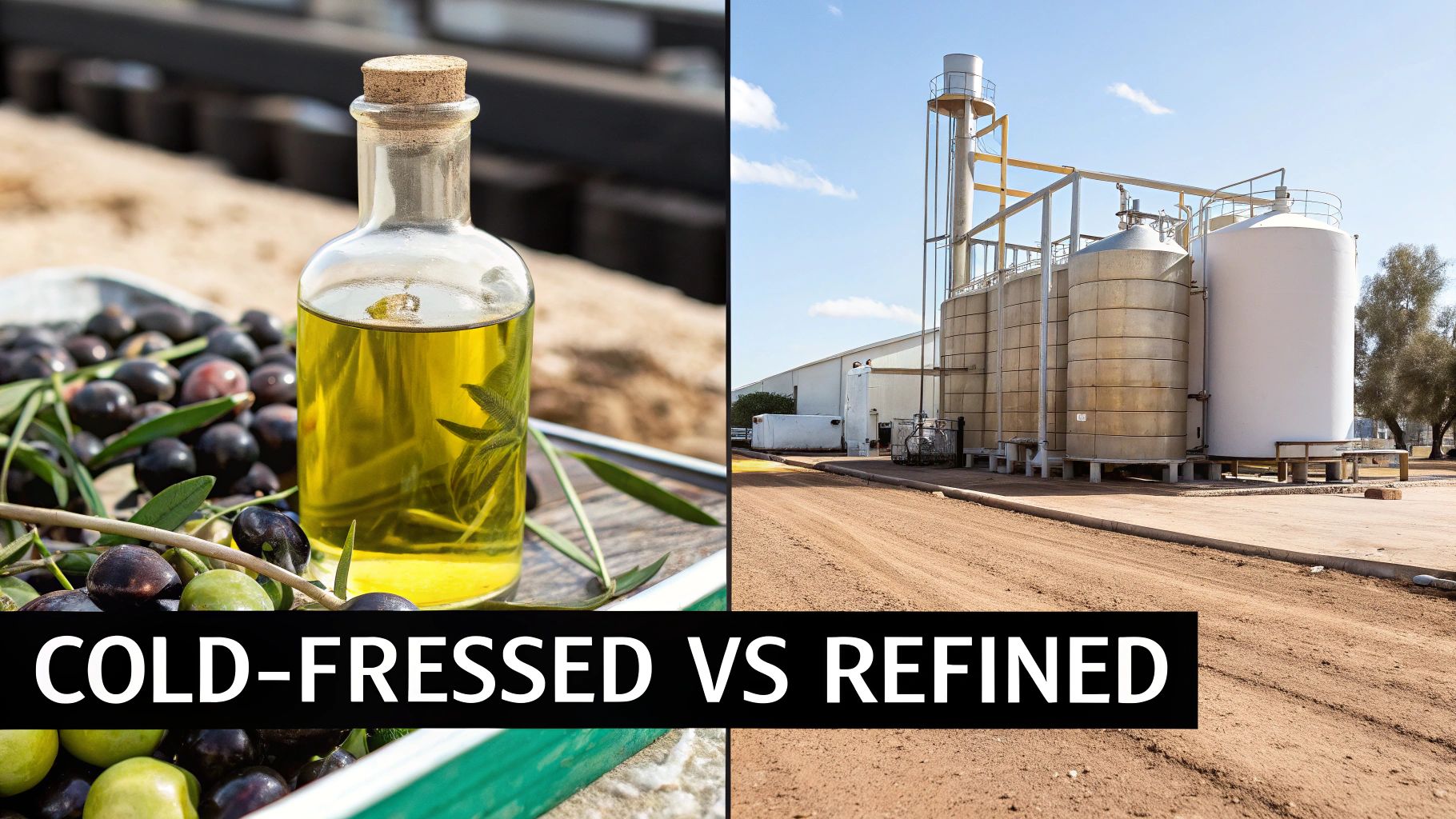
The journey an oil takes from a living plant to a bottle in your pantry is the single most important chapter in its story. It is here that two seemingly similar oils diverge onto wildly different paths. One path is a celebration of nature, preserving the plant's inherent goodness. The other is a testament to industrial might, focused on ruthless efficiency.
This is the essential truth you must grasp when choosing between olive oil and canola oil. The contrast is not merely one of taste or color; it is a profound difference in philosophy. One is a raw, natural extract, the other a highly engineered commodity.
The Gentle Art of Extra Virgin Olive Oil
True extra virgin olive oil is nothing more and nothing less than the fresh juice of olives. Its creation is a purely mechanical act, not a chemical one. Olives are harvested, washed, and crushed into a thick paste. This paste is then slowly churned in a process called malaxation, coaxing the tiny oil droplets to join together.
Finally, a centrifuge spins the paste at high speed, separating the pure oil from water and solids. The secret? The entire process happens at low temperatures—what we call "cold-pressing"—to protect the oil's fragile, health-bestowing compounds. This meticulous craft ensures the oil retains its vibrant flavor, its intoxicating aroma, and most importantly, its treasure trove of polyphenols and antioxidants.
Think of it this way: You can squeeze an orange by hand to get fresh juice, or you can send it to a factory where it is boiled, concentrated, stripped, and reconstituted. Both began as an orange, but only one delivers the fruit’s full, life-giving power. That is the difference between EVOO and refined oils.
The beauty of this method lies in its elegant simplicity. It is designed for preservation, not just extraction. To witness just how timeless this process is, you can explore the detailed steps of making authentic olive oil. This profound respect for the ingredient is what sets true EVOO apart.
The Industrial Reality of Canola Oil
Canola oil’s journey from the tiny seeds of the rapeseed plant is a far more complex—and violent—affair. Unlike fleshy olives, these minuscule seeds do not surrender their oil willingly. Releasing it requires a multi-stage industrial assault involving high heat, immense pressure, and chemical solvents.
The typical factory process is a marvel of engineering, but a nutritional tragedy:
- High-Heat Crushing: The seeds are first cooked at scorching temperatures and then forced through a screw press to expel some of their oil. Instantly, this heat begins to damage the fragile polyunsaturated fats, causing them to oxidize.
- Chemical Extraction: To wring out every last drop, the leftover seed mash is bathed in a petroleum-based solvent—usually hexane. While the hexane is later boiled away, this is a world away from the gentle press of olives.
- Intense Refining: The crude oil that emerges from this process is frankly unpalatable. It must be refined, bleached with industrial clays to remove its color, and then deodorized with high-temperature steam to strip it of its strong, unpleasant odor.
This harsh refining, bleaching, and deodorizing process—known simply as RBD—is what creates the bland, light-colored oil on your shelf. It is an incredibly efficient method for producing cheap, stable cooking fat, but that efficiency comes at a devastating nutritional price. The very compounds that make an oil "healthy"—the vitamins, polyphenols, and precious micronutrients—are almost entirely annihilated, leaving behind little more than pure, empty fat.
The Nutritional Showdown: Fats and Antioxidants
To truly settle the olive oil versus canola oil debate, we must look past the marketing and peer inside the bottle. It's not just about "fat." The real story—the one that will shape your health for years to come—is in the specific types of fats and, more importantly, the powerful natural compounds that accompany them.
At a glance, both oils seem promising. They are known for being high in monounsaturated fats, the kind celebrated for heart health. But this is where their paths diverge sharply. Canola oil is a mixture of fats, with a significant amount of polyunsaturated fats, including a dose of omega-3s but a much larger helping of omega-6s. That balance is crucial.
Olive oil, by contrast, is a true monounsaturated powerhouse. Its fame rests on its incredibly high content of oleic acid, which can constitute a staggering 55-83% of its fatty acid profile. This specific fat, in concert with an army of powerful antioxidants like polyphenols, gives olive oil its legendary anti-inflammatory and cell-protecting powers. It's also why high-quality extra virgin olive oil stands up surprisingly well to heat, resisting the formation of toxic compounds far better than highly refined oils.
The Critical Role of Fatty Acid Balance
When you compare fats, the ratio of omega-6 to omega-3 polyunsaturated fatty acids is a very big deal. Your body needs both, but the modern diet is drowning in omega-6s (from processed foods and other seed oils) while being starved of omega-3s. This profoundly lopsided intake fuels a state of chronic, low-grade inflammation—a smoldering fire that is the secret driver of many modern diseases.
Canola oil does contain a respectable amount of the plant-based omega-3 alpha-linolenic acid (ALA). The problem? Its omega-6 content is roughly double its omega-3 content. In a vacuum, that ratio isn't catastrophic, but in the context of our modern diet, it adds more fuel to an already raging fire. For those seeking to restore this balance with plant-based choices, a good guide to Vegan Omega 3 can offer powerful alternatives.
Extra virgin olive oil sidesteps this entire problem. Because it is primarily monounsaturated fat, it contains very low levels of polyunsaturated fats. This means it doesn't dump a significant load of omega-6s into your system, acting instead as a stabilizing, anti-inflammatory force in your diet.
The Antioxidant Gap That Changes Everything
If the fat profile is the main event, the antioxidants are what crown the champion. And here, the contest is over before it begins. The industrial refining that produces canola oil obliterates almost all of its natural micronutrients, including its vitamins and the all-important polyphenols. You are left with a clean, neutral, but nutritionally vacant fat.
Extra virgin olive oil is a different species entirely. Because it is an unrefined, fresh fruit juice, it arrives teeming with more than 30 different phenolic compounds. These are nature's most potent antioxidants, acting as your personal bodyguards, protecting your cells from the relentless assault of free radicals. They are also the source of that signature peppery, slightly bitter kick that is the hallmark of a truly great EVOO.
One of the most remarkable compounds found only in extra virgin olive oil is oleocanthal. This specific polyphenol possesses anti-inflammatory properties so powerful they operate on the very same biological pathways as ibuprofen. Imagine that: it’s not just a nutrient, it’s a bioactive compound delivering a gentle, medicinal effect, helping to cool inflammation with every spoonful.
This single compound reveals the profound difference. One oil is a mere source of calories. The other is a functional food that actively defends your body. The detailed olive oil nutrition facts prove just how much more is going on in a bottle of real EVOO than a simple fat comparison can ever show.
When the final bell rings, this nutritional showdown isn't a close decision. While canola oil’s fat profile has merit, it simply cannot compete with the combined protective might of the antioxidants and anti-inflammatory compounds found in authentic extra virgin olive oil. This isn't a minor detail—it is the very heart of the matter when choosing the truly healthier oil.
What Clinical Studies Reveal About Long-Term Health
Looking at a nutritional label tells you what’s in the bottle. It doesn’t tell you what happens when you choose one oil over the other, day after day, for years on end. For that, we must turn to human evidence—the clinical trials and massive population studies that pull back the curtain on how these oils actually perform inside our bodies over a lifetime.
The research reveals a fascinating split. On one side, we have targeted, short-term trials where canola oil demonstrates a specific advantage. On the other, we have decades of observational data pointing to the profound, holistic benefits of a life built around olive oil. To make a truly wise choice, you must understand both sides of this story.
Canola Oil and the Cholesterol Question
If your primary mission is to laser-focus on lowering "bad" LDL cholesterol, the clinical data for canola oil is surprisingly strong. In tightly controlled studies, canola oil consistently outperforms olive oil in its ability to improve specific blood lipid markers. This is not a statistical fluke; it is a real, measurable effect seen across multiple trials.
A major review that pooled the results of 13 different clinical trials found that people consuming canola oil saw a significant drop in both their LDL cholesterol and total cholesterol. The analysis showed that, when compared directly to olive oil, canola oil led to an average LDL reduction of 6.13 mg/dL and a total cholesterol drop of 8.92 mg/dL. You can dig into the research on these cholesterol findings to see the raw data for yourself.
This evidence makes a compelling case for canola oil as a specific tool for targeted cholesterol management. But this is where the narrative pivots from a single metric to the far grander story of overall health and disease prevention.
Olive Oil: The Cornerstone of Longevity
While canola oil flexes its muscle in short-term cholesterol trials, extra virgin olive oil’s reputation is forged in the crucible of long-term, large-scale population studies. These studies don’t just track a single blood marker for a few weeks; they follow hundreds of thousands of people for decades to discover who truly thrives and who falls victim to chronic disease. And time and time again, one way of eating emerges as a powerful shield against the ravages of aging: the Mediterranean diet.
At the very heart of this legendary dietary pattern is the generous use of extra virgin olive oil. It is not just another ingredient; it is the foundational fat upon which this entire healthy edifice is built. This is a critical distinction. The benefits don't come from olive oil in isolation, but from its central role in a diet rich in plants, fish, and whole foods.
The magic of olive oil lies not only in what it contains, but in how it synergizes with other healthy foods. Its polyphenols protect the delicate nutrients in vegetables from being destroyed during cooking and even enhance their absorption in your body. It is a multiplier effect that you can never get from a refined oil or an isolated supplement.
The evidence linking this way of life—and by extension, olive oil—to a longer, healthier existence is simply overwhelming. Here is what the research consistently reveals:
- Dramatically Reduced Heart Disease Risk: Massive studies confirm that people who consume the most olive oil have a significantly lower risk of heart attacks and strokes. This benefit extends far beyond cholesterol, pointing to olive oil’s power to improve blood pressure, quell inflammation, and maintain the health of our blood vessels.
- Powerful Cognitive Protection: Regular consumption of extra virgin olive oil is strongly associated with a lower risk of cognitive decline, Alzheimer's, and other forms of dementia. The potent antioxidants and anti-inflammatory compounds in EVOO are believed to shield brain cells from the very damage that leads to these devastating conditions.
- Lower Risk of Certain Cancers: Consistent intake has also been linked to a reduced risk of several cancers, most notably breast and colorectal cancer. Researchers theorize that the powerful antioxidants in olive oil help neutralize the free radicals that can corrupt DNA and ignite cancerous growth.
The data paints a vivid picture. Canola oil can effectively lower a risk factor for heart disease. Extra virgin olive oil, on the other hand, is linked to preventing the disease itself, along with a host of other chronic illnesses that dictate how well we age. The choice becomes a matter of strategy: are you looking for a tactic to manage a single number, or a foundational plan for a lifetime of vibrant health? To explore this connection further, check out our article on the role of olive oil in the Mediterranean diet.
Choosing the Right Oil for Your Kitchen
Let's bring this discussion down from the ivory tower of science and into your kitchen. When should you actually reach for olive oil, and when is canola the smarter play? This isn't about slapping a "good" or "bad" sticker on either bottle. It's about understanding their specific jobs and using the right tool for the task to protect both the oil's integrity and your health.
One of the most persistent—and frankly, damaging—myths in the culinary world is that you cannot cook with extra virgin olive oil. People live in fear of its supposedly low smoke point, banishing this liquid gold to salad duty only. But for nearly everything you do in your kitchen on a daily basis, this is simply not true.
Debunking the Smoke Point Myth
The smoke point is the temperature where an oil stops shimmering and starts smoking, unleashing a cloud of nasty free radicals. While it's true that a hyper-refined oil like canola can withstand more heat, a high-quality extra virgin olive oil has a smoke point between 375°F and 410°F.
Now, think about how you actually cook. Sautéing and pan-frying typically happen between 250°F and 350°F. Roasting in the oven? That’s usually around 400°F. A quality EVOO is more than capable of handling these tasks, especially since its high antioxidant content acts as an internal shield, keeping it stable under heat. Unless you're deep-frying, it's the superior choice. If you want to see the numbers laid bare, this cooking oil smoke points chart is an invaluable resource.
This diagram simplifies your decision based on your ultimate health goal.
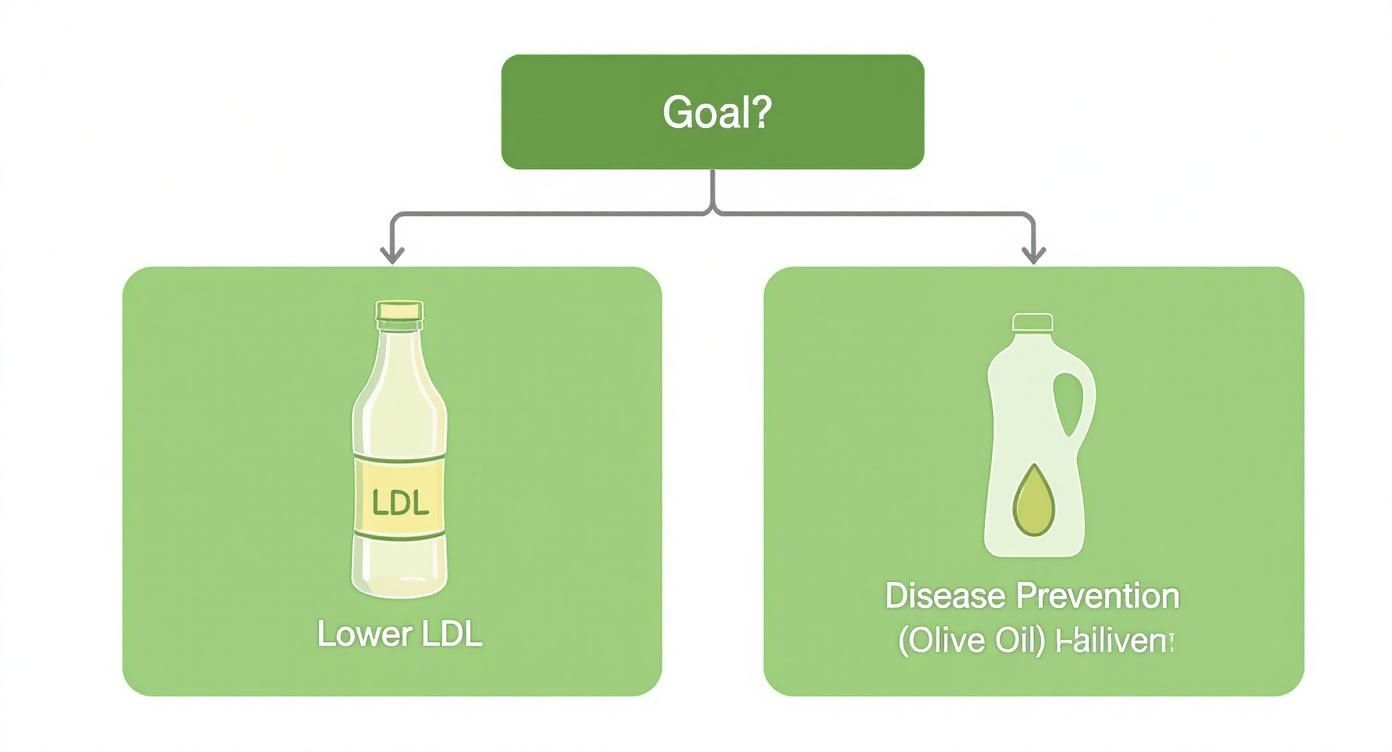
As you can see, if your goal is broad-spectrum disease prevention, olive oil is the clear champion. Canola oil, in contrast, is a specialist's tool for the single task of managing LDL cholesterol.
A Practical Guide for Your Pantry
So, what does this look like in your day-to-day life? The secret is to match the oil to the mission, extracting maximum health benefits without compromising its integrity.
Here’s a simple framework:
- Finishing, Drizzling, & Dressings: This is extra virgin olive oil’s moment to shine. Used raw, it delivers every drop of its peppery flavor and the full, unadulterated spectrum of its delicate polyphenols.
- Everyday Sautéing & Roasting: A good extra virgin olive oil is a fantastic, health-promoting choice here. Its stability and flavor will elevate everything from humble vegetables to fish and chicken.
- High-Heat & Deep-Frying: When you need relentless, sustained heat, canola oil’s higher smoke point and neutral flavor make it the practical workhorse.
- Baking: When you need a fat that won’t interfere with the delicate flavor of your cake or muffins, canola oil is often the go-to for its clean, unobtrusive profile.
Here's the bottom line: Use extra virgin olive oil when you want to add health and flavor. Use canola oil when you simply need a neutral, high-heat tool. Never waste the precious, life-giving compounds of a great EVOO on deep-frying.
How to Buy True Extra Virgin Olive Oil
A word of warning: not all bottles labeled "extra virgin" contain the real thing. The market is flooded with low-quality, and sometimes outright fraudulent, products. To ensure you're getting the health benefits you're paying for, you must become a savvy consumer.
Look for these vital clues on the label:
- Harvest Date: Freshness is everything. Seek out a harvest date, not just a "best by" date. You want the most recent harvest available, ideally within the last year.
- Dark Glass Bottle or Tin: Light is the mortal enemy of good oil, causing it to rapidly degrade. Dark, opaque packaging is a shield that protects those fragile polyphenols from rancidity.
- Specific Origin: Vague promises like "Product of Italy" can mean olives were sourced from all over the world and merely bottled there. A specific region or single estate indicates far greater quality control.
By making these simple shifts in how you shop and cook, you can graduate from the "which is healthier" debate and adopt a more sophisticated strategy—using the best of both oils to build a truly healthier kitchen.
The Final Word from Health Experts
When you sift through all the evidence—from the way these oils are born to the verdict of clinical science—an undeniable truth emerges. While both olive oil and canola oil might have a place in your pantry, they play vastly different roles in the story of your health. Deciding which is "healthier" depends entirely on your goal—are you seeking long-term disease prevention or just a functional cooking fat?
For everyday use and a genuine, measurable improvement to your health, extra virgin olive oil is the clear and definitive winner. Its stunning concentration of polyphenols and anti-inflammatory compounds serves as a powerful defense system for your body, guarding against cellular damage and the onset of chronic disease. Think of it not as a simple fat, but as a functional food that elevates both your meals and your well-being.
Canola oil, in contrast, is a practical, budget-friendly tool for specific culinary tasks. Its high smoke point and neutral taste make it a reliable choice for high-heat cooking where the delicate compounds in olive oil might be compromised. It has its place, but it does not actively build health the way a true EVOO does.
The Expert Consensus on Your Health
Most leading health experts unequivocally recommend extra virgin olive oil for long-term vitality. The harsh refining process and higher omega-6 content of canola oil have sparked legitimate debate about its potential to contribute to inflammation. In stark contrast, the rich polyphenol content in olive oil has been linked to a remarkable 16% reduced risk of cardiovascular disease in major population studies. You can discover more insights about these health comparisons and see for yourself how the experts weigh in.
Your choice of oil reveals a deeper philosophy. Are you looking for a fat that simply does no harm, or one that actively contributes to your vitality? One is a neutral placeholder; the other is a cornerstone of a truly healthful life.
Ultimately, the decision rests with you. Your choice should align with your personal health goals, your budget, and your cooking style. But for most people, most of the time, making a high-quality extra virgin olive oil your primary fat is one of the simplest and most powerful decisions you can make for your long-term health.
Frequently Asked Questions
Even after diving deep into the science, a few practical questions always surface. Let's clear up the most common points of confusion so you can choose your oils with absolute confidence.
Is All Canola Oil Genetically Modified?
The short answer is yes, the vast majority is. Most of the rapeseed crop grown in North America is genetically engineered to resist herbicides, which makes farming easier and more profitable. If this is a concern for you, finding a non-GMO alternative is simple. Look for bottles bearing the official USDA Organic seal or the Non-GMO Project Verified label. These certifications are your guarantee that the oil comes from non-engineered plants.
Does "Light" Olive Oil Have Fewer Calories?
Absolutely not—and this is a critical distinction to understand. The word "light" on an olive oil bottle refers only to its flavor and color, not its calorie or fat content. A "light" olive oil is a heavily refined product, stripped of the bold taste and health-promoting polyphenols that make extra virgin olive oil so valuable. It has the exact same number of calories but delivers none of the profound health benefits.
Don't fall for the marketing trick. "Light" is a misleading term designed to fool calorie-conscious shoppers. In reality, it simply means you're buying a less healthy, nutritionally bankrupt oil.
What’s the Best Way to Store Cooking Oils?
Heat, light, and air are the mortal enemies of any cooking oil. Exposure to these elements triggers a process called oxidation, which turns the oil rancid, destroying both its flavor and its nutritional value. To keep your oils fresh and potent, store them in a cool, dark place like a pantry or cupboard—never on the countertop next to your stove.
Always ensure the cap is screwed on tightly to keep oxygen out. This rule applies to both oils, but it is especially vital for a high-quality extra virgin olive oil. To experience its peak flavor and benefits, you should try to use it within a few months of opening the bottle. It's easy to learn how to tell if oil is rancid with a quick sniff and taste test.
At Learn Olive Oil, we are dedicated to helping you discover the rich world of high-quality olive oil. From understanding labels to mastering culinary pairings, we provide the expert insights you need to make every meal healthier and more delicious. Explore our guides and start your journey at https://learnoliveoil.com.

 Learn Olive Oil
Leave a comment