It is, at its heart, a fat. Almost 100% fat, in fact. And like any fat, it's dense with calories—around 119 in a single tablespoon. But if that’s all you see, you're missing the real story. Because the secret of this ancient oil isn't about the calories… it's about the extraordinary kind of fat it contains, and the legion of micronutrients hidden within.
The Essential Nutrition Facts of Olive Oil
Before we peel back the layers on antioxidants and fatty acids, let's look at the raw numbers. This is the "what's on the label" snapshot, the foundation for everything that follows. Once you grasp this, the incredible health claims you've heard for years will suddenly click into place.
Why does this simple oil play such a monumental role in a healthy life? The answer begins right here, in the basic breakdown.
This infographic provides a powerful visual summary, putting the calories, fat types, and key vitamins into sharp perspective.
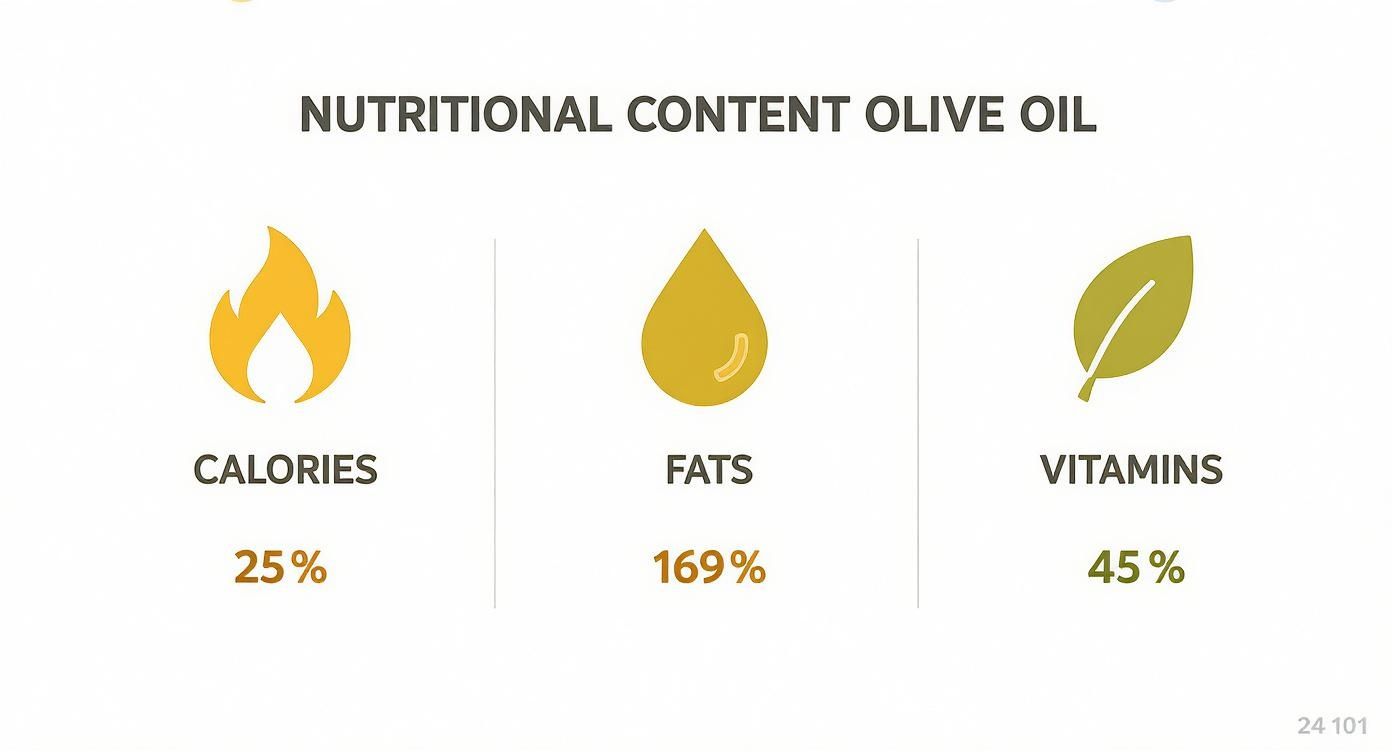
As you can see, the calorie count is exactly what you'd expect from any pure oil. But the real magic hides in the details. For a closer look at the energy content alone, you can find a more detailed breakdown in our guide on olive oil calories per tablespoon.
Here is a quick-reference table that puts the precise figures side-by-side, comparing a standard tablespoon with a 100g serving for a more complete picture.
Extra Virgin Olive Oil Nutrition At a Glance
This table offers a straightforward look at the key nutritional values in a single serving versus a larger 100-gram amount.
| Nutrient | Amount per 1 Tablespoon (~14g) | Amount per 100g |
|---|---|---|
| Calories | 119 kcal | 884 kcal |
| Total Fat | 14 g | 100 g |
| Saturated Fat | 1.9 g | 14 g |
| Polyunsaturated Fat | 1.4 g | 10 g |
| Monounsaturated Fat | 10 g | 73 g |
| Vitamin E | 1.9 mg (13% DV) | 14.4 mg (96% DV) |
| Vitamin K | 8.1 mcg (7% DV) | 60.2 mcg (50% DV) |
These numbers tell a profound story: while every calorie comes from fat, the vast majority is the "good" monounsaturated kind. And you get a powerful dose of fat-soluble vitamins for the journey.
Understanding the Fats in Your Olive Oil
The word "fat" has been dragged through the mud for decades. But when it comes to extra virgin olive oil, its fat composition isn't a liability—it is the very source of its legendary health benefits. This isn't just another cooking oil. It's a unique blend of fatty acids that sets it apart from almost everything else on the shelf. The secret is the overwhelming abundance of one particular type of 'good' fat.
The Power of Monounsaturated Fats
Meet the undisputed star of the show: monounsaturated fat (MUFA). This is the bedrock of olive oil's celebrated health profile, making up the vast majority of the oil. Think of it as the foundation upon which all its other benefits are built.
This high concentration is what transforms olive oil into a liquid powerhouse. Oils dominated by polyunsaturated fats can be unstable, but the molecular structure of monounsaturated fat gives it resilience and a long list of wellness advantages.
Drill down into the nutritional data, and you’ll find a specific champion in this category: oleic acid. This omega-9 fatty acid is the main event, often composing 55% to 83% of the oil. It is the key player behind the heart-healthy effects that have made the Mediterranean diet famous.
The real magic of EVOO is how these fats work in harmony. The high level of stable monounsaturated fats acts as a natural shield, protecting the more delicate components of the oil, ensuring the precious antioxidants and vitamins reach your plate intact.
This remarkable balance defines its nutritional superiority. In 100 grams of EVOO, for instance, you'll find that monounsaturated fats can account for nearly 73% of the total fat. This specific composition is directly linked to better cardiovascular outcomes, as these fats help lower "bad" LDL cholesterol while supporting "good" HDL cholesterol levels.
Saturated and Polyunsaturated Fats in Balance
Of course, monounsaturated fat isn't the only type in the bottle. To grasp the full picture of what makes olive oil so unique, you have to look at the other fats, which exist in much smaller, well-proportioned amounts.
A glance at the numbers reveals a perfect harmony:
- Saturated Fat: This makes up a minimal portion, typically around 14%. While our bodies need some saturated fat, its low concentration in EVOO is a major health advantage compared to animal-based fats like butter or lard.
- Polyunsaturated Fat: Also a smaller component at about 11%, this group includes essential fatty acids like omega-6 and omega-3.
This specific fatty acid profile is no accident; it is a direct reflection of the olive fruit itself. Understanding this composition helps you see why this ancient food is so much more than a simple cooking ingredient. For a deeper dive, check out our guide on what olive oil is made of. This balance is precisely why extra virgin olive oil remains a superior choice for your daily health.
Why Olive Oil Calories Support Weight Management
"Wait a minute," you might be thinking. "If extra virgin olive oil is pure fat with 120 calories a tablespoon, won't it make me gain weight?" It’s a perfectly logical question. But the answer is not what you’d expect. The truth is, not all calories are created equal.
The calories from a spoonful of vibrant, antioxidant-rich EVOO are worlds away from the empty calories of highly refined foods. Your body processes them in a completely different way. This isn't just a hopeful theory; we see it in the real world, in populations where olive oil is a diet staple, yet obesity rates are consistently low. The secret is all about how this "liquid gold" works with your metabolism and appetite.
The Satiety Secret
One of the greatest weapons in the battle for weight management is satiety—that satisfying feeling of fullness that tells your brain it's time to stop eating. As it turns out, the healthy monounsaturated fats in extra virgin olive oil are remarkably good at sending this very signal.
A simple drizzle over a salad or roasted vegetables makes a meal far more satisfying. This helps you feel fuller for longer, naturally reducing the temptation to snack between meals. It’s a true game-changer. Instead of driving you to eat more, using olive oil strategically can actually help you control your overall calorie intake by keeping hunger at bay. This is why so many people find success with it, as we cover in our guide on using extra virgin olive oil for weight loss.
How Good Fats Support a Healthy Metabolism
Beyond just making you feel full, the compounds in EVOO give your metabolic health a genuine boost. Its famous anti-inflammatory properties, thanks to compounds like oleocanthal, help your metabolism run more efficiently.
Think about it: chronic inflammation is often linked to metabolic problems and weight gain. Olive oil offers a simple, delicious way to fight back. The evidence from major population studies and clinical trials backs this up. Despite being dense in calories, diets rich in olive oil often prove more effective for weight management than strict low-fat diets. One major review showed that people on olive oil–enriched diets lost more weight and lowered their BMI more effectively than those on standard diets. You can discover more about these health findings and explore the data for yourself. It's a paradox that drives home a crucial point: the quality of your calories matters far more than just counting them.
The Power of Polyphenols
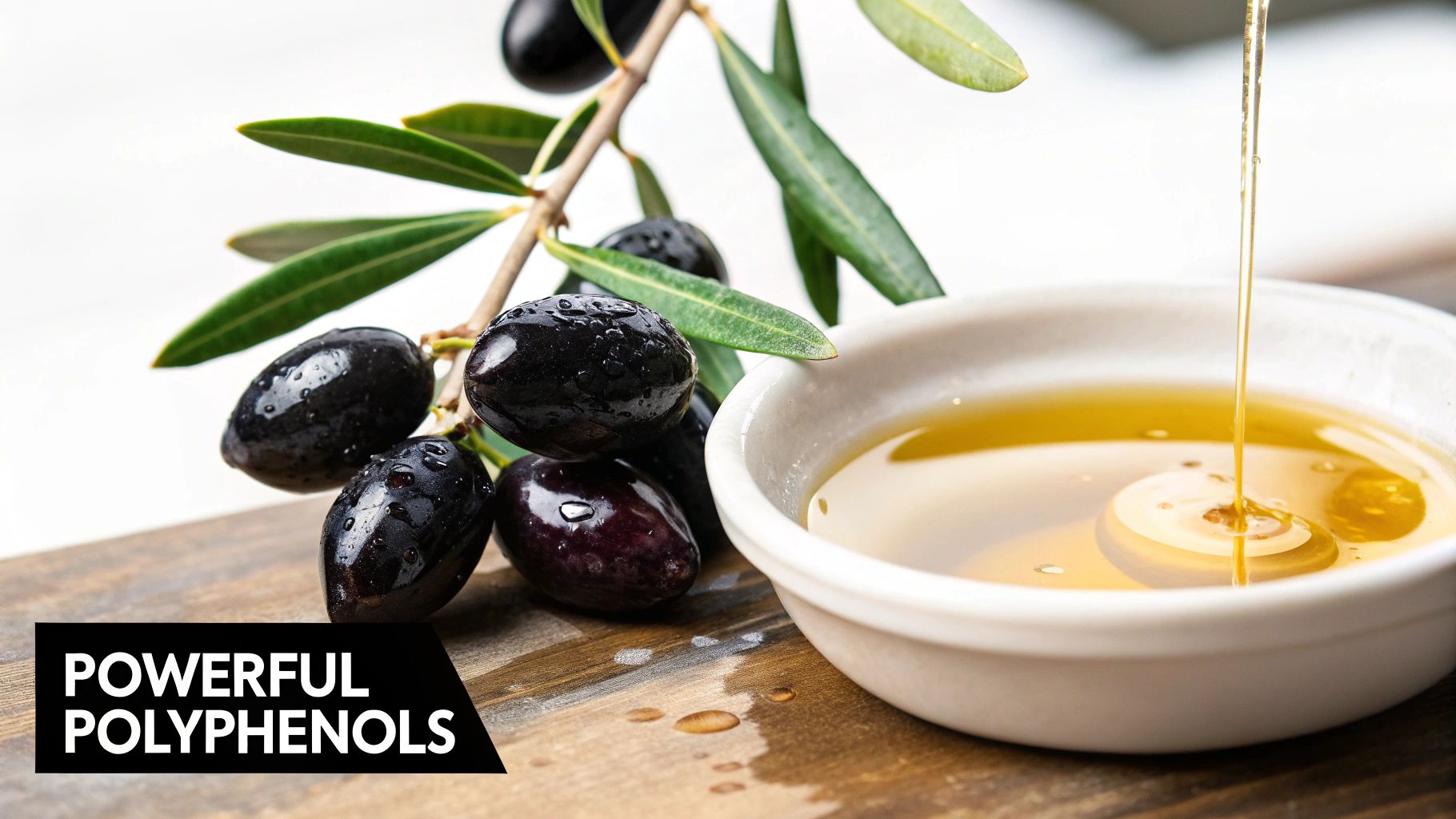
If the healthy fats in extra virgin olive oil are the engine, then its polyphenols are the high-octane fuel. These compounds are not a minor detail on a lab report; they are the very heart and soul of the oil. They are the source of a genuine, fresh EVOO's signature peppery bite and slightly bitter finish—a flavor profile that is a clear sign of its potent health benefits.
These natural antioxidants are the olive tree's built-in defense system, protecting the fruit from the harshness of the sun and other environmental threats. When we consume the oil, those protective qualities are passed on to us. These micronutrients go to work in our bodies, shielding our cells from oxidative stress and calming inflammation. This is the real magic behind the "extra virgin" designation.
Your Body's Antioxidant Defense
Imagine polyphenols as your body's personal security team. They patrol your system, neutralizing destructive free radicals—unstable molecules that wreak havoc on your cells, contributing to aging and chronic diseases. Without this kind of defense, your body is far more vulnerable.
This antioxidant activity is a very big deal for long-term health. The presence of these compounds, especially superstars like oleocanthal and hydroxytyrosol, is a critical piece of the nutritional puzzle you will never find on a standard food label. In fact, studies have shown these specific polyphenols have powerful anti-inflammatory properties, with some researchers even comparing the effects of oleocanthal to ibuprofen.
Have you ever noticed that peppery tingle at the back of your throat when you taste a high-quality EVOO? That is the oleocanthal reporting for duty. It is not a defect—it is the taste of the oil's health-giving power at work.
This is precisely why choosing a true extra virgin olive oil is so important. The intense refining used to make lower-grade oils like "light" or "pure" olive oil completely destroys these delicate but mighty compounds, taking their incredible benefits along with them.
The concentration of these vital micronutrients can vary dramatically from one oil to the next, influenced by everything from the olive variety and harvest time to the milling process. To get a deeper understanding of how these levels are measured and what they mean for your health, you can learn more about olive oil polyphenol content and see why higher counts make a real difference. At the end of the day, these are the compounds that elevate a simple kitchen staple into a foundation for a healthy life.
How Processing and Quality Affect Nutrition
Let me be blunt: not all olive oils are created equal. Far from it. That "extra virgin" label isn't just marketing fluff; it is a promise of quality that directly dictates the health benefits you receive, placing it in a completely different universe from refined options like "pure" or "light" olive oil.
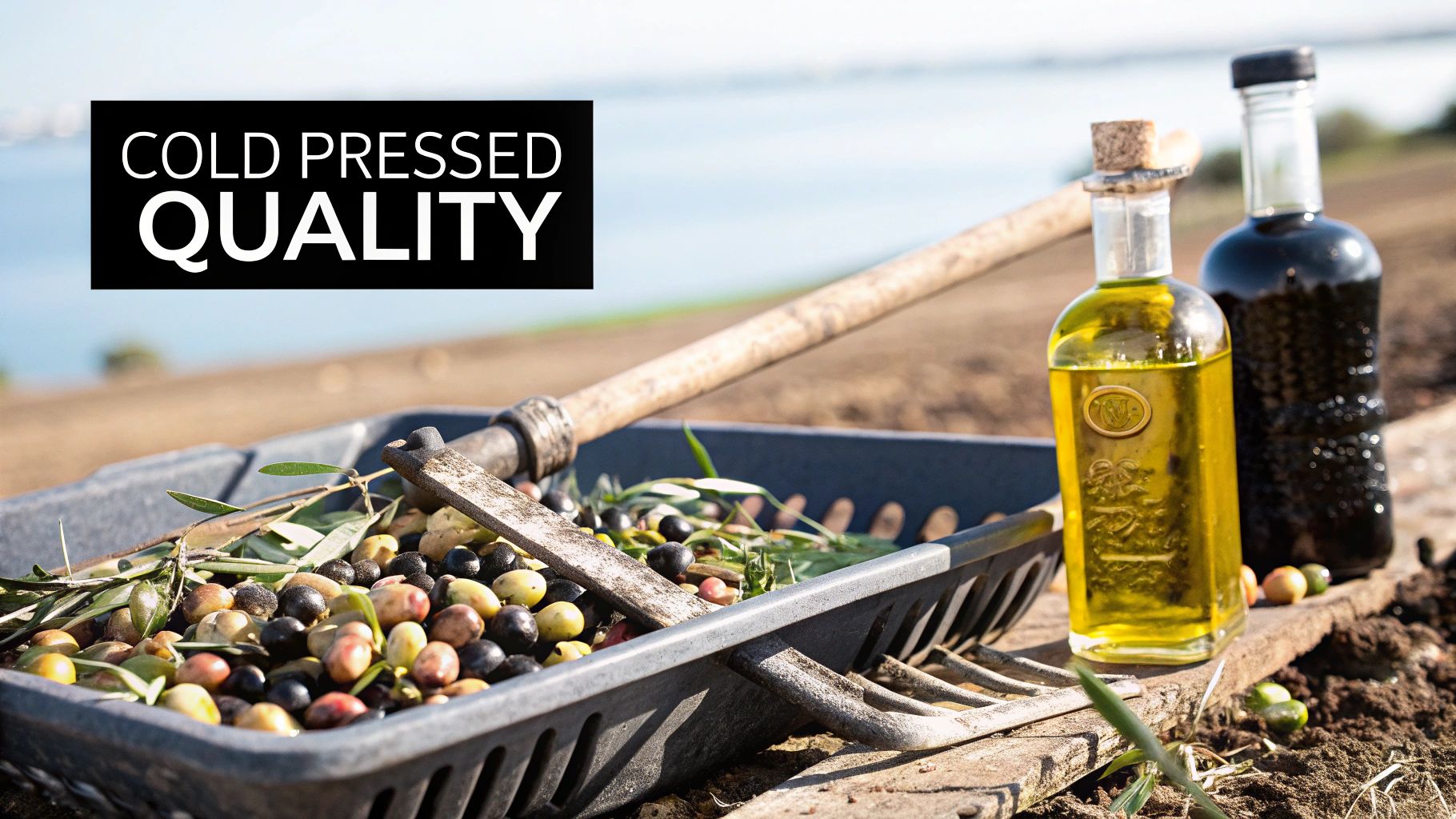
The secret is in how the oil is made. True extra virgin olive oil (EVOO) is, quite simply, fresh-pressed olive juice. It's extracted using only mechanical methods in a process you'll often see called cold-pressing. This gentle approach is absolutely critical for preserving the oil's delicate, health-promoting compounds.
Cheaper, refined oils are made using high heat and chemical solvents. This aggressive processing obliterates the very things that make EVOO a nutritional superstar. The fragile polyphenols and Vitamin E—the source of the oil’s powerful antioxidant and anti-inflammatory properties—simply cannot survive that kind of industrial assault.
What High Quality Really Means
The extra virgin olive oil nutritional information on any bottle is only as good as the oil inside. A genuine EVOO maintains its natural integrity, which is why its production is so carefully controlled. When you buy a true EVOO, you're getting the authentic, unadulterated product.
But a warning: even the best oil can lose its nutritional power if not handled correctly. Three mortal enemies degrade its quality and strip away those potent nutrients:
- Heat Exposure: This destroys delicate polyphenols and can even create harmful byproducts.
- Light Exposure: Light causes the oil to oxidize, turning it rancid and erasing its antioxidant benefits.
- Air (Oxygen): Oxygen is another enemy, causing the healthy fats and vitamins to break down with alarming speed.
Have you ever wondered about that peppery, slightly bitter kick in a high-quality olive oil? That’s not a defect—it’s the taste of health! It is the calling card of a high polyphenol count. If your oil tastes flat, bland, or just greasy, it’s a clear signal that those vital compounds are long gone.
When you're shopping, remember that quality is everything. Products like Pamako Ultra Premium Extra Virgin Olive Oil Organic are a great example of the high standards you should look for. Always check the bottle for a harvest date, and once you get it home, store it in a cool, dark place. This knowledge helps you pick an oil that actually delivers on its nutritional promise.
How Much Olive Oil Should You Use Daily?
Knowing what makes extra virgin olive oil so good for you is the first step. The next—and most important—is figuring out how to make it a regular part of your life. It’s not about whether you should use it, but how much is enough to unlock those incredible benefits.
The good news is, you don’t have to drench your food. A mountain of research points to a clear, simple, and manageable daily amount that can make a profound difference.
Finding the Science-Backed Sweet Spot
After decades of studies, researchers have a very good idea of what works. For most adults, the sweet spot lies somewhere between one and two tablespoons per day. This isn't just a random number; it's the amount consistently linked to measurable health improvements in major clinical trials.
This quantity provides a potent dose of beneficial oleic acid and polyphenols without overloading your diet with calories. For a deeper dive, our article covering how much olive oil you should consume per day has all the details.
The true magic of EVOO comes from its high polyphenol content. A landmark study, the PREDIMED trial in Spain, followed over 7,000 people and found that a daily intake of roughly 1.5 to 2 tablespoons led to significant improvements in cardiovascular health, including better blood pressure.
Weaving this amount into your daily routine is easier than you think.
- Drizzle a tablespoon over your lunchtime salad.
- Use another to sauté vegetables for dinner.
- Finish a bowl of soup or grilled fish with a final, flavorful swirl.
If you follow a specific eating plan, like many Mediterranean diet plans, this daily dose of olive oil isn't just a suggestion—it's a non-negotiable cornerstone. Making this small change is a simple but powerful way to turn every meal into an opportunity to truly nourish your body.
Common Questions About Olive Oil Nutrition
Even with all the data, navigating the world of extra virgin olive oil can bring up some practical questions. It's completely normal to want clear answers before you bring a bottle into your kitchen. Let's dig into some of the most common uncertainties and clear things up once and for all.
One of the biggest myths I hear is about cooking with extra virgin olive oil. Can you really heat it without destroying all the good stuff? The answer is a definitive yes.
A high-quality EVOO has a surprisingly robust smoke point, typically between 350-410°F (177-210°C). This range makes it an excellent choice for nearly all home cooking methods, from sautéing vegetables to pan-searing fish. The secret is to use a fresh, well-made oil; its stability comes from the very antioxidants you want to preserve.
Is All Olive Oil Equally Nutritious?
This is a critical point that trips up many people. The short answer is no. Not even close.
Only extra virgin olive oil delivers the full powerhouse of polyphenols, vitamin E, and other beneficial compounds. Other grades—like "pure," "light," or plain "olive oil"—are refined using high heat and chemical solvents.
Those harsh refining methods strip away the delicate, health-promoting antioxidants and anti-inflammatory compounds. What's left is essentially just fat calories, devoid of the very benefits olive oil is famous for. "Extra virgin" is your signal for an unrefined, nutrient-rich oil.
Another thing people often ask about is shelf life. Does olive oil go bad? It absolutely does. Olive oil is a fresh fruit juice, and unlike wine, it does not get better with age. Its nutritional potency starts to decline from the moment it's made, especially when it's up against its three enemies: heat, light, and air.
To get the most out of your oil, try to use it within 12-18 months of the harvest date (not the bottling date!) and always keep it sealed in a cool, dark cupboard.
Finally, what's the deal with unfiltered versus filtered oil? You might see cloudy, unfiltered oils and wonder if they're better. They do contain tiny bits of olive fruit, which add some extra nutrients and a more rustic, potent flavor. However, those same particles make the oil spoil much faster.
For most people, a good filtered EVOO is the more practical choice. It has a much better shelf life while still retaining the vast majority of its health benefits.
At Learn Olive Oil, we believe that understanding the facts empowers you to make better choices. Explore our guides and discover the world of premium olive oil. Visit us at https://learnoliveoil.com to continue your journey.

 Learn Olive Oil
Leave a comment