The short answer is yes. But the real answer—the one that will change the way you bake forever—is far more exciting.
For centuries, bakers in the sun-drenched kitchens of the Mediterranean have guarded a secret. It’s the key to unlocking cakes so moist they weep, muffins so tender they melt on your tongue, and flavors so rich and complex that butter simply can't compete. That secret is olive oil.
The Secret to Better Baking Is Hiding in Your Pantry
This isn’t some fleeting culinary trend. It’s a return to a time-honored technique that transforms everyday baking into an art form. I understand your hesitation. The thought of pouring that golden-green liquid into your mixing bowl instead of unwrapping a familiar stick of butter might feel wrong. Unnatural, even.
But I promise you, once you taste the results, you will become a believer.
Prepare to discover how this simple switch elevates your favorite recipes from merely "good" to absolutely unforgettable. We will delve into why this heart-healthy fat is making its way from the salad bowl to the mixing bowl, creating baked goods that stay miraculously fresh for days.
Why More Bakers Are Making the Switch
The exodus from butter to olive oil isn't just a niche movement; it's part of a massive global awakening. The olive oil market was valued at an astonishing USD 22.30 billion in 2022 and is projected to climb ever higher. Why? Because households—which make up over half the market—are finally discovering what Mediterranean grandmothers have always known. Olive oil belongs in everything from cakes and breads to pastries. This ancient practice, long a staple of the Old World, is now taking firm root across North America.
Here's the simple truth: Olive oil creates a different kind of crumb. Where butter can sometimes produce a dense, heavy texture, olive oil yields a lighter, more tender, and exceptionally moist result that defies the passage of time.
This remarkable difference comes down to the very nature of fat. Butter is roughly 80-85% fat; the remainder is water and milk solids. Olive oil, in its purest form, is 100% liquid fat. This allows it to coat flour particles in a unique way, inhibiting the development of tough gluten and giving birth to a uniquely tender texture.
The benefits are not subtle. They are things you can taste, feel, and see in your baking:
- Superior Moisture: Cakes and quick breads made with olive oil retain their moisture with an almost supernatural tenacity. They remain fresh and delectable for days longer than their butter-based cousins.
- Enhanced Flavor: A high-quality olive oil adds a subtle, complex, and often fruity dimension that beautifully harmonizes with ingredients like citrus, chocolate, and nuts. It doesn’t just add fat; it adds character.
- Healthier Profile: Olive oil is brimming with monounsaturated fats, celebrated by doctors and nutritionists as heart-healthy. You can learn more about its virtues in our guide to olive oil nutrition facts.
To paint a clearer picture, here is a quick comparison of these two titans of the baking world.
Olive Oil vs Butter Quick Comparison for Baking
| Attribute | Olive Oil | Butter |
|---|---|---|
| Primary Fat | Monounsaturated (Heart-Healthy) | Saturated |
| Flavor Profile | Varies: fruity, peppery, grassy | Creamy, rich, familiar |
| Moisture | Excellent; creates a moist crumb | Good; milk solids add richness |
| Texture | Lighter, tender, and often softer | Can be dense, flaky, or crumbly |
| Shelf Life | Extends freshness of baked goods | Standard shelf life |
This table reveals a crucial fact: while butter will always have its place, olive oil offers a set of unique advantages that can truly elevate your baking from a craft to an art.
So when you ask, "can I bake with olive oil?" the answer is a resounding, unequivocal yes. It’s more than a substitute; it’s an upgrade hiding in plain sight in your pantry.
How to Choose the Right Olive Oil for Your Recipe
Walk down the oil aisle of any grocery store and you’ll be met with a baffling wall of options. It's enough to make even a seasoned baker feel lost. But here's the secret: understanding just two or three key differences will make you the master of that aisle and, more importantly, your kitchen.
Because choosing the wrong olive oil can turn your delicate vanilla cake into a peppery, savory fiasco.
This isn't about finding one "perfect" olive oil for all your baking. It's about building a small, strategic arsenal. Think of yourself as an artist choosing colors for a masterpiece; you need the right hue for the right part of the canvas. The entire art lies in matching the oil's intensity to your recipe, ensuring it enhances—rather than overpowers—your final creation.
So, when you ask, "can I bake with olive oil?" the more intelligent question is, "which olive oil should I use?"
The Flavor Intensity Spectrum
Let's cut through the confusion. Olive oils generally fall into three categories you need to know, and each one has a distinct purpose in your baker's toolkit.
-
Extra Virgin Olive Oil (EVOO): This is the highest-quality, least-processed oil, treasured for its bold, often fruity or peppery flavor. Do not fear its big personality; use it to your advantage. A robust, grassy EVOO is nothing short of divine in a lemon-rosemary loaf or a dark chocolate torte, where its assertive character stands shoulder-to-shoulder with other powerful flavors.
-
"Pure" or "Regular" Olive Oil: This is your dependable, middle-of-the-road champion. It's a blend of refined olive oil and a touch of EVOO, giving it a milder flavor and lighter color. Think of it as your trusted workhorse for recipes where you desire a hint of fruity richness without shouting over the other ingredients—perfect for a carrot cake or savory muffins.
-
Light-Tasting Olive Oil: Don't be fooled by the name—"light" refers only to the flavor, not the calories. This oil is highly refined, making it the most neutral option available. For a batch of classic chocolate chip cookies or a delicate angel food cake, this is your secret weapon. It delivers all the moisture benefits without waging war on the vanilla and brown sugar.
The most common mistake bakers make is using a powerful, expensive EVOO where a quiet, neutral oil is desperately needed. The goal is harmony, not a battle for dominance in your mixing bowl.
Making the Right Choice, Every Time
Before you reach for a bottle, first think about your recipe's flavor profile. Is it delicate and sweet, or is it bold and rustic? While flavor is paramount, properties like smoke point are also critical for certain applications, and you can consult a comprehensive cooking oil smoke point chart to make informed decisions for any high-heat cooking.
Here is a simple mental checklist I run through:
- Identify the Dominant Flavors: Are you working with strong notes like dark chocolate, citrus, or herbs? A flavorful EVOO can be a brilliant partner.
- Consider the Desired Outcome: For classic recipes where you want traditional taste to reign supreme (like shortbread or vanilla cupcakes), reach for a light-tasting oil.
- Think About Texture: All these oils will bless your baking with incredible moisture, so your primary decision truly does come down to taste.
Mastering this doesn't require years of practice, just a little forethought. For a deeper dive into decoding labels and understanding origins, arm yourself with our complete guide on how to choose olive oil. With this knowledge, you are no longer guessing; you are making a strategic choice that will elevate every single thing you bake.
The Simple Math That Unlocks Perfect Results
Swapping butter for olive oil in your baking isn’t a simple one-for-one exchange. Get this crucial step wrong, and you risk a greasy, flat cake or a batch of cookies that spreads into a single, sad pancake. The secret lies in a little-known fact about the fats themselves.
Butter, the trusted friend of generations of bakers, is only about 80-85% fat. The rest is a mixture of water and milk solids, which contribute flavor and aid in browning. Olive oil, however, is 100% pure liquid fat.
Because of this fundamental difference in composition, you simply don't need as much.
The 3/4 Rule for Flawless Baking
The golden rule for making the switch is refreshingly simple: use three-quarters of the amount of olive oil that the recipe calls for in butter. So, if your cherished banana bread recipe demands one cup (8 ounces) of butter, you will measure out a scant 3/4 cup (6 ounces) of olive oil.
This single adjustment is your ticket to a perfectly moist bake that is never, ever oily. It's all about matching the fat content, not the volume.
A common mistake is treating melted butter and olive oil as equals. Since olive oil is pure fat and denser, using a little less prevents your baked goods from becoming heavy and leaden. Precision here is what separates the amateur from the artist.
This infographic is an excellent visual guide for choosing the right type of olive oil for your project, whether you want a bold flavor or something more neutral.
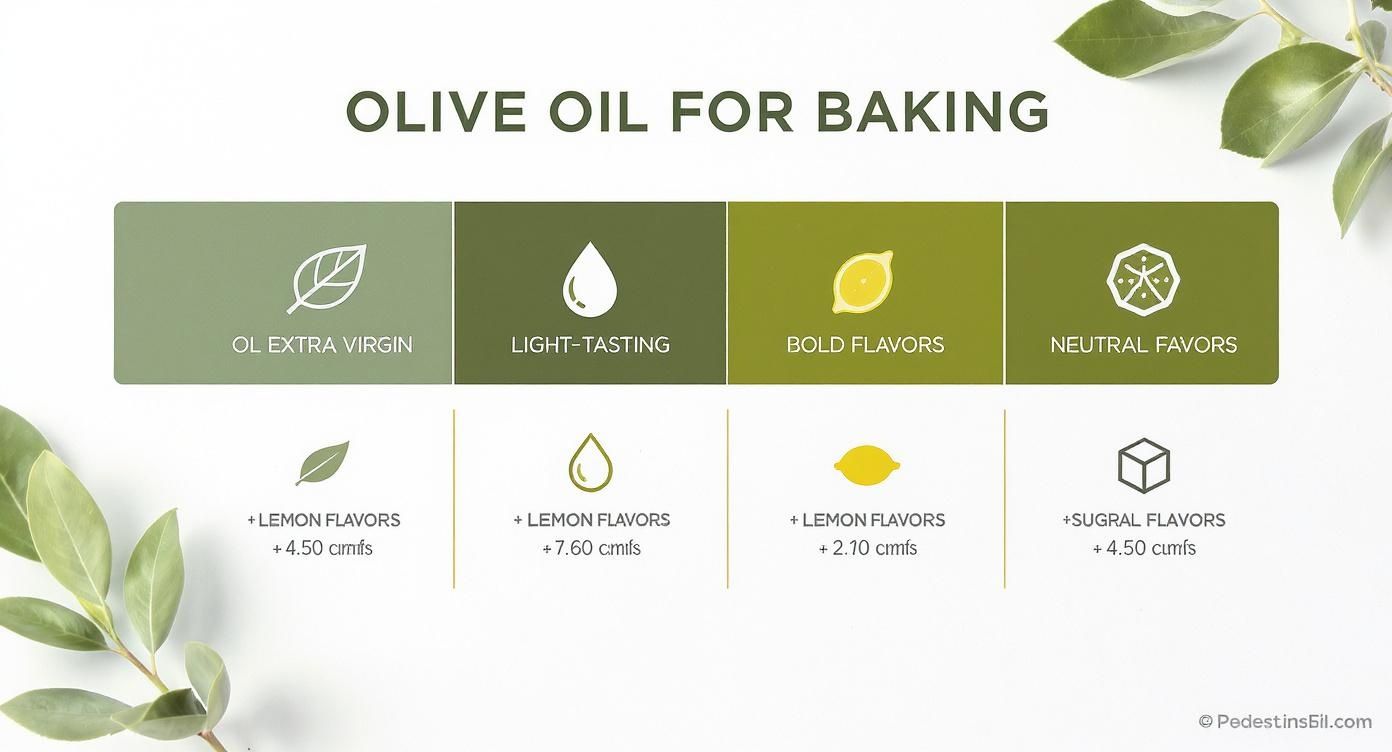
As you can see, you can select an oil that either stands up to strong flavors like chocolate or one that quietly adds moisture without altering the delicate taste of vanilla cakes.
For quick reference, I always keep a chart like this taped to the inside of my cupboard.
Butter to Olive Oil Conversion Chart for Baking
This chart is your practical, everyday guide for substituting butter with olive oil. Just find the amount of butter your recipe requires and use the corresponding amount of olive oil.
| If the Recipe Calls For (Butter) | Use This Much (Olive Oil) |
|---|---|
| 1 teaspoon | 3/4 teaspoon |
| 1 tablespoon | 2 1/4 teaspoons |
| 2 tablespoons | 1 1/2 tablespoons |
| 1/4 cup | 3 tablespoons |
| 1/3 cup | 1/4 cup |
| 1/2 cup | 1/4 cup + 2 tablespoons |
| 2/3 cup | 1/2 cup |
| 3/4 cup | 1/2 cup + 1 tablespoon |
| 1 cup | 3/4 cup |
With this chart, you can adapt your treasured recipes with the confidence of a seasoned pro, knowing your measurements are spot on.
Practical Tips for Making the Switch
Once you've mastered the ratio, the switch is easy. But a couple of professional tips will make the transition completely foolproof.
- For Melted Butter Recipes: When a recipe calls for melted butter (think brownies or many quick breads), the swap is incredibly straightforward. Just measure out 75% of the volume in olive oil and you're ready to go.
- For Solid Butter Recipes: Things get a bit different when a recipe asks you to "cream" solid butter with sugar. You cannot, of course, cream a liquid. Instead, you'll vigorously whisk the olive oil with the sugar and eggs for a few minutes. This powerful action forces air into the mixture and helps create the light, tender texture you're after.
This isn't just a trick for home bakers anymore. The commercial foodservice industry, which commands 42% of the global olive oil market, has fully embraced olive oil in baked goods. Many high-end bakeries now proudly feature olive oil cakes and cookies, highlighting their superior flavor and health appeal. You can see this trend in action in this market analysis of cooking olive oil.
If you want to dive deeper into how these two fats perform, explore our guide on the differences between olive oil and butter in cooking. Mastering this conversion will open up a breathtaking new world of baking possibilities.
Recipes Where Olive Oil Is Not Just an Ingredient, but the Star
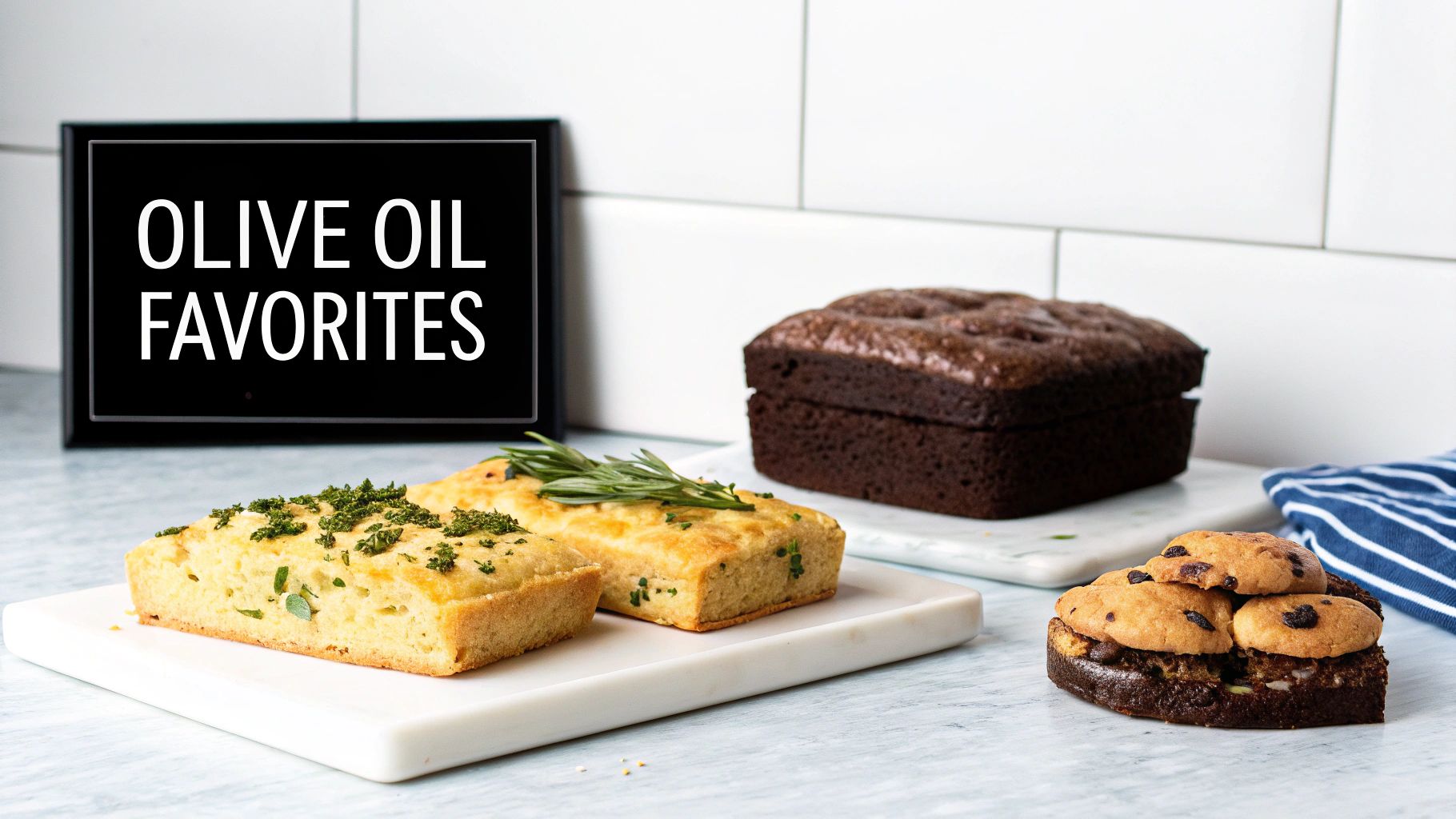
Now that you understand the "how" and "why" of baking with olive oil, let’s get to the most exciting part—the recipes where this liquid gold isn't just a substitute, but the undisputed hero of the dish.
Some baked goods seem almost destined for olive oil. They embrace its unique qualities to create textures and flavors that butter can only dream of. This is where theory meets the mixing bowl, and magic happens.
The Classic Citrus Olive Oil Cake
If one recipe perfectly showcases the transformative power of olive oil, it is the citrus olive oil cake. Imagine a lemon or orange cake with a delicate, almost ethereal crumb that dissolves on your tongue. That’s not a happy accident; it’s by design. The olive oil coats the flour particles, preventing strong gluten from forming and resulting in an impossibly tender cake.
- Why it works so brilliantly: A fruity extra virgin olive oil possesses flavor notes that beautifully echo the bright zestiness of lemon, orange, or even grapefruit. Instead of clashing, the oil and citrus perform a delicate dance, creating a sophisticated flavor that is at once bright, complex, and deeply satisfying.
- The moisture factor: These cakes are famously moist. Unbelievably so. And they stay that way for days. While butter-based cakes turn dry and sad, the pure fat in olive oil is a master at locking in moisture. The last slice is often just as glorious as the first.
The Ultimate Fudgy Brownies
For anyone who believes brownies should be dense, profoundly rich, and intensely chocolatey, olive oil is your new secret weapon. When you swap melted butter for a good-quality olive oil, you aren’t just changing the fat—you are turning up the volume on the chocolate itself.
The real magic here is that olive oil allows the pure, unadulterated flavor of the cocoa to sing. Butter, with its distinct dairy notes, can sometimes mute the deep, dark intensity of good chocolate. Olive oil gracefully steps aside and lets the star ingredient take center stage.
The result is a brownie with that coveted crackly top and a gooey, almost molten center. The oil creates a chewiness that is simply addictive, proving that the world's best brownies might not contain any butter at all.
Savory Herb Focaccia
Of course, baking isn’t only about sweets. In savory breads like focaccia, olive oil is completely non-negotiable. It is not merely an ingredient; it is the very soul of the bread. From the dough itself to the generous drizzle on top before baking, olive oil delivers spectacular flavor, a tender interior, and that signature crispy, golden crust.
This reveals how astonishingly versatile this ingredient truly is. It can create a delicate cake crumb one moment and a hearty, rustic bread the next. Olive oil shines in all sorts of savory applications, and you can explore more ideas for delicious savory pizza recipes that also benefit from its rich character.
This embrace of olive oil in baking is also tied to its sterling nutritional profile. Extra virgin olive oil is rich in monounsaturated fats and powerful antioxidants. This health-conscious appeal is a key driver behind its market growth, which is expected to climb from US$17.6 billion to around US$23.5 billion by 2032. You can learn more about these market trends in this insightful industry report.
Think of these examples as your playbook for immediate success. Whether you're aiming for a zesty cake, fudgy brownies, or a savory masterpiece, you're now equipped to choose olive oil with confidence and purpose. For more inspiration, check out our collection of https://learnoliveoil.com/baking-with-olive-oil-recipes.
Common (and Costly) Mistakes to Avoid When Baking With Olive Oil
Embarking on a new baking adventure is always thrilling, but a few simple missteps can quickly turn a fun experiment into a kitchen catastrophe. Let's make sure that doesn't happen to you. If you sidestep these common errors, you will get the delicious results you're dreaming of, right from your very first attempt.
The single biggest mistake I see is a catastrophic mismatch of flavors. Pouring a powerful, peppery extra virgin olive oil into a delicate vanilla cupcake batter is a recipe for a savory surprise no one asked for. It's like adding hot sauce to your morning coffee—the ingredients are excellent on their own, but disastrous together.
This simple mistake is why some people try baking with olive oil once, fail, and then wrongly conclude it’s not for them. In truth, they just chose the wrong tool for the job.
Mismatching the Oil and the Recipe
The solution here is simple: always match the intensity of the oil to the intensity of the recipe. For light, sweet flavors like vanilla, almond, or simple sugar cookies, you need a neutral-flavored, "light-tasting" olive oil. Its job is to provide moisture without interfering with the star ingredients.
On the other hand, for bakes with bold personalities—think dark chocolate brownies, citrus cakes, or savory herb breads—a more robust, fruity extra virgin olive oil can be a spectacular partner. Its complex notes will complement, not clash with, the other powerful flavors in the mix.
Your olive oil should be a supporting actor, not a scene-stealer, unless its flavor is intentionally part of the script. Respect the recipe's original character and choose your oil accordingly.
Another common pitfall is using old or improperly stored oil. Olive oil does not improve with age like fine wine. Instead, its flavor degrades over time, and it can become rancid, imparting a stale, crayon-like taste to your baked goods. To learn more, check out our guide on how to tell if olive oil has gone rancid.
Forgetting About Texture
Finally, many bakers new to olive oil forget that it is a liquid fat, which directly impacts the texture of your final product, especially during the mixing stage.
- The Overmixing Trap: It's far easier to overmix batter when using a liquid fat like olive oil. Overmixing develops too much gluten, which is the mortal enemy of tenderness. This leads to a tough, rubbery, or gummy bake instead of a light and delicate one.
- The Simple Fix: Mix your wet and dry ingredients only until they are just combined. A few small lumps in the batter are not only acceptable, they are often the sign of a more tender crumb to come. Resist the urge to keep stirring until it's perfectly smooth.
By avoiding these three key mistakes—mismatching flavors, using old oil, and overmixing—you set yourself up for incredible success. Baking with olive oil isn't difficult, but it does reward a little bit of thoughtful preparation.
Your Questions About Baking With Olive Oil, Answered
Whenever you try something new in the kitchen, questions are bound to arise. That's a good thing! It means you're thinking like a baker. To help you get started with unshakeable confidence, I've gathered the most common questions people have when they first consider leaving butter behind.
Think of this as your personal FAQ for making the switch. My goal is to eliminate any confusion so you can get right to the fun part: baking something truly amazing.
Can I Use Olive Oil Instead of Vegetable Oil in Baking?
Yes, you absolutely can, and you should. For almost any recipe that calls for vegetable oil or another neutral oil, you can swap in olive oil using a simple 1-to-1 ratio. If the recipe needs one cup of canola oil, just use one cup of olive oil instead. It's a fantastic and effortless way to introduce more heart-healthy monounsaturated fats into your baked goods.
The one thing to keep in mind is flavor. For something delicate like an angel food cake or a simple sugar cookie, you'll want to reach for a light-tasting olive oil. This will give you all the moisture you're looking for without overpowering the recipe's intended taste.
Will My Baked Goods Taste Like Olives?
This is probably the number one fear I hear from new converts, and the answer is refreshingly simple: only if you want them to. The final flavor comes down entirely to which olive oil you choose. A robust, peppery extra virgin olive oil will certainly leave its mark, adding a grassy, complex note to your bakes.
Sometimes, that’s exactly what you want! Imagine a rustic lemon and rosemary cake where those savory notes would be a perfect complement. But for a classic vanilla birthday cake? Probably not. For most sweet recipes where you don't want a competing flavor, just stick to a "light-tasting" or mild olive oil.
The real magic of baking with olive oil is the control it gives you. You can either add a new layer of sophisticated, fruity flavor or just let it work silently behind the scenes to create incredible moisture.
Does Baking With Olive Oil Change Cookie Texture?
It certainly does, and I would argue it's often for the better. Butter is a solid fat, which gives many cookies their structure and crispy edges. Olive oil, on the other hand, is a liquid. This fundamental difference means cookies made with olive oil tend to come out softer and more cake-like than their butter-based cousins.
You'll probably notice they spread a bit more on the baking sheet, so it's a good idea to give them some extra room. What you might lose in crispiness, you gain in a wonderfully chewy, moist cookie that stays soft for days. It's a texture that many people, myself included, have come to adore.
At Learn Olive Oil, we believe that truly understanding your ingredients is the secret to becoming a better cook. We're here to help you do just that, from picking the perfect bottle to trying new techniques in your own kitchen.
Dive deeper into the world of premium olive oil by exploring our resources at https://learnoliveoil.com.

 Learn Olive Oil

Leave a comment