Yes, you can freeze olive oil. And if you've ever splurged on a bottle of the good stuff—the kind that makes you close your eyes and savor its peppery finish—then you'll want to lean in for this next part. Because this simple act is the single best way to protect that liquid gold.
Freezing hits the pause button on time itself. It stops the clock on the natural aging process, locking in those vibrant, grassy notes and the powerful compounds that make olive oil a cornerstone of a healthy diet. It’s a method that keeps your oil tasting just as fresh months from now as the day you first opened it.
Your Pantry is Quietly Robbing You of Flavor
Imagine this. You bring home a bottle of exquisite extra virgin olive oil. You open it, and your kitchen is filled with that fresh, pungent aroma you adore. Now, imagine having that exact same experience six months down the line. It's not a fantasy; it's the result of one small change in how you store it.
Most of us commit the same innocent crime. We tuck our precious olive oil away in a dark kitchen cabinet. But there's a far superior way, a method that chefs and food scientists have quietly known for years.
Freezing is the ultimate guardian for your olive oil. It erects an impenetrable fortress, shielding the oil’s delicate flavor compounds and precious antioxidants from their three mortal enemies: heat, light, and air. When you leave olive oil at room temperature, these three villains launch a slow, relentless assault, transforming a stellar product into a sad, tasteless imitation of its former self.
Why The Deep Freeze is Your Olive Oil’s Best Friend
The science is simple, but its power is profound. The arctic temperatures of your freezer bring the chemical reactions that cause rancidity to a screeching halt. For unfiltered oils, the breakdown process can be a shocking 26 times faster at room temperature compared to when frozen solid. Research has shown that freezing essentially stops this degradation in its tracks, preserving the oil's vital characteristics for up to two years.
Freezing isn't just a clever kitchen trick. It's a scientifically validated method for protecting your investment in high-quality olive oil. It guarantees the last drop you pour will be every bit as potent and delicious as the first.
Olive Oil Storage: A Brutal Showdown
So, how do the common storage methods truly compare? Let's look at the fate of your olive oil after one year in three different environments.
| Attribute | Frozen (-20°C) | Refrigerated (4°C) | Room Temperature (20°C) |
|---|---|---|---|
| Flavor Profile | Almost identical to fresh | Slightly muted, less complex | Noticeably flat, potential off-flavors |
| Antioxidant Level | High, minimal loss | Moderate loss | Significant degradation |
| Rancidity | None | Low risk, but possible | High risk, likely present |
| Color & Clarity | Preserved (once thawed) | May become cloudy/solidify | Stable, but quality isn't visible |
The verdict is in. The freezer is the undisputed champion for long-term preservation, holding your oil in a state of perfect suspended animation.
Preserving the soul of your ingredients is the first step toward creating unforgettable food. It’s a principle that touches everything in your kitchen, from how you store your oil to selecting the right healthy cooking pans for the task at hand. When you master the fundamentals of olive oil freshness, you begin to elevate every meal you create.
We are all guilty of it. We get home from the market, unpack our bags, and place that beautiful bottle of olive oil in a kitchen cabinet. It sits there next to the spices and vinegar, poised for action. It seems like the logical place, doesn't it?
It’s wrong. Terribly wrong. Behind that harmless cabinet door, your olive oil is fighting a losing battle for its life.
Every moment your oil sits at room temperature, it is under attack from heat, light, and oxygen. These culprits trigger a process called oxidation, which methodically dismantles everything that makes a good olive oil great. Those healthy polyphenols? They begin to vanish. That vibrant, peppery flavor you paid a premium for? It slowly fades into a greasy, bland disappointment.
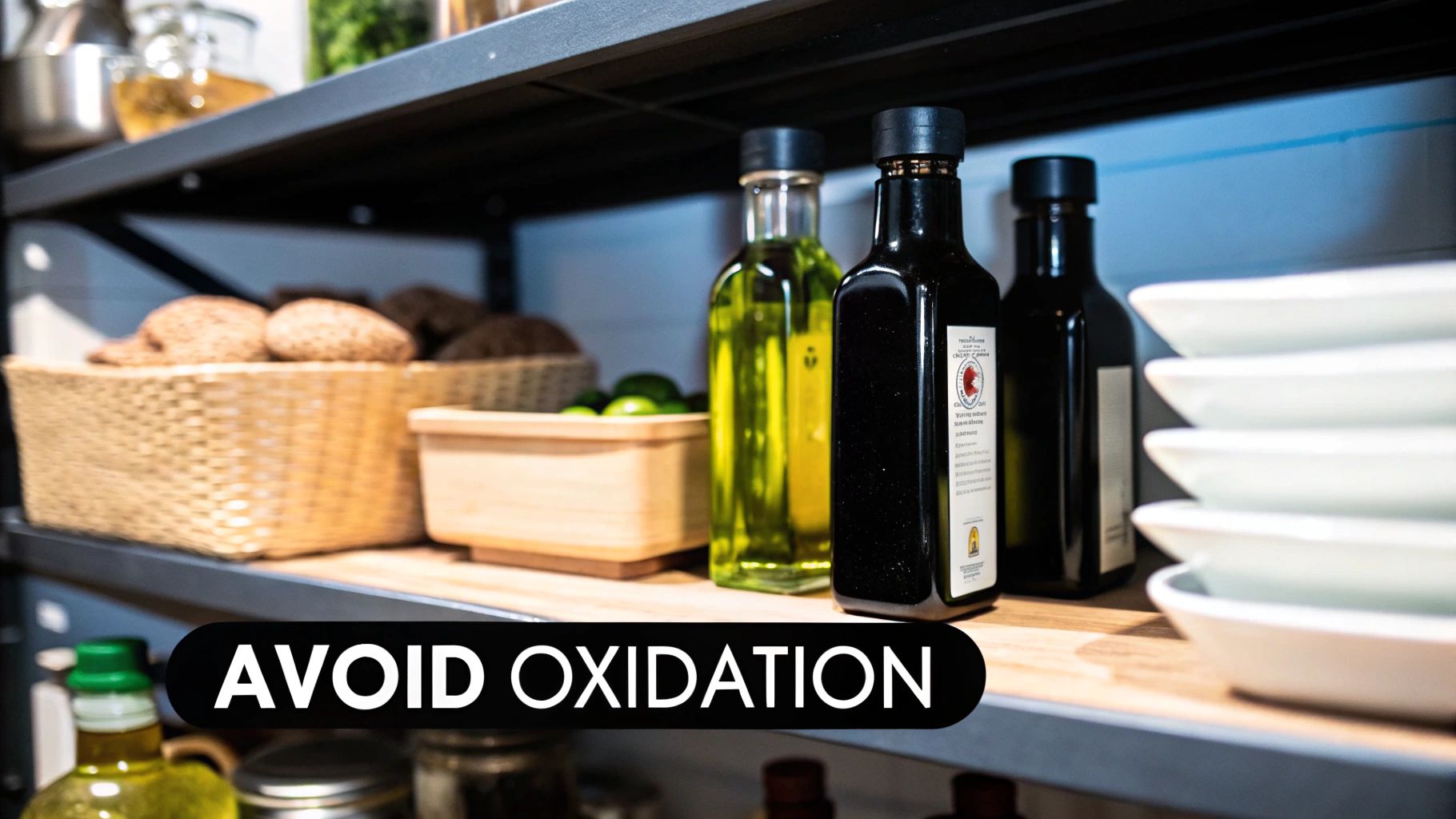
The Great Fade: A Tragedy in Your Cabinet
Think about that special tin of Tuscan olive oil you treated yourself to—the one with that incredible grassy kick. Leaving it in the pantry is like leaving a bouquet of fresh-cut flowers in a hot car. It is only a matter of time before its vitality is stolen forever.
This is where your freezer enters as the hero of the story. Freezing is like hitting a magic pause button on all those destructive chemical reactions.
When you plunge the temperature far below freezing, you are placing your olive oil into a state of suspended animation. It is the single most effective way to lock in that 'just pressed' freshness for months, not just weeks.
This insight is more crucial today than ever. The global olive oil market is a staggering $22.3 billion industry, yet you almost never hear anyone championing the freezer as the ultimate storage solution. Most oils are sold in bottles designed for the pantry, a practice that flies in the face of the science of preservation. For more on market trends, you can explore the data from Grand View Research.
Of course, how you freeze it is just as important as the act itself. The wrong container can leave your oil tasting of last night's leftovers or, even worse, freezer burn. To get this crucial step right, you’ll want to consult our guide on the best olive oil storage containers.
How to Freeze Olive Oil Like a Professional
So, you're ready to embrace the power of cold storage. Excellent! The process is remarkably simple, but success lies in avoiding a couple of common pitfalls that can ruin a perfect bottle of oil or, worse, your containers.
First, let's establish a critical ground rule: Whatever you do, do not try to freeze olive oil in its original glass bottle. Like water, oil expands when it freezes. That expansion generates enough force to crack or even shatter the glass, leaving you with a dangerous, oily disaster in your freezer. It’s a classic rookie mistake, and thankfully, it's easily avoided.
The ideal tool for this job is likely already hiding in your kitchen drawer: a simple ice cube tray.
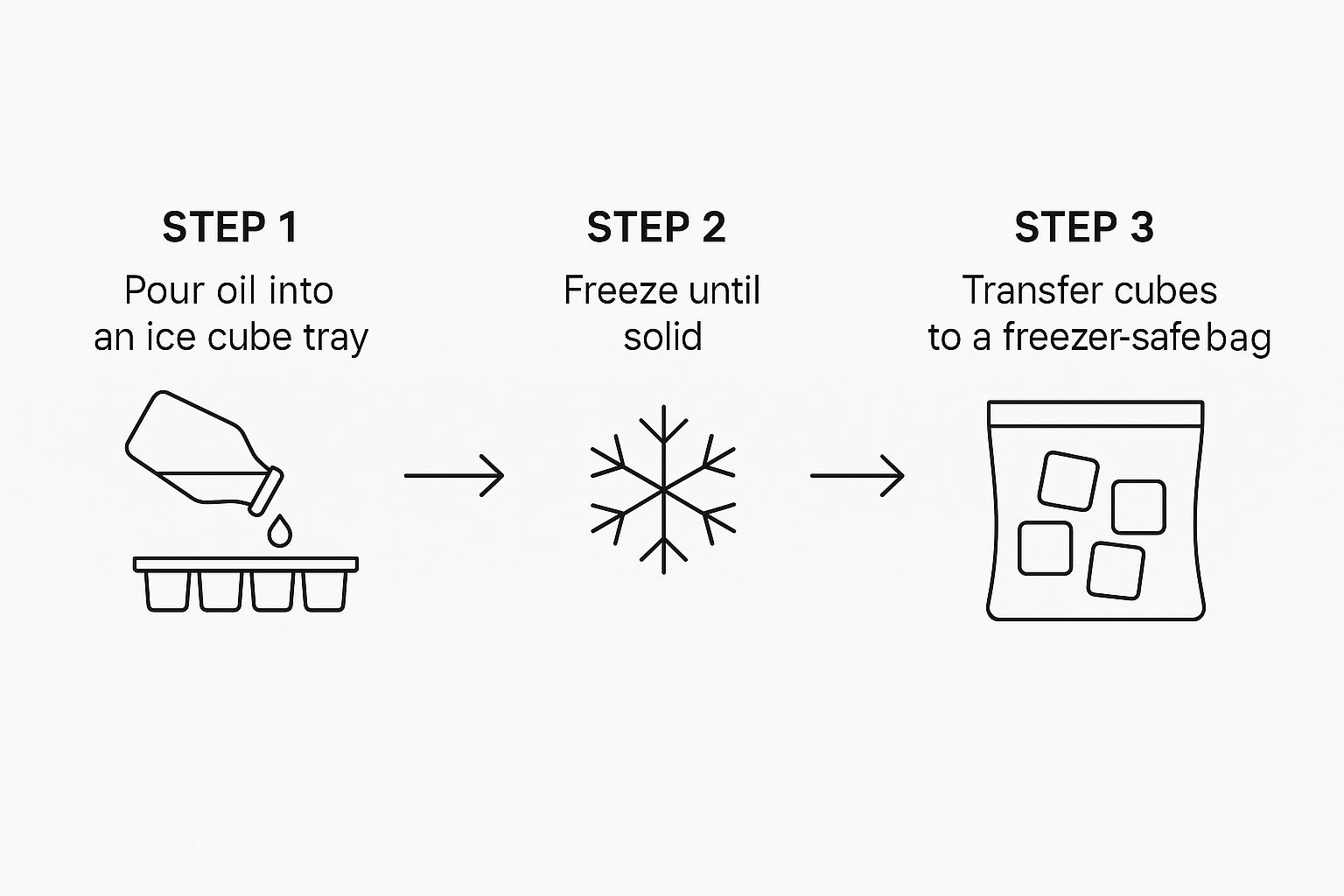
This method is my personal favorite for creating perfectly portioned, ready-to-use olive oil cubes. It is a fantastic way to eliminate waste and makes grabbing a bit of oil for cooking completely effortless.
The Genius of Portioning and Storing
The true brilliance of the ice cube tray method is the built-in portion control. Most standard ice cube trays hold about one tablespoon of liquid per compartment. This is an incredibly convenient amount for sautéing garlic, starting a pan sauce, or whisking up a quick vinaigrette. By freezing your oil in these small, manageable portions, you only ever thaw exactly what you need.
Allow the oil a few hours to freeze solid. Once the cubes are firm, pop them out of the tray and immediately transfer them into a freezer-safe, airtight bag or container. This step is non-negotiable. It creates a vital barrier, protecting the delicate oil from absorbing stray freezer odors (nobody wants their oil tasting of last week's fish sticks). It also prevents freezer burn, which can severely degrade the flavor. Be sure to squeeze as much air out of the bag as possible before sealing it tightly.
Think of transferring the cubes to a sealed bag as your insurance policy. It's the one step that guarantees the fresh, peppery notes you love will still be there when you're ready to cook.
If you're freezing oil for specific dishes, it helps to know how to scale your recipes so your pre-portioned cubes align perfectly with your cooking plans. And for the true food nerds among us, understanding what is olive oil made of will give you a new appreciation for the delicate compounds you’re working so hard to preserve.
How to Thaw Your Olive Oil Without Destroying It
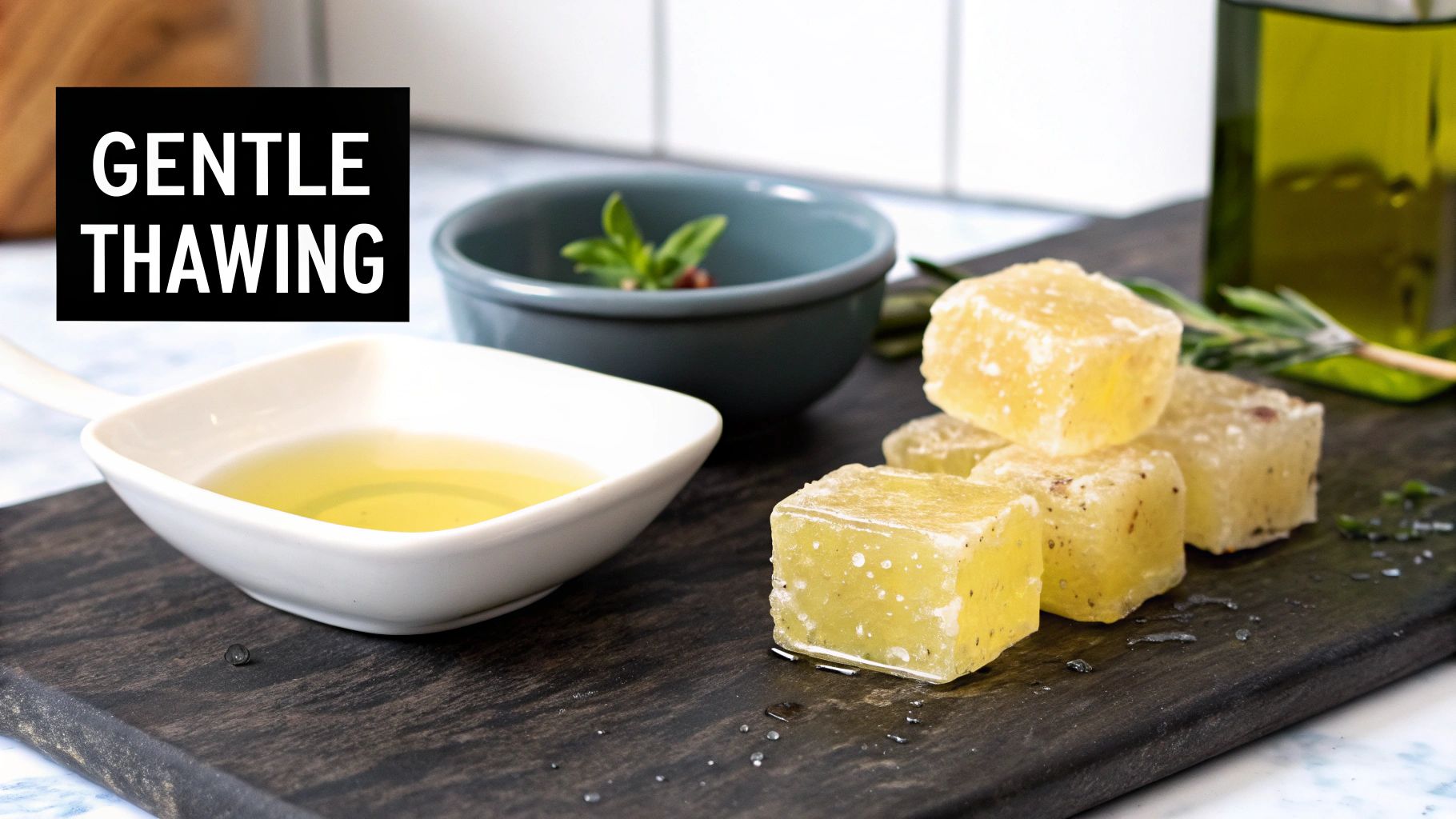
You’ve carefully frozen your olive oil, locking in its peak freshness. Now comes the equally important finale: thawing it correctly. The biggest mistake you can make is to rush this process. Whatever you do, keep that frozen oil far away from the microwave. High heat is the sworn enemy of good olive oil, and it will swiftly destroy the delicate flavors and healthy antioxidants you worked to save.
Patience is your greatest ally here. The goal is to bring the oil back to its liquid state gently and gradually, which is the surest way to protect its structure and taste. I've found two simple, foolproof methods that work every time.
The Best Ways to Thaw Olive Oil
Your choice of method simply depends on how soon you need the oil.
- On the Counter: This is my preferred method for a quick thaw. Just place your frozen oil cubes or container on a small plate and leave them on the counter. A single cube is usually ready in about 20-30 minutes, while a larger container might take a few hours.
- In the Refrigerator: If you’re not in a hurry, moving the container from the freezer to the fridge is the most gentle method of all. It’s a slow, steady thaw that can take several hours or even overnight.
You will notice the oil looks cloudy and thick as it thaws before it finally turns clear again. Do not be alarmed—this is completely normal. The different fats in olive oil melt at slightly different rates, which causes that temporary cloudy appearance. This is a natural part of the process and has zero impact on the quality.
Treat your thawing olive oil like a fine wine. A slow, gentle process is your guarantee that its complex flavors and aromas will arrive intact, ready for your kitchen.
Once it's fully liquid again, it’s always wise to give it a quick sniff to confirm it smells fresh. If you're ever uncertain, our guide on how to tell if olive oil is rancid can help you spot any problems right away.
The Unspoken Truths About Freezing Olive Oil
While freezing is a brilliant strategy for preserving olive oil, it is not a perfect solution for every person or situation. Before you clear a space next to the frozen peas, it's worth considering the practical trade-offs. This isn't the standard storage method for a reason, and understanding why will help you decide if it truly fits your life.
The Hidden Costs: Energy and Expense
On a commercial scale, the economics simply don't work. A fascinating case study from Italy revealed that the energy required for frozen olive oil storage was a staggering 2–3 times higher than traditional methods.
To put that into perspective, freezing just 1,000 kg of oil for one year consumed about 1,560 kWh of electricity. Compare that to the less than 300 kWh needed for regular ambient storage. It's a massive difference and a key reason you don't see producers adopting this on a large scale.
Practical Hurdles for the Home Kitchen
For most of us, the biggest roadblock is simply space. Our freezers are often packed to the brim, and dedicating a significant portion of that prime real estate to olive oil just isn't realistic.
Then there is the non-negotiable container issue. You absolutely must use a genuinely airtight container. Freezers are notorious for strong odors—think garlic, fish, or that forgotten onion—and olive oil will soak them up like a sponge. An improperly sealed container can lead to a disastrous flavor transfer, ruining the very oil you worked so hard to protect.
You'll also notice the oil gets cloudy and solidifies as it freezes. Don't panic, this is normal! If you're curious about why this happens, our guide explains why is my olive oil cloudy and what it means for quality.
Ultimately, freezing olive oil is a commitment. It requires the right equipment and a realistic assessment of your freezer space to ensure the effort pays off in beautifully preserved flavor.
Your Questions About Freezing Olive Oil, Answered
When people discover you can freeze olive oil, their first reaction is usually surprise, followed quickly by a flurry of questions. It's not exactly common kitchen knowledge, so let's tackle the most frequent inquiries.
Does Freezing Harm Olive Oil’s Health Benefits?
This is a great question, and the answer is a resounding no—in fact, freezing is the single best way to protect them. The very things that make extra virgin olive oil a nutritional superstar, like its delicate polyphenols and antioxidants, are also quite fragile. Heat, light, and air are their sworn enemies, causing them to degrade over time.
Freezing effectively hits the pause button on all that decay. It stops the chemical reactions that would normally chip away at the oil's nutritional powerhouse, locking in the goodness. Think of it as putting those health benefits into suspended animation until you're ready to use them.
Can You Refreeze Thawed Olive Oil?
I would strongly advise against it. Every time the oil thaws and refreezes, you introduce new opportunities for it to degrade. Temperature fluctuations can create condensation (adding water, which is bad for oil) and re-expose it to oxygen.
This is precisely why freezing in small, single-use portions is the only way to go.
By freezing olive oil in an ice cube tray, you create perfectly portioned amounts. You can simply pop one out and thaw exactly what your recipe calls for, which eliminates waste and removes any temptation to refreeze.
Which Type of Olive Oil Is Best for Freezing?
You can technically freeze any olive oil, but you’ll get the biggest return on your effort by freezing high-quality, unfiltered extra virgin olive oils. These are the premium oils you buy for their incredible, complex flavors and high antioxidant content—and those are the very qualities that fade the fastest.
Think of freezing as an insurance policy for that beautiful bottle of EVOO you splurged on. It’s the best way to ensure the unique character you paid for is still there, from the first drop to the very last.
At Learn Olive Oil, we're dedicated to helping you get the most from every bottle. Discover expert insights on choosing, tasting, and using the world's finest olive oils at https://learnoliveoil.com.

 Learn Olive Oil
Leave a comment