It's a question whispered in kitchens everywhere. That beautiful bottle of extra virgin olive oil you paid good money for… does EVOO go bad?
Yes, Your Olive Oil Does Go Bad
Let's settle this once and for all. That gorgeous bottle of EVOO in your pantry has a definite—and surprisingly short—shelf life. Unlike a fine wine that slumbers in a cellar, improving with age, olive oil is much more like fresh-squeezed fruit juice. The moment it's pressed from the olive, a clock starts ticking, beginning a slow, invisible, and irreversible decline.
So, does EVOO go bad? The answer is a firm and resounding yes.
It’s not spoilage in the way milk curdles or bread grows mold. No, this is a far more insidious process, a quiet chemical breakdown known as rancidity. This invisible decay slowly, methodically robs the oil of its fresh, peppery flavor and, just as importantly, dismantles the very health benefits you bought it for in the first place.
This decline is accelerated by three saboteurs that are almost certainly lurking in your kitchen right now. I call them the "three enemies" of fresh olive oil.
To keep your oil at its peak, you must know what you're up against. Here’s a breakdown of the three culprits that will destroy a great bottle of EVOO without you even realizing it.
The Three Enemies of Fresh Olive Oil
| Enemy | How It Damages Your Oil | Your Simple Defense |
|---|---|---|
| Light | Direct sunlight or even bright indoor lights trigger a process called photo-oxidation, which rapidly breaks down the oil's quality. | Store it in a dark cupboard or pantry, away from windows. Always choose oil sold in dark glass or opaque tins. |
| Heat | Warmth acts like an accelerator for the chemical reactions that cause rancidity. Storing it near the stove is one of the worst things you can do. | Find a cool, stable spot in your pantry. The ideal temperature is around 57°F (14°C), but consistent room temperature is fine. |
| Air (Oxygen) | Every time you open the bottle, oxygen gets in and starts oxidizing the oil, causing it to go stale and lose its vibrant character. | Keep the cap screwed on tight. Buy a bottle size you can use within a month or two of opening. |
By understanding and defending against these three factors, you're already halfway to preserving your oil's peak flavor and health benefits.
The infographic below really drives home how these elements work together to turn your liquid gold into a flat, unappealing fat.
It’s a constant battle against these environmental forces, and knowing your enemy is the first step. This same principle of proper storage applies to many other pantry items. People often ask, can wine go bad? While the chemistry is different, the core idea is the same: storage matters.
To get a better handle on the timeline for your oil, you can dive deeper into the shelf life of unopened olive oil and learn what to look for on the bottle.
The Secret Life and Slow Death of Olive Oil

Think of a freshly pressed bottle of extra virgin olive oil as a living thing, brimming with vibrant compounds called polyphenols. These powerful antioxidants are the source of a great EVOO's peppery kick and the reason it's so incredibly good for you.
They also act as the oil's personal army of bodyguards, fiercely defending its fresh flavor and nutritional value from attack. Every single time your oil is exposed to heat, light, or air, these polyphenol guards leap into action, sacrificing themselves to protect the integrity of the oil.
It’s a valiant effort, but their numbers are finite. Over time, as more and more of these defenders are lost in battle, the oil becomes vulnerable.
The Inevitable Siege of Oxidation
This slow breakdown leaves the oil exposed to its mortal enemy: oxidation. This is the very chemical process that makes things go rancid, and it's why even the finest EVOO eventually goes bad. It's the same relentless natural force that turns a sliced apple brown or causes iron to rust.
Once the polyphenol guard is gone, oxygen molecules launch an all-out assault on the delicate fat molecules in the oil. This attack shatters them, creating new compounds that give off those tell-tale, repulsive smells of stale nuts, wax crayons, or old putty.
The real tragedy here isn't just that the oil tastes bad. It's that the very health-promoting compounds you bought the oil for have been completely destroyed.
This process is like a slow-motion siege. A top-tier olive oil, packed with polyphenols, begins with a massive army of guards and can fend off the attack for a long time. A low-quality oil, on the other hand, starts with just a handful of defenders and quickly surrenders. To understand what makes one oil more resilient than another, it helps to learn about what determines an olive oil's polyphenol content.
Ultimately, the slow death of olive oil is more than just spoilage—it's the loss of its soul. A rancid oil is no longer a health-giving food; it's just a flavorless, unhealthy fat.
Why Your Kitchen Counter Is a Death Trap for EVOO
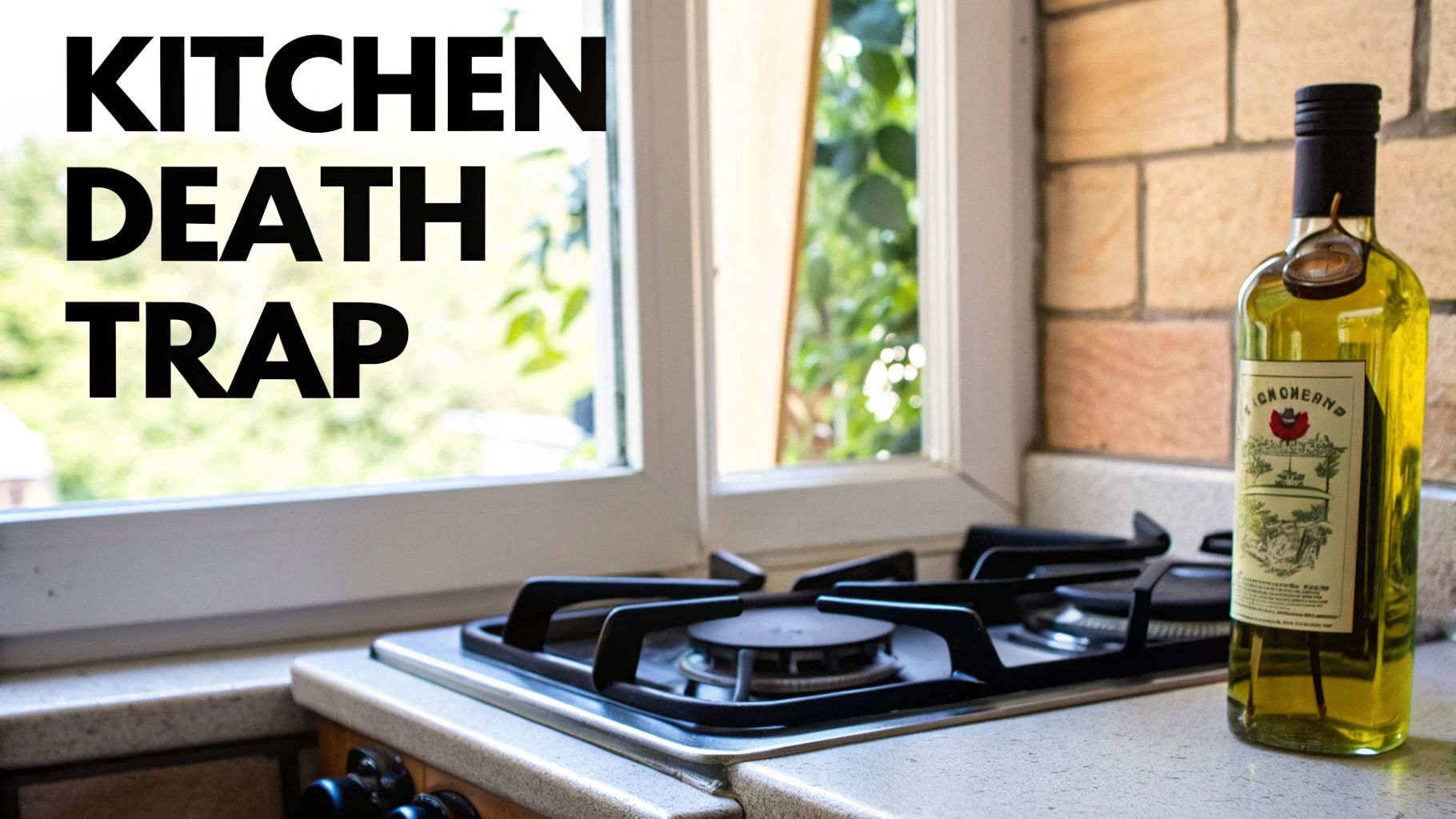
It seems like the perfect spot, doesn't it? Keeping that beautiful bottle of extra virgin olive oil right next to the stove or on a sunny windowsill. It’s convenient, always within arm's reach for a quick pour. But that seemingly innocent habit is secretly murdering your expensive EVOO.
Every time you fire up the stovetop, the heat it radiates is slowly cooking the oil right inside the bottle. That warm, sun-drenched patch of countertop? It’s bathing your oil in the very energy that speeds up its decay, turning a vibrant ingredient into a disappointing one.
A Few Degrees Makes All the Difference
Of all the enemies olive oil has, heat is the most relentless and destructive. Think of it as a catalyst, putting the chemical reactions that cause rancidity into overdrive. You might not feel a huge temperature difference, but your oil certainly does.
Here's a reality check: a predictive model found that a specific EVOO could last over 36 months when stored at a cool 10°C (50°F). But when the exact same oil was stored at just 16°C (61°F)—only six degrees warmer—it was predicted to go bad in just 21 months. That's a massive drop. This finding, from a detailed shelf life analysis from the Olive Oil Commission of California, shows how even a small change can slash your oil's lifespan by nearly half.
The vague advice to "store in a cool, dark place" isn't just a friendly suggestion. It's an ironclad rule for anyone who wants to protect their investment and enjoy the flavor they paid for.
The same principles apply to many other fine products. Learning about proper storage conditions for protecting liquid flavors is just as critical for spirits and vinegars as it is for olive oil.
This isn't just about avoiding bad flavor; it's about taking control. The single biggest thing you can do to preserve your oil's freshness is to move that bottle from the counter to a cool, dark pantry. Combine that simple move with the right container, and you’ll make all the difference. For more on that, check out our guide on the best olive oil storage containers.
How to Spot Rancid Oil Before It Ruins Your Dinner
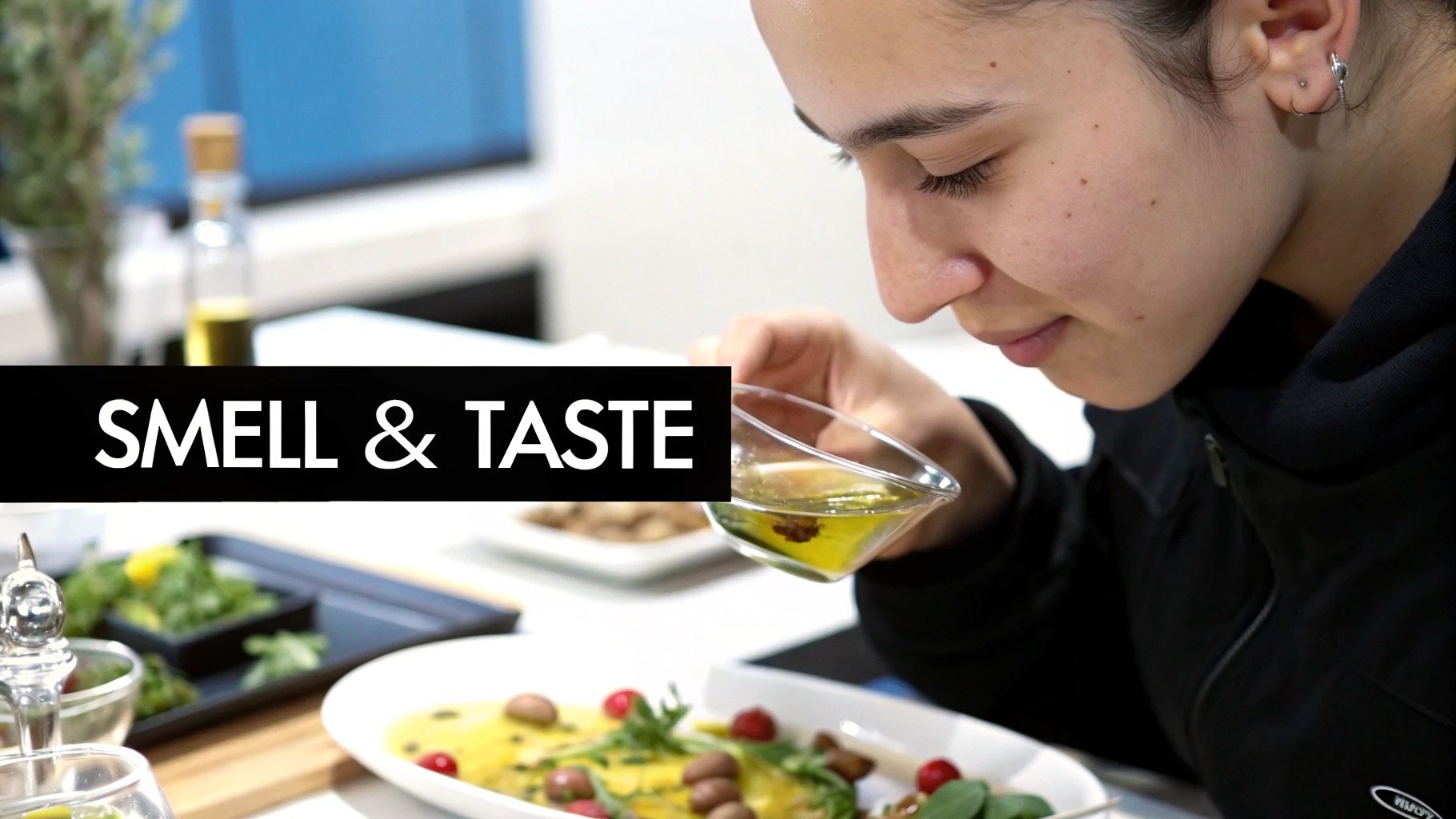
You don’t need a lab coat or a fancy chemistry set to figure out if your olive oil has gone bad. The best tools for the job are already at your disposal: your own nose and palate. And forget what you’ve heard about color—a beautiful green hue doesn't automatically mean the oil is fresh.
Your first line of defense is a simple sniff test. Pour a little bit of oil into a glass, cup it in your hands to warm it slightly, and take a good, long sniff. A fresh, high-quality EVOO should smell vibrant and alive. Think fresh-cut grass, green tomato leaf, or even artichoke.
If the oil has turned, your nose will tell you right away. The smell is distinctive and, frankly, pretty off-putting.
The Telltale Signs of Rancidity
Rancid oil just doesn't smell like food anymore. Instead, you get these stale, almost chemical-like odors that you’ll probably recognize from other things around the house. What you're smelling is literally the decay of the oil's fats.
Keep an eye (and a nose) out for these specific warning signs:
- Waxy or Greasy Smells: This is the big one. It often smells like a box of crayons, old putty, or maybe a forgotten tube of ChapStick.
- Stale Nut Odors: Sometimes it will remind you of old peanuts or walnuts that have been sitting in the back of the pantry for way too long.
- A Complete Lack of Aroma: If you smell it and get… nothing? Just a faint, generic oily smell? The oil has lost all its vibrant character and is probably old and flat.
If the oil passes the sniff test, a quick taste is the final confirmation. You don't need to be a professional taster; just a small sip will do. A rancid oil feels greasy in your mouth and has a flat, stale flavor that can leave a pretty unpleasant aftertaste.
A great olive oil should leave your mouth feeling clean, not oily. If the taste lingers in a greasy, unpleasant way, that bottle’s best days are long behind it.
Learning to spot rancidity is a skill anyone can pick up. For a more detailed walkthrough, you can learn how to test olive oil at home and really build your confidence. Trusting your senses is the most reliable way to make sure you never ruin a perfectly good meal with bad oil again.
The Cardinal Rules for Storing Olive Oil
Alright, so we know what causes extra virgin olive oil to go bad. The good news is, you can easily build a solid defense to protect it. Keeping that vibrant, peppery flavor intact is actually pretty straightforward once you know the rules.
Think of it this way: your mission starts the second you get that bottle home. You need to guard it against its three biggest enemies: heat, light, and air. This means the type of bottle it's in and where you decide to keep it in your kitchen are absolutely critical.
Keep It Cool and In the Dark
It helps to remember that olive oil is essentially a fresh fruit juice. You'd never leave a glass of freshly squeezed orange juice sitting out on a sunny countertop, right? The same principle applies here. The perfect spot for your oil is a cool, dark pantry or cupboard, well away from the stove and out of direct sunlight.
Here's your simple checklist for getting it right:
- Choose the Right Armor: Always, always buy EVOO that comes in dark glass bottles or opaque tins. These containers are like a shield, blocking the harmful light that speeds up spoilage.
- Seal It Tight: Get into the habit of screwing the cap back on tightly after every single use. Oxygen is just waiting for an invitation to get in and start breaking down the oil.
- Mind the Temperature: A stable, cool environment is key. Storing your oil next to the stove, where it's constantly getting blasted with heat, is one of the quickest ways to ruin a beautiful product.
Debunking the Refrigeration Myth
You’ve probably heard that putting olive oil in the fridge will ruin it. It's a common myth, usually because people see the oil get cloudy or even solidify and assume it's gone bad. But don't worry—this is just a harmless physical reaction.
The cloudiness is simply the natural waxes and fats in the oil congealing in the cold. It's not a sign of spoilage at all. Just let the bottle sit at room temperature for a bit, and it will return to its normal liquid clarity with no harm done to the flavor.
In reality, cooler temperatures are great for preserving an opened bottle of EVOO. Research from UC Davis even shows that freezing olive oil is an excellent way to maintain its quality, which proves that the solidification you see in the fridge isn't a bad thing. For everyday use, just aim to finish an opened bottle within 3 to 6 months for the best taste. You can read more about these olive oil facts from UC Davis to dig into the science.
By following these simple rules, you're doing more than just storing a condiment; you're preserving the very essence of what makes a great olive oil special. For even more detailed tips, check out our guide on how to store olive oil after opening.
Your Questions About EVOO Freshness Answered
Let's tackle some of the most common questions that pop up about keeping olive oil fresh. You know the basics of what makes an oil go bad; now it’s time to get practical. Think of this as your go-to guide for making sure you're always using the best stuff in your kitchen.
These are the concerns we hear all the time, paired with the straight-up answers you need to protect that beautiful bottle of EVOO and make every dish shine.
How Reliable Is the Best-By Date?
Honestly, treat the "best-by" date more like a rough guideline than a strict rule. It’s the manufacturer's best guess for how long the oil will last under perfect storage conditions, usually set for 18-24 months after it's bottled. But let's be real—that bottle's journey to your pantry probably wasn't perfect.
A much better indicator of freshness is the harvest date. Always look for it. An oil from a recent harvest is your best bet for vibrant flavor. As a rule of thumb, try to use your oil within 12 to 18 months of when the olives were picked.
Is It Safe to Cook with Old Olive Oil?
Taking a swig of rancid oil won't send you to the hospital, but it’s definitely not good for you. The oxidation process obliterates the healthy antioxidants that make EVOO so special in the first place. Worse, it can introduce free radicals you don't want in your body.
The more immediate problem? It will make your food taste terrible. If your oil has a funky smell—think crayons, old walnuts, or even Play-Doh—it's going to ruin your meal. Don't let a bottle of bad oil sabotage a dish you’ve worked hard on. Just toss it.
Does Olive Type or Brand Matter?
It makes a huge difference. Some olive varieties, like Coratina or Picual, are naturally loaded with polyphenols. These antioxidants are like built-in bodyguards for the oil, giving it a much longer and more stable shelf life.
Similarly, a good producer is obsessed with quality. They take extra care during harvesting and milling to keep oxygen out, giving their oils a massive head start on freshness. This is a world away from a mass-produced oil that's been sitting around. Heat plays a huge role here, too; a 2021 study drove home how much faster oils degrade when stored at higher temperatures. You can learn more about how temperature impacts EVOO quality over time.
Ready to put your newfound knowledge to the test? At Learn Olive Oil, we provide expert insights to help you choose, taste, and use the world's finest olive oils. Start your journey with us and discover what truly great EVOO tastes like. Discover the World of Premium Olive Oil

 Learn Olive Oil
Leave a comment