Let's shatter a stubborn myth right now: yes, olive oil absolutely goes bad.
It’s a romantic notion to think of it like a fine wine, gathering complexity in a cellar. But that’s dead wrong. A far better, and truer, analogy is to think of it as fresh-squeezed fruit juice. From the very moment it’s pressed from the olive, its incredible flavor and potent health benefits begin a slow, steady march toward mediocrity.
The Simple Answer to a Deceptively Complex Question
That beautiful bottle of golden-green liquid sitting in your pantry is very much alive. It’s a natural product, a perishable food, and just like any other, it has a finite shelf life.
Much of the confusion stems from the "best-by" date you see printed on the label. Please, think of this less as a hard-and-fast expiration date and more as the producer's best guess for when the oil will be at its peak quality—and that’s assuming it's been stored under perfect conditions.
The real culprits waging a silent war on your olive oil are three everyday enemies hiding in plain sight in your kitchen: light, heat, and air. These three are relentless, working tirelessly to break down the very compounds that make olive oil a culinary treasure.
Why Quality is Your Best Defense Against Time
Not all olive oils are created equal, and this truth has a huge impact on how long they last. Higher-quality oils, especially those packed with natural antioxidants called polyphenols, have a powerful, built-in defense system against decay. On the other hand, lower-quality, refined oils often have these natural protectors stripped away during industrial processing.
This handy guide gives you a good idea of the typical shelf life you can expect from different types of olive oil.
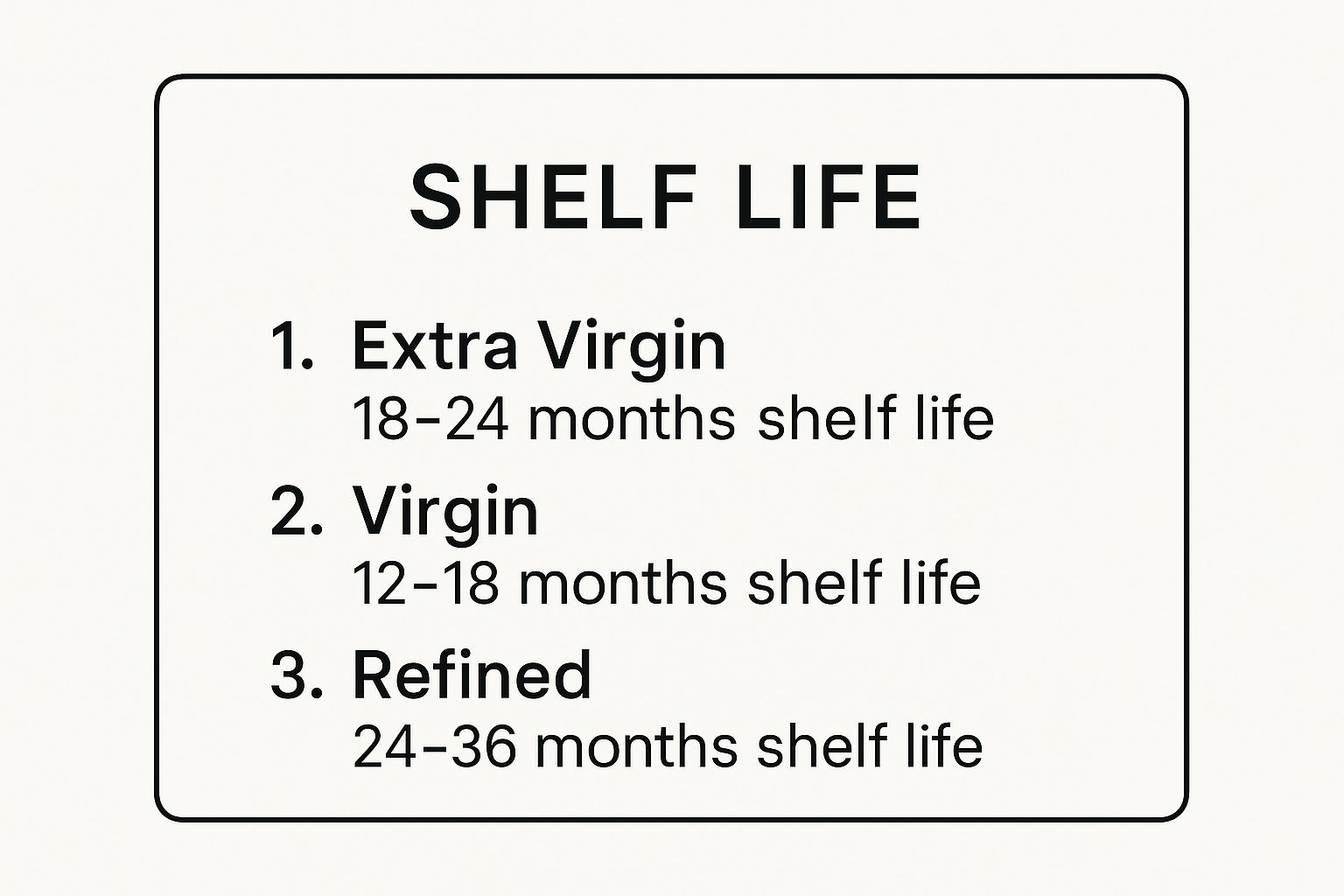
As you can see, the robust, antioxidant-rich nature of Extra Virgin Olive Oil gives it a significant head start. More processed oils might seem to last longer on paper due to industrial refining, but they begin their life from a much lower quality point.
The fact that olive oil expires isn't a flaw; it's a feature of its natural, unadulterated state. Understanding this helps you protect your oil, so every drop you pour is as delicious and healthy as the day it was bottled.
Of course, how you store it at home is just as critical as the quality of the oil you buy. The effect of temperature alone is shocking. Research has shown that olive oil stored at a cool 10°C (50°F) can stay fresh for over 36 months.
But raise that to a more typical pantry temperature of 16°C (61°F), and its lifespan gets slashed to around 21 months. This reveals a powerful secret: small, seemingly insignificant changes in your kitchen can dramatically accelerate the aging process.
To keep things simple, here’s a quick-glance table to help you protect your olive oil from its primary enemies.
Your Olive Oil Defense Plan
| The Enemy | How It Hurts Your Oil | Your Best Defense |
|---|---|---|
| Light | Triggers oxidation, which creates foul, off-flavors and destroys nutrients. | Store it in a dark cabinet or pantry, far away from any windows. |
| Heat | Speeds up the breakdown of fats and antioxidants, leading directly to rancidity. | Keep it away from the stove, oven, and other heat-generating appliances. |
| Air (Oxygen) | Oxidizes the oil every time you open the bottle, causing it to go stale. | Tightly seal the cap after each use and use the oil within a few months of opening. |
By keeping these three factors in mind, you're putting up the best possible defense to keep your oil fresh and flavorful for as long as possible.
Decoding the Dates on Your Olive Oil Bottle
That "best-by" date staring back at you from the bottle can feel like a final, uncrossable deadline. But when it comes to olive oil, think of it less as an expiration date and more like a gentle suggestion. It's the final chapter of a story that started long before that oil ever saw the inside of a bottle.
The truth is, that date can be an unreliable narrator. It's the manufacturer's best guess for when the oil might start losing its peak flavor, but it tells you nothing about the crucial journey it took to get to your shelf.
The Most Important Date You’re Probably Ignoring
Forget the "best-by" date for a second. The single most crucial piece of information on that label is the harvest date. This is the oil's true birthday. It marks the moment the olives were picked from the tree, and the countdown on freshness and flavor officially began.
An oil harvested in October 2023 is a world away from one harvested in October 2022, even if they somehow carry the same "best-by" date.
Unfortunately, not every producer includes this vital detail. When you see a harvest date, it's often a sign of a producer who takes immense pride in the freshness and quality of their product. It is a signal of transparency you should seek out.
Factors That Shape Your Oil's Destiny
Long before a "best-by" date is ever stamped on the bottle, several key factors have already determined its potential for a long, flavorful life or a quick slide into rancidity.
- Olive Varietal: Just like grapes in wine, different types of olives possess unique characteristics. Some, like the Picual olive from Spain, are naturally bursting with antioxidants, which act as powerful preservatives and give the oil a much more stable shelf life.
- Milling Speed: The clock starts ticking the second an olive leaves the branch. The best producers rush their olives from the grove to the mill within hours to halt oxidation in its tracks and lock in those fresh, vibrant flavors.
- Filtration: Unfiltered oils might look appealingly rustic, but those tiny bits of leftover olive sediment can actually accelerate spoilage. A properly filtered oil, with those particles removed, will almost always stay fresh longer.
The bottle itself is the final piece of the puzzle. Dark glass or an opaque tin isn’t just a stylistic choice; it’s a suit of armor, protecting the precious oil from its greatest enemy—light.
Ultimately, that "best-by" date is just one clue in a much larger story. If you're curious about the regulations behind these dates, you can find more information in this a complete guide to labelling for food products. By learning to look beyond that single date, you become a much smarter shopper and a true guardian of quality.
The Science of How Good Oil Goes Bad
So, what’s actually happening inside that bottle as your once-vibrant olive oil starts to lose its magic? It’s not a mystery, but a simple, slow-motion chemical reaction called oxidation. This is the exact same natural process that rusts a nail or turns a sliced apple brown on your counter.
Think of oxygen, light, and heat as the three relentless enemies of olive oil. They are constantly attacking and breaking down the very things that make extra virgin olive oil so special: its healthy fats and its powerful antioxidants, known as polyphenols.
These polyphenols are the secret weapon in a high-quality oil. I like to think of them as a tiny, dedicated army standing guard, fiercely defending the oil's fresh flavor, vibrant aroma, and nutritional goodness.
The Battle for Freshness
A truly great, fresh extra virgin olive oil begins its life with a strong polyphenol army. This natural defense system is precisely why a high-quality EVOO boasts a longer, more stable shelf life. You can learn more about what these powerful compounds do by exploring the fundamental components of olive oil.
But here’s the crucial part: every time you make a poor storage choice, you’re weakening those defenses.
Leaving the bottle uncapped? You’ve just invited a whole battalion of oxygen to the attack. Placing it on a sunny windowsill? You’re exposing it to the damaging rays of light. Storing it next to the stove? You’re bombarding it with destructive heat.
Each of these mistakes forces the polyphenol army to fight harder, sacrificing its soldiers at a much faster rate than nature intended.
Once this army is depleted, the oil is left defenseless. The enemies—oxygen, light, and heat—win the battle, and the oil’s healthy fats begin to break down. This is the moment your oil goes rancid.
This breakdown isn't just about taste; it’s a profound chemical change. Scientific studies show that as oxidation takes hold, the oil’s flavor, aroma, and overall quality are all degraded. Research confirms that antioxidant compounds like polyphenols are critical for slowing this process, but bad storage habits can trigger off-flavors in just a few short months.
The Three Villains of Olive Oil Spoilage
To win this fight for freshness, you need to know exactly who you're up against. Here are the three main culprits that turn good oil bad:
- Oxygen (The Invisible Attacker): Every single time you open the bottle, oxygen rushes in and gets to work oxidizing the oil. Always seal your bottle tightly and try to use it within a few months of opening. It’s a race against time.
- Light (The Silent Saboteur): UV light acts as a powerful catalyst for oxidation. This is why you’ll always see the best oils packaged in dark glass bottles or opaque tins—it’s like armor against light’s damaging rays.
- Heat (The Speed Demon): Heat is the accelerator pedal for the oxidation process. It rapidly speeds up the decay of your oil, turning a slow march into a desperate sprint. A cool, dark pantry is its best friend.
Trusting Your Senses: The Ultimate Test for Spoilage
Forget the dates stamped on the label for a moment. When it comes to determining if your olive oil is still good, the most reliable tools you have are your own nose and palate. The dates are a guideline, but your senses deliver the final, undeniable verdict.
You don’t need years of training to become your own olive oil expert—all it takes is a moment of focused attention. The simple "sniff and sip" test is precisely what professional tasters use, and you can master it in your own kitchen in minutes. This is how you take back control from confusing labels and truly understand the oil you’re cooking with.
The first step is easy: pour a small amount of oil into a glass. Cup the glass with one hand to gently warm the oil, which helps release its aromatic compounds. Cover the top with your other hand, swirl it for a moment, then bring it to your nose and take a deep, deliberate sniff.
What Fresh Olive Oil Smells Like
A fresh, high-quality olive oil should smell vibrant and alive. Think of pleasant, green aromas that evoke the outdoors.
You might pick up notes of:
- Freshly cut grass
- Green tomato leaf
- Artichoke or green apple
- A hint of peppery spice
These are the smells of a healthy oil brimming with antioxidants. It’s the scent of quality, and once you recognize it, you’ll never forget it. This is the first clear signal that your oil is ready to make your food shine.
The Unmistakable Signs of Rancidity
Now, for the other side of the coin. Rancid oil has a distinctly unpleasant and stale aroma that's impossible to miss once you know what you're looking for. It doesn't smell like fresh fruit; it smells like decay.
If your oil has gone bad, it will smell like:
- Waxy crayons or old lipstick
- Stale walnuts or old peanuts
- Window putty or Elmer's glue
This is the smell of oxidation. The healthy fats have broken down, and the oil has lost both its flavor and its health benefits. If you smell any of these, the oil is well past its prime. Your nose is the most important tool here, and for even more detail, you can check out our guide on how to tell if olive oil is rancid.
Fresh vs. Rancid: A Sensory Showdown
When you're trying to distinguish between a vibrant, fresh oil and one that's gone bad, your nose and tongue are the ultimate judges. The differences are stark once you know what to look for. This table breaks down the key sensory cues.
| Sensory Cue | Signs of Freshness (What You Want) | Signs of Rancidity (What to Avoid) |
|---|---|---|
| Smell | Bright, green, and fruity. Notes of fresh-cut grass, herbs, tomato leaf, or apple. | Dull, stale, and off-putting. Smells like old nuts, crayons, putty, or wax. |
| Taste | Clean and vibrant. May have a pleasant bitterness or a peppery kick in the throat. | Greasy, flat, and flavorless. Tastes like old cooking oil or leaves a waxy feeling. |
Ultimately, a small taste offers the final confirmation. A fresh oil will taste clean, while a rancid one will be greasy and stale. By arming yourself with this simple sensory test, you ensure that only the best-tasting and healthiest oil makes it into your dishes, protecting your cooking from the flavor-killing effects of bad oil.
The Secrets to Proper Olive Oil Storage
So you’ve brought home a fantastic bottle of olive oil. Great! Now, your job is to become its guardian. Proper storage isn’t just a casual recommendation; it's the most critical thing you can do to preserve the flavor and health benefits you paid for.
It all boils down to three simple, non-negotiable rules: keep it dark, keep it cool, and keep it sealed.
So many of us accidentally sabotage our own olive oil. Leaving it on the counter next to the stove or on a sunny windowsill might seem convenient, but you're actually creating a torture chamber for your oil. You're exposing it to its two greatest enemies: heat and light, and rapidly speeding its decline into rancidity.
Finding the Perfect Hiding Spot
The ideal home for your olive oil is a cool, dark place, like a pantry or a kitchen cabinet—as long as it’s not the one directly over your oven. You're looking for a stable, cool temperature. Think of it as a wine cellar for your liquid gold. This simple step can add months of fresh, vibrant life to your bottle.
This is also why the container it comes in is so important. Always try to buy olive oil sold in dark glass bottles or opaque metal tins. This packaging is like a suit of armor, shielding the oil from damaging light long before it ever gets to your kitchen.
To really dive deep into protecting your oil, check out our guide on proper olive oil storage techniques.
What about the fridge? It's a common question, but the answer is almost always no. While it seems logical, the cold temperature makes the oil solidify and can create condensation inside the bottle. Moisture is an enemy of freshness and can mute the oil's delicate aromas.
Buy What You Need and Use It With Vigor
Finally, one of the best "storage" tips is to buy olive oil in a size you'll actually use. It’s tempting to grab that giant tin to save a few dollars, but if it takes you a year to get through it, you're just giving oxygen more time to work its damaging magic.
A good rule of thumb is to only buy a bottle you can finish within a couple of months after you open it. Every time you twist that cap, you let more air in, and the clock on freshness starts ticking faster.
Taking care of your oil isn't just about good taste; it's also one of many smart ways to save money on groceries by preventing waste. After all, rancid oil is wasted oil.
Why Olive Oil Quality Matters Now More Than Ever
Taking care of your olive oil is more than just a kitchen habit. It's a small act that ties you directly into a much larger, global story. The simple choices you make in your pantry have an echo in the sun-drenched olive groves of Spain and Italy, where the future of this liquid gold is facing serious challenges.
Realizing that olive oil has a shelf life isn't just about avoiding a bad taste in your salad dressing—it's about understanding economics, agriculture, and sustainability. Climate change is throwing a wrench into farming cycles that have existed for centuries, resulting in smaller, less predictable harvests and, you guessed it, higher prices. This puts immense pressure on producers and makes every single drop of oil that much more precious.
A Global Squeeze on Supply
Our collective love for high-quality olive oil keeps growing, but the industry is navigating some of its toughest years yet. Europe's market, worth over USD 9.7 billion, is the epicenter of global production. Consider this: Spain alone is responsible for nearly half of the world's entire olive supply. But in recent years, crippling droughts and punishing heatwaves have sent their production numbers into a nosedive.
This isn't just a local problem. That scarcity creates a ripple effect that touches all of us through higher prices and tighter availability. As these pressures build, making sure every bottle lasts as long as it should isn't just smart—it's essential.
This shifts your role from just being a shopper to being a savvy, informed consumer. When you protect the quality of the oil you've bought, you're not just saving a few dollars. You're playing a small but significant part in building a more resilient future for this incredible industry.
By learning how to store your oil correctly, you’re doing more than just protecting an investment. You're honoring the incredible amount of work that went into producing that bottle, and you're helping make sure a valuable resource doesn't end up down the drain. One bottle at a time, you're supporting a more sustainable chain that stretches all the way from the olive grove to your kitchen counter.
Common Questions About Olive Oil Expiration
Even after you get the hang of what makes olive oil go bad, a few common questions always pop up. Let’s tackle them head-on so you can use your oil with total confidence.
Can I Get Sick From Using Expired Olive Oil?
This is a big one, but you can relax. It's extremely unlikely you'll get sick.
When meat spoils, you're dealing with harmful bacteria. Olive oil "spoiling" is a completely different process called rancidity, which is simply the healthy fats breaking down. While it will taste awful and will have lost all its amazing health benefits, it won't make you ill.
The real danger is to your meal, not your health. A splash of rancid oil can completely ruin a dish you've worked hard to create.
Is It Okay to Cook With Slightly Old Olive Oil?
Absolutely, as long as it still smells and tastes good. If there are no off-putting aromas, you're clear to use it for cooking.
But if it's already showing the first signs of rancidity—that faint crayon or stale nut smell—heat will only make it worse. Those unpleasant flavors will intensify and transfer directly into your food.
A good rule of thumb: save your freshest, most flavorful olive oil for finishing dishes where its taste can really shine, like drizzling over pasta or a salad. Use your good—but maybe slightly older—bottle for everyday cooking.
Does Light Olive Oil Last Longer Than Extra Virgin?
Not necessarily. It's a common misconception that refined "light" oils last longer because some of the more volatile compounds have been stripped out.
However, high-quality extra virgin olive oil has a powerful secret weapon: polyphenols. These natural antioxidants are incredibly effective at protecting the oil from oxidation. A fresh, high-polyphenol EVOO, when stored properly, will often outlast a refined oil and taste a whole lot better doing it.
When it comes to shelf life, proper storage is the real MVP, regardless of the oil type. You can even learn how to test olive oil at home and train your own palate to spot the difference.
What Should I Do With Rancid Olive Oil?
Whatever you do, don't pour it down the drain! It can create serious plumbing clogs that are a nightmare to fix.
Instead, give it a second life around the house. You can use it for non-food tasks like:
- Conditioning wooden cutting boards
- Polishing stainless steel appliances
- Lubricating squeaky hinges
- Protecting garden tools from rust
If you can't find another use for it, pour it into a non-recyclable container, seal it tightly, and throw it away with your regular garbage.
At Learn Olive Oil, we believe that understanding your olive oil is the first step to truly enjoying it. From the grove to your table, we make appreciating this liquid gold simple and rewarding. https://learnoliveoil.com

 Learn Olive Oil
Leave a comment