Let’s settle this once and for all. Is filtered olive oil—crystal clear and shelf-stable—the superior choice? Or does the crown belong to unfiltered olive oil, with its rustic cloudiness and explosive, fresh-from-the-grove flavor? The truth is, one is not inherently better than the other. The real secret lies in knowing which one to choose for the job at hand. One is a steadfast kitchen partner; the other, a fleeting, seasonal delicacy. Your choice depends entirely on what you desire more: longevity and culinary grace (filtered) or a raw, untamed flavor that must be enjoyed in the moment (unfiltered).
The Essential Olive Oil Choice: Unfiltered vs Filtered
Walk down any olive oil aisle, and the choice stares back at you, a silent testament to two different philosophies. One bottle gleams with a brilliant, golden clarity—a picture of refinement. Beside it sits another, its contents hazy, almost mystical, whispering of ancient groves and time-honored traditions. This isn’t a battle of good versus evil. It’s an invitation to understand two distinct personalities, two unique culinary tools, and to discover which one belongs in your kitchen and on your palate.
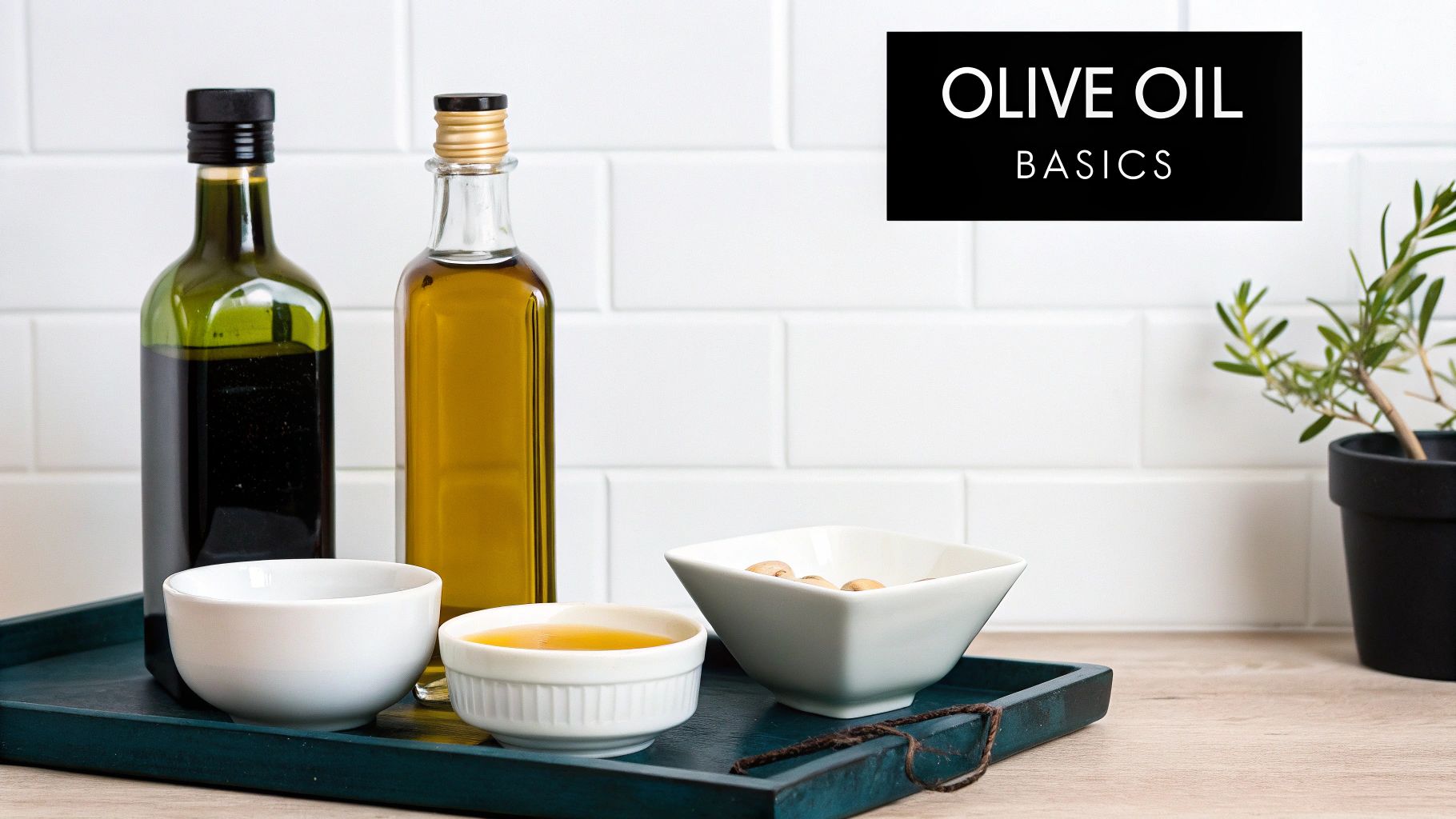
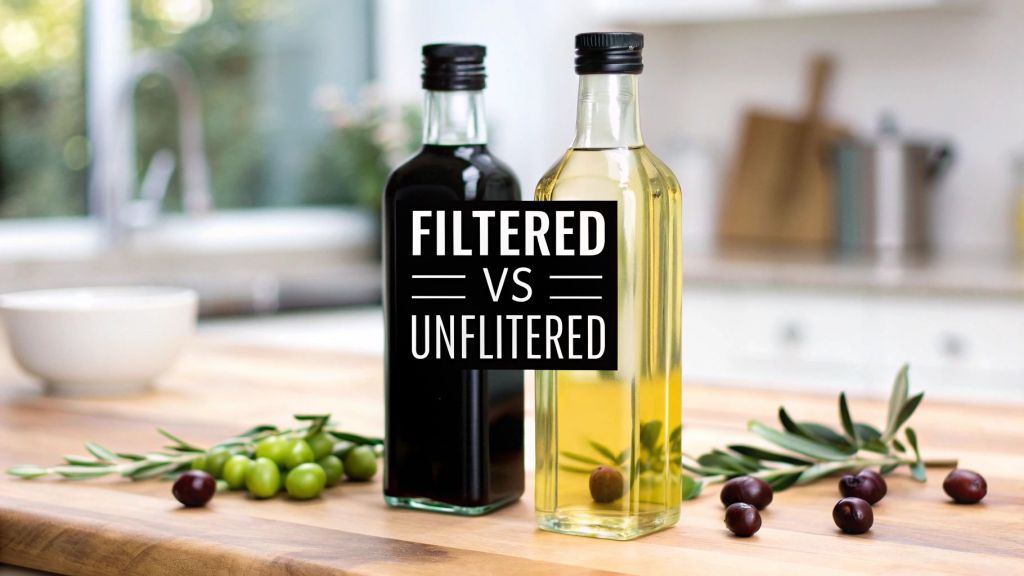
The visual difference is your first clue. That cloudy appearance in unfiltered oil isn't a flaw—it's a signature. It’s the ghost of the olive itself, tiny, suspended particles of fruit left behind from the press. This is olive oil in its most primal, unadulterated state.
These microscopic bits of olive are the soul of the oil's bold, peppery flavor, but they are also its fatal flaw, dramatically shortening its life. Filtered oil, by contrast, has had these very particles meticulously removed. The result? A pristine appearance, a more nuanced taste, and a far more forgiving shelf life. This fundamental distinction is the key to unlocking the subtle world of the different types of olive oil vying for your attention.
Filtered vs Unfiltered Olive Oil At a Glance
To cut through the noise, let’s lay the facts bare. Think of this as your field guide, a quick reference to consult before we delve into the soul of each oil.
| Attribute | Filtered Olive Oil | Unfiltered Olive Oil |
|---|---|---|
| Appearance | Bright and perfectly clear | Cloudy or hazy with potential sediment |
| Flavor Profile | Milder, smoother, more buttery | Bolder, more robust, often peppery |
| Best Used For | Everyday cooking, sautéing, baking | Finishing, dipping, drizzling on salads |
| Shelf Life | Longer (18-24 months) | Shorter (6-12 months), best when fresh |
The trade-off is clear as day. With filtered oil, you gain longevity and an astonishing versatility. With unfiltered, you are rewarded with a raw, intense flavor experience—a fleeting moment of perfection meant to be seized and savored.
Two Paths, One Olive: How Olive Oil Gets Made
To truly grasp the chasm between filtered and unfiltered olive oil, you must transport yourself to the olive mill. Imagine the air, thick with the scent of crushed olives. Here, a single, pivotal decision splits one harvest into two profoundly different destinies.
Every bottle of authentic olive oil begins its journey in the same way. Freshly harvested olives are crushed into a fragrant, vibrant paste. From this raw material, a centrifuge spins at high speed, separating the pure oil from the water and solid flesh of the olive. At this exact moment, you have a cloudy, raw, and untamed liquid, teeming with microscopic particles of fruit. And right here, the road diverges.
The vast majority of olive oil you encounter will now undergo filtration. This is a crucial step where the freshly pressed oil is passed through fine filters, typically made of cotton or cellulose pads. This process acts like a microscopic net, capturing every last droplet of water and olive sediment. To understand the mechanics on a larger scale, the principles behind commercial fryer oil filtration systems are surprisingly similar.
This graphic captures that critical fork in the road.
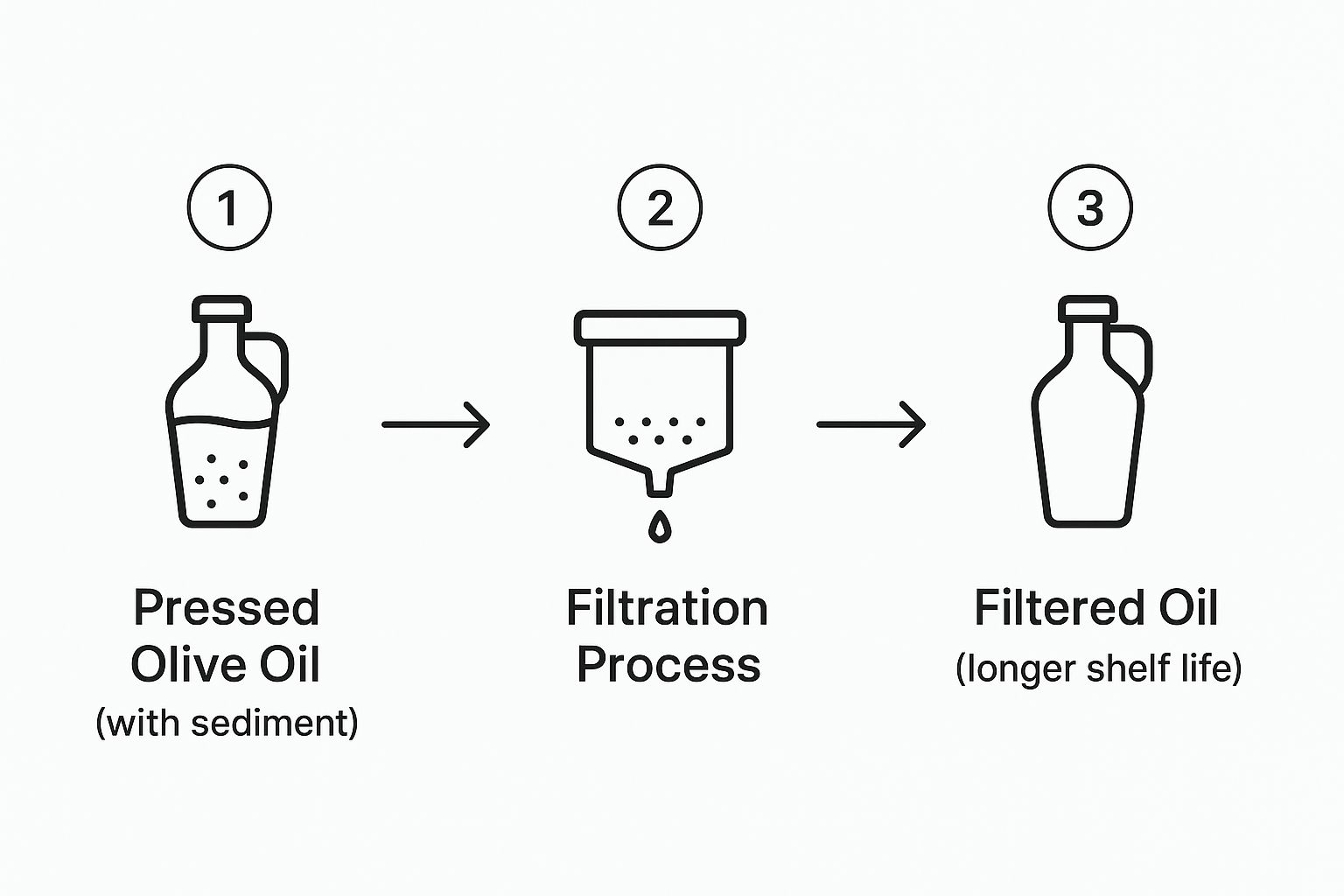
As you can see, that one deliberate step is all it takes to transform a raw, cloudy oil into the crystal-clear product that has become a global standard.
The Unfiltered Approach: A Nod to Tradition
The path to unfiltered olive oil, however, is one of patience and reverence. Instead of forcing the oil through modern filters, producers embrace a gentler, more ancient method called racking.
The new oil is left to rest, undisturbed, in large stainless-steel tanks for weeks. Here, gravity performs its slow, silent magic, gradually pulling the heavier sediment and water to the bottom. The clearer oil is then carefully siphoned from the top. It’s never a perfect separation—a fine veil of sediment always remains—but it’s a patient process that keeps the oil as close as possible to its natural state, straight from the olive.
The real difference comes down to intent. Filtration is engineered for clarity and stability. The unfiltered method is a conscious choice to preserve the raw, intense character of a freshly pressed olive, even if it’s only for a fleeting season.
This single divergence in production creates two oils with dramatically different personalities. You'll see it in their appearance, taste it in their flavor, and witness it in their lifespan. Unfiltered oil’s suspended olive pulp gives it a cloudy look, a more aggressive flavor, and a higher initial polyphenol count, but this comes at the cost of a brutally short shelf life of just 8 to 12 months.
Filtered oil, with those volatile impurities removed, is far more stable and can last for 18 to 24 months. This reliability is precisely why it dominates the world’s olive oil market.
A Connoisseur's Guide to Flavor and Aroma
To truly understand an olive oil, you must taste it. The difference between filtered and unfiltered isn't merely academic; it’s a sensory journey into two distinct worlds of flavor and aroma. It’s a story that begins the moment you twist open the cap.
Choosing between them is like choosing between two brilliant artists. One is a master of subtlety and refined technique, the other a raw, unapologetic expressionist. Neither is superior—they are simply different languages for expressing the soul of the olive.
The Bold Character of Unfiltered Olive Oil
Unfiltered olive oil delivers a taste that is as close as you can get to biting into a fresh olive plucked from the tree. It announces its presence with an assertive, vibrant character. Because those tiny, suspended bits of olive fruit remain, the flavor is inherently more intense and layered.
You’ll discover bright, grassy notes, perhaps a hint of artichoke, and almost certainly that spicy, peppery tickle in the back of your throat. That “kick” is the signature of high polyphenol content—the very antioxidants celebrated for their health benefits. This is a robust, full-bodied experience that doesn’t just speak; it sings.
Think of unfiltered olive oil as a rustic, full-bodied Cabernet Sauvignon. It’s complex, with a powerful finish that commands attention. Its purpose isn’t to blend in, but to stand out and elevate simple ingredients with its assertive personality.
This is not an oil for the faint of heart. Its slightly coarser mouthfeel and powerful flavor profile make it the undeniable star of any dish it graces.
The Refined Elegance of Filtered Olive Oil
Filtered olive oil, by contrast, is a portrait of pure elegance. By removing the sediment, the filtration process essentially polishes the oil, smoothing its rough edges. The result is a buttery, silky mouthfeel and a subtler, more delicate flavor.
This refinement is not a lack of character; it’s a different kind of character. The flavors are more nuanced. You might detect softer notes of ripe almond, a gentle fruitiness, or a light floral aroma. It seeks to harmonize with other ingredients rather than dominate them, making it an incredibly versatile partner in the kitchen.
Its clean finish and smooth texture make it approachable, perfect for a vast range of dishes where you want the healthy fats and gentle flavor of olive oil without overwhelming the other components. To truly appreciate these subtleties, many enthusiasts explore guided tastings. You can learn more about the art of professional olive oil tasting techniques to develop your own palate. This balanced profile is precisely why filtered oil is a beloved staple in kitchens across the globe.
The Nuanced Truth About Health and Shelf Life
When the filtered versus unfiltered debate ignites, no topic is more contentious than health benefits. The conversation almost always centers on polyphenols—the powerhouse antioxidants that give extra virgin olive oil its legendary status. But the real story is a classic duel between initial potency and long-term stability.
Fresh from the press, unfiltered olive oil undeniably holds an advantage. Because it retains those microscopic bits of olive fruit, it boasts a higher concentration of beneficial polyphenols. These are the compounds that deliver that peppery bite, celebrated for their power to fight inflammation and oxidative stress.
This immediate antioxidant punch is what seduces so many health-conscious consumers. But this is only half the story. To ignore the other half is to risk welcoming a rancid, disappointing oil into your kitchen.
The Double-Edged Sword of Potency
Herein lies the tragic flaw: the very elements that make unfiltered oil so potent are the architects of its demise. Those leftover particles of olive pulp and water don’t just carry extra polyphenols; they are catalysts, kicking the process of oxidation into overdrive.
Think of it like a bouquet of fresh-cut flowers. It is breathtakingly beautiful on day one, but its vibrancy is tragically fleeting. Unfiltered olive oil follows this same dramatic arc of peak quality and rapid decline.
The crucial trade-off is this: unfiltered oil starts with a higher dose of antioxidants, but its window of peak quality is dramatically shorter. After just a few months, both its health benefits and its flavor begin to plummet.
This is a practical reality every consumer must understand. An old bottle of unfiltered olive oil has lost much of its nutritional power and can even introduce harmful free radicals into your diet.
Stability: The Unsung Hero of Health
This is where filtered olive oil reveals its true genius. Yes, the filtration process removes some sediment and, with it, a small fraction of polyphenols. But what it gains in return is far more valuable: stability. By removing the particles that accelerate decay, filtration locks in the oil’s integrity for the long haul.
A well-made filtered olive oil will maintain its premium quality and health properties for 18 to 24 months. Compare that to the fleeting 6 to 12-month lifespan of its unfiltered cousin. This means you are far more likely to actually receive the full spectrum of olive oil's health benefits from a bottle of filtered oil, simply because it remains fresh and potent on the shelf.
Ultimately, the healthiest choice isn't just about what’s in the bottle the day it's made, but what’s still in it the day you pour it.
Mastering the Kitchen: When to Use Each Oil
An ingredient’s true worth is proven in the kitchen. When it comes to olive oil, the real question isn't "which oil is better?" but rather, "which oil is right for this dish?" The answer lies in understanding the unique strengths each one brings to the table.
Unfiltered olive oil, with its bold and assertive character, is a finishing oil through and through. Its job is to be the star of the show. Think of it as that final, transformative flourish that turns simple ingredients into something truly special.
Its robust, often peppery flavor is exactly what you want when the pure taste of the olive needs to shine.
- Drizzling Over Soups: A simple swirl over a hearty Tuscan bean soup or a creamy tomato bisque adds an incredible burst of freshness and complexity.
- Finishing Salads: On a classic Caprese salad with ripe tomatoes and fresh mozzarella, its grassy notes are absolutely perfect.
- Dipping with Bread: When served with a loaf of crusty bread, it becomes an appetizer in its own right, delivering that unadulterated taste of the harvest.
The Versatile Workhorse: Filtered Olive Oil
Filtered olive oil, on the other hand, is the reliable and versatile workhorse of your pantry. Its cleaner flavor profile and higher smoke point open it up to a much wider range of culinary tasks where you need more control and subtlety.
Filtered oil’s greatest strength is its ability to complement rather than dominate. It provides all the heart-healthy benefits and moisture of olive oil without steamrolling the other ingredients in your dish.
This makes it the go-to choice for most everyday cooking. You can use it for gently sautéing vegetables, creating a delicate vinaigrette, or even baking where its mild flavor won't clash with the sweetness of a cake. To explore its many applications, take a look at our guide on how to use olive oil in cooking.
Price and production trends also influence how these oils are used. Despite a global production increase in 2024/25—where Spain's output jumped by 51%—market preferences keep the two oils in their distinct lanes. Filtered oils have broad appeal for their stability and versatility, while unfiltered oils continue to command a premium as a fresh-use, niche product. You can learn more about the factors behind recent olive oil price shifts from Critida.com.
Beyond just cooking, knowing the properties of different oils is crucial for kitchen maintenance. For instance, understanding the best oil to season cast iron can make a huge difference in the longevity of your cookware.
How to Shop for Olive Oil with Confidence
Stepping into the olive oil aisle can feel like facing a wall of confusion. But armed with knowledge, that wall transforms into a field of opportunity. Choosing between filtered or unfiltered oil stops being a guess and becomes a deliberate, confident decision tailored to your needs.
It all begins by asking yourself two honest questions:
- What is my mission? Do I need a bold, peppery finishing oil to make a special dish sing, or am I seeking a reliable, all-purpose oil for my daily culinary adventures?
- How quickly will I use this? Be realistic. A large, beautiful bottle of unfiltered oil is a tragic waste if it languishes in your pantry for months.
Answering these two simple questions will instantly cut through the clutter, guiding you directly to the bottle that’s right for you.
Reading the Label Like an Expert
Once you have a purpose, the label becomes your trusted guide. Ignore the flashy marketing claims and focus on the details that truly matter—starting with the harvest date.
This date is the single most vital piece of information on any bottle of extra virgin olive oil. For unfiltered oil, it is everything. You are chasing that ephemeral, fresh-from-the-press character, so you must have the most recent harvest possible. For filtered oil, the harvest date is your benchmark for its 18- to 24-month shelf life.
Also, look for terms like “cold-pressed,” a promise that the oil was extracted gently, preserving its delicate flavors and nutrients. To truly master the art of selection, dive into our complete guide on how to buy olive oil.
The secret to smart shopping isn’t finding a single "best" oil. It’s about seeing filtered and unfiltered oils as two distinct tools, and learning to pick the right one for the job at hand.
Global trends also shape what you find on the shelves. The European Union is a powerhouse, typically producing around 58-60% of the world's olive oil. After a challenging previous season, EU production for 2024/25 rebounded to 2.1 million tons—a 40% increase. This kind of market shift can directly influence the price and availability of both the filtered and unfiltered oils in your local store.
Common Questions About Filtered vs. Unfiltered Olive Oil
Even with a solid understanding of production and flavor, a few persistent questions often remain. Let's tackle the most common points of confusion head-on, so you can choose and use your olive oil with absolute certainty.
Is Unfiltered Olive Oil Actually Healthier?
This is the million-dollar question, and the answer isn't a simple yes or no. Immediately after pressing, unfiltered olive oil does contain a slightly higher concentration of polyphenols—those celebrated antioxidants. But here’s the crucial catch.
The very olive particles that carry these extra antioxidants also make the oil incredibly unstable, causing it to degrade rapidly. So, while a brand-new unfiltered oil is a nutritional powerhouse, its glory is short-lived. A high-quality filtered oil, in contrast, preserves its health properties for much, much longer. If your goal is consistent, day-in-day-out health benefits, a fresh filtered oil is the more dependable choice.
The healthiest olive oil isn't the one with the most antioxidants at the mill; it's the one that still has them when it reaches your plate. Stability is everything.
Can I Cook with Unfiltered Olive Oil?
I would strongly advise against it, for anything beyond the gentlest warming. The tiny bits of olive fruit suspended in unfiltered oil have an extremely low smoke point. They will begin to burn almost instantly.
When that sediment scorches, it releases a bitter, acrid flavor that will ruin your dish. Unfiltered oil's true purpose is to be used raw. It is a finishing oil, born for that final, glorious drizzle over pasta, salad, or a simple piece of bread. When the pan gets hot, always reach for your filtered oil.
Why Is It So Hard to Find Unfiltered Olive Oil?
The answer is simple: its brutally short shelf life. A bottle of unfiltered olive oil is at its peak for only a few months after harvest and is often past its prime in less than a year. This makes it a logistical nightmare for large distributors and supermarkets that rely on products with a long and stable shelf life.
This is why you'll most often find it sold directly by small, artisanal producers. Your best bet is to seek it out at local farmers' markets or from specialty online retailers, particularly right after the autumn harvest. Think of it not as a pantry staple, but as a seasonal delicacy to be treasured.
At Learn Olive Oil, we believe that understanding your ingredients is the first step to incredible food. Explore our guides and unlock a new world of flavor. Start your journey today!
 Learn Olive Oil
Leave a comment