You believe you're making the healthy choice. You see "Organic" and "Extra Virgin" on a handsome label, and it goes straight into your shopping cart. But allow me to reveal a hard truth: that label is often a clever disguise for a profoundly disappointing product. For a shocking number of organic olive oil brands, the organic certification is a marketing tactic, not a true promise of the vibrant flavor or life-giving health benefits you paid a premium for.
Why Most Organic Olive Oil Fails the Test
Let's cut through the marketing fog and get straight to the heart of the matter. An organic seal, while valuable, only tells you one thing: the olives were grown without synthetic pesticides. That’s a noble start, but it's barely the first chapter of the story.
That same seal reveals precisely nothing about the oil’s freshness, its antioxidant potency, or the symphony of flavors it should deliver. An oil can be fully certified organic and yet be stale, bland, and nutritionally bankrupt by the time it reaches your kitchen.
Consider this guide your secret weapon, your way to see through the hype. We will look past the surface-level claims and uncover the hidden markers that separate a world-class olive oil from the forgettable liquids crowding grocery store shelves.
What Truly Defines Quality
Genuine quality in olive oil is not a matter of opinion. It is a combination of specific, measurable factors. The world's best chefs and those truly serious about their health have learned to look beyond the basic organic seal to find oils that deliver an extraordinary return on their investment.
Here is what they hunt for:
- Polyphenol Counts: These are the powerful antioxidants that give a great olive oil its peppery finish and its remarkable health benefits. A high count is the unmistakable signature of a robust, freshly milled oil.
- Harvest Dates: Olives are a fruit. Olive oil is its juice. A specific harvest date—not a vague "best by" date—is the single most reliable indicator of freshness and vitality.
- Milling Practices: How the oil is made is a very big deal. "Cold-extracted" isn’t just a fancy phrase; it's a solemn promise that the delicate flavors and precious nutrients were not destroyed by heat during processing.
This is about more than just picking a product off a shelf. It’s about investing in your health and elevating every meal you create. To begin your journey, our complete guide on how to buy olive oil provides the foundational knowledge you need.
The greatest misconception is that 'organic' automatically equals 'high quality.' An organic olive oil can still be old, oxidized, and carelessly crafted. You must learn to read the label and spot the tell-tale signs of true freshness.
We are about to reveal these benchmarks of quality, so you can shop with the confidence of an insider.
How to Read an Olive Oil Label Like an Expert
Every bottle of organic olive oil tells a story, but you must know the language to read it. The front label seduces you with appealing words like "extra virgin," but the real secrets are almost always hidden in the fine print on the back. Learning to decode these details is the single most powerful step you can take to transform yourself from an average shopper into a savvy, confident buyer.
Let's be blunt: the market for these oils is exploding. More choices mean more confusion. The global organic olive oil market is projected to leap from USD 1.09 billion in 2024 to an estimated USD 1.74 billion by 2029. This boom is driven by a growing hunger for healthy fats and the diets that celebrate them. You can get a clearer picture of this trend by exploring the growth of the organic olive oil market.
With a flood of new products hitting the shelves, mastering the label has never been more critical.
Uncovering the Harvest Date
Your first mission, should you choose to accept it, is to find the harvest date. Do not confuse this with the "best by" date. The "best by" date is often set two years after bottling and tells you almost nothing about the oil's true age. Olive oil is a fresh fruit juice; its peak of flavor and nutritional power begins to fade the moment it is pressed.
A specific harvest date, like "October 2023," is a mark of a transparent and proud producer. It tells you exactly when the olives were picked and transformed into oil, empowering you to always choose the freshest bottle. If a bottle lacks a clear harvest date, consider it a red flag.
Understanding Seals and Certifications
Beyond the organic seal, look for geographical indications that serve as an ironclad guarantee of authenticity. These certifications are a direct link between the oil and a specific place, protecting its unique character and time-honored production methods.
- PDO (Protected Designation of Origin): This is the gold standard. It certifies that the olives were grown, milled, and bottled in a particular region using traditional techniques. Every step happens in one place.
- PGI (Protected Geographical Indication): This seal is a bit more flexible but remains a superb indicator of quality. It guarantees that at least one stage of production occurred in the named region.
These seals are your best defense against oils that might blend olives from different countries while deceptively splashing a single-origin name on the front for marketing purposes.
A true PDO or PGI seal means you're not just buying olive oil; you're buying a piece of a place—its soil, its climate, and its history. It's the ultimate proof of authenticity and terroir.
Demystifying Technical Terms
Finally, a few technical terms can reveal volumes about an oil’s quality and flavor. Acidity, often listed as free fatty acid (FFA), is a crucial one. For extra virgin oils, this number must be low—ideally below 0.5% and legally required to be under 0.8%. A lower acidity level signifies healthier olives and superior handling during production.
"Cold-extracted" or "cold-pressed" is another term you demand to see. This confirms the oil was kept below 27°C (80.6°F) during the milling process. This is vital for preserving its delicate aromas and all-important polyphenol antioxidants. Any hotter, and you begin to destroy the very qualities that define the finest organic olive oil brands. Armed with this knowledge, you can revolutionize the way you shop and ensure every bottle you bring home is a champion.
Comparing Top Organic Olive Oil Brands
Choosing from the top organic olive oil brands feels less like a grocery run and more like selecting a fine wine. Each bottle possesses its own personality, a story shaped by the specific olive varietal, the terroir where it grew, and the philosophy of its producer. This isn’t about finding a single "best" oil; it's about uncovering the right oil for the right moment—the one that will make your food sing.
Let's move beyond vague marketing claims into the realm of real sensory analysis. Our comparison focuses on what truly matters to your palate: the aroma, the complexity of the flavor, and that lingering finish. We'll explore the tangible differences between oils, from the peppery kick of a high-polyphenol Tuscan blend to the buttery smoothness of a Spanish Arbequina.
This is a deep dive into the craft. We're looking at the whole picture—not just the taste, but the dedication to regenerative farming and the specific olive varietals they champion. You deserve to know what you're buying.
Brand A: The Bold Finisher
Imagine an oil that is unapologetically robust and green. That is the hallmark of Brand A, typically crafted from Picual olives harvested early in the season. Its aroma is intensely herbaceous, evoking fresh-cut grass and green tomato leaf.
On the palate, it delivers a powerful, peppery sensation at the back of your throat, a clear sign of its high polyphenol content. This isn't an oil for the faint of heart; its bold bitterness is a feature, not a flaw. The finish is long and persistent, leaving a clean, spicy note.
This oil was born for finishing. Drizzle it over a thick steak, a hearty bean soup, or a simple slice of grilled sourdough to add a dramatic final flourish. Using it for delicate cooking would be a waste of its assertive character.
Brand B: The Versatile Staple
In contrast, Brand B offers a much more balanced and approachable profile. Often made from Koroneiki olives, its aroma is milder, with notes of ripe fruit, banana, and a hint of almond. It strikes a beautiful middle ground, making it an incredibly versatile player in the kitchen.
The flavor is smooth and buttery with a gentle, delayed peppery finish. It has enough character to stand on its own in a vinaigrette but is subtle enough not to overpower other ingredients when used for sautéing vegetables or fish. This is the dependable workhorse you want in your pantry for everyday cooking.
The greatest value in an olive oil is its suitability for the task at hand. A bold, expensive finishing oil is wasted in a frying pan, just as a mild cooking oil will fail to make an impact on a finished dish. Knowing the difference is key.
This infographic provides a clear visual comparison of key metrics for several leading organic olive oil brands.
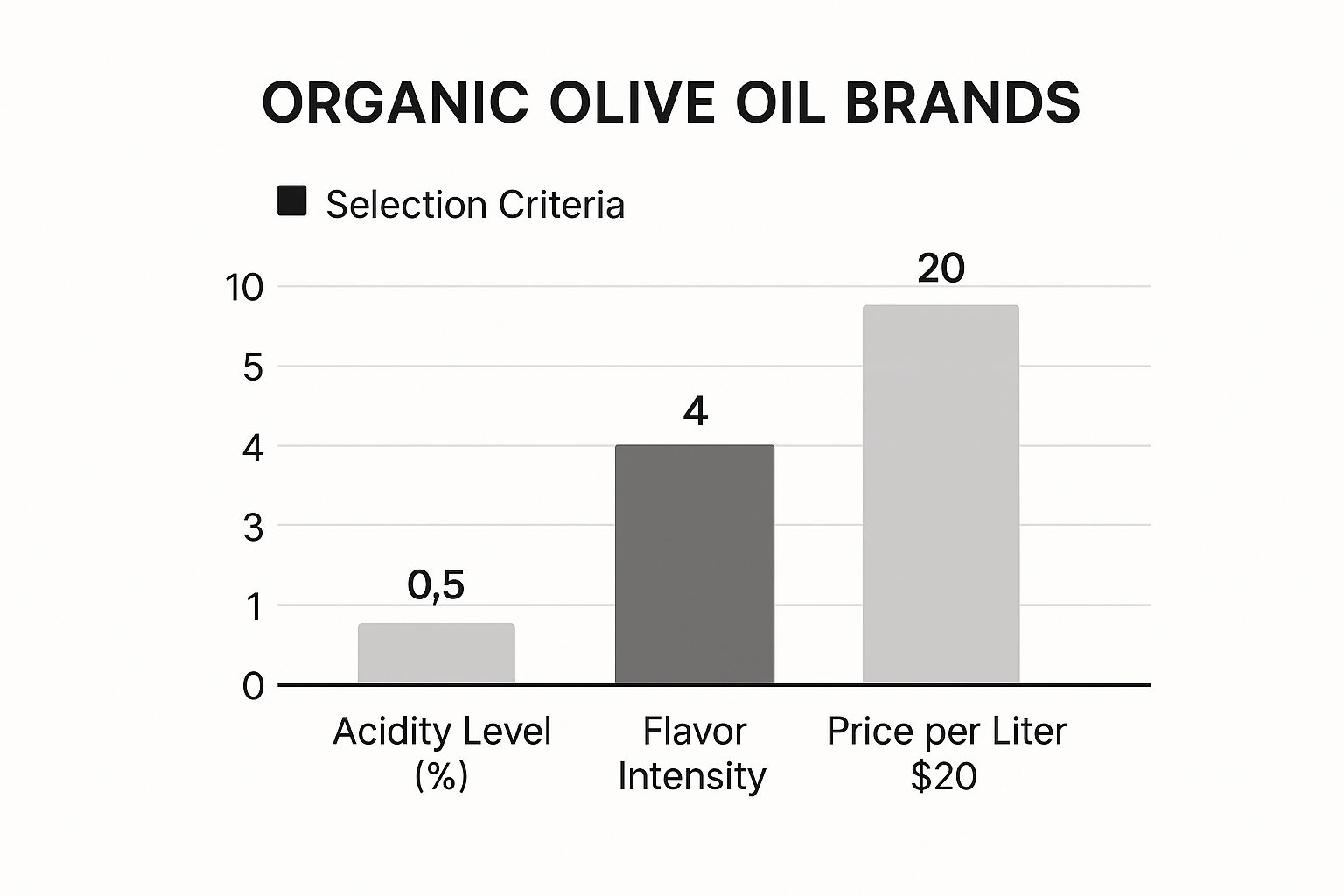
As the chart shows, a lower acidity level often correlates with higher quality, but the flavor intensity and price can vary significantly. This allows you to choose based on both your palate and your budget.
Organic Olive Oil Brands At-A-Glance Comparison
To make sense of the options, it helps to see them side-by-side. This table breaks down the key characteristics of our example brands, showing how the olive varietal directly influences the flavor and its best use in your kitchen.
| Brand | Olive Varietal | Flavor Profile | Polyphenol Level | Best For |
|---|---|---|---|---|
| Brand A | Picual | Robust, peppery, herbaceous, bitter finish | High | Finishing oils, drizzling on steak, soups, crusty bread |
| Brand B | Koroneiki | Balanced, fruity, hint of almond, mild pepper | Medium | Everyday cooking, vinaigrettes, sautéing, roasting |
| Brand C | Arbequina | Mild, buttery, sweet, notes of green apple | Low | Baking, mayonnaise, delicate sauces, light fish dishes |
This quick comparison highlights the importance of choosing an oil for a specific purpose rather than trying to find one bottle that does it all.
Brand C: The Delicate Specialist
Finally, we have Brand C, the specialist for delicate applications. Usually derived from Arbequina olives, this oil is exceptionally mild and sweet. Its aroma is light and fruity, reminiscent of green apple and fresh herbs.
Its flavor profile is distinctly buttery and smooth, with almost no bitterness or peppery kick. This makes it the perfect choice for baking—where you want the health benefits of olive oil without its strong taste—or for making mayonnaise and gentle dressings for delicate greens.
By understanding these distinct profiles, you can move from buying a generic bottle to curating a small collection of oils, each with a specific purpose. For a broader look at market leaders, you might be interested in this review of the top 8 premium olive oil brands for 2025. This situational approach ensures you get the most value and flavor out of every single drop.
Matching the Right Oil to the Right Dish
You would never use a powerful, peppery finishing oil in a delicate sponge cake, would you? That would be a culinary crime. The true secret to unleashing the magic of a fantastic organic olive oil isn't just its quality—it's knowing how and when to use it. This is where you graduate from simply using oil to truly cooking with it.
Let’s organize our thinking into three primary roles: finishing, everyday cooking, and dressings. Think of this less as a set of rigid rules and more as a powerful guide to help every bottle in your pantry fulfill its delicious destiny.
For Finishing and Dipping
This is where your boldest, most expressive oils claim their moment in the spotlight. A finishing oil is a condiment, not merely a cooking fat. Its job is to add that final layer of complexity—a sharp peppery kick, a fresh grassy aroma, or a bold bitter note that makes a completed dish burst into song.
These are the oils with high polyphenol counts and a robust, herbaceous character. They are absolutely perfect for:
- Drizzling over a hearty bowl of soup just before it reaches the table.
- Accenting a perfectly grilled steak or a flaky piece of fish.
- Creating a simple, yet deeply satisfying, dip for crusty bread.
The biggest mistake people make is cooking with a true finishing oil. Heat destroys the delicate, volatile compounds that give these oils their incredible flavor and aroma. Always save your best oils for the final act.
For Everyday Cooking and Sautéing
For the daily work in your kitchen, you need a reliable partner. This oil must be high-quality and delicious enough to improve your food, but balanced enough not to bulldoze every other flavor on the plate. Crucially, its smoke point must be high enough for moderate heat.
A well-rounded, fruity oil is your best friend here. Something with a buttery texture and a mild peppery finish is incredibly versatile. It’s the one you’ll grab for sautéing garlic and onions, roasting vegetables, or pan-searing chicken. To truly master this, check out our complete guide on how to use olive oil in cooking.
For Dressings and Marinades
When you're whipping up a vinaigrette or a marinade, you need an oil that plays well with others, especially acidic ingredients like vinegar and citrus. A big, bitter oil can easily clash with acidity, throwing the entire creation out of balance.
This is where milder profiles, like the buttery and slightly sweet notes found in an Arbequina-based oil, truly shine. They create a smooth, rich base that emulsifies beautifully without stealing the spotlight.
The growing appetite for these nuanced products is undeniable. In fact, market projections show the global organic olive oil market is on track to hit about USD 2.5 billion by 2025. This surge isn't just coming from home cooks; it reflects a broader appreciation for natural, high-quality ingredients across many industries, from food to cosmetics. Learning to match the right oil to the right dish is the ultimate way to tap into this appreciation for quality.
Making Your Final Choice With Confidence
You now possess the knowledge to see past the marketing fog and identify a truly exceptional olive oil. The final step is a simple conversation with yourself to determine what you truly desire from the bottle you bring home. This is less about finding a single "best" brand and more about finding the one that is perfect for you.
So, what is your primary goal? Are you a flavor purist, hunting for an oil with a bold, peppery kick that can transform a simple meal into something memorable? Or are you driven by wellness, making the highest possible polyphenol count your number one priority?
Perhaps you're a practical home cook who simply needs a versatile, reliable, and delicious workhorse for everyday cooking. Each of these paths leads to a different kind of oil. Knowing which path you're on is the key to choosing with absolute confidence.
Situational Recommendations
To make it even clearer, here’s a quick guide to matching your needs with the right oil profile:
- For the Flavor Seeker: You will want to find robust, single-varietal oils from an early harvest. Look for oils made from Picual or Coratina olives, famous for their intense, grassy notes and a powerful, spicy finish. These are the ultimate finishing oils.
- For the Health-Conscious Consumer: Your focus should be squarely on the harvest date and polyphenol count. A recent harvest is non-negotiable for maximum antioxidant potency. We dive deeper into the connection between these compounds and the many olive oil health benefits in our detailed guide.
- For the Everyday Chef: Balance is your greatest ally. Look for versatile blends, often featuring Arbequina or Koroneiki olives. These tend to have a milder, fruitier profile that works beautifully in everything from vinaigrettes to light sautéing.
Choosing an olive oil is an intensely personal decision. It's where your taste, health goals, and culinary ambitions meet. Trust your palate, but let knowledge guide your hand. This approach ensures every dollar you spend is an investment in both flavor and well-being.
The growing demand for healthier cooking oils is a powerful force in the market today, fueled by a greater awareness of their benefits. As premium packaging and stricter organic standards become more common, people are increasingly willing to invest in superior organic olive oil brands. This trend only reinforces the value of seeking out authentic, high-quality products.
Have Questions About Organic Olive Oil? Let's Clear Them Up
Diving into the world of organic olive oil can feel like learning a new language. You master the basics, but a few nagging questions always seem to linger, standing between you and that perfect bottle. Let's tackle the most common ones and get you choosing your next oil with total confidence.
Answering these questions isn't just about trivia—it's about protecting your investment. Understanding these details ensures you get every drop of the incredible flavor and health benefits you paid for.
What’s the Best Way to Store My Organic Olive Oil?
Proper storage is the single most important thing you can do to preserve the vibrant character of your oil. Think of high-quality organic EVOO as a delicate, living product that has three mortal enemies: heat, light, and air.
Always, always keep your bottle tucked away in a cool, dark place like a pantry or cupboard. The worst thing you can do is leave it next to your stove or on a sunny kitchen windowsill. That's a surefire recipe for accelerating oxidation and completely ruining the flavor. It's no accident that the best organic olive oil brands use dark glass or opaque tins—they're shielding their precious oil from damaging light.
The moment you open the bottle, the clock starts ticking. Make sure to seal the cap tightly after every single use to minimize its exposure to oxygen, the main culprit behind rancidity. For the best possible taste, it's a good idea to use up an opened bottle within two to three months.
Does the Color of an Olive Oil Tell Me Anything About Its Quality?
This is easily one of the most persistent myths out there. The simple truth is that color—whether it’s a brilliant, grassy green or a pale, buttery gold—tells you absolutely nothing about the oil's quality.
An oil’s color is just a reflection of two things: the olive variety and how ripe the fruit was when it was harvested.
- Green Oils: Typically made from less ripe olives. They're higher in chlorophyll, which often results in a more assertive, peppery, and robust flavor.
- Golden Oils: Usually come from riper fruit. These tend to be milder, smoother, and more buttery in character.
Here's a little industry secret: professional tasters use special blue-tinted glasses for their evaluations. This completely masks the oil's color, forcing them to judge it purely on its true merits—aroma and taste.
Is "First Cold Press" Better Than "Cold Pressed"?
That phrase "first cold press" sure sounds impressive, doesn't it? But honestly, it's mostly a marketing term left over from an old-fashioned way of making olive oil. It brings to mind old hydraulic presses that literally had to press the olive paste multiple times to get all the oil out.
Today, modern extra virgin olive oil is made using a centrifuge that extracts the oil in a single, continuous process. This means that virtually all authentic EVOO is from a "first press" by default. The term you really want to look for is "cold-pressed" or "cold-extracted."
This is a critical distinction. It guarantees the oil was processed at a temperature below 27°C (80.6°F). Using this gentle, low-heat method is absolutely essential for preserving the delicate flavor compounds and powerful antioxidants that make a superior oil what it is. To dive deeper into these terms, our guide to understanding olive oil labeling is a fantastic resource.
Should I Really Cook With My Expensive Organic EVOO?
Yes, you absolutely can—you just need a little strategy. A top-tier organic extra virgin olive oil generally has a smoke point between 375°F and 410°F (190°C to 210°C). That makes it perfectly safe for most everyday cooking methods, including sautéing and roasting.
However, it's true that its most complex aromas and beneficial polyphenols can start to diminish under prolonged high heat. That's why so many chefs save their priciest, most flavorful EVOOs for finishing. A generous drizzle over pasta, a warm bowl of soup, or grilled vegetables right before serving is where it truly shines. This simple step allows its character to be fully appreciated and can turn a good dish into a truly great one.
At Learn Olive Oil, we believe that understanding the story behind the bottle transforms your entire culinary experience. We're dedicated to helping you explore the rich world of premium olive oil, from the grove to your table.
Discover the World of Premium Olive Oil at learnoliveoil.com
 Learn Olive Oil
Leave a comment