Let's settle a question that haunts the curious baker. Can you use olive oil in baking? The answer isn’t just a simple yes. It’s a resounding yes. In fact, swapping butter for a carefully chosen olive oil isn’t merely a substitution—it's a breathtaking upgrade. It’s the kind of secret that can elevate your baking from merely “good” to truly, maddeningly unforgettable.
The Secret to Better Baking Is Already in Your Pantry
I hear the whispers of doubt: "But won't my cake taste like a salad?" This is the single biggest myth holding bakers back from a world of superior texture and flavor. The truth is, olive oil is a culinary chameleon, capable of producing cakes, muffins, and breads with a moist, tender crumb that stays miraculously fresh for days.
Forget those dry, crumbly disappointments. When you bake with olive oil, you’re introducing a healthy monounsaturated fat that enriches your creations in several astonishing ways.
Why Olive Oil Is a Baking Game-Changer
This shift from solid fats like butter to a high-quality liquid fat is more than just a passing trend. The global olive oil market was valued at a staggering USD 22.58 billion in 2023 and is projected to climb. Why? Because savvy home cooks are finally unlocking its incredible versatility. As more people seek healthier fat alternatives, its role in the oven has moved from an insider’s secret to a celebrated technique. You can read more about the market growth of this versatile ingredient on GrandViewResearch.com.
The real magic of olive oil lies in its ability to create an exceptionally tender crumb. Because it's a liquid, it coats flour particles more thoroughly than solid fats, inhibiting gluten development and resulting in a softer, more delicate texture.
So, what does this mean for your favorite recipes?
- Unbeatable Moisture: Olive oil helps baked goods retain moisture, fighting off staleness. An olive oil cake will be just as delicious on day three as it was fresh from the oven.
- Deeper Flavor: Instead of overpowering your ingredients, it amplifies them. Chocolate tastes richer, citrus notes become brighter, and herbs smell more aromatic.
- A Healthier Swap: You’re trading the saturated fats in butter for heart-healthy monounsaturated fats and a dose of powerful antioxidants.
Ready to unlock this secret for yourself? Here's how to begin.
Quick Guide to Olive Oil Baking Substitutions
Making the switch is simpler than you imagine. Here's a cheat sheet for swapping out common fats with olive oil. Remember, these are starting points—the joy is in tweaking them to perfection for your specific recipe.
| Original Fat | Olive Oil Substitute (by volume) | Best For |
|---|---|---|
| Butter or Margarine | ¾ of the amount (e.g., use ¾ cup of olive oil for 1 cup of butter) | Cakes, muffins, quick breads, brownies |
| Vegetable/Canola Oil | 1:1 ratio (use the exact same amount) | Recipes already calling for liquid oil |
| Melted Butter | 1:1 ratio (use the exact same amount) | Brownies, certain cakes, and batters |
| Shortening | ¾ of the amount (e.g., use ¾ cup of olive oil for 1 cup of shortening) | Savory breads, some cookies (texture will change) |
This table will set you on the right path, making it easy to adapt almost any recipe you already love.
How to Choose the Right Olive Oil for Your Recipe
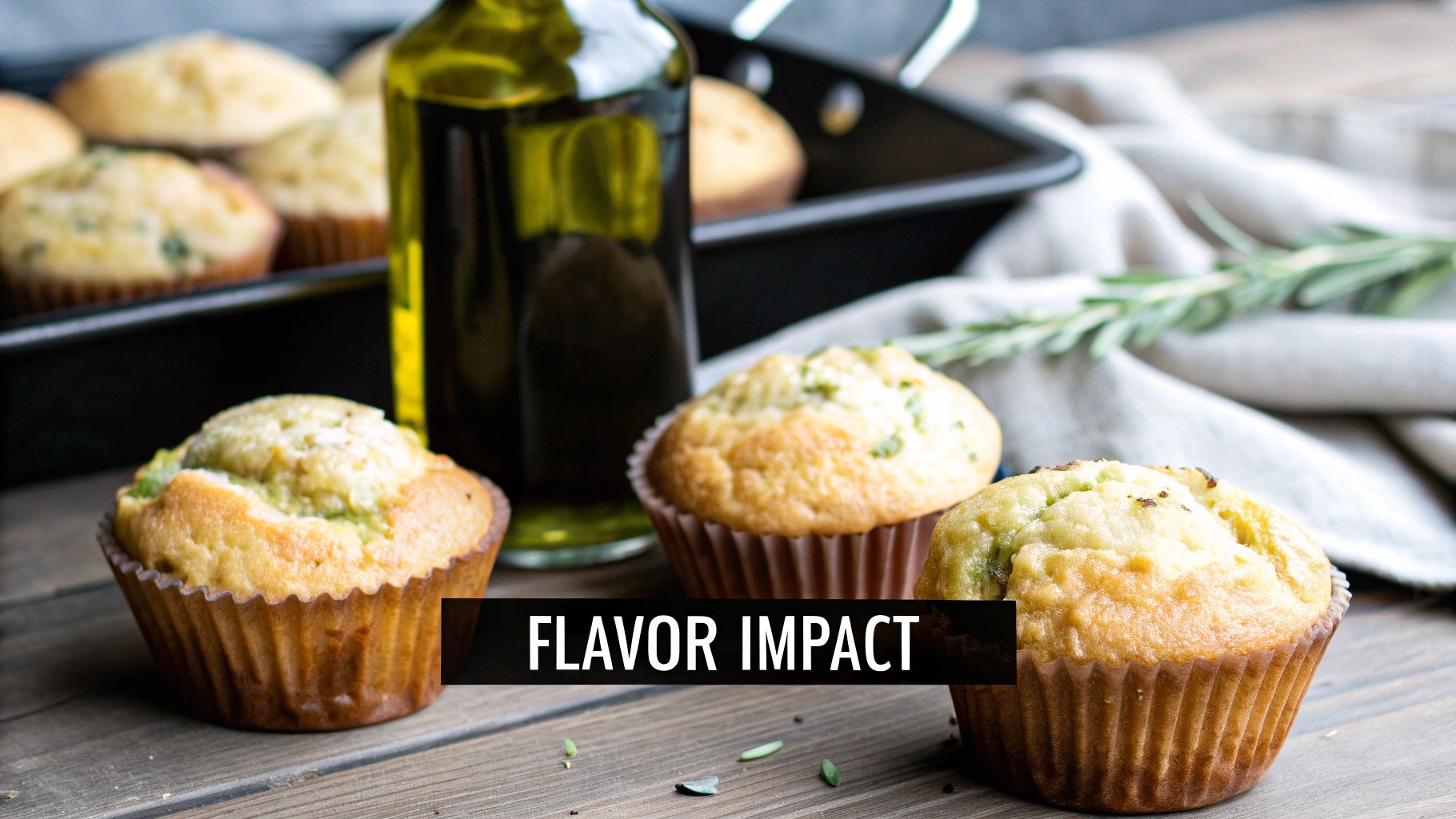
Here is where many well-intentioned bakers stumble. Grabbing the first bottle of olive oil you see is a recipe for disappointment. That robust, peppery oil you adore on salads will absolutely tyrannize a delicate vanilla cake. The secret to success is matching the oil’s personality to your recipe’s soul.
Think of it like casting an actor. You wouldn't put a booming action hero in a quiet, romantic film, would you? The same logic applies. The oil must either support the star flavors or fade gracefully into the background. Your goal is harmony, not a battle for the spotlight.
Thankfully, finding the right partner is easier than ever. With global olive oil production hitting around 2.4 million tonnes for the 2023/24 season, the variety on store shelves has exploded, giving bakers an arsenal of incredible options.
Decoding the Labels for Baking
Your first step toward mastery is understanding the language on the bottle. Let’s break down the common types and where they truly shine.
-
Extra-Virgin Olive Oil (EVOO): This is the pinnacle of quality—unrefined and bursting with the boldest flavor, which can range from grassy and peppery to fruity and buttery. A bright, fruity EVOO is breathtaking in a lemon loaf or an orange-scented cake, where its notes sing in harmony with the citrus.
-
"Pure" or "Regular" Olive Oil: Don't let the name fool you. This is a blend of refined and virgin olive oils. It has a much milder flavor and a higher smoke point, making it a reliable, neutral workhorse for most baking. This is my go-to for everything from chocolate chip cookies to savory breads.
-
"Light-Tasting" Olive Oil: This is the most neutral of all. Highly refined, it has virtually no discernible olive flavor, which makes it the perfect stealth ingredient. Use it where you demand zero interference with delicate flavors, like a classic white cake or light pastries.
The rule of thumb is simple: If your bake has bold flavors that can stand up to a partner—like chocolate, citrus, or rosemary—a mild extra-virgin olive oil can add wonderful complexity. For everything else, especially delicate flavors like vanilla or almond, reach for a light-tasting or regular olive oil.
Learning how to choose your oil is foundational. To truly master this skill, explore our complete guide on how to choose the right olive oil for any culinary mission. This knowledge will give you the confidence to ensure your oil works with your ingredients, never against them.
Getting the Swap Just Right
This is where the magic—and a little kitchen science—truly happens. You can't just pour olive oil into a measuring cup and call it a day. Swapping a liquid fat for a solid one like butter isn't a simple exchange; it fundamentally changes the chemistry of your batter.
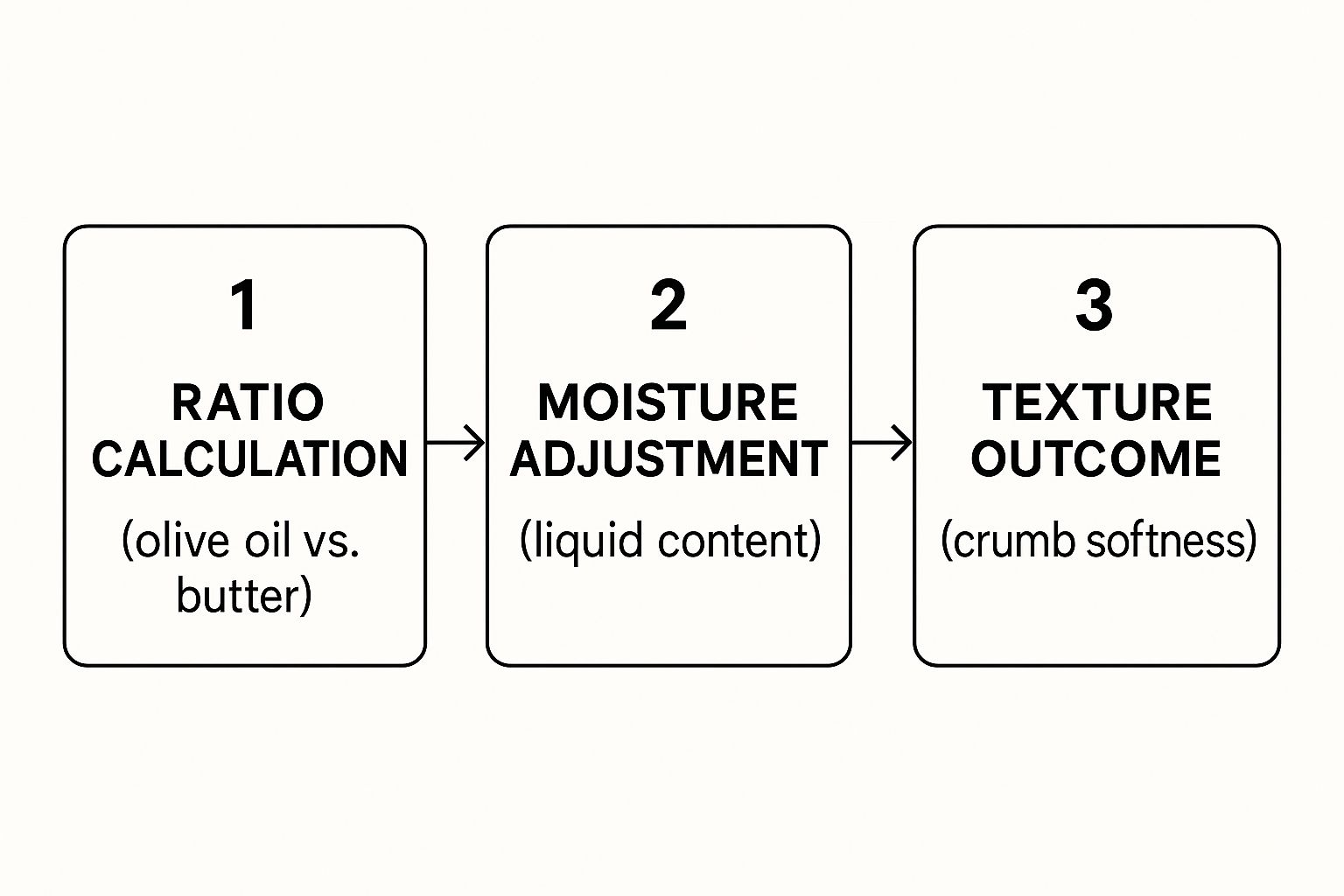
Getting this right is what separates a dense, oily brick from a light, transcendent cake. A solid rule of thumb is the 3:4 ratio of olive oil to butter. So, if your recipe calls for one cup of butter, you’ll want to use three-quarters of a cup of olive oil. But this is just your starting point. True mastery comes with practice and finesse.
The process is a chain reaction: getting the ratio right directly impacts the moisture, which ultimately determines the sublime softness and texture of your final creation.
What About the "Creaming" Method?
Now, let’s confront the single biggest question that stops experienced bakers in their tracks: what do I do with recipes that start by "creaming" butter and sugar? That process is all about forcing air into solid fat to create lift. Since you can't "cream" a liquid, you need a different strategy to achieve that same airy result.
The answer is to create a beautiful emulsion. Vigorously whisk your olive oil with the sugar, eggs, and any other liquids in the recipe. You're looking for the mixture to become noticeably lighter in color, thicker, and perfectly smooth. This powerful whisking traps thousands of tiny air bubbles that will expand in the oven, giving your cake or muffins a light, even crumb.
This emulsion technique is your secret weapon. It prevents the dense, heavy outcome many bakers fear, guaranteeing a professional-quality texture every single time.
This method does more than just replace butter; it unlocks an entirely new world of flavor and texture. To get a better handle on how this versatile ingredient behaves, you can explore our guide on the many olive oil uses in cooking that go far beyond the oven. Embracing these techniques will transform you from a curious home baker into a confident artisan.
Olive Oil Flavor Profiles and Baking Pairings
Choosing the right olive oil is just as crucial as getting the ratio correct. The flavor can range from delicate and buttery to robust and peppery, and picking the wrong one can easily sabotage your dessert. Here’s a quick guide to help you make the perfect match.
| Olive Oil Type | Flavor Profile | Ideal for Baking… | Use with Caution In… |
|---|---|---|---|
| Extra-Light | Neutral, very mild, buttery | Angel food cake, delicate vanilla cookies, pie crusts, recipes where you don't want any oil flavor. | Anything where a hint of fruitiness could be a benefit. |
| "Classic" or "Pure" | Mild, gentle fruitiness | Yellow cakes, muffins, brownies, quick breads (like banana or zucchini bread). | Delicate pastries or frostings where flavor needs to be pure. |
| Extra-Virgin | Fruity, peppery, can be grassy or robust | Olive oil cakes, citrus-forward recipes (lemon or orange), savory breads, chocolate desserts. | Very light, subtly flavored recipes like shortbread or vanilla bean scones. |
As you can see, a bold EVOO that makes a fantastic finishing oil for pasta would be a disaster in a delicate vanilla cupcake. Start with a milder oil if you're new to this. As you grow more confident, you can experiment with more assertive flavors to complement your bakes.
What to Expect From Your Olive Oil Bakes
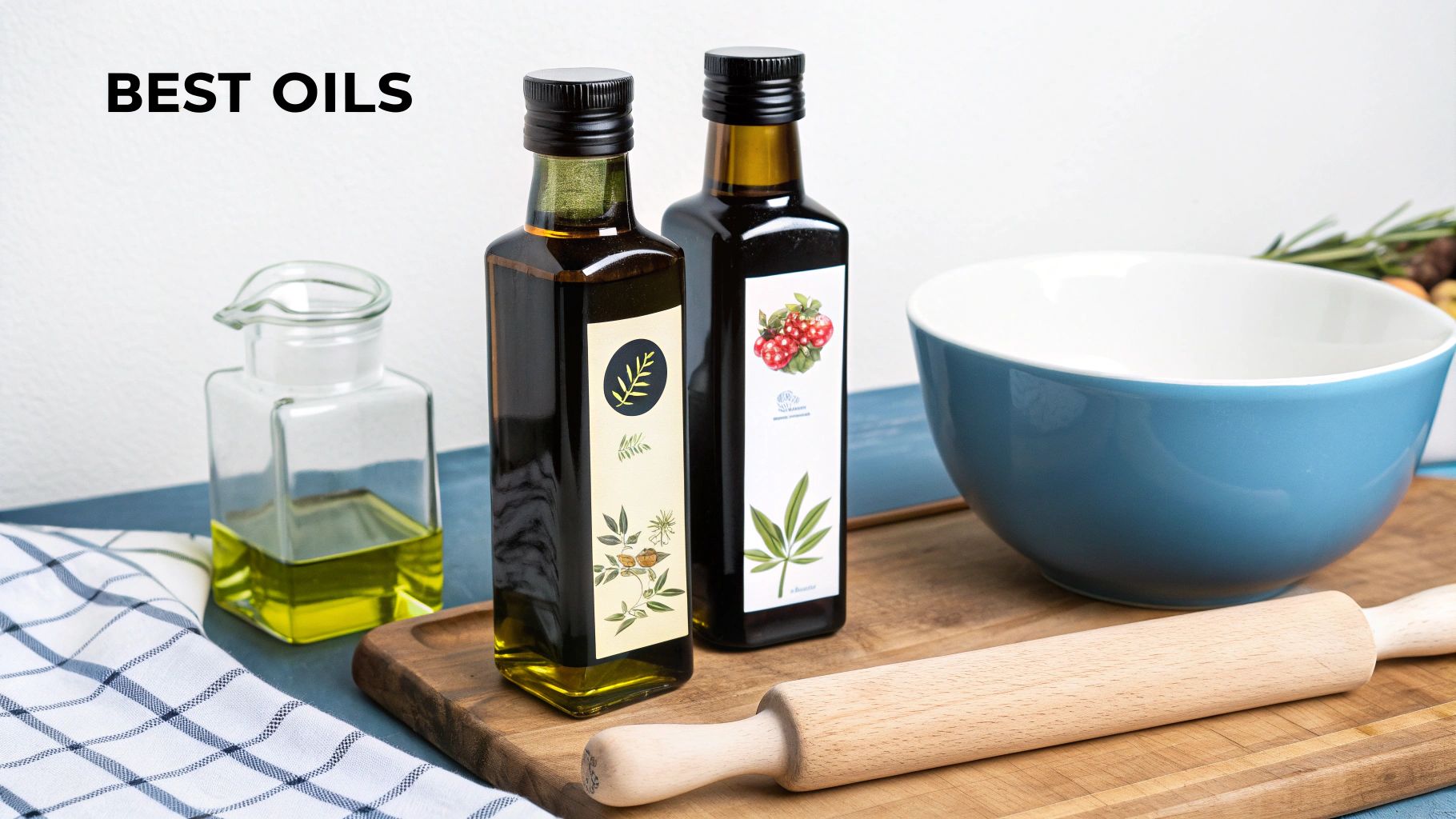
When you finally make the switch, you’re doing more than just swapping fats. You’re fundamentally changing the soul of your bake, and the difference is something you can taste and feel instantly. The first thing you'll notice is a ridiculously tender crumb and a richer mouthfeel that butter simply cannot match.
But the most impressive benefit, the one that will convert you for life, is how long everything stays fresh. Bakes made with olive oil hold their moisture beautifully. That cake you bake on Monday? It will still be just as delicious on Wednesday, without a hint of the tragic dryness that plagues butter-based recipes.
A Transformation of Flavor and Appearance
Beyond that astonishing texture, you'll notice a lovely, subtle golden hue in your finished goods. It’s a visual promise of the richer flavor waiting inside. Olive oil doesn’t just bring its own personality; it makes everything else in the bowl taste more like itself.
Chocolate suddenly tastes deeper, darker, more complex. Citrus zest pops with a vibrant punch. Herbs like rosemary and thyme become incredibly aromatic. It’s as if olive oil turns up the volume on the entire recipe.
This is no new-age baking hack; it’s a time-honored tradition. Europe has been the heart of the olive oil world for centuries, with classics like Italian focaccia and Greek olive oil cakes setting the gold standard. This deep-rooted influence has encouraged bakers everywhere to explore healthier, more flavorful fats. You can see this global shift by looking into the global olive oil market trends and how they're shaping modern cooking.
Once you start baking this way, you’ll quickly go from being a curious experimenter to a true believer. If you're ready to dive in, our guide on how to cook with olive oil is a great place to start your journey.
Proven Recipes That Showcase Olive Oil
All the theory in the world means nothing until you taste the stunning results for yourself. When you match the right olive oil with the right recipe, the outcome is simply incredible. It’s not just a substitute; it’s a profound upgrade.
Here are three classic examples where olive oil creates a texture and depth of flavor that butter can only dream of. Think of these as your gateway to a whole new world of baking.
From Brownies to Bread
Let's start with a shocker: Fudgy Dark Chocolate Brownies. Swapping melted butter for a mild olive oil results in a ridiculously dense, moist brownie that stays perfect for days. The oil actually deepens the chocolate flavor, making it richer and more complex. It's a game-changer.
Next, a Lemon and Thyme Olive Oil Loaf. This is where a fruitier extra virgin olive oil gets to take a bow. Its grassy, bright notes make the citrus and fresh herbs pop in a way that’s simply beautiful. You end up with a tender, aromatic crumb that feels both elegant and deeply comforting.
And of course, we must pay tribute to olive oil's natural home: a rustic Rosemary Sea Salt Focaccia. For this, you want a bold, peppery EVOO. It isn't just an ingredient here; it's the star of the show. It infuses the dough with incredible flavor and is the secret to that signature crispy-yet-chewy crust.
These recipes are undeniable proof that the answer to "Can I use olive oil in baking?" is a resounding yes. Each one highlights a different strength of the oil, from its power to create unbelievable moisture to its ability to amplify other flavors.
For a deeper dive with more specific recipes and techniques, a dedicated guide on olive oil for baking is an excellent next step. With these ideas, you’re more than ready to begin your own delicious experiments.
Common Questions About Baking with Olive Oil
It's perfectly normal to have questions when you're about to change a core ingredient like butter. I get it. You want to be sure you're making the right move before the oven even preheats.
Let’s tackle the most common concerns head-on.
Will My Cake Taste Like Olives?
This is always the first question, and the answer is a relieving no—unless you want it to! The key, as always, is choosing the right olive oil for the job.
For delicate recipes like a vanilla cake or simple sugar cookies, a "light-tasting" or mild olive oil is your best friend. It provides all the incredible moisture without leaving any detectable flavor. For all intents and purposes, it's invisible.
But for bakes with complementary flavors—think lemon pound cake, orange-scented muffins, or a rosemary quick bread—a fruitier extra-virgin olive oil can add a beautiful, subtle complexity. Just save those robust, peppery finishing oils for savory bakes like focaccia, where that bold flavor is a feature, not a bug.
What About Creaming Butter and Sugar?
An excellent question. Many recipes rely on that classic step of creaming butter and sugar together to create an airy foundation. Since olive oil is a liquid, you can't "cream" it, but you can achieve a similar result with a different technique.
Instead of creaming, you will vigorously whisk the olive oil with your sugar, eggs, and any other liquids. Keep whisking until the mixture becomes thick, pale, and fully combined. This process, called emulsification, traps thousands of tiny air bubbles that will expand in the heat of the oven, giving your baked goods a wonderfully light and tender structure.
Don't rush this part! A proper emulsion is the secret to achieving that perfect, fluffy crumb you'd expect from a butter-based recipe. It's the most critical step for preventing a dense, heavy cake.
Is Baking with Olive Oil Actually Healthier?
From a health perspective, it’s a brilliant switch. Olive oil is packed with monounsaturated fats, the "good" kind known for being heart-healthy. Butter, on the other hand, is mostly saturated fat.
When you bake with olive oil, you’re not just cutting back on saturated fat; you’re replacing it with a healthier alternative while adding a dose of natural antioxidants. If you want to dive deeper into the science, this guide to olive oil nutrition facts breaks down all the benefits.
At Learn Olive Oil, we're dedicated to helping you discover the incredible world of premium olive oil. From the grove to your kitchen, our expert insights will guide you in choosing, tasting, and cooking with this liquid gold. Start your journey and elevate your culinary creations by visiting us at https://learnoliveoil.com.
 Learn Olive Oil
Leave a comment